













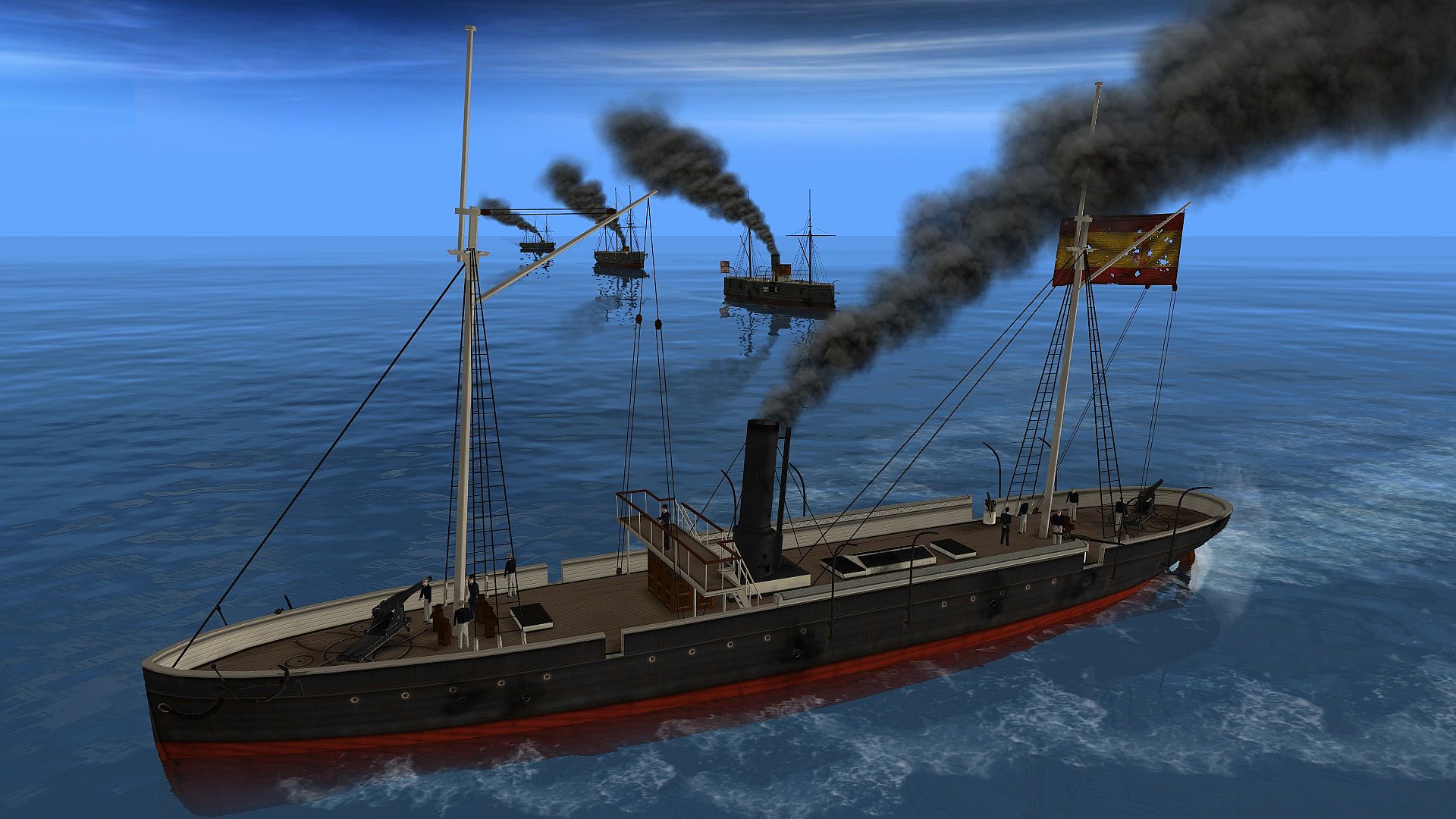
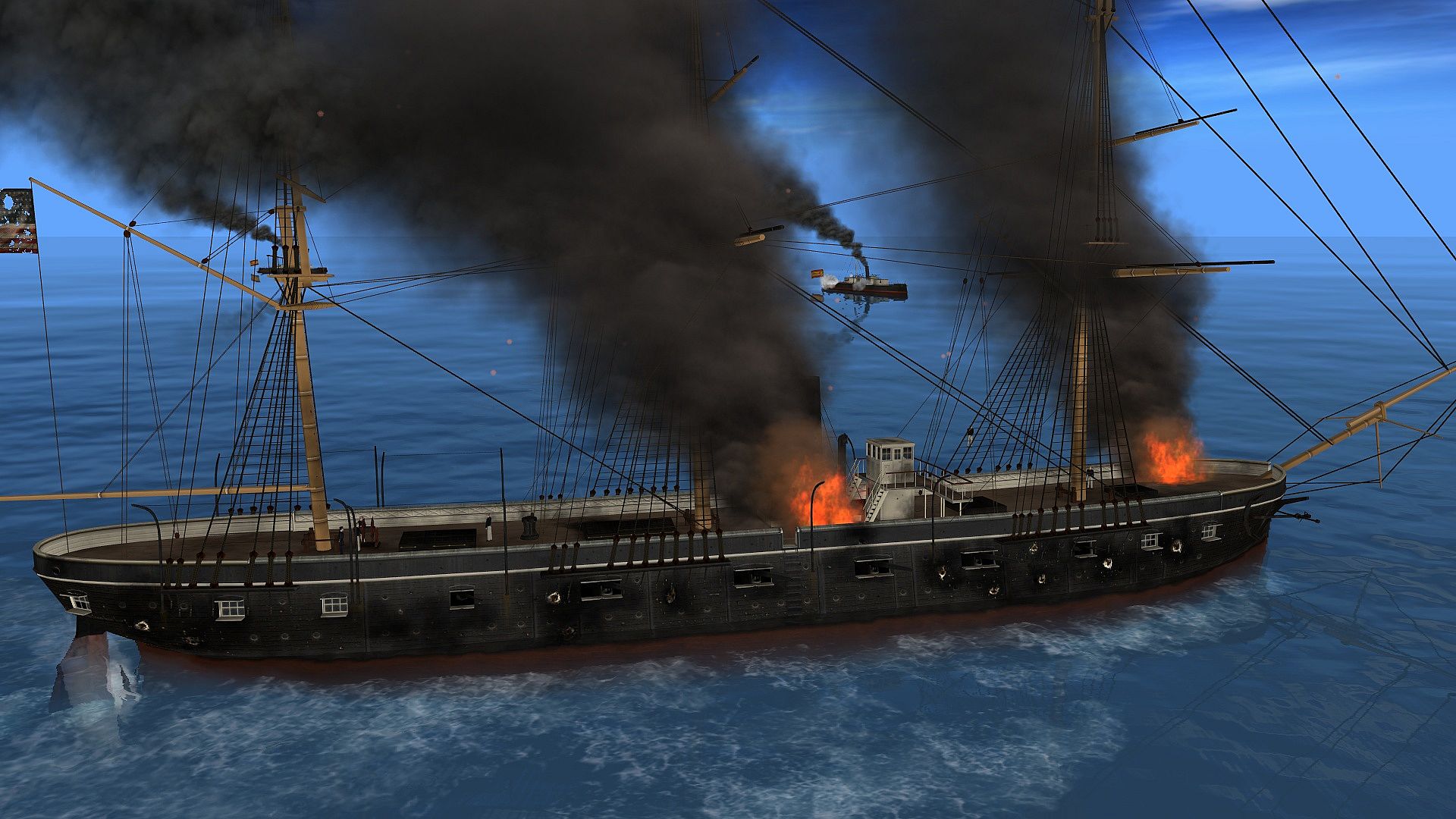
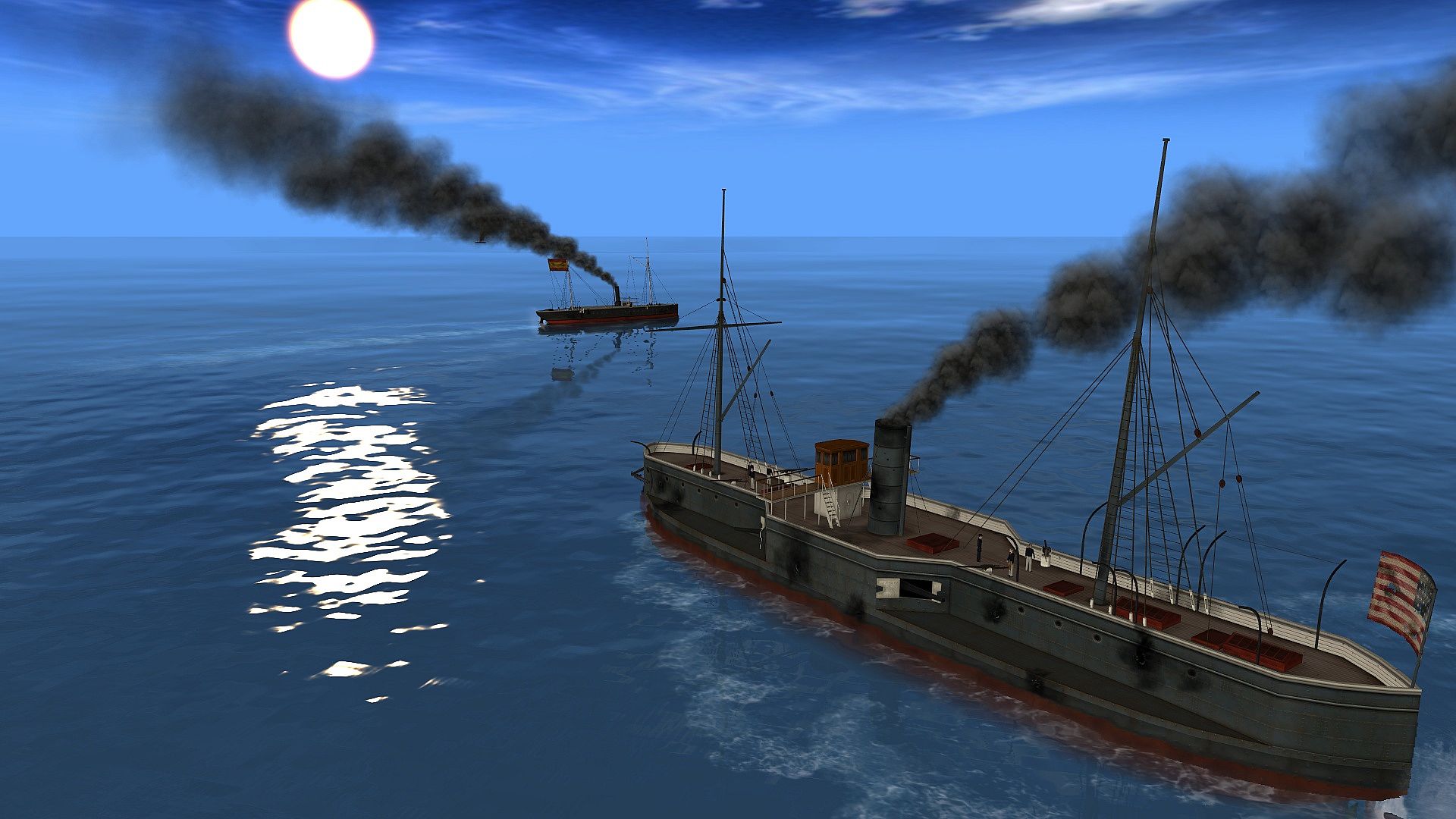
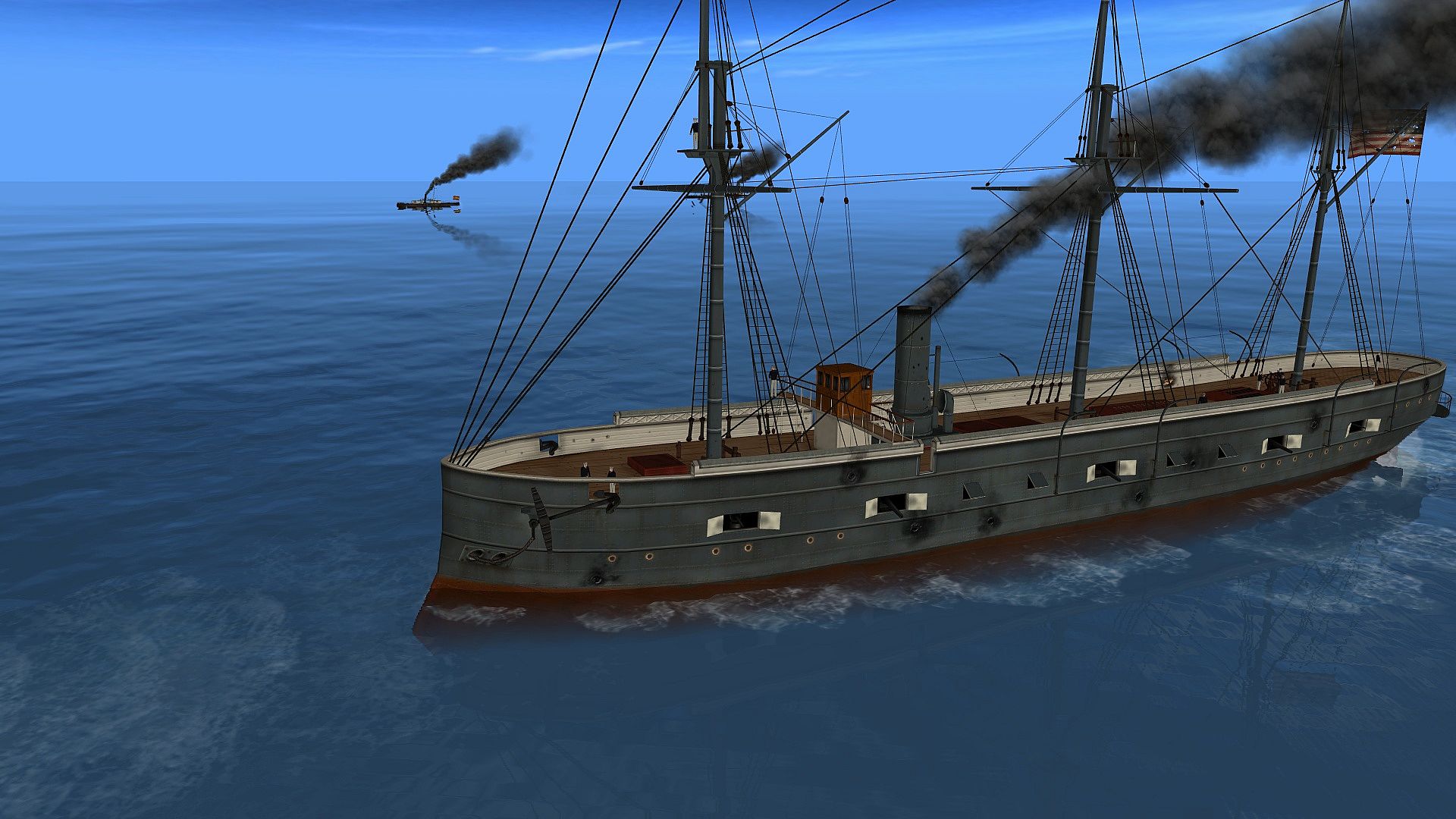
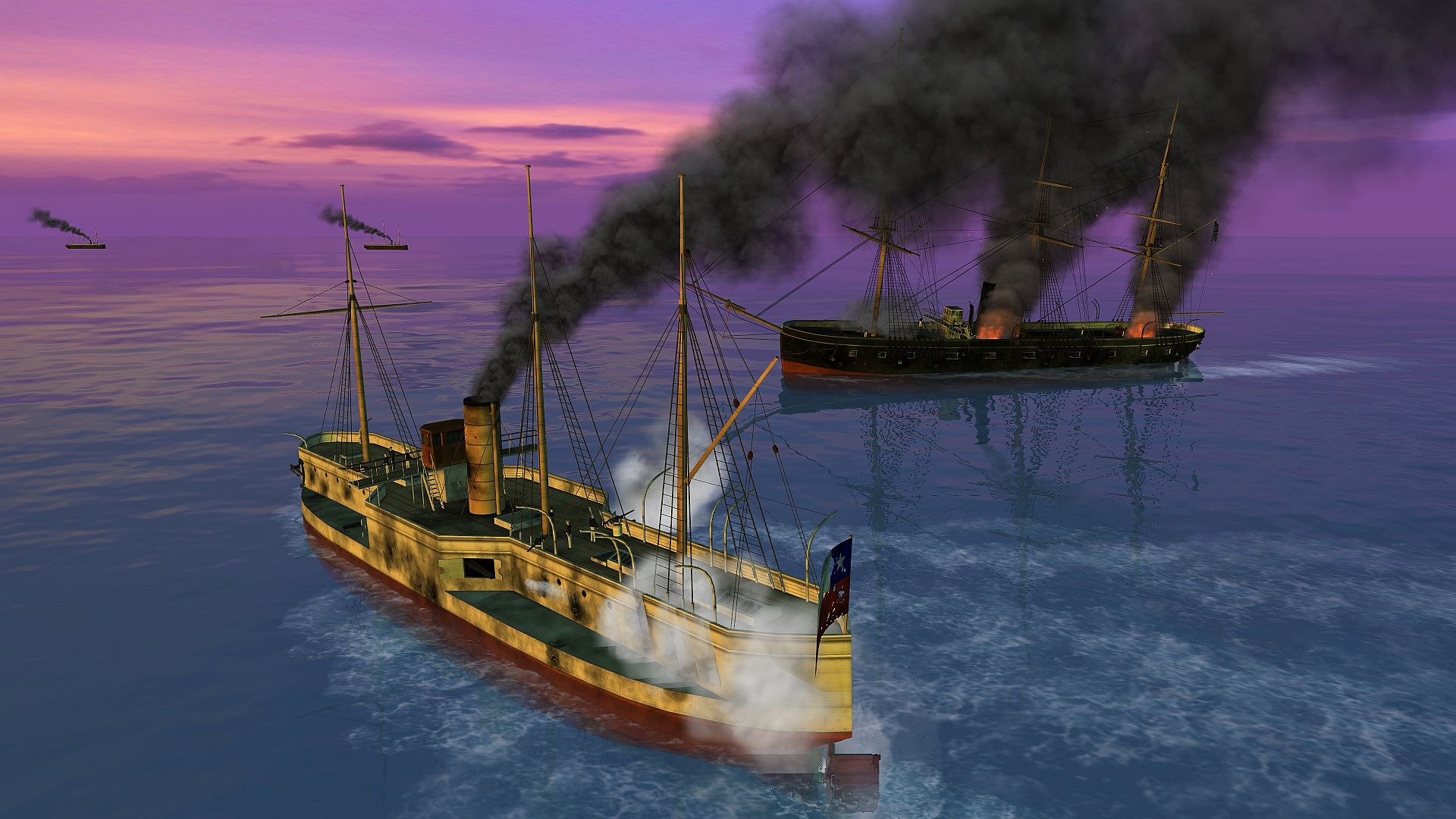
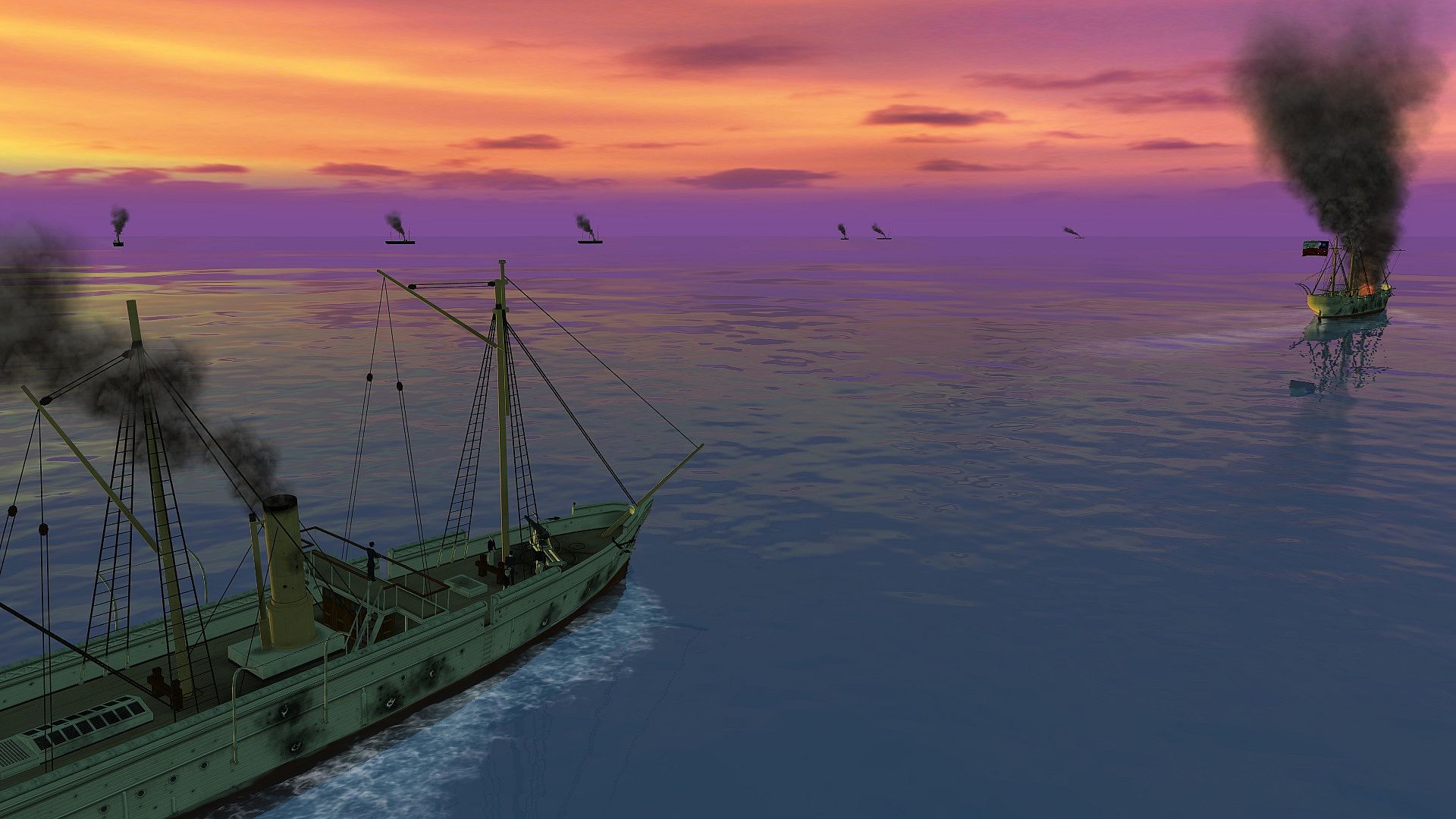
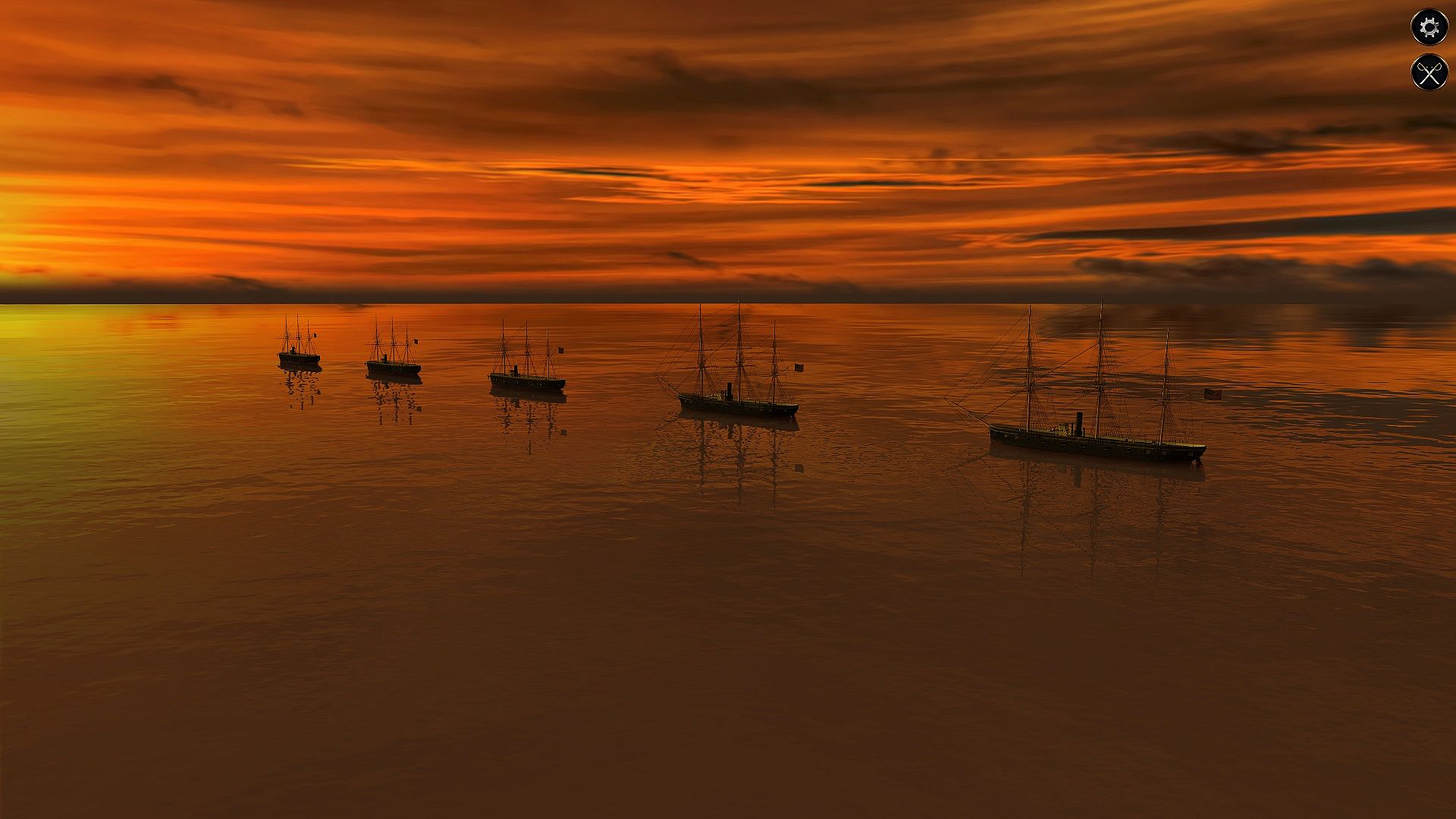
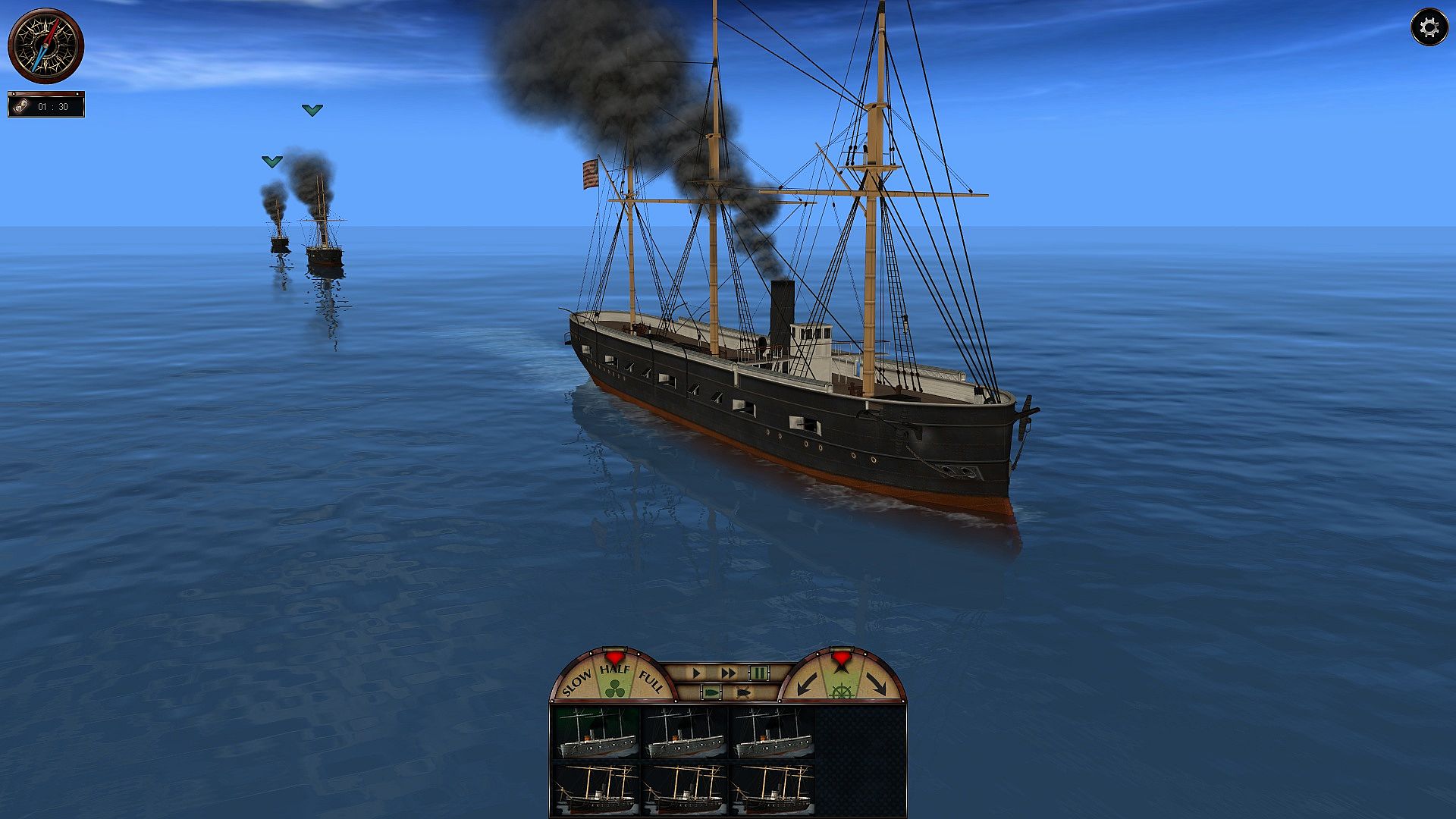
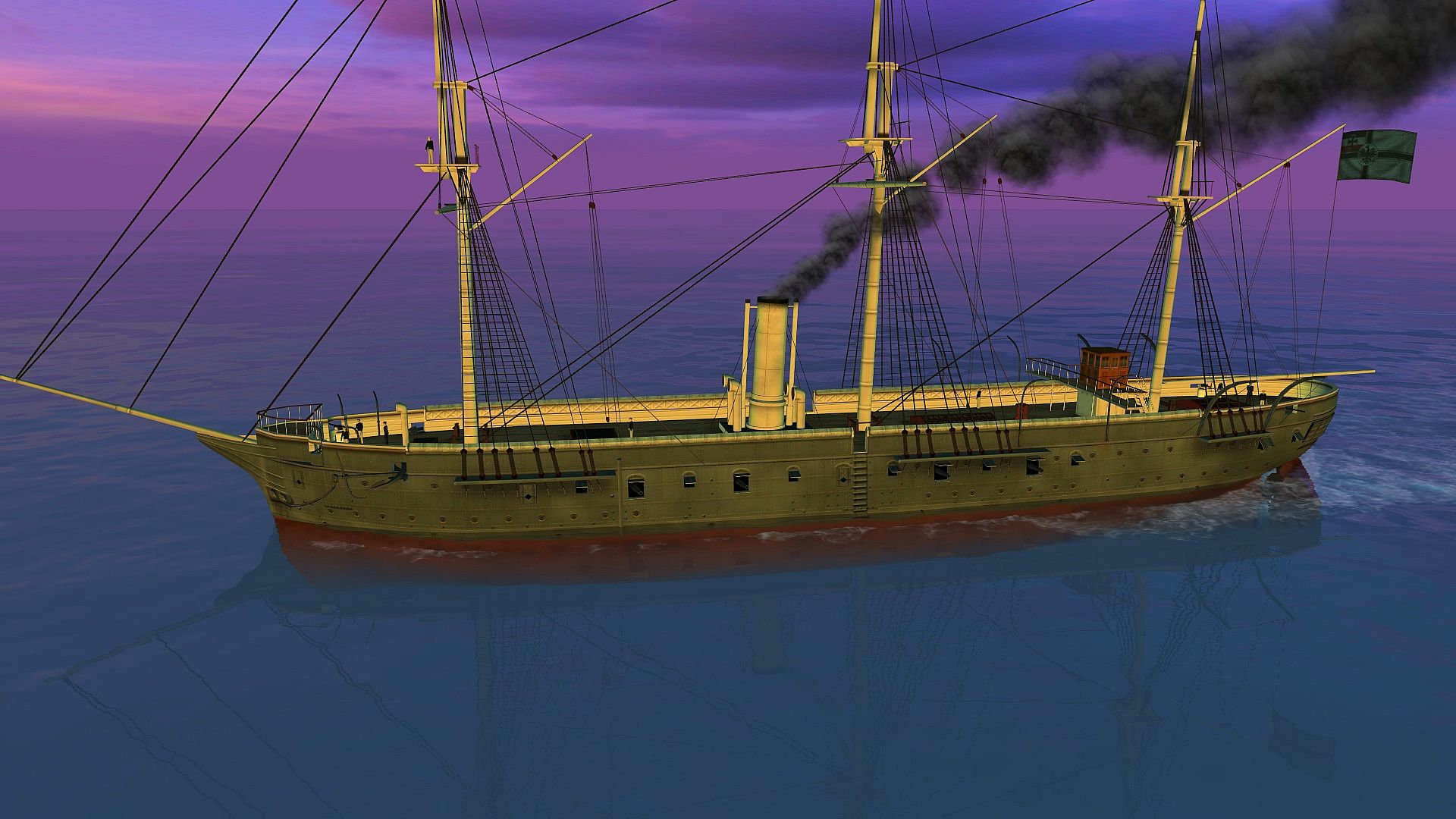
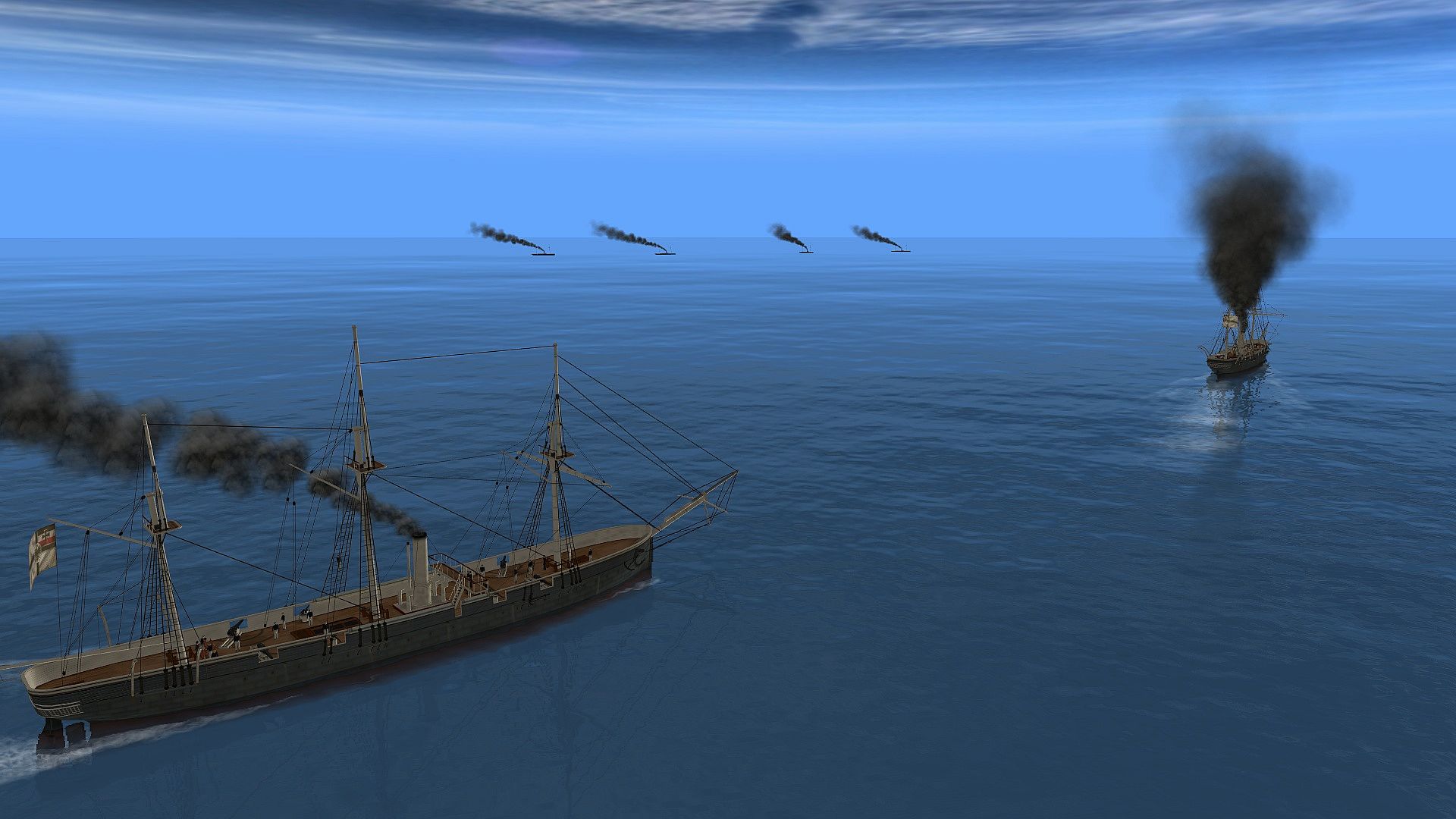
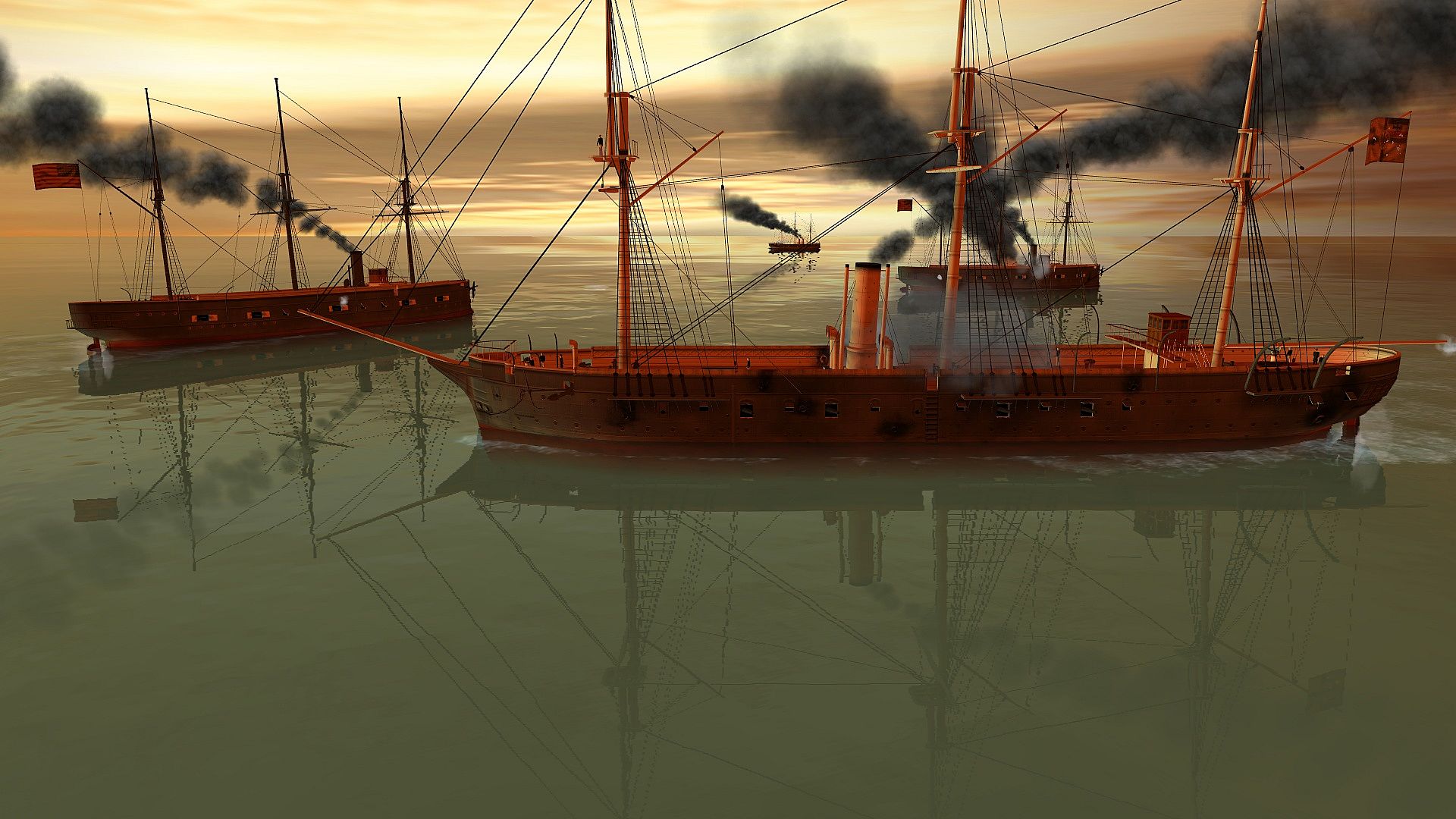
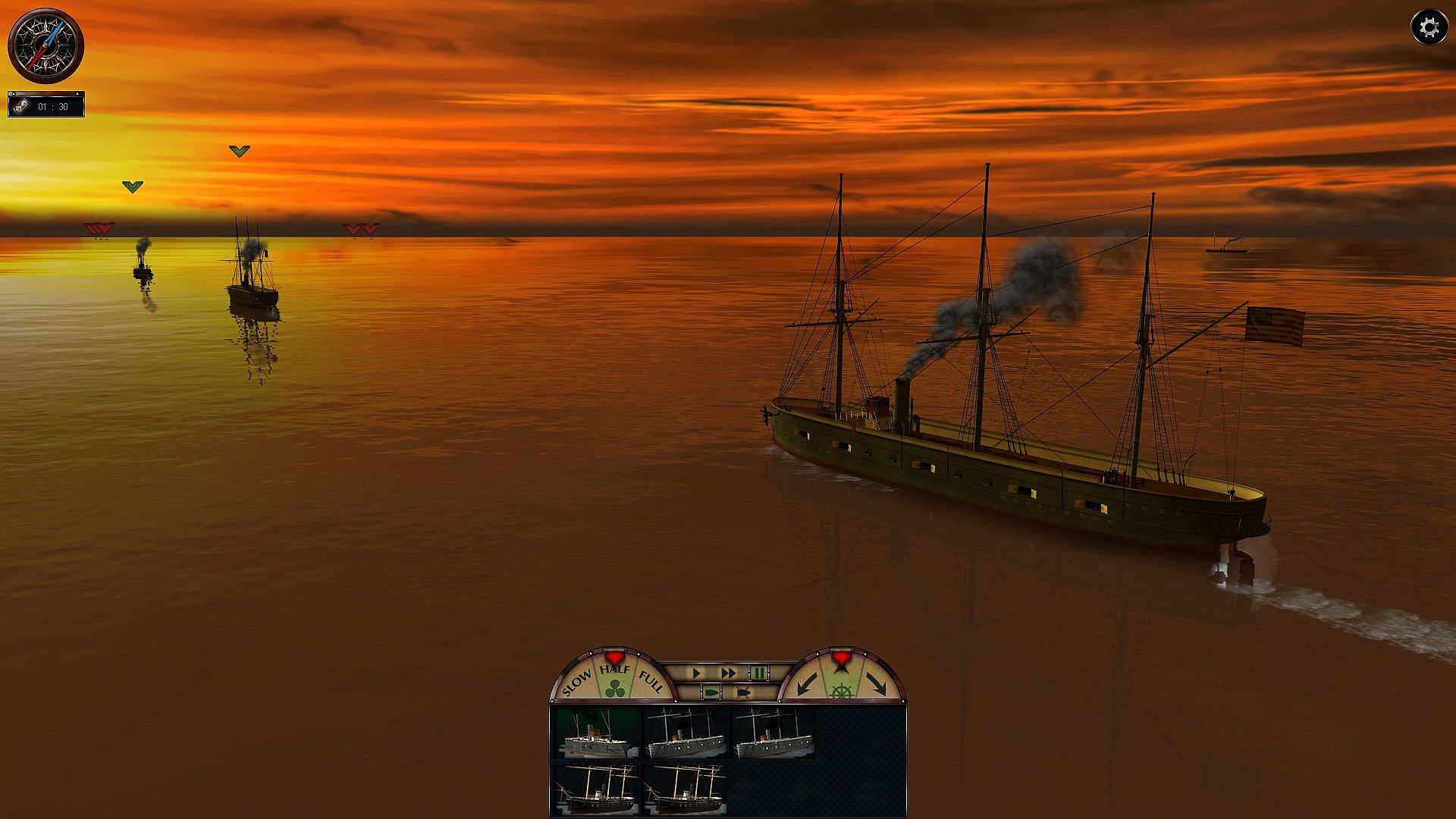
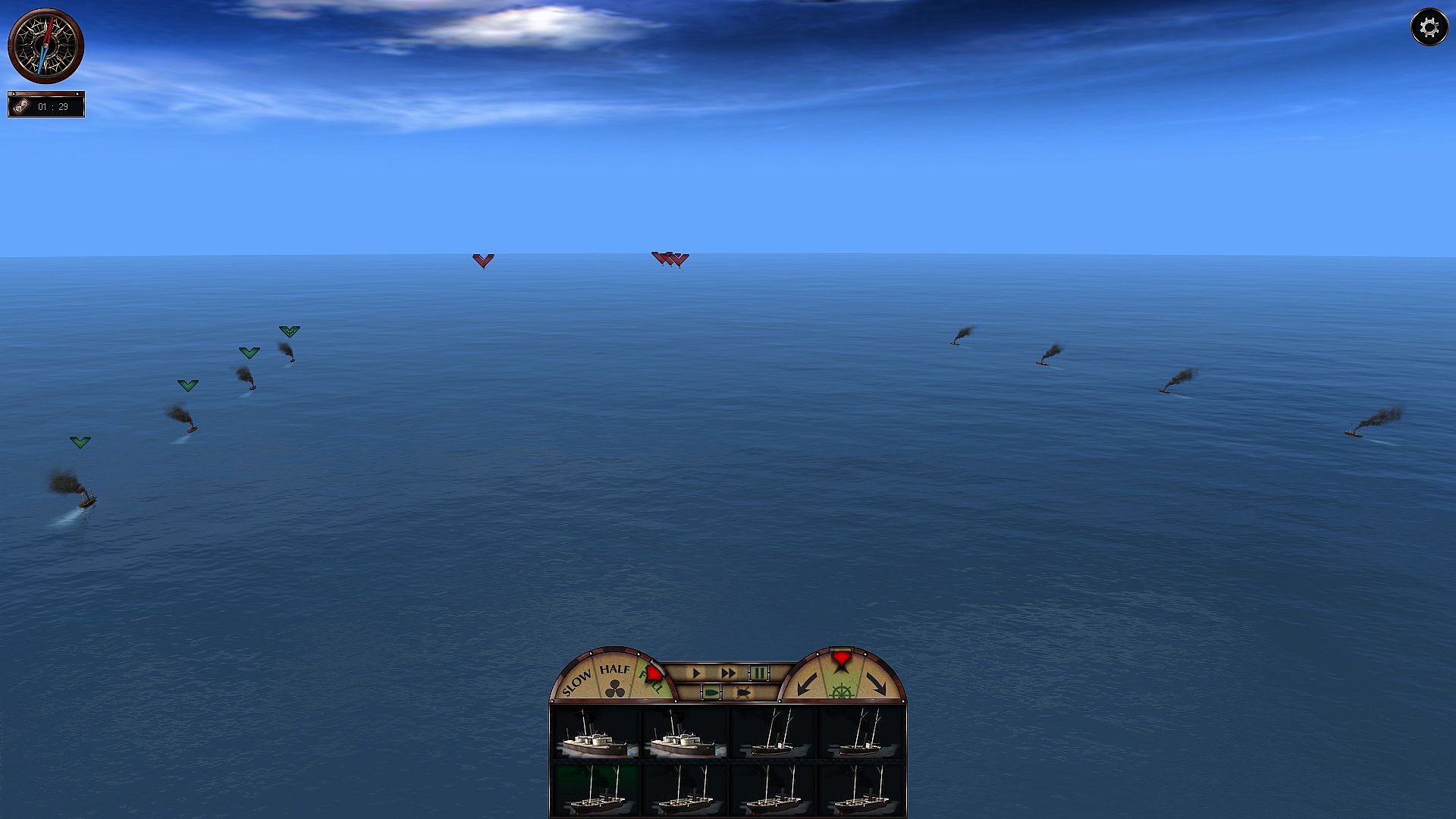
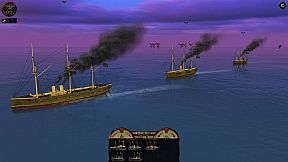
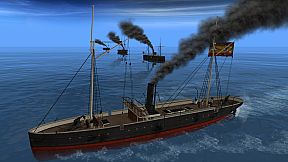
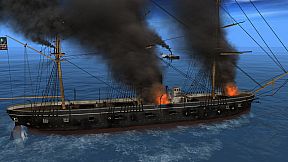
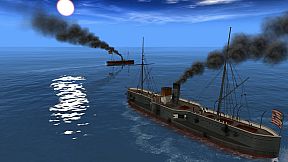
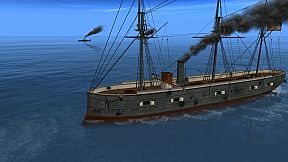
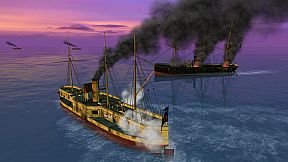
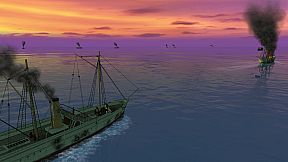

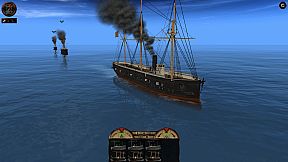
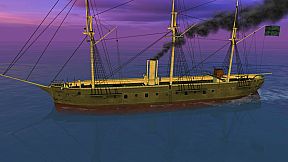
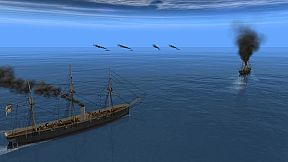
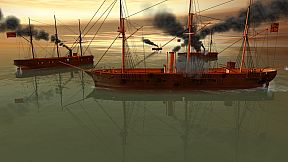
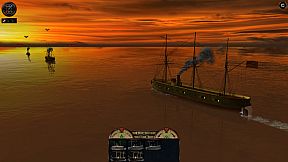
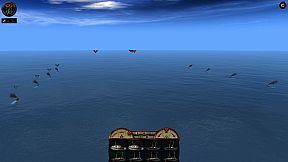
Victorian Admirals is a naval combat simulation for PC that places players in command of steam-powered warships during fleet-scale engagements in the Pacific during the 1880s. The game draws from alternative history scenarios where colonial powers clash over island territories without escalating into full-scale war. Real-time battles emphasize squadron management, ship positioning, and accurate weapon performance rather than arcade-style action.
Gameplay
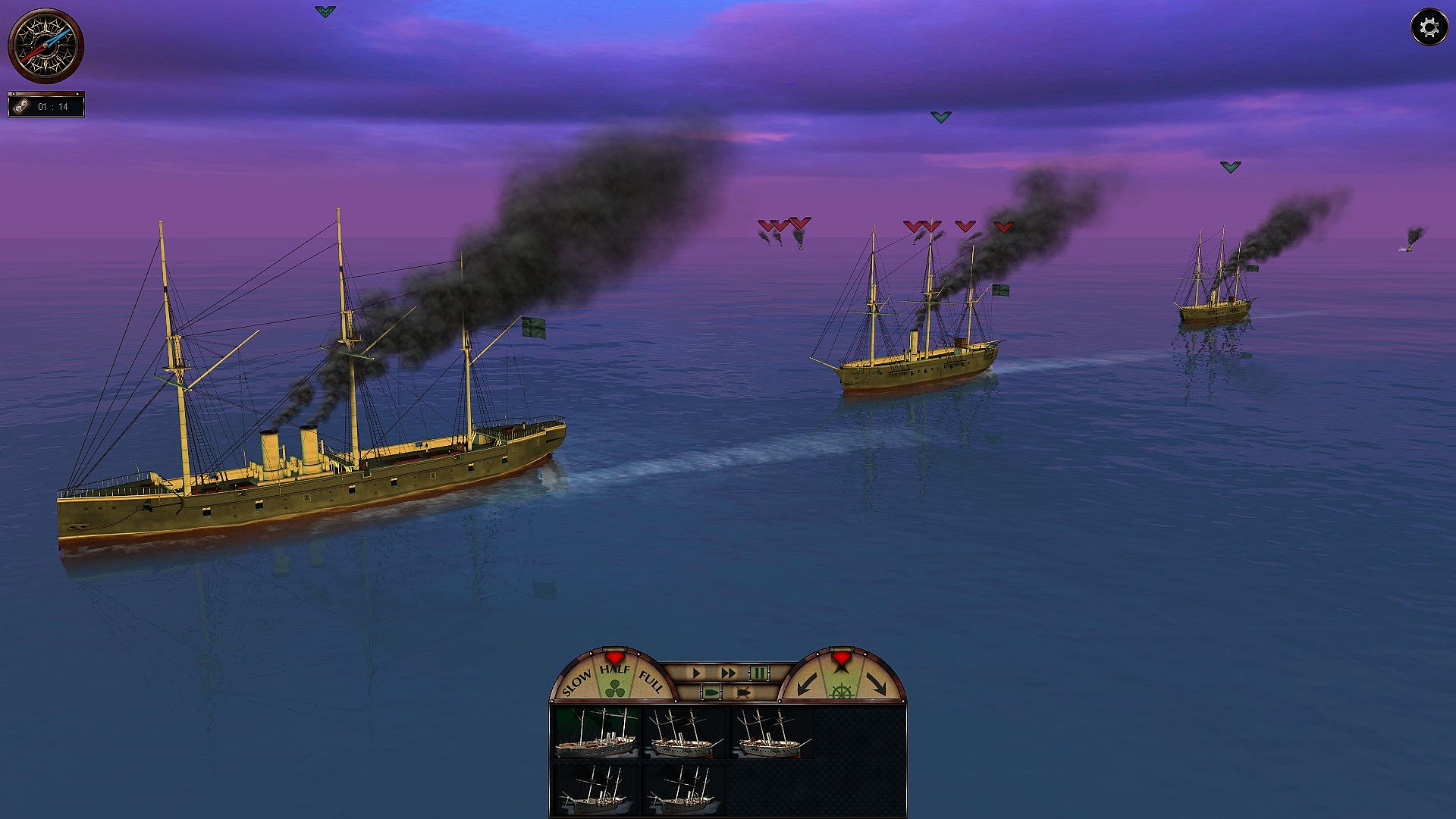
Core mechanics revolve around organizing ships into squadrons and directing their formations during combat. Players assign groups of vessels to specific roles, adjust their relative positions, and issue orders that account for realistic ship handling characteristics. Each vessel features distinct attributes such as speed, armor placement, and armament layout drawn from period naval designs.
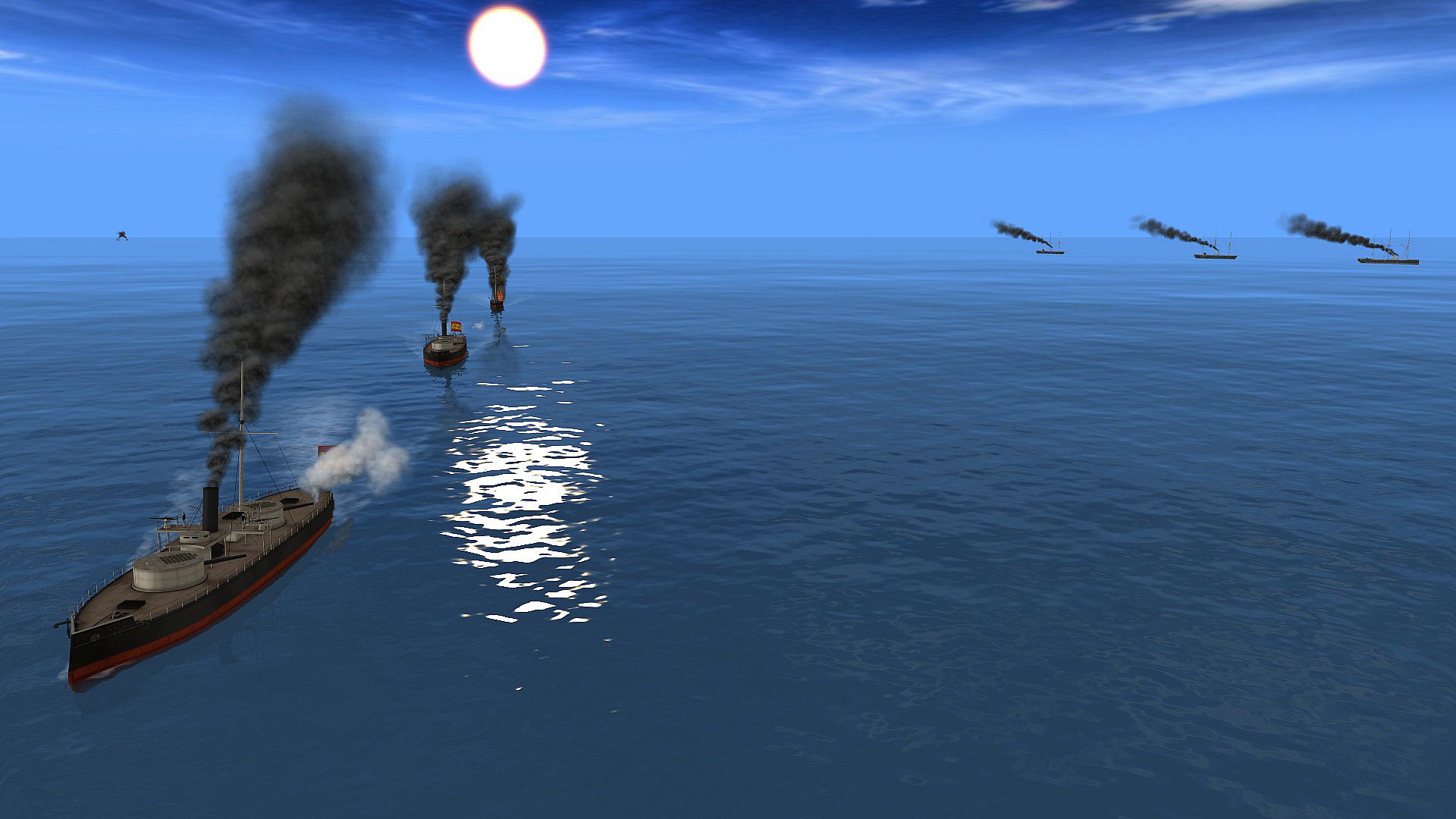
Weapon systems incorporate detailed ballistic calculations. Cannon fire accounts for projectile trajectories, shell types, and factors like range and target angle. Damage modeling reflects the era's naval technology, with hits affecting different sections of a ship based on impact location and armor thickness. Battles unfold in real time, requiring constant adjustments to maintain effective firing lines while maneuvering to avoid incoming fire.
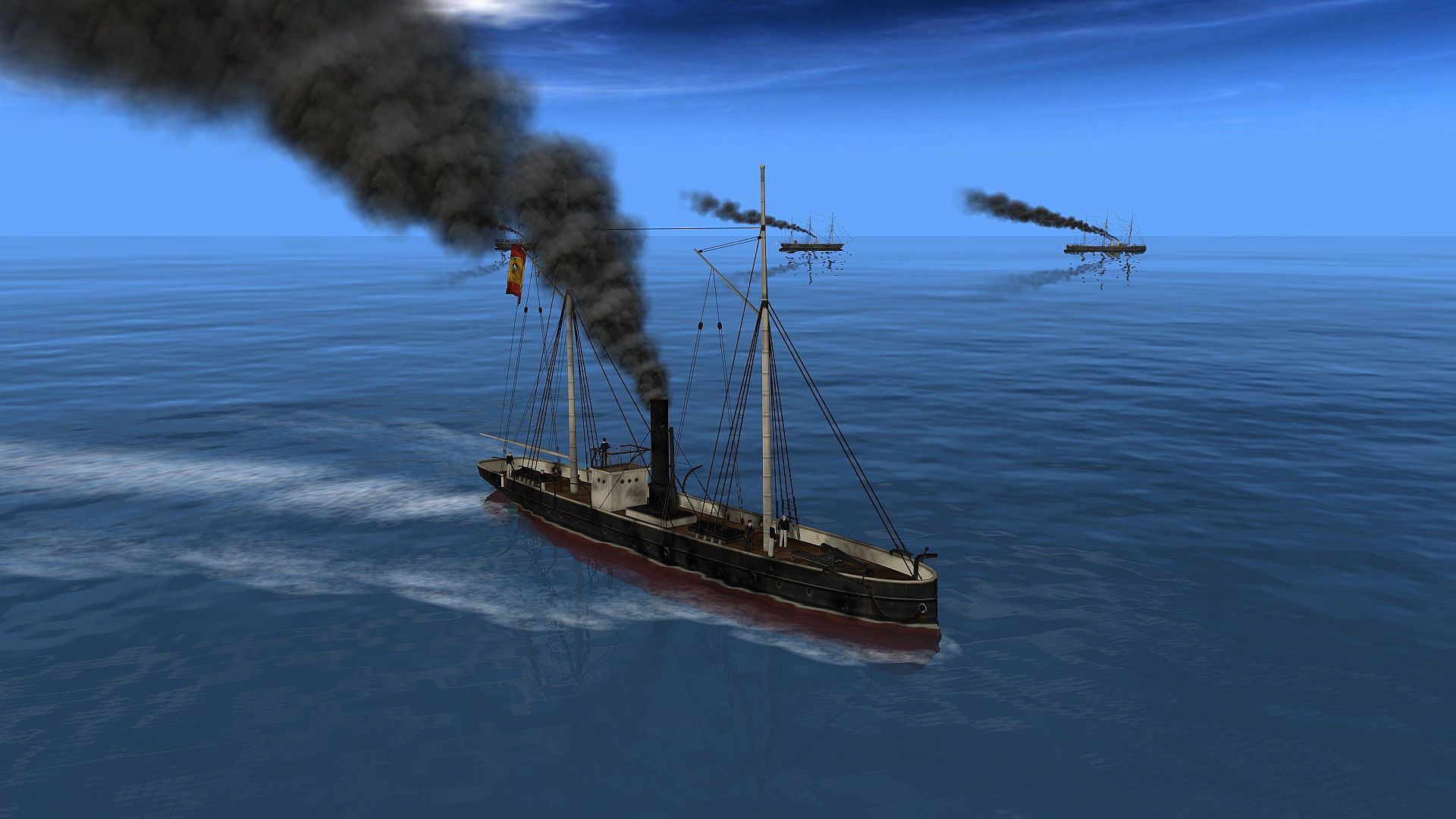
The simulation prioritizes tactical decision-making over rapid reflexes. Squadron leaders must coordinate multiple ships simultaneously, balancing offensive pressure with defensive positioning. Ship models include visual and performance details that influence how vessels respond to commands and sustain damage over the course of an engagement.
Game Modes
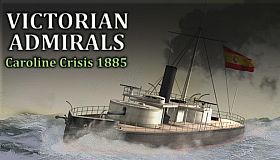
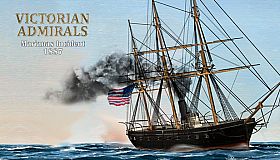
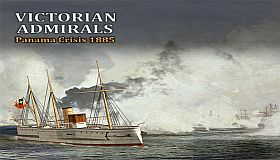
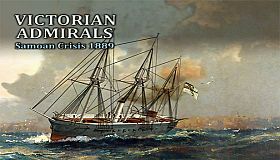
The package contains four distinct scenarios, each representing a short naval confrontation between specific powers. These include the Panama Crisis involving Chile and the United States, the Caroline Islands Crisis between Germany and Spain, the Marianas Incident pitting Spain against the United States, and the Samoan Crisis featuring Germany and the United States.
Each scenario functions as a self-contained battle set in tropical waters. Players select and organize available squadrons for one side, then direct them against opposing forces in a single real-time engagement. No additional modes such as skirmish generators or extended campaigns appear in the verified structure. The focus remains on preparing formations and executing the clash under the constraints of each historical-inspired situation.
Historical Scenarios
The conflicts unfold against a backdrop of late-nineteenth-century imperialism in Oceania. In the Panama Crisis, Chilean forces respond to American occupation of a key port by moving to secure another strategic location. The Caroline Islands Crisis centers on competing claims to islands where one power arrives ahead of the other to assert control. The Marianas Incident arises from American interest in securing island bases while Spain faces internal distractions. The Samoan Crisis stems from rival attempts to influence local leadership, leading to warships gathering in a busy harbor.
These setups limit the scope to brief, decisive fleet actions. No large-scale wars occur, keeping the action confined to squadron-versus-squadron encounters with realistic period constraints on ship numbers and capabilities.
Is It Worth Playing?
Victorian Admirals appeals primarily to players interested in detailed real-time naval simulations from the steam era. The emphasis on squadron organization, formation tactics, and ballistic modeling provides a focused experience for those who enjoy methodical command over fast-paced action.
Reception on major platforms shows mostly negative feedback, with common points including limited user interface options, dated visuals, and a deliberate pace that demands extended play sessions per scenario. Some reviewers note accurate ship movement and firing delays, while others find the overall presentation and strategic depth lacking.
The game remains available as a complete anthology package with no ongoing updates or seasonal content. Prospective players should consider their tolerance for older simulation titles that prioritize technical accuracy in naval mechanics over polished presentation or broad accessibility features. Those seeking quick matches or modern graphics will likely find the experience mismatched, while enthusiasts of niche fleet command simulations may appreciate the specific systems on offer.