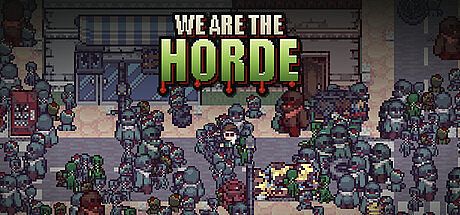


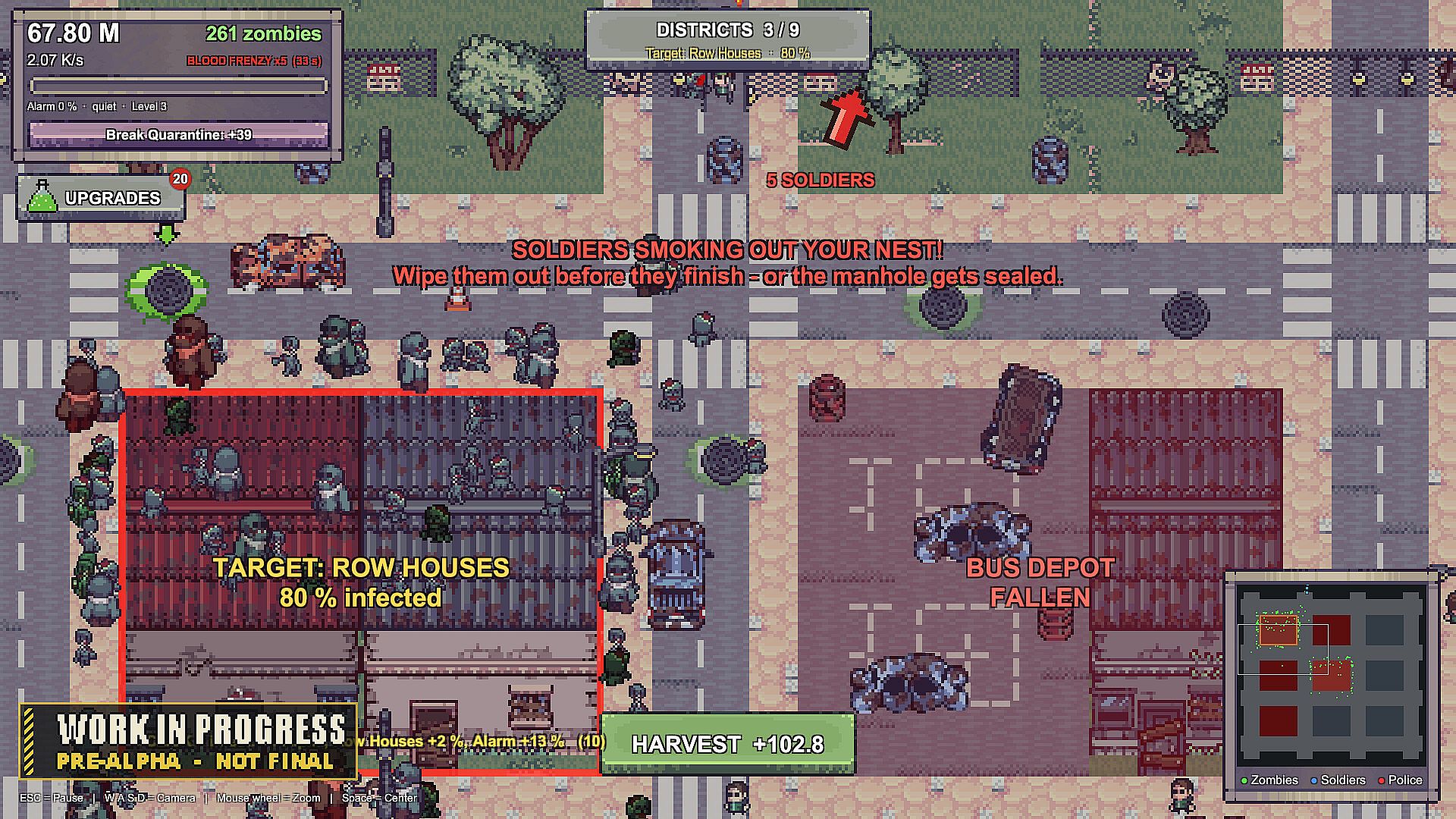
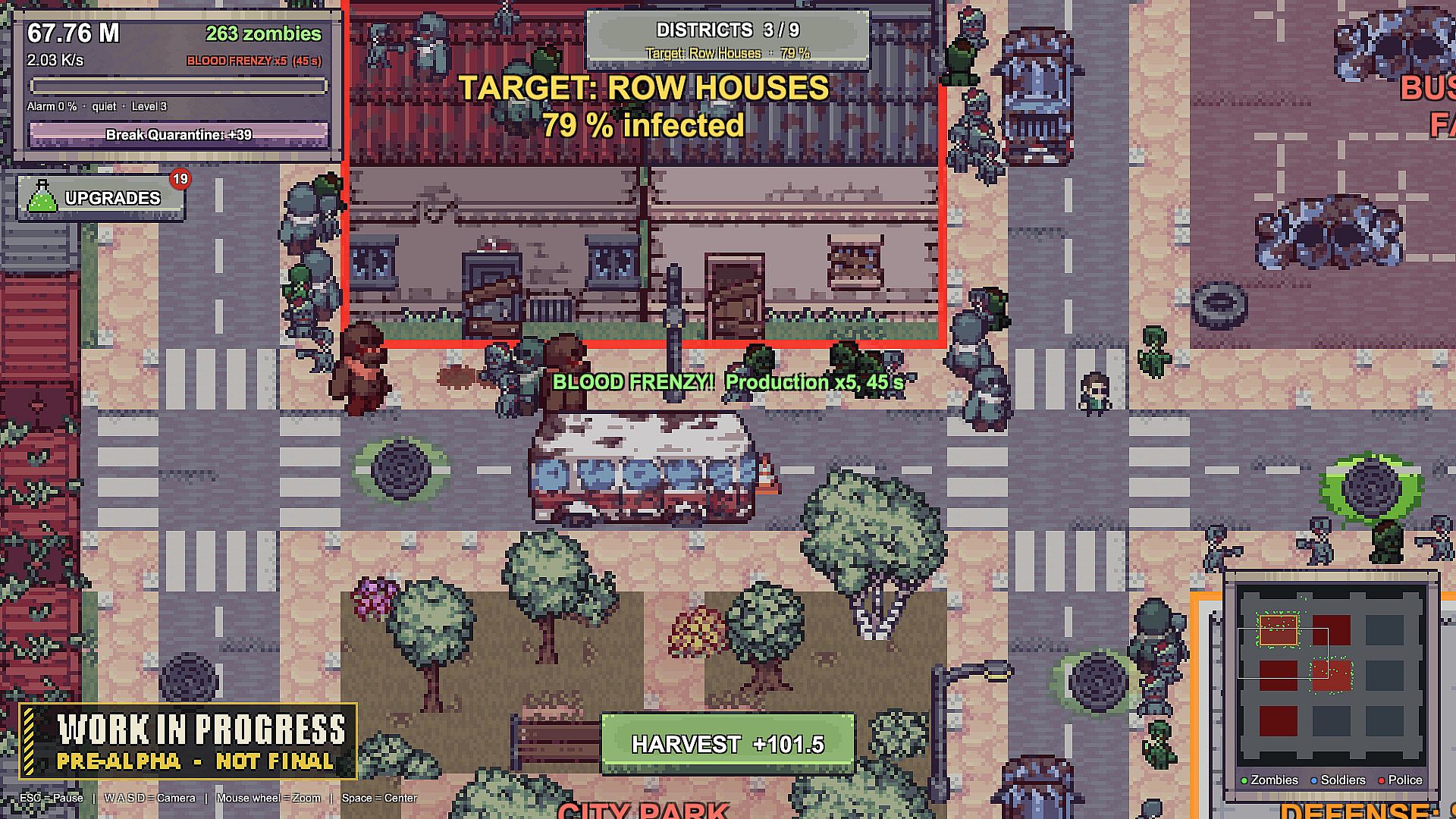
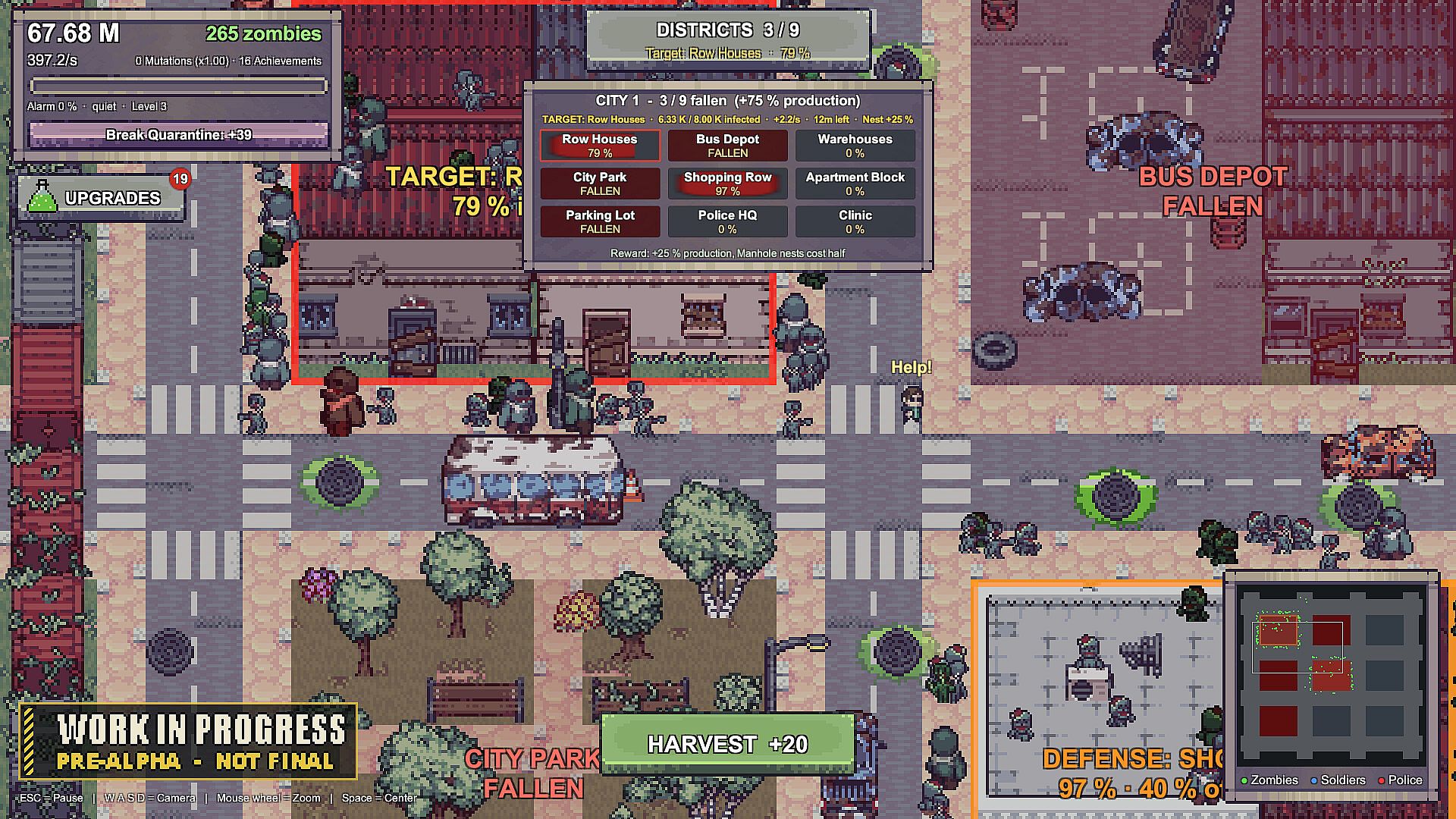
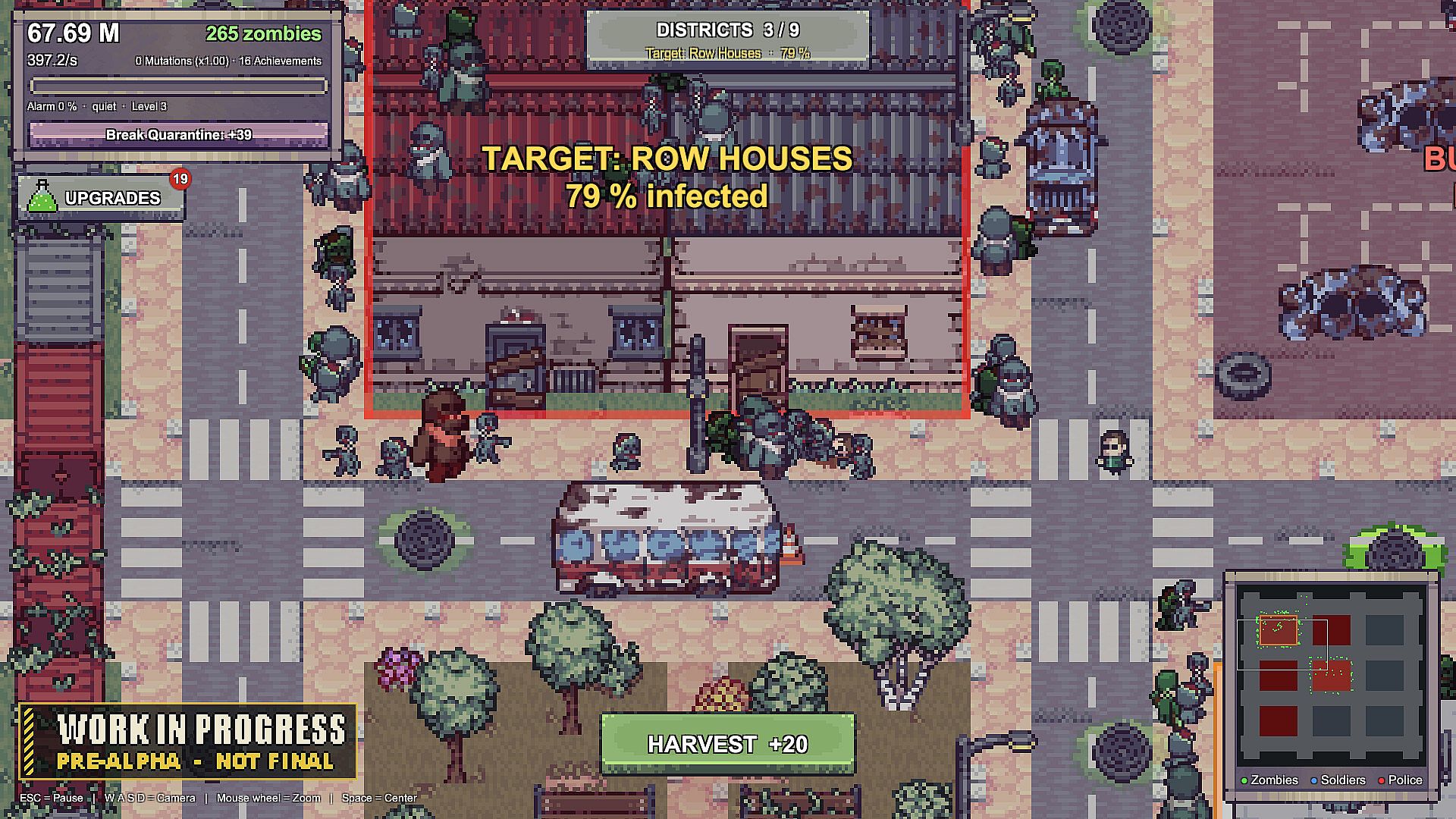
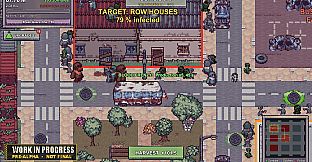
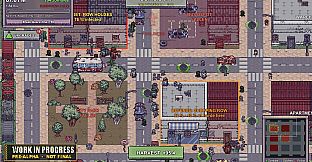
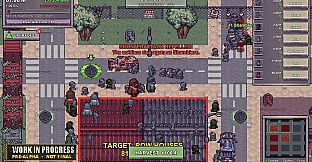
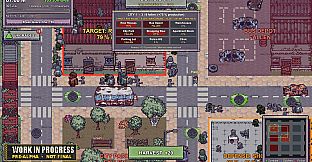
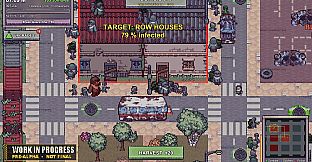
We Are The Horde is a strategy simulation game on PC in which players take control of a growing zombie horde rather than fighting against one. The experience centers on expanding an undead force through a pixel-art city while managing noise, resistance, and strategic choices about how to handle survivors.
Gameplay
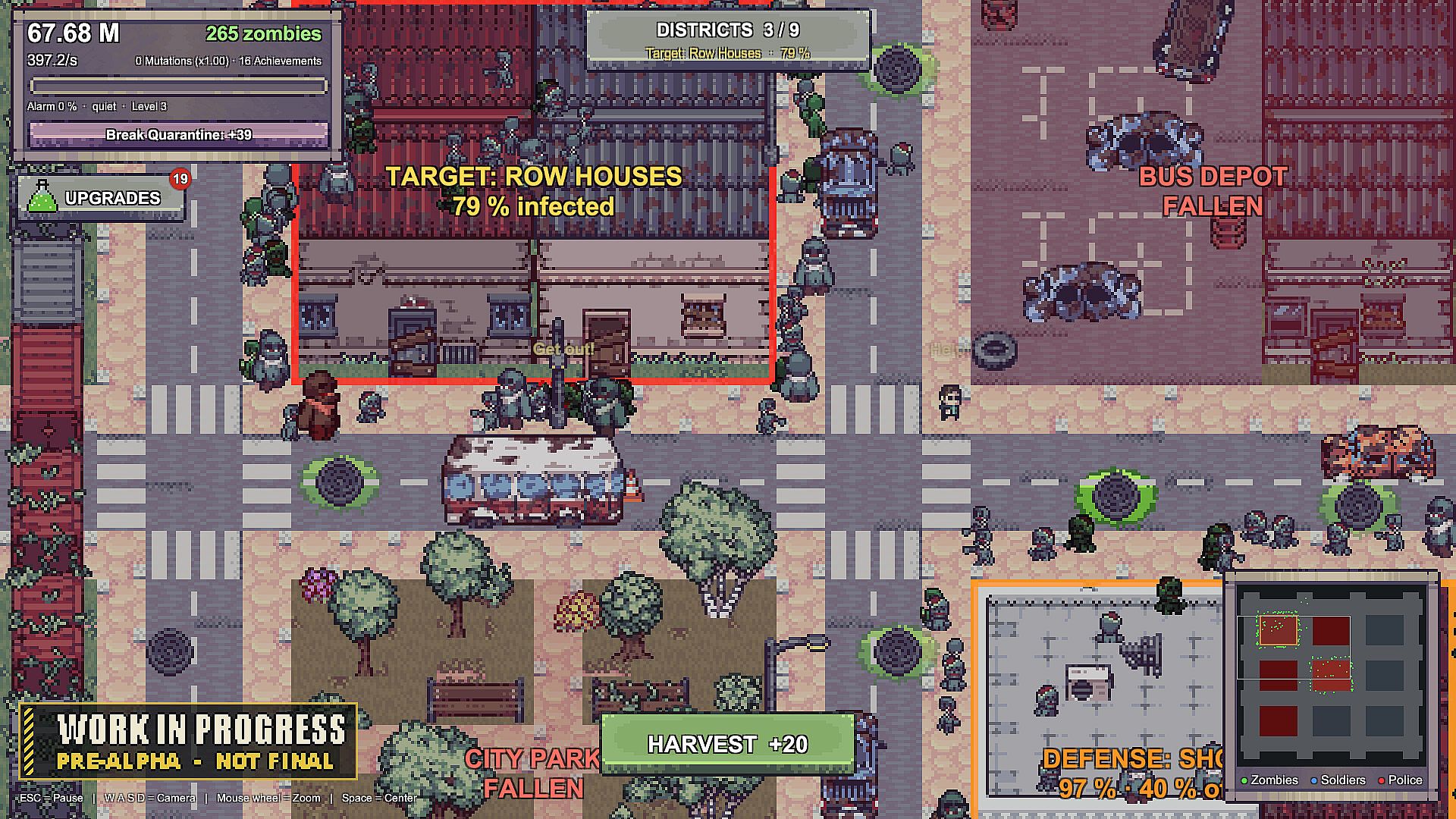
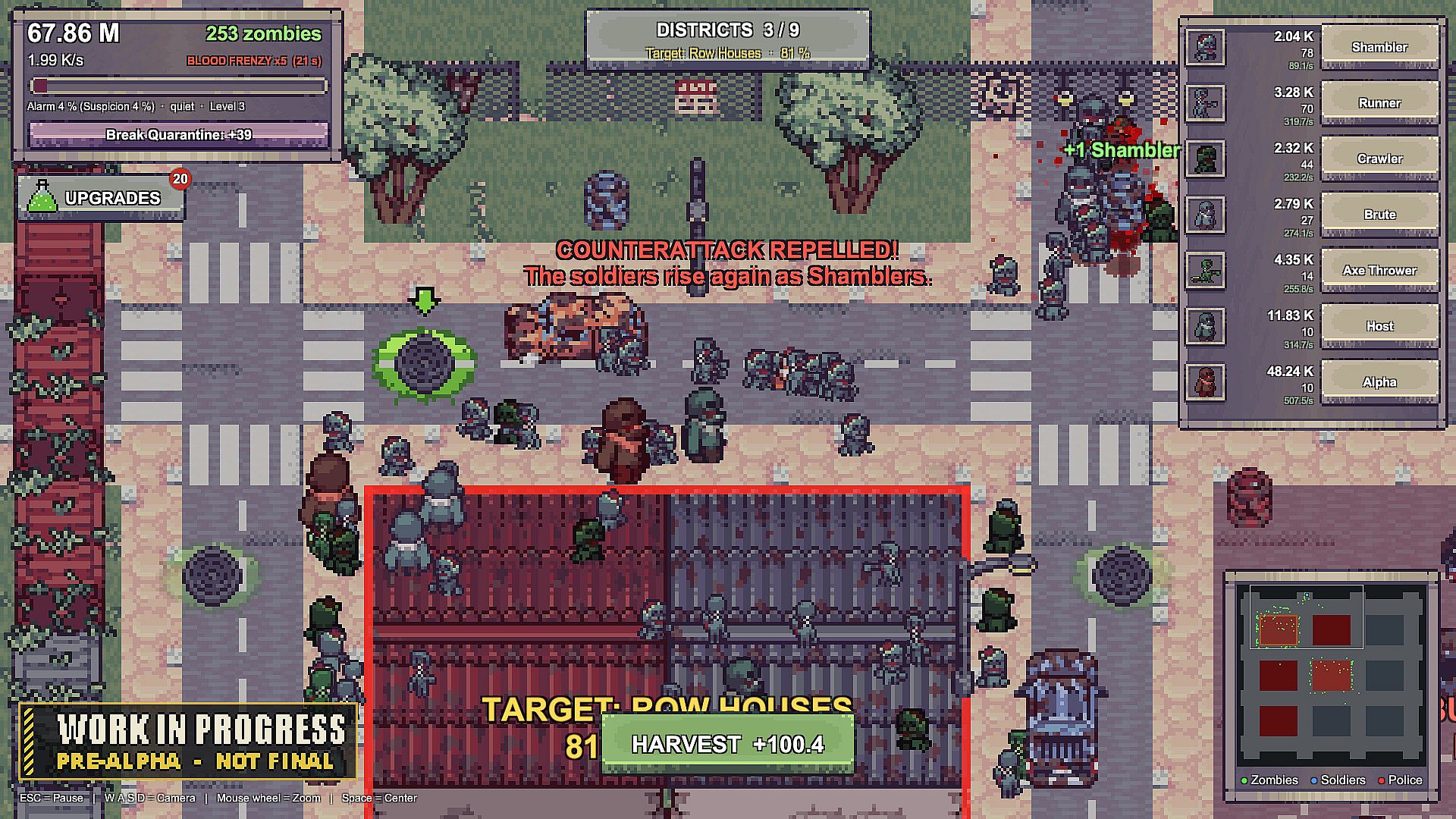
The core loop involves starting with a single shambler that emerges from a manhole and then adding more zombies to create a visible flood moving through the streets. Each added zombie contributes to the horde and remains present until it falls in combat. Seven distinct zombie types handle different roles, such as the Axe Thrower attacking from range or the Crawler emerging from sewers during fights. These units generate biomass that fuels further growth, and players can apply dozens of upgrades along with permanent mutations to strengthen the force over time.
Growth carries risks because louder activity raises the alarm level. Police patrols respond with gunfire, survivors arm themselves with baseball bats, and cleanup squads actively reduce horde numbers. Rapid expansion can trigger intervention from the Director, who deploys Special Ops or launches Mass Raids. For each survivor encountered, players decide between immediate devouring for biomass or infection to add a permanent new zombie, though the latter increases suspicion as missing persons reports accumulate.
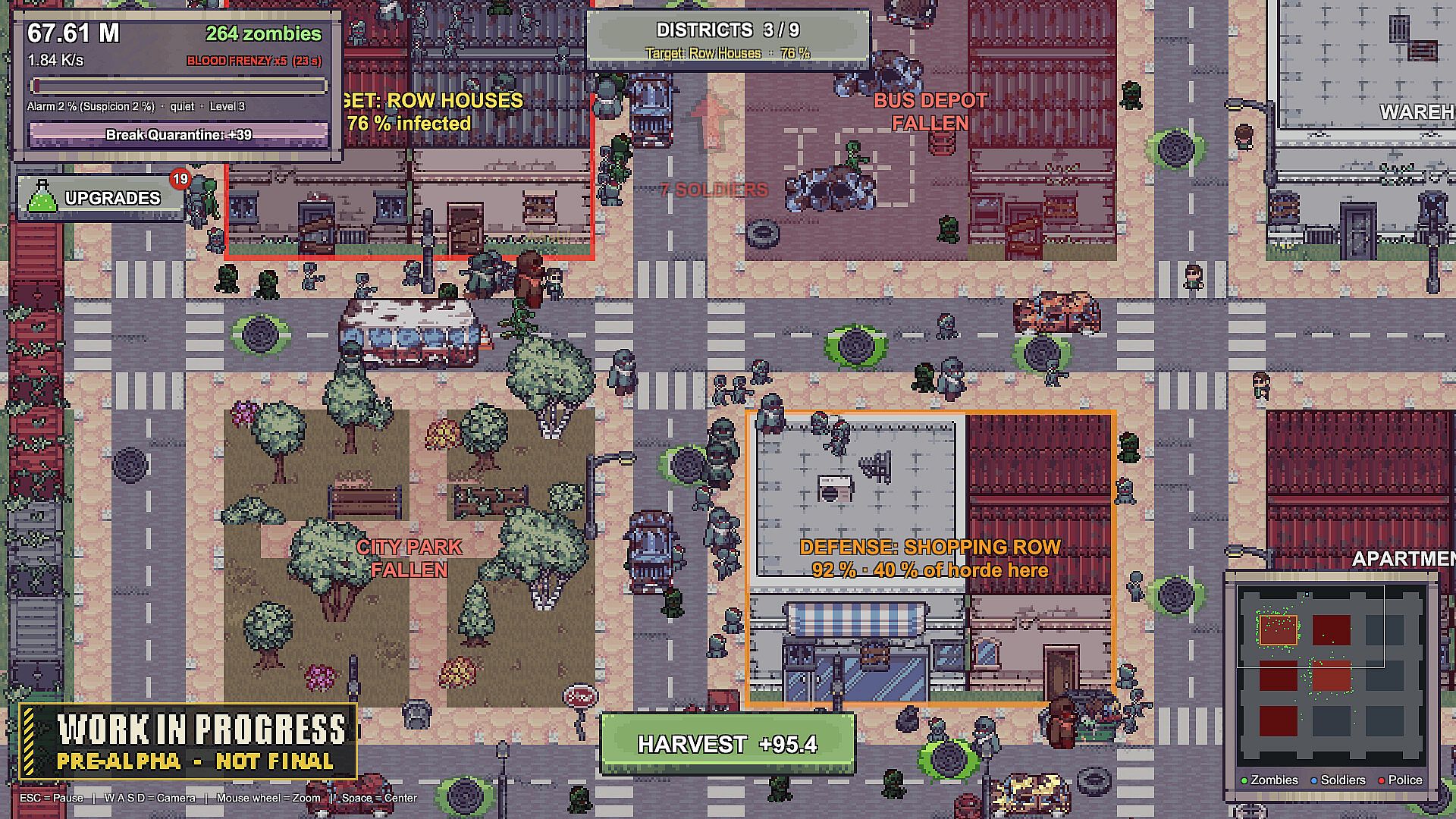
The city consists of nine districts, each offering unique rewards upon conquest. Once taken, a district provides ongoing benefits while the horde visibly occupies it. Neighboring areas send reinforcements through gates to retake ground, forcing players to balance offense with defense as parts of the horde hold positions autonomously. Manhole access points can be converted into nests that spawn reinforcements on demand, allowing targeted placement to accelerate district captures. Looters occasionally appear and drop one of ten random items that provide temporary advantages like blood frenzy or defensive traps.
Game Modes
Play revolves around two difficulty settings that alter the intensity of city resistance and Director interventions. Normal difficulty follows the intended pace of steady expansion and district conquest, while Hard difficulty increases pressure from patrols, raids, and counterattacks for more experienced players. Sessions support both short visits and extended play because the horde continues feeding and growing offline for up to eight hours, with the city fighting back during that time. Upon return, players can observe results, collect looter rewards, and adjust strategy without starting from scratch.
The structure encourages repeated district conquests across multiple cities once one falls and the horde breaks quarantine, carrying mutations forward. Thirty-three achievements track progress across various milestones such as specific zombie counts, district captures, and survival against particular threats.
Visuals and Presentation
Handcrafted pixel art depicts the horde in motion with up to 250 individually animated zombies visible on screen at once. The city streets and districts show clear changes as control shifts, and a dark soundtrack underscores the atmosphere of spreading infection. The game supports full play in both English and German.
Is It Worth Playing?
Players who enjoy deliberate strategy and simulation elements will find a focused loop built around horde management, resource decisions, and defensive positioning. The offline progress system suits those with limited daily playtime, while the two difficulty options and achievement list provide clear goals for longer engagement. The emphasis on visible growth, role-specific units, and reactive city responses creates a consistent sense of scale without requiring constant input. Those seeking fast-paced action or multiplayer elements may find the deliberate pace less appealing, but the title delivers a self-contained experience centered on becoming the apocalypse rather than surviving it.