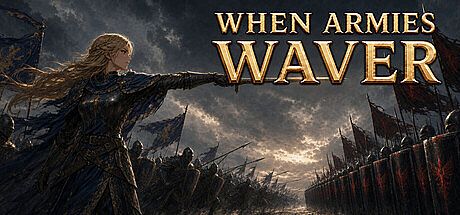


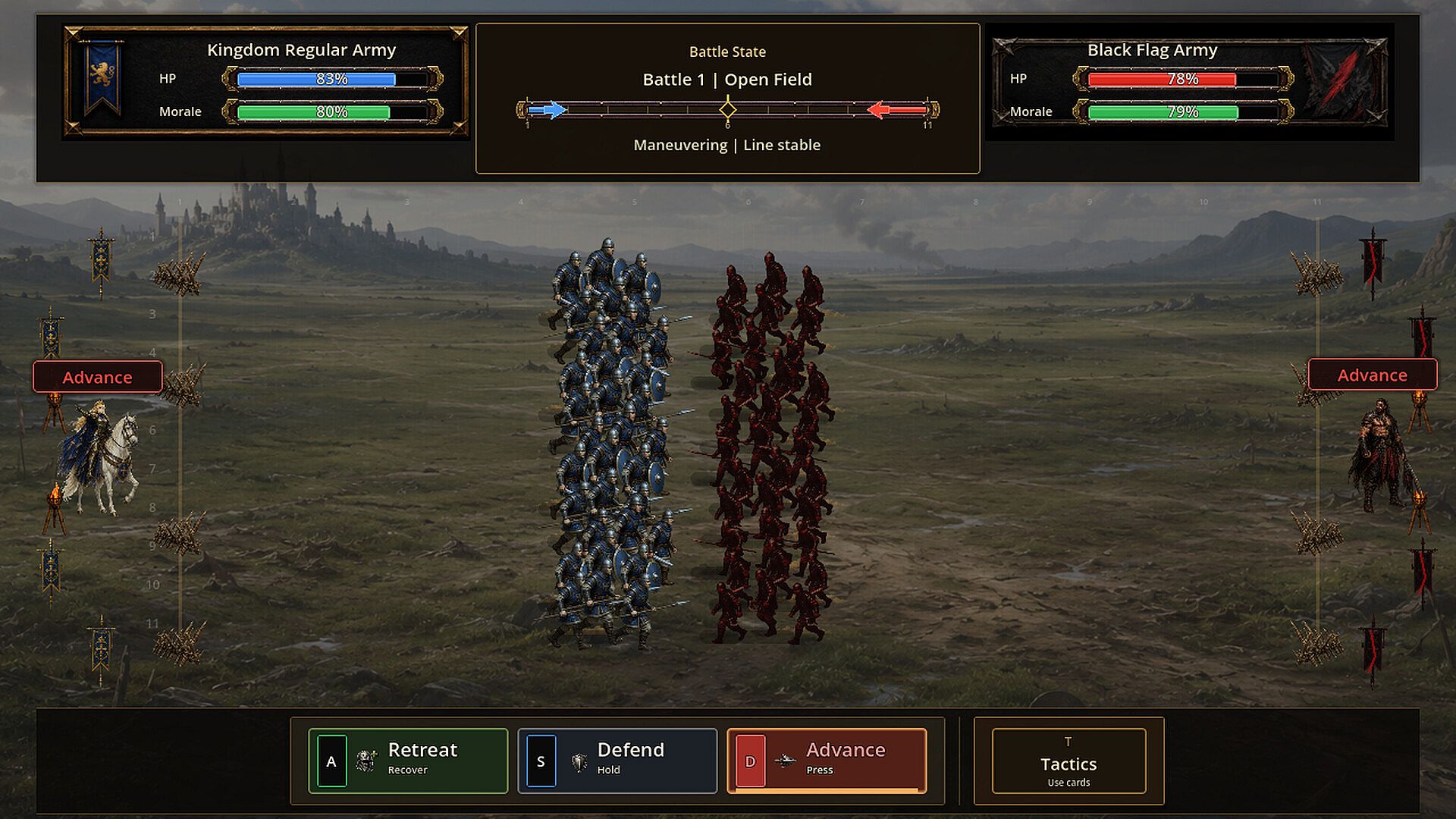
When Armies Waver is a medieval strategy roguelite for PC that places players in command of entire battle lines rather than individual units. The game emphasizes reading battlefield conditions such as morale, pressure, formation integrity, and attrition to issue broad orders that shift the tide of combat. Core systems revolve around managing a formation's stability while facing enemy forces in real-time engagements set in a medieval context.
Gameplay
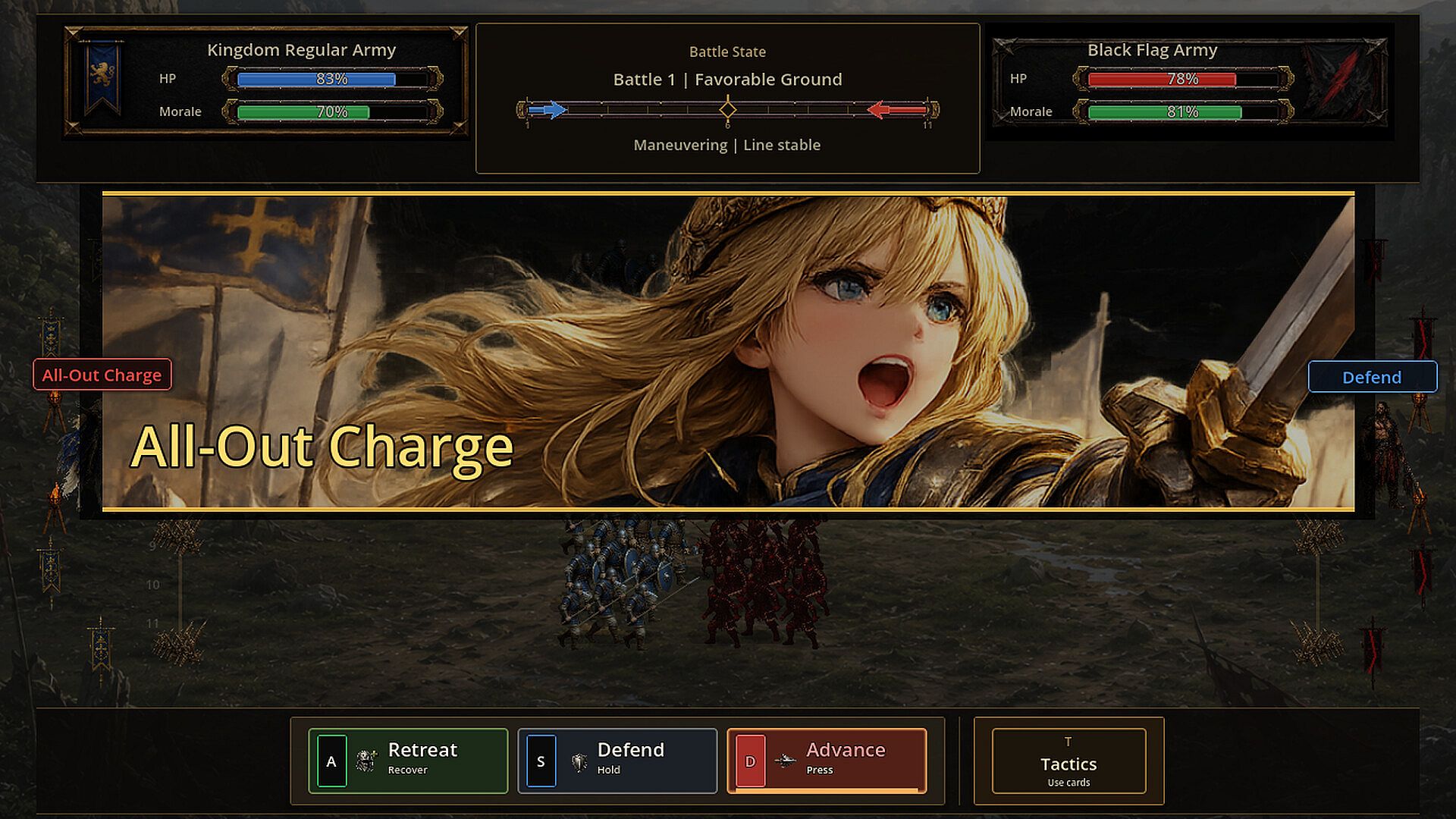
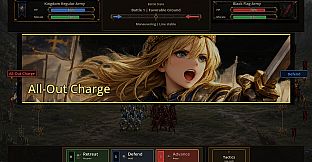
Players direct the army through three primary orders: Advance to press an advantage, Defend to absorb charges, or Retreat to regroup and restore morale. Timing these commands proves critical, as committing to an all-out charge at the right moment can break an opposing line while premature actions risk collapse. The system tracks how formations hold under stress, with attrition reducing available troops over successive fights.
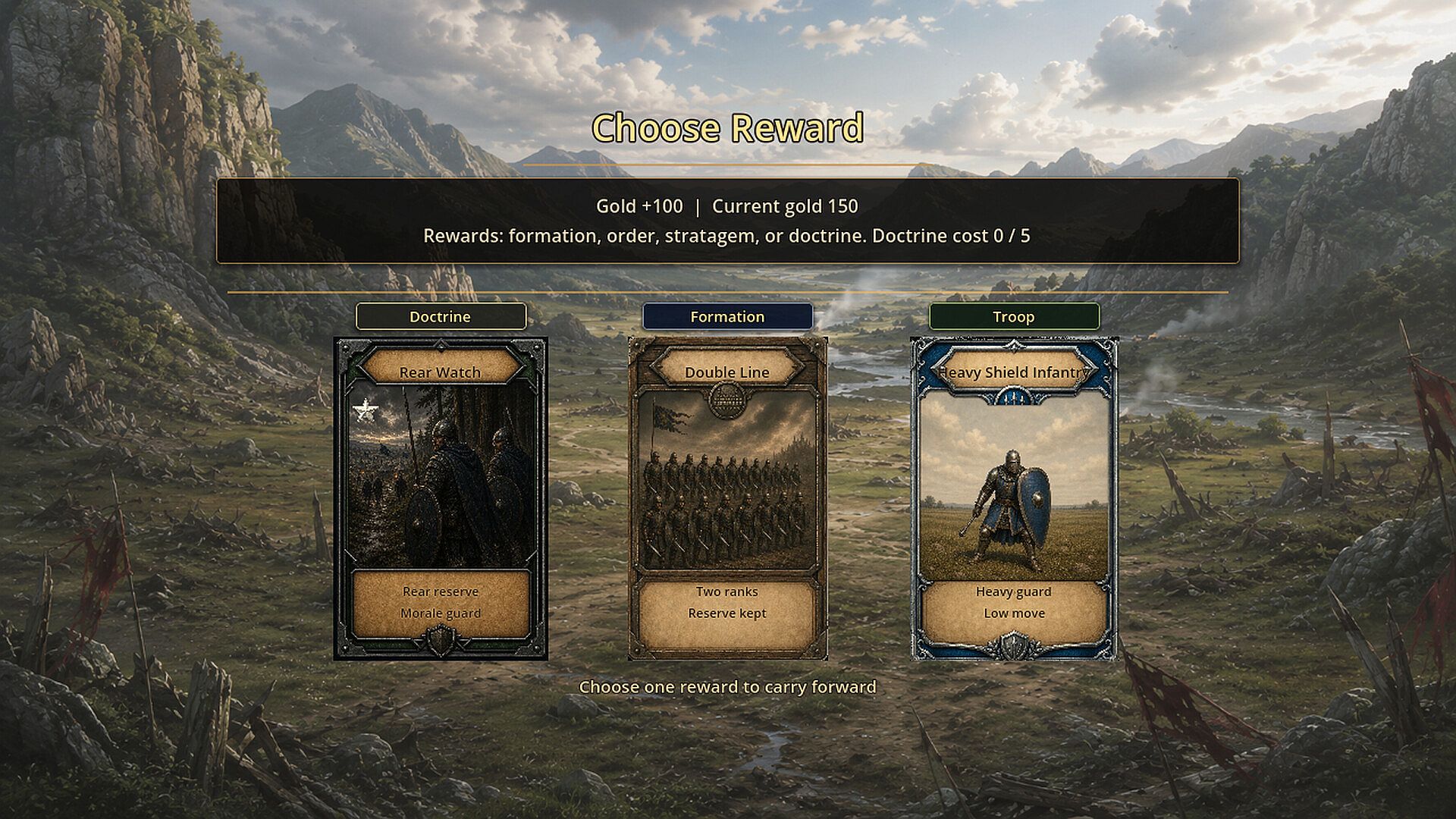
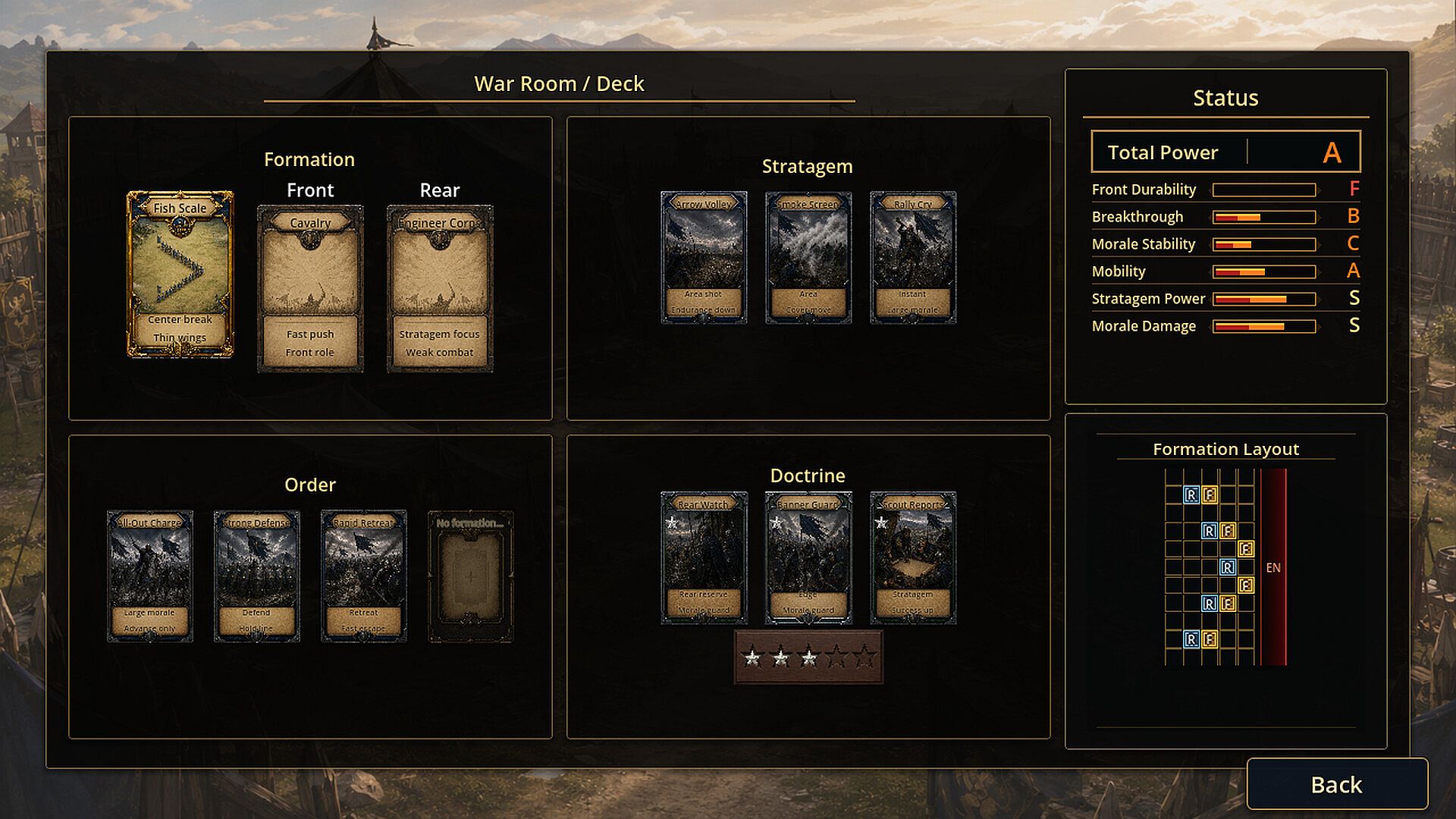
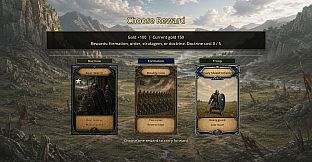
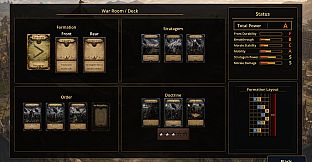
Between victories, reward cards expand options. Formations set the army's base structure and style. Orders provide temporary boosts to specific actions. Stratagems deliver tools like arrow volleys or smoke screens. Doctrines offer ongoing effects when equipped. In the war room, these elements combine with front- and rear-rank troops to create varied army compositions suited to defense, mobility, or breakthrough roles.
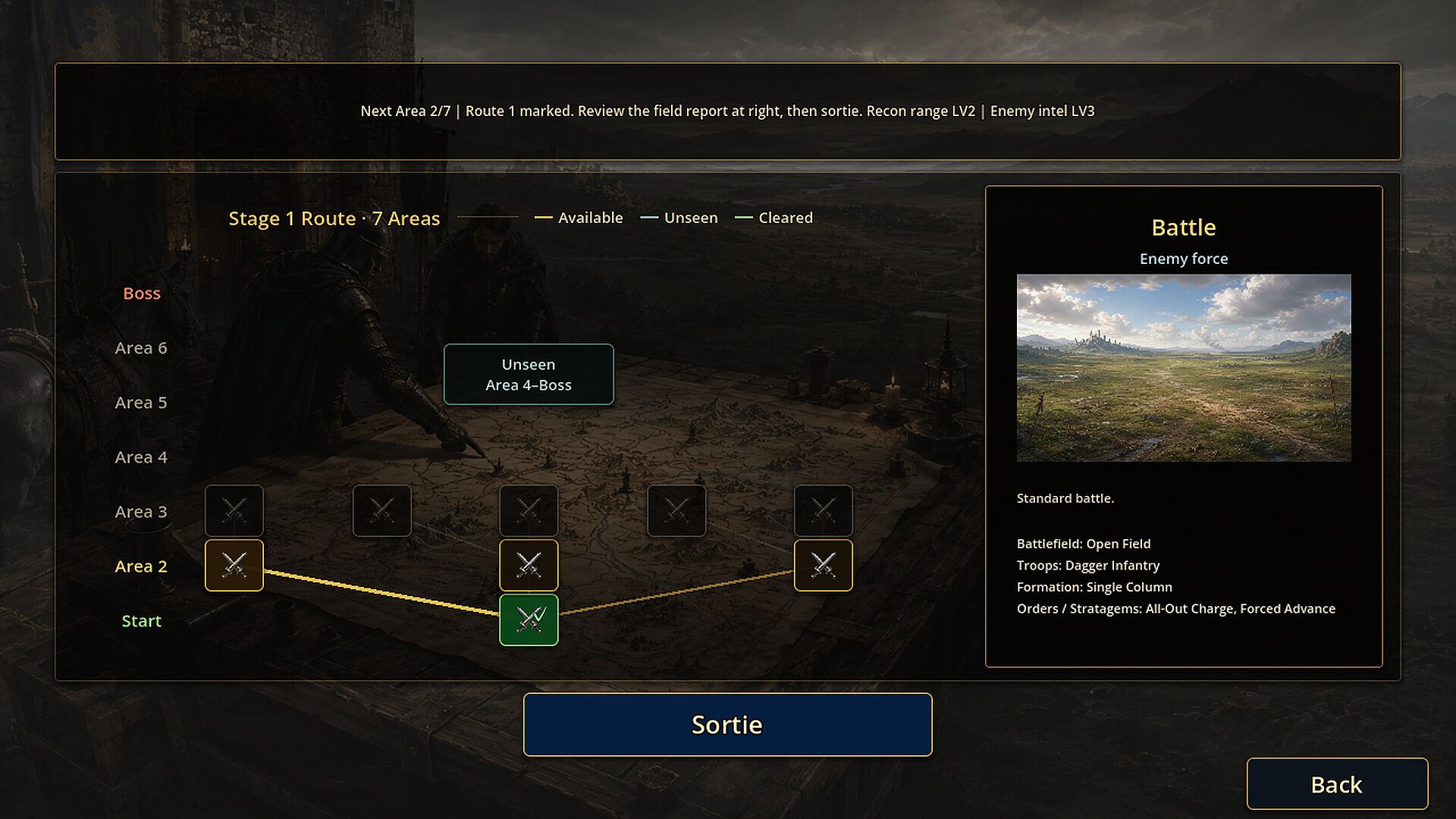
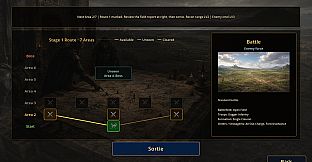
Campaign progression involves selecting connected routes on a map that present standard battles, elite encounters, supply points, events, or the final confrontation. Scouting upgrades reveal more details about upcoming threats, including enemy formations and planned orders. Reserves replace losses, but depletion leaves later fights understrength, forcing careful preservation of forces across the run.
Game Modes
The experience centers on compact roguelite campaigns where each run builds an army through card choices and route decisions. Standard battles test basic tactics, while elite forces demand stronger loadouts. Supply and reward nodes offer opportunities to strengthen the formation or gain new cards. Events introduce variables that can alter momentum before the final enemy line.
Route selection influences risk and reward balance. Shorter paths may limit upgrades but reduce exposure to heavy losses, whereas longer routes provide more card options at the cost of greater attrition. Persistent casualties carry forward, making reserve management a constant factor in sustaining campaign progress.
Army Building and Tactics
Deckbuilding forms the backbone of long-term strategy. Each victory grants three card options that layer onto the current army. Experimentation arises from mixing formations with supporting orders and stratagems to counter different enemy setups. Doctrines add persistent advantages that shape overall approach without needing constant activation.
Positioning and battlefield awareness matter as much as the orders themselves. A formation that starts strong can rout if morale drops too far, while a timely retreat preserves strength for later engagements. This loop encourages repeated campaigns to test alternative army configurations against the same route challenges.
Is It Worth Playing?
When Armies Waver suits players who enjoy single-player strategy experiences focused on army-level decision making and roguelite progression. The emphasis on morale and formation management creates a distinct loop compared to unit-control tactics games. Those interested in experimenting with card combinations and adapting to route-based risks will find depth in the systems described.
Without widespread player data available at this stage, the game's appeal rests on its core mechanics of real-time mass battles and persistent army management. It targets strategy fans comfortable with indie titles that prioritize tactical reading over direct soldier control. Availability remains limited to PC through standard digital storefronts.