


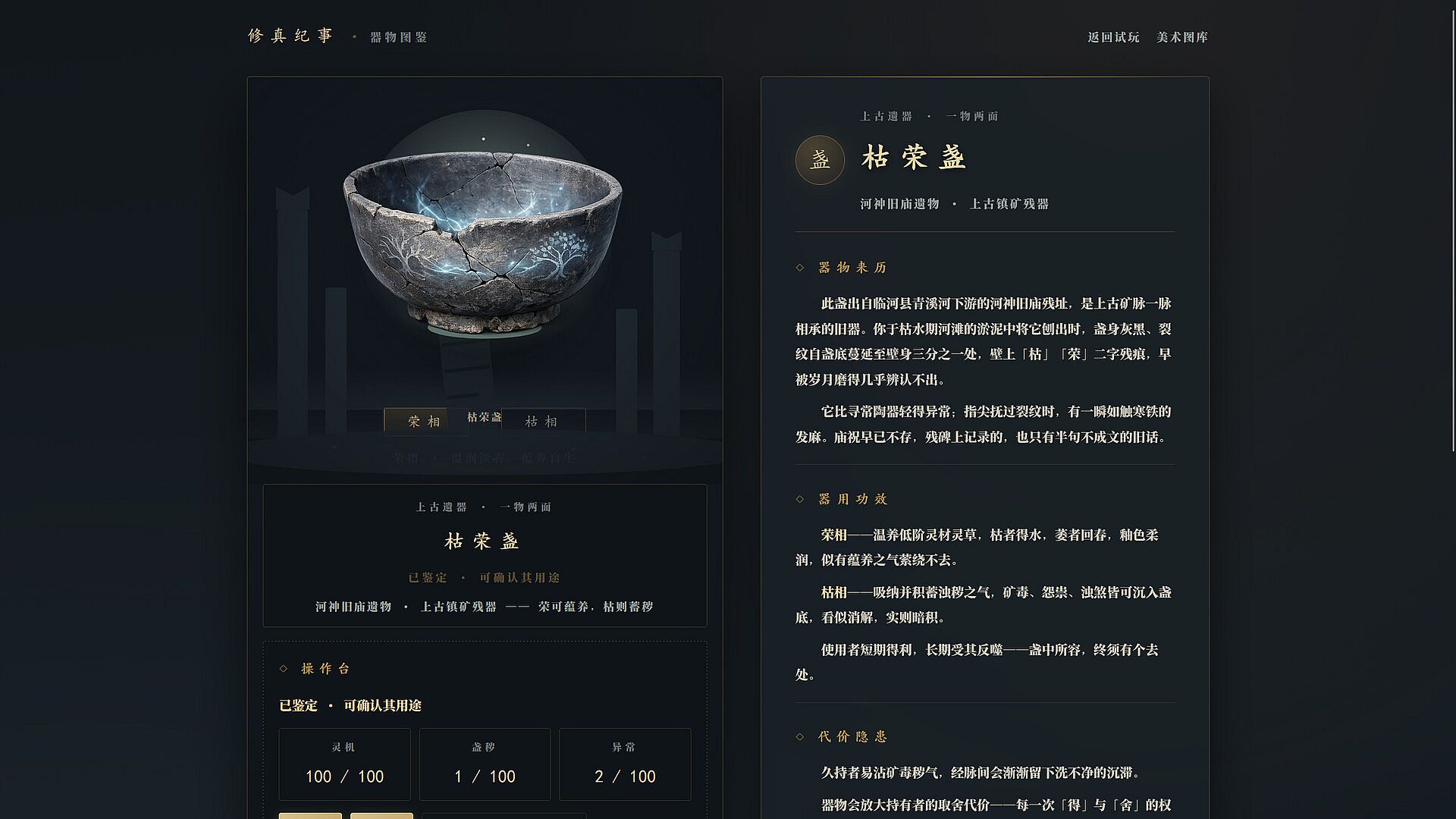
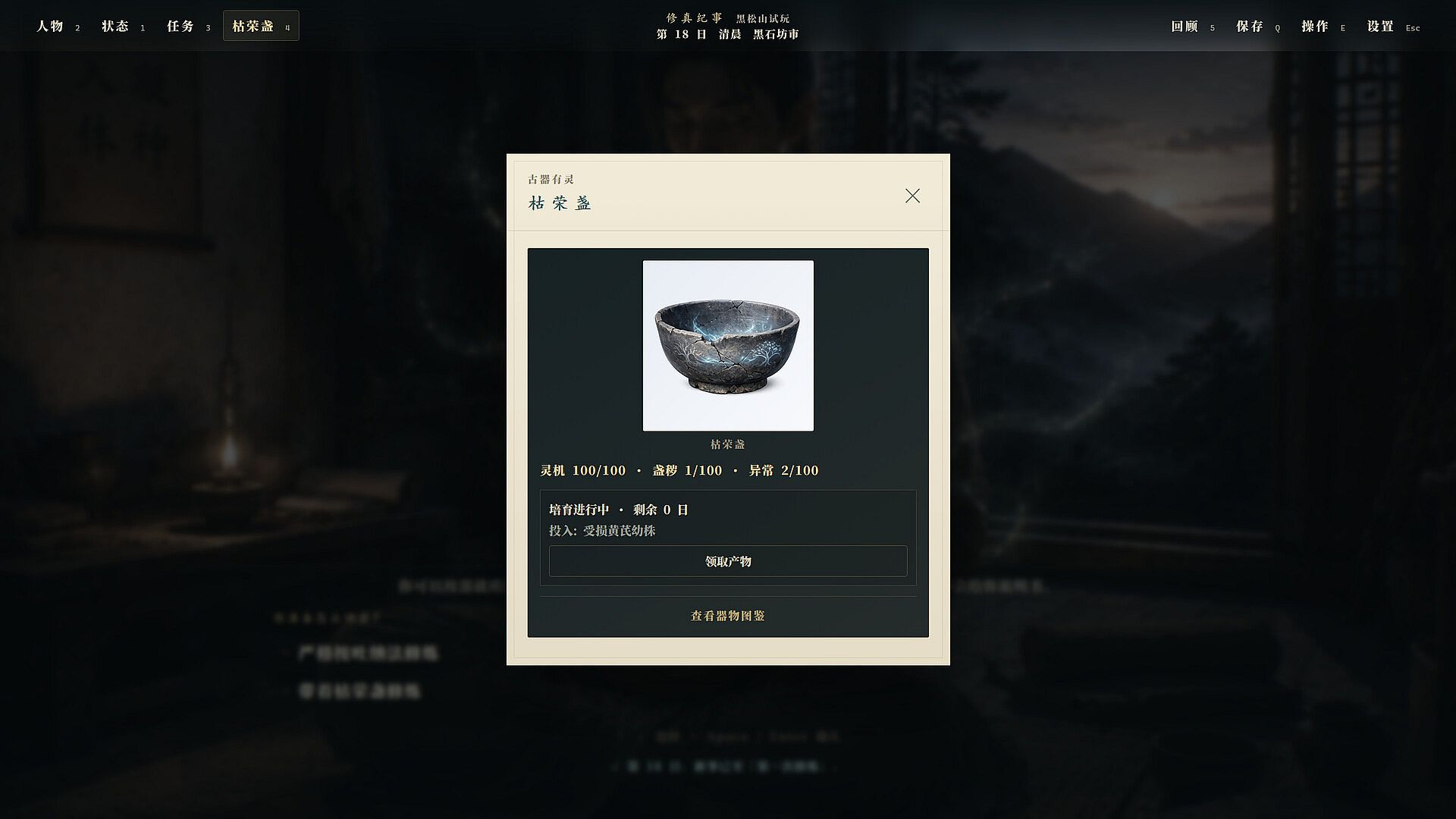
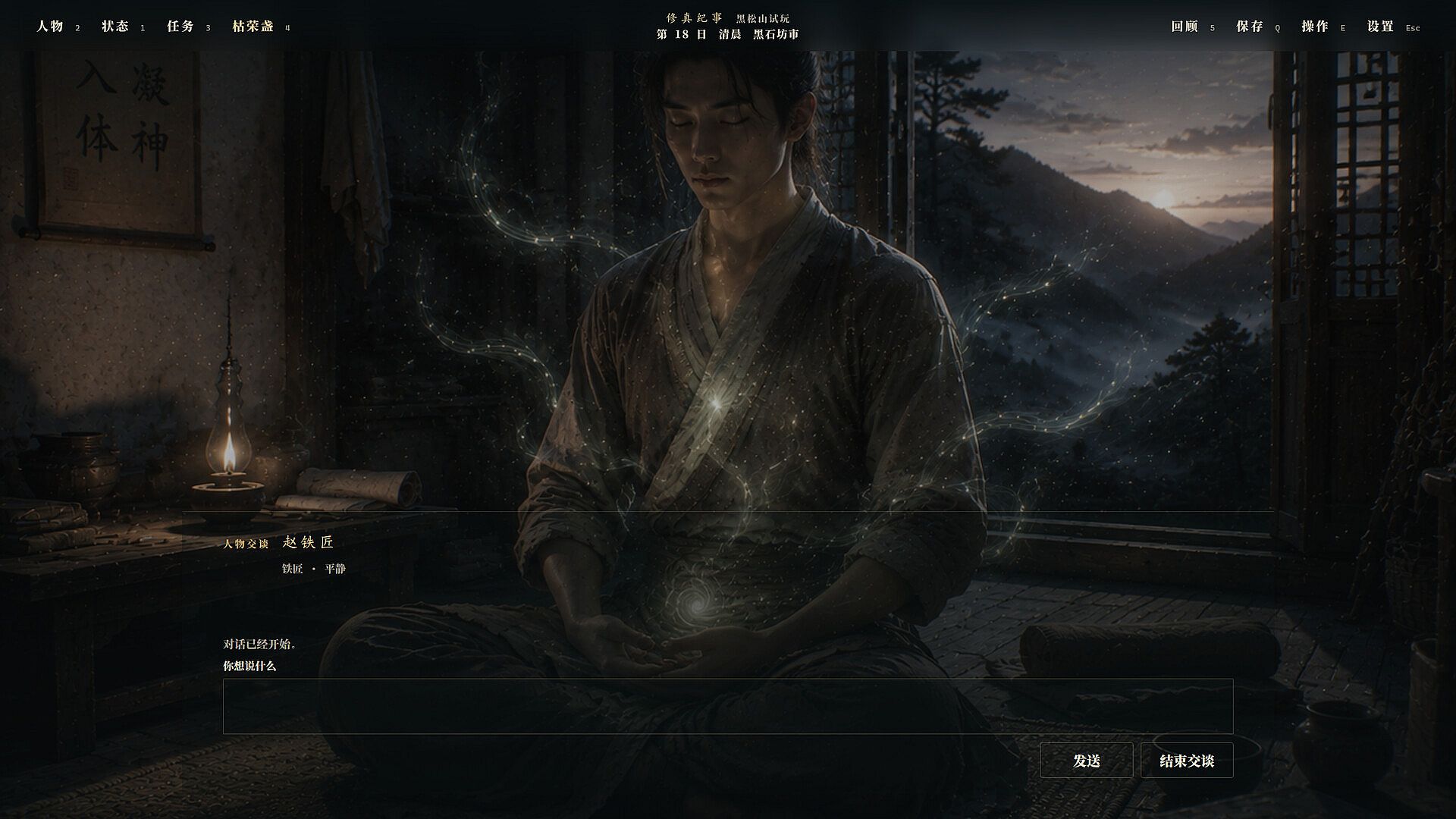
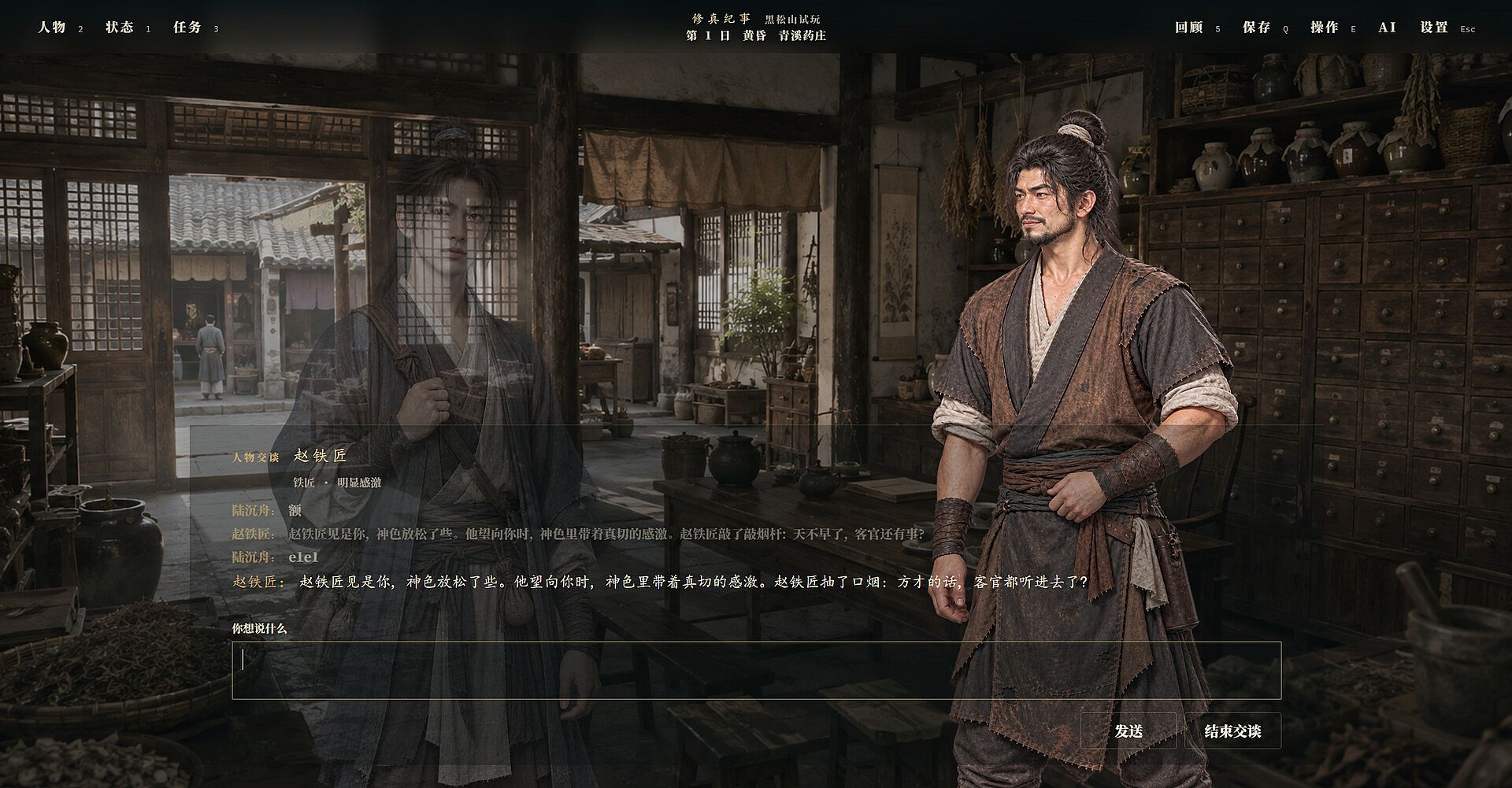






Xiuzhen Chronicles is a single-player cultivation life simulation RPG that places players in the role of Lu Chenzhou, an ordinary young man from Linhe County with no special bloodline or inheritance. The game emphasizes a rule-driven system where cultivation emerges from everyday survival, resource management, and interactions in a living world. Genres include strategy, indie, RPG, casual, simulation, and adventure, all delivered on PC through detailed mechanics that track physical condition, techniques, relationships, and past decisions rather than simple experience gains.
Gameplay
Core gameplay revolves around exploration, cultivation, resource gathering, item use, event handling, and relationship building. Players start with almost nothing and must decide how to respond to problems, whether by joining a sect for structured advancement from menial tasks or pursuing opportunities as a wandering cultivator through markets, commissions, trade, and wilderness exploration. Techniques, resources, identity, and prior experiences shape future encounters and consequences, creating interconnected progression that affects later events and obligations.
The simulation tracks NPC states including emotions, memories, and knowledge. These characters remember past actions such as assistance or betrayal, and they can suffer injuries, shift allegiances, or die. Time advances independently, allowing unresolved issues to evolve and missed opportunities to disappear permanently. Choices made early can influence outcomes much later, turning personal history into part of the broader world narrative.
Game Modes
The experience centers on a persistent single-player simulation without predefined linear paths. Players can commit to sect life for gradual rank advancement or operate independently, shifting between these approaches as circumstances and decisions allow. A sect disciple might eventually depart or act against the group, while a lone cultivator could later form their own organization. Rule systems resolve key results such as item acquisition, character survival, relationship shifts, and cultivation breakthroughs based on current states rather than scripted narrative alone.
This structure supports varied personal histories. One playthrough might emphasize trade and alliances in markets, while another focuses on wilderness survival and technique acquisition. Outcomes remain consistent with the world's ongoing state, so the same initial event can branch differently depending on timing, resources, and prior choices.
World and Systems
The setting operates as a dynamic environment where NPCs maintain independent lives complete with their own relationships and experiences. Events unfold regardless of player presence, and past interactions carry forward through memory and consequence. Cultivation extends beyond numerical progression to include physical condition, social standing, and accumulated history that influences available options and risks.
Rule-based resolution ensures narrative descriptions align with actual game state changes. This prevents outcomes from occurring solely through text and instead ties them to verifiable factors like available resources or existing relationships. The result is a world that accumulates player-driven history alongside its own independent developments.
Is It Worth Playing?
Xiuzhen Chronicles targets players who enjoy detailed life simulation combined with RPG elements and strategic decision-making in a cultivation context. Its focus on persistent consequences, NPC autonomy, and rule-driven outcomes suits those interested in long-term personal stories rather than quick power fantasies or combat-focused loops. The game remains in development with a release date listed as coming soon, so current details derive from the official description and system requirements that confirm single-player support on Windows with modest hardware needs.
Those drawn to simulation games that emphasize relationships, time-sensitive events, and flexible paths between sect affiliation and independent exploration will find the core loop aligned with these preferences. The absence of early reviews means prospective players should monitor updates for confirmation of how the systems perform in practice once available.