Drone flying skills develop through practice, starting with a simulator that uses an actual RC controller rather than a gamepad. Experienced FPV pilots often emphasize this point, noting that a simulator without an RC controller falls short because the abilities gained do not fully transfer to a real drone. The stick layout differs, as do the springs and movement ranges. A gamepad from Xbox or PlayStation works for basic trials but not for building muscle memory, making a proper RC transmitter the essential first step after acquiring a simulator.
There are three main factors, all linked to accuracy. First, the resolution of the sticks: Hall Effect gimbals or mechanical gimbals in an RC controller provide much greater precision than a gamepad joystick designed for FPS games. Second, the springs: an RC controller has springs on only three axes (yaw, pitch, roll), leaving throttle without one, just like on a real drone, while a gamepad includes springs on all axes, including throttle. Third, the protocol: an RC controller connects via USB joystick mode or directly through ELRS/CRSF with a dongle, using the same system employed in actual flights.
The outcome is clear: training with a gamepad creates muscle memory for a setup that does not exist in real flying, leading to wasted time and delays in progress by months.
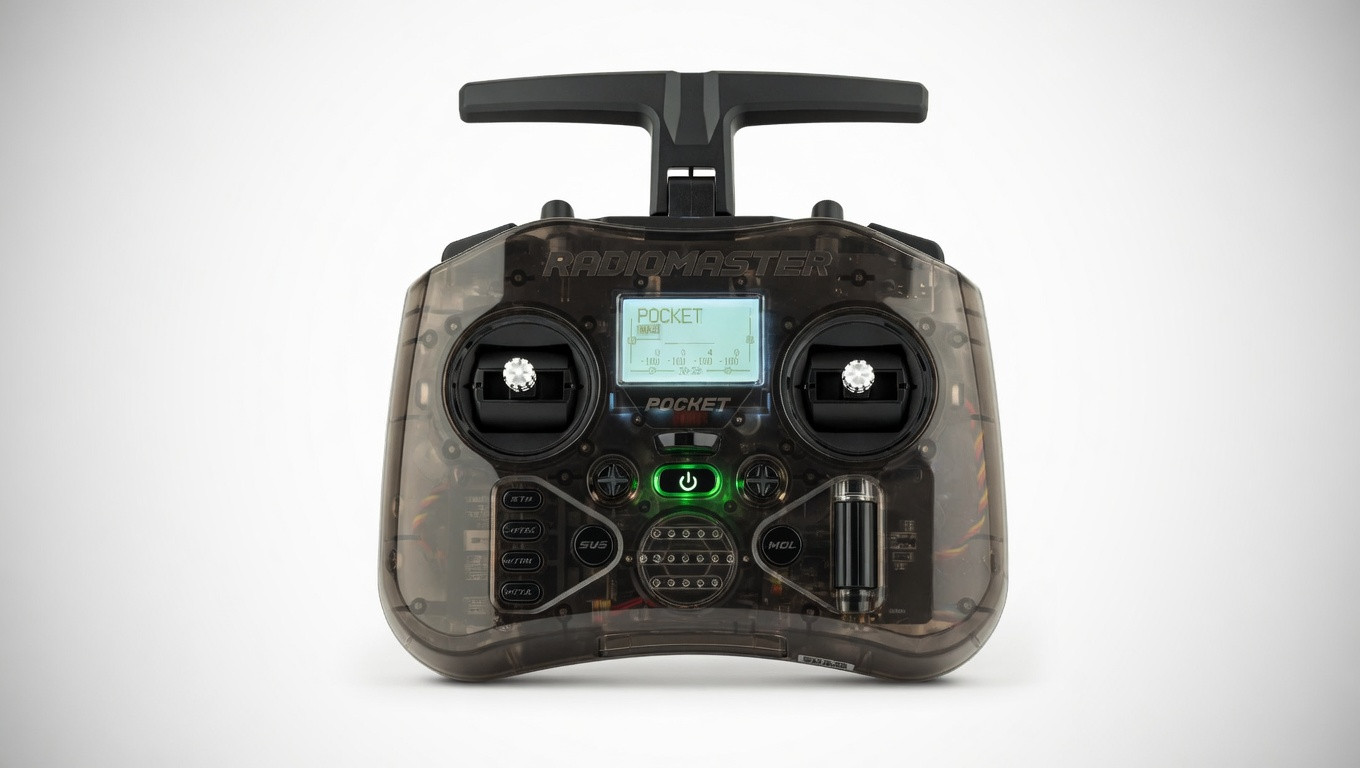
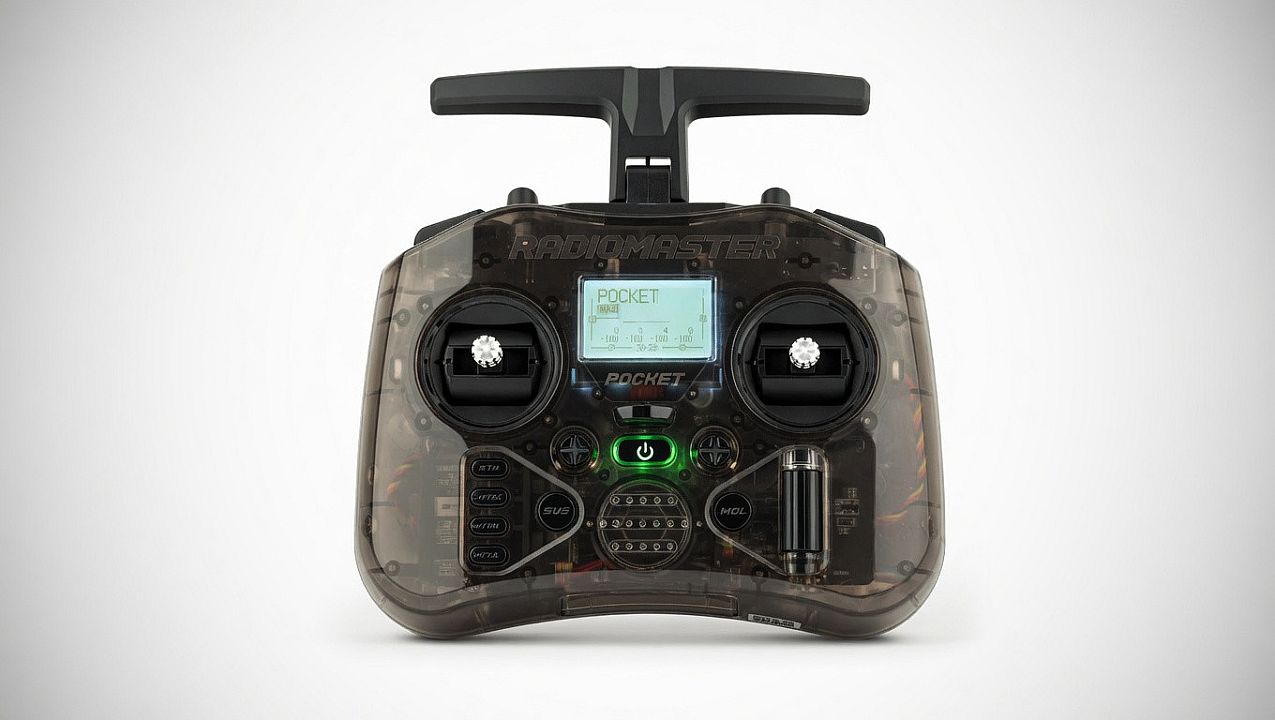
The most affordable viable choice in 2026. The Radiomaster Pocket is a compact, lightweight controller featuring Hall Effect gimbals and ELRS support, suitable for use at a desk with a PC or as a full transmitter for a drone in the field. Its price is around 80 USD / 75 EUR / 65 GBP / 320 PLN.
Benefits include its compact size, which fits easily in a backpack next to a laptop. Drawbacks involve fewer switches compared to full-size models, something pilots setting up advanced flight modes may notice.
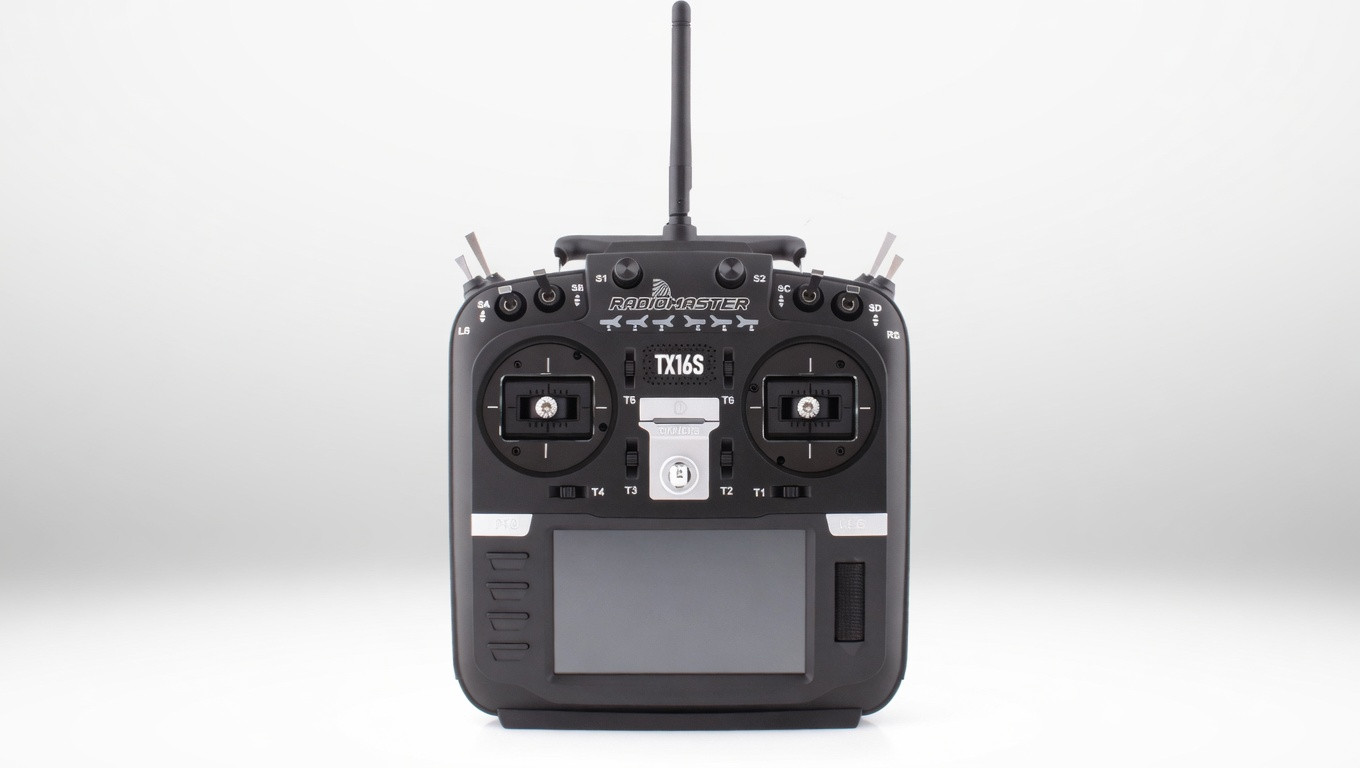
The industry benchmark for full-size transmitters. The TX16S offers large Hall Effect gimbals, a color screen, interchangeable radio modules, and built-in support for OpenTX and EdgeTX. Its price is approximately 200 USD / 185 EUR / 165 GBP / 800 PLN.
Benefits include its comprehensive features, providing everything needed with room for long-term use. Drawbacks are its size and cost, which might feel excessive for initial training sessions.
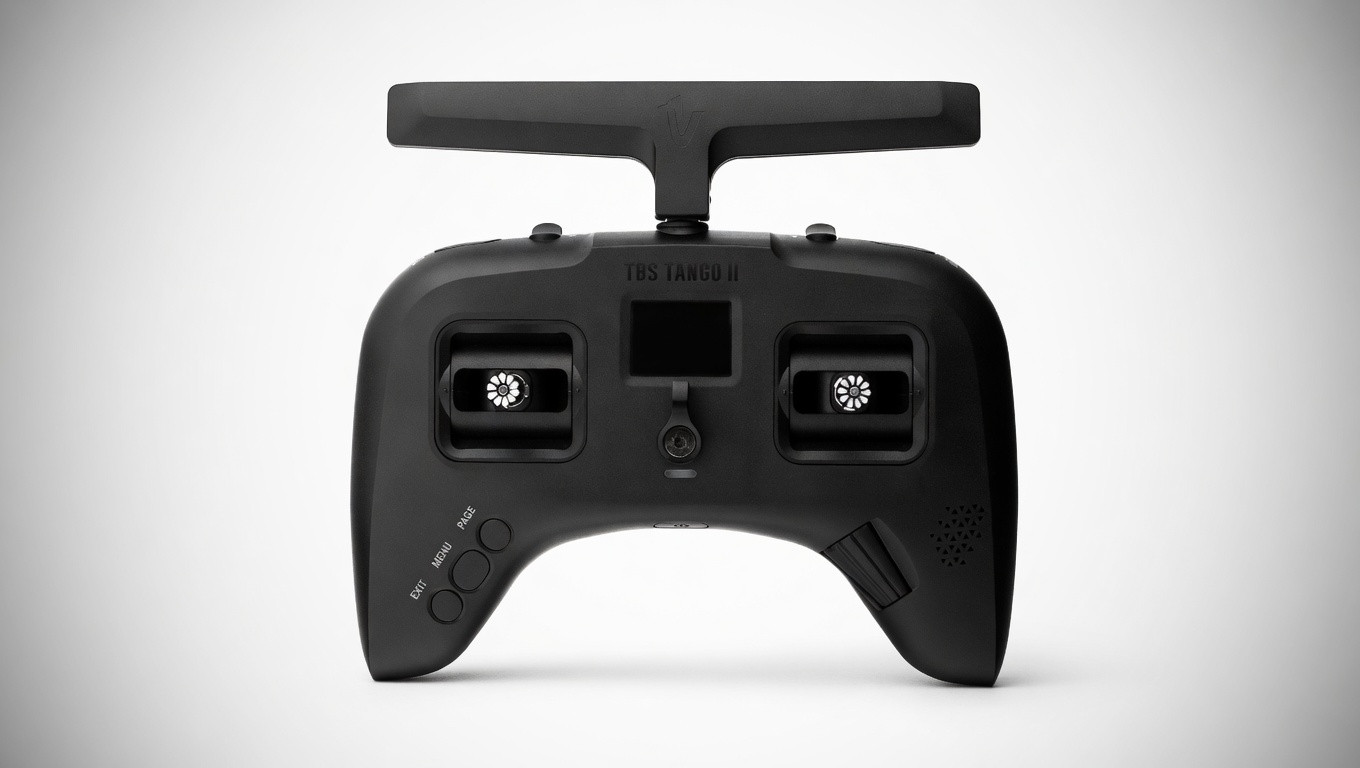
A classic option from the Team BlackSheep ecosystem. The Tango 2 includes a built-in Crossfire module, Hall Effect gimbals, and a compact design that allows it to fit in a backpack with other gear. Its price is about 150 USD / 140 EUR / 125 GBP / 600 PLN.
Benefits include its integration with Crossfire and lightweight build. Drawbacks are reduced compatibility with modules from other brands than with the TX16S, which can limit pilots experimenting with various radio protocols.
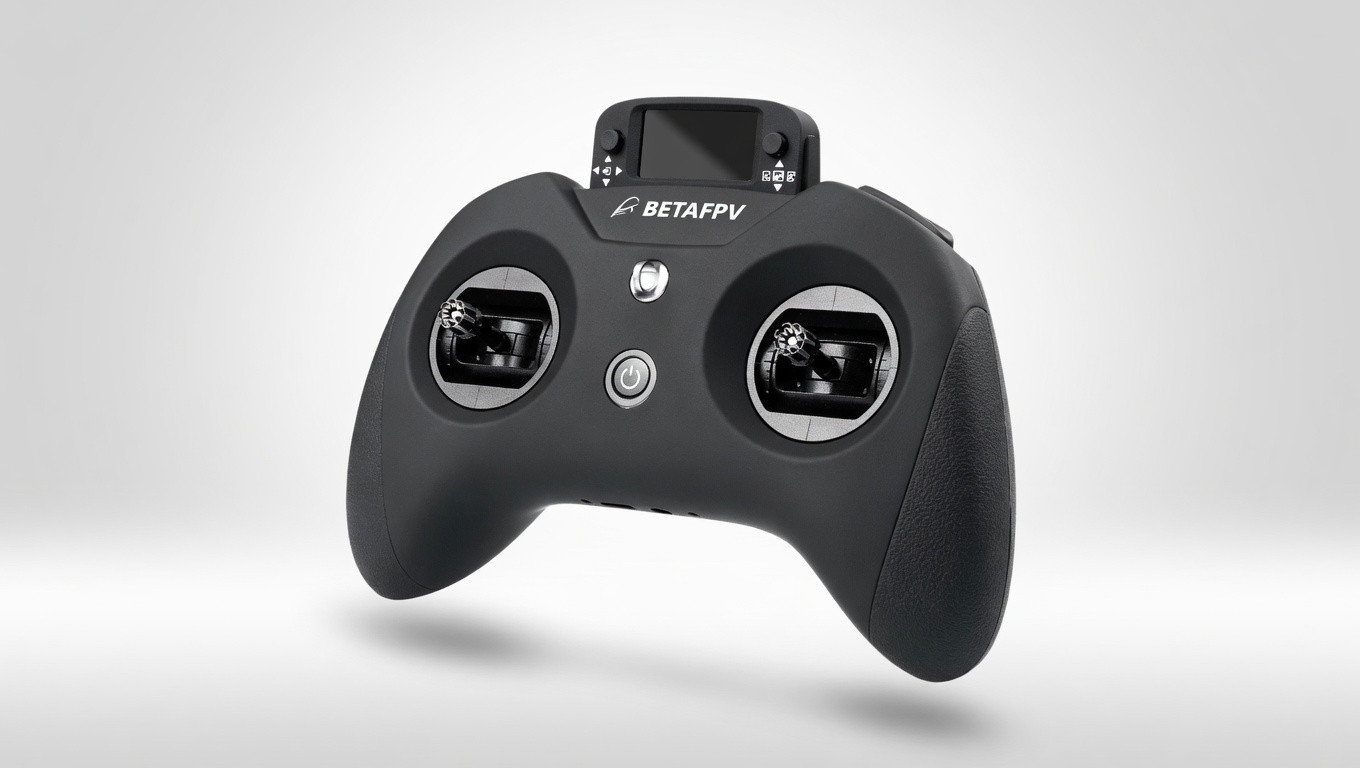
An entry-level device: The LiteRadio from BetaFPV is mainly intended for simulators, not for actual drones. Prices begin at around 50 USD / 45 EUR / 40 GBP / 200 PLN, making it the cheapest practical option for the first 50 hours of training.
Benefits include the low entry cost, allowing users to determine if FPV suits them without spending large amounts. Drawbacks are less robust gimbals than Hall Effect in pricier models and lower durability over time. It works for the initial hours of simulator use, but an upgrade is advisable for serious training.
The easiest method is USB joystick mode. Most RC controllers in 2026 support it directly: once connected via USB-C or USB-mini to a PC, the transmitter appears as a standard gamepad in Windows, and the simulator recognizes it automatically. Mapping the sticks to aileron, elevator, rudder, and throttle channels occurs once in the game's controller settings.
Another approach, closer to a real setup, involves an ELRS or Crossfire dongle linked to the PC. The controller pairs wirelessly with the dongle, similar to how it connects to a receiver on a drone. This requires extra equipment-an ELRS dongle costs about 30 USD-but it offers lower latency and the same binding process used in the field.
Firmware such as OpenTX or EdgeTX, available on Radiomaster and some other models, enables customization of stick profiles and throttle curves to personal tastes. Spending an hour reviewing EdgeTX documentation can prevent months of frustration from unexpected transmitter behavior.
After setting up the controller, any FPV simulator can be run. Four options that have proven effective:
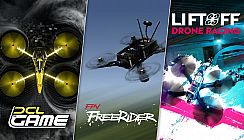
Liftoff is the most commonly suggested by real-world pilots as the initial simulator following an RC controller purchase.
DCL - The Game, from Climax Studios with publisher THQ Nordic, features official tracks from the Drone Champions League and strong visual effects.
TRYP FPV from TRYP FPV LLC focuses on drone physics and a stick feel that mirrors actual flight.
Uncrashed from CHIROPTERA Studio serves as the top pick for cinematic flying and proximity shots in videos.
The first session should cover a tutorial, throttle hover, and basics of acro mode. The initial 10 hours typically involve many crashes, where patience plays a key role. After 30-50 hours, muscle memory emerges that effectively carries over to a real drone in the field.
Three brief scenarios:
RC controllers do not see discounts as often as digital games, but around Black Friday and Chinese New Year, reductions of 15-25 percent occur. At those times, models like Radiomaster Pocket or TX16S, which are among the most frequently discounted in their category, become available.