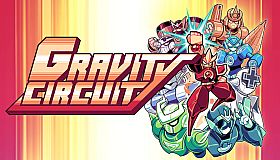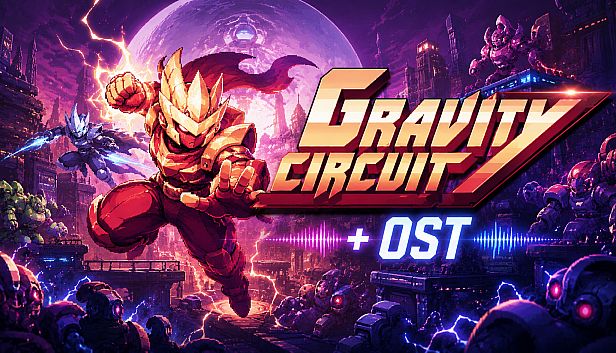





Gravity Circuit is a 2D action platformer developed as an indie title for PC. Players control Kai, a robot operative who uses melee attacks and a grappling hook to navigate stages and defeat enemies in a futuristic setting populated by sentient machines. The game emphasizes responsive controls, combo-based combat, and platforming challenges across a linear campaign.
Gameplay
The core loop revolves around traversing side-scrolling levels filled with platforms, hazards, and groups of robotic foes. Kai relies on punches, kicks, and dive attacks to build combos that send enemies flying. A grappling hook serves dual purposes: it allows swinging across gaps or latching onto ceilings for mobility, and it pulls stunned enemies close for throws that deal heavy damage on impact with other targets. This system encourages aggressive play, where players chain grabs, throws, and strikes to clear rooms efficiently.
Progression comes from rescuing scattered robots within each stage. These rescues yield tokens spent at a central hub on skill upgrades. Players equip up to three abilities at once, such as enhanced mobility options or combat modifiers, which alter how stages and bosses are approached. Levels incorporate unique mechanics like moving platforms or environmental interactions that test timing and positioning. Boss encounters demand pattern recognition and precise dodging, with higher difficulties reducing the margin for error to just a few hits before defeat.
Controls feel tight and weighty, making every punch land with impact and every grapple feel deliberate. The campaign spans twelve stages total, beginning with eight selectable missions followed by four concluding ones after the initial set is cleared. Secrets hidden throughout encourage exploration without derailing the main path.
Game Modes
The primary experience is the single-player campaign, which guides players through the story of Kai confronting threats in a robot world. After completing the main story, additional options unlock for replay value. New Game+ carries over acquired upgrades, allowing faster progression through familiar stages with retained power.
Circuit mode alters resource management by converting energy drops into health, which restricts frequent use of special burst moves and shifts focus toward careful conservation. Speedrun mode removes cutscenes and dialogue interruptions to support timed runs, with dedicated tracking for personal bests. These post-game features build on the base campaign without introducing entirely new content types.
Difficulty settings range from easier options that provide more forgiveness to hard mode, where enemies hit harder and require stricter mastery of mechanics. The hub area remains accessible between stages for upgrades and preparation regardless of mode selected.
Visuals and Presentation
Graphics adopt a retro-futuristic pixel style that evokes classic console platformers while incorporating modern polish in animations and effects. Character designs stand out with distinct robotic aesthetics, and stages feature varied environments that highlight the grappling and combat systems. Frame rate remains stable during intense sequences on PC hardware.
The included original soundtrack features energetic, chiptune-inspired tracks that complement the fast-paced action. Sound design emphasizes crisp impacts from melee strikes and satisfying audio cues for successful grapples and combos.
Is It Worth Playing?
Gravity Circuit delivers a focused single-player experience centered on satisfying melee platforming and challenging boss fights. Its short main campaign length suits players seeking a complete story without excessive time commitment, while post-game modes extend replayability for those interested in mastery or speedrunning. Reception highlights the responsive controls, level variety, and upgrade system as strengths that reward experimentation with equipped skills.
The title appeals most to fans of 2D action platformers who enjoy precise combat and exploration within linear stages. Upgrades and difficulty options allow customization of challenge level, making it accessible yet demanding on higher settings. With overwhelmingly positive player feedback on controls and atmosphere, it stands as a strong choice for those prioritizing tight gameplay loops over open-world elements or multiplayer features. The bundled soundtrack enhances the overall package for repeated play sessions.