




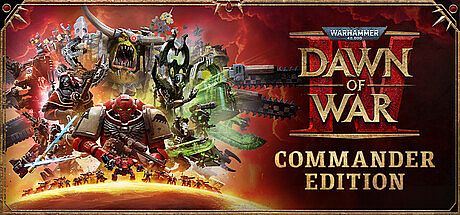



Warhammer 40,000: Dawn of War IV Commander Edition is a real-time strategy game set in the Warhammer 40,000 universe. Players command armies across large-scale battles on the planet Kronus, managing resources, constructing bases, and directing units in direct confrontations. The title returns the series to its emphasis on base building and mass combat while introducing refined animation systems that highlight individual unit interactions.
Gameplay
The core loop centers on gathering resources, expanding territory, and deploying forces from four distinct factions. Each faction operates with unique unit rosters and abilities that shape how battles unfold. Blood Ravens focus on versatile infantry and vehicle support, while Adeptus Mechanicus emphasize mechanical constructs and technological superiority. Orks rely on overwhelming numbers and aggressive melee rushes, and Necrons bring durable constructs with resurrection mechanics.
Combat features an expanded synchronization system where units engage in paired animations during melee exchanges. This approach replaces generic attack loops with specific counters and reactions based on unit types and power levels. The result encourages players to position forces carefully to trigger advantageous matchups rather than relying solely on numerical superiority or ranged fire.
Base construction follows traditional RTS patterns but incorporates faction-specific structures that alter defensive and offensive options. Players balance economy, production queues, and frontline pressure while adapting to terrain and enemy compositions. Co-operative play supports shared campaign progression for two players.
Game Modes
The campaign consists of more than seventy missions divided among the four factions. Each faction follows its own narrative thread that contributes to an overarching story set two centuries after earlier events on Kronus. Missions vary in objectives, from direct assaults to defensive stands and territory control.
Skirmish mode allows custom matches against AI opponents on multiple maps with adjustable rules for quick practice or experimentation. Last Stand provides a cooperative survival experience where players defend positions against escalating waves, selecting commanders and upgrading forces between rounds.
Competitive multiplayer supports one-versus-one, two-versus-two, and three-versus-three formats. Matches emphasize the same base-building and unit synchronization mechanics found in other modes. Crusade mode arrives after launch as a persistent campaign layer where strike forces retain progress across a planetary map of territories, accumulating bonuses and managing attrition over repeated engagements.
Factions and Mechanics
Adeptus Mechanicus makes its series debut with a roster centered on cybernetic troops and heavy walkers. Their playstyle rewards precise timing of ability activations and layered defenses. Blood Ravens retain classic Space Marine traits with strong individual soldiers and rapid response options.
Orks emphasize quantity and momentum, using cheap units to swarm objectives while larger war machines provide heavy support. Necrons focus on endurance, regenerating forces and deploying ancient technology to outlast opponents. All factions share core RTS systems yet diverge in resource management and combat pacing.
The synchronization combat director governs melee outcomes across the battlefield. Units of comparable strength enter extended animation sequences that resolve based on relative power and specific matchups, adding visual clarity to engagements without altering underlying statistics.
Is It Worth Playing?
The Commander Edition bundles the base game with three days of early access ahead of the September 17, 2026 release, a Blood Ravens story prologue, the Aftermath campaign expansion, an additional faction, and the digital soundtrack. These extras provide immediate access to expanded single-player content and future Year One updates.
Announced features target fans of classic real-time strategy who value large battles, persistent progression options, and faction asymmetry. The return of Last Stand and the addition of Crusade mode extend replayability beyond the campaign. Multiplayer balance will determine long-term competitive appeal once the game launches.
Players seeking a modern take on Warhammer 40,000 real-time strategy with refined combat presentation and multiple campaign paths will find the announced scope substantial. Those preferring faster-paced or hero-focused experiences may prefer other entries in the broader genre. The title remains in pre-release, so final assessment depends on post-launch performance and community feedback.
