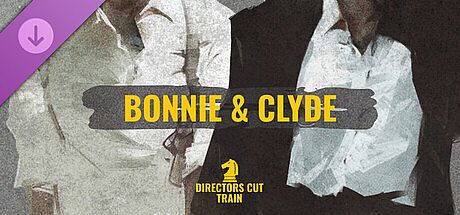


Directors Cut: Train - Bonnie & Clyde is an indie RPG simulation adventure title available on PC. It serves as a standalone story campaign DLC set in the same universe as the base game Directors Cut: Train. Players follow Kira and Mark, two former employees of the Glassy Sky corporation, as they pursue a personal heist after losing their jobs, savings, and prospects seven months earlier. The narrative unfolds across four acts centered on a single night of action and confrontation.
Gameplay
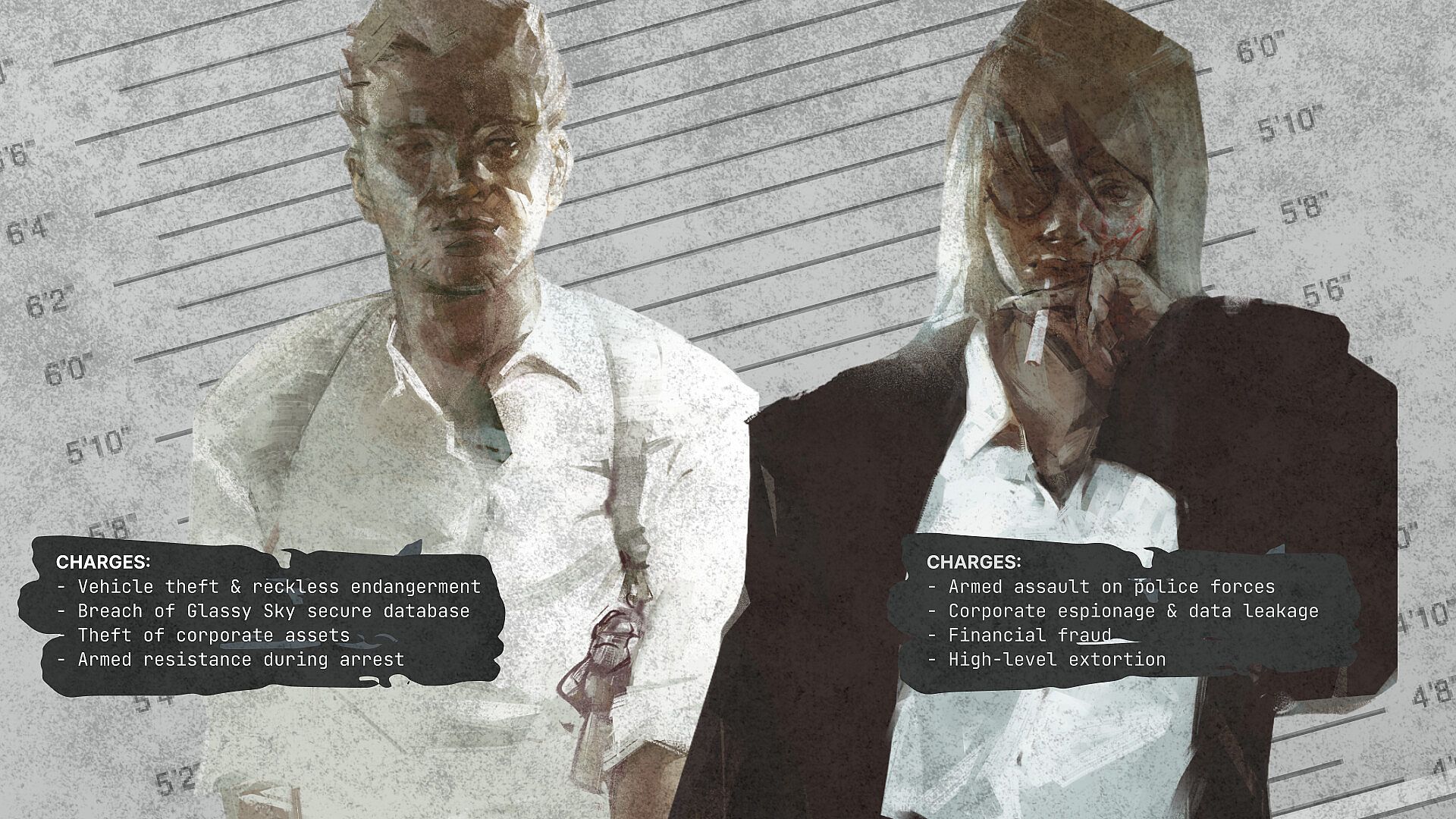
The core loop combines driving sequences, on-foot combat, and objective-based progression through urban environments. Players control Mark while Bonnie operates as an active partner who provides cover fire, makes independent decisions, and contributes to combat encounters. Movement happens either behind the wheel during chases or on foot during building infiltrations, with gunfights occurring in real time against security personnel and specialized troopers. Objectives surface dynamically as events progress, guiding the player toward key targets without revealing exact outcomes in advance. Certain scenes shift into introspective sequences that represent the characters' mental states through altered visuals and quieter pacing. The experience emphasizes a painterly art style with character portraits and illustrative story elements that distinguish key moments.
Exploration covers multiple distinct areas including a gas station, multi-level office spaces, stairwells, forest roads, and an airport setting at dawn. Encounters feature escalating tension through alarms, time-limited sequences, and pursuit mechanics that require quick adaptation between evasion and direct confrontation. The partner system integrates Bonnie into the action rather than treating her as a passive element, allowing her choices to influence how situations resolve during the heist.
Game Modes
The title functions exclusively as a single-player narrative campaign. No additional modes such as multiplayer, endless play, or separate challenge variants appear in the available content. The entire experience consists of the four-act heist story that runs approximately one hour from start to finish. Progression follows a linear structure with branching possibilities tied to player decisions and partner actions, but the focus remains on completing the central story arc. The DLC requires ownership of the base game Directors Cut: Train and does not depend on completing the original campaign beforehand.
Story and Themes
The campaign explores the relationship between Kira and Mark as they race toward a shared objective that each interprets differently. One character maintains an outwardly bright demeanor while the other focuses on immediate survival and protection. Dialogue and events highlight the gap between their perspectives, building toward a conclusion that leaves open questions about their future once the heist concludes. The narrative incorporates mature elements including violence, smoking references, and depictions related to mental health struggles and self-harm, presented within the context of the characters' experiences.
Visual storytelling relies on the established style from the base game, using brushstroke aesthetics, portraits, and illustrations to convey key emotional beats. Surreal interludes pull the action into internal visions that reflect the protagonists' psychological states amid the unfolding events.
Is It Worth Playing?
This short-form narrative experience suits players interested in focused story-driven content with integrated action and partner mechanics. The campaign delivers a complete heist arc in roughly one hour, making it accessible for those seeking a concise addition to the base game without requiring extensive time investment. Early player feedback on the overall title has been limited but uniformly positive among the small number of reviews available. The DLC stands as free additional content that expands the universe through new locations, chases, and character interactions. Those who enjoy atmospheric indie adventures with simulation and RPG elements in a single-player format will find the most direct appeal here, particularly if they value partner AI that actively participates in gameplay rather than serving only as background support. The mature themes and visual approach further narrow the audience to those comfortable with intense psychological and violent sequences.