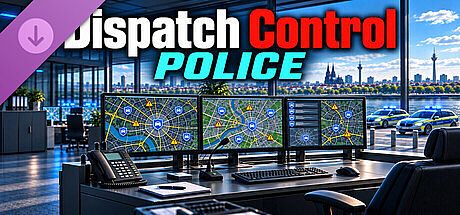



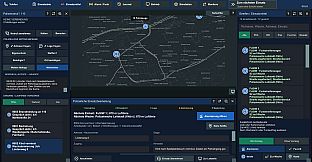
DispatchControl Police is a strategy and simulation game that places players in the role of a police dispatcher managing emergency calls and unit deployments. It requires the base game Dispatch Control and focuses on realistic decision making in a police context, with support for single player shifts or online co-op sessions.
Gameplay
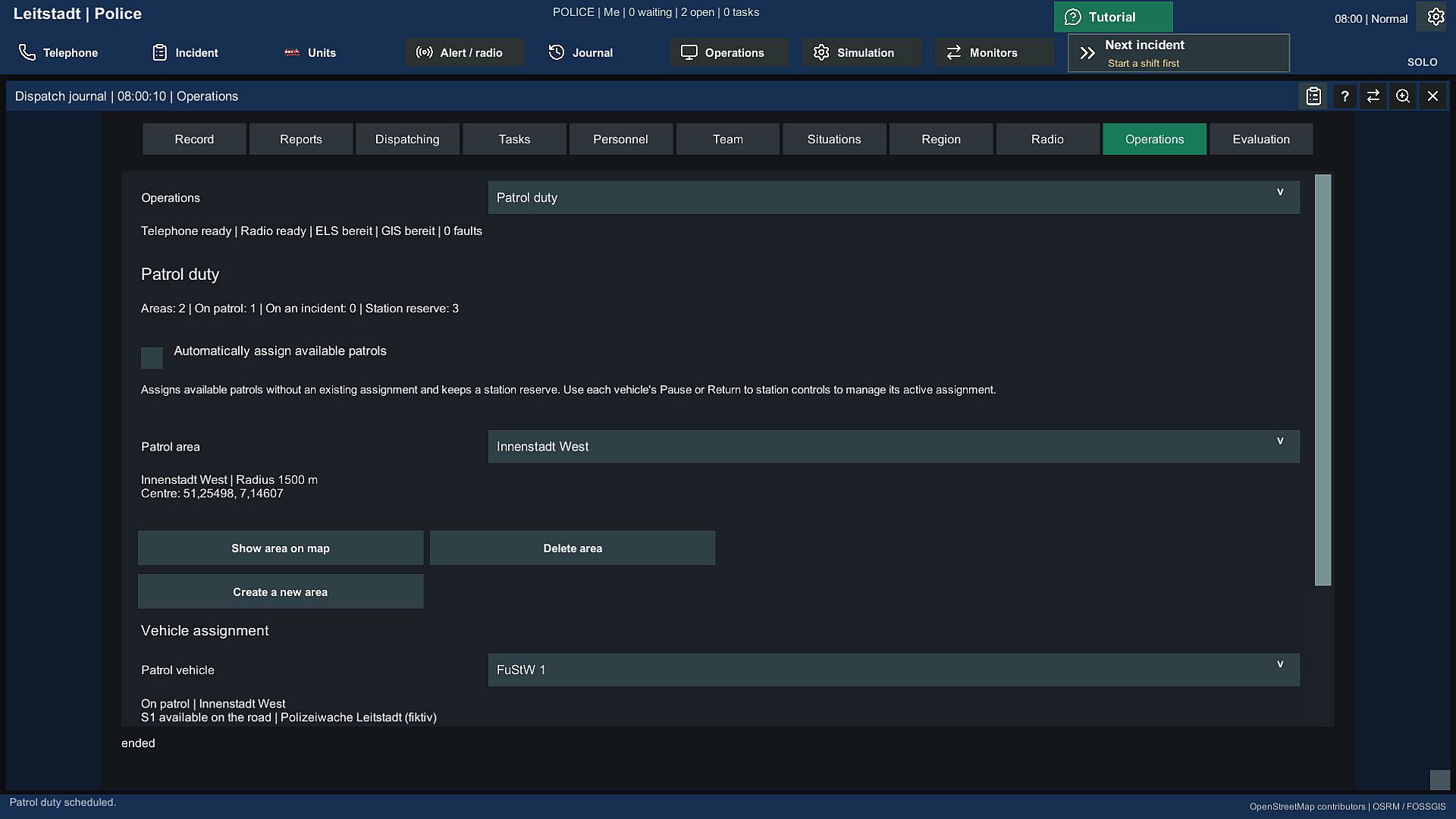
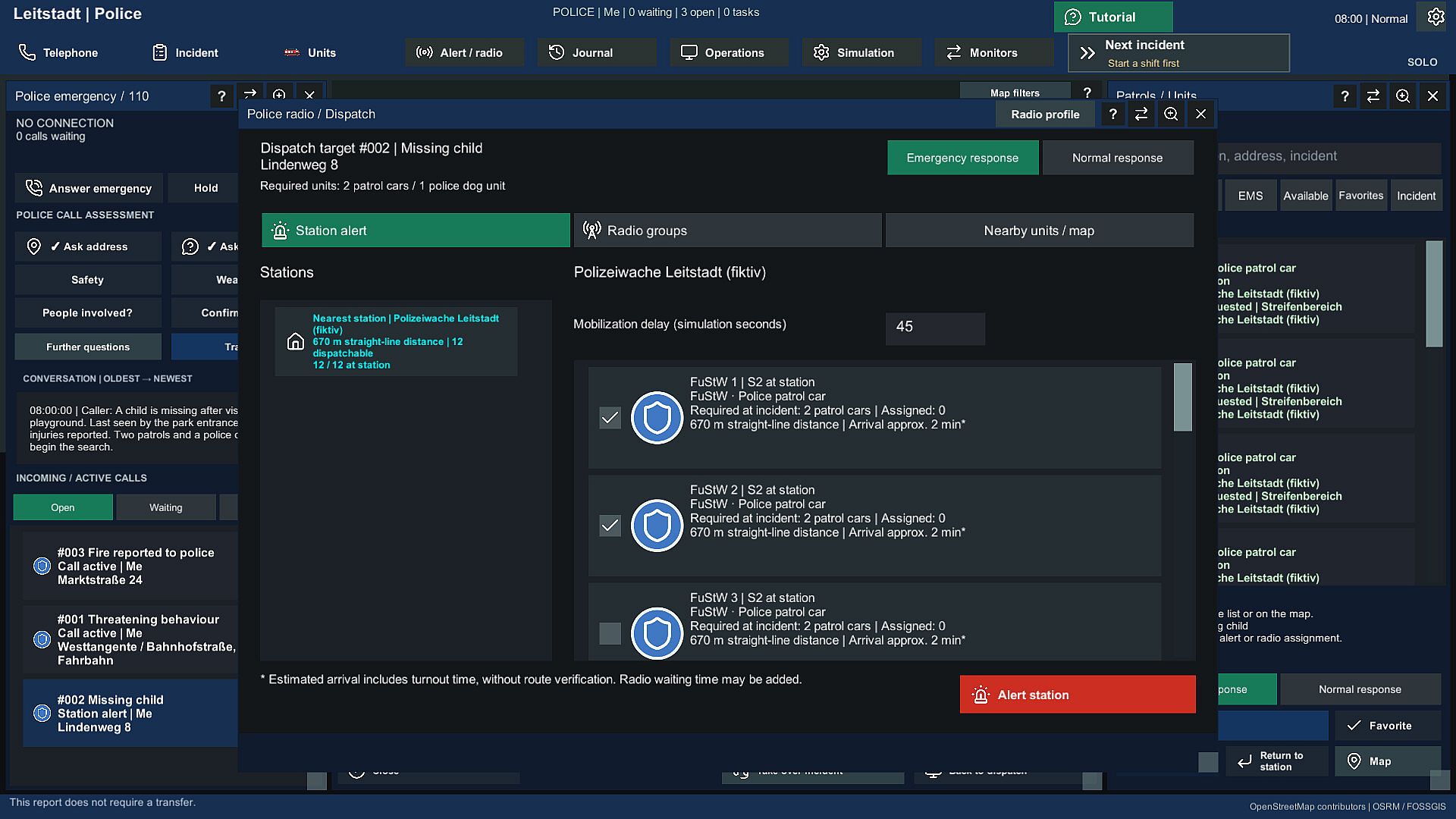
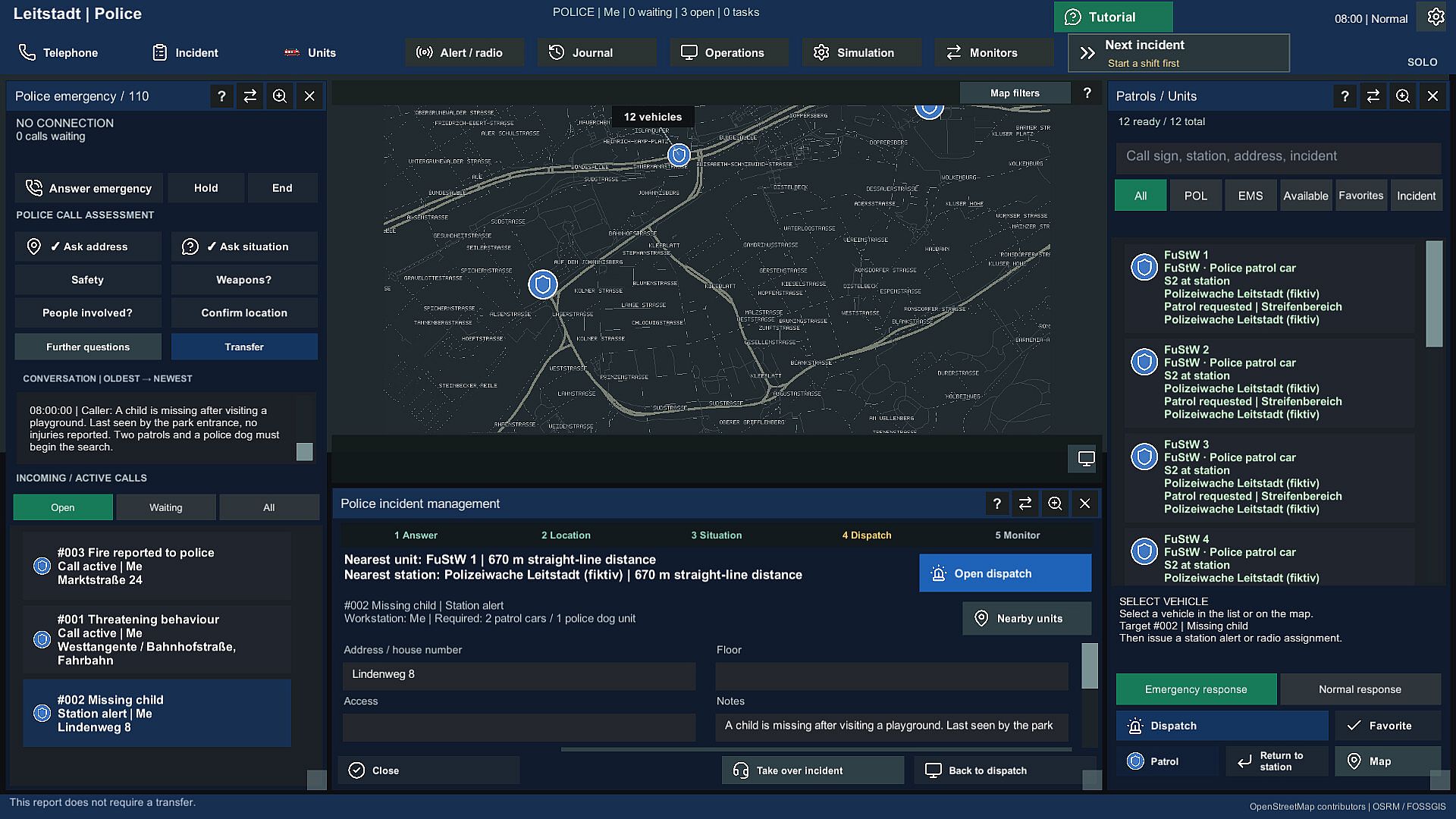
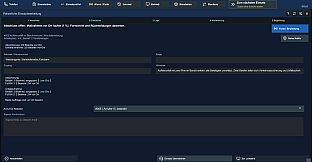
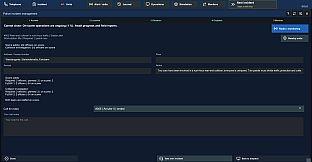
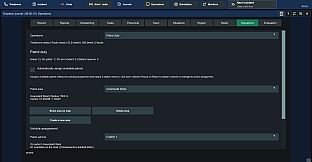
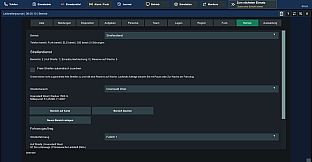
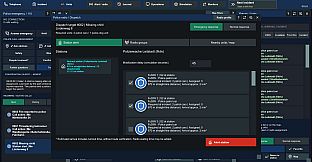
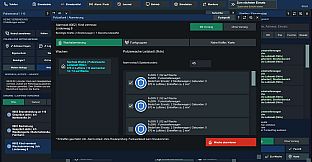
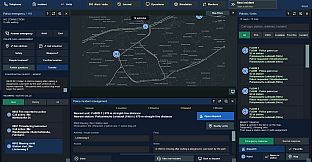
Players answer incoming calls, gather details through targeted questions about location, involved parties, weapons, escape routes, witnesses, and injuries, then decide on the appropriate response. Information builds gradually, and new reports can alter priorities as units travel to scenes on a map drawn from OpenStreetMap data with recorded police station positions. Dispatchers track vehicle journeys, assignments, and returns while accounting for busy units to maintain capacity for future calls.
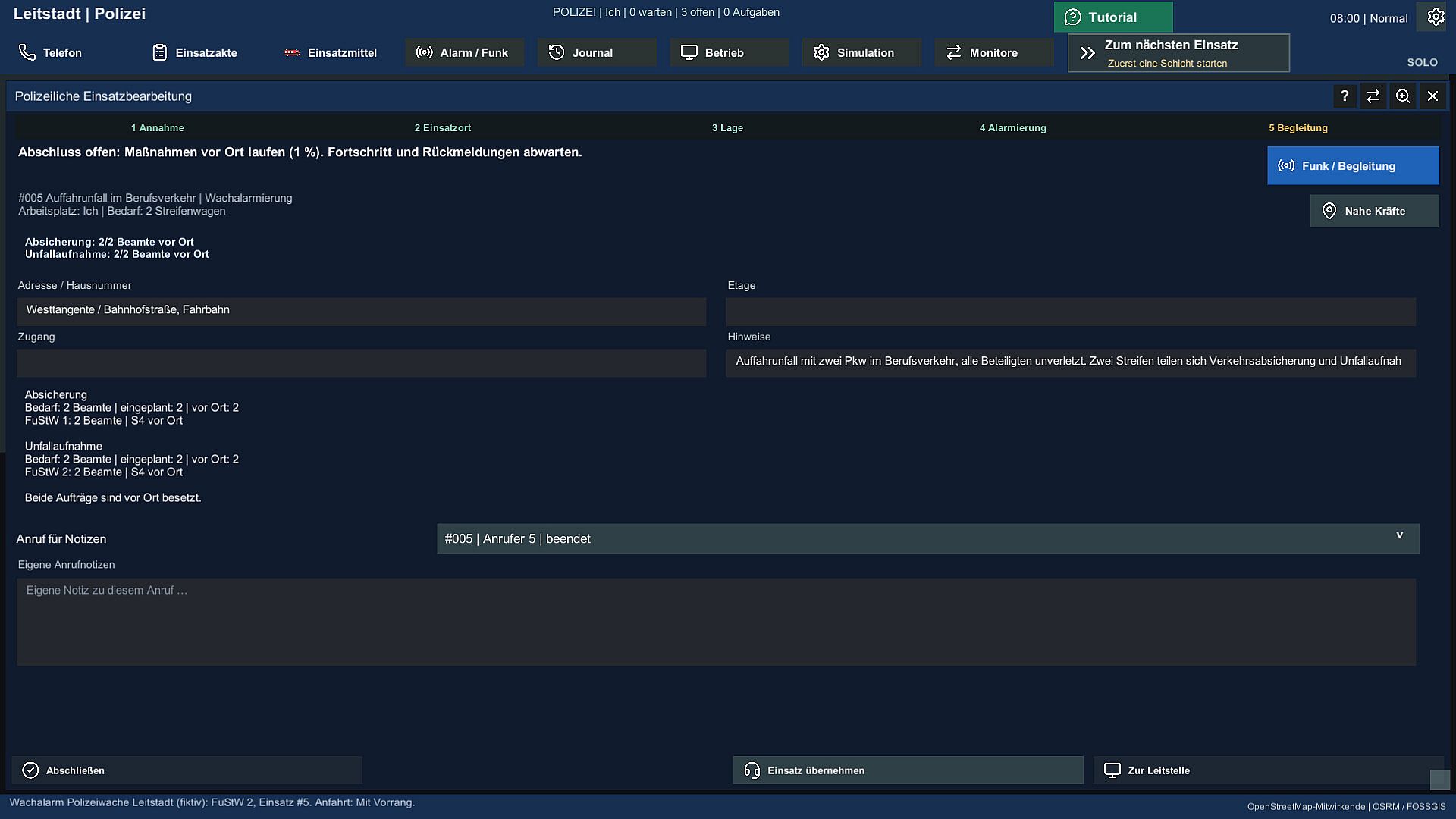
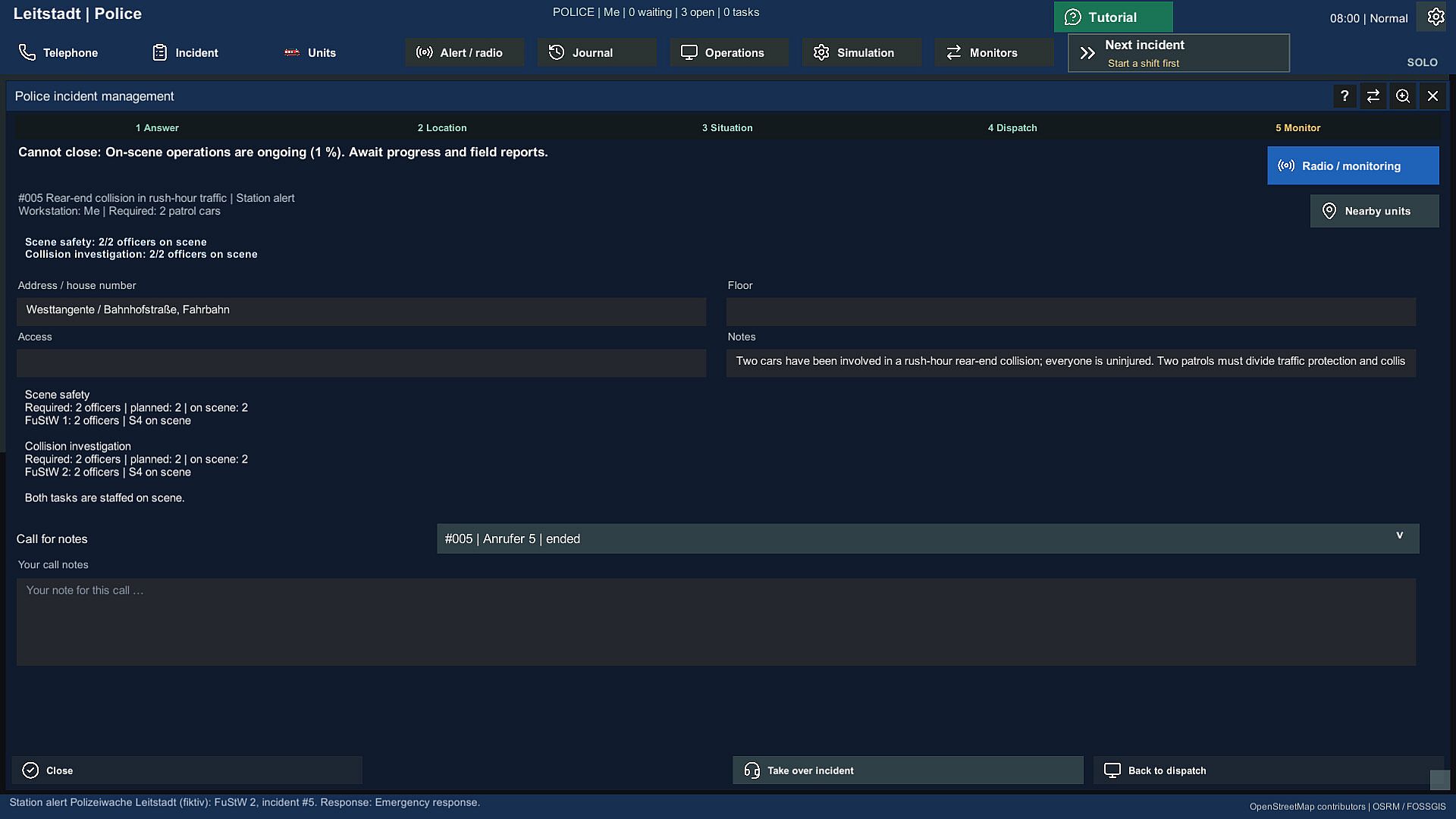
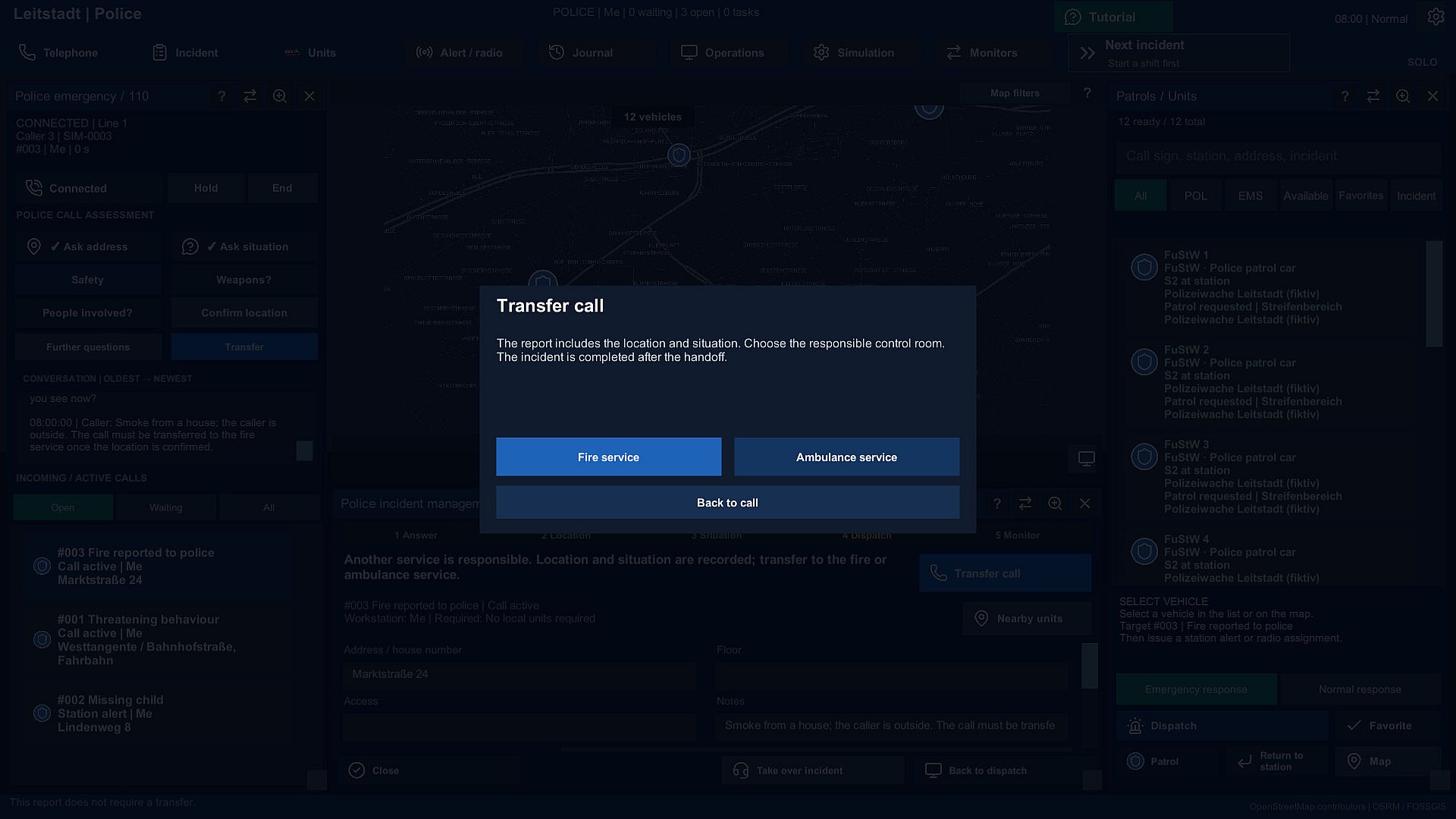
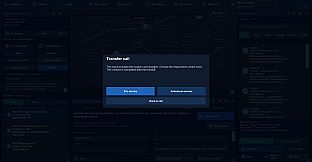
Incidents range from routine matters such as noise complaints, burglaries, shoplifting, threats, and vandalism to more involved situations like missing person searches, hit and run reports, and suspicious vehicle checks. Escalations may require additional patrols. Some calls are better suited to fire or ambulance services, so confirming details and transferring information forms a key part of the workflow. The interface uses a dark blue theme with police specific radio elements and emergency call handling centered on the 110 number.
Game Modes
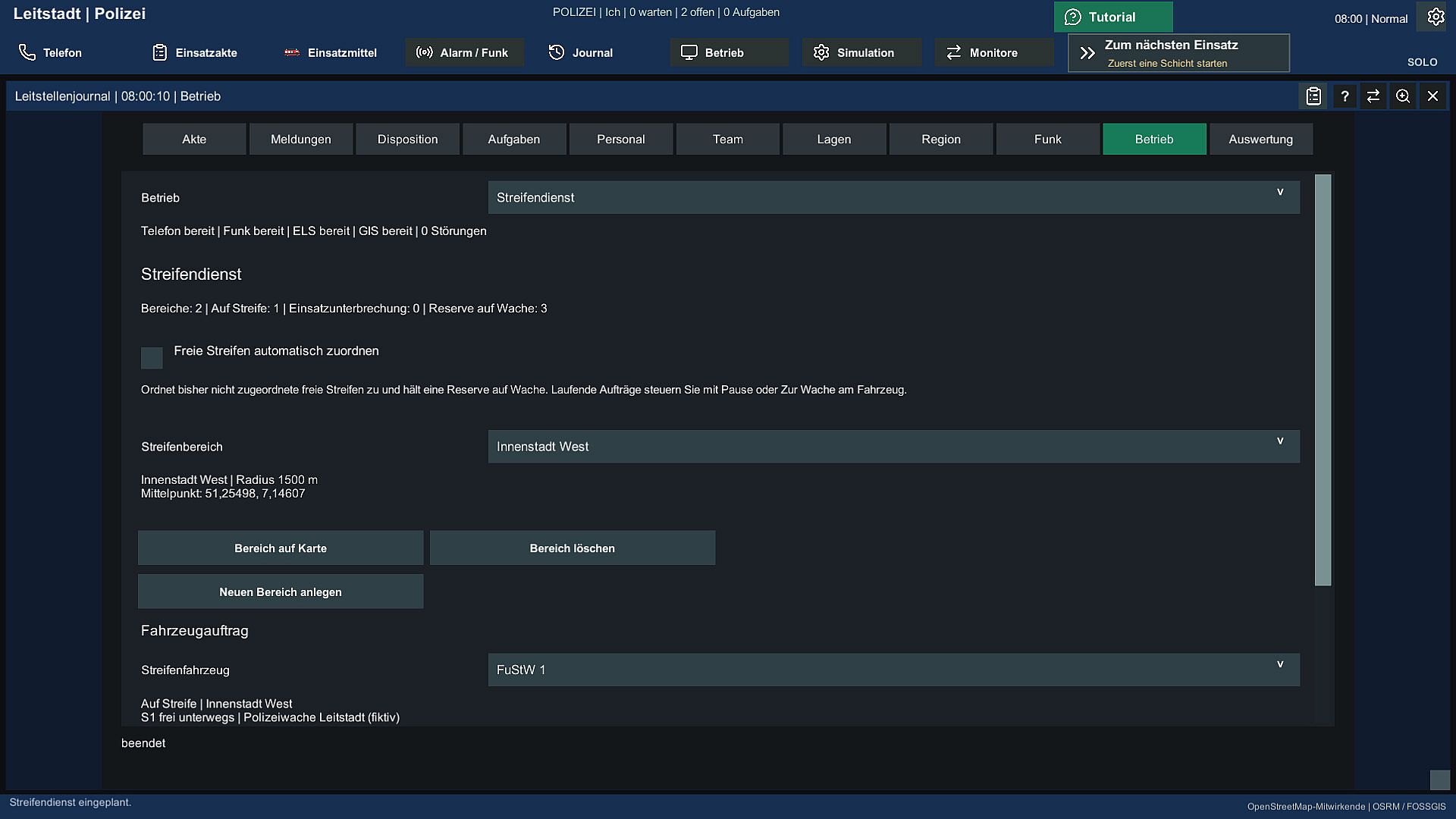
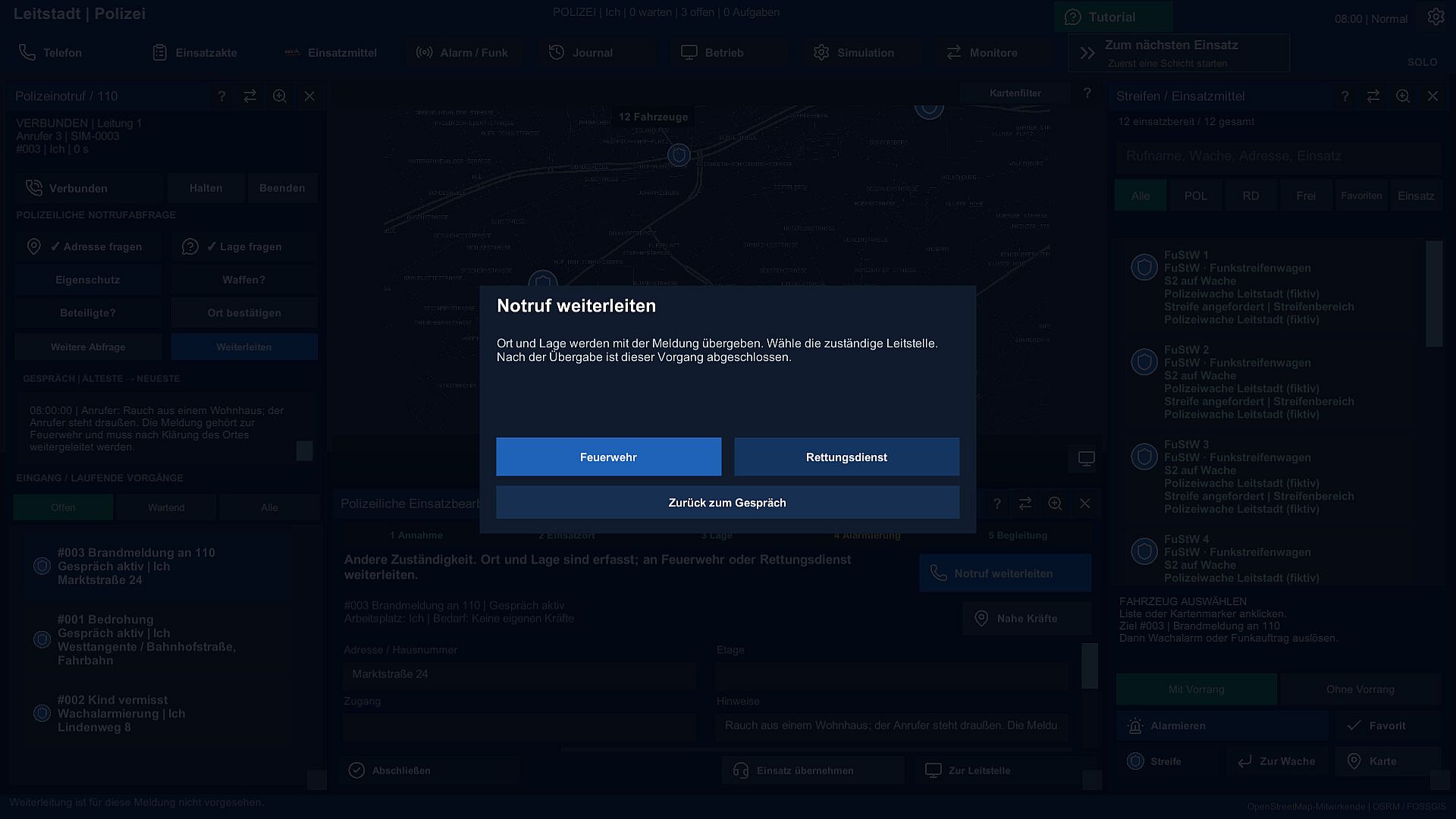
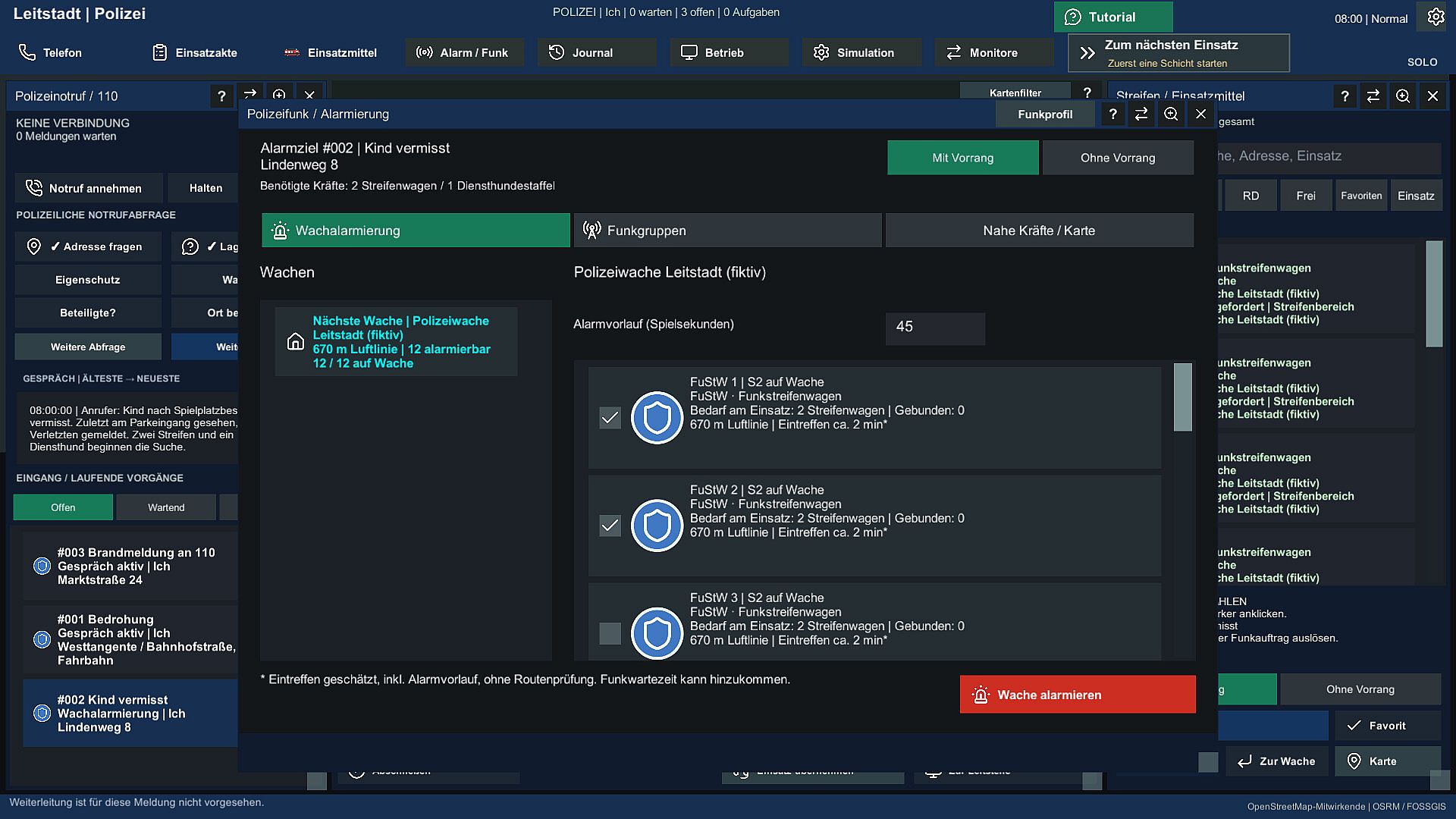
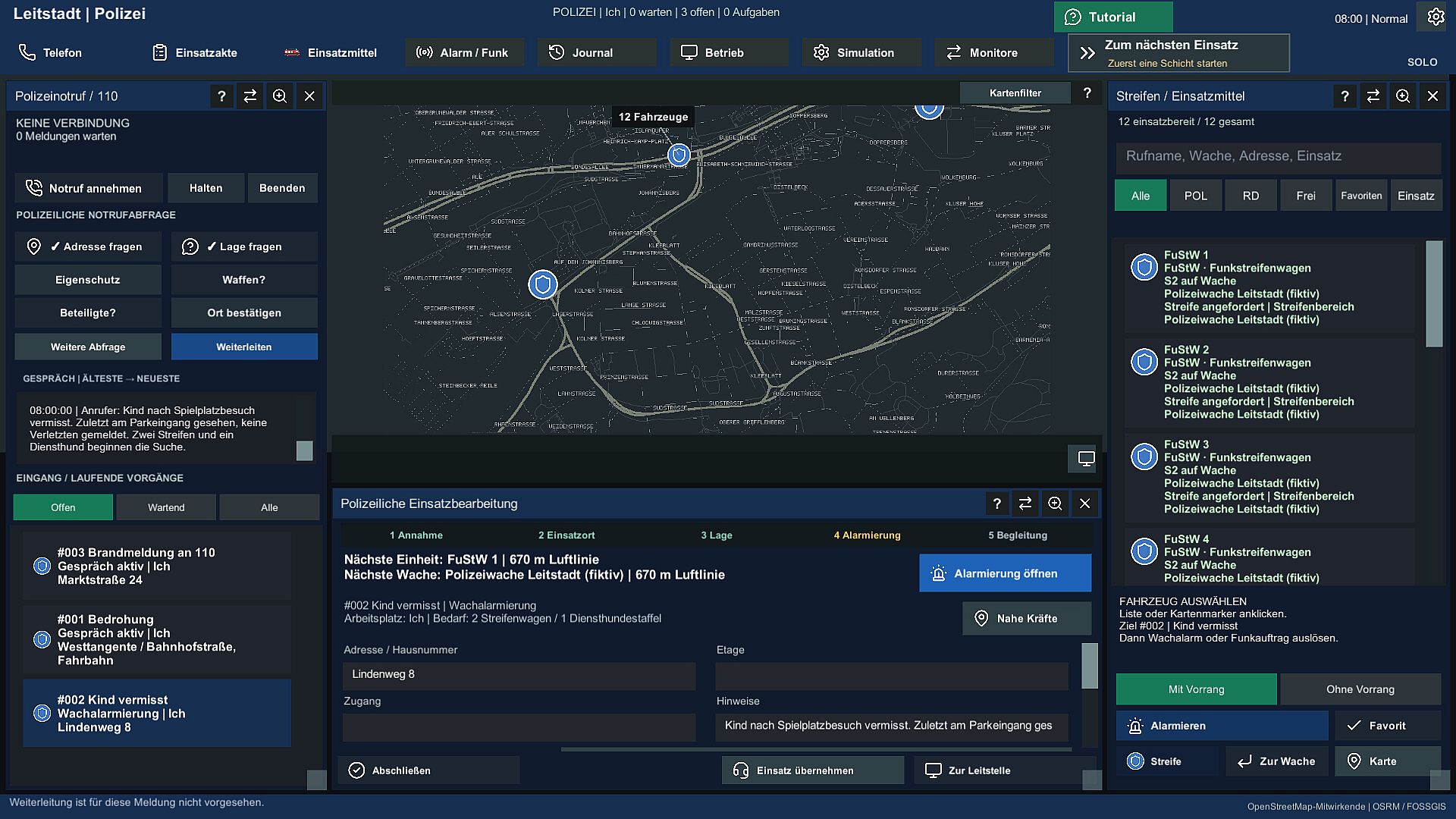
Two distinct modes shape the experience. Simulation mode emphasizes detailed call handling, full questioning sequences, and manual management of procedures. Casual mode simplifies the process by presenting address, situation, and required unit information immediately, allowing quicker dispatch decisions while still requiring players to ensure suitable vehicles reach incidents. Both modes support German and English interfaces, and the host selects the mode in multiplayer.
Shifts can run in free play or structured campaign chapters from the base game, with incidents and vehicle fleets generated for gameplay rather than drawn from live data.
Key Mechanics and Features
Core systems revolve around building an accurate picture from caller input, coordinating limited resources on the map, and adapting to changing situations. Patrols follow routes to and from scenes, and players must balance immediate responses against the need to keep units available. Transferring calls to the correct service adds strategic depth, as misrouting wastes time and capacity. The police focused content introduces dedicated questions, incident types, and visual styling that differentiate it from the base fire and ambulance operations.
Custom regions expand options beyond prepared German cities, though map data relies on OpenStreetMap sources with fallback loading for reliability. Recent updates have improved custom map handling and road routing in Casual mode.
Is It Worth Playing?
DispatchControl Police suits players who enjoy methodical resource management and real time decision making in a dispatch setting. Those who prefer detailed questioning and adaptive planning will find the Simulation mode rewarding, while Casual mode offers a more streamlined alternative for quicker sessions. The requirement for the base game means owners already familiar with its systems gain the most immediate value from the police shift content.
Current updates continue to refine map loading and mode stability, indicating ongoing support for the title. Players seeking a focused police dispatch experience within a broader emergency simulation framework will likely appreciate the specialized questions, incident variety, and coordination elements. Those looking for action oriented gameplay or narrative driven stories may find the pace more deliberate than expected.