

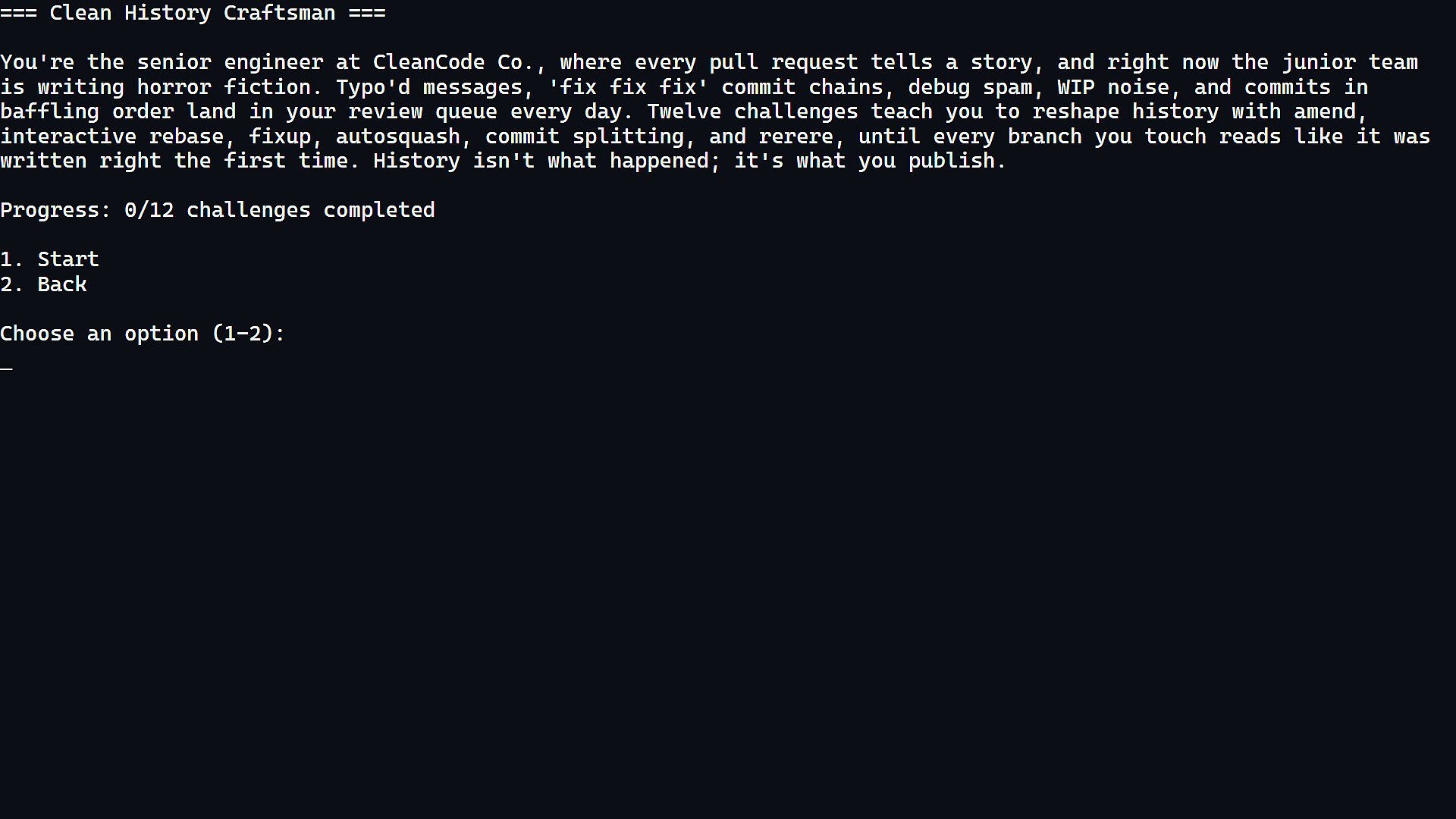
git gud - Clean History Craftsman is a casual simulation game built as a challenge pack for the terminal-based Git training title git gud. Players step into the role of a senior engineer at CleanCode Co., reviewing pull requests that arrive as messy, story-driven branches in a fully simulated repository. The focus stays on rewriting commit history through authentic Git operations so each branch reads cleanly from the first commit onward.
Gameplay
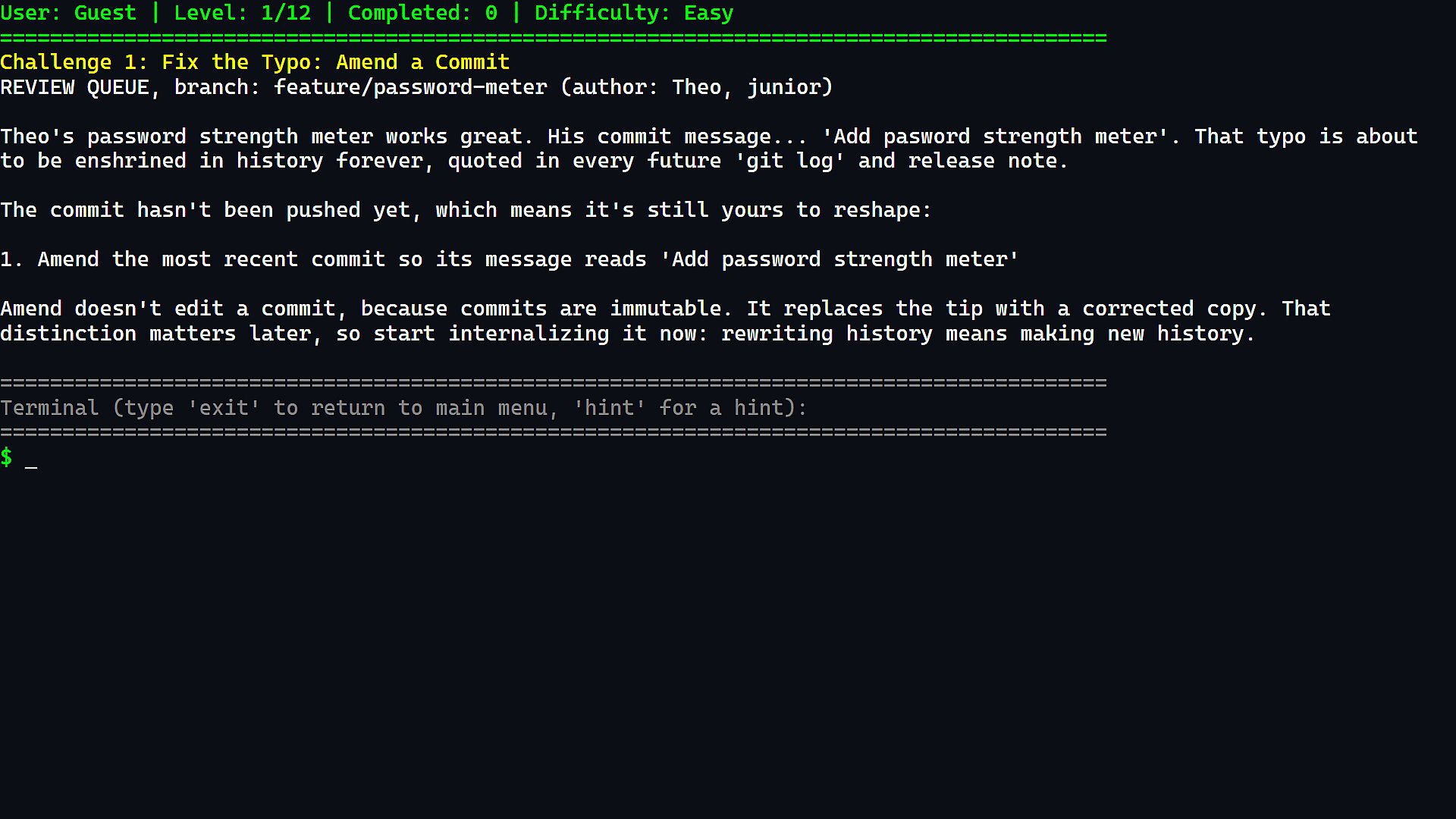
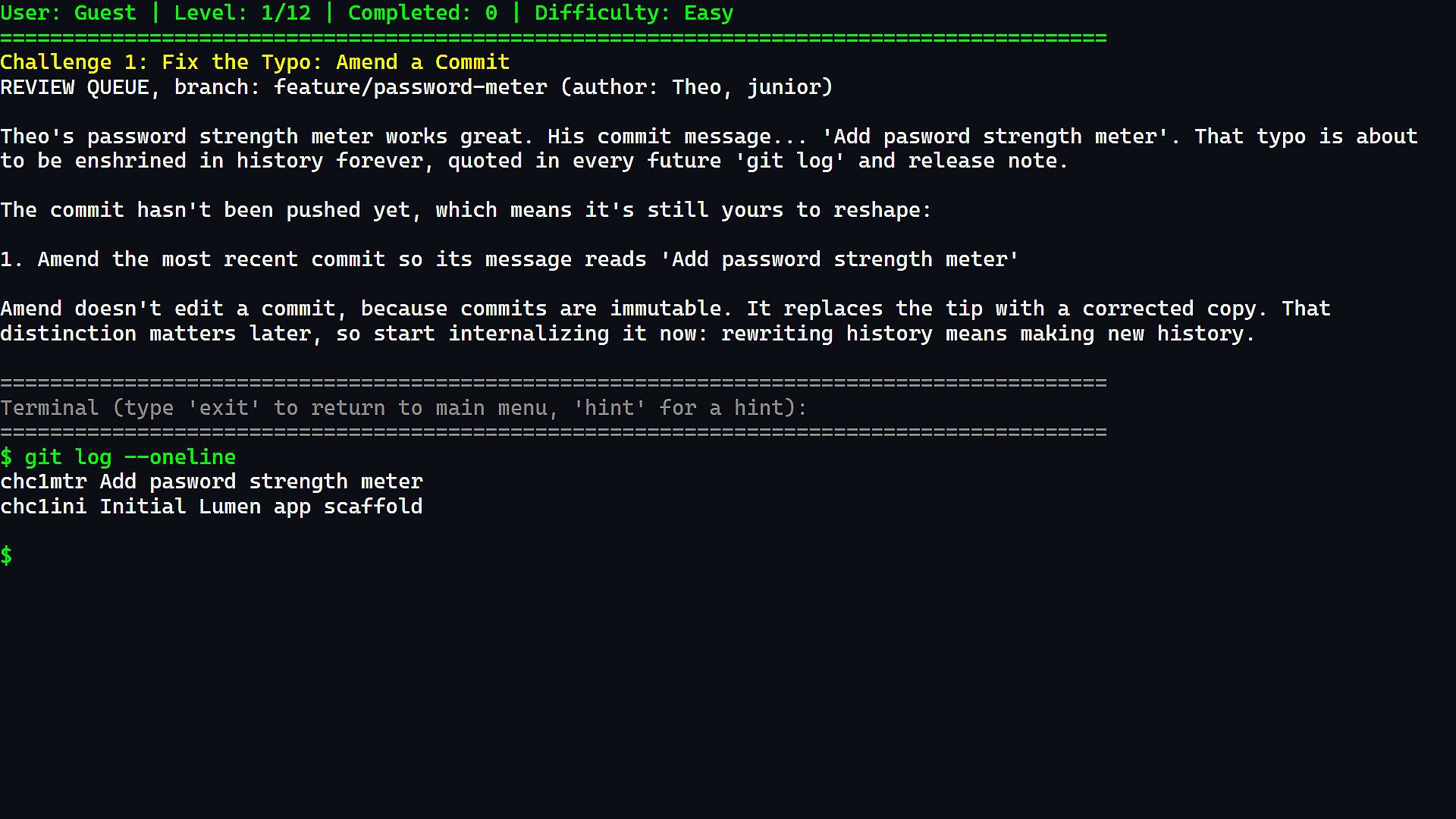
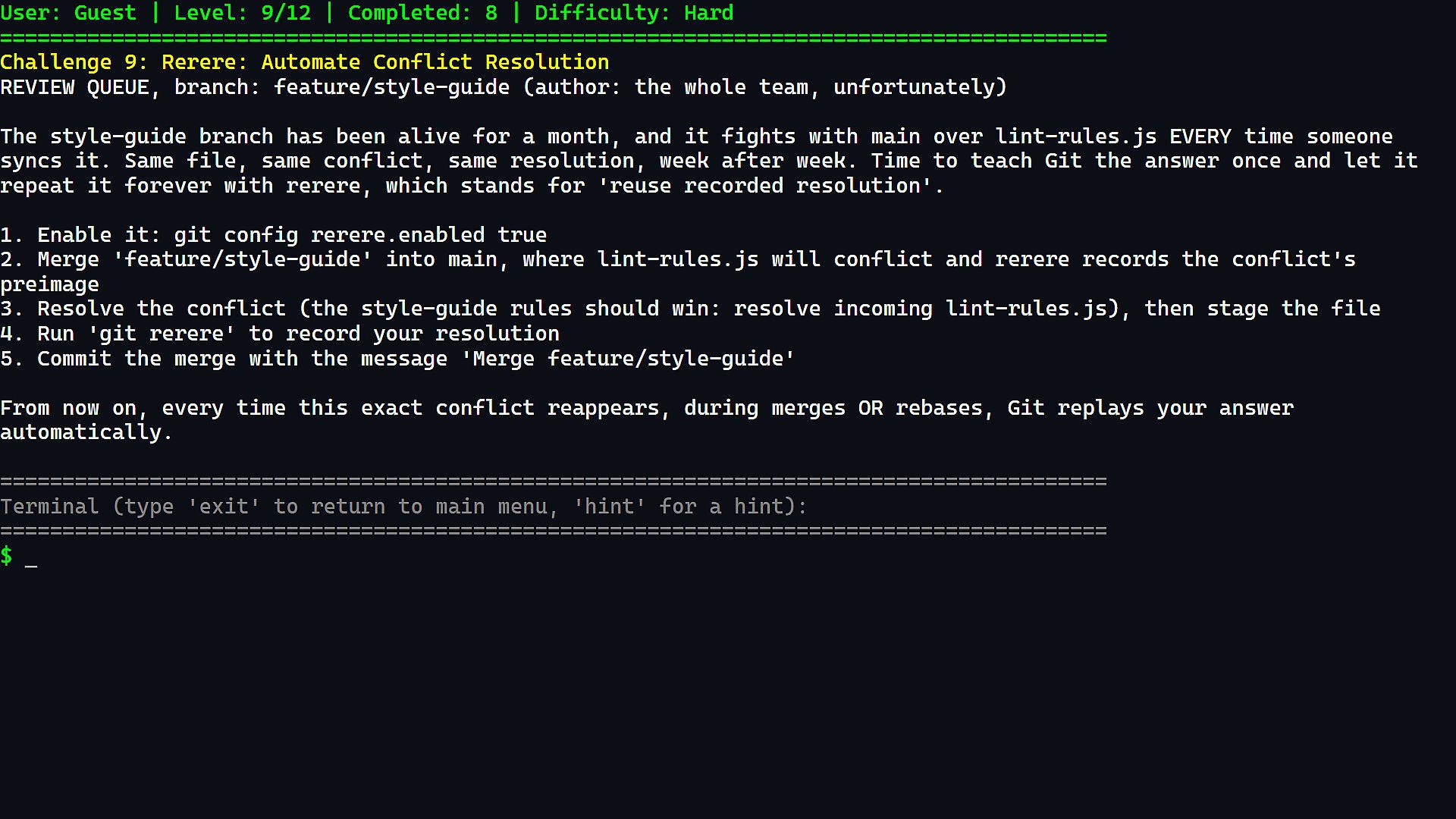
The core loop places you at a command-line interface where every action uses real Git commands inside a live repository. You receive branches filled with typical junior mistakes such as typo-filled messages, chains of fix commits, debug logging left in place, and commits pushed in the wrong sequence. Your task is to apply targeted rewrites that produce a linear, readable history without altering the underlying code changes.
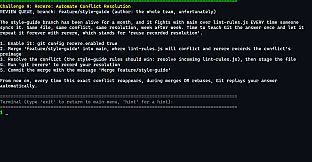
Each scenario runs in an isolated environment that faithfully reproduces Git states, including interactive rebase todo lists, conflict markers, and rerere records. Progress requires typing exact commands like amend, reword, squash, reorder, drop, fixup, and autosquash. Feedback appears immediately after each command, confirming whether the repository state now matches the target clean history. The simulation tracks every step so players see the direct results of their edits on future release notes and reviewer experience.
Game Modes
Twelve individual story-driven scenarios form the main content. Each one presents a single teammate branch wrapped in narrative context that explains why the history matters beyond the code itself. Players work through the review queue one branch at a time, applying the precise sequence of rewrites needed to reach the desired state.
A final integrated challenge combines every element into one complex branch. This scenario arrives with a buried WIP experiment, commits in the wrong order, and no instructions on which operations to use. Success requires folding, reordering, and continuing until only three clean commits remain, then shipping the result. The mode tests independent decision-making across the full range of history-rewriting tools.
Learning Through Simulation
The pack emphasizes practical fluency over abstract puzzles. Every amend fixes a typo before it appears in release notes. Every squash collapses a trail of fixes into a single meaningful change. Reordering ensures tests land after the code they cover. Dropping a temporary debug commit removes noise entirely. Fixup and autosquash demonstrate how to mark corrections at the moment they occur and let the tool arrange the rebase automatically. Rerere records a conflict resolution once so the same merge never needs manual handling again. Splitting a commit separates unrelated ideas into atomic units. These mechanics appear exactly as they do in real Git, giving players repeatable practice that transfers directly to daily workflow.
Is It Worth Playing?
Players who already know basic Git commands will find the most value here. The pack targets those ready to move from functional use to history-rewriting precision that produces tidy pull requests. The base game supplies one hundred levels covering fundamentals through advanced rebasing, while this content pack adds focused narrative scenarios that reinforce the same tools in realistic review-queue situations. Reception for the core experience sits at mostly positive, reflecting steady interest in its practical approach to version control training. Availability on PC keeps the barrier low for developers seeking targeted practice without leaving the terminal environment. Those who value clean, publishable history over quick-and-dirty commits will see clear returns from working through the full set of challenges.