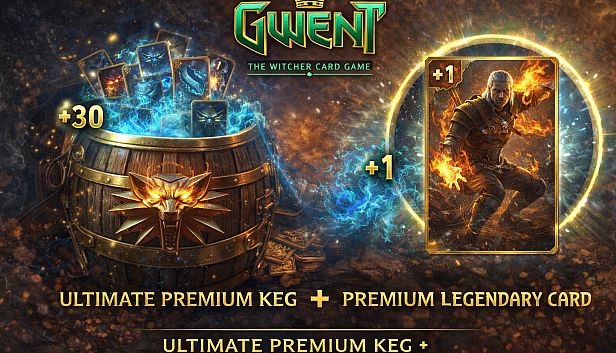


GWENT: The Witcher Card Game is a free-to-play collectible card game that draws directly from the Witcher universe. Players build decks around iconic characters and abilities, then compete in online PvP matches that emphasize strategy, timing, and resource management over pure chance.
Gameplay
Matches unfold across up to three rounds, with the first player to win two rounds claiming victory. In each round, participants alternate playing cards from a starting hand of ten drawn from a twenty-five-card deck. The goal is to accumulate more points than the opponent before either player chooses to pass and end their contributions for that round.
Cards deploy across two distinct rows: melee and ranged. This layout creates tactical choices about positioning and synergies. Units gain strength through base power, abilities, and effects that can boost allies, weaken foes, or trigger special conditions. Leaders provide faction-specific powers that shape overall strategy from the first turn.
Success hinges on careful deck construction and in-match decisions. Players must decide when to commit strong units early or hold them in reserve, while accounting for the opponent's likely responses. The system rewards foresight and adaptation rather than random draws alone.
Game Modes
Standard mode serves as the core competitive format, where players climb ranks through consistent performance. Casual matches allow relaxed play without ranking pressure. Seasonal mode introduces rotating rule variations each month, altering card interactions or match conditions to keep the experience fresh.
Draft mode, also known as Arena, lets players construct a temporary deck on the spot from offered choices, testing adaptability under different constraints. Training matches against AI opponents provide a low-stakes environment for learning fundamentals or testing new ideas.
These options accommodate different play styles, from quick sessions to deeper competitive runs. All modes support the same core ruleset while varying the context and stakes.
Factions and Deck Building
Six factions offer distinct playstyles: Northern Realms, Nilfgaard, Monsters, Scoia'tael, Skellige, and Syndicate. Each faction includes unique leaders and card pools that encourage specialized strategies, such as armor protection, spy mechanics, or swarm tactics.
Decks combine faction cards with neutral options. Building requires balancing unit strength, special abilities, and response tools while staying within size limits. The collection system supports gradual acquisition through play, allowing steady improvement without mandatory purchases.
- Northern Realms emphasizes resilient units and armor.
- Nilfgaard focuses on control and information denial.
- Monsters leverage powerful single threats and regeneration.
Is It Worth Playing?
The game remains actively supported through community-driven balance updates via the Balance Council, even after official development shifted to a maintenance phase in late 2023. This keeps the meta evolving without new card releases.
Progression feels fair because new cards integrate naturally into existing collections, and matches reward skill in deck tuning and round management. The hand-drawn artwork and visual effects enhance every duel without distracting from the strategic core.
Players who enjoy tactical card games with bluffing elements and faction variety will find consistent depth here. Those seeking constant new content expansions may notice the slower pace of change, yet the established systems and free entry point make it accessible for long-term engagement.