






House of Pips is a turn-based domino roguelike that blends classic tile matching with roguelike progression and rule-altering perks. Players sit at the table in a setting framed by family tradition, where the core activity involves reading the board, managing a hand of dominoes, and placing tiles to score while adapting to each new draw. The game runs on PC and fits the strategy, indie, and casual genres through its accessible yet deep mechanics that reward careful planning and creative combinations.
Gameplay
The central loop centers on placing dominoes that match adjacent pips, building scores through chains and multiples. What sets the experience apart is the perk drafting system. Players select abilities that bend standard rules, such as altering a domino's pips, swapping tiles on the board, or converting blanks into wildcards. These perks can be stacked across a run to create synergies that amplify scoring plays and open new strategic paths.
Progression comes through a skill tree that unlocks additional perks and upgrades as sessions continue. Each run encourages experimentation with different combinations, turning familiar domino placement into varied approaches that suit aggressive scoring or defensive control. The pixel-art presentation keeps the focus on the table layout, with clear visuals for pips and board state that support quick decision making.
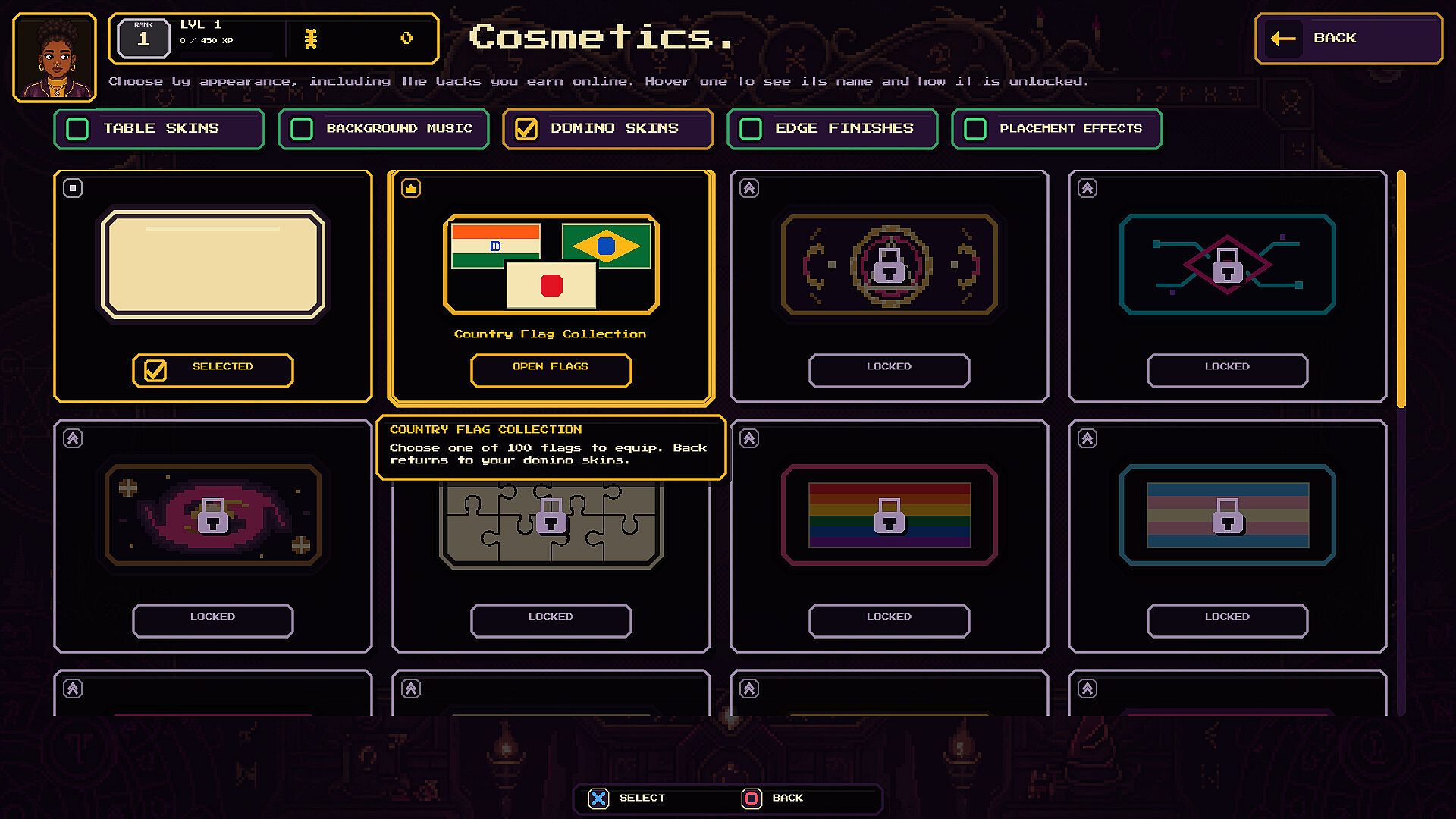
Customization options extend to domino appearances. The Country Flag Collection adds 100 distinct flag designs as backs for the tiles. These skins are selected through the cosmetics menu and apply uniformly across all dominoes without altering any rules, scores, or difficulty. One purchase grants access to the full set, covering flags from Afghanistan through Zimbabwe in a curated selection that emphasizes variety over exhaustive coverage.
Game Modes
Single-player content includes matches against computer-controlled rivals and a series of 20 dedicated solo challenges. These challenges strip away opponents and timers, emphasizing precise placement and puzzle-like optimization where every move contributes to the final outcome. Players can test different perk builds in isolation before carrying successful strategies into longer runs.
Online multiplayer allows direct competition with other players. Both participants draft perks independently, leading to asymmetric rule sets that reward reading the opponent's likely approach alongside the board state. Testing for this mode has confirmed stable performance, supporting friendly or competitive sessions across the table.
Progression elements tie the modes together. Skill tree advancements and perk unlocks carry forward, giving each session a sense of growth whether played solo or with others. The overall structure supports repeated playthroughs focused on refining house styles built from chosen perks.
Customization and Presentation
Beyond core mechanics, the game offers light personalization through unlockable elements like avatars, additional table designs, and music tracks. These features complement the domino skins from the Country Flag Collection, allowing players to tailor the visual and auditory atmosphere without impacting gameplay balance. The retro pixel style maintains clarity during placement decisions while evoking a nostalgic tabletop feel.
The narrative framing adds personality through commentary that reflects the family rivalry theme. This layer remains secondary to the strategic decisions but contributes to the consistent tone across runs.
Is It Worth Playing?
House of Pips appeals to players who enjoy strategic tile games combined with roguelike build crafting. The perk system and skill tree provide meaningful variety across sessions, while the option for both solo challenges and online matches broadens its reach. Those who appreciate adapting rules and discovering synergies will find repeated value in experimenting with different perk combinations.
The Country Flag Collection serves as a straightforward visual upgrade for anyone who wants to personalize their dominoes further. Because it introduces no mechanical changes, it integrates cleanly for players already invested in the base experience. With the full release approaching in Q4 2026 and a demo available for testing the core systems, the game suits those seeking a fresh take on dominoes in a single-player or multiplayer context.