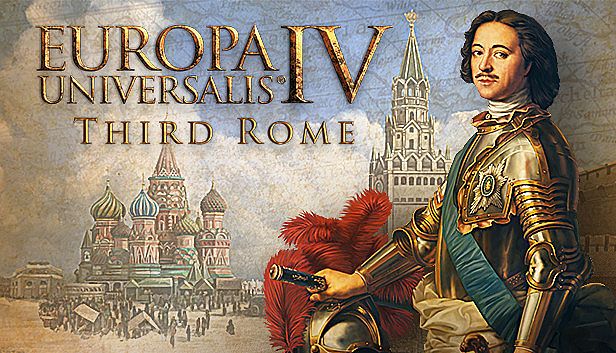










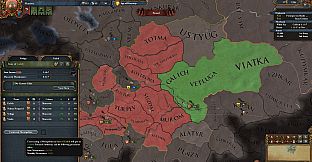
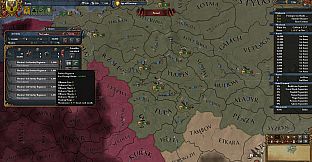
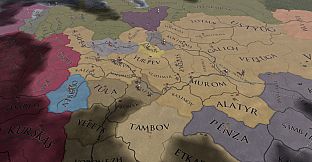
Europa Universalis IV: Third Rome serves as an immersion pack for the grand strategy simulation Europa Universalis IV on PC. It expands the historical depth of Russian and Orthodox-themed nations through targeted mechanics that emphasize spiritual authority, political hierarchy, and frontier expansion.
Gameplay
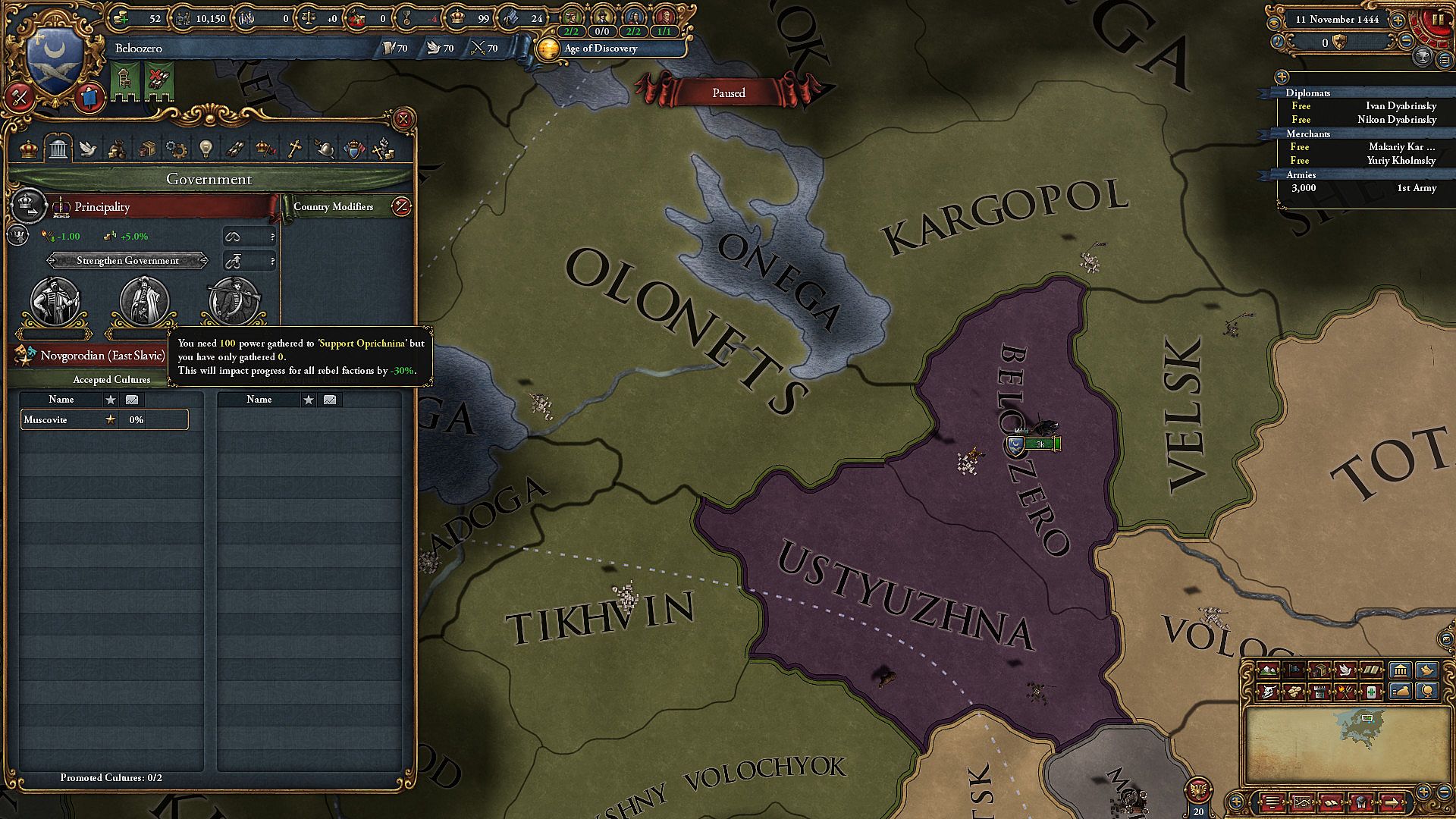
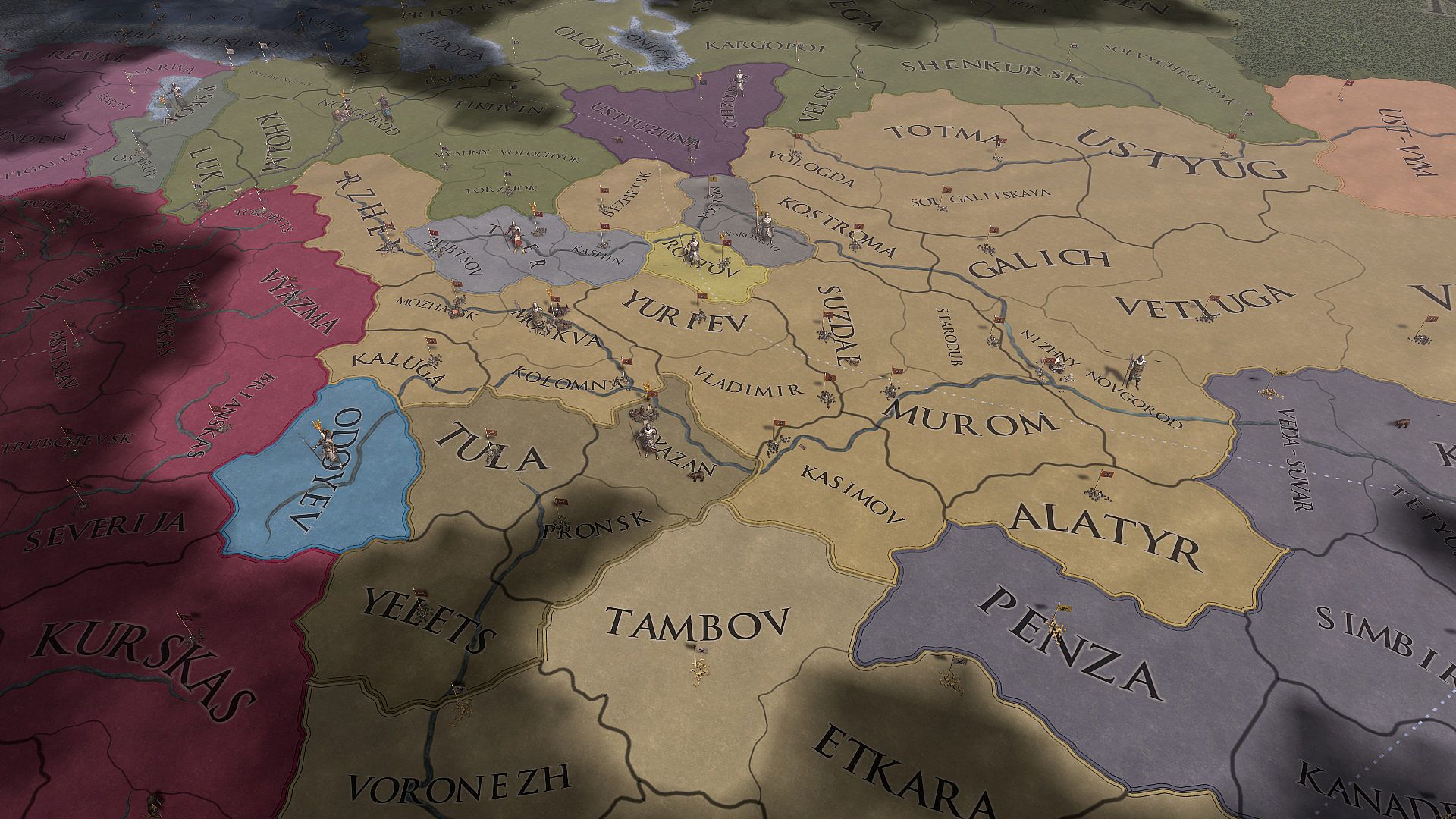
The core loop revolves around managing a nation's development across centuries while balancing internal stability, external threats, and resource allocation. Players guide Muscovy or other Russian principalities toward unification and imperial status. New government ranks introduce structured progression from principalities to tsardoms, granting abilities such as claiming entire states at higher levels along with bonuses that strengthen central authority.
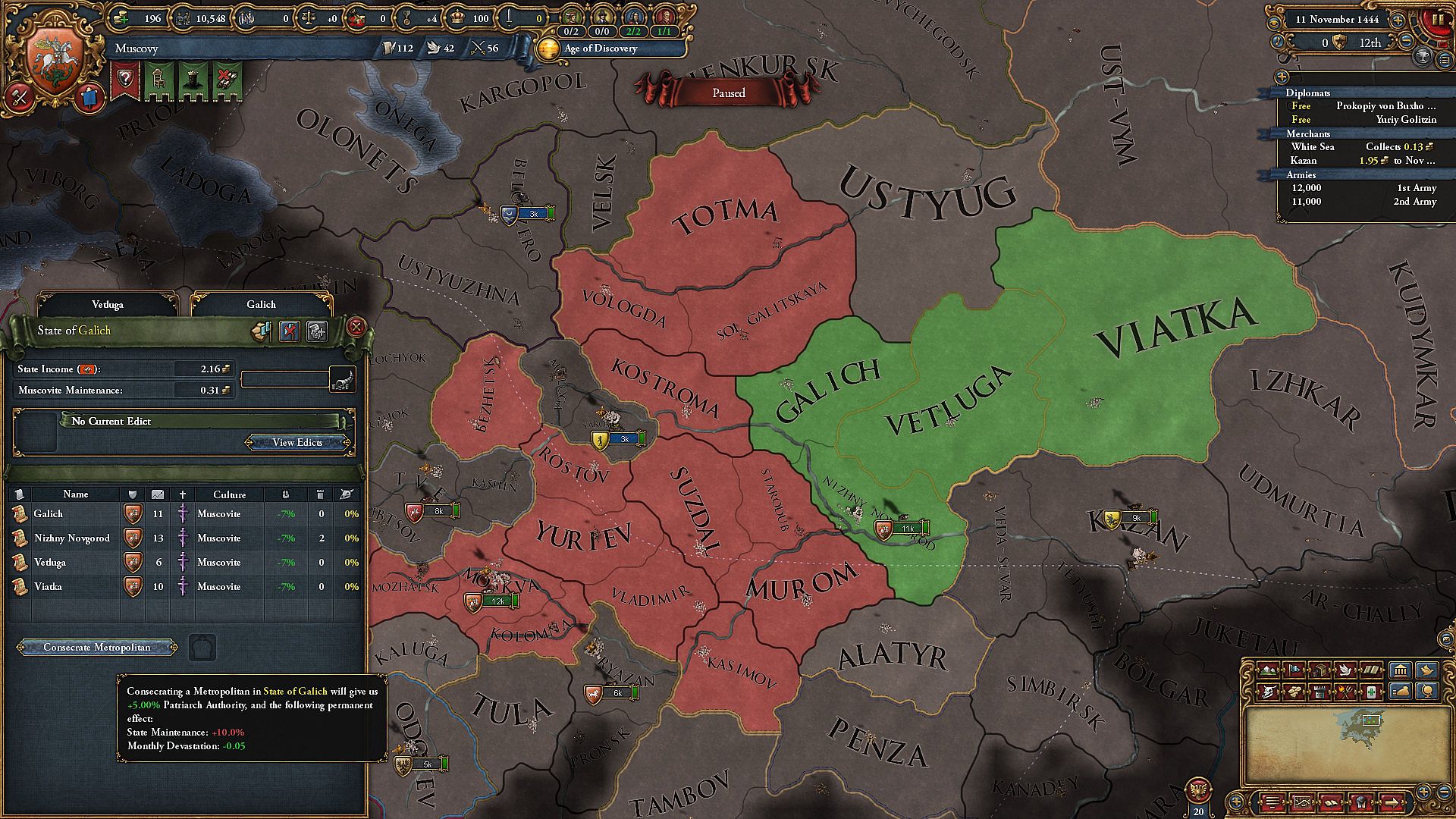
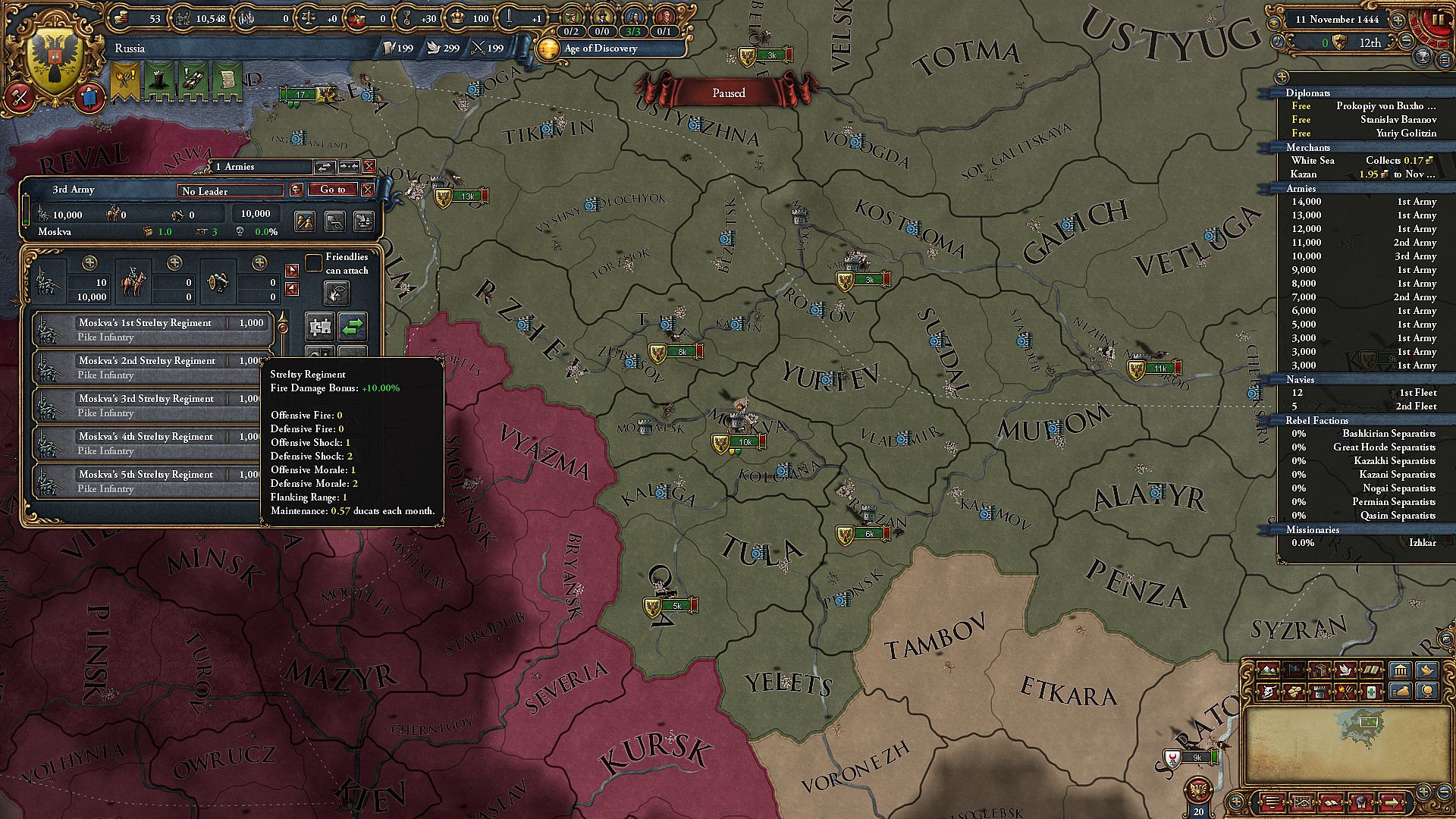
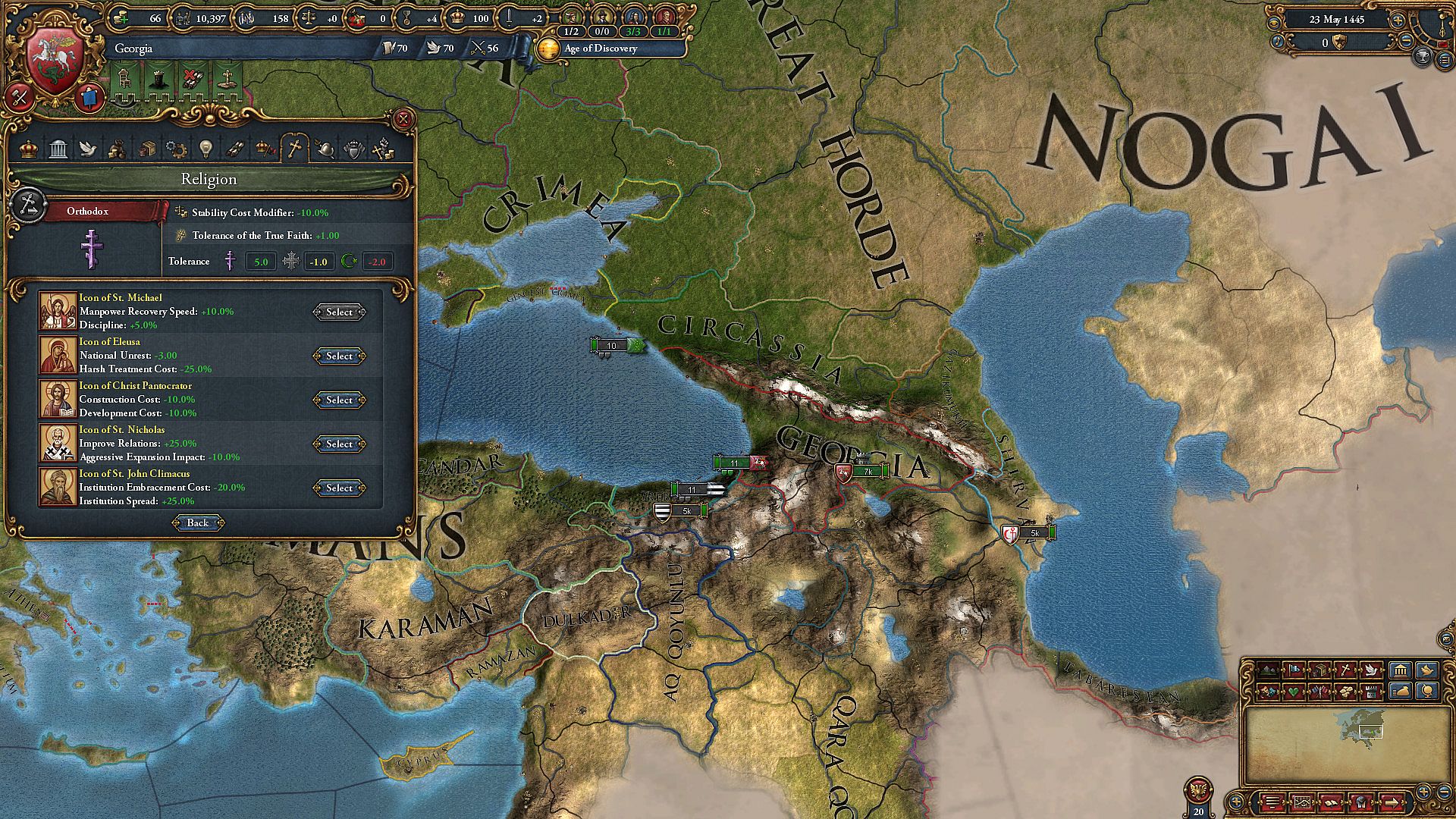
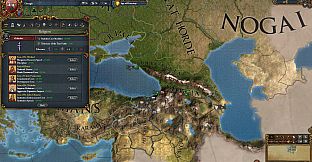
Orthodox Church interactions add layers to decision-making. Players commission icons tied to specific saints, each providing distinct empire-wide effects based on the chosen reverence. Consecrating developed provinces with metropolitans increases church authority at a resource cost, creating trade-offs between short-term expenses and long-term influence. Streltsy units offer combat advantages in field battles yet increase the expense of maintaining internal order, requiring careful army composition and revolt management.
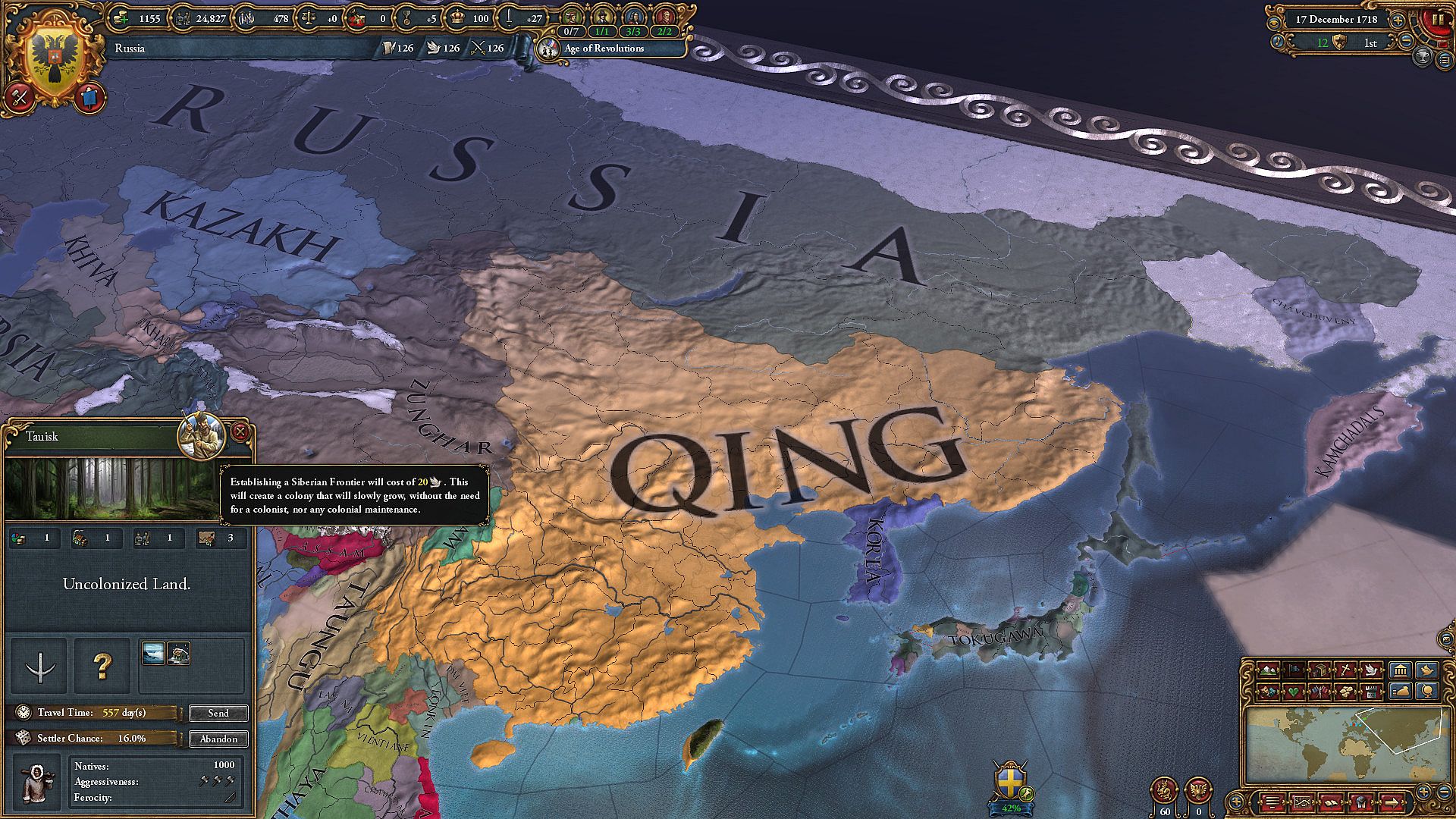
Siberian colonization operates through a gradual process on uninhabited border provinces. This method avoids native uprisings that typically hinder standard colonial efforts, allowing steady territorial growth without frequent military interruptions.
Game Modes
Europa Universalis IV supports single-player campaigns where one nation advances through historical events and rival interactions under AI control. Ironman mode restricts saves and certain adjustments to enforce permanent consequences for choices. Multiplayer sessions allow groups of players to compete or cooperate in the same persistent world, with human opponents introducing unpredictable diplomacy and warfare dynamics.
These formats accommodate different preferences. Single-player suits extended solo sessions focused on internal optimization and scripted missions. Multiplayer emphasizes real-time negotiation, alliance management, and competitive expansion against other participants.
Russian Government and Military Systems
Government ranks scale with national development and provide escalating tools for control. Lower ranks focus on regional consolidation, while the tsar level unlocks state-wide claims and enhanced stability modifiers. This system integrates with existing mechanics to reward consistent piety and territorial growth.
Military options expand through Streltsy regiments that perform well in direct confrontations. Their deployment demands attention to stability costs, encouraging players to pair them with diplomatic or administrative strategies that offset unrest. Siberian frontier mechanics further differentiate Russian play by enabling low-risk expansion into vast empty regions, shifting focus from defensive colonization to broader empire building.
Is It Worth Playing?
The immersion pack delivers concentrated improvements for Russian and neighboring Orthodox nations. Its mechanics reward players who enjoy detailed internal management and religious systems alongside territorial conquest. Those interested in Muscovy or Ruthenian starts gain new options for authority building and military specialization that alter standard campaign pacing.
Player feedback on the pack itself shows mixed results, with some noting its narrow focus limits broader appeal. The base game maintains active development and supports both solo and group playstyles. Individuals drawn to grand strategy simulations centered on Eastern European history and church-state interactions will find the additions relevant. Those seeking wide mechanical variety across many nations may prefer evaluating the pack after experiencing core gameplay first.