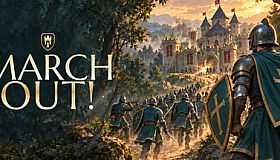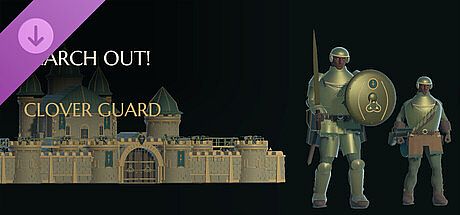


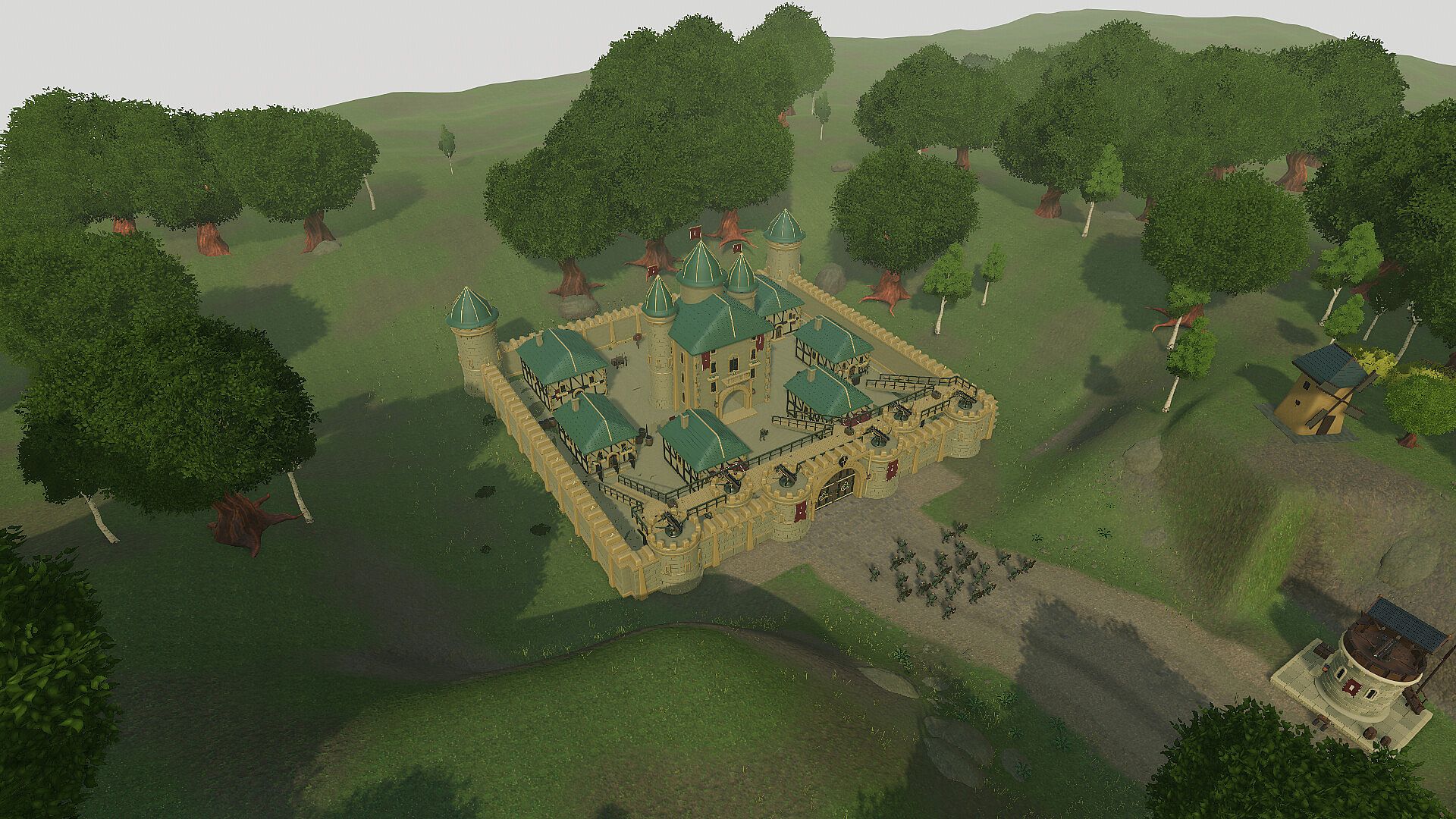
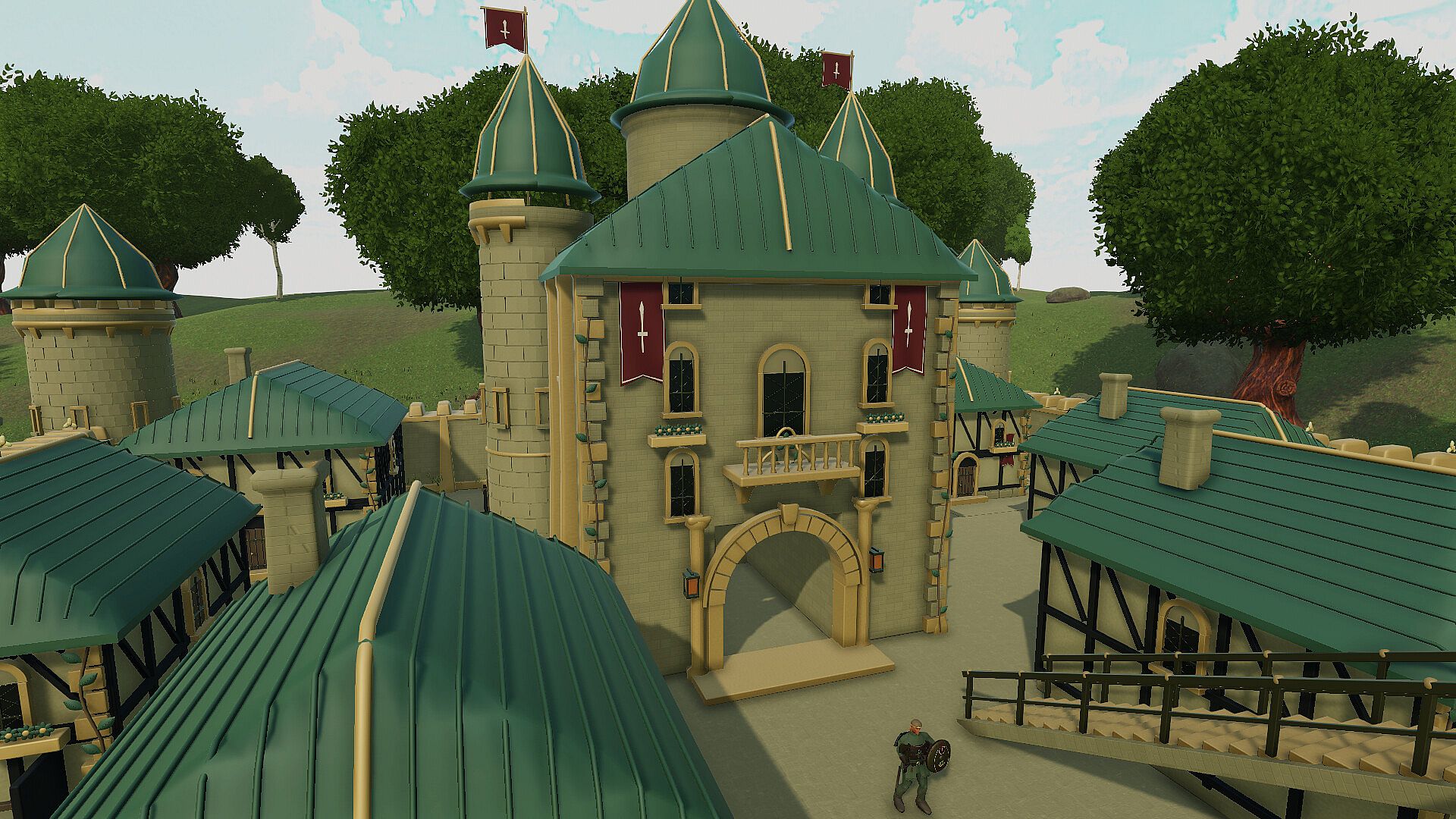
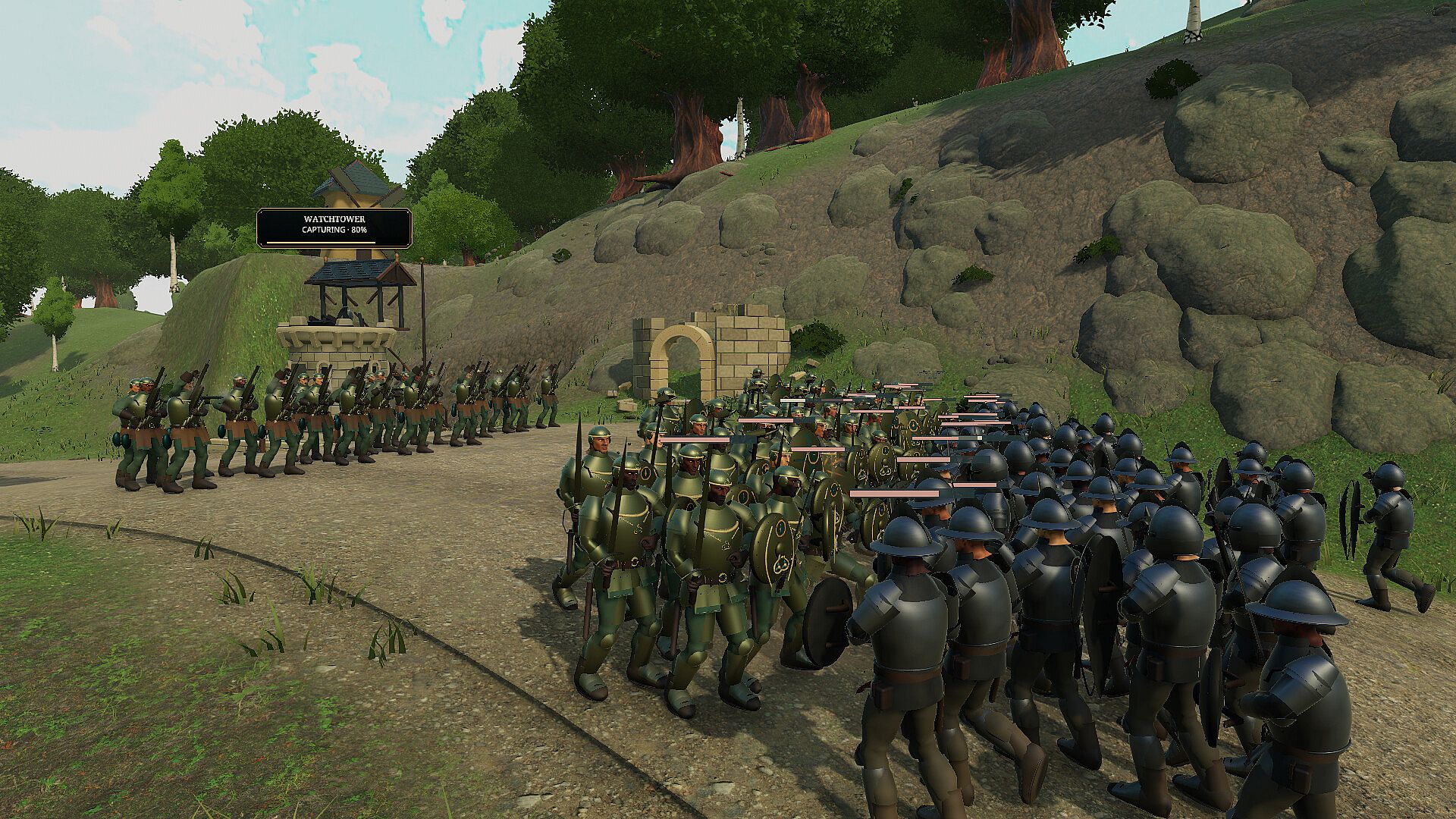
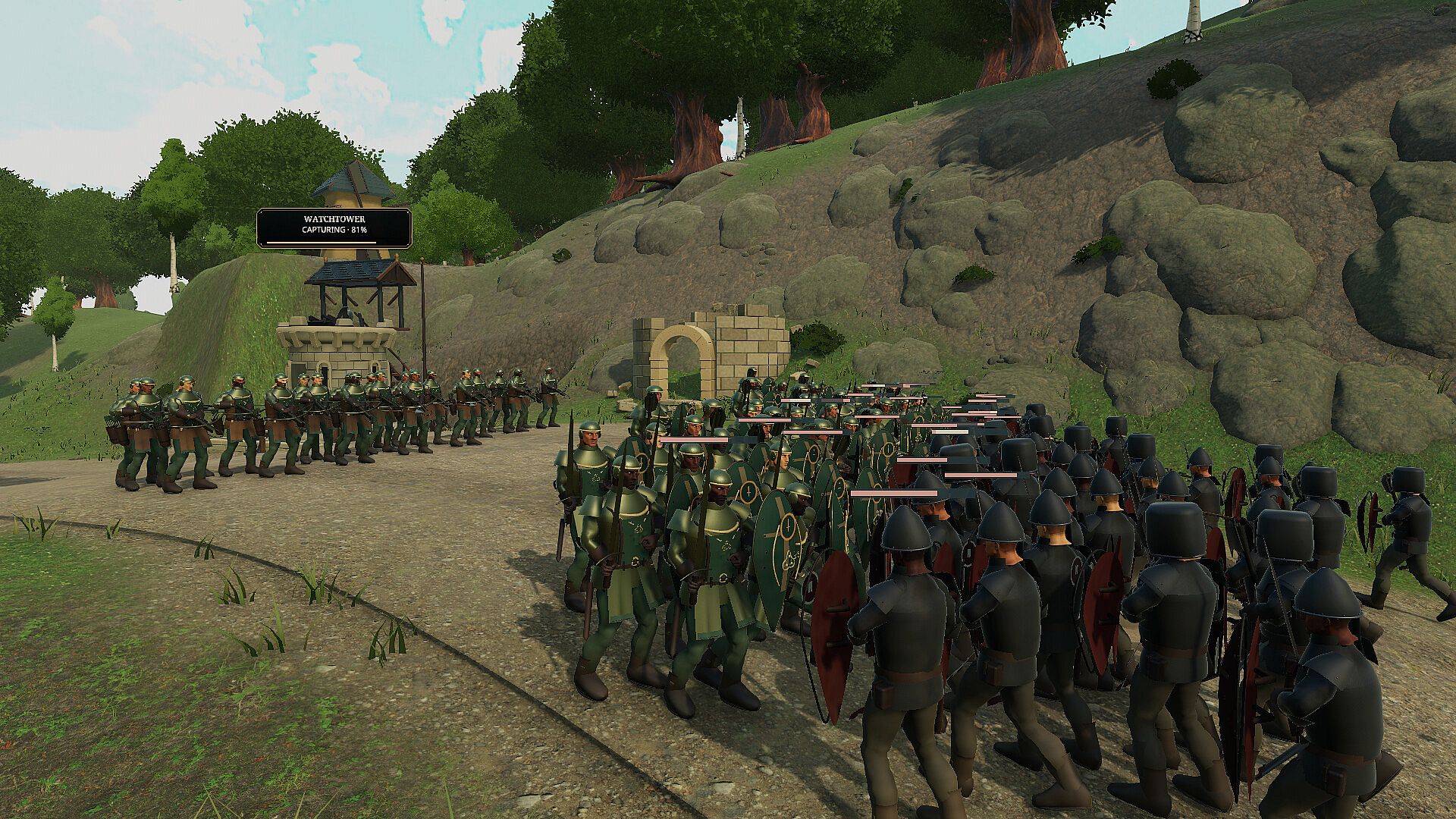
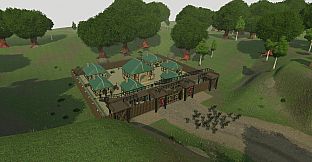
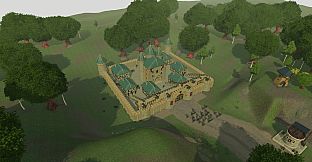
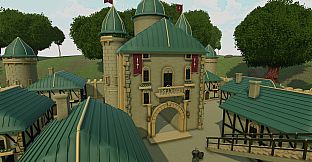
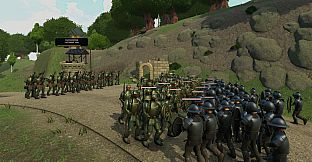
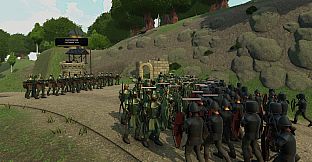
March Out! combines real-time strategy with third-person action in a medieval kingdom setting. Players build and command armies across three technology tiers while stepping onto the battlefield themselves as a commander who can fight, rally troops, operate siege weapons, and ride mounts. The Clover Guard collection adds a distinctive visual theme of green wool, interlaced brass, and carved hilltop citadel elements that apply to the commander, melee, ranged, and heavy units in every era, along with matching castle gates, walls, weapons, and fortifications. These cosmetics leave unit strength, prices, castle health, and all match rules unchanged, so they work in single-player and every multiplayer mode without altering balance.
Gameplay
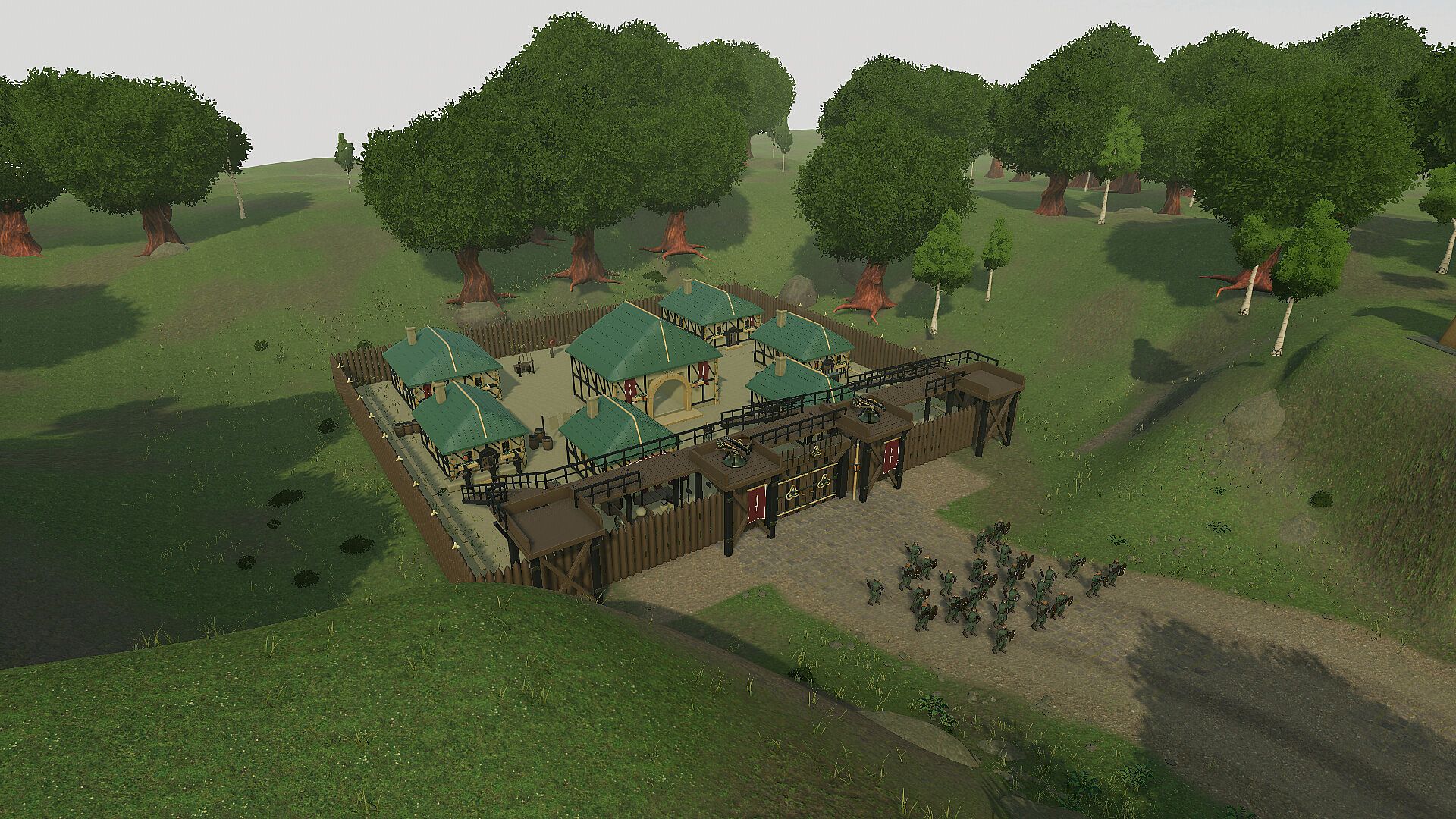
The core loop starts in the walkable Commander's Hall, where players prepare their commander, review a miniature battle on the war table, and select the next engagement. From there they recruit troops that advance through three technology tiers, mixing roles and specialists while protecting supporting farms and villages that generate income. Losses matter because surviving soldiers carry forward in the campaign, and battlefield recruitment lets commanders call reinforcements without leaving the fight. On the field the commander moves in third person, issues orders via a radial menu or hotkeys, rallies nearby units, retreats behind gates, or seizes control of wall weapons and cannons. Settlements expand the battlefield with homes, wheat fields, and economic pressure points that reward holding ground and penalize neglect. Optional day-night cycles and weather change lighting, reflections, and ambient sound without affecting combat rules. Roadside tower foundations allow investment in arrow, ballista, or stone defenses that coordinate with castle fortifications.
Game Modes
Single-player progress follows a six-siege campaign that carries surviving forces and resources between battles. Multiplayer supports up to four players across several distinct formats. Castle War pits two kingdoms against each other in a longer contest that spans multiple castles. King of the Keep places two to four kingdoms in a scramble to capture and hold a central fortress. Capture the Banner requires teams to seize and return a contested banner. Last Castle Standing has kingdoms defend their home castles while eliminating opponents. Co-op Last Stand lets two to four players share one castle for joint defense. A seasonal challenge such as The Long Watch adds time-limited objectives with permanent cosmetic rewards for qualifying play.
Customization and Progression
Kingdom identity comes from heraldry, colors, and crest choices made in the armoury and House & Heraldry sections of the Commander's Hall. The Clover Guard theme equips a full set of matching troops and architecture that other players can see even if they do not own the collection. Earned Royal Marks spent at the Royal Outfitter provide further commander and castle personalization. A physical Wall of Crowns leaderboard inside the hall displays top performers with statues for the highest ranks and plaques for the top ten. Persistent parties and shared castle visits let friends coordinate before marching out together. Battlefield cleanup crews and improved casualty settling keep larger engagements readable at higher troop limits.
Is It Worth Playing?
March Out! suits players who enjoy directing armies while also participating directly in the fighting. The mix of strategic recruitment, economic management through farms and villages, and personal combat creates a consistent loop across both the campaign and the listed multiplayer modes. Recent updates have added co-op defense, mounted commanders, controllable cannons, and expanded settlements that now appear in standard play. The Clover Guard collection offers a complete themed option for those who want their forces and fortifications to share a unified visual style without any mechanical impact. Because the game released in late October 2026 and continues to receive balance and feature updates, interested players can expect ongoing refinement of siege combat, army scale, and kingdom customization. Those who prefer pure real-time strategy or pure action games may find the hybrid approach either a strength or a distraction depending on how much they value switching between command and direct control.