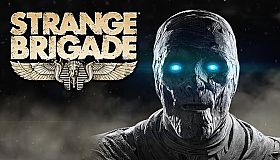















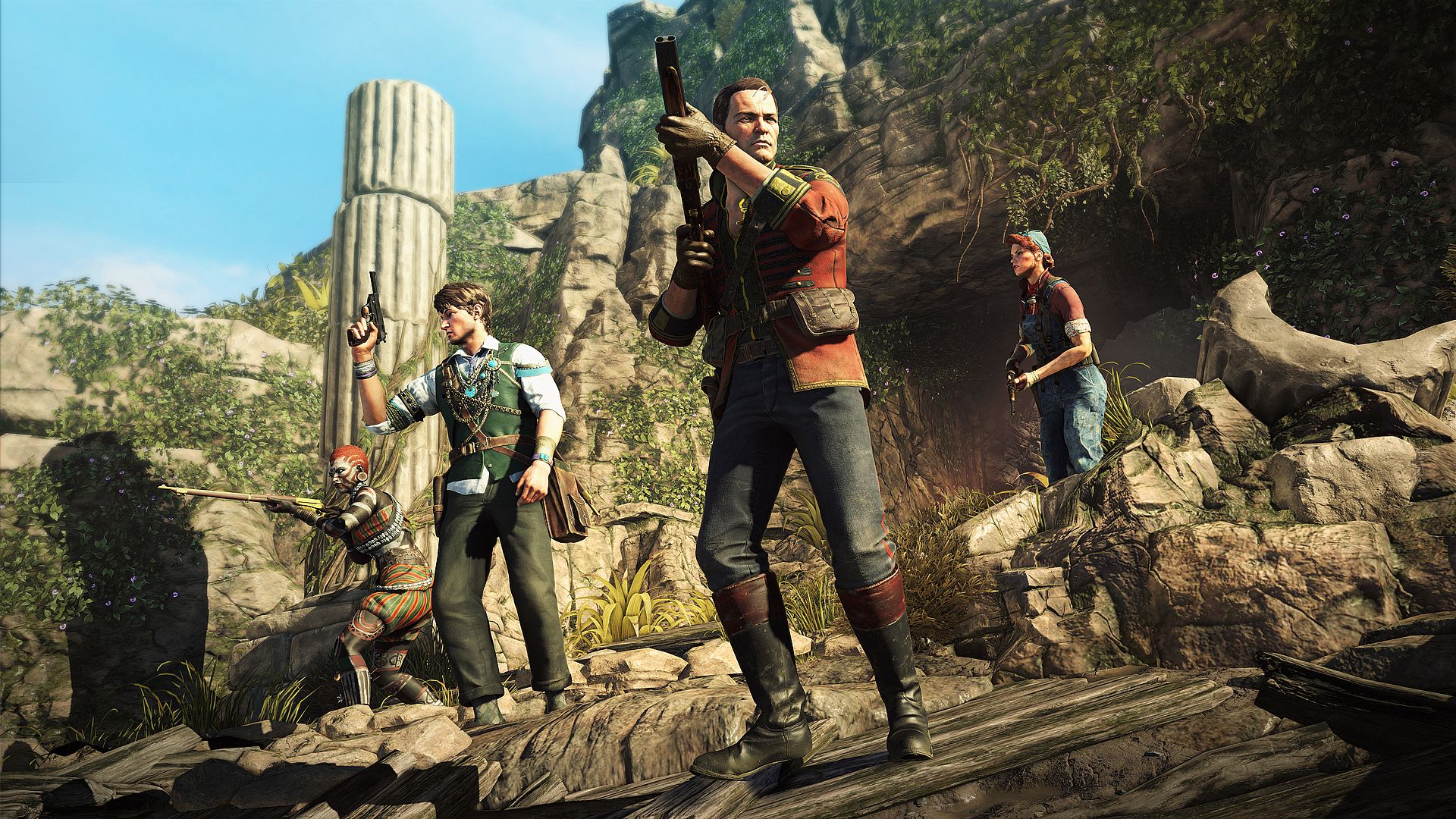
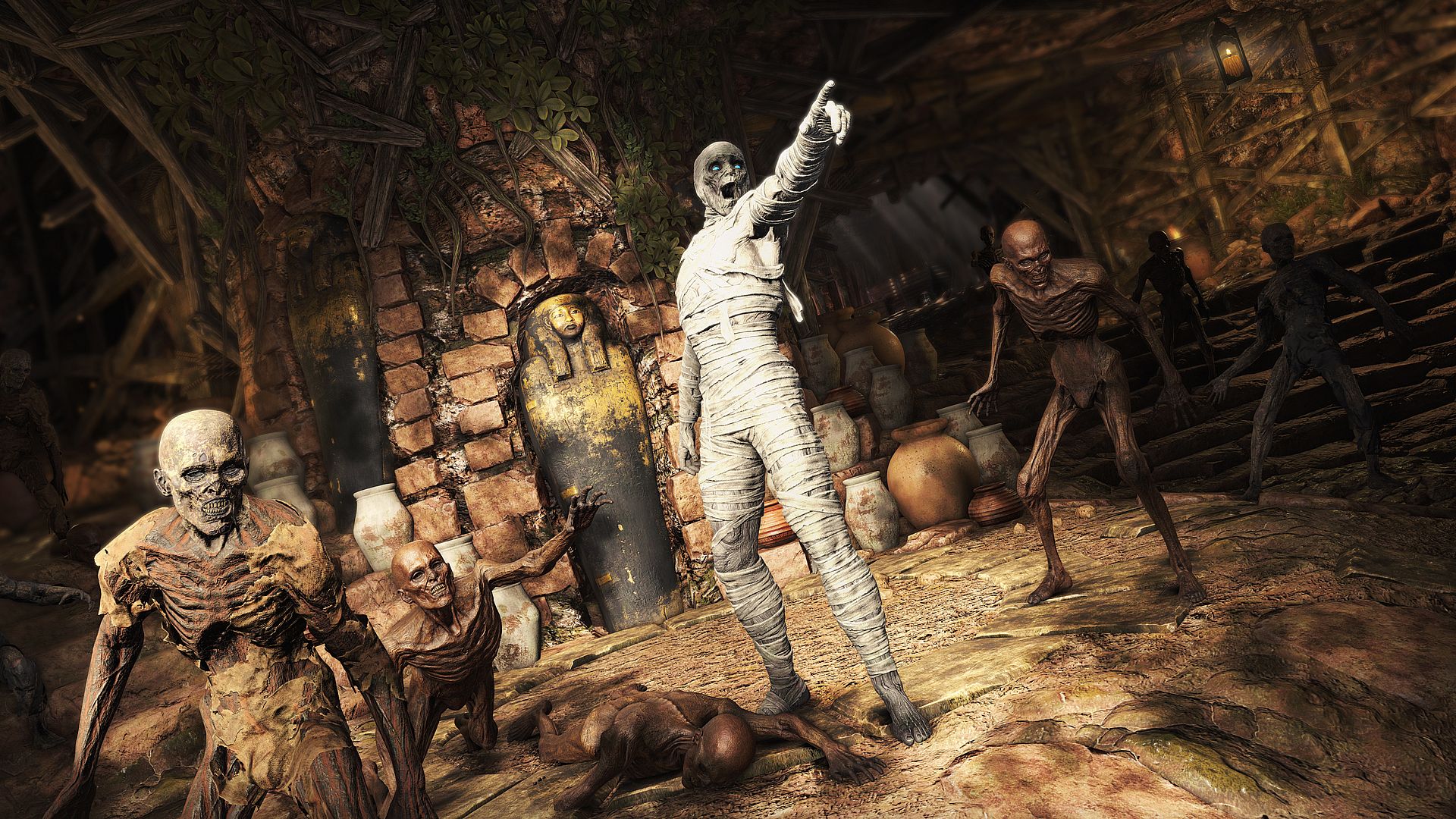
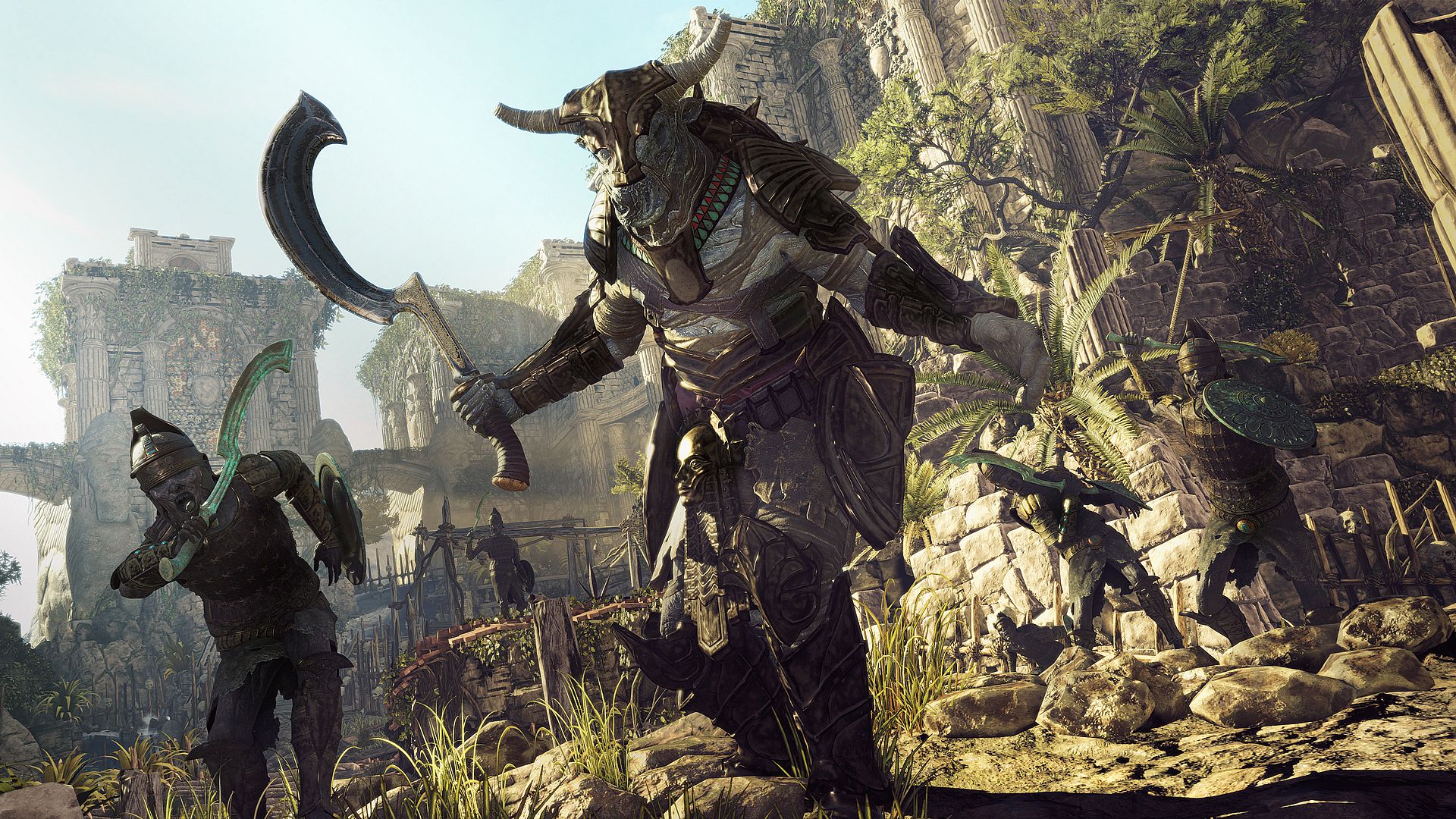
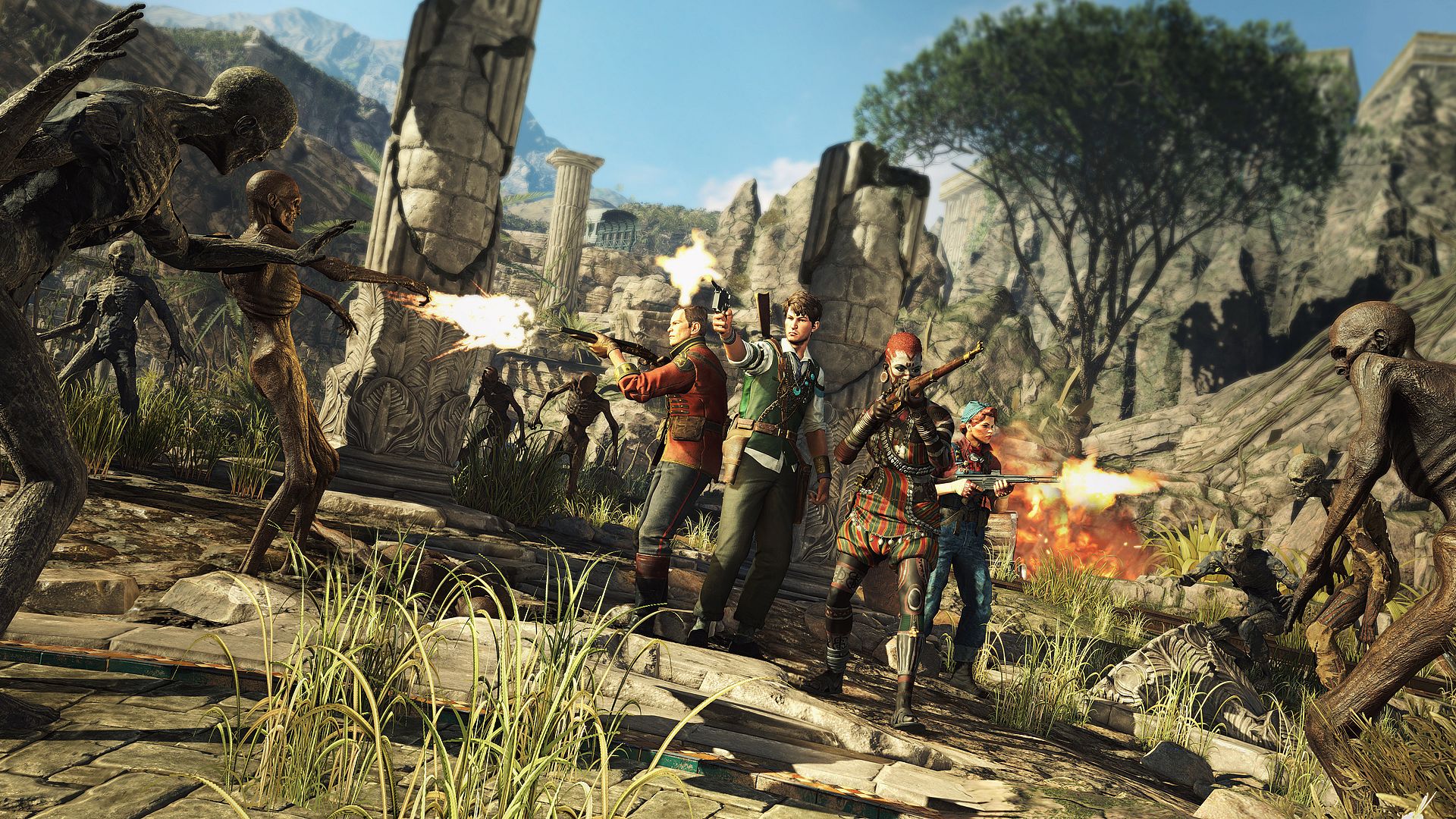
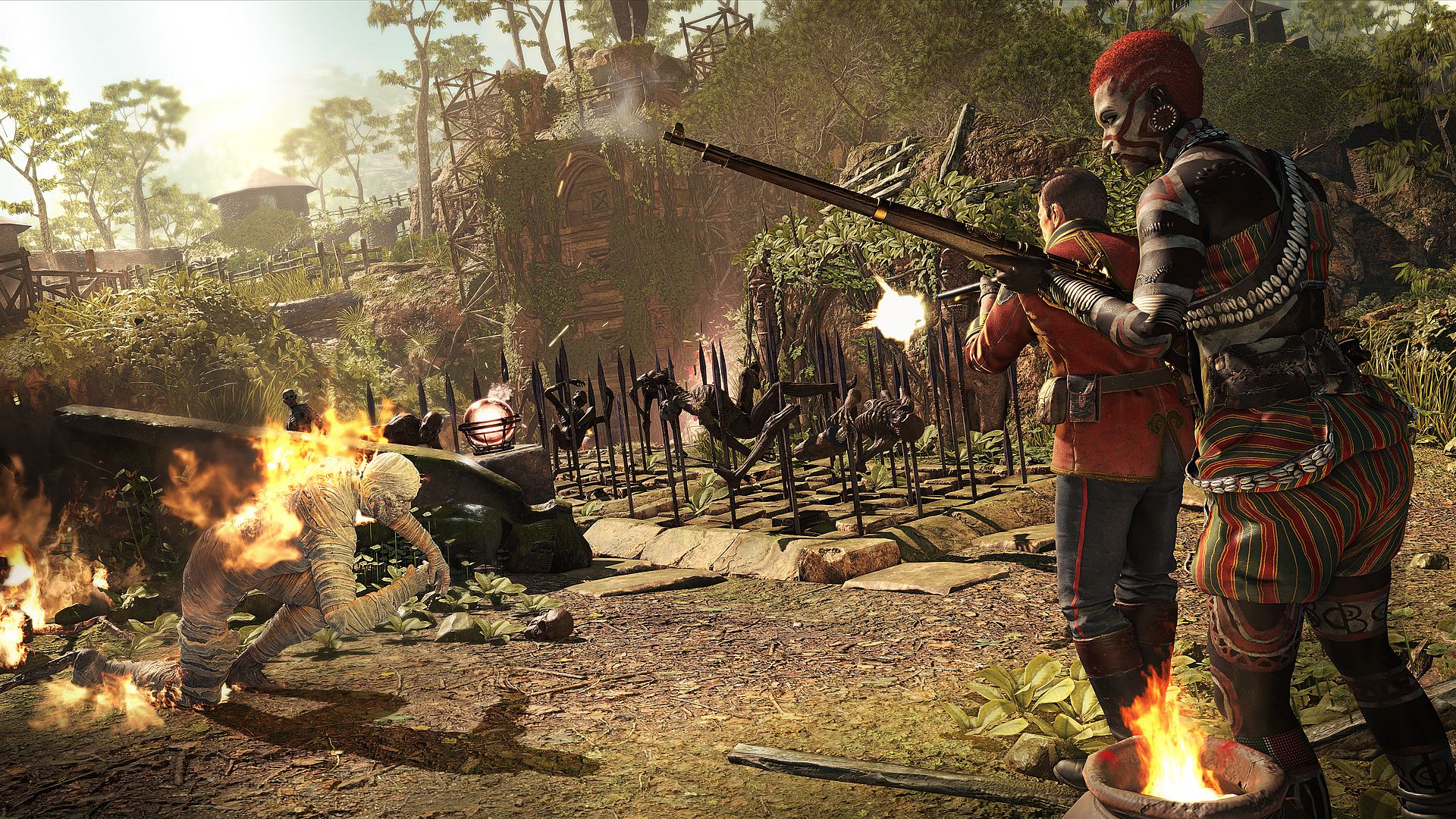
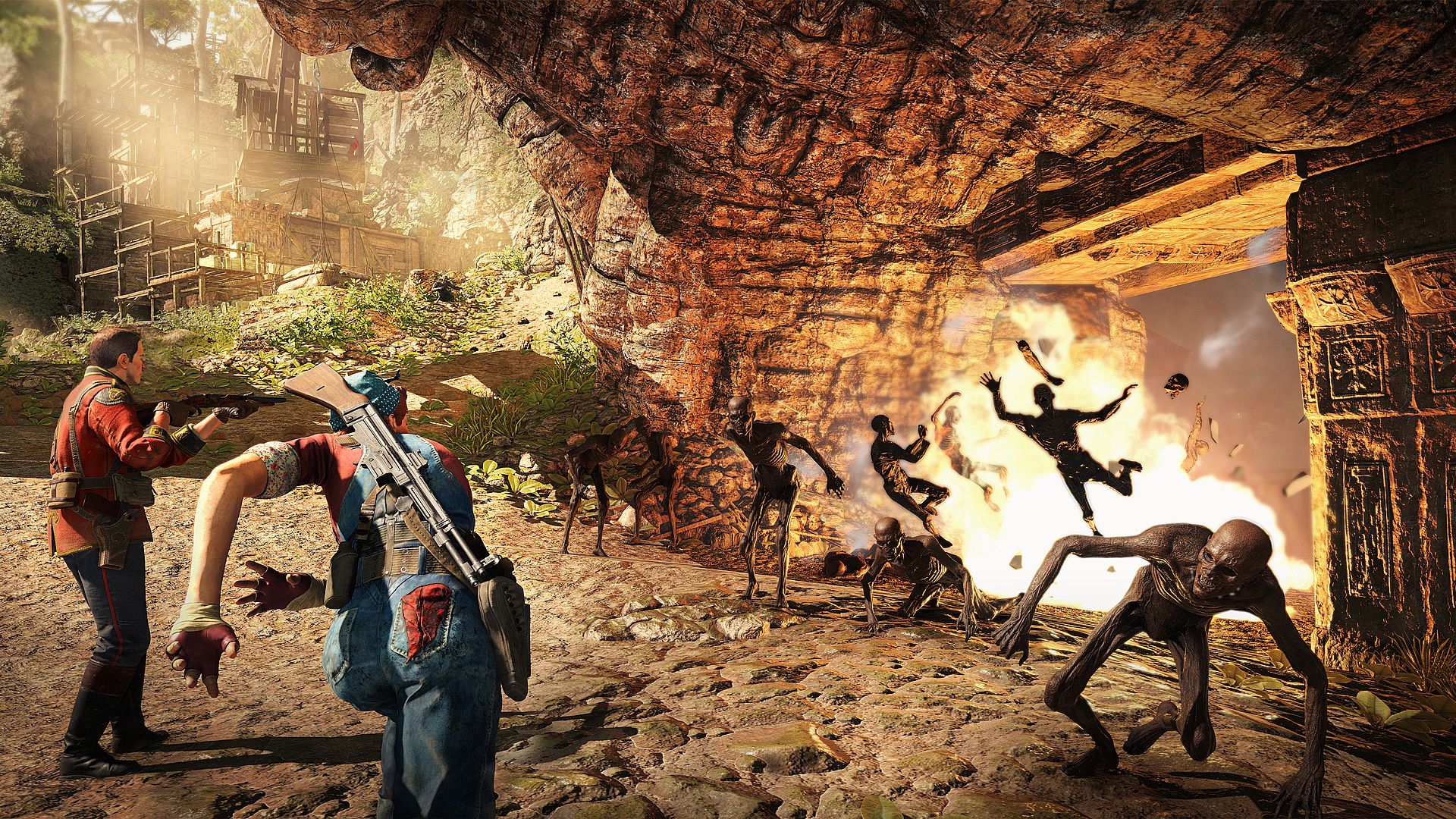
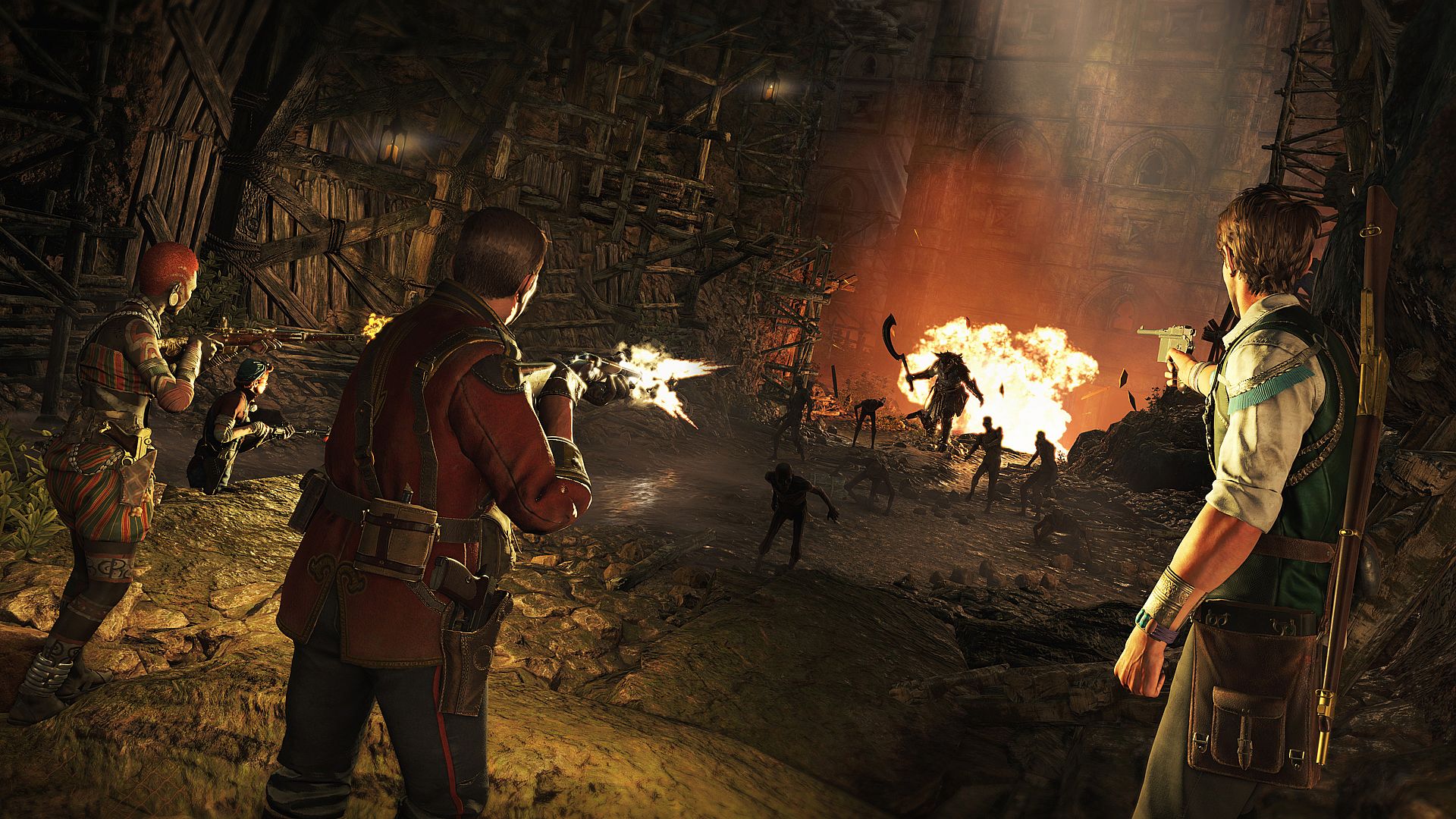
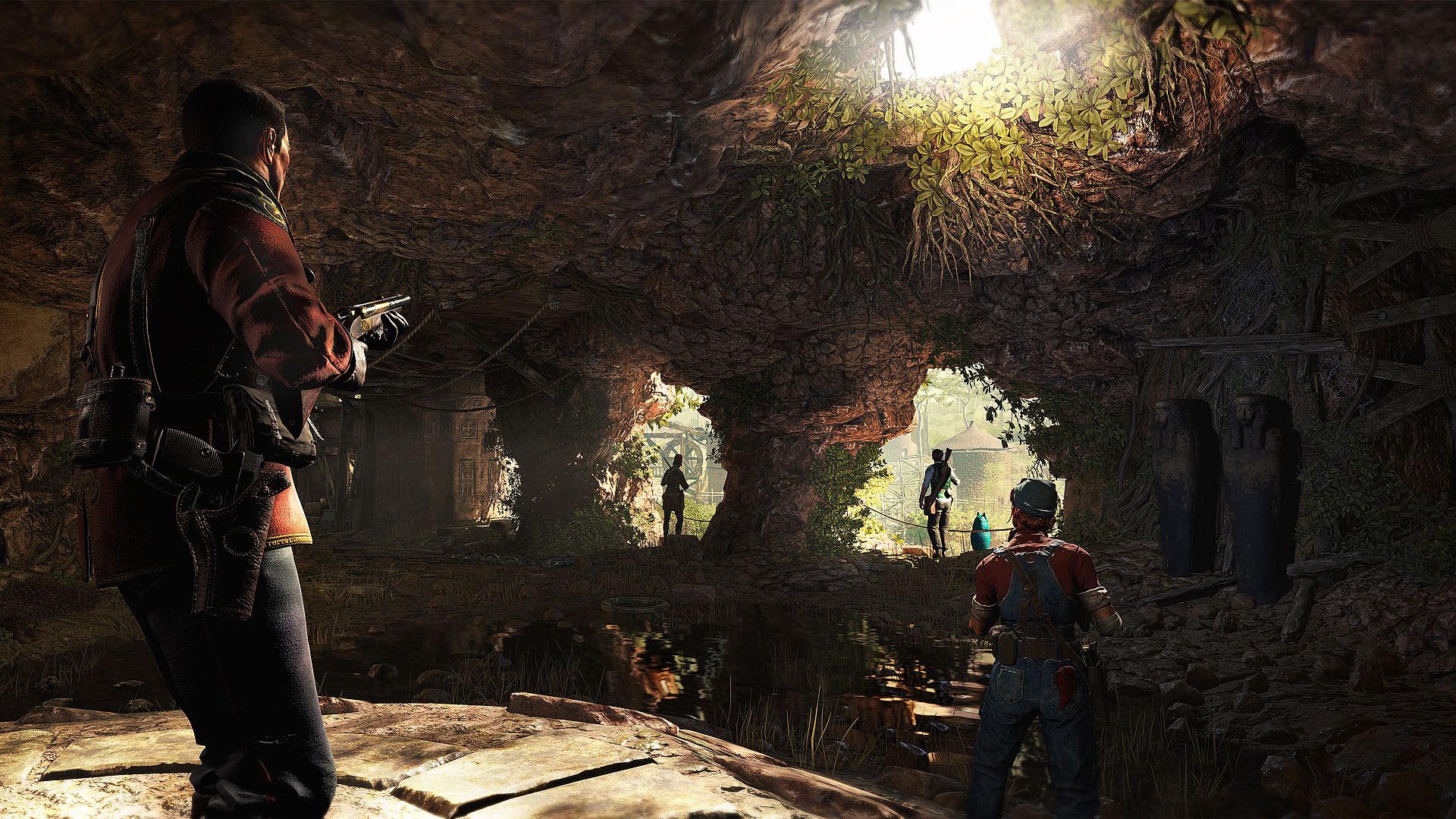
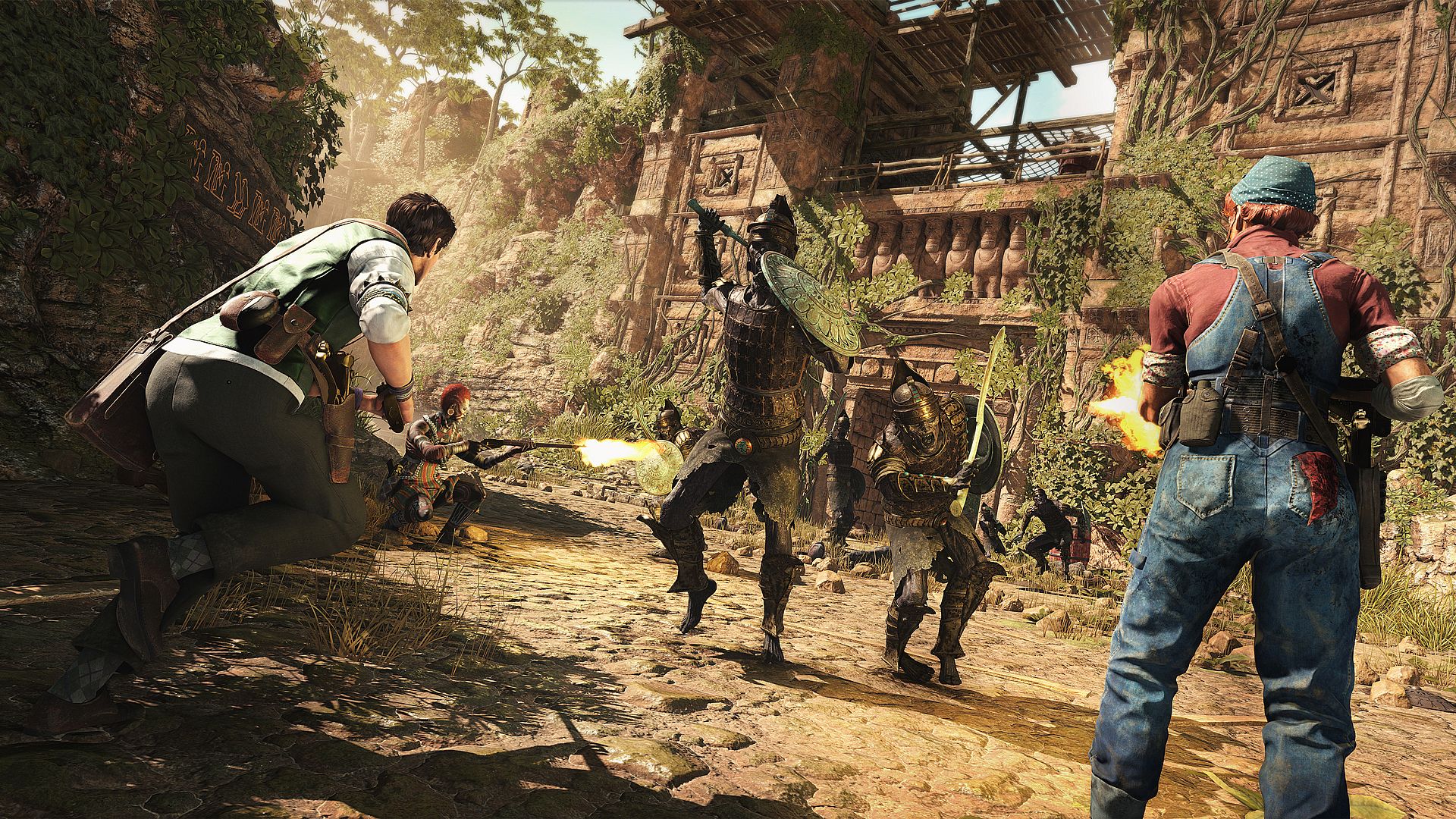
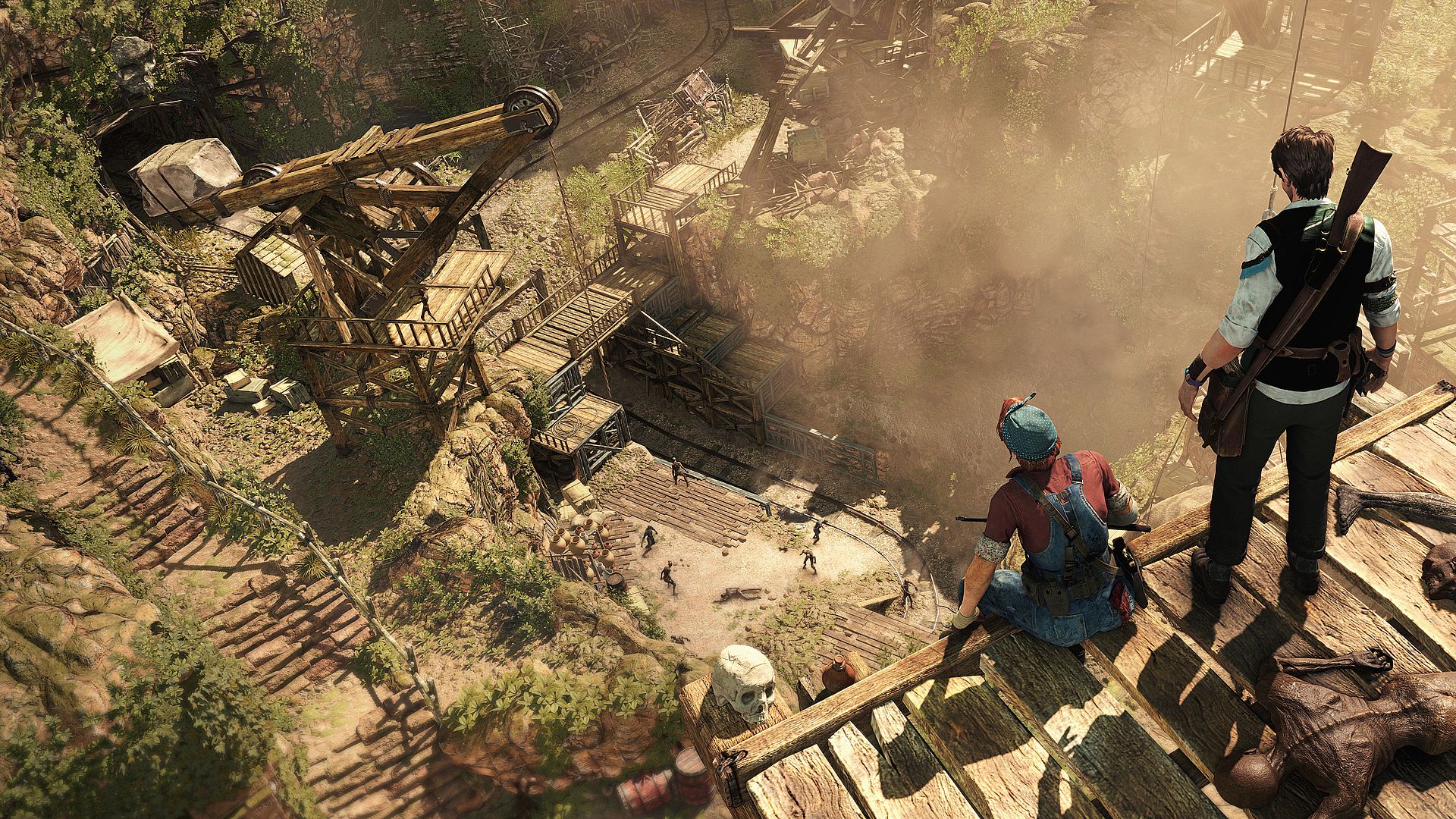
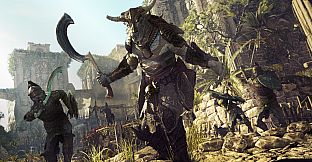
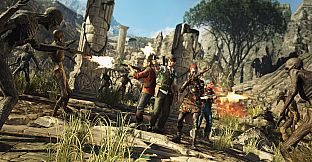
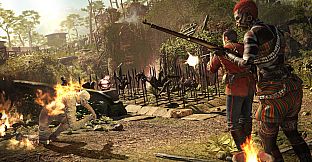
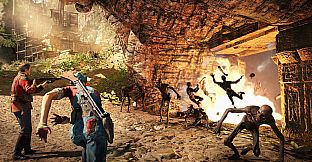
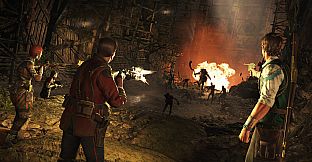
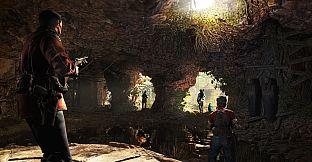
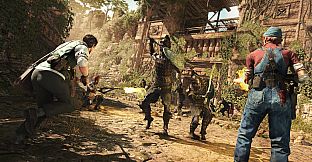
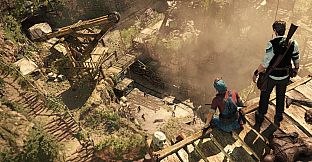
Strange Brigade is a third-person action adventure shooter set in the 1930s that blends shooting, light exploration, and co-op play. Players take control of one of several characters tasked with stopping ancient evils while hunting for treasure across varied environments. The core experience centers on gunplay against waves of enemies, occasional puzzles, and collecting secrets that encourage replaying levels.
Gameplay
The gameplay loop revolves around third-person shooting with a focus on managing hordes of supernatural foes. Each character carries multiple weapons that can be upgraded or swapped during missions, and players use special abilities tied to amulets for crowd control or damage boosts. Exploration plays a supporting role through hidden collectibles and optional paths that reward thorough play without derailing the action.
Combat emphasizes positioning and resource management, as enemies often approach in large groups that require switching between primary fire, explosives, and character-specific tools. Solo runs remain viable, though the design shines when multiple players coordinate to cover different angles and revive one another. The 1930s setting adds personality through voice lines and environmental details that break up the shooting sequences.
Customization comes from unlocking new weapons, items, and amulets that alter how abilities function. These elements integrate directly into the campaign flow, giving players reasons to experiment across different runs without requiring external progression systems.
Game Modes
The main campaign consists of multiple stages that advance a story of treasure hunting and monster fighting. Each stage mixes linear shooting sections with light puzzle solving and secret hunting, typically taking 30 to 45 minutes depending on exploration depth. Progress carries over between sessions, and completing stages unlocks further content.
Horde mode provides standalone survival challenges in dedicated arenas. Players start with basic gear and earn currency from each wave to purchase upgrades, focusing purely on endurance against escalating enemy numbers. This mode supports the same co-op framework as the campaign and offers a different pace centered on wave defense.
Score Attack mode repurposes campaign sections into timed challenges where the goal is clearing enemies as quickly as possible for high scores. It serves as a competitive layer for players who want to optimize routes and weapon choices after finishing the story content.
Season Pass Content
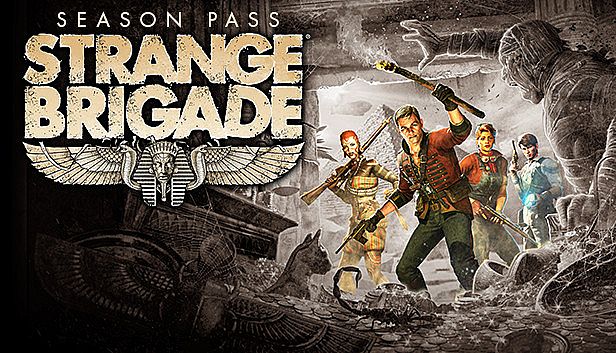
The Season Pass expands the base experience with additional campaign missions that continue the main storyline. These new stages follow the same structure of shooting, exploration, and co-op encounters while introducing fresh environments and enemy encounters.
New playable characters join the roster, each bringing distinct weapons and abilities that change team composition options. Additional weapons, items, and amulets further diversify loadouts, allowing more varied approaches to both existing and new content.
Explosive new amulets provide powerful effects that integrate into the existing ability system. Together these additions increase replay value by offering more characters to master and more missions to complete with friends or alone.
Is It Worth Playing?
Strange Brigade suits players who enjoy co-op third-person shooters with a lighter tone and replayable modes. The combination of campaign stages, horde survival, and score challenges provides solid variety for groups of two to four players, while solo play remains functional for those who prefer single-player runs.
The Season Pass extends the core loop with meaningful additions that keep the experience fresh after the initial campaign. Those who value character variety and ongoing content updates will find the most value here, especially if they already enjoy similar co-op action titles.
Overall the game delivers consistent shooting and co-op moments without overcomplicating its systems. It works best when played with others, but the verified modes ensure there is content worth returning to even after the story concludes.