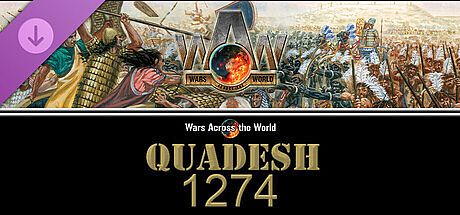




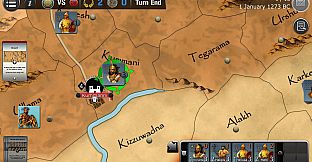
Wars Across the World: Quadesh 1274 is a turn-based strategy game that recreates the conflict between the Egyptian empire under Pharaoh Ramses II and the Hittite empire under King Muwattali in the ancient Near East. Players direct armies across the coasts of Judea, Syria, and Phoenicia over a span of eight years, with the objective of controlling key regions and defeating opposing forces and their allies. The game runs on a fixed structure of 16 turns, each covering roughly six months between 1277 and 1269 BC, and it supports two sides in direct opposition.
Gameplay
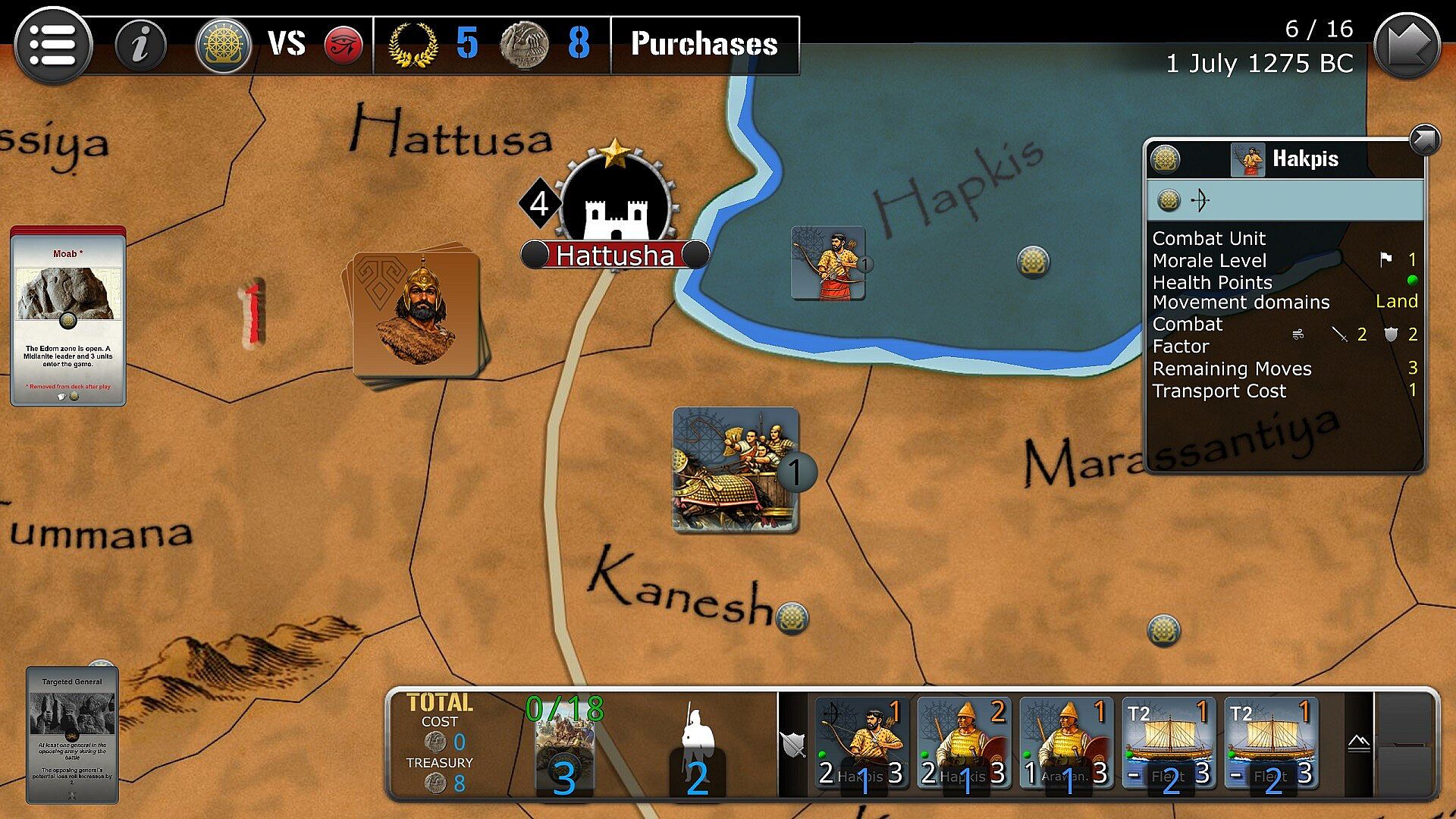
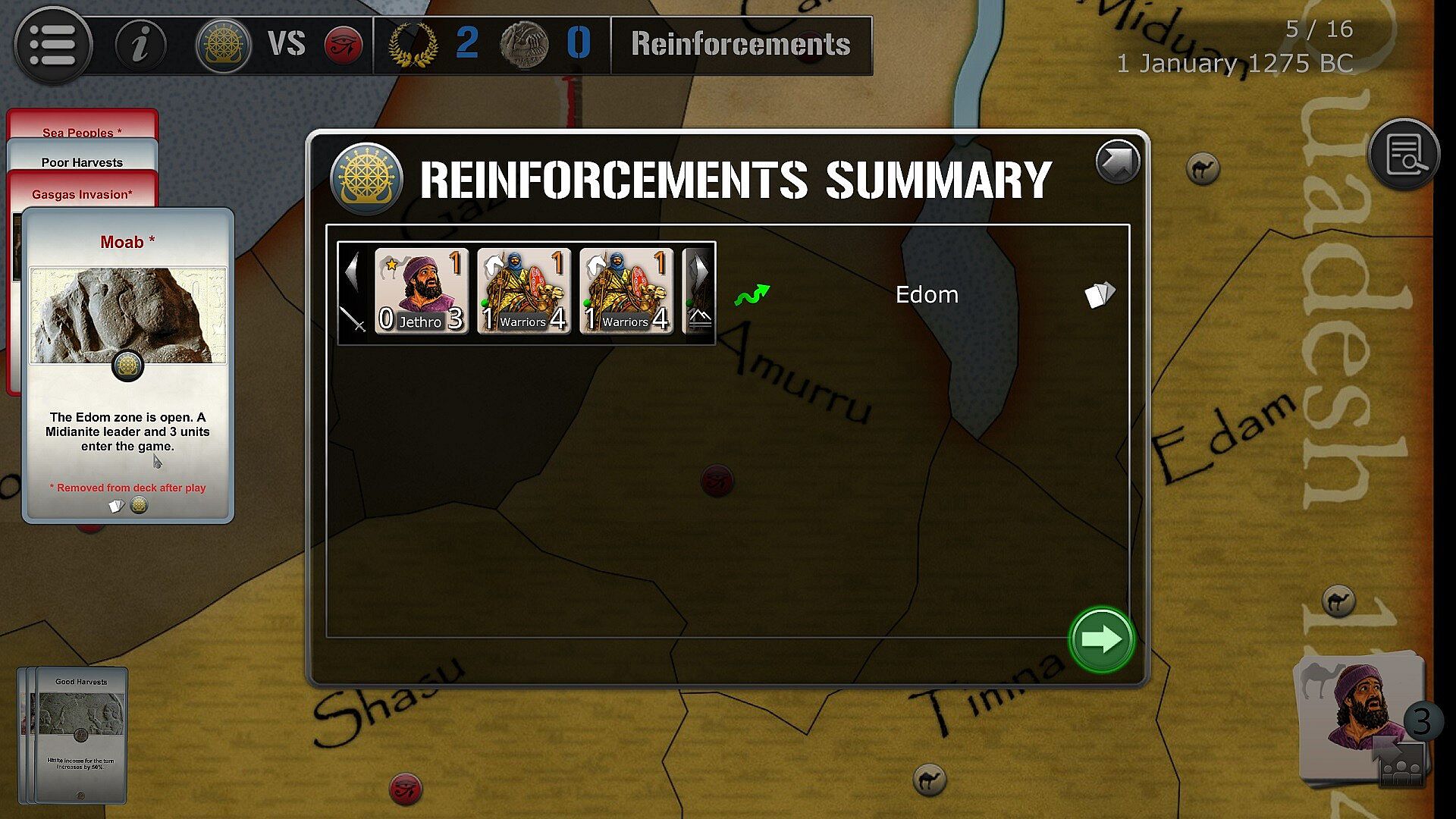
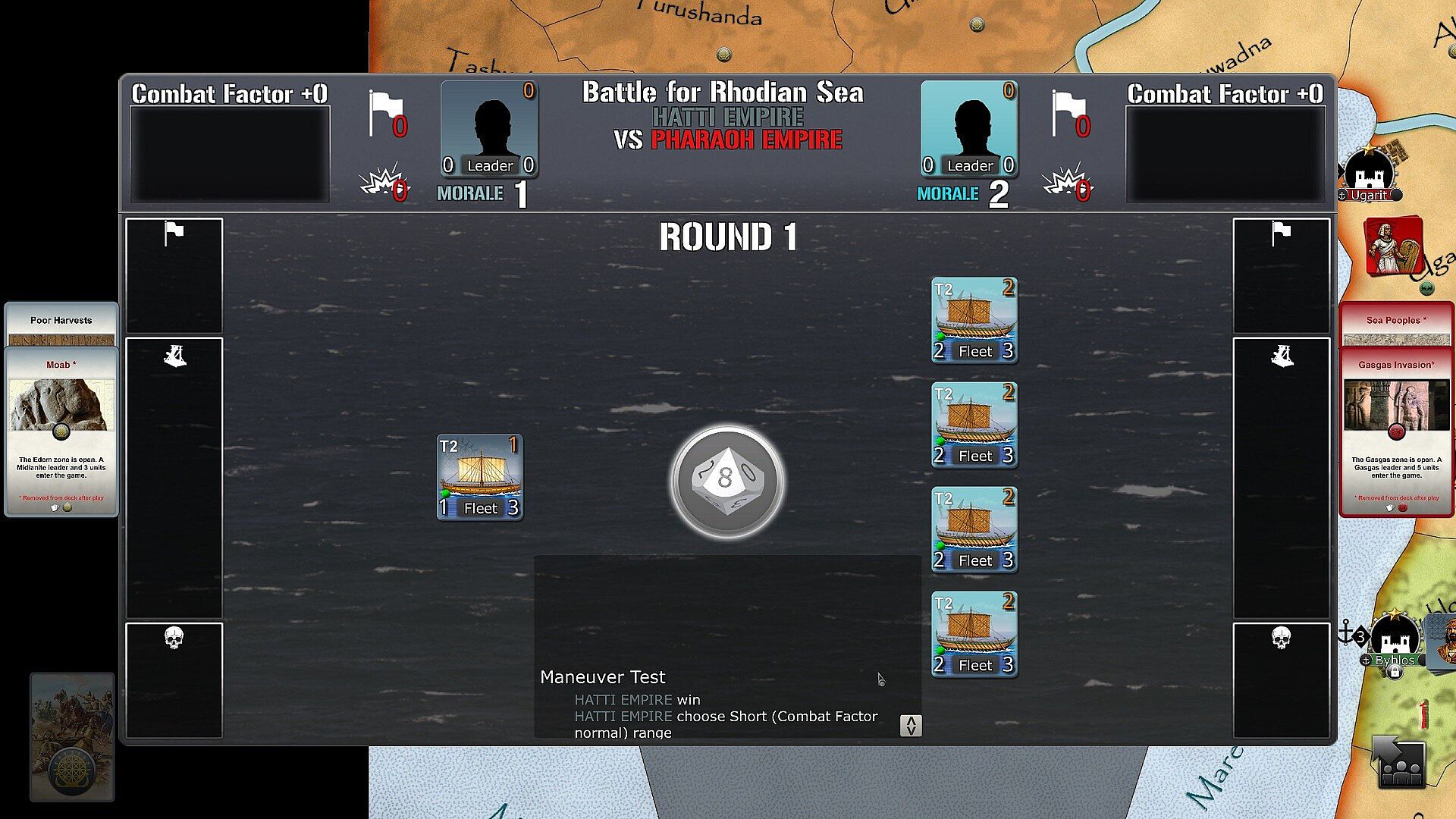
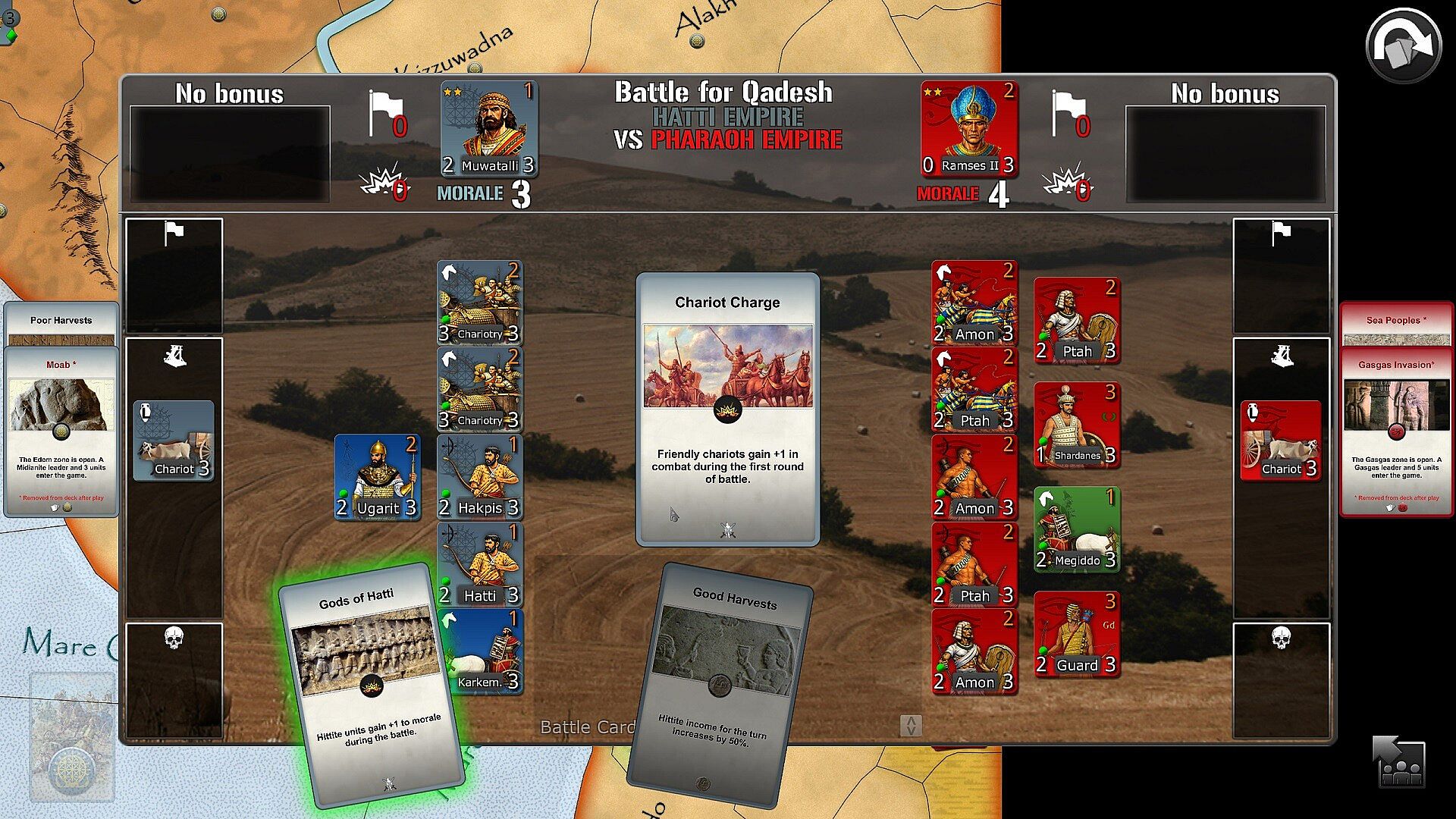
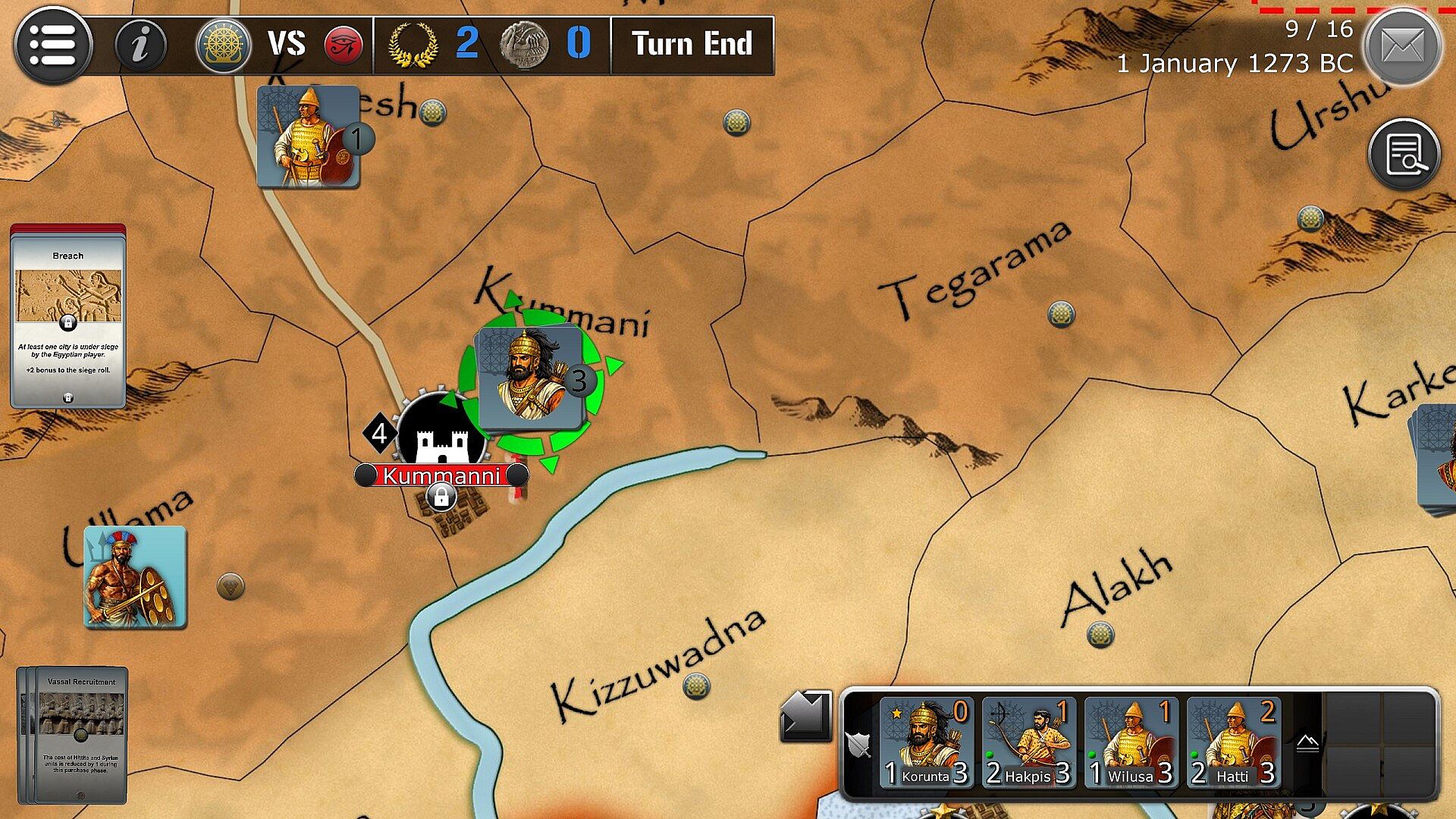
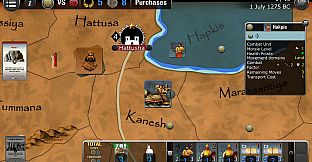
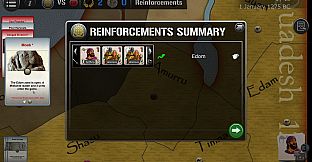
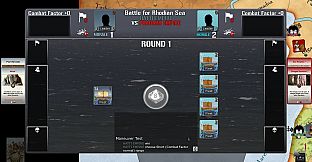
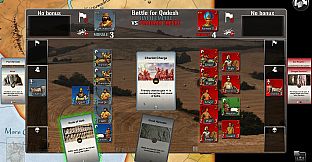
The core loop centers on managing limited forces through a sequence of phases that include drawing event cards, recruiting or reinforcing units, accumulating resources from controlled territories, and executing movements and combats. Infantry units number between two thousand and four thousand men per side, supported by five hundred war chariots, while additional troops arrive through allied contingents or mercenaries funded by treasury reserves in captured areas. Event cards introduce shifts in diplomacy, military actions, politics, or economics, altering available options or unit effectiveness from turn to turn. Movement occurs across regional areas, with battles resolved through dice rolls combined with card play that can modify outcomes or provide temporary advantages. Supply considerations tie directly to territorial control, and the entire session typically concludes in about ninety minutes.
Game Modes
The title consists of a single focused scenario built for two participants, one commanding Egyptian forces and the other leading the Hittites. Both sides begin with comparable strength and access to the same core mechanics, allowing either player to pursue victory through territorial gains or decisive engagements. The structure supports head-to-head play, with the option to switch sides between sessions for repeated attempts at different strategic approaches. No additional modes or variants appear in the design.
Factions and Forces
Egyptian and Hittite armies form the primary factions, each relying on a mix of infantry and chariot elements that prove roughly equal at the outset. Support comes from recruitable allies and mercenaries, drawn either through specific event cards or by spending accumulated resources from key coastal and inland regions. Neither side holds an inherent advantage, and the design avoids designating one as more difficult to command. Players must balance immediate combat needs against longer-term control of resource-generating areas to sustain operations across the full sixteen turns.
Is It Worth Playing?
This entry suits players who enjoy compact historical wargames with card-driven variability and straightforward area movement. The balanced starting positions and short session length make it accessible for repeated matches without requiring extensive setup time. Those seeking deeper campaign systems or larger-scale conflicts may find the scope limited to this single Bronze Age confrontation. The emphasis on event cards and resource management provides consistent replay value through different card draws and territorial priorities, particularly when competing directly against another participant.