







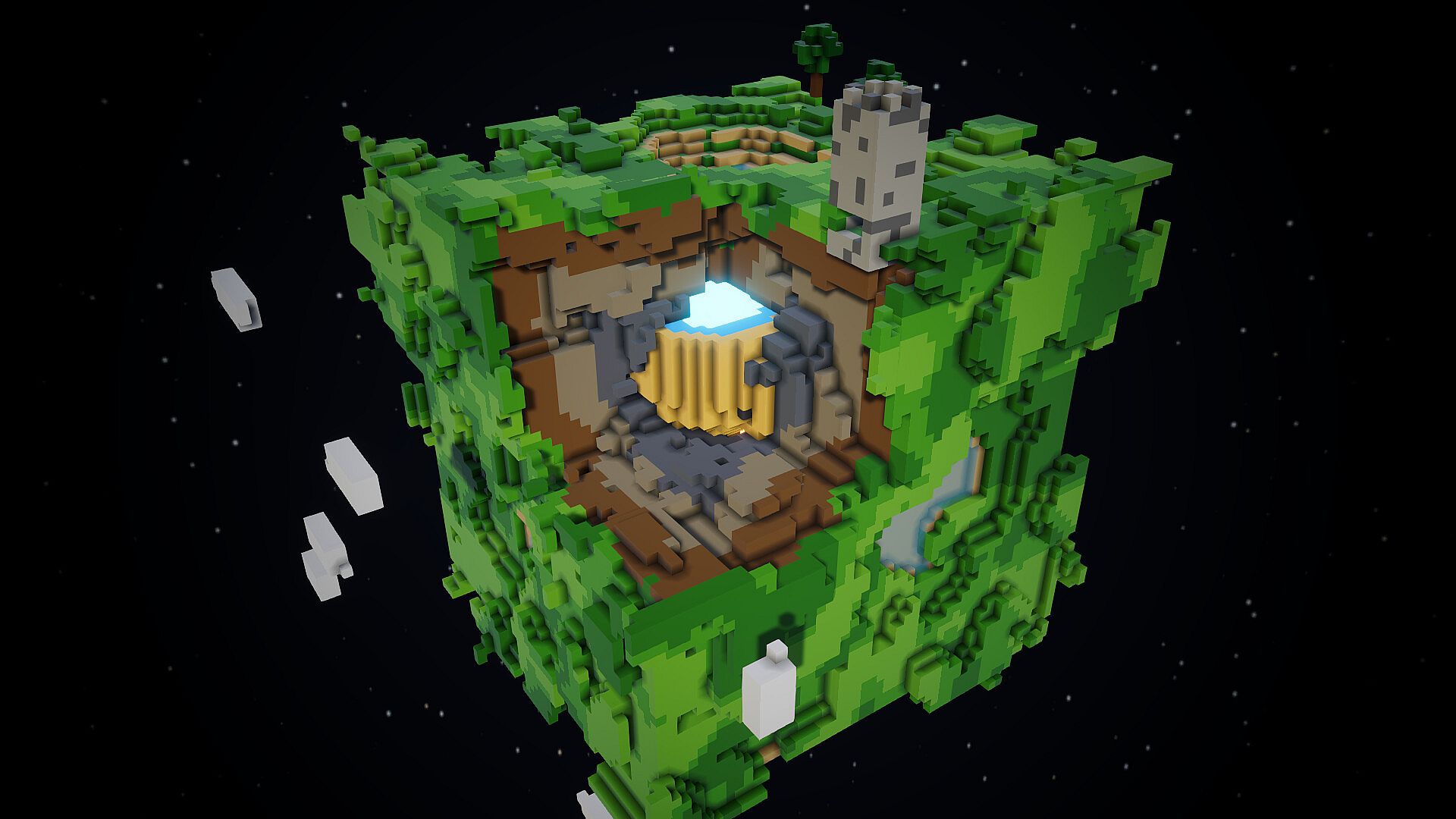
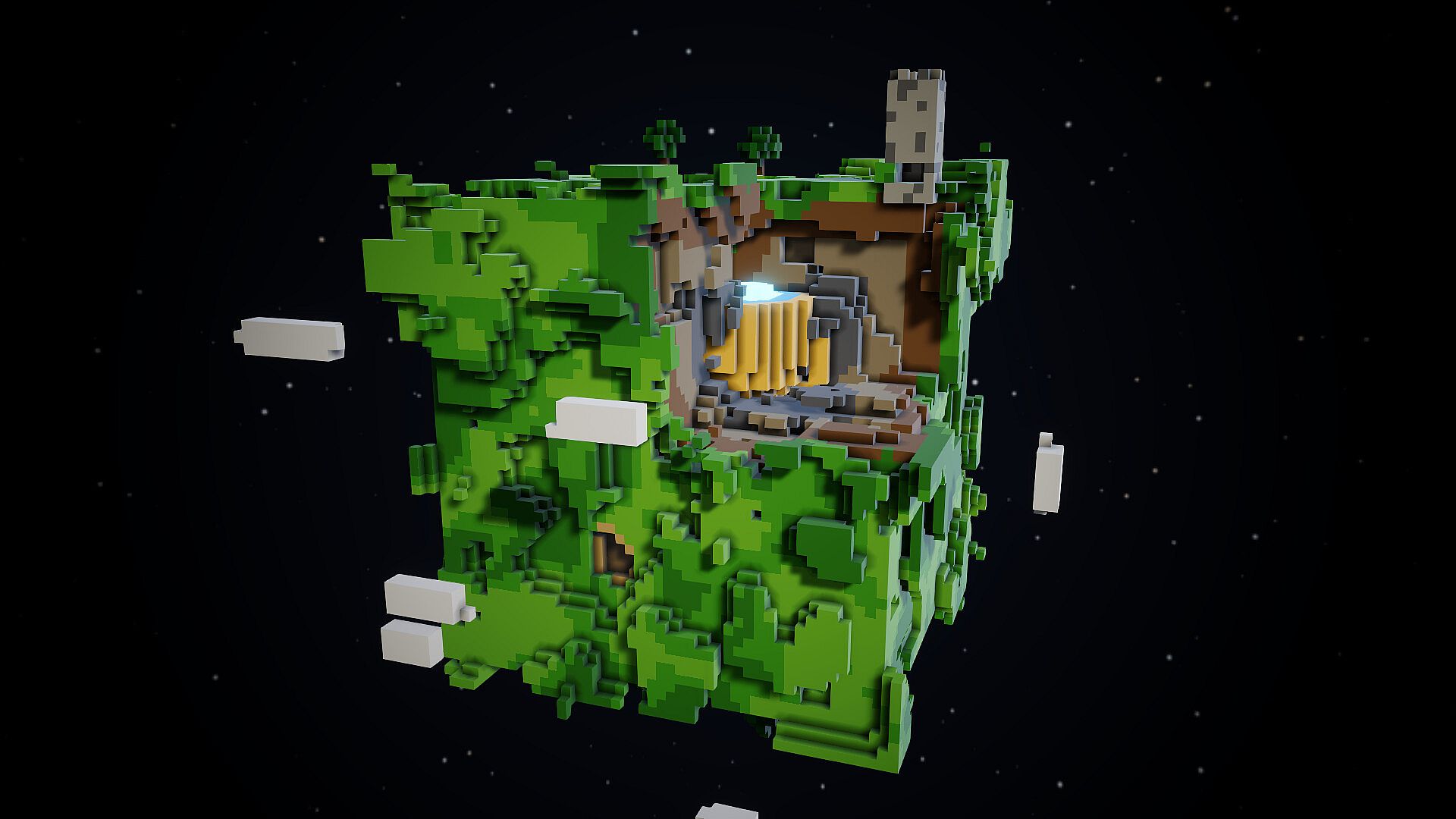
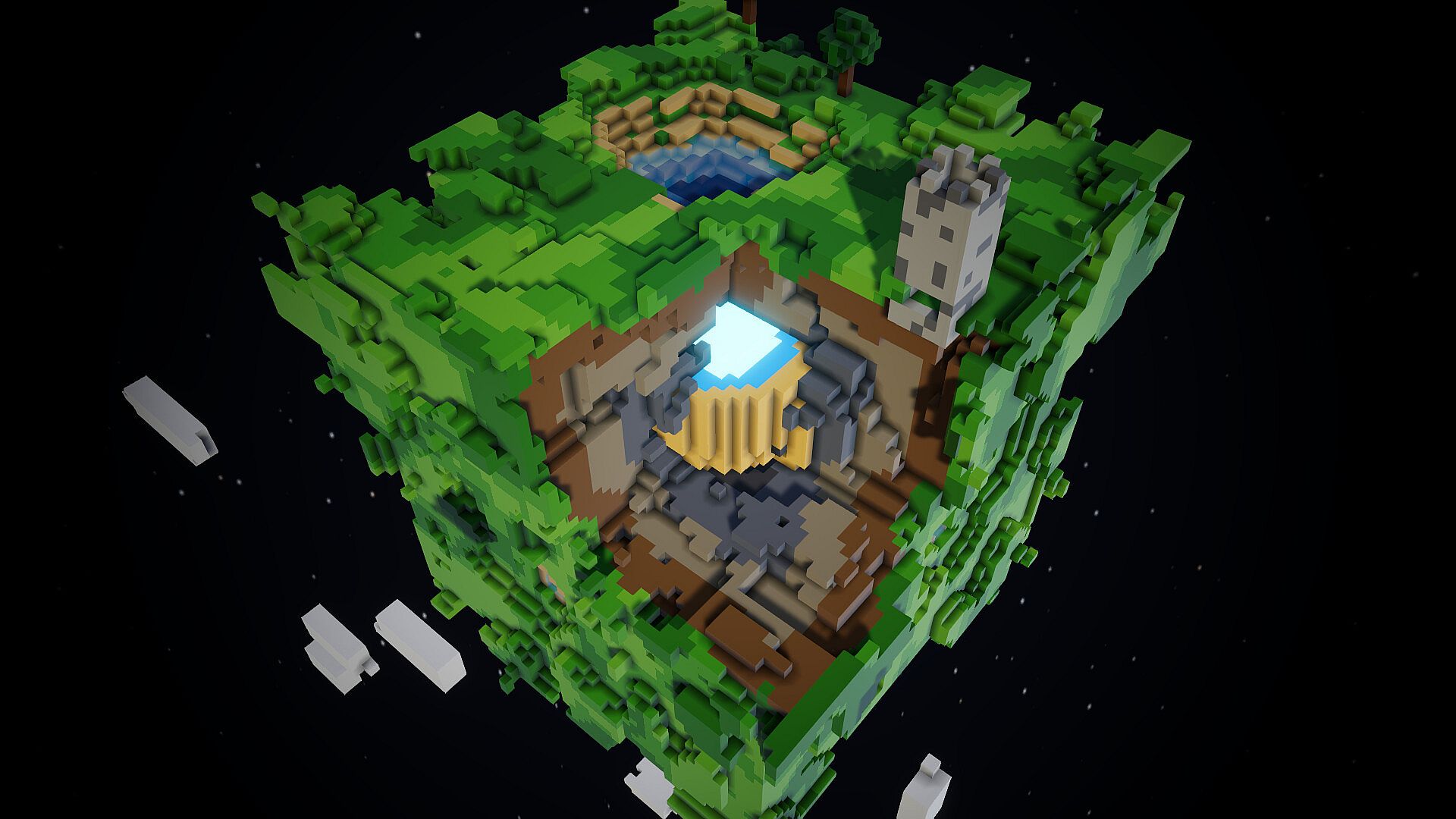
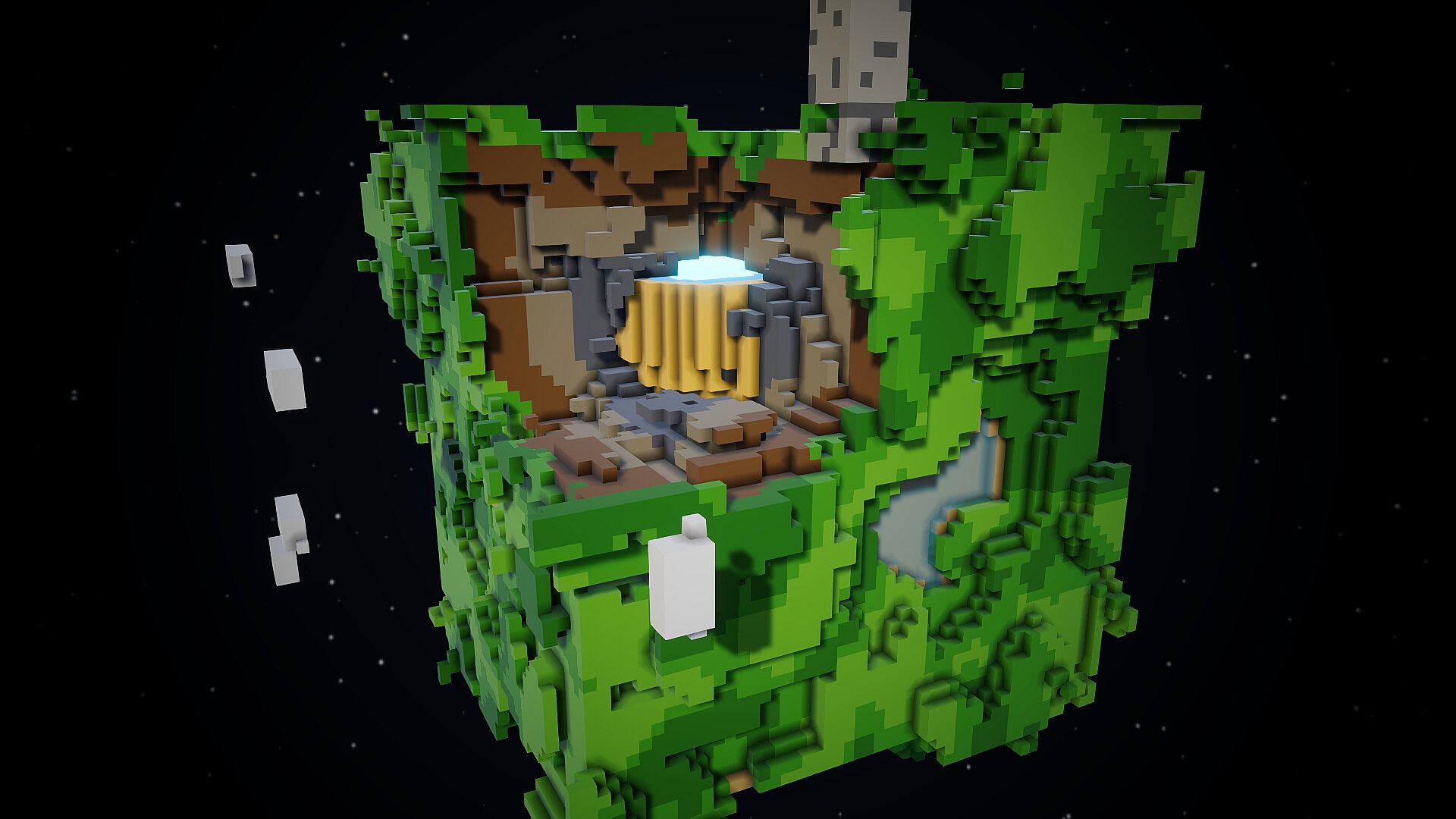
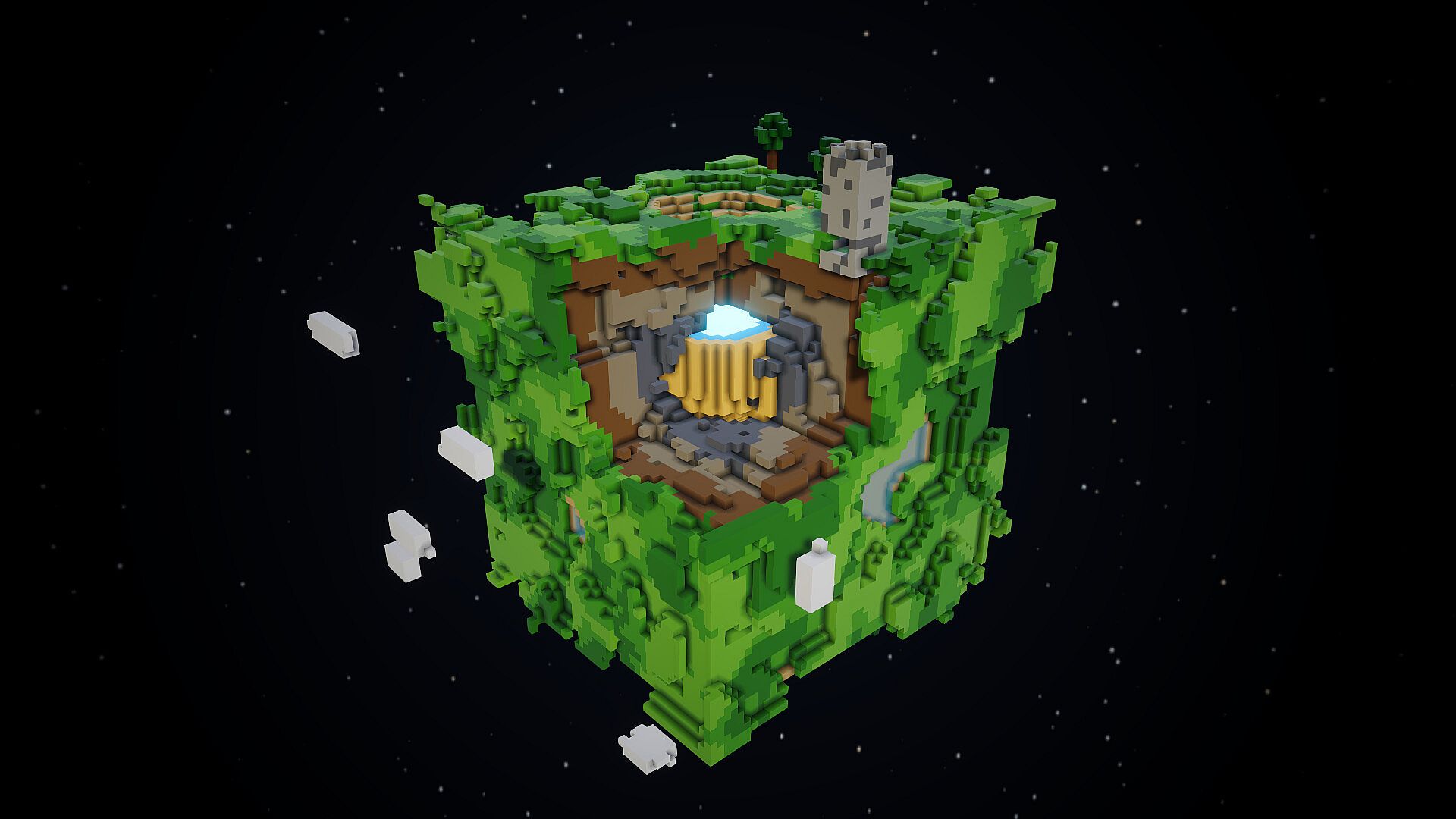
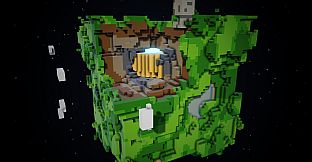
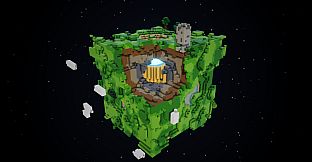
10 Billion Blocks is an indie incremental simulation and adventure game for PC. Players dismantle cube-shaped planets layer by layer through targeted clicks that remove blocks in a radius determined by the exact point of impact on each face. The experience centers on resource gathering, automated assistance, and progressive upgrades that open deeper layers until only a central relic remains.
Gameplay
The core loop revolves around breaking blocks on a spherical world made of six distinct layers. Each layer features unique materials with increasing hardness that requires pick upgrades to access. A single click clears the targeted block along with surrounding material within its radius, and deeper blocks yield higher coin rewards based on composition and depth. Ore seams appear for tracing, while geodes and sealed structures add variety to the excavation process.
Miners can be hired with earned coin to work independently. These units mine continuously during play sessions and can be positioned at specific anchors to focus efforts on chosen shafts. They represent the only permanent loss in the game, as an explosion destroys them without refunding the hiring cost. The upgrade tree branches from a single root, with each level unlocking child options that add multipliers, flat increases, or new click shapes without requiring full investment in any parent node.
Recovered pieces function as weapons that alter block states. Burning combined with frozen produces shatter effects, burning with impact creates melt, and wet triggers chain reactions that propagate along water instead of following the weapon's original pattern. Explosions can detonate buried TNT, while removing supports causes masses to detach and impact lower areas for full payouts. These interactions remain optional, allowing complete clearance without their use, though they accelerate progress when triggered.
Game Modes
The game operates as a single continuous campaign across multiple planets. Each world starts larger than the last, and completion transfers all accumulated coin, miners, upgrades, and relic pieces to the next instance. The structure builds outward from the initial small planet through repeated cycles of excavation and advancement.
Progression follows a fixed sequence of six-layer planets that increase in scale. The campaign maintains a finite length with a defined endpoint once the final planet is cleared. No separate modes or variations exist beyond this core progression loop, keeping the focus on incremental growth and repeated application of improved tools across successive worlds.
Key Mechanics
Click radius mechanics reward precise placement, as clipping corners removes clusters while deep wall placements take larger bites. Block value scales with depth, encouraging steady descent. The hardness ceiling on picks enforces sequential layer access, turning each planet into an outside-in reading of its contents.
Relics at each planet's core consist of indestructible material. Clearing all breakable blocks leaves the relic exposed, from which exactly one piece is taken before warping onward. This piece carries forward permanently, altering future runs through accumulated advantages without resetting any owned resources.
Is It Worth Playing?
10 Billion Blocks suits players who prefer focused incremental experiences with a clear conclusion rather than endless loops. The finite campaign delivers a complete arc from first clicks through multiple planet cycles, emphasizing steady advancement and optional interaction systems. Those drawn to simulation elements like automated mining placement and layered resource management will find consistent depth in the upgrade and positioning choices.
The title appeals to casual sessions because each planet can be approached methodically or accelerated through state-altering combinations. Retention of all progress between worlds removes frustration from restarts, while the single-build structure ensures everything remains accessible from the start. Players seeking short-to-medium length adventures centered on excavation and incremental power growth will likely appreciate the straightforward yet layered systems.











