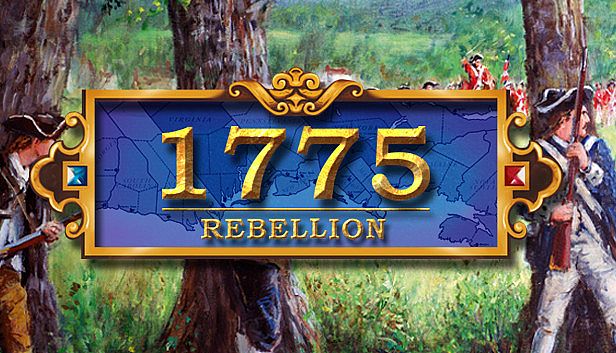












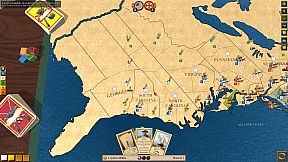
1775: Rebellion is a strategy game for PC that recreates the opening stages of the American Revolution through area control and card driven conflict. Players lead opposing sides across the original thirteen colonies plus Maine, Nova Scotia, and Quebec as they fight for dominance of towns and forts.
Gameplay
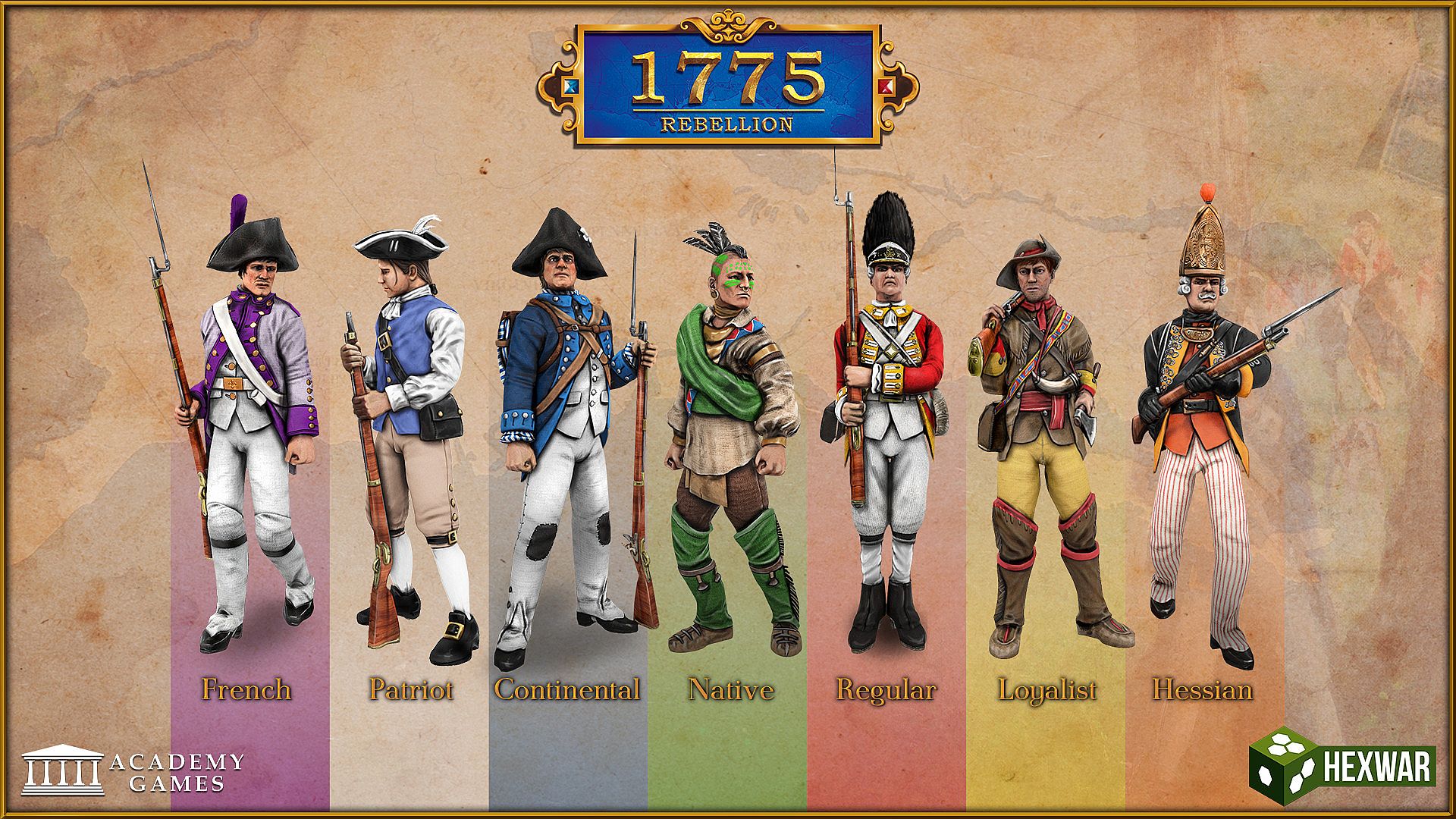
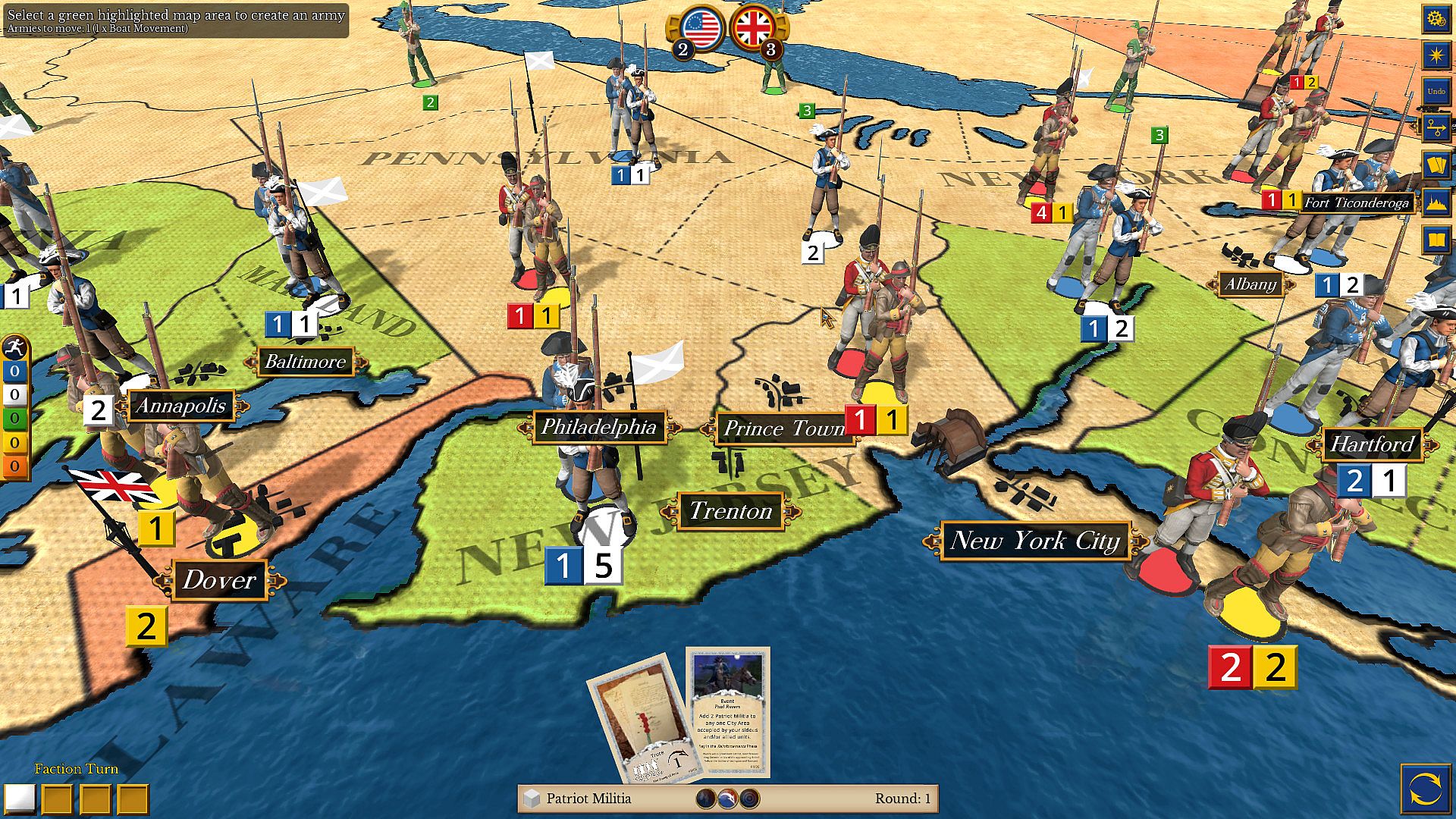
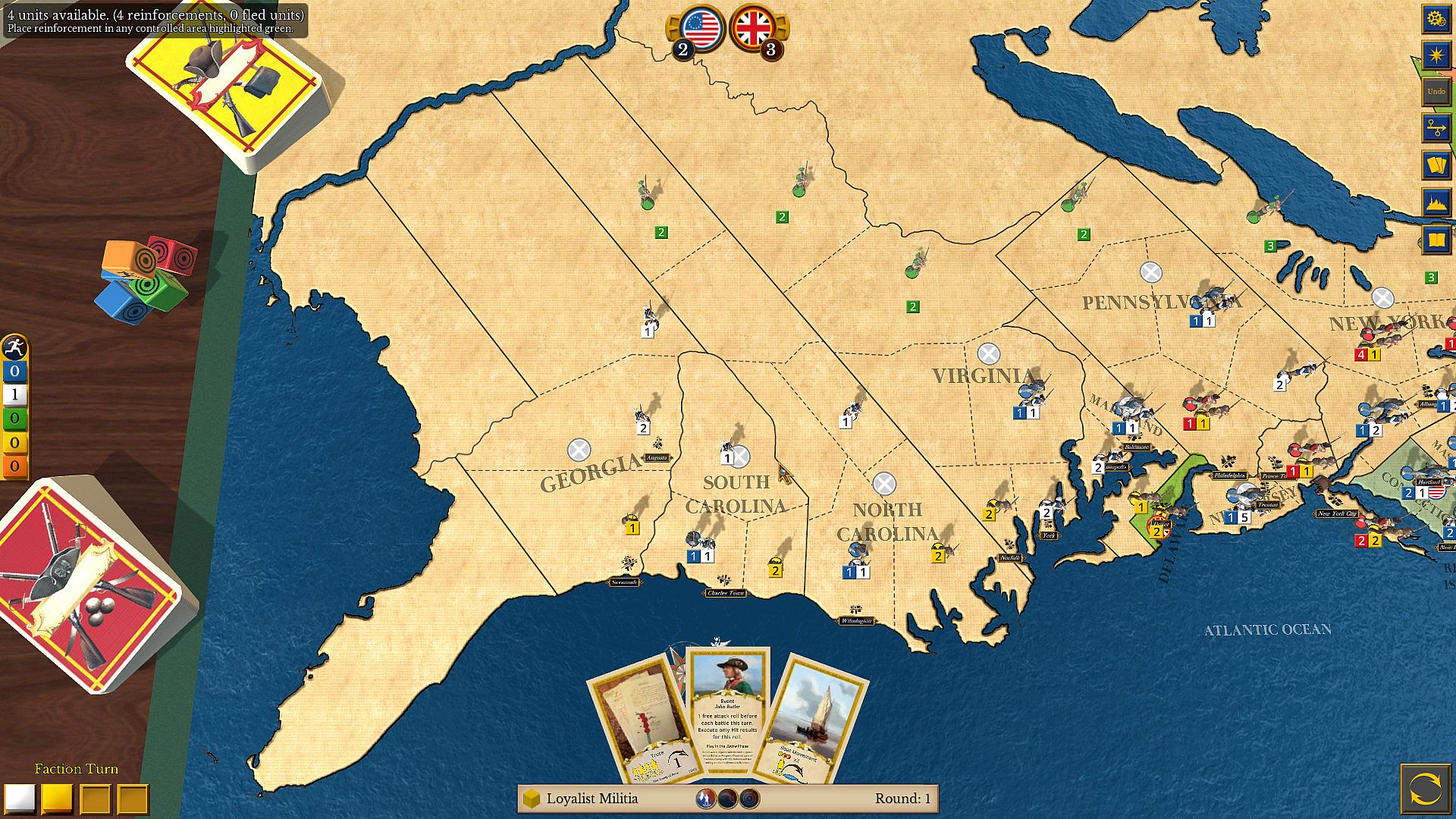
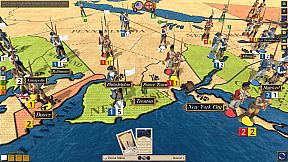
The map divides each colony into smaller areas where factions maneuver units to establish control. A side claims a colony once only its units occupy every area within its borders. Four main factions operate under two alliances: the Continental Army and Patriot Militia on the American side, British Regulars and Loyalist Militia on the British side. Allied French units support the Americans while Hessian units support the British, entering play through event cards.
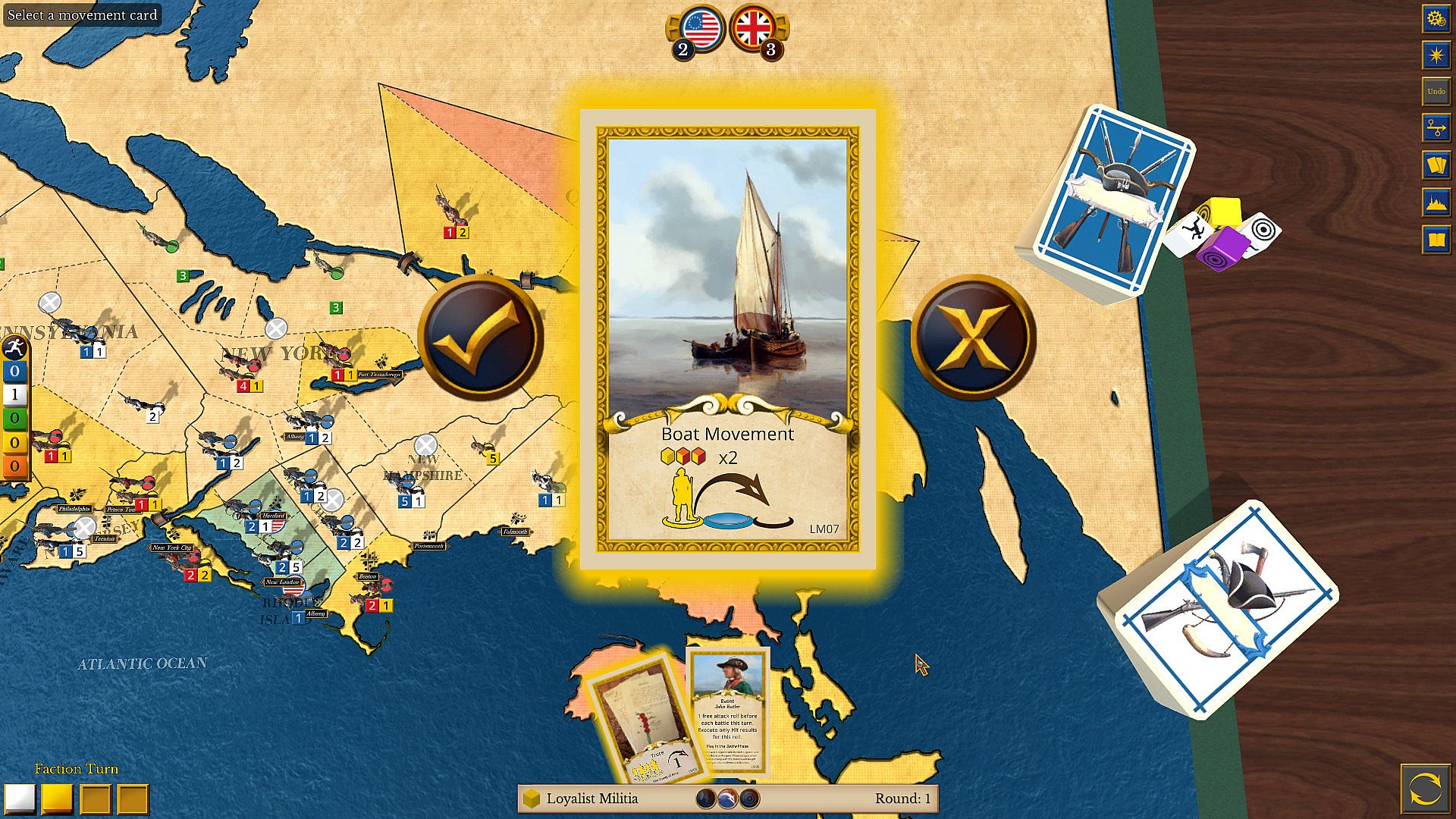
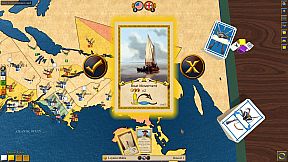
Each round consists of four turns ordered by a blind draw of faction markers, so turn order can shift dramatically from round to round. Victory checks begin on round three, and the game concludes automatically on round eight unless both factions on one side play their truce cards earlier. Every faction maintains its own deck of movement cards, event cards, and a single truce card. Movement cards allow troop repositioning while event cards trigger special effects. The truce card doubles as a powerful movement option but also functions as a timer that can end the game prematurely if both sides of an alliance exhaust theirs.
Combat uses faction specific dice that display hit, flee, or command decision results. Hits remove opposing units, flee results send units to a reinforcement box for later return, and command decisions permit retreats to adjacent areas. All units in a battle roll regardless of whose turn it is. Continental Army units roll two dice with strong hit chances and low flee rates. British Regulars never flee and hit reliably yet receive no reinforcement influx each turn. Militia units on both sides roll three dice but suffer higher flee rates. Armies can combine units from partner factions and allies when moving, provided at least one unit from the controlling faction is present.
Game Modes
The game supports solo play against three levels of artificial intelligence. Hotseat mode accommodates up to four players on a single computer by passing control between factions. Online multiplayer allows remote opponents to join the same session. Three distinct scenarios alter starting conditions and objectives: the full 1775 campaign, a shortened 1775 variant, and the focused Siege of Quebec.
Each scenario runs through the same core round structure while varying initial unit placements and event card availability. The short scenario compresses the timeline for quicker sessions, while the siege scenario concentrates action around a single key location.
Factions and Combat
American Continental Army units emphasize reliability in battle with fewer but more effective dice rolls. Patriot Militia provides volume through extra dice at the cost of greater vulnerability to fleeing. British Regulars deliver consistent pressure without reinforcement support, forcing careful management of existing forces. Loyalist Militia mirrors the American militia profile with three dice and elevated flee chances. Allied French and Hessian units follow their own dice distributions when brought into play, adding specialized capabilities to their respective alliances.
Deck management forms a central strategic layer. Each faction begins with a fixed number of movement cards, and playing the truce card early can limit options later. Event cards introduce historical flavor such as reinforcements or tactical shifts that reward timing and cooperation between allied factions.
Is It Worth Playing?
1775: Rebellion delivers a faithful digital version of its source board game with clear emphasis on historical detail and straightforward mechanics. The combination of area control, variable turn order, and faction specific combat dice creates meaningful decisions without excessive complexity. Players who enjoy cooperative elements within opposing alliances will find value in coordinating movements and card plays with a partner. The three scenarios and adjustable AI difficulties provide replay options for solo sessions, while hotseat and online support extend the experience to groups. Those seeking a light yet historically grounded strategy title focused on the American Revolution will find the core systems rewarding through repeated play.