

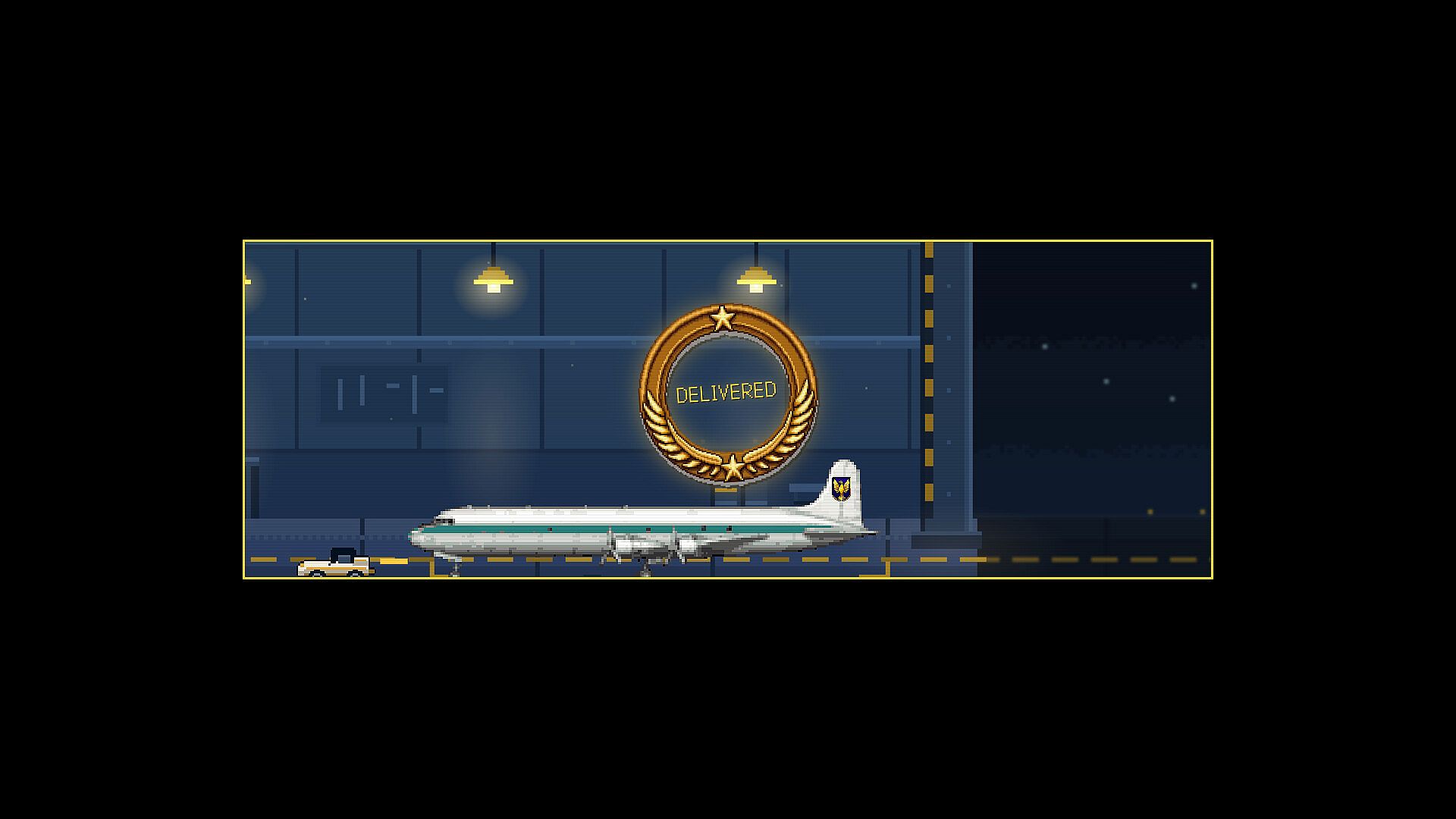
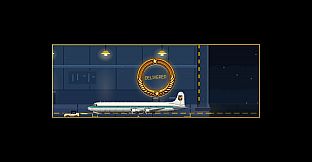
AIR EMPIRE: 1950 Airline Tycoon is a strategy and simulation game set during the golden age of commercial aviation. Players begin as the operator of the smallest airline among nineteen competitors and work to build a dominant carrier through careful route planning, fleet decisions, and financial management across the transition from propeller aircraft to the jet era.
Gameplay
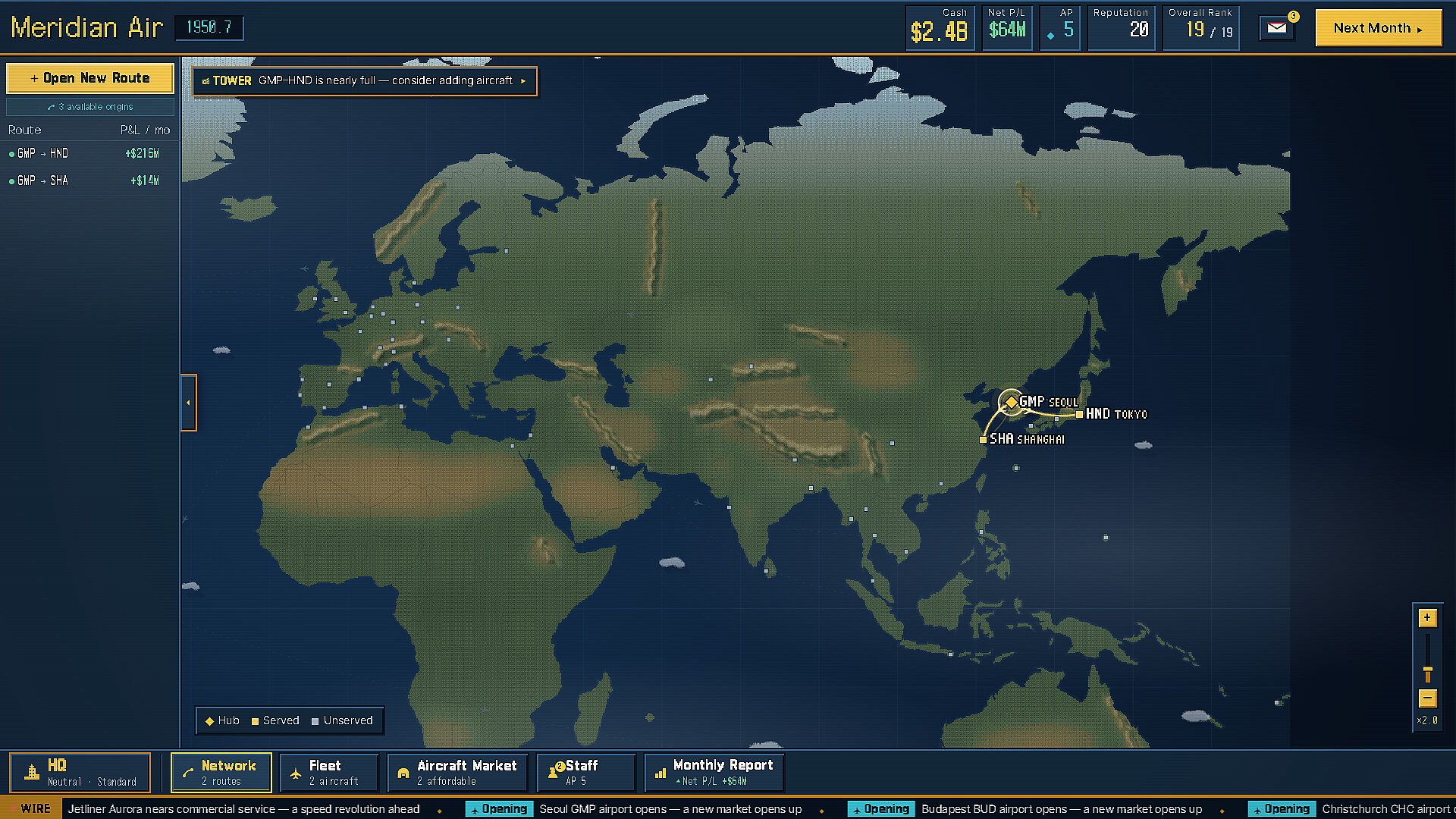
The core loop centers on opening routes, setting fares for each seat, and reviewing monthly financial results. At the close of each month, a split-flap display shows revenue and losses broken down by individual route along with explanations of where money was spent or earned. This level of detail removes uncertainty about performance and highlights exactly which connections need adjustment.
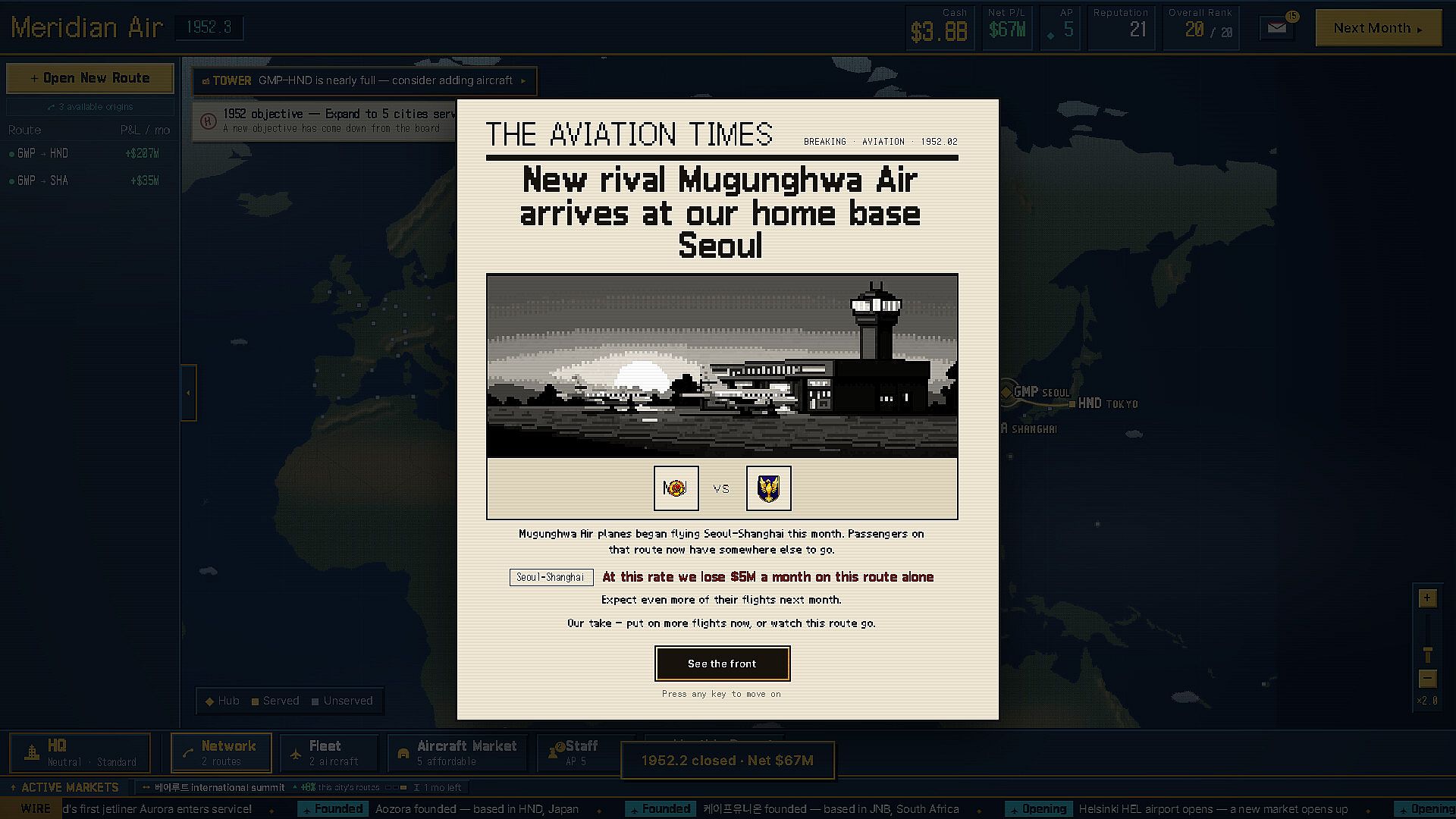
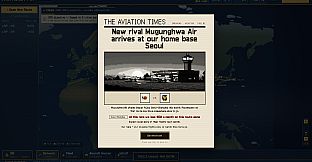
Rival airlines operate under the same economic rules. Each has its own leadership style that influences expansion speed and pricing. Some competitors push aggressively into high-traffic corridors while others expand more cautiously and risk slower growth or decline. These rivals compete directly for the same airport slots and passenger demand, turning popular routes into contested areas where success depends on timing and pricing accuracy.
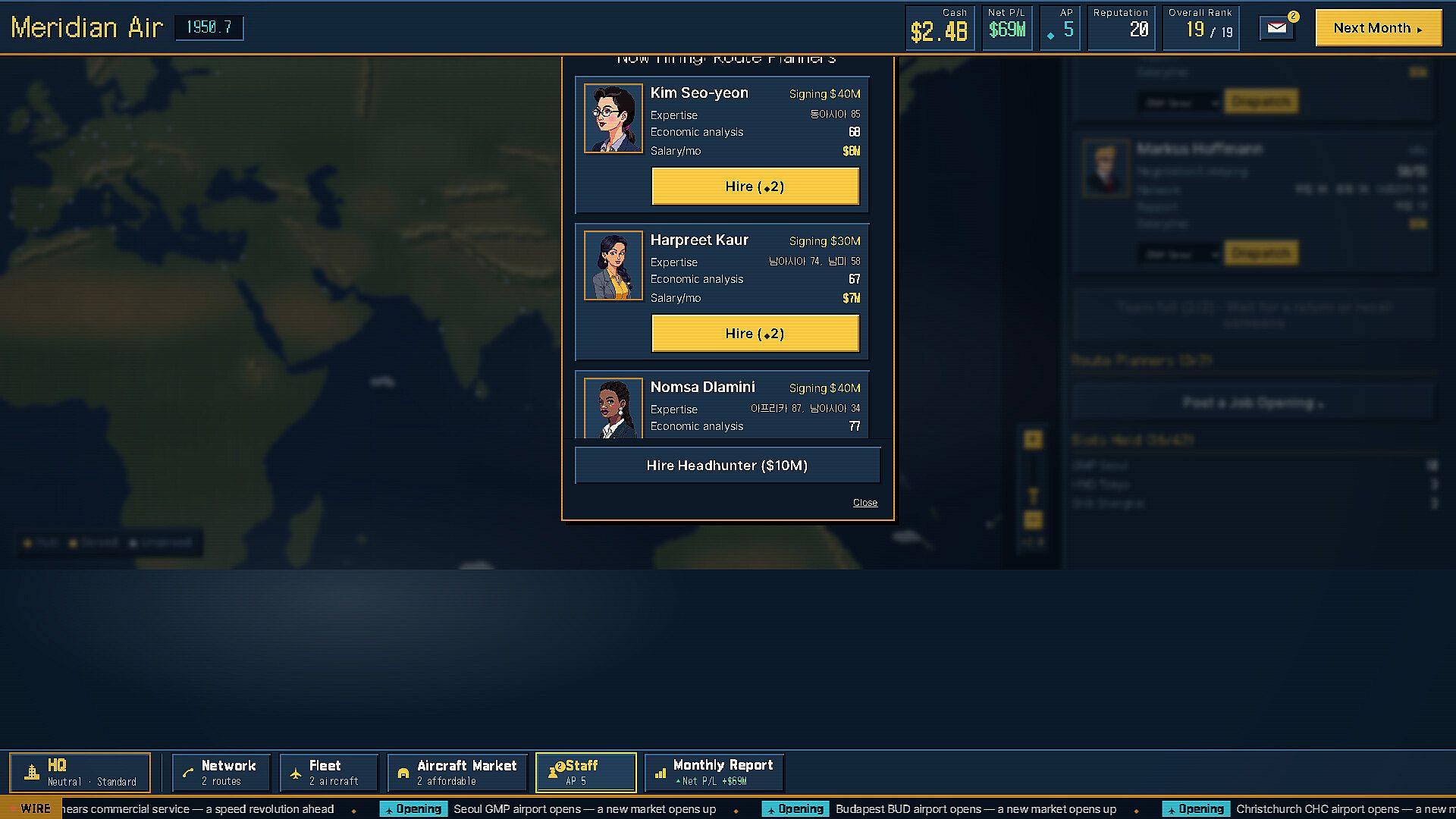
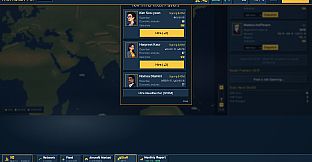
Information about new markets arrives only after hiring a route planner familiar with the region. The resulting data appears as a forecast range rather than exact figures, so decisions always carry an element of calculated risk. Airport slots cannot be purchased outright; instead, a negotiator must be sent to secure them, and the outcome depends on what the negotiator returns. Every new route therefore represents a wager based on incomplete data that improves only with better staff choices.
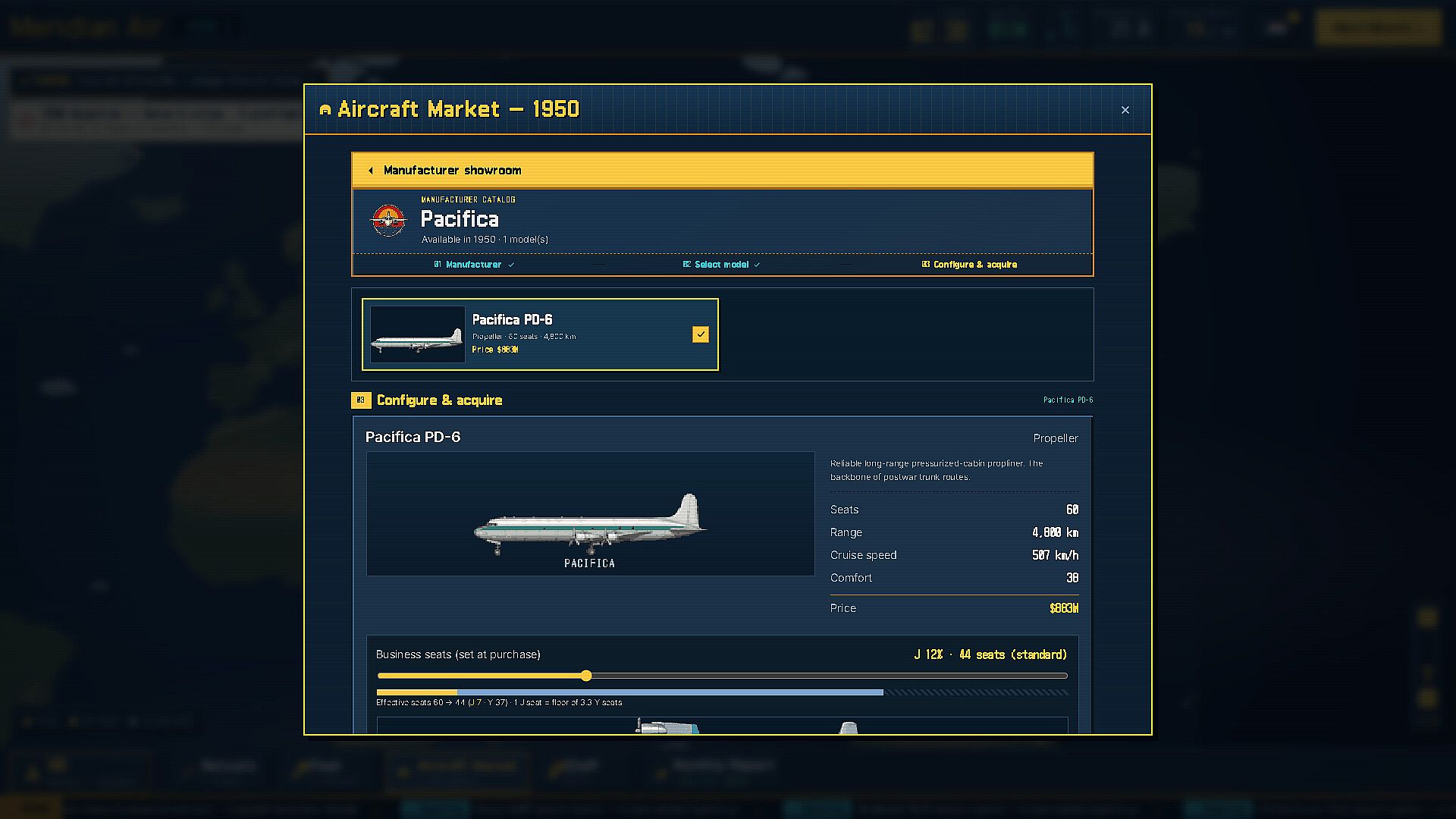
The passage of time brings technological shifts. An in-game almanac records yearly progress as propeller planes give way to early jets. Choosing when to invest in newer aircraft can provide a decisive advantage over slower-moving competitors. Pricing, debt levels, fleet composition, and slot acquisition all interact, so changes to one area affect the others and require ongoing attention to the overall balance sheet.
Game Modes
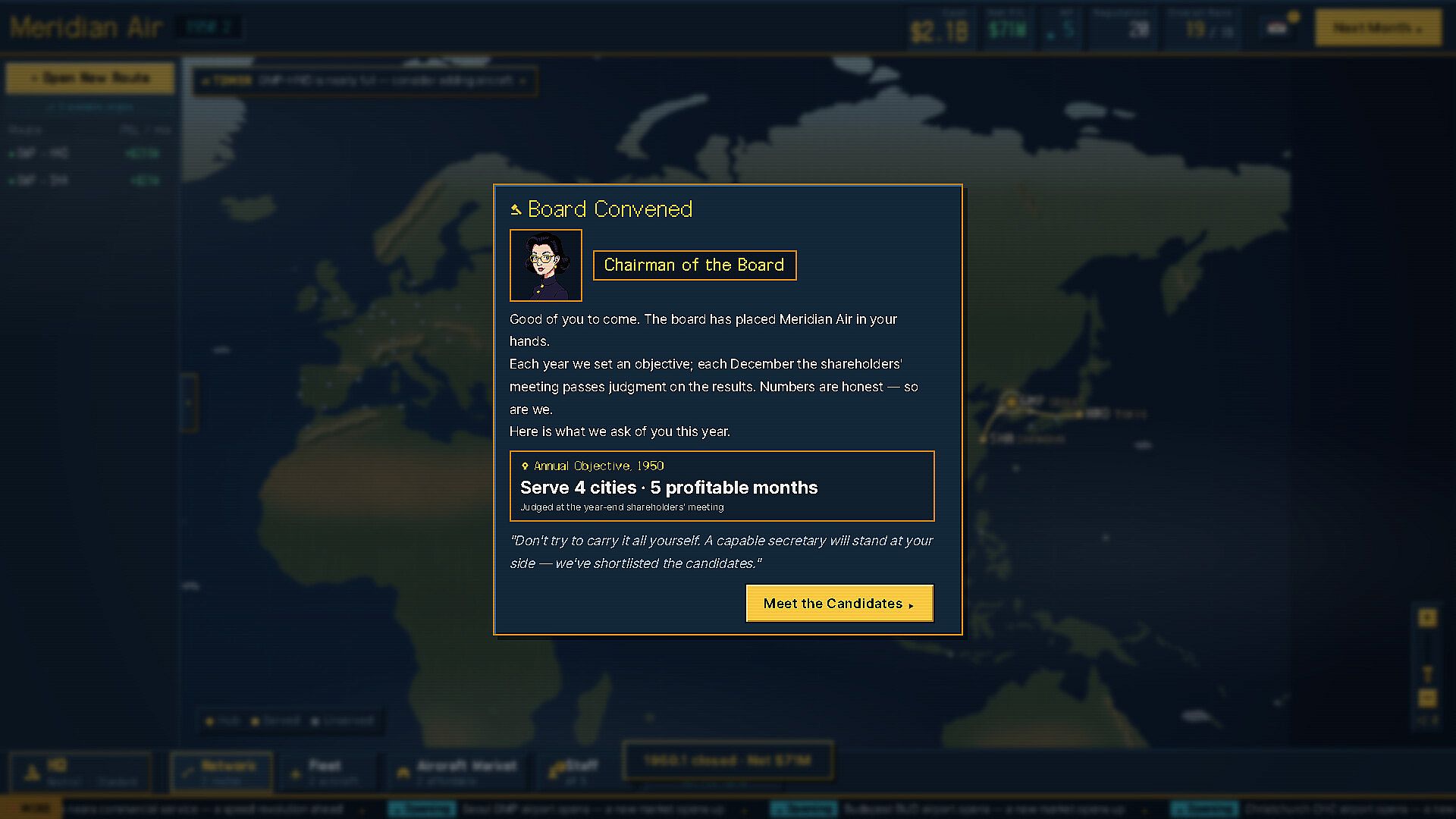
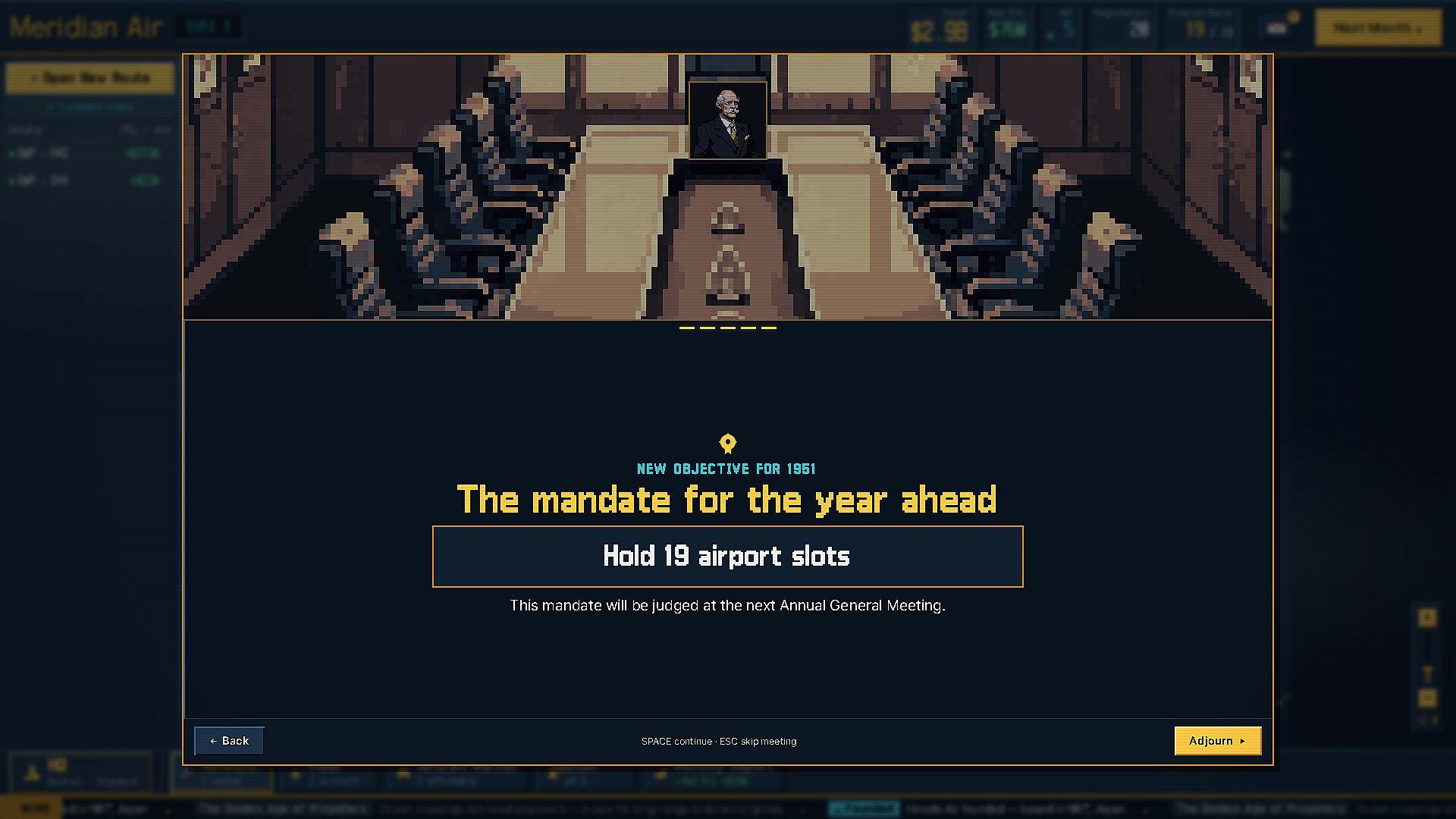
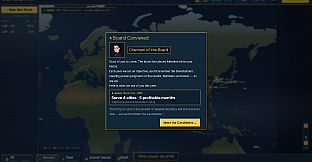
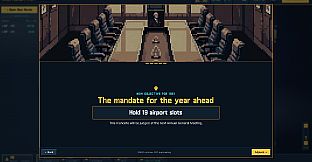
The game runs as a continuous single-player campaign that spans multiple years. Each January the board of directors sets specific targets such as revenue thresholds, slot holdings, or city coverage requirements. At the end of December those targets are evaluated against the actual financial records, and the board's confidence level adjusts accordingly. Repeated shortfalls lead to increased pressure on the player.
Progression occurs through the advancing calendar and the evolving industry. Players must adapt to changing aircraft availability and shifting demand patterns while maintaining profitability. The absence of scripted events means outcomes depend entirely on the interplay between the player's choices and the independent actions of rival carriers.
Key Mechanics
Staff hiring forms a central system. Route planners reduce uncertainty in unsurveyed markets, while negotiators handle slot acquisition at new airports. Both roles carry costs that must be weighed against the potential revenue from expanded operations. Better personnel narrow the range of forecast outcomes but never eliminate risk entirely.
Financial oversight happens at the end of every month with a clear breakdown of route performance. This reporting shows which connections contributed positively or negatively and where expenses accumulated. The yearly board review adds another layer of accountability by tying continued employment to the achievement of concrete objectives set at the start of each year.
Is It Worth Playing?
The game appeals to players who enjoy detailed economic simulations and long-term strategic planning without reliance on combat or narrative elements. Its systems emphasize reading financial data, managing incomplete information, and responding to competitor behavior in a shared market. Because the title remains in development and has not yet released, no player reviews or performance data exist to assess reception. Those interested in airline management titles modeled on classic tycoon experiences may find the described mechanics worth following until launch.