




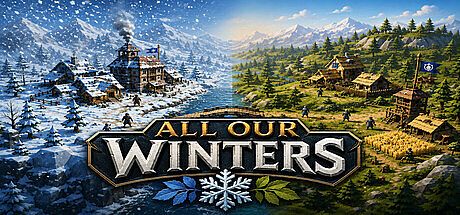



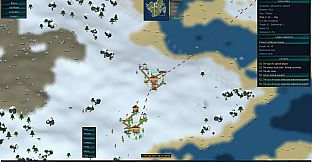
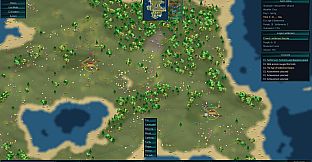
All Our Winters is a strategy indie casual simulation game for PC in which players act as an unseen god shaping a procedurally generated wilderness. Villagers live independent lives, drawing conclusions from environmental changes rather than receiving direct commands. The core loop centers on indirect influence through world-altering actions that affect settlement growth, faith, conflict and long-term memory across generations.
Gameplay
Every decision imprints on the land and its people. Burning a rival forest may be interpreted as divine favor while the same act on home territory breeds fear. Mercy creates holy sites that draw pilgrims for generations. Wrath leaves cursed ground where no colony settles. Extended silence causes the world to forget the god entirely. These systems create persistent consequences that shape future events without player micromanagement.
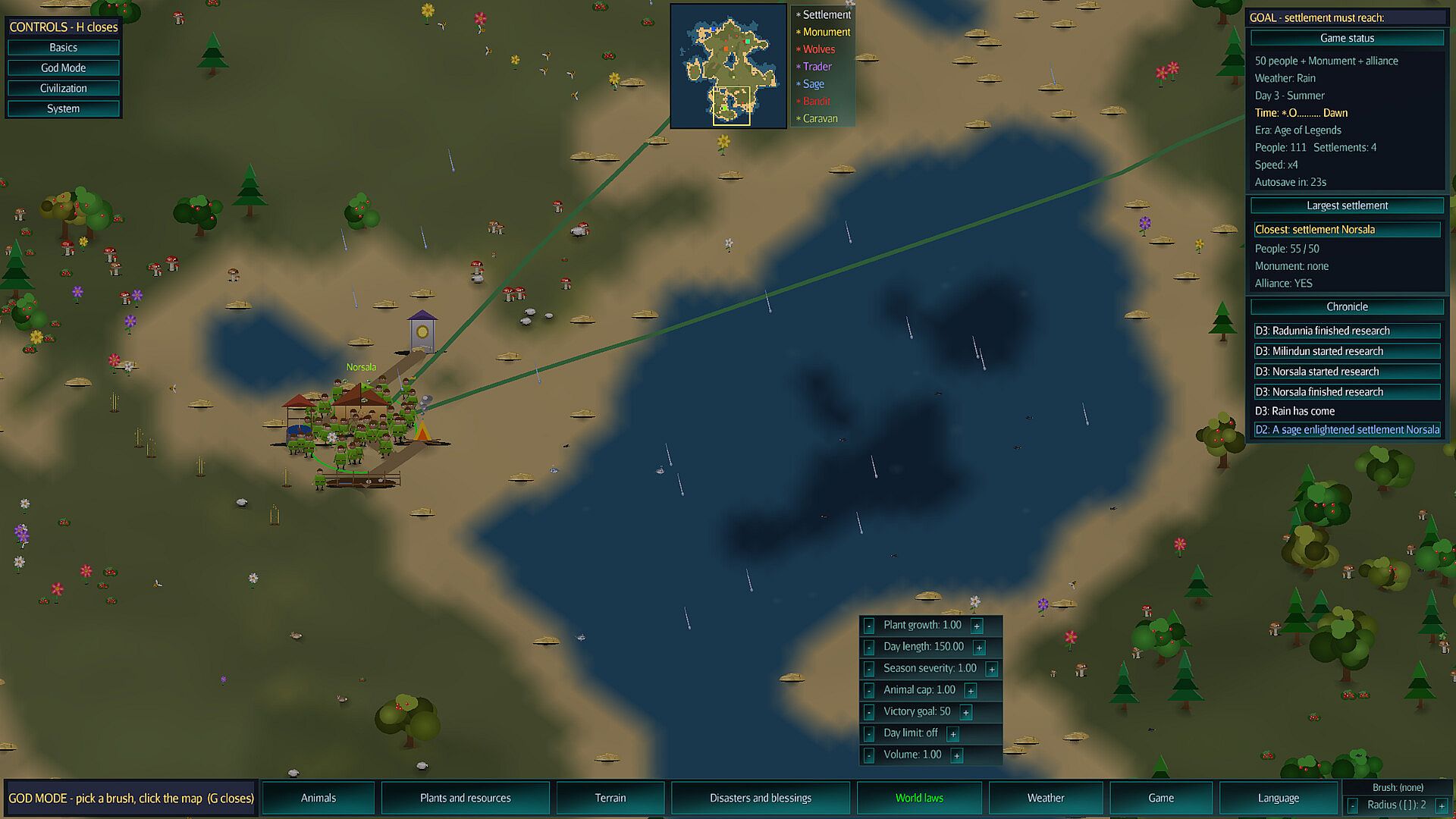
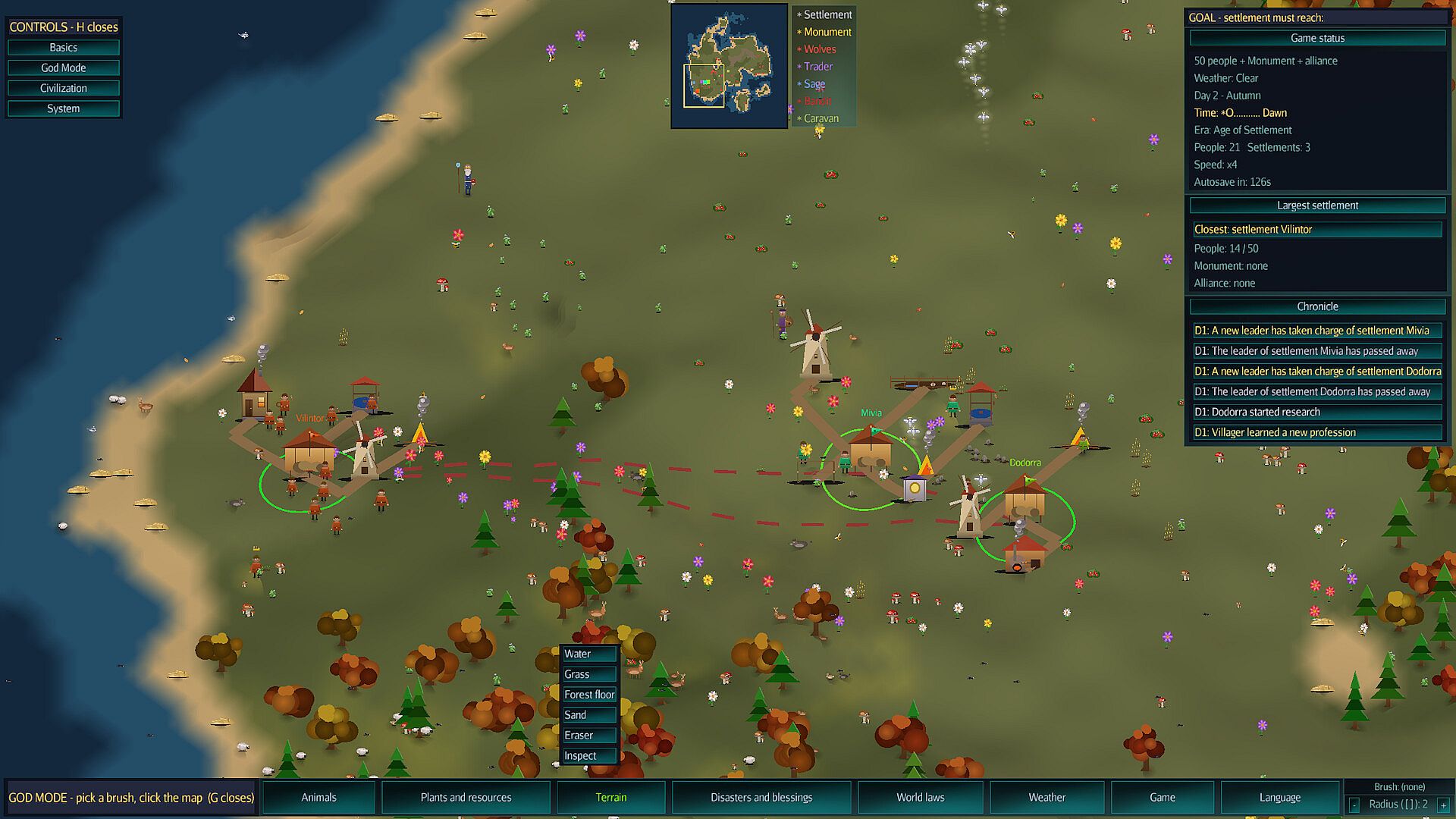
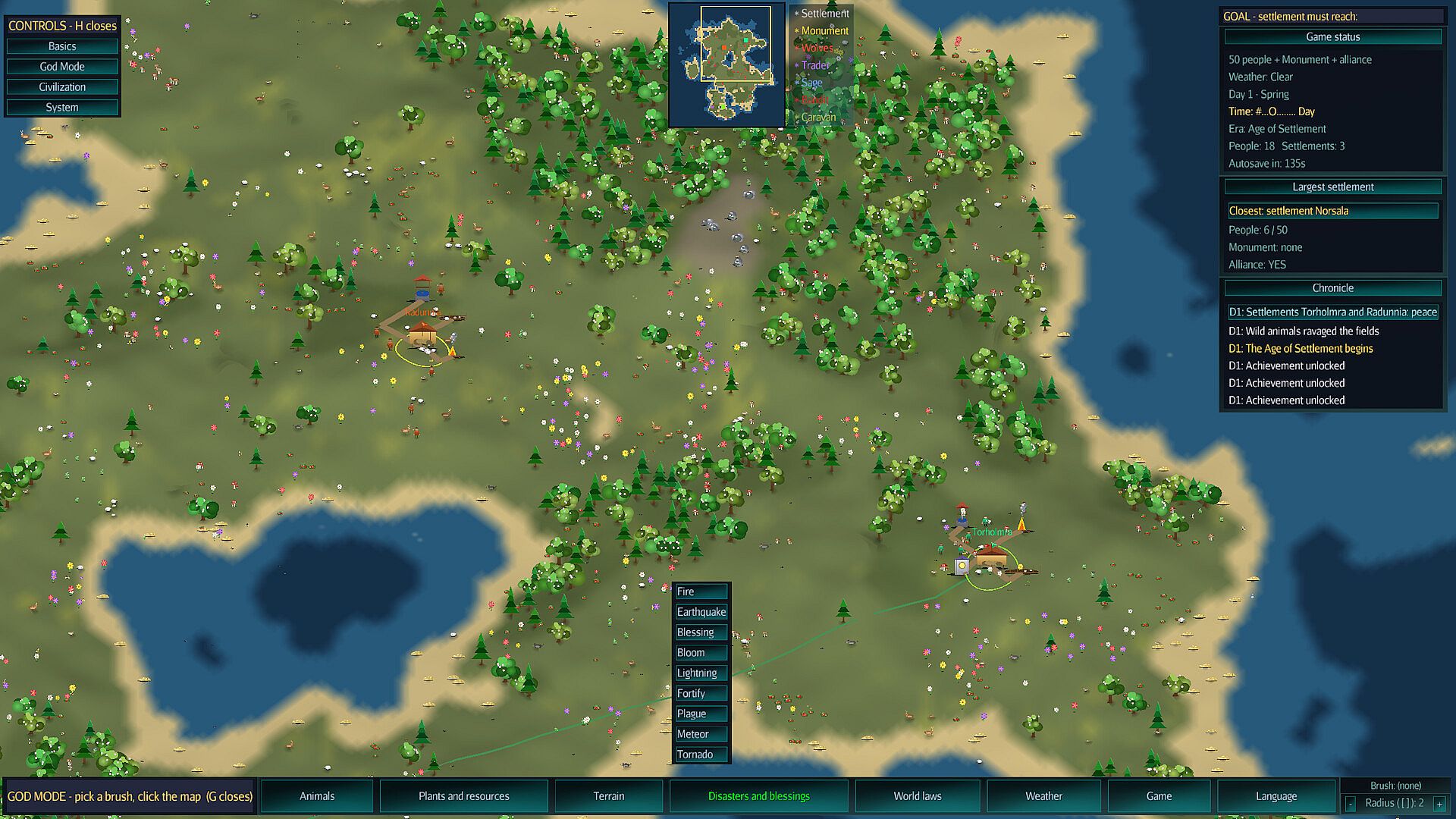
Villagers each carry a name, trade and personal history. They farm, fish, hunt, mine, build, study and fight according to their needs and skills. Hunger, cold, fatigue and illness affect daily routines. Marriages produce children who inherit and refine crafts over years. Settlements construct granaries, wells, mills, bakeries, forges, workshops, markets, libraries, shrines, taverns and Monuments. Chiefs emerge whose courage influences battle outcomes. Caravans travel between groups, refugees arrive and tribute flows after defeats.
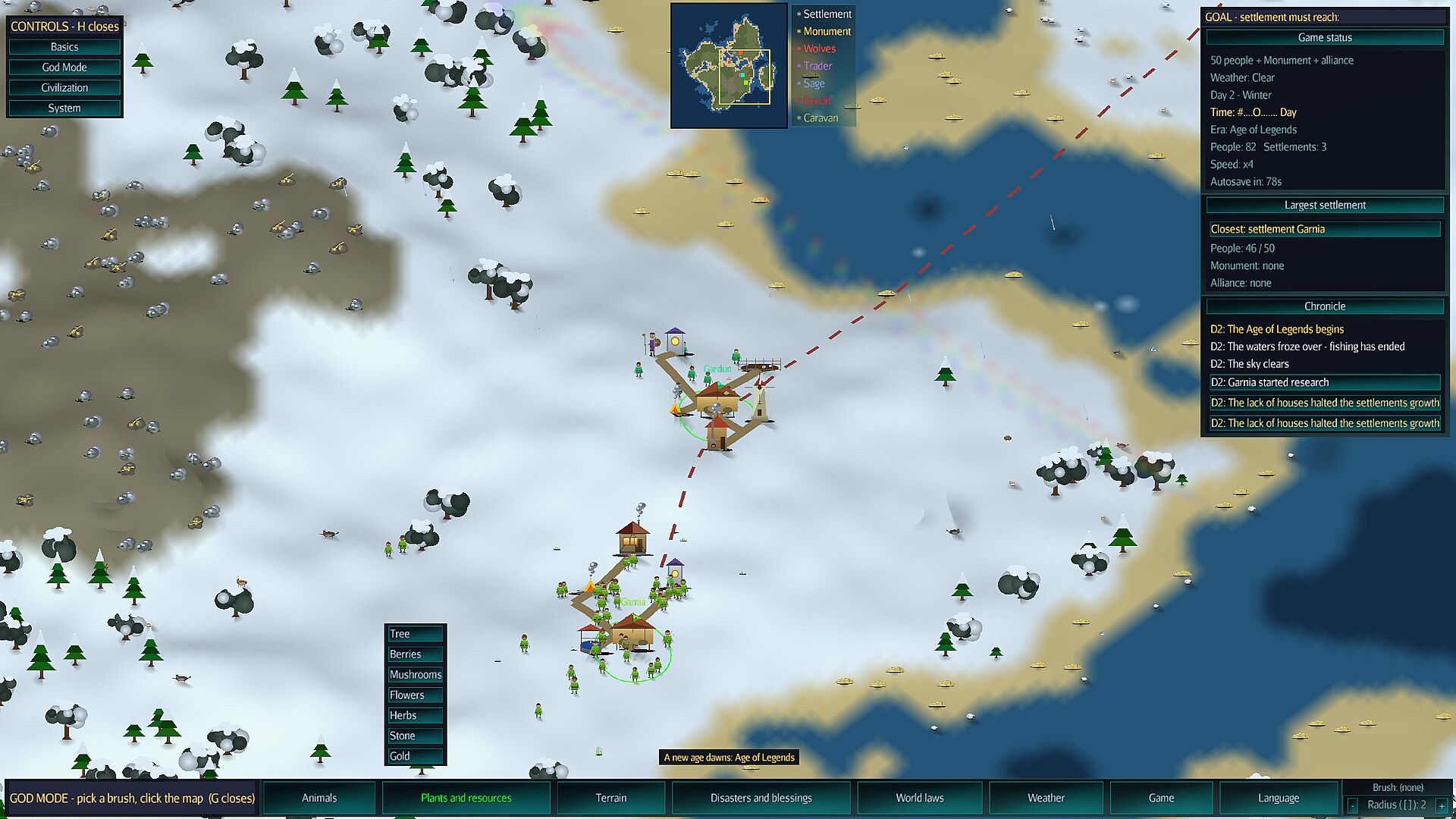
Seasons drive survival pressure. Drought withers crops and spring frost blackens them. Summer heat spoils stored food, requiring milling and baking into bread. Herds require fodder when pasture dies. Bonfires consume firewood or extinguish. Frozen lakes halt fishing. Wolves approach settlements as cold intensifies and clothing degrades over time. These mechanics force ongoing adaptation rather than static planning.
Neighboring settlements form alliances or fight over resources. Wars see warriors muster and march in formation, with morale breaking under losses. Defeated groups offer tribute instead of total annihilation. The dead receive burial at the site of death, their souls ascending. Annual ancestor honors occur at winter's threshold by candlelight.
Game Modes
The open sandbox serves as the primary experience. Beyond it lie seven unlockable scenarios, each altering core conditions. One imposes a brutal winter. Another requires racing to construct a Monument. Barren soil limits growth. A flooded archipelago changes terrain access. Endless nights remove day cycles. A land consumed by fire introduces constant burning threats. These scenarios modify the base systems without adding new core mechanics.
World Generation and Presentation
Everything visible and audible generates at runtime. No image or sound files exist. Villagers, buildings, trees, flames and snowflakes render from vector shapes. Wolf howls, church bells and fires synthesize during play. Each world therefore differs in appearance and audio from any other. A running chronicle records all events. End-of-game statistics track wars, alliances, disasters, chiefs and Monuments. Eighteen achievements carry across worlds and unlock additional scenarios. Nine interface languages are available with save-anywhere support and autosave.
Is It Worth Playing?
The game suits players who enjoy god-simulation and village-management experiences with indirect control and strong seasonal survival elements. Its procedural systems and persistent world memory reward observation over direct intervention. Those seeking traditional city-builders with unit commands or fast-paced action will find the pace and mechanics mismatched. The vector-based generation and synthesized audio provide consistent variety across playthroughs. No free modes or trials are confirmed. The experience remains single-player only with no multiplayer components. For fans of thoughtful, consequence-driven simulation on PC, the title delivers a focused loop centered on shaping rather than commanding.











