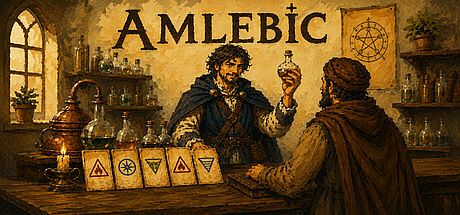



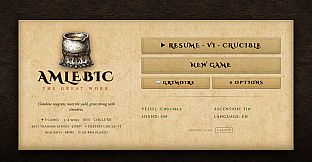
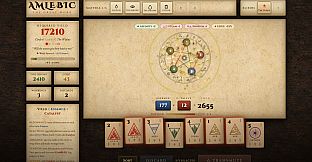
Amlebic is a single-player strategy and casual game on PC that blends alchemy themes with roguelike deckbuilding mechanics. Players step into a candlelit laboratory to perform transmutations, combining elemental reagents to generate higher yields through careful placement and reactions.
Gameplay
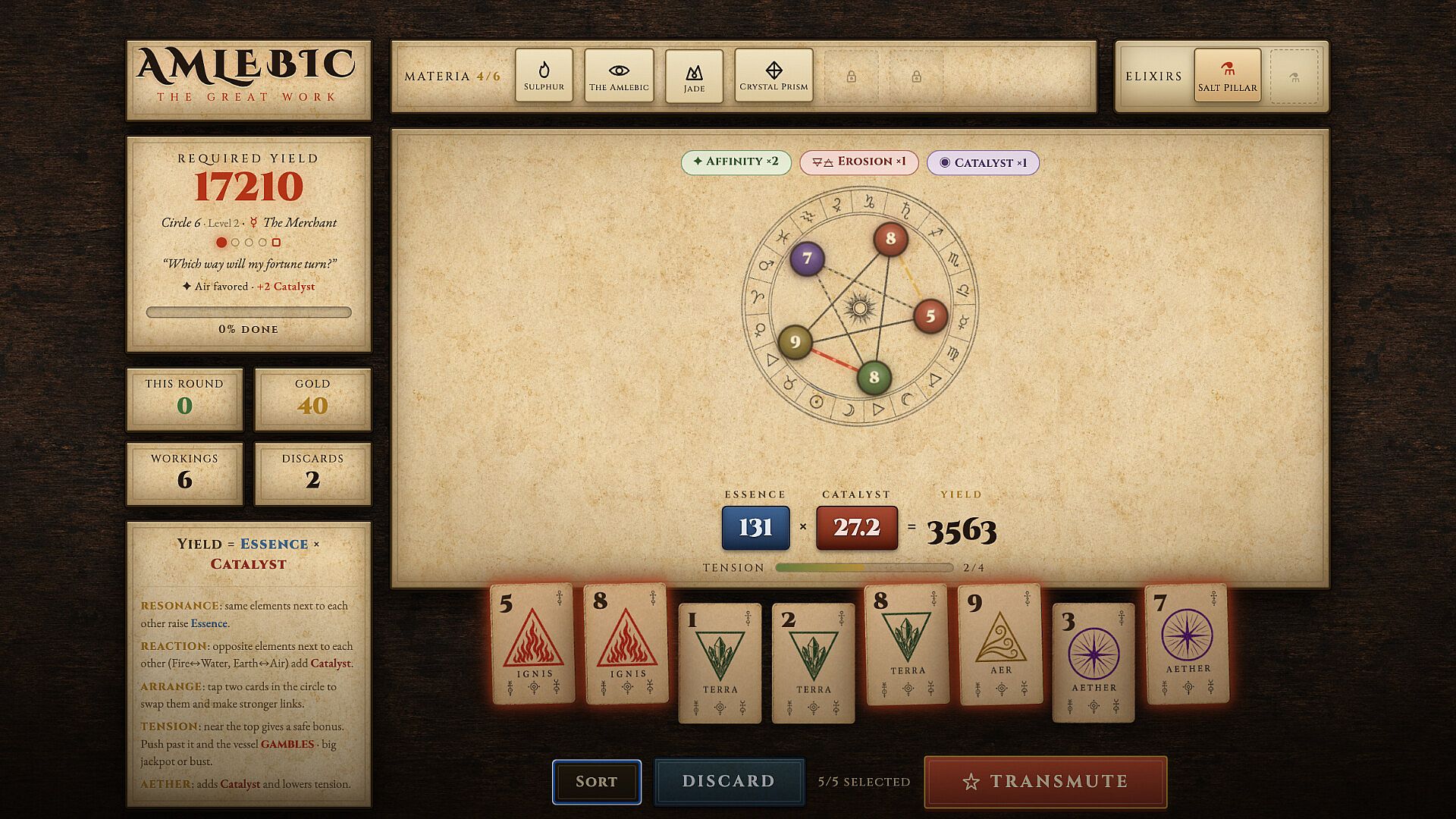
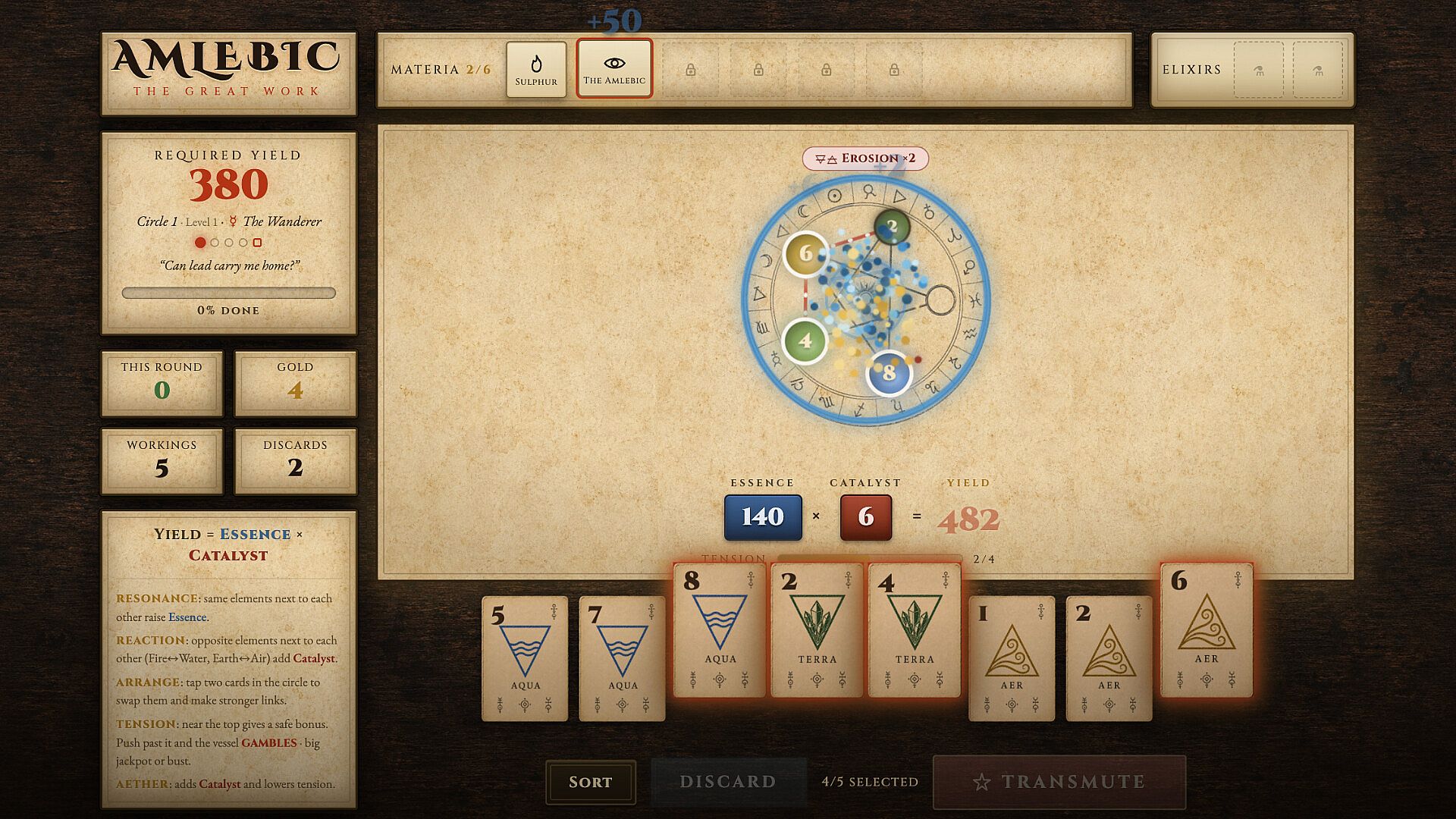
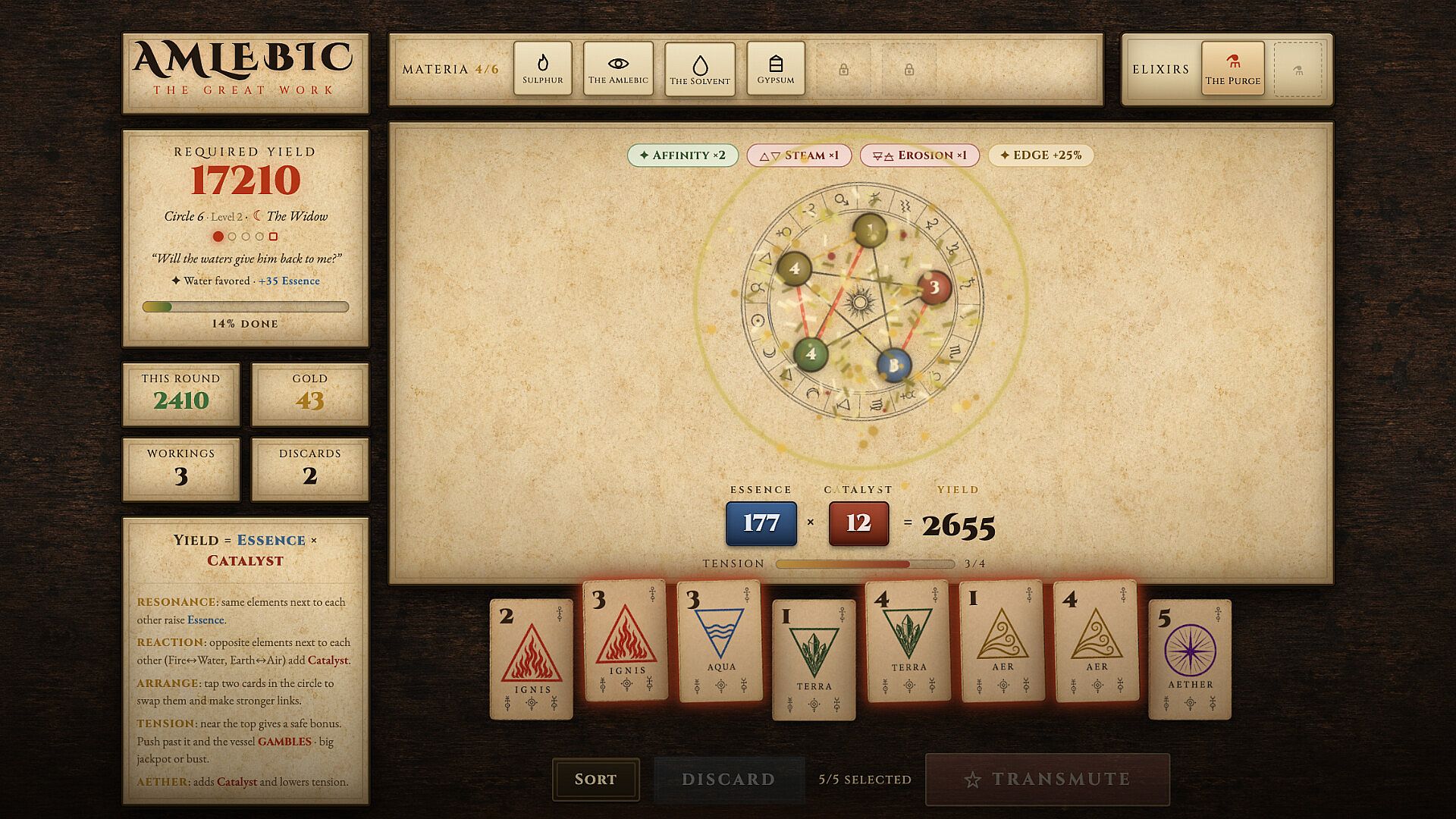
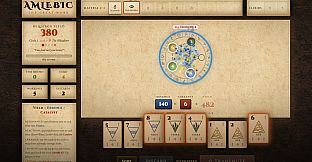
The core loop centers on positioning up to five reagents on an alchemical circle. The available elements include Fire, Water, Earth, Air, and Aether. Adjacent identical elements create Resonance, which increases Essence. Opposite elements trigger a Reaction that produces Catalyst. The final score multiplies Essence by Catalyst, and players must reach a target Yield to advance past each Circle.
Tension builds with every placement. Overfilling the vessel causes it to boil over, ending the attempt. Success requires balancing bold reactions against this risk. Each transmutation functions as an experiment, with outcomes feeding into permanent upgrades that carry forward across runs.
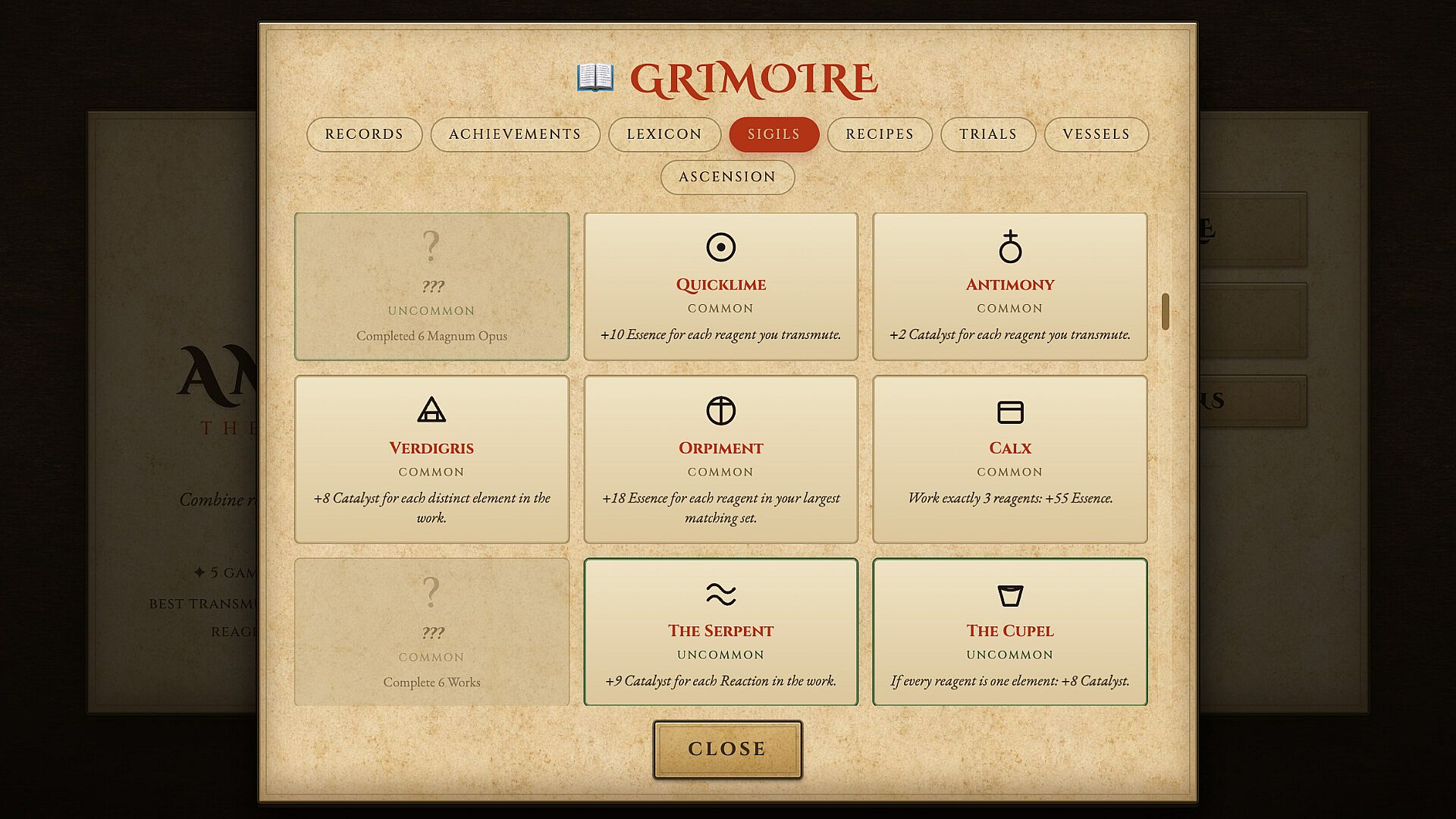
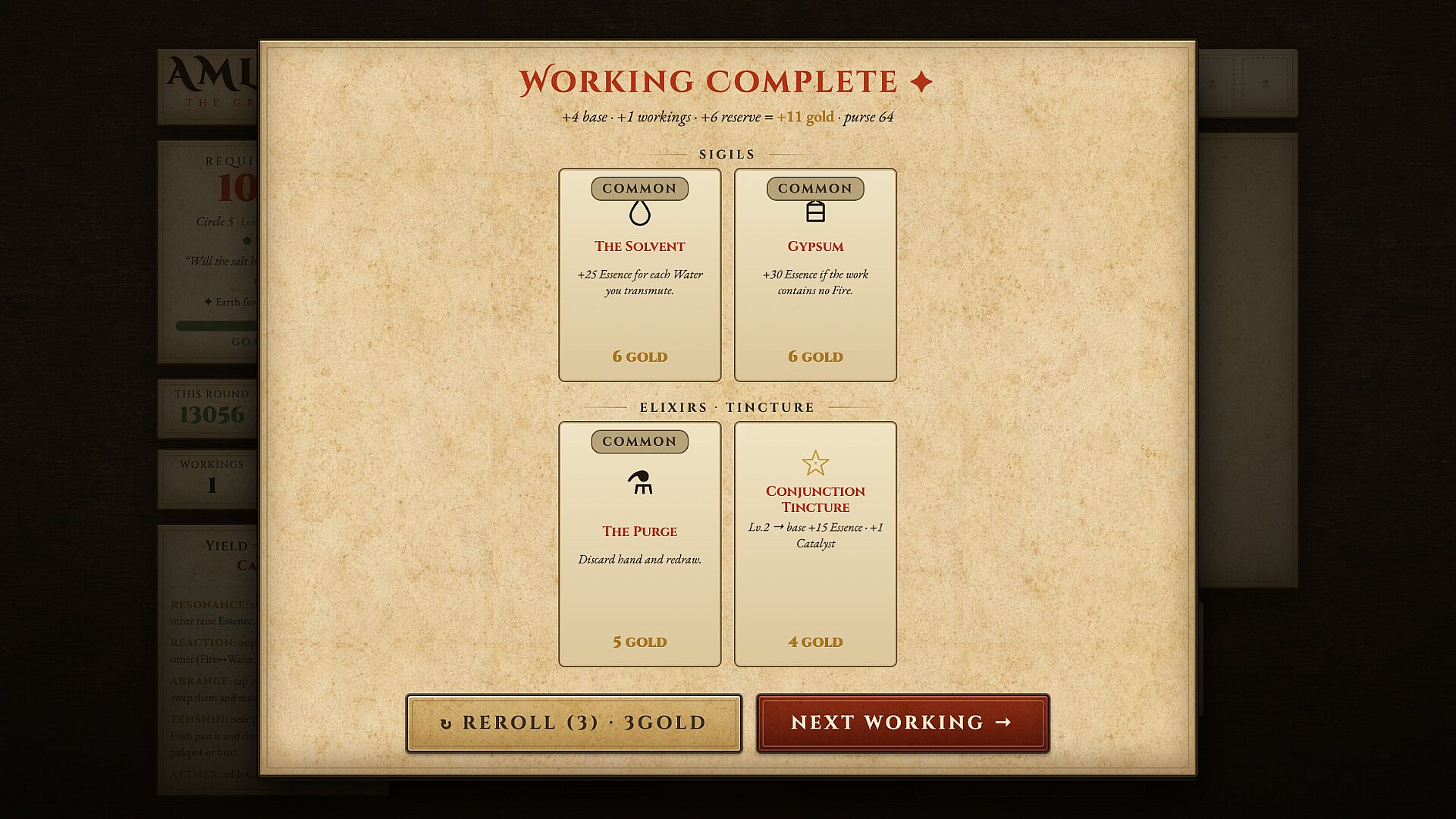
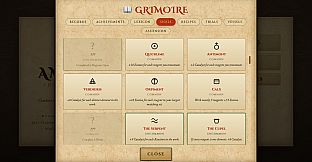
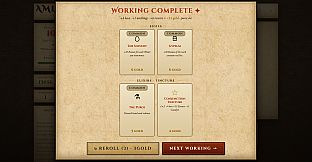
Sigils provide ongoing powers that activate during every transmutation and scale with repeated use. Gold earned from successful Circles purchases Elixirs, Vouchers, and rare Spectrals. Eleven Vessels and eight Ascension tiers alter starting conditions for each run, encouraging experimentation with different setups.
Game Modes
Amlebic features one primary mode: a continuous single-player ascent through 200 Circles. Progress begins at Circle 1 and builds toward the summit. Every tenth Circle introduces a Trial that modifies a core rule to increase difficulty.
New systems and powers reveal themselves gradually during the climb. This structure emphasizes discovery through play rather than upfront explanations. Runs focus on refining an engine of reagents, sigils, and upgrades to handle escalating challenges.
Progression and Systems
Players collect and combine elements while managing limited slots on the circle. The roguelike elements come from run-to-run growth via sigils and purchases, which compound across attempts. Vessels reshape initial reagent access, while Ascension tiers add layers of starting modifiers.
Trials every ten Circles force adaptation by altering rules, such as restricting placements or changing reaction outcomes. This keeps the long ascent varied without introducing separate modes.
Art and Accessibility
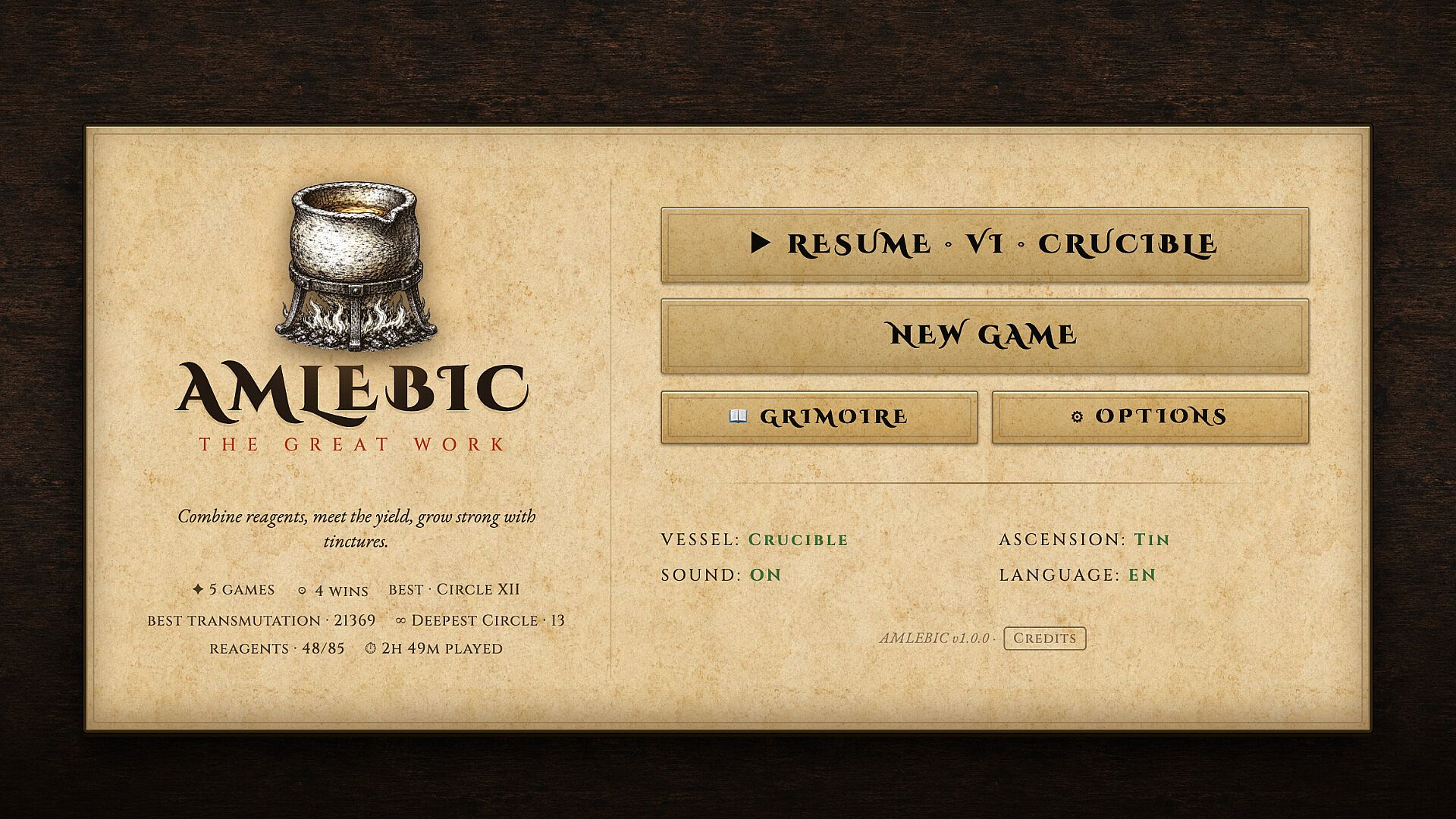
The presentation uses hand-drawn artwork styled after alchemical manuscripts, featuring aged vellum textures, iron-gall ink lines, and engraved vessel details. The game supports both Windows and macOS systems with modest hardware requirements.
Mechanics start straightforward with basic placement and scoring. Depth emerges through repeated runs as interactions between Resonance, Reaction, and Tension become clear. The design rewards observation and incremental mastery.
Is It Worth Playing?
Amlebic suits players who enjoy strategic placement puzzles combined with roguelike progression in a single-player format. The focus on elemental reactions and yield optimization provides a clear loop for those drawn to casual strategy titles with deckbuilding layers.
With a release scheduled for August 13, 2026, the game remains in pre-release. Its structure of one extended climb with incremental unlocks appeals to those who prefer learning through experimentation over extensive tutorials. The modest system requirements make it accessible on a wide range of PCs.