




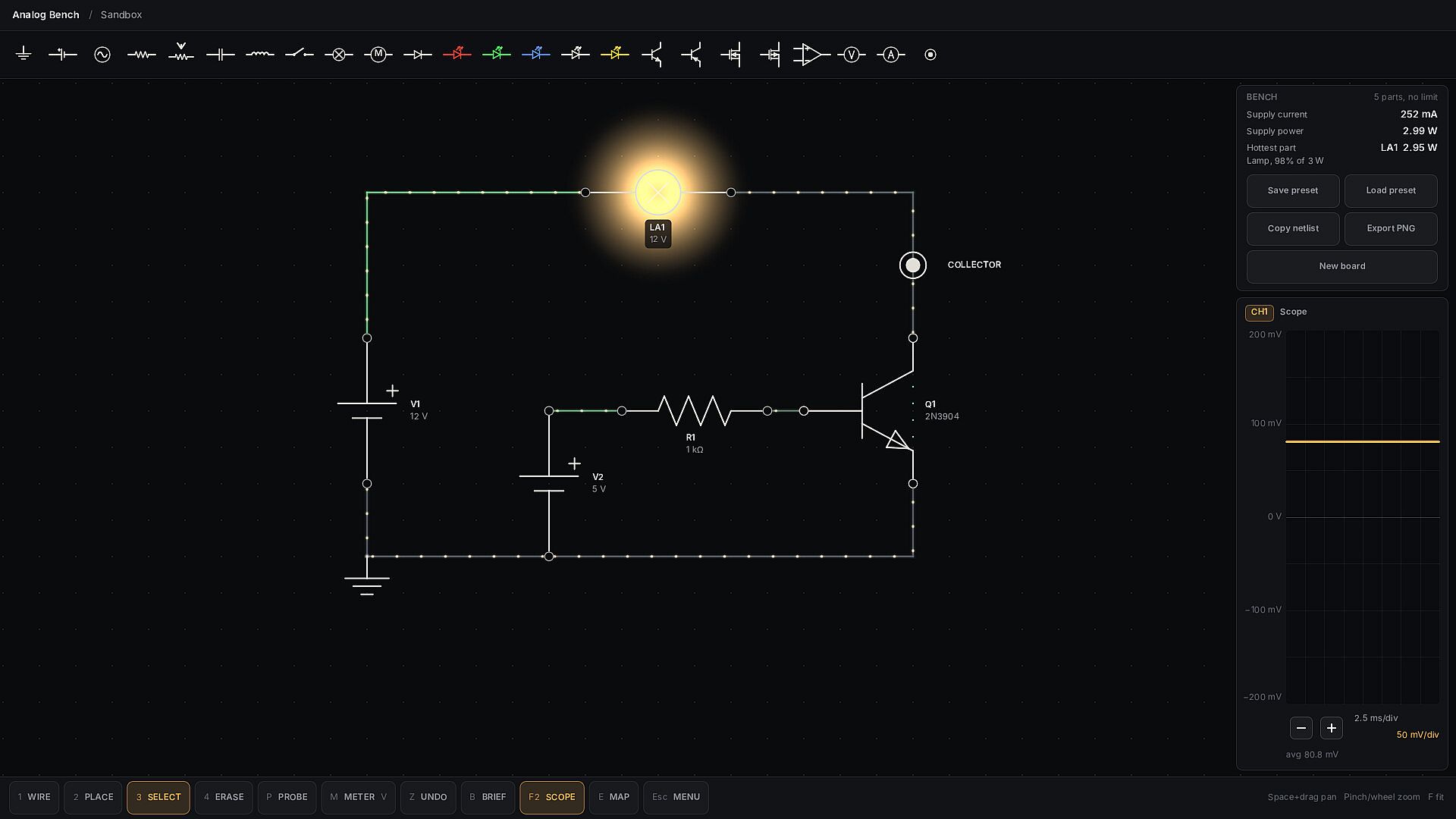
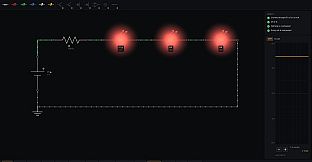
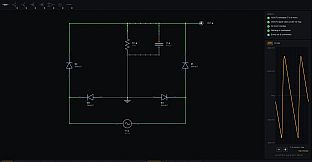
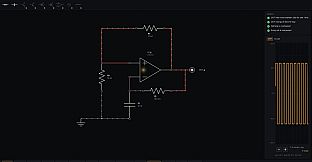
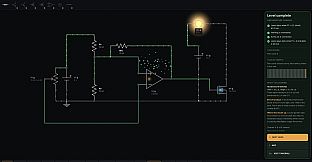
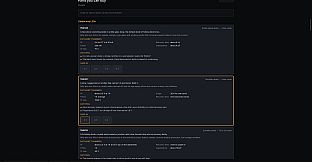
Analog Bench is a single-player indie simulation game centered on analog electronics and circuit design. Players build and test real-world inspired circuits using a built-in simulator that calculates component behavior in real time. The experience blends puzzle-solving with hands-on learning, where success depends on meeting specific electrical goals while respecting component limits.
Gameplay
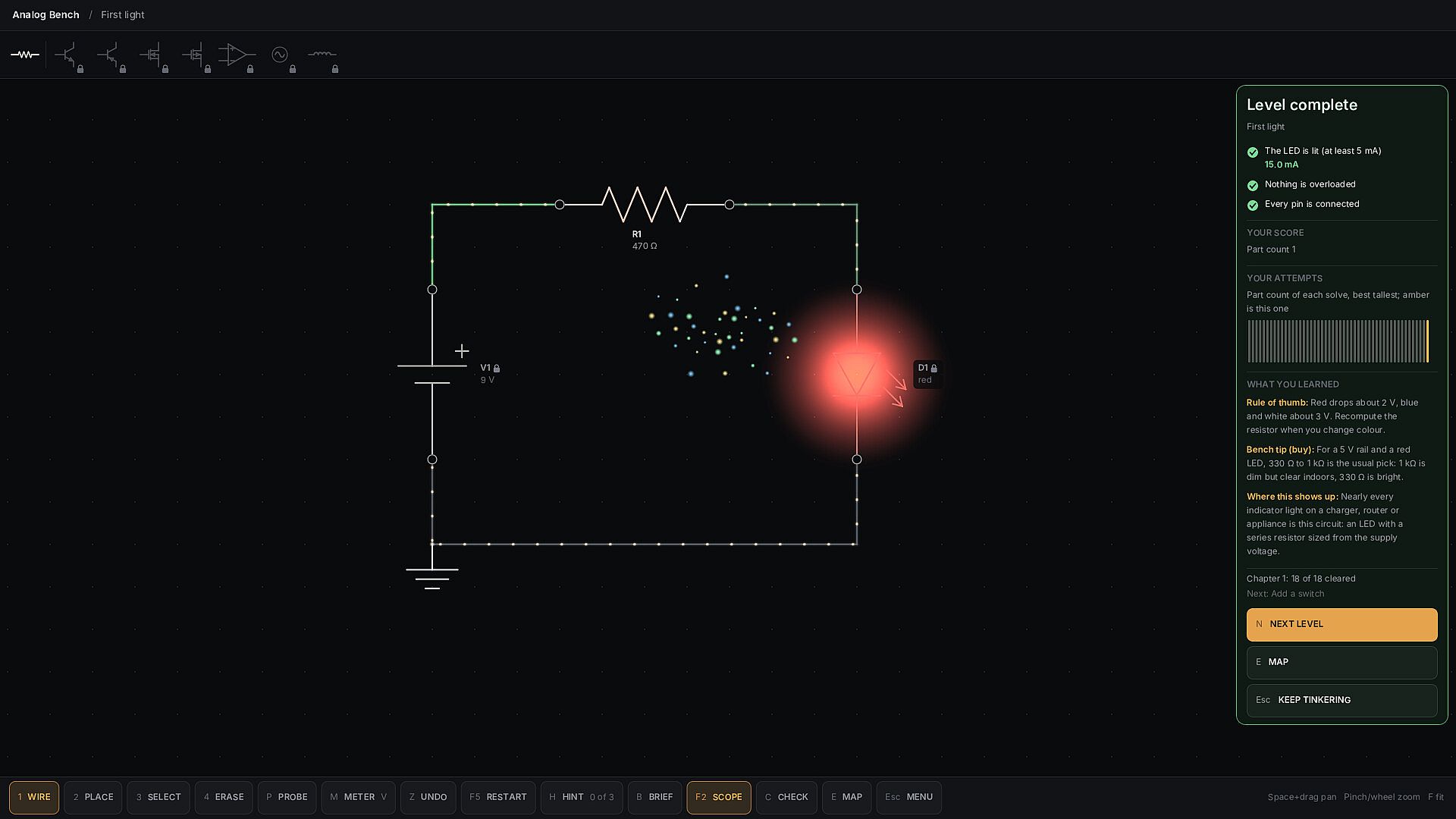
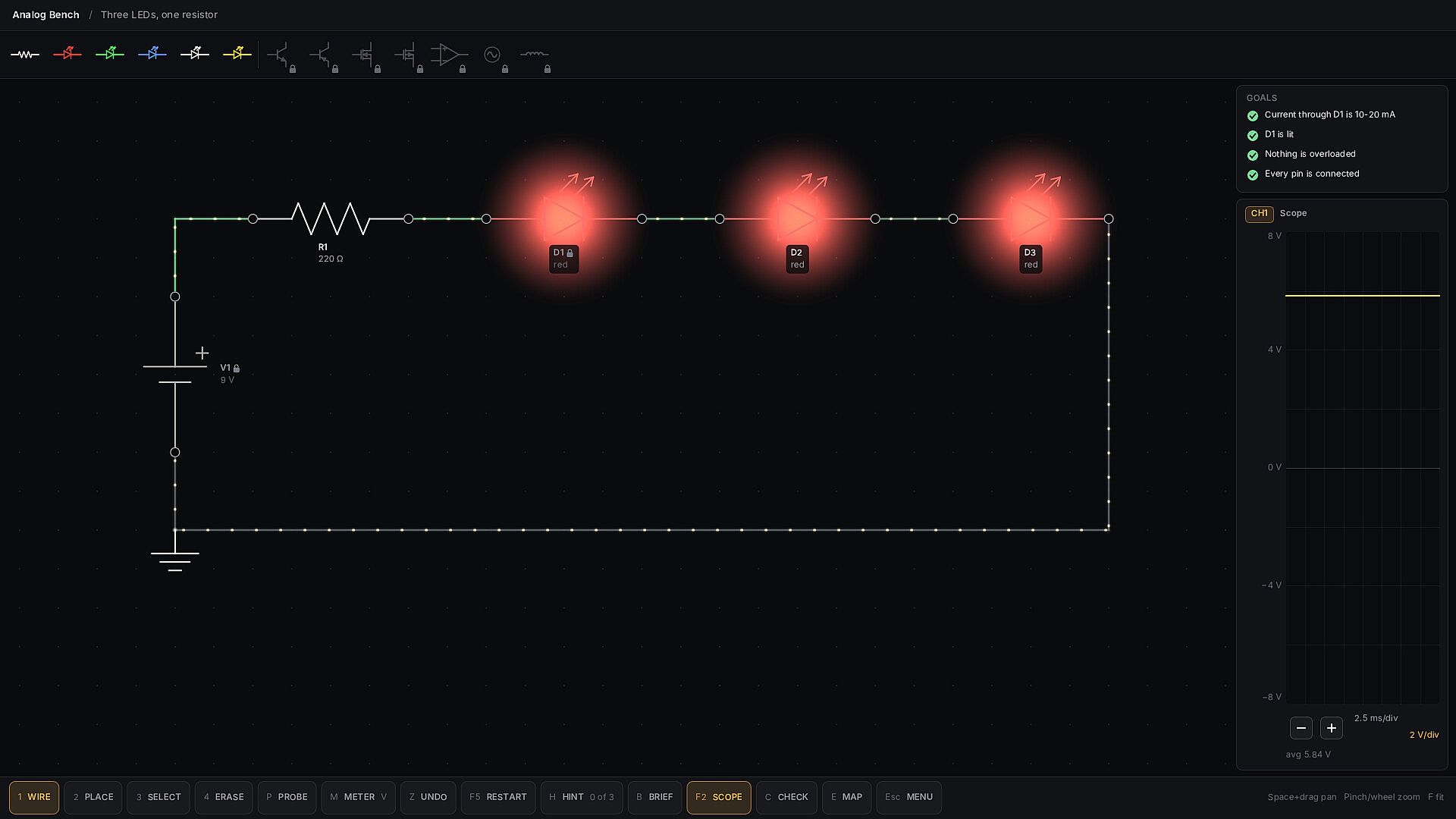
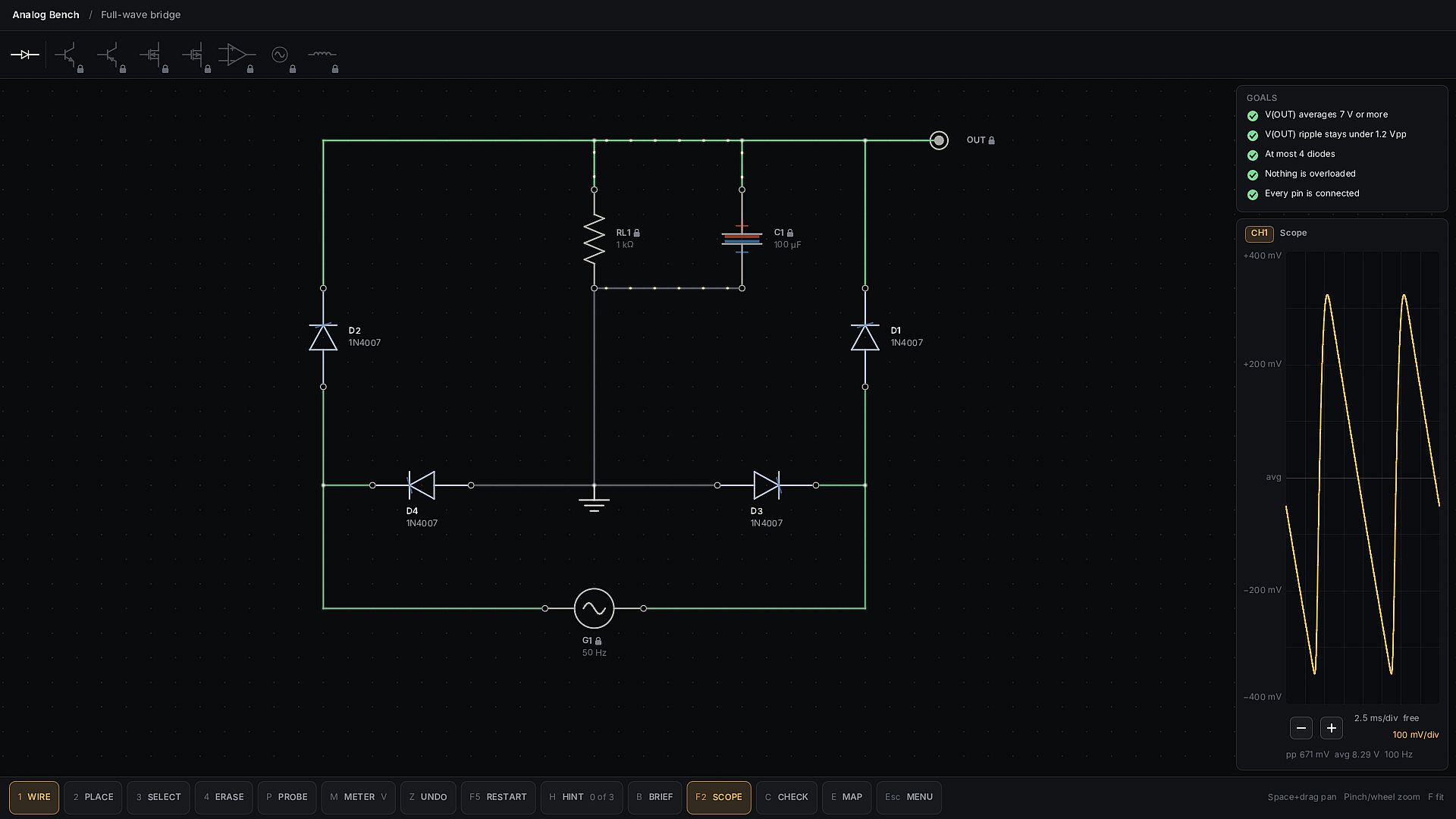
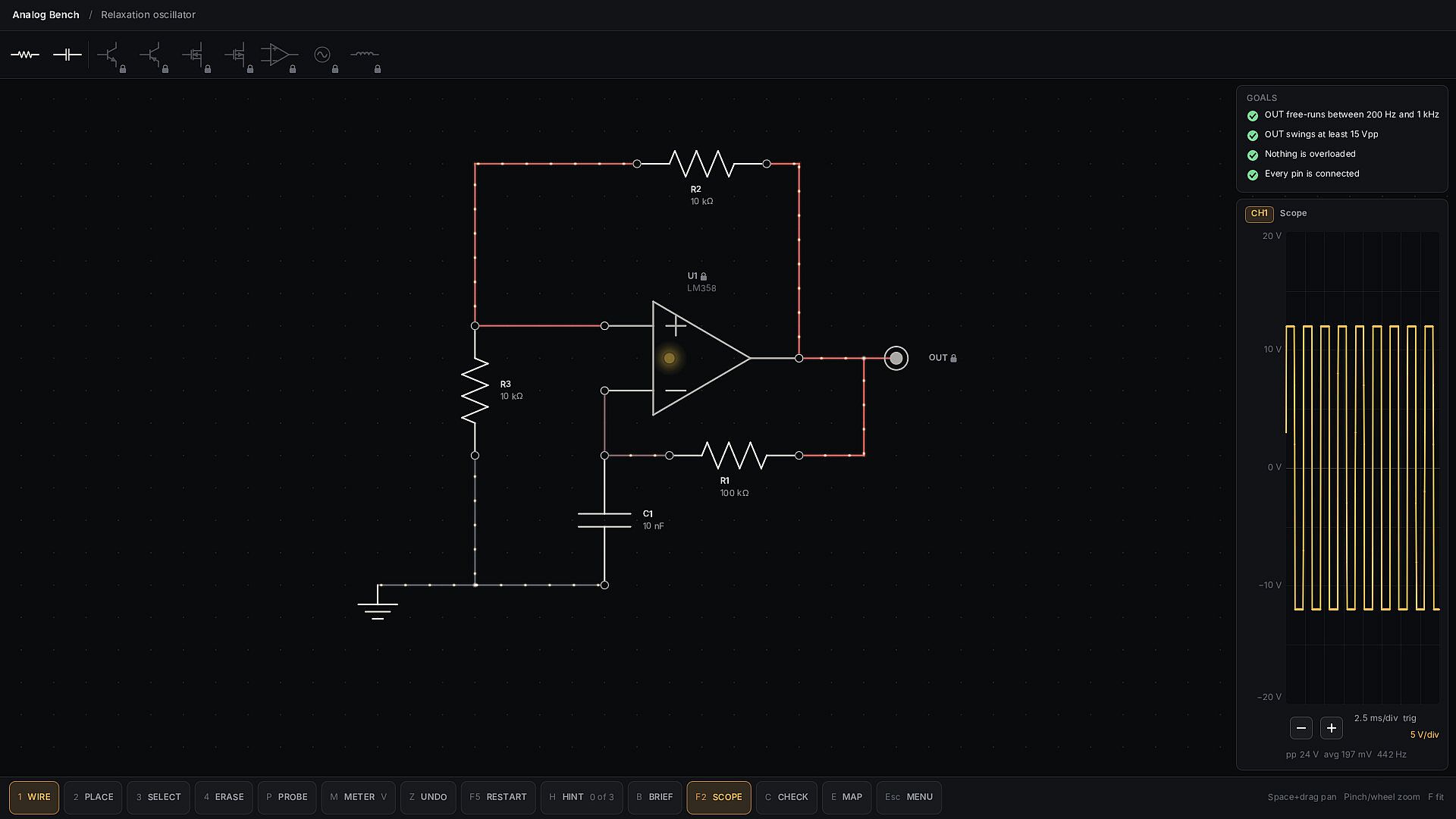
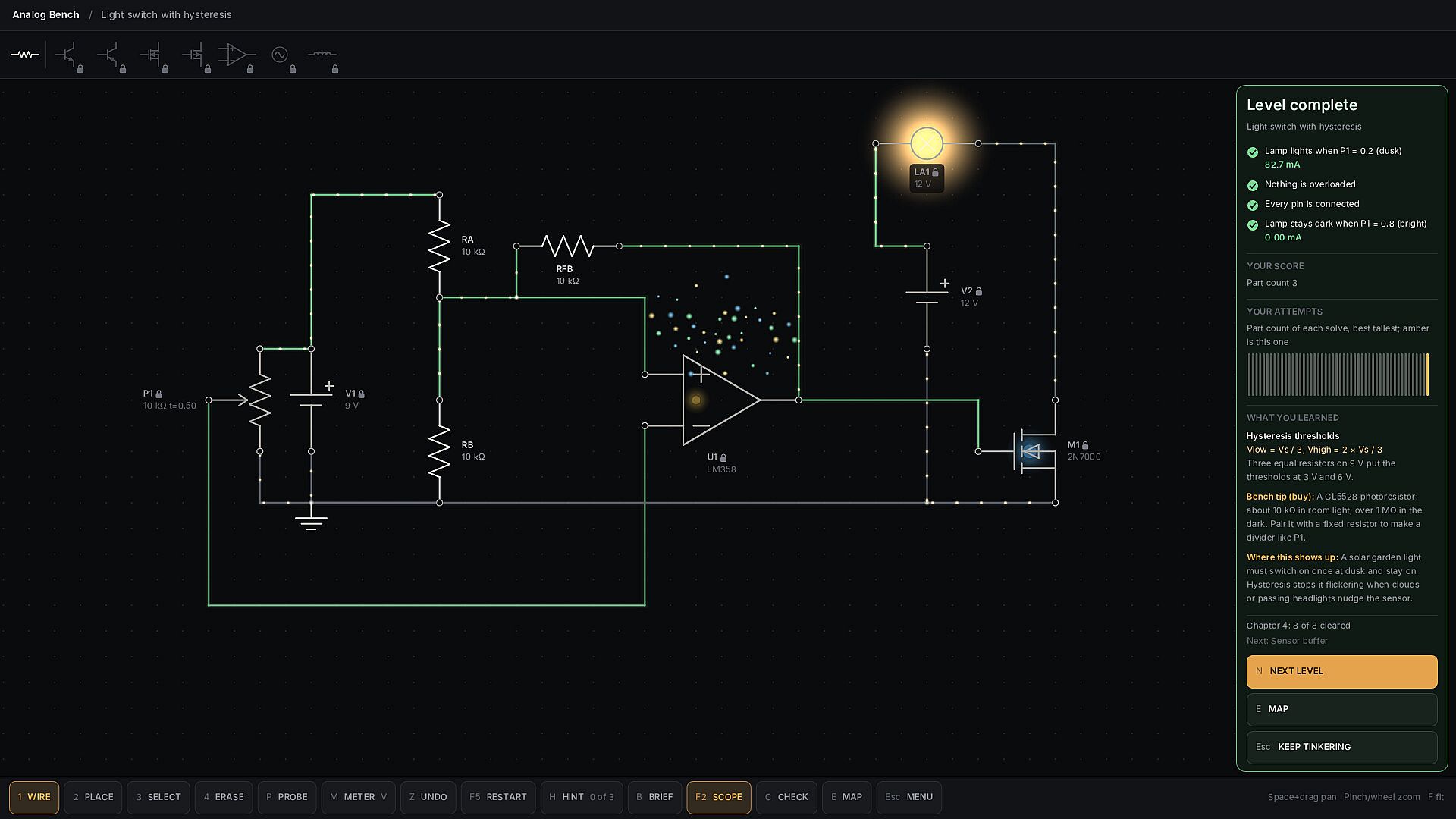
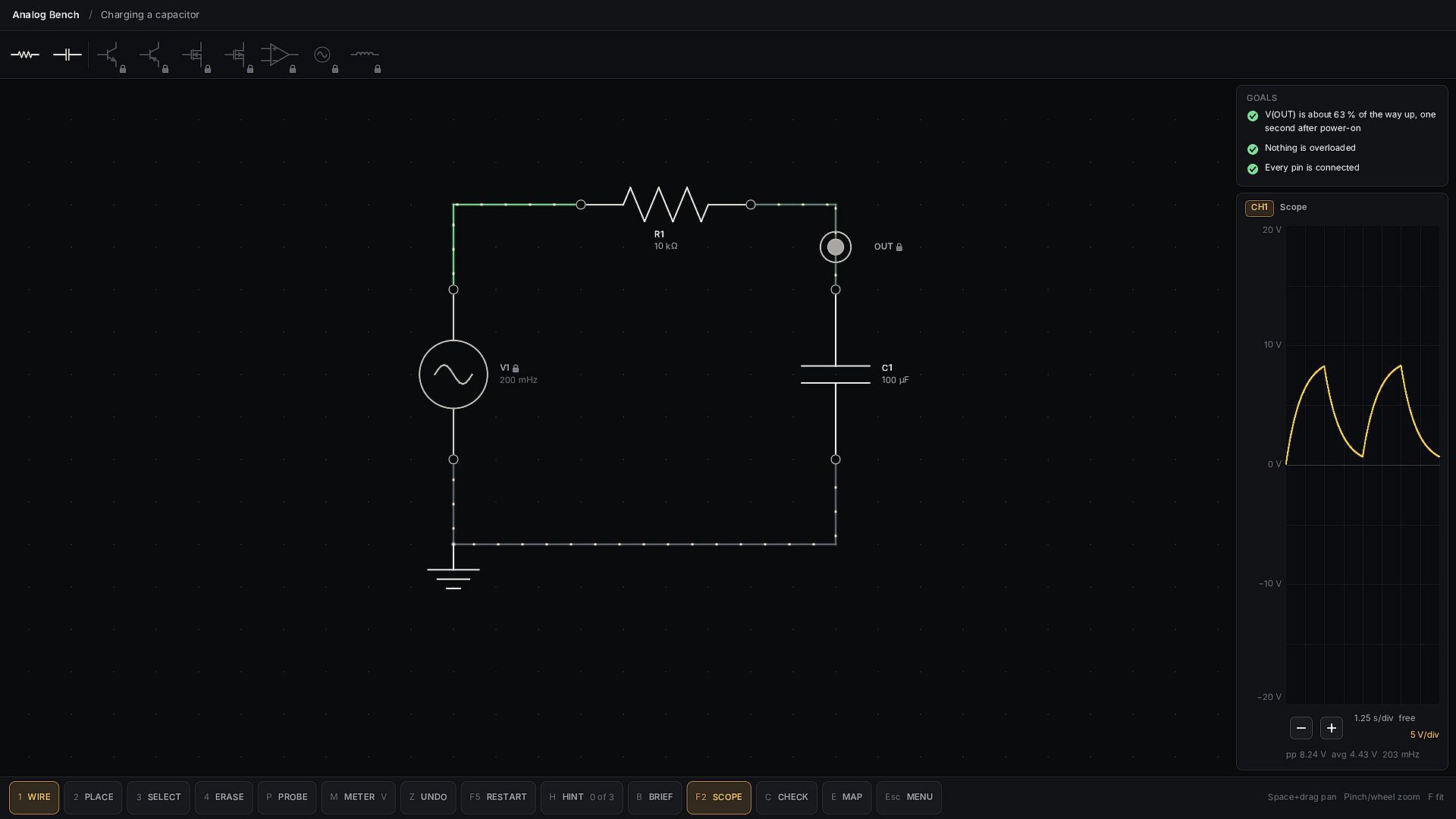
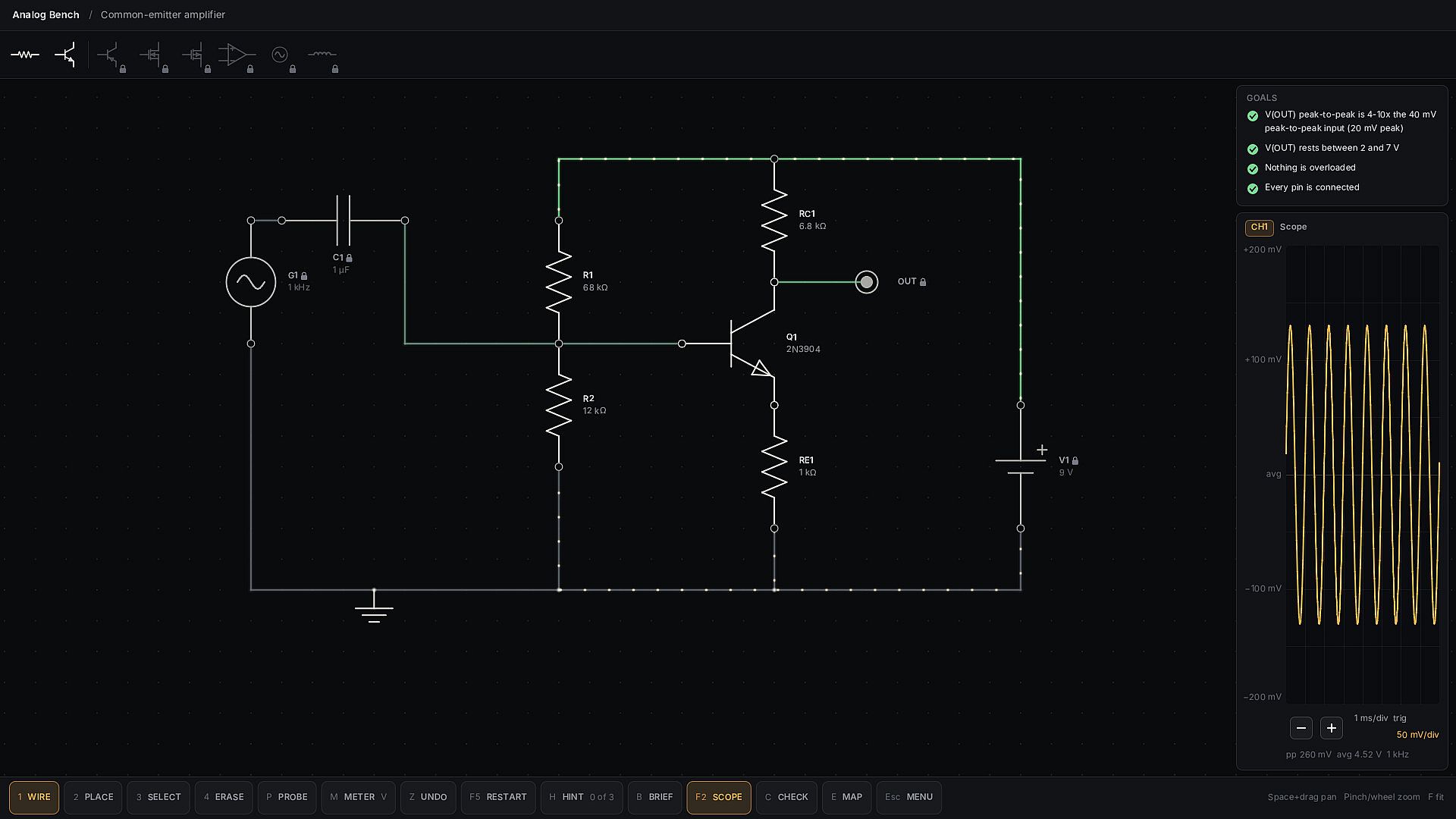
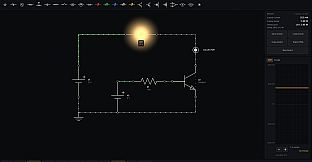
The core loop involves wiring components such as batteries, resistors, LEDs, capacitors, transistors, and op-amps onto a virtual breadboard. A physics-accurate simulator then evaluates the circuit against puzzle objectives, showing how changes in values affect current, voltage, and overall performance. Players measure signals with virtual probes connected to a live oscilloscope and a multimeter for voltage or current readings. This setup reveals why a design passes or fails, encouraging iterative adjustments rather than guesswork.
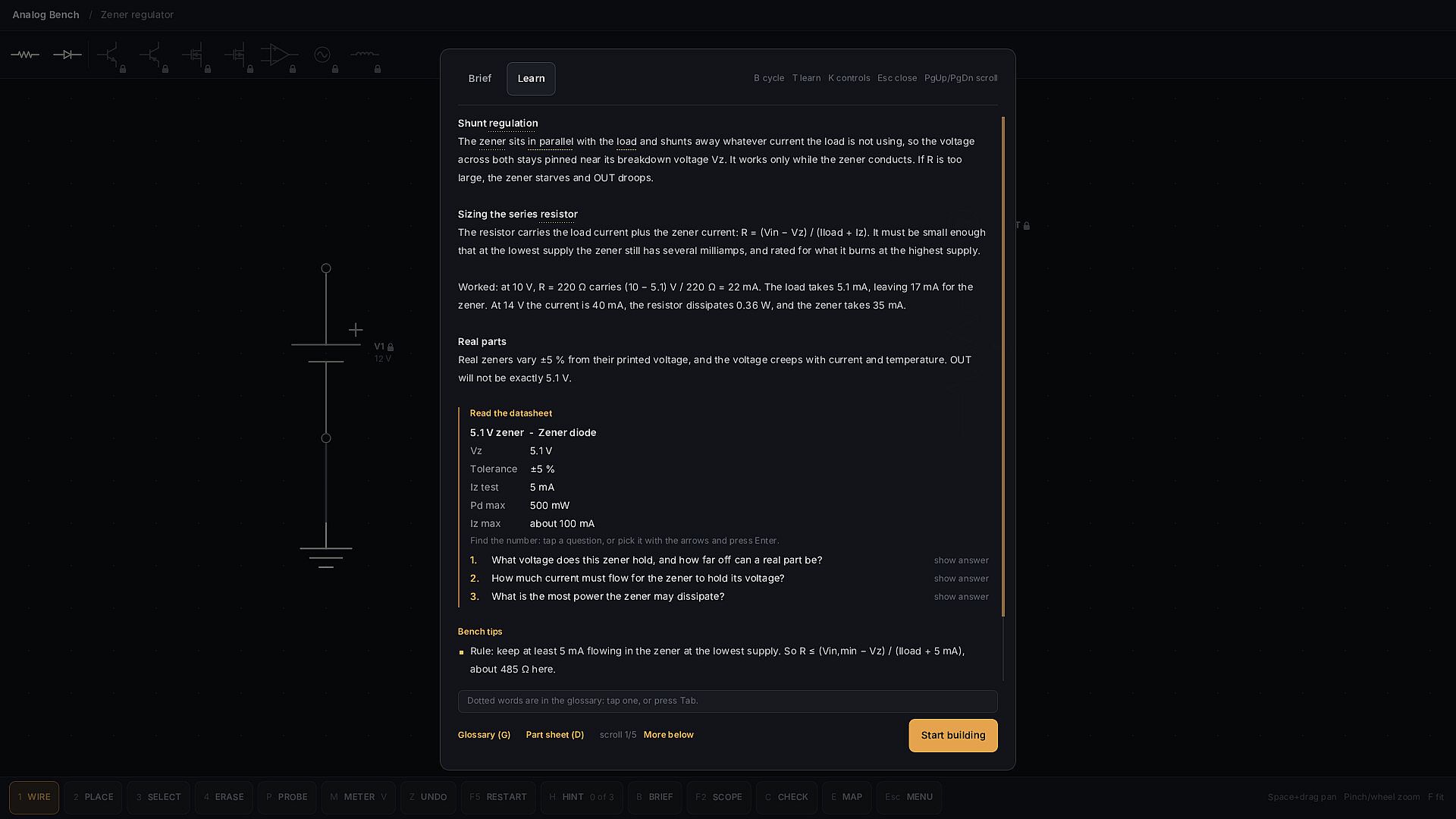
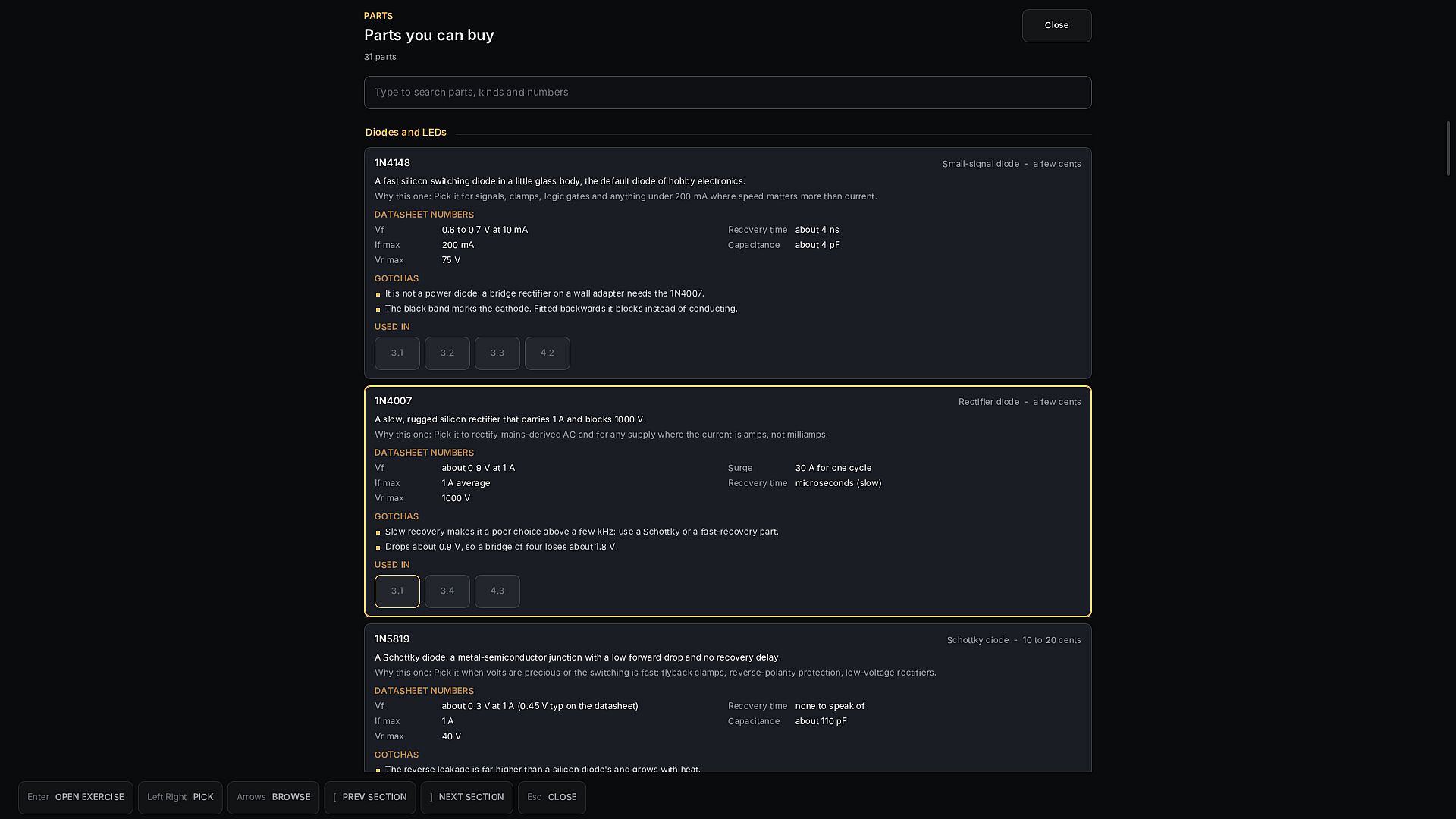
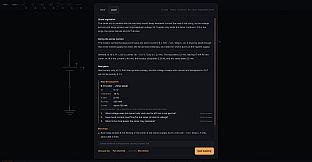
Each exercise starts with a brief goal, followed by optional deeper explanations and progressive hints. A glossary defines technical terms, while a parts reference provides component specifications and a chapter recap reviews key formulas. Experimentation stays comfortable through undo, restart, and autosave features. Interface options allow scaling, color adjustments, sound toggles, and visual effect controls to match individual preferences.
Game Modes
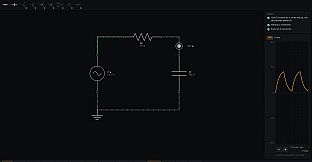
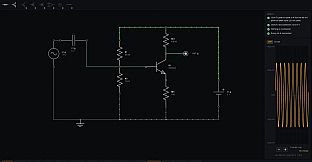
The main experience consists of 55 structured exercises divided across four chapters. The first covers DC circuits, focusing on current, voltage, resistance, and power. The second addresses time and filters, introducing capacitors along with charging curves and signal smoothing. The third explores semiconductors and op-amps, including rectifiers, transistor switches, amplifiers, and oscillators. The fourth presents practical circuits such as regulators, motor drivers, and a light switch with hysteresis.
A separate free-build sandbox mode supplies the full parts palette and starter circuits for open experimentation. Players can save boards as presets, copy text netlists, or export images of completed designs. This mode supports unrestricted testing of personal ideas without puzzle constraints.
Learning and Tools
Progression emphasizes understanding over rote solutions. Every exercise integrates brief instructions with expandable lessons that explain underlying principles. The oscilloscope displays live waveforms for signal analysis, while the multimeter delivers precise numerical readings. These tools help diagnose issues like exceeding component limits or failing to achieve target outputs.
Support materials include a searchable glossary for quick term lookups and a dedicated parts reference for data sheets. Chapter recaps consolidate formulas and concepts for review. The simulator handles all calculations internally, allowing focus on design decisions rather than manual math.
Is It Worth Playing?
Analog Bench suits players interested in electronics, puzzle design, or educational simulations. Its single-player structure and offline availability on Windows and macOS make it accessible without accounts or online requirements. The combination of guided exercises and open sandbox encourages both structured learning and creative exploration. Those who enjoy methodical problem-solving and seeing theoretical concepts translate into working circuits will find consistent engagement across the four chapters and free-build options.












