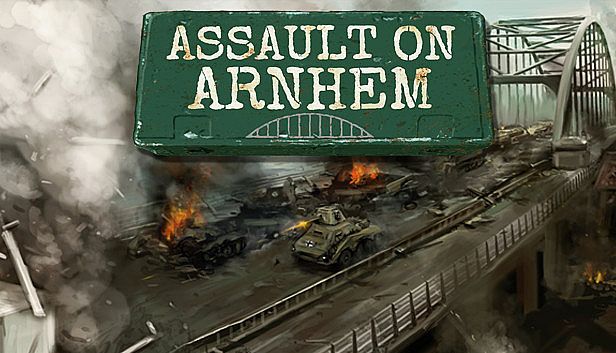











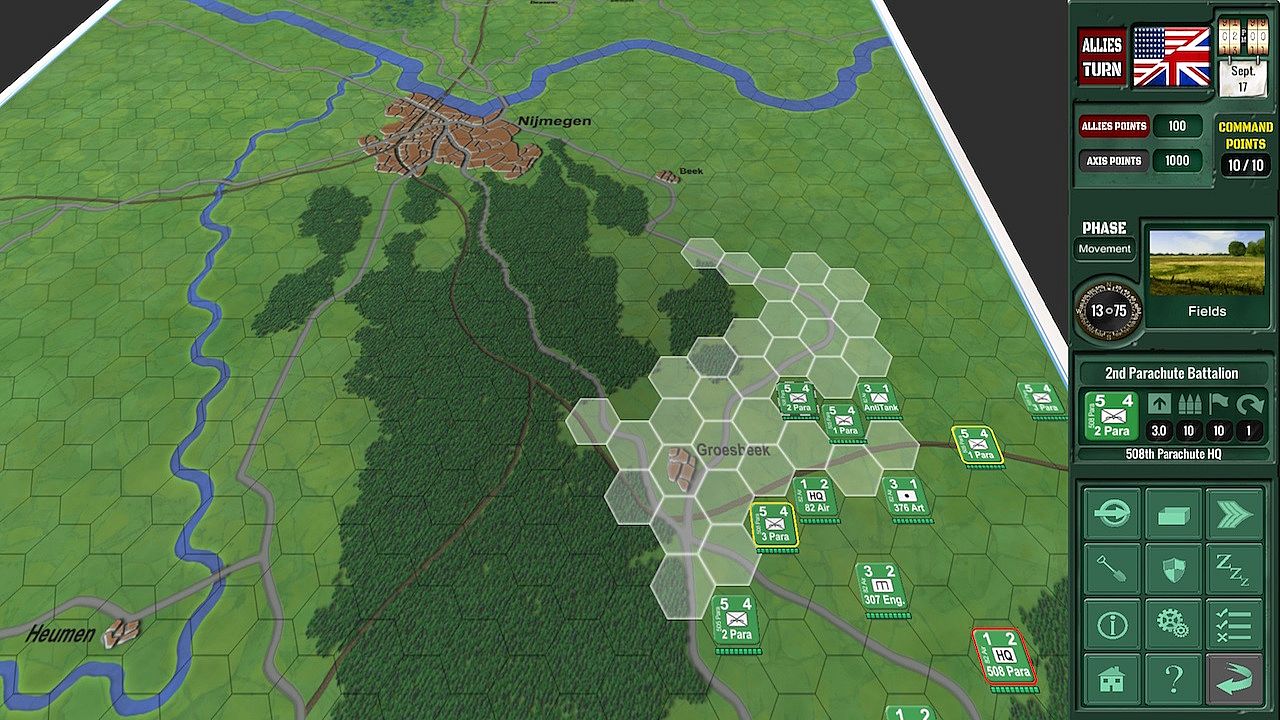
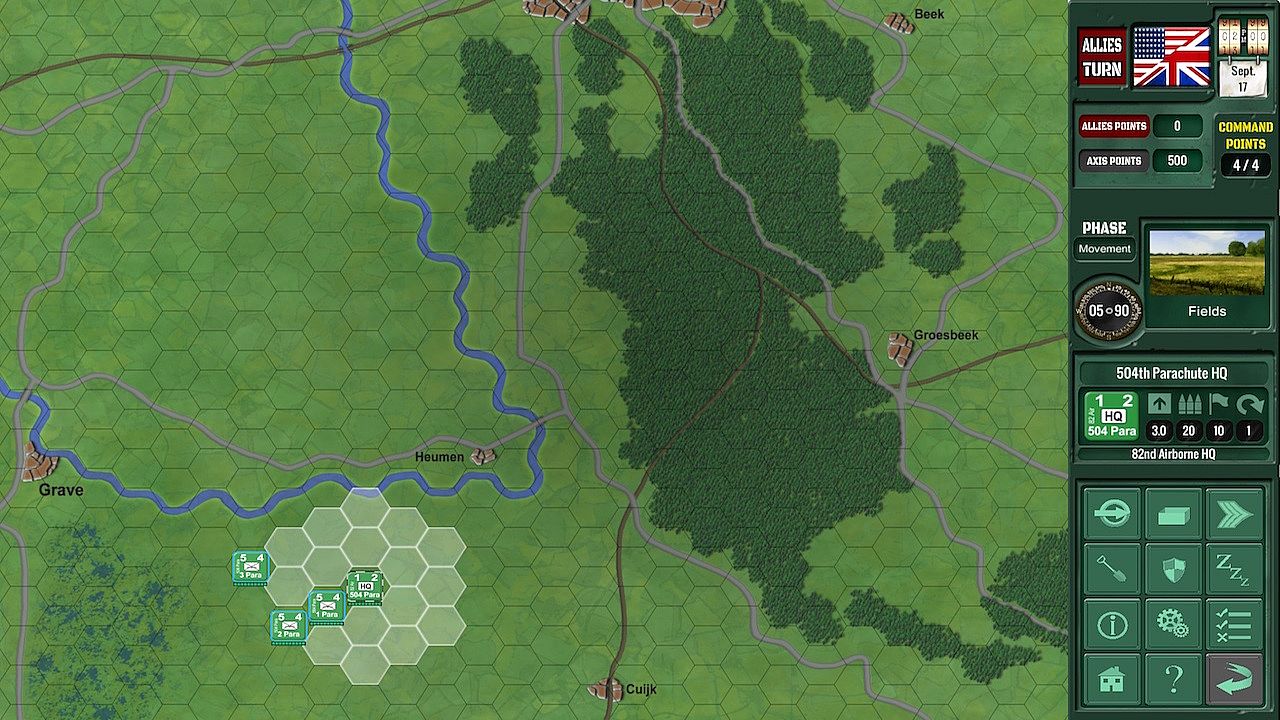
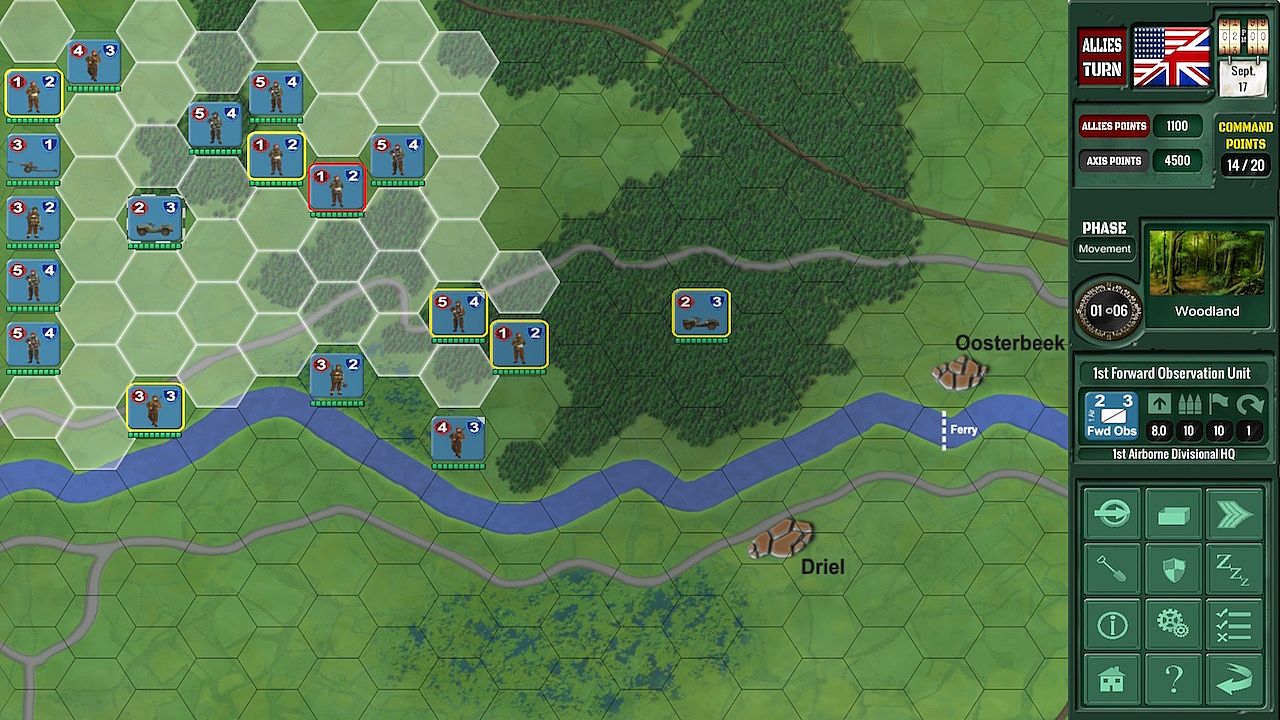
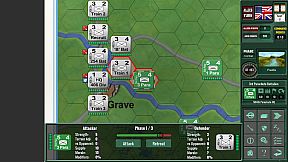
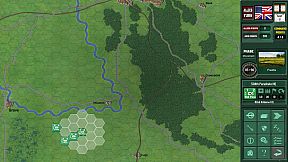
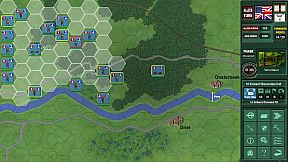
Assault on Arnhem is a turn-based strategy wargame set during the September 1944 Operation Market Garden campaign. Players take command of Allied or Axis units in an effort to secure or hold key bridges leading to the Dutch town of Arnhem. The game emphasizes operational-level decision making across a 3D map view, where supply lines, terrain, and timing determine success or failure.
Gameplay
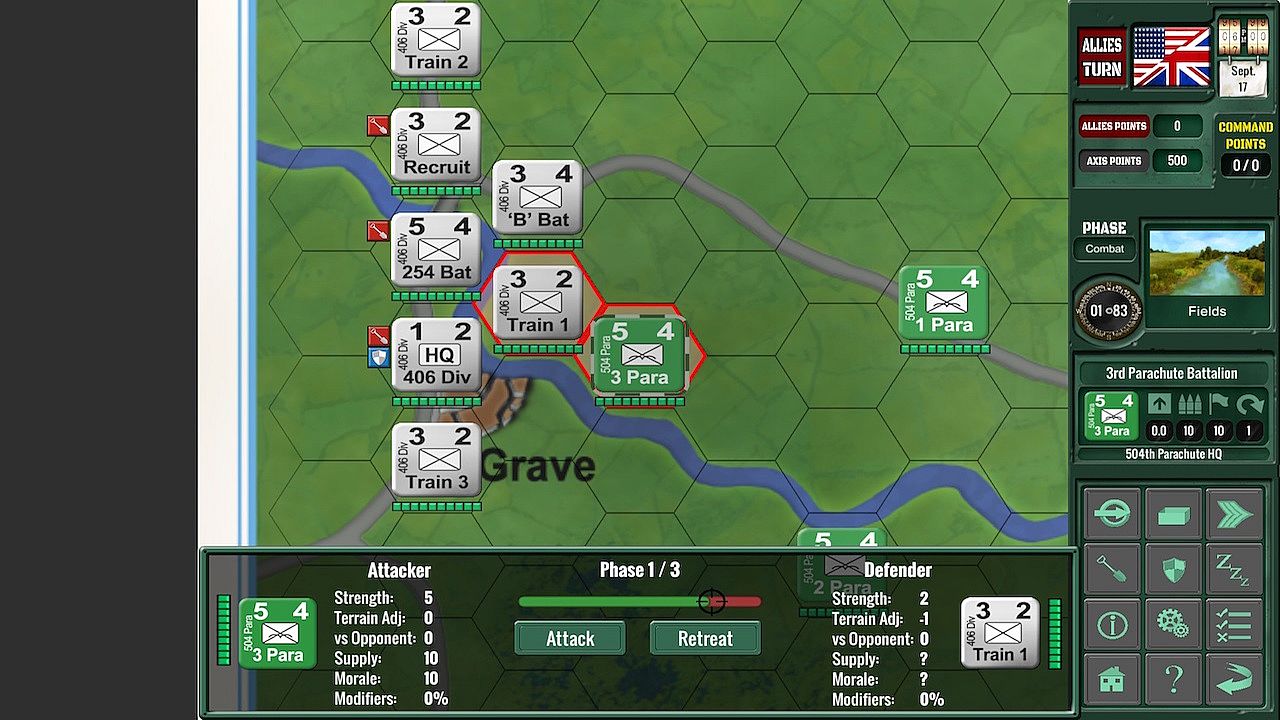
Each turn involves moving units, managing logistics through headquarters supply lines, and committing forces to combat under varying conditions. Over 110 units fall into seven distinct types, allowing players to coordinate infantry, armor, artillery, and reconnaissance elements. Fog of war hides enemy positions based on terrain, encouraging careful scouting and ambushes in wooded areas. Night turns reduce visibility for both sides, which limits command range and combat effectiveness while opening opportunities for recon units to slip behind lines.
Logistics rules require attention to supply routes, as units need regrouping and resupply to remain effective. Reinforcement schedules and supply drops add another layer, forcing players to time advances with incoming support. The system supports three levels of AI difficulty for solo play as either side, with an in-game tutorial to introduce the basics before deeper complexity emerges.
Game Modes
Four scenarios cover specific actions at Grave, Nijmegen, and Arnhem, alongside the full Operation Market Garden campaign. Three shorter battle scenarios focus on individual objectives, while the main campaign links them into a longer strategic effort. Victory requires capturing or defending bridge objectives within the allotted time.
Multiplayer supports up to four players in hotseat format on the same device. Cross-platform online play accommodates two participants. AI opponents fill remaining seats when fewer human players participate, maintaining the same rules and mechanics across all modes.
Single-Player Options and AI
Three AI difficulty settings allow gradual progression from straightforward opposition to more challenging command decisions. The campaign scenario stretches across multiple turns and locations, testing sustained logistics management and reinforcement timing. Players can switch sides to experience both the Allied push and Axis defensive responses under identical rules.
Is It Worth Playing?
The game carries mixed user reviews, with 62 percent positive ratings from a modest number of submissions. Its accessible entry point suits newcomers to operational wargames, while the underlying systems of supply, visibility, and night operations provide lasting interest for experienced players. The combination of historical scenario variety, hotseat and online multiplayer, and adjustable AI makes it suitable for those seeking deliberate, turn-based strategy focused on World War II bridgehead fighting. Availability on PC remains unchanged since its 2016 release, with no further expansions or seasonal content added. Those drawn to detailed logistics and terrain-aware tactics will find the most value, particularly in longer campaign sessions or competitive hotseat matches.