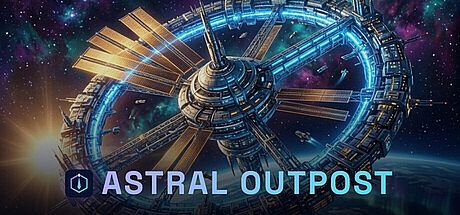


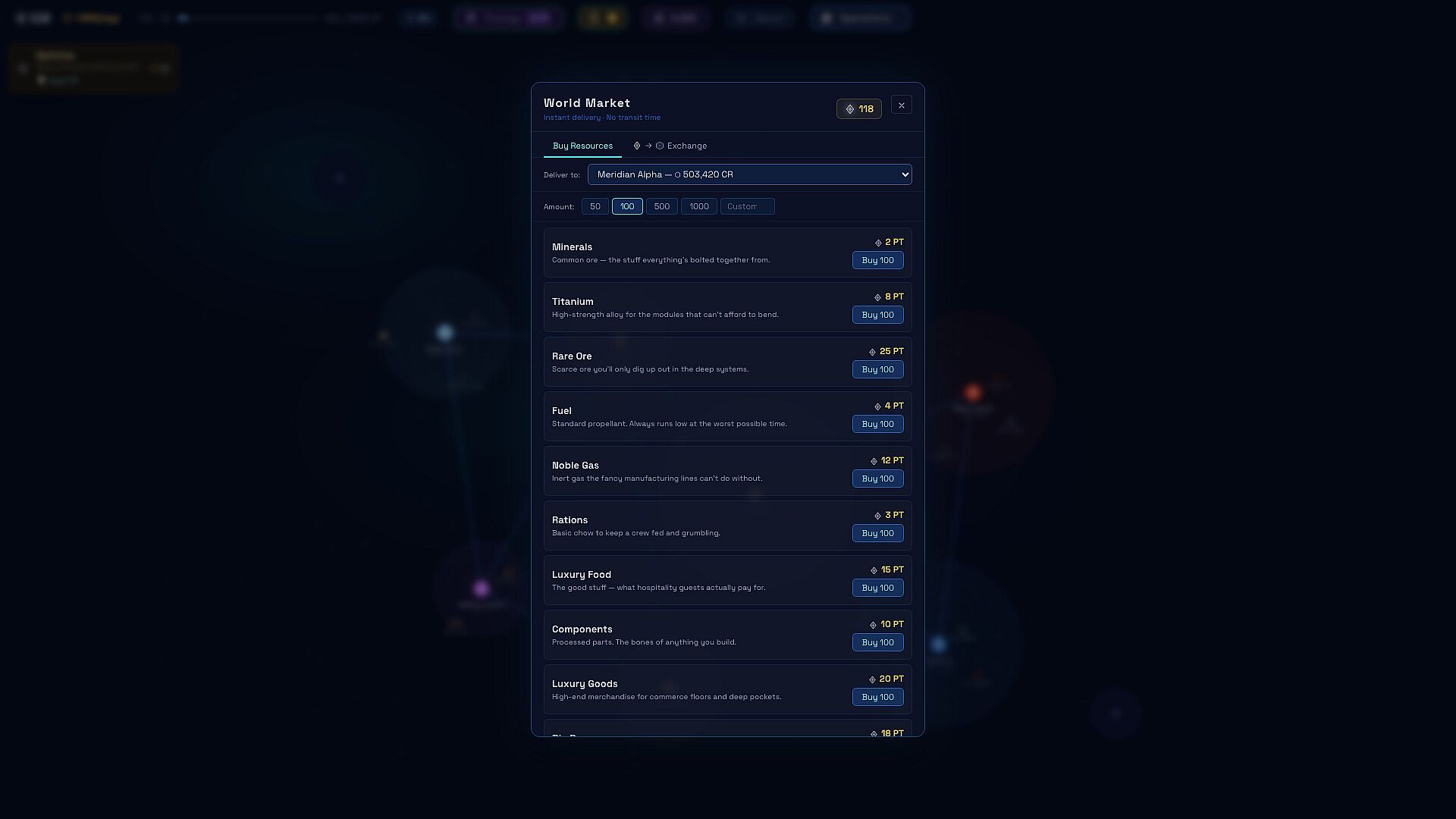

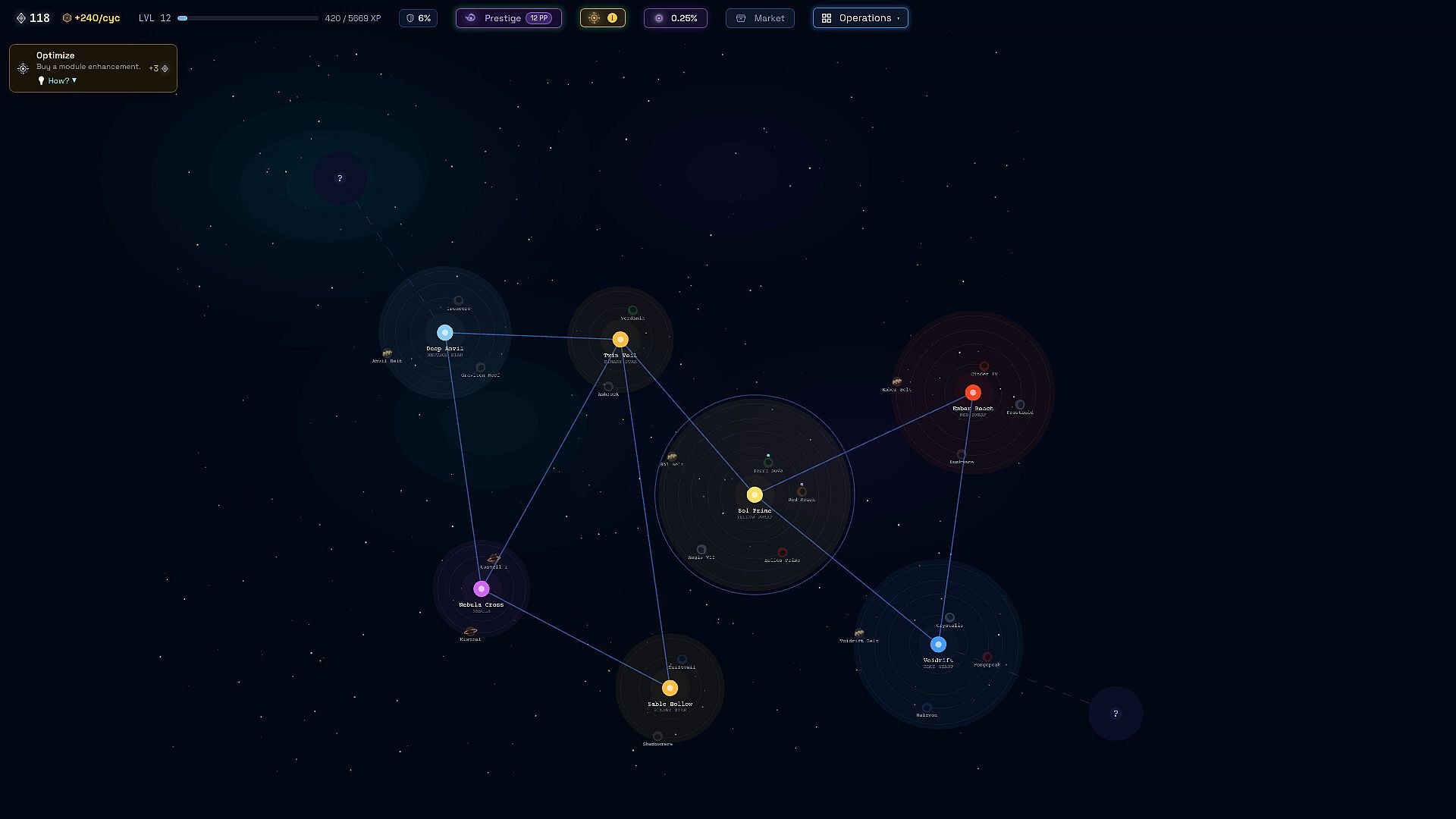






Astral Outpost is an idle strategy game in the strategy, casual, and simulation genres for PC. Players manage orbital stations above planets, matching modules to local demands in order to build a profitable trade network that continues generating resources even during offline periods.
Gameplay
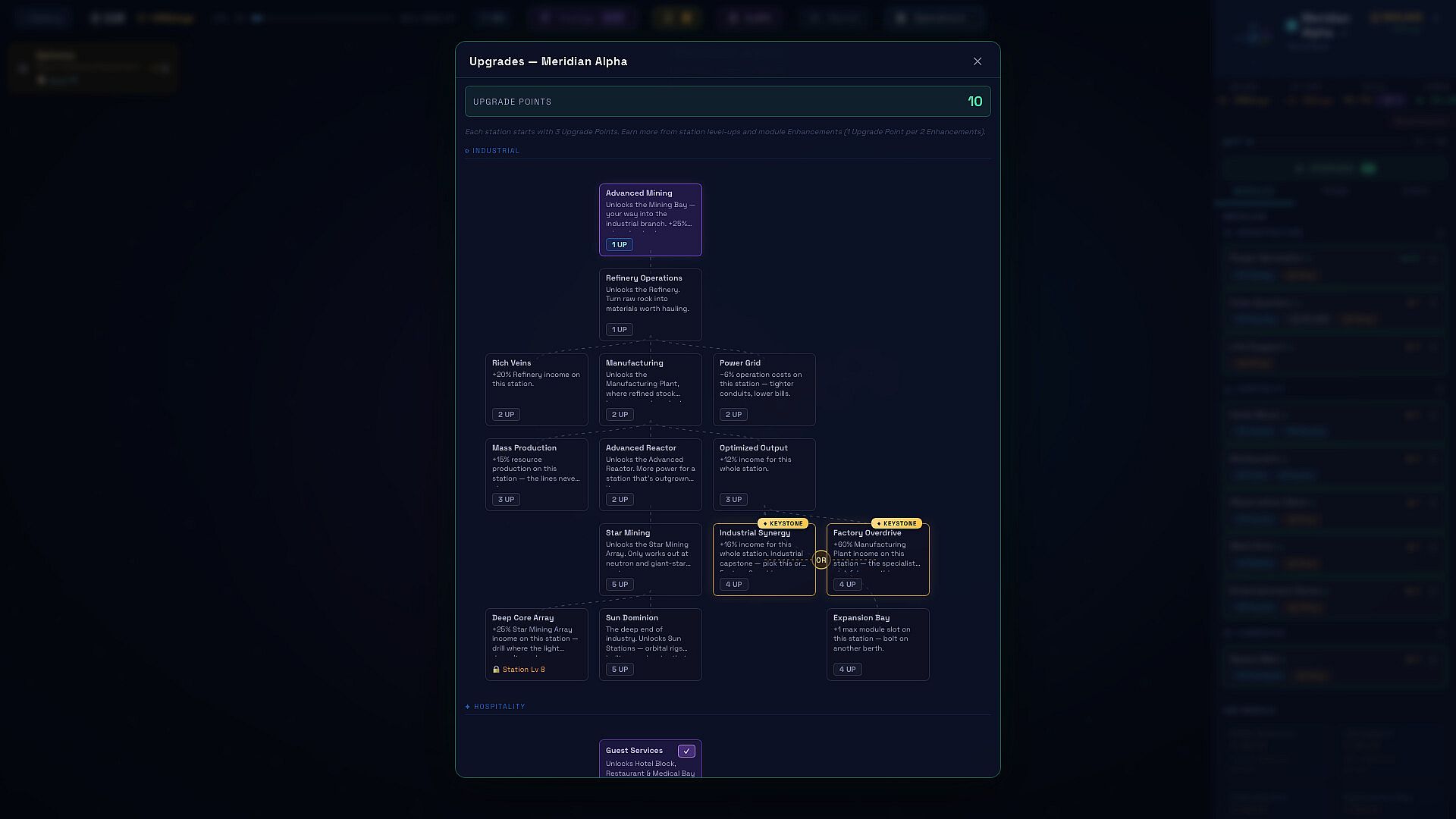
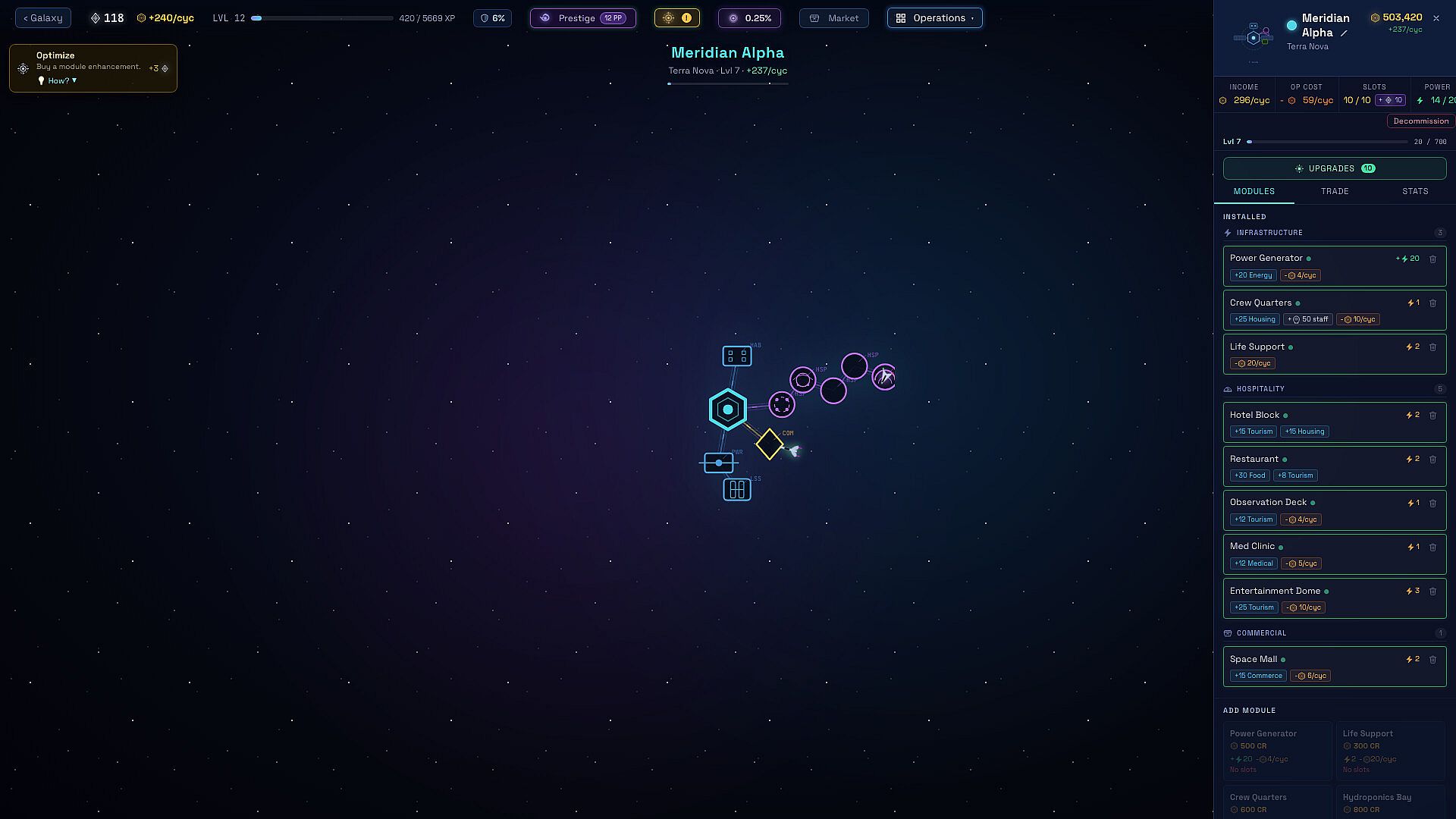
The core loop centers on station construction and ongoing management. Each planet presents specific requirements such as housing, power, or dining options. Players respond by attaching appropriate modules to their station, balancing operational costs against incoming revenue. Production chains form naturally when industrial modules feed into manufacturing lines or when resort facilities attract visitors. Forty upgrades per station allow specialization along distinct paths, including refineries that support manufacturing, hotels that fill resort stations, or hubs that capture trade margins. Planets maintain active economies that respond to the modules installed, creating feedback where the right configuration yields higher returns over time.
Events interrupt the routine with pirate raids, sudden market fluctuations, refugee arrivals, and anomalous signals. Responses range from payment or combat to riskier choices that can damage modules or unlock multi-part storylines spanning multiple systems. Reputation with three major factions shapes long-term outcomes. Positive standing with the Traders' Guild, Crimson Fleet, or Stellar Federation unlocks cheaper goods, reduced raid frequency, and access to exclusive technology in their territories. Negative reputation turns those same regions into hazards, while gifts provide an alternative route to improved relations.
Game Modes
Station specialization serves as the primary variation in approach. One path emphasizes industrial output through refineries and manufacturing upgrades. Another focuses on hospitality with dense hotel modules for resort-style stations. A third prioritizes trade volume through hub modules that skim margins across multiple routes. Each tree contains forty upgrades that alter production efficiency and resource flows.
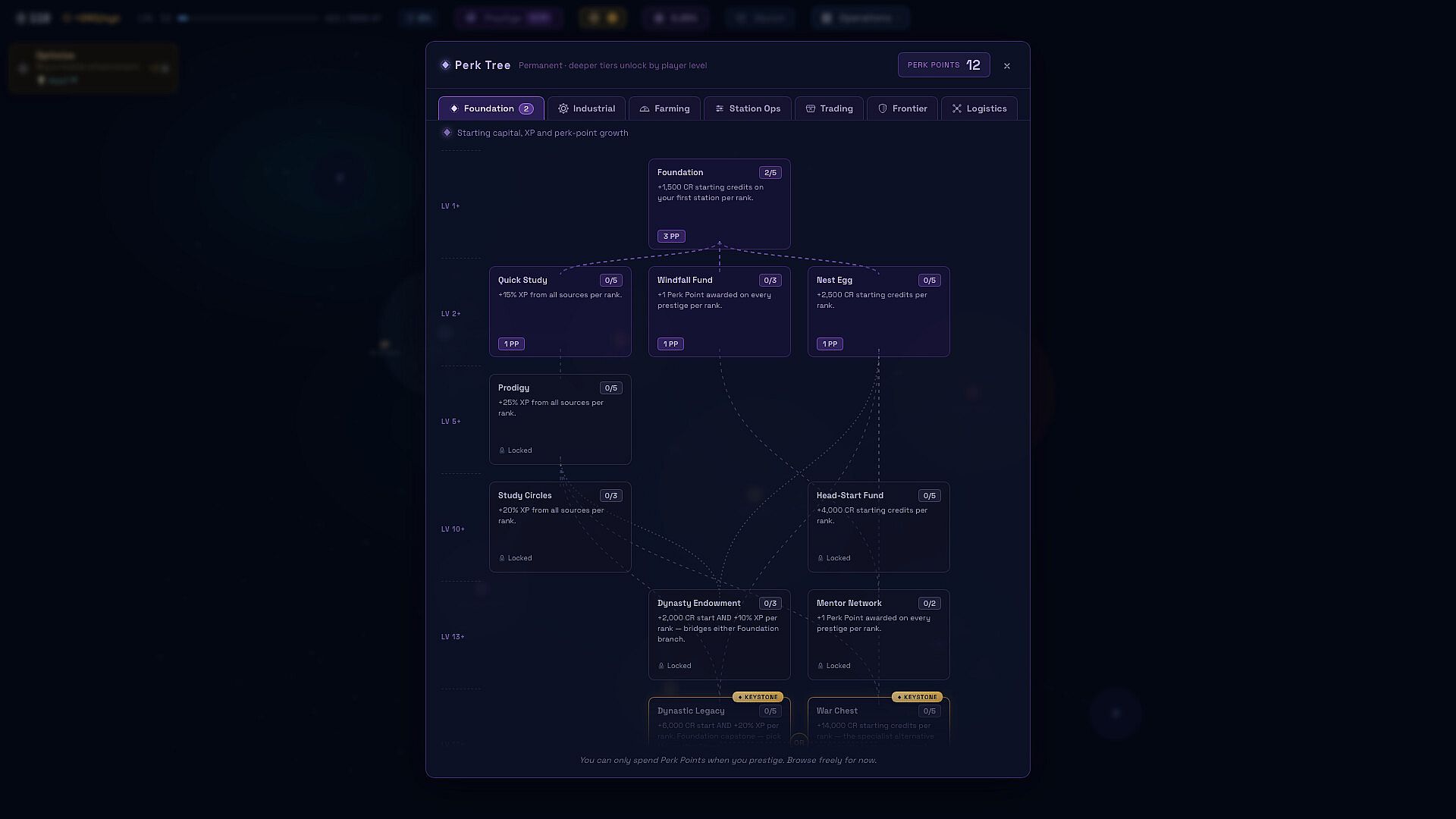
Prestige resets provide a second layer of progression. Players can prestige for permanent bonuses distributed across seven separate trees. After prestige, new stations can be founded near dying suns or around a megastructure that contains a black hole. New Game+ increases overall difficulty while carrying forward those prestige perks, allowing repeated playthroughs with escalating challenges across different star clusters.
Progression and Systems
Offline progress runs without timers or energy systems. Earnings accumulate up to a cap and become available upon return, supporting flexible play sessions. Thirty-five achievements track milestones such as specific module combinations or faction standings. Four global leaderboards record fastest times to first prestige and other speed-related accomplishments. Saves use Steam Cloud alongside local backups for reliability across sessions.
Seven languages support full playability. The game runs natively on Windows, macOS with both Apple silicon and Intel processors, and Linux. Reputation persists through prestige resets, maintaining its effects on markets, raids, and available technology in subsequent runs.
Is It Worth Playing?
Astral Outpost suits players who enjoy idle strategy and simulation titles with station-building mechanics and light narrative events. The absence of energy meters or aggressive timers allows relaxed engagement, while production chains and faction reputation add depth for those who prefer systems that reward planning and adaptation. Prestige and New Game+ extend replay value for completionists interested in optimization across multiple runs. The combination of offline earnings, modular construction, and reactive events creates a self-sustaining empire that rewards both short check-ins and longer planning sessions.