







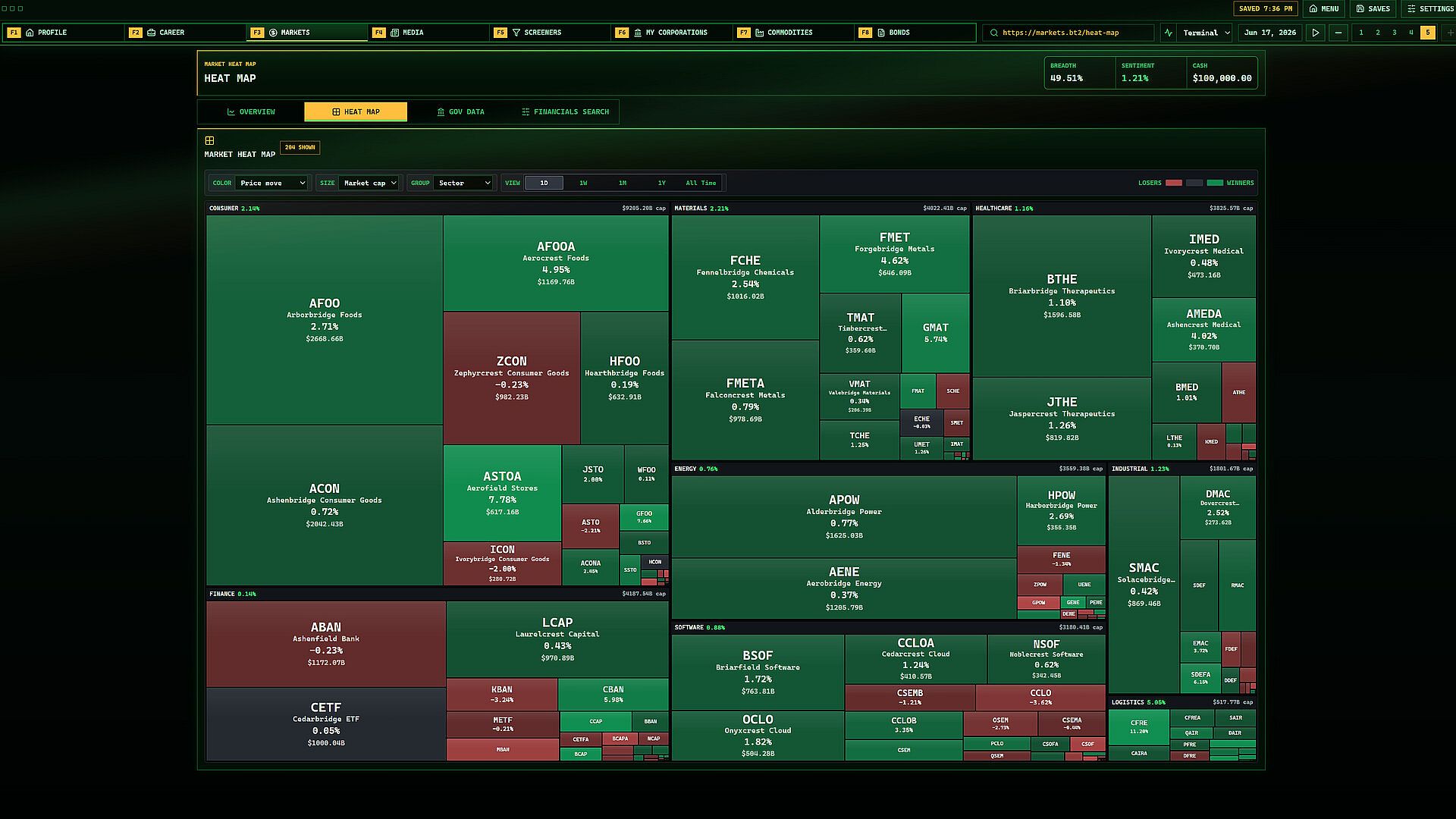


Beat The Machine is a single-player strategy and simulation game focused on stock trading, corporate management, and career progression in a realistic economic environment. Players engage with a detailed market system where decisions around trading, company operations, and personal advancement shape outcomes in a simulated economy.
Gameplay
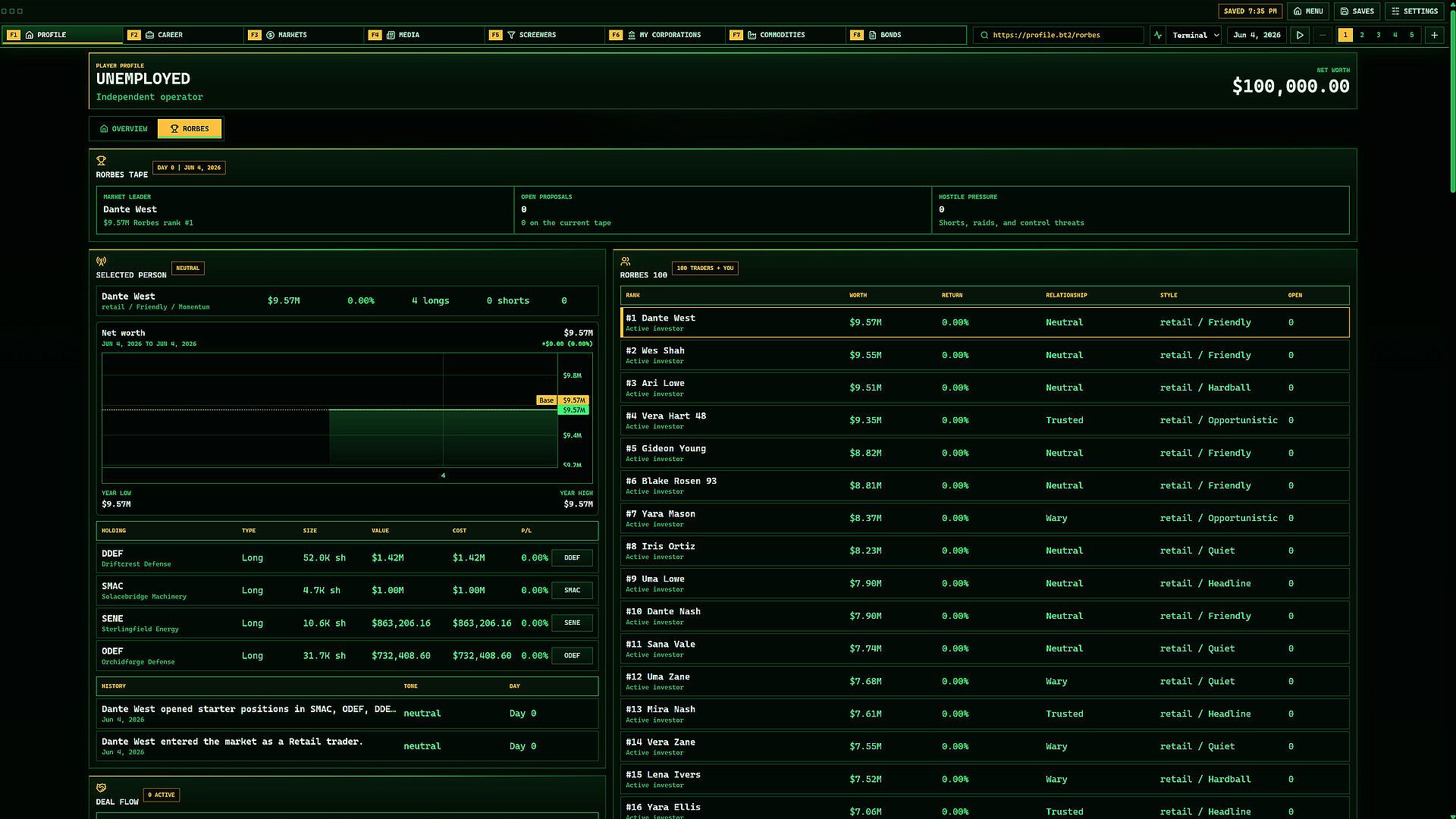
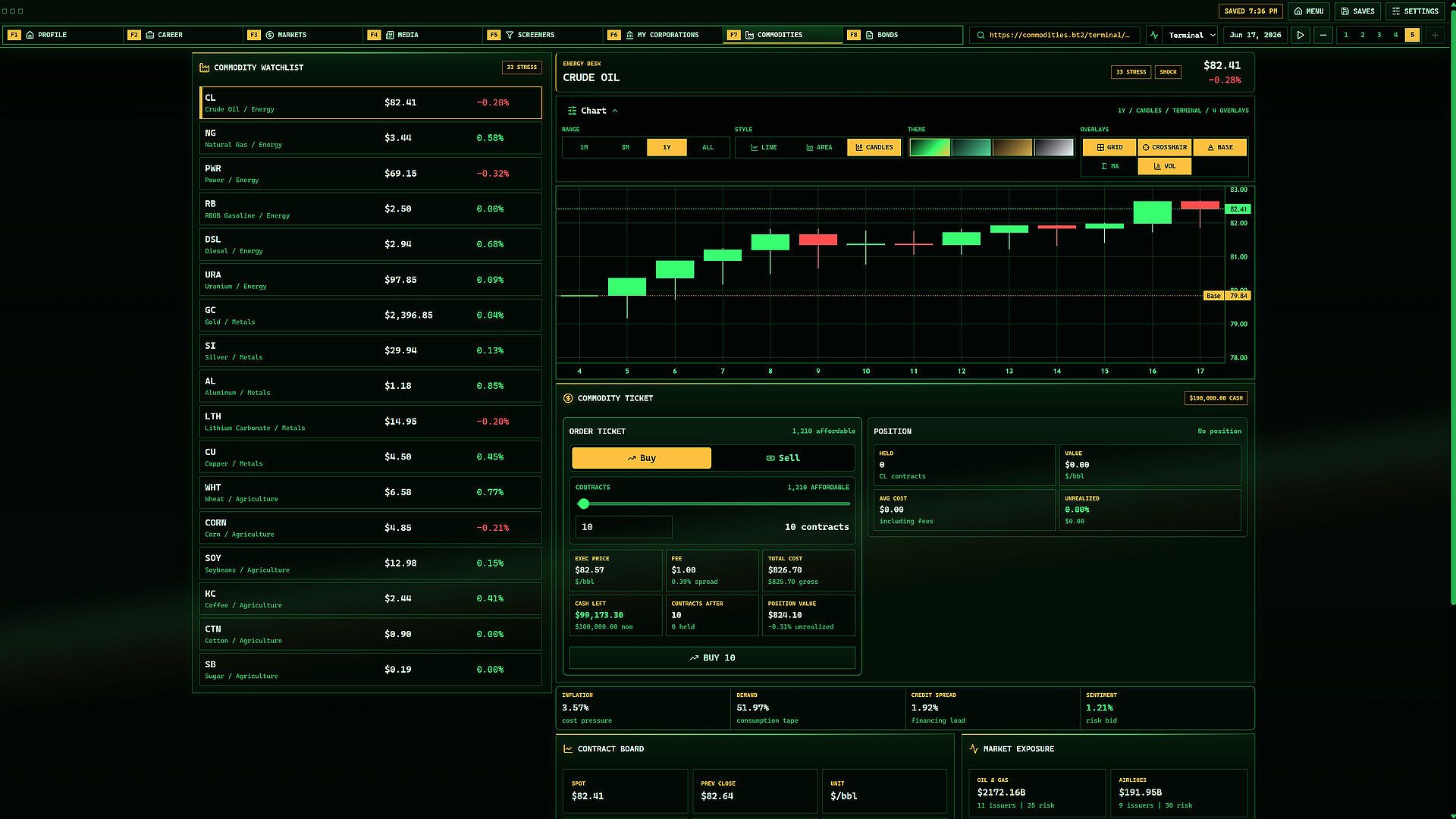
The core loop revolves around interacting with a network of interconnected companies that process commodities through refinement, manufacturing, and sales stages. Items move from basic resources to finished products consumed by end users or other businesses, creating dependencies that influence market prices and opportunities. A thousand uniquely generated NPCs operate as traders with individual behaviors, contributing to dynamic market conditions that respond to player actions and broader economic shifts.
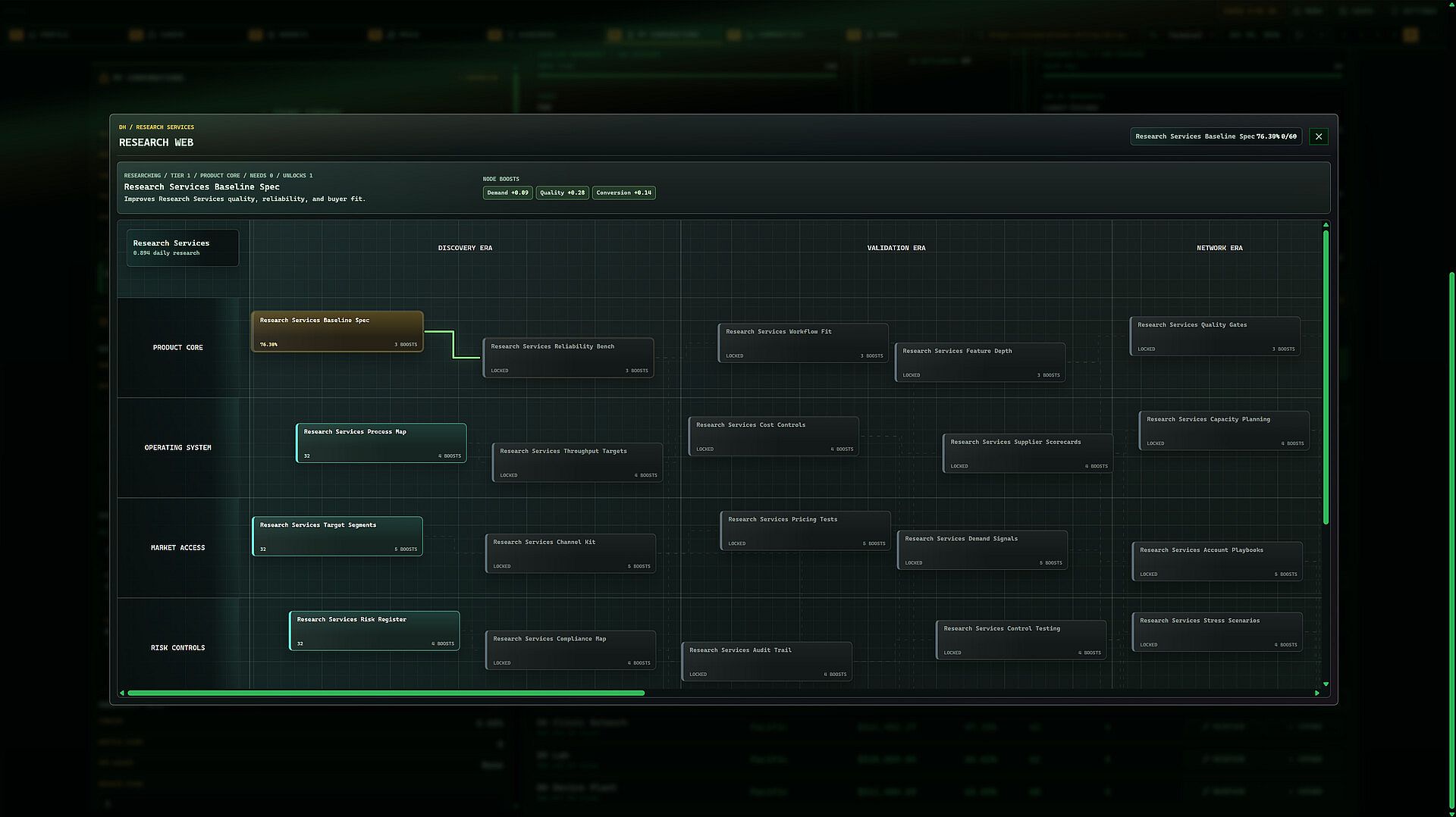
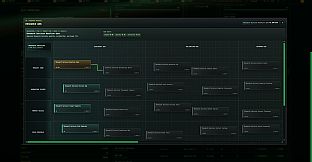
Research systems allow advancement through company-specific trees, where most paths include up to fifty nodes that unlock improvements in efficiency, capabilities, or new options. Career elements let players begin in entry-level roles at a company and advance through positions to leadership. Once at the top, options include retiring with substantial compensation or shifting into other strategies such as aggressive corporate maneuvers that reduce dividends, streamline operations, or extract value through restructuring.
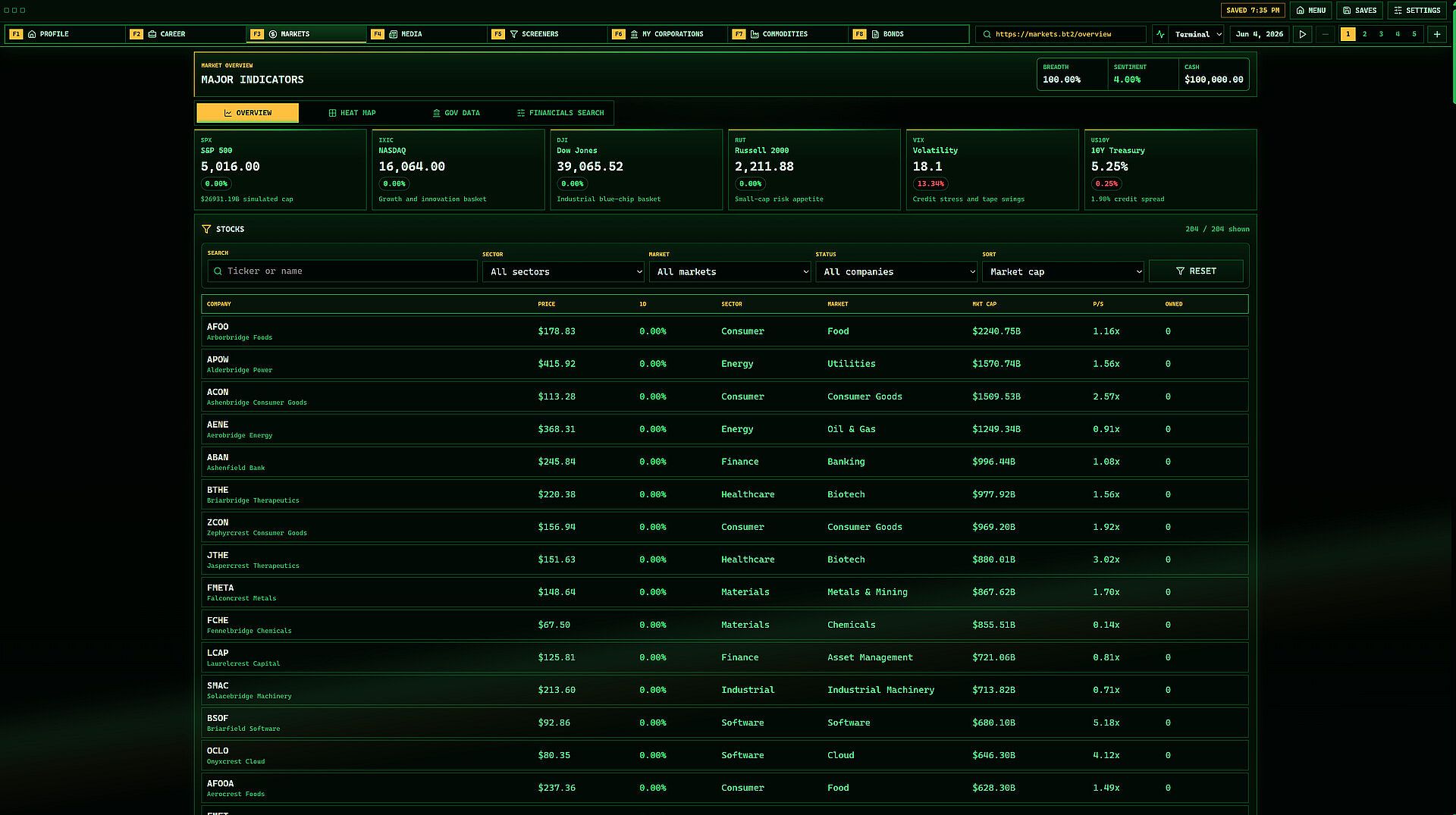
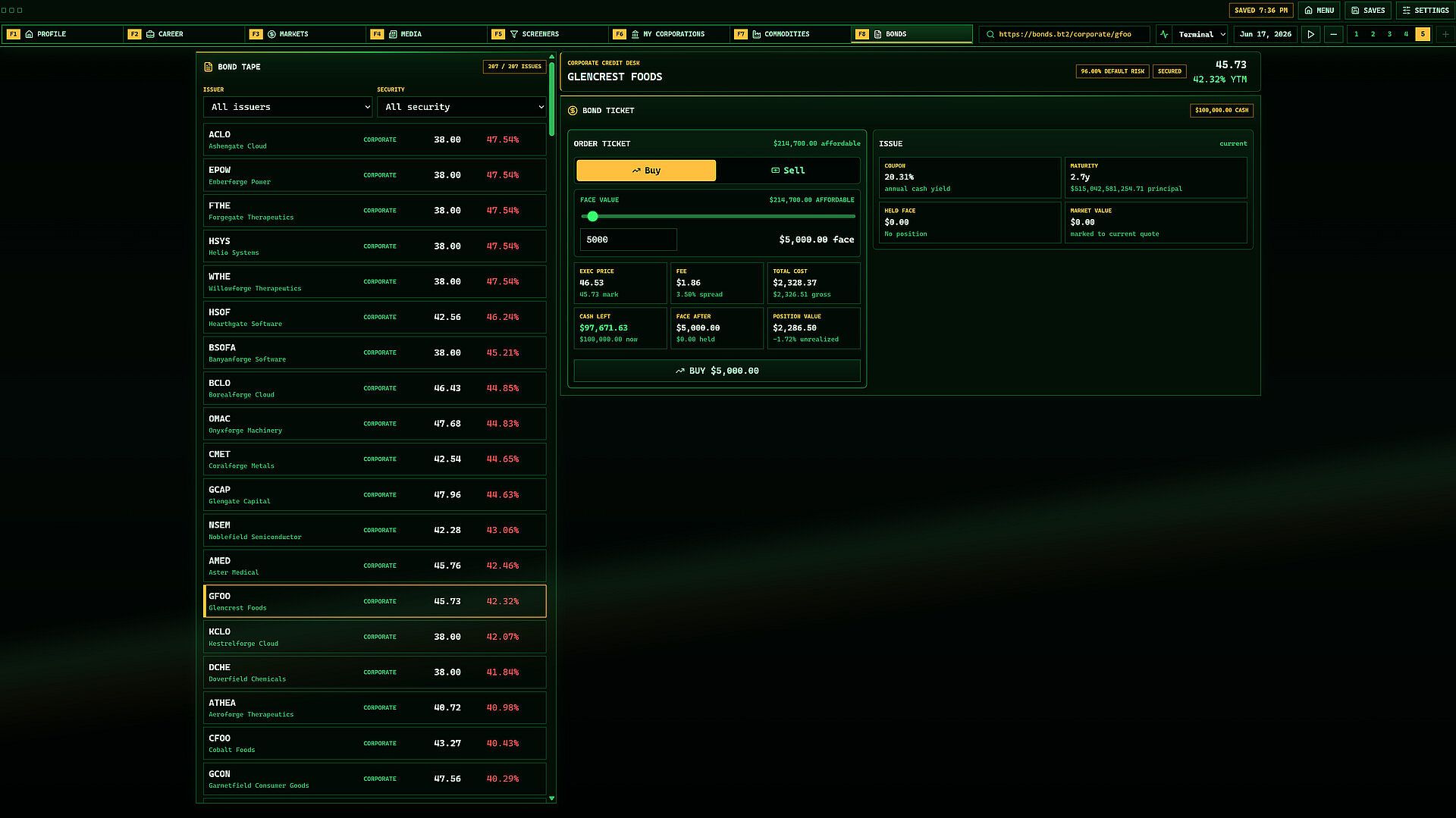
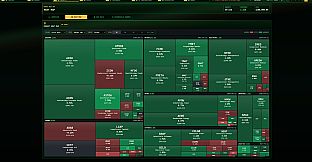
Trading forms another pillar, where players buy and sell shares while monitoring how NPC activity and company interlinks affect valuations. The simulation emphasizes realism through these layered mechanics rather than abstract interfaces, requiring attention to supply chains and individual trader patterns for sustained progress.
Game Modes
Beat The Machine operates as a unified single-player experience without separate named modes. Players choose emphasis based on preference: focusing on market trading to build wealth through share transactions, pursuing internal career advancement from junior positions to executive roles, or adopting a corporate raider approach that targets companies for dismantling or value extraction. Retirement serves as an end-state option after accumulating resources through any of these paths.
The interconnected company system supports all approaches by linking commodity flows to final sales, so choices in one area ripple across the economy. Research trees integrate with whichever path a player selects, providing long-term upgrades that enhance trading accuracy, career speed, or raiding effectiveness. This flexibility lets individuals tailor sessions around trading acumen, operational management, or disruptive tactics without switching between distinct game types.
Early Access Development
The title enters Early Access with a polished foundation in its career and stock trading systems. Additional elements such as deeper research mechanics, company expansion options, and social media interactions remain in planning or partial implementation. Developers intend to refine business systems and add layers like government economic influences and subsidiary management before exiting Early Access, with community input via Discord guiding adjustments to realism and balance.
System requirements remain modest, supporting play on standard Windows hardware with integrated graphics. The single-player focus means no multiplayer components or seasonal content at launch, keeping attention on iterative improvements to the core simulation during the Early Access period.
Is It Worth Playing?
Beat The Machine suits players interested in detailed economic simulations and strategic decision-making around markets and careers. Its emphasis on NPC-driven trading and supply chain connections offers a distinctive take on stock games, appealing to those who enjoy long-term progression through research and role advancement. With no user reviews available prior to release and an Early Access launch scheduled for mid-August 2026, potential buyers should consider whether the current core systems align with their interest in realistic trading and corporate mechanics. Those drawn to single-player strategy titles that reward careful planning over action may find value in following its development updates.











