

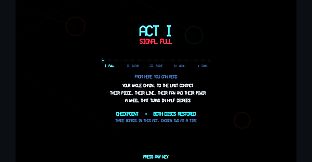
Break Order is a turn-based strategy game built around elastic billiard physics on PC. Players issue one impulse per turn to pieces on a table, after which collisions resolve under a fully deterministic simulation. The result is a geometry-driven contest where chains of bounces determine outcomes rather than direct targeting or random chance.
Gameplay
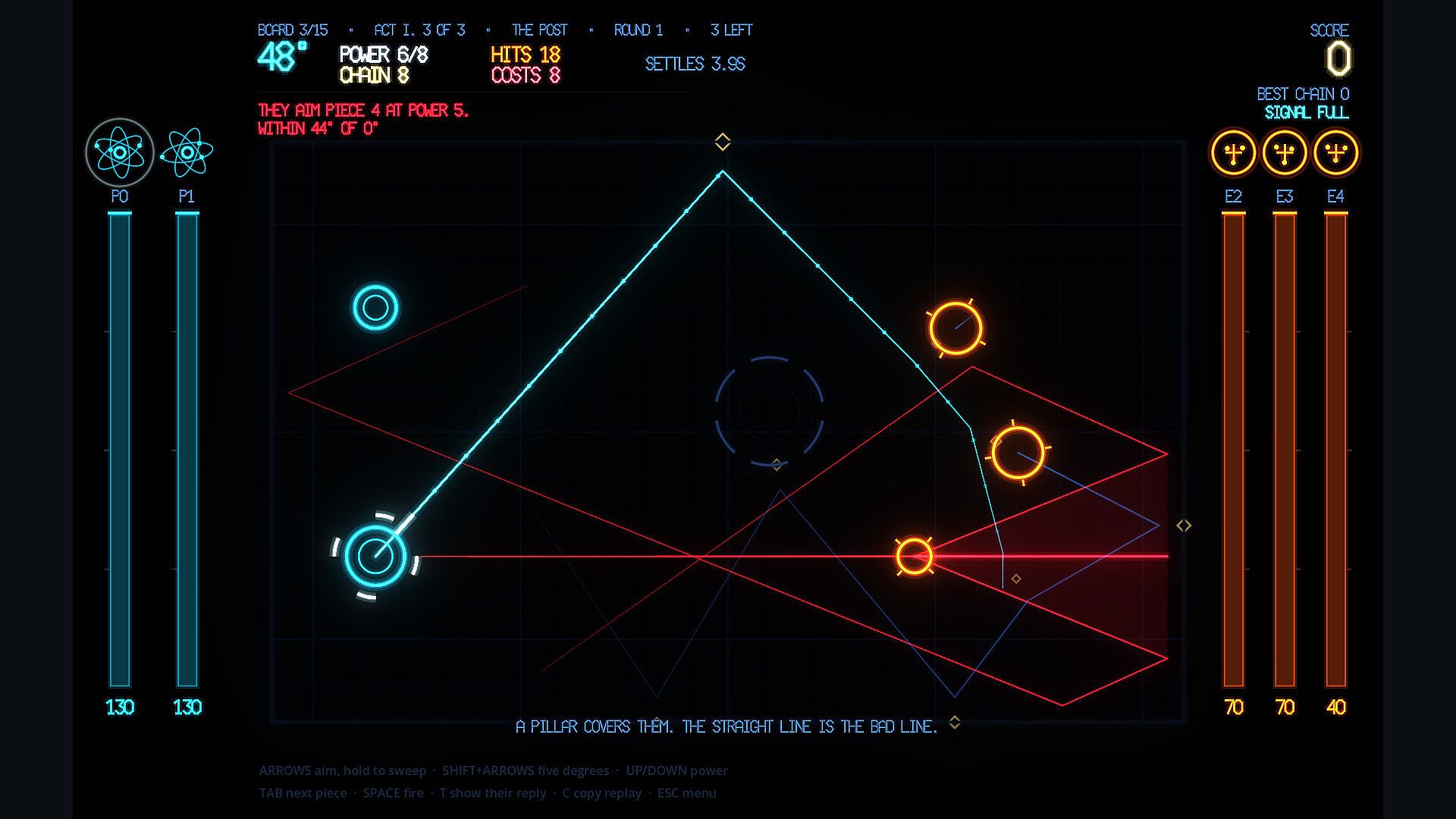
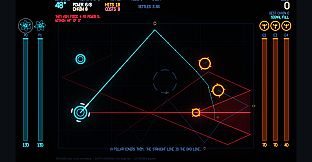
Each turn begins with a single push chosen from a quantized set of 720 directions and eight power levels. The simulation then runs forward using integer fixed-point arithmetic and continuous collision detection, ensuring identical results across machines. The preview line drawn during aiming uses the exact same solver, so what appears on screen matches the outcome precisely.
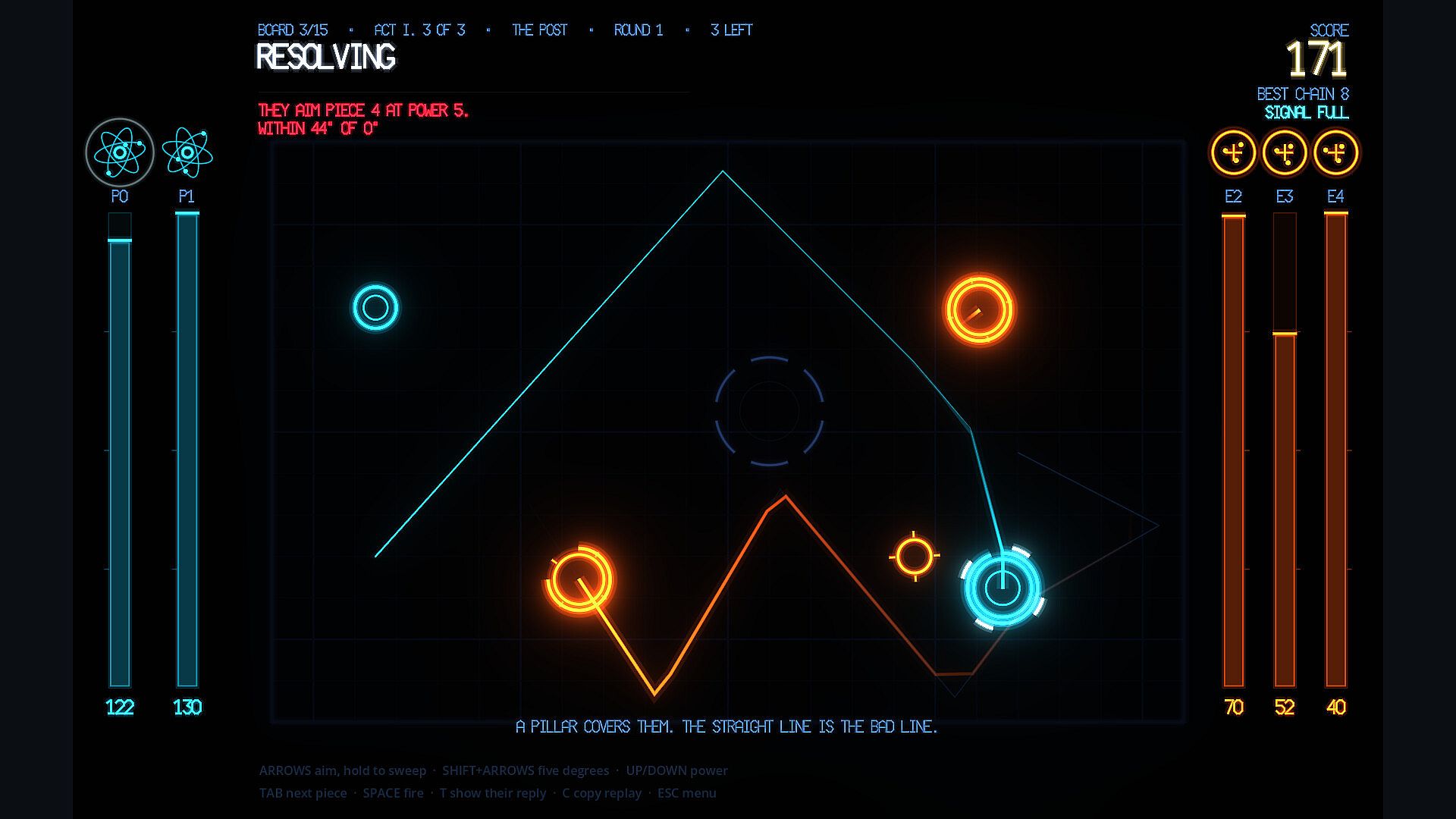
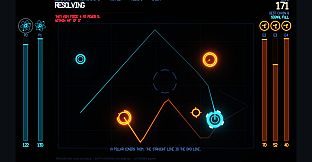
Damage increases with the depth of a carom sequence, rewarding longer chains. Pieces carry mass that influences whether they act as shovers or travelers. Environmental elements include bumpers with restitution above one and mud banks with restitution below one. Hitting friendly pieces transfers momentum at a cost, turning potential errors into deliberate positioning tools.
The opposing side commits its shot at the end of its phase, revealing the chosen piece, power, and arc on the shared table. This commitment allows geometric responses such as blocking lines, displacing the shooter, or forcing the incoming shot onto enemy pieces. The exact angle within the revealed arc remains fixed for the opponent, preserving threat without granting perfect information.
Game Modes
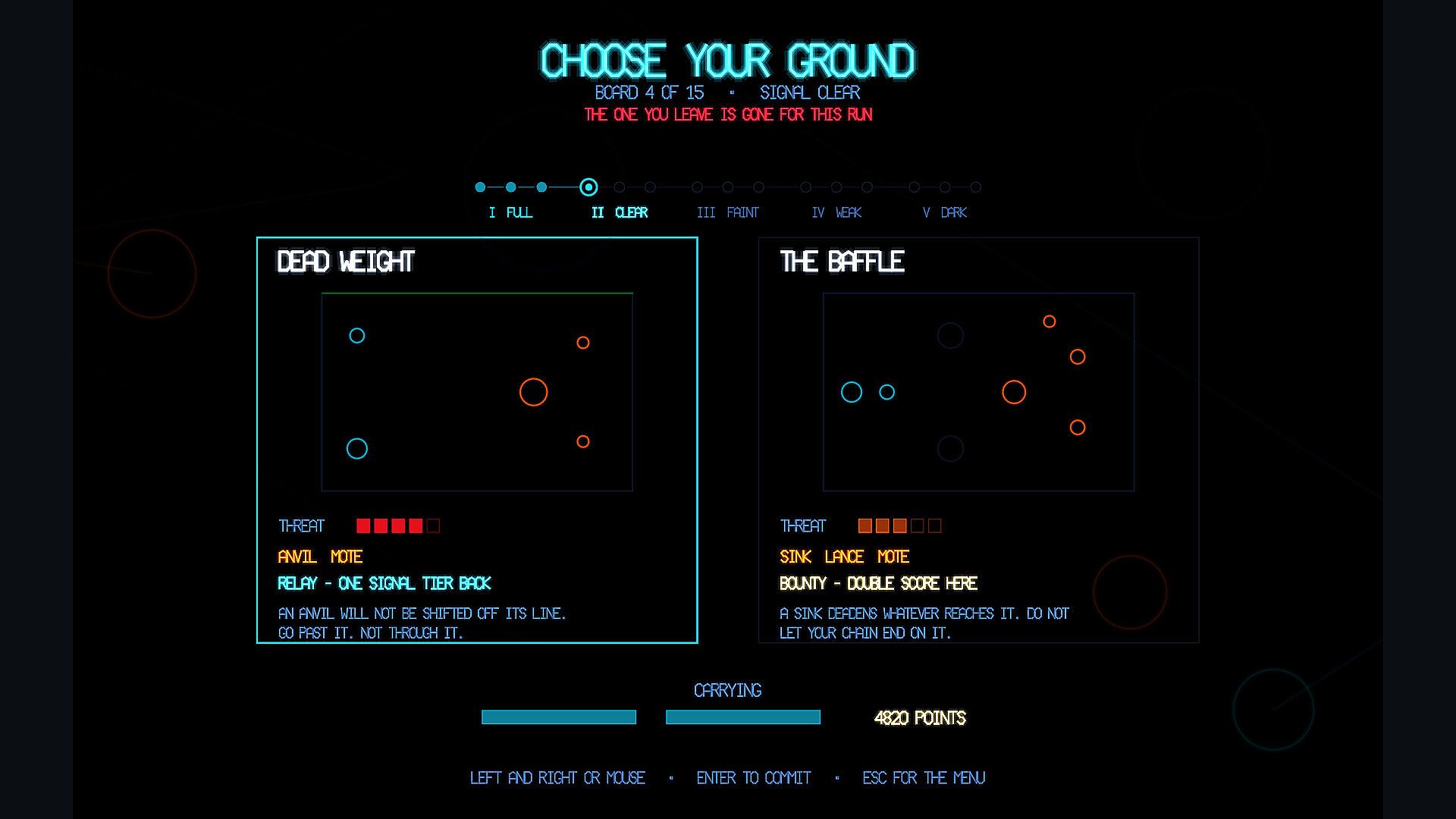
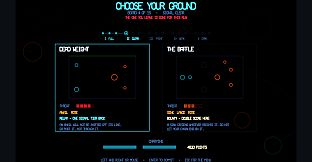
The game features a handmade campaign of individual encounters. Each board receives exhaustive analysis by a bot that explores the full discrete search space, establishing solution quality benchmarks.
A daily board appears for all players simultaneously. Scoring tracks the fewest turns required, and deterministic behavior makes direct comparison meaningful. Solutions export as short codes that replay the identical sequence on any machine.
An attract mode runs actual gameplay sessions rather than pre-recorded footage, demonstrating live physics resolution in real time.
Core Mechanics and Precision
Everything operates without floating-point calculations below the visual layer. Fixed substeps and continuous collision handling eliminate drift, so repeated shots on the same layout produce the same result indefinitely. This property supports shareable solutions and consistent leaderboards.
Players solve spatial problems by selecting the initial angle that initiates productive chains. Mass, restitution, and piece roles create layered interactions where a single impulse can reposition multiple elements or eliminate threats through indirect paths. The discrete input grid keeps the decision space finite and searchable while avoiding the unpredictability of continuous analog aiming after multiple reflections.
Is It Worth Playing?
Break Order suits players who enjoy deterministic puzzle-solving and turn-based tactics grounded in verifiable physics. The campaign offers crafted challenges rated for solution efficiency, while daily boards provide repeatable, comparable tests of skill. Single-player focus with leaderboards and shareable replays rewards precision and study over improvisation or luck.
Those drawn to geometry-based strategy, billiard-style chain reactions, and systems where every outcome follows directly from chosen inputs will find the mechanics consistent and replayable. The game launches with campaign content and daily features already integrated, making it a complete experience for its target audience at release.