

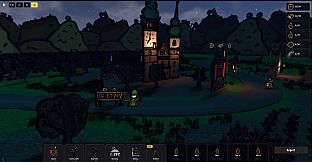
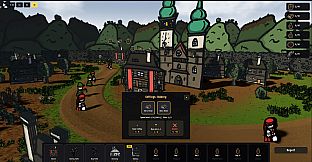
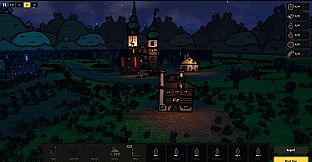
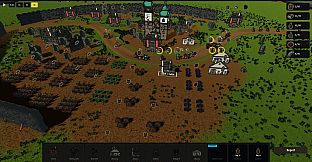
Brew&Defend is a strategy game that blends tavern management with tower defense mechanics on PC. Players construct and maintain a supply chain to serve waves of customers who arrive along a path, each with specific cravings for drinks and food. The core challenge involves balancing ingredient production, processing, and sales in real time to avoid lost sales that damage reputation and finances.
Gameplay
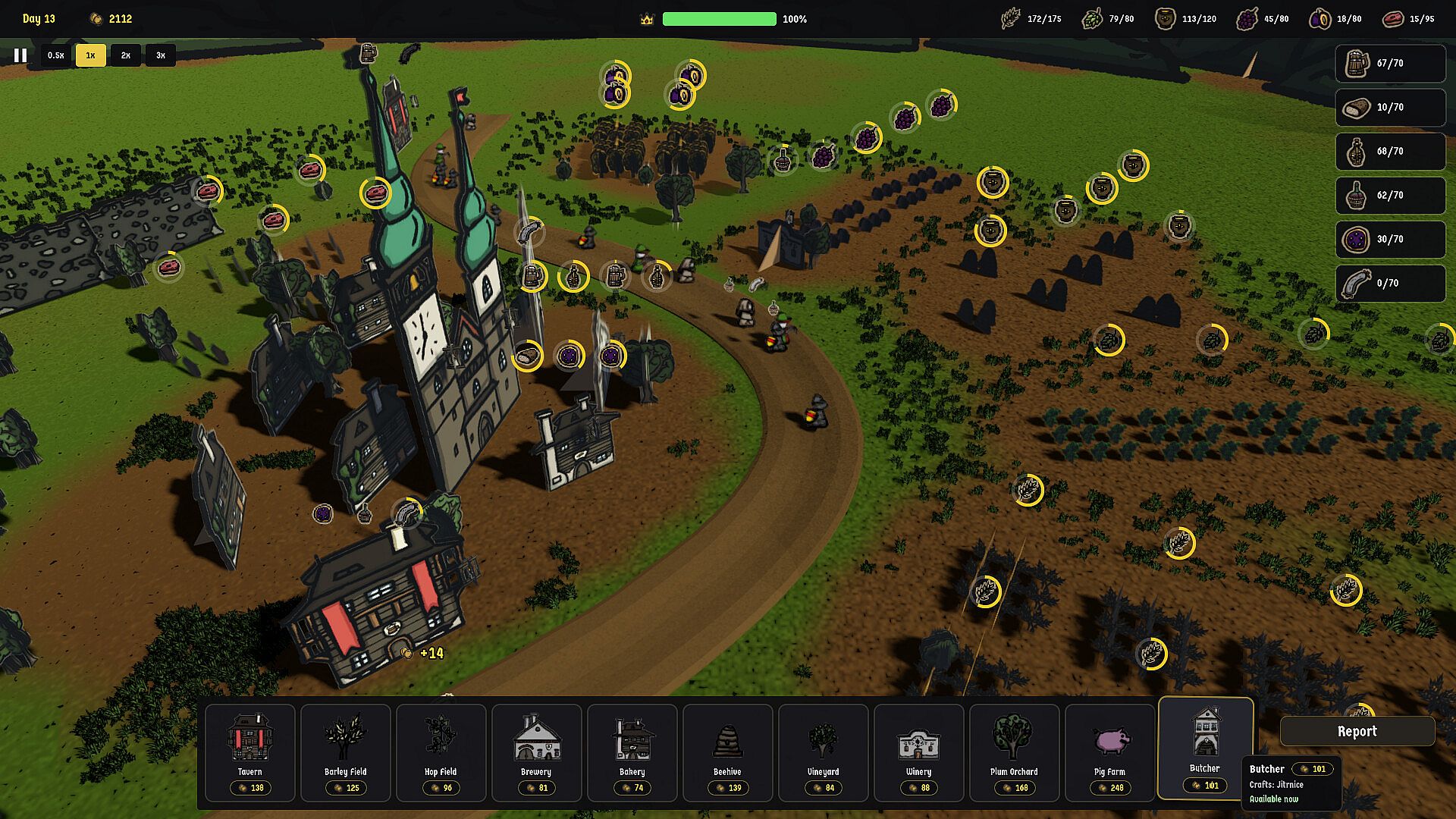
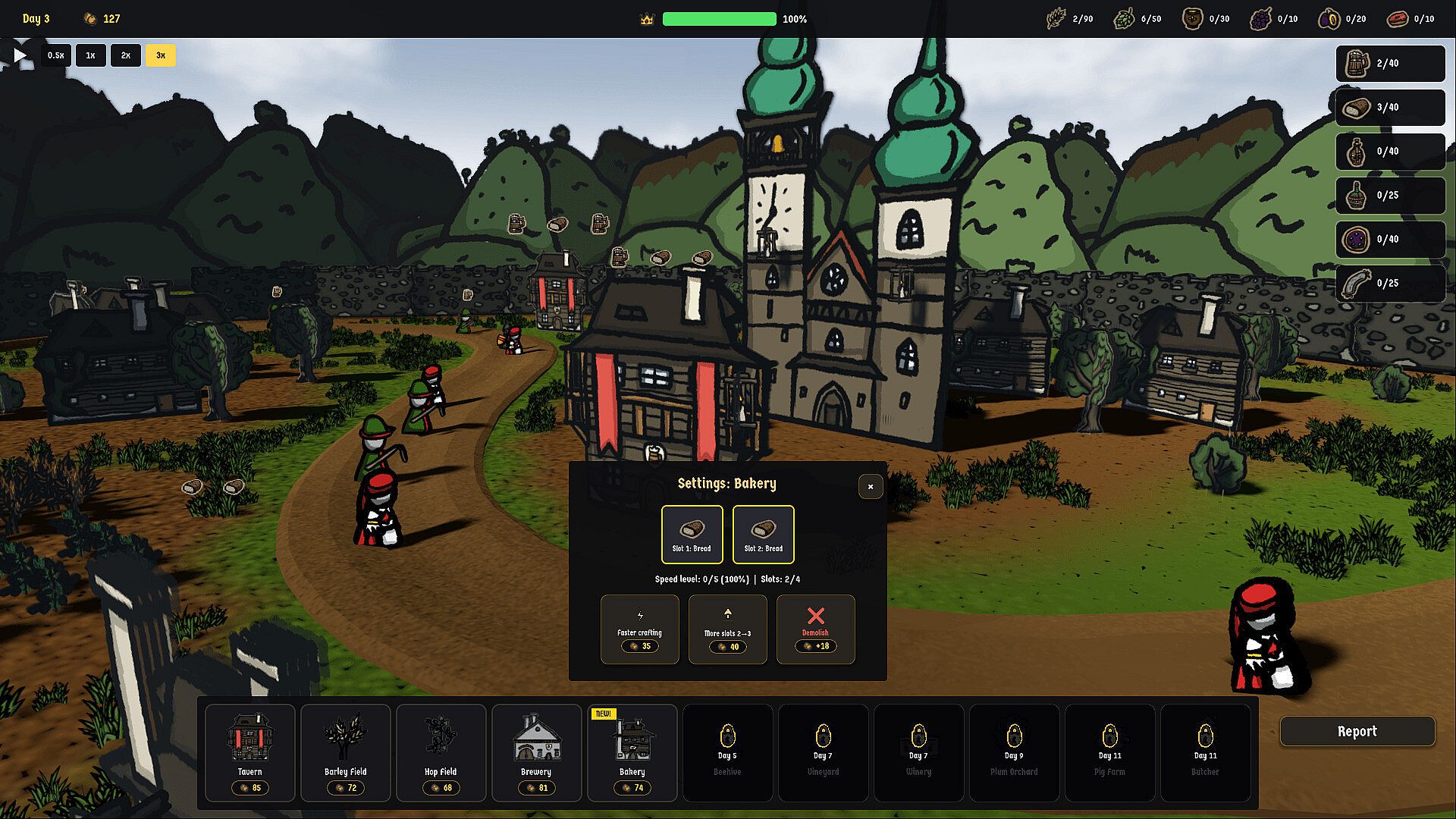
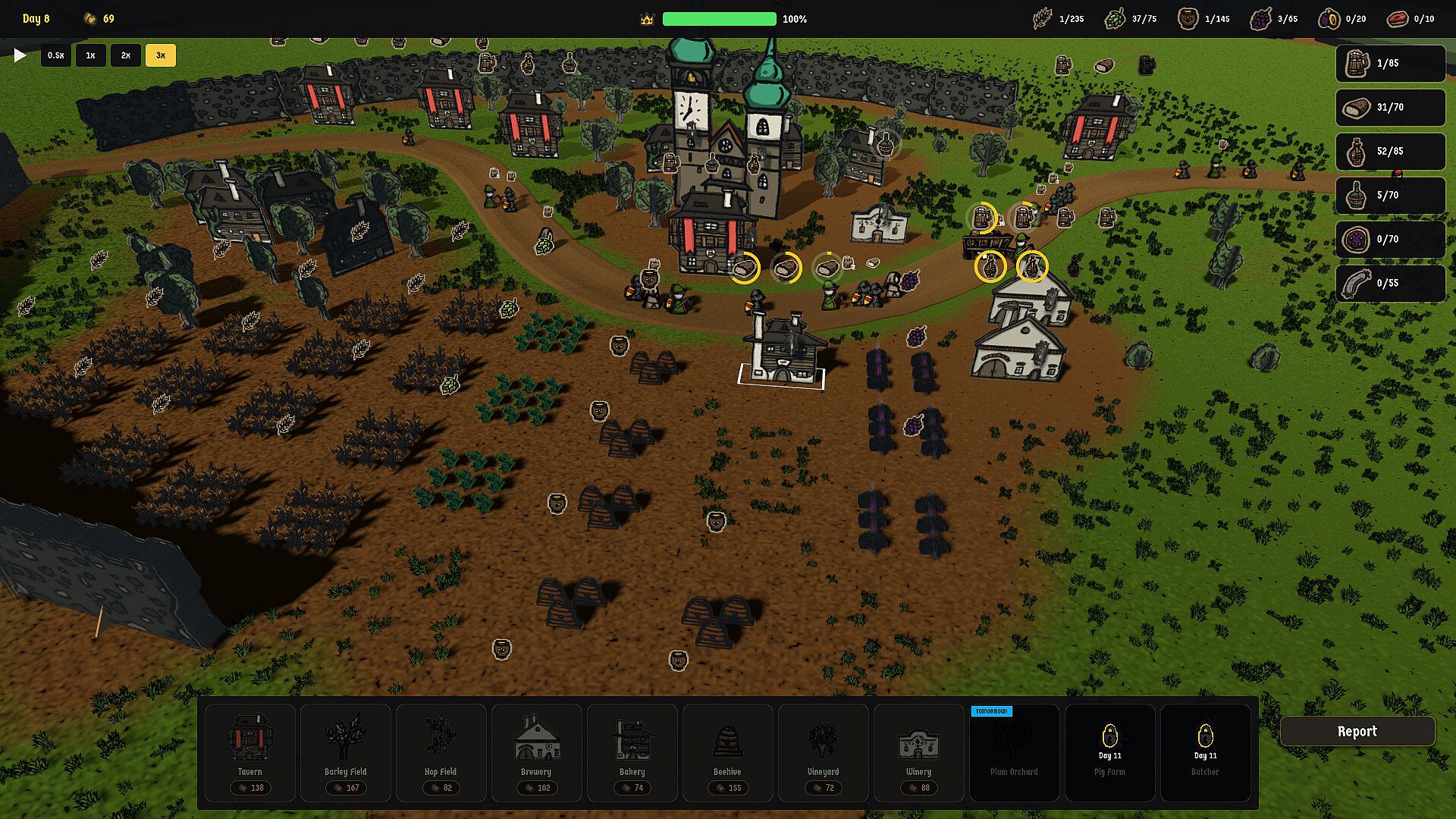
The gameplay centers on building production facilities instead of traditional towers. Fields grow raw materials such as barley, hops, honey, grapes, and plums, while processors turn those into finished goods like beer, wine, mead, bread, pies, and sausages. Players also raise pigs for meat products. These items move through a chain of buildings that must be positioned and upgraded to keep pace with demand.
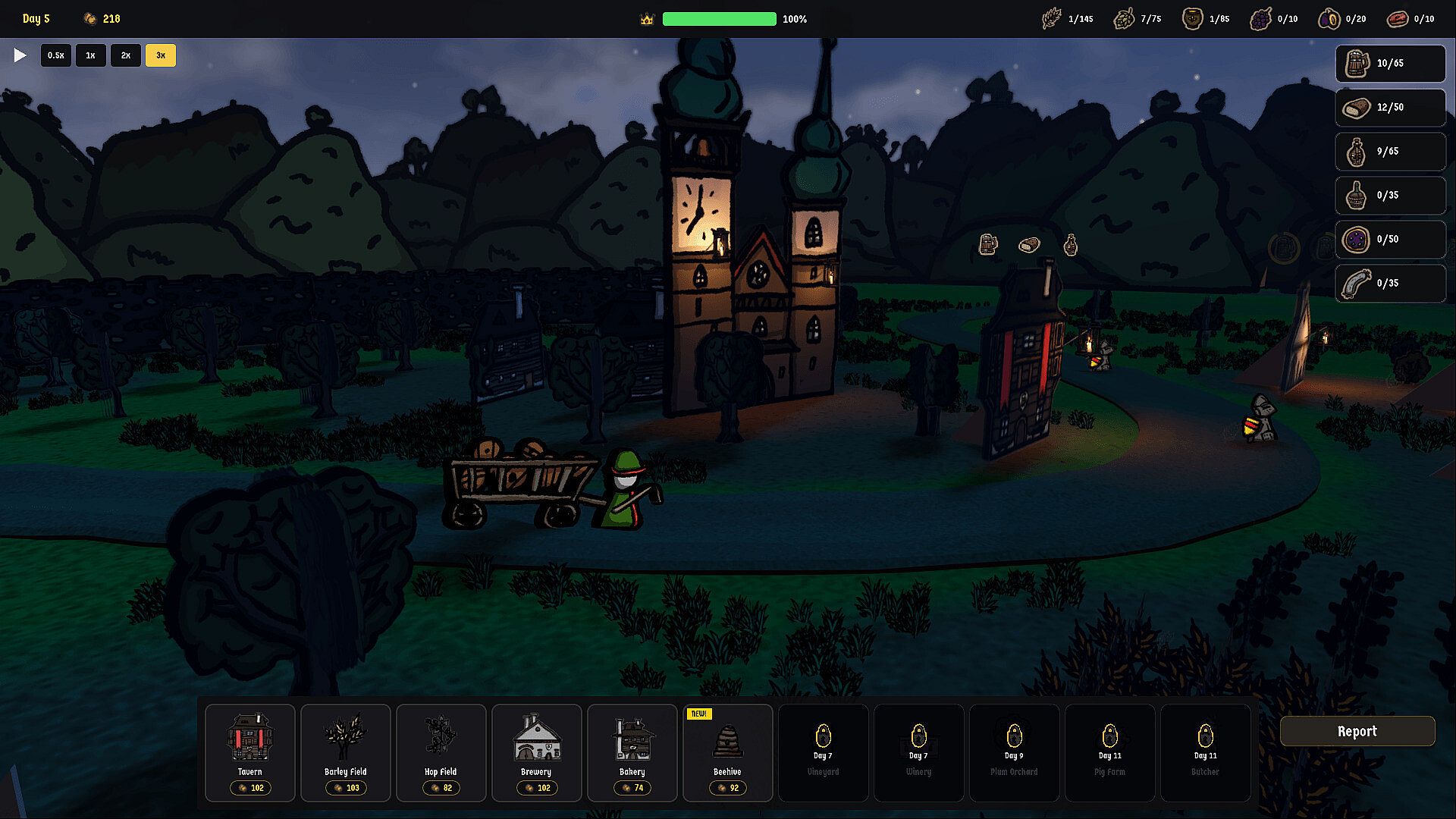
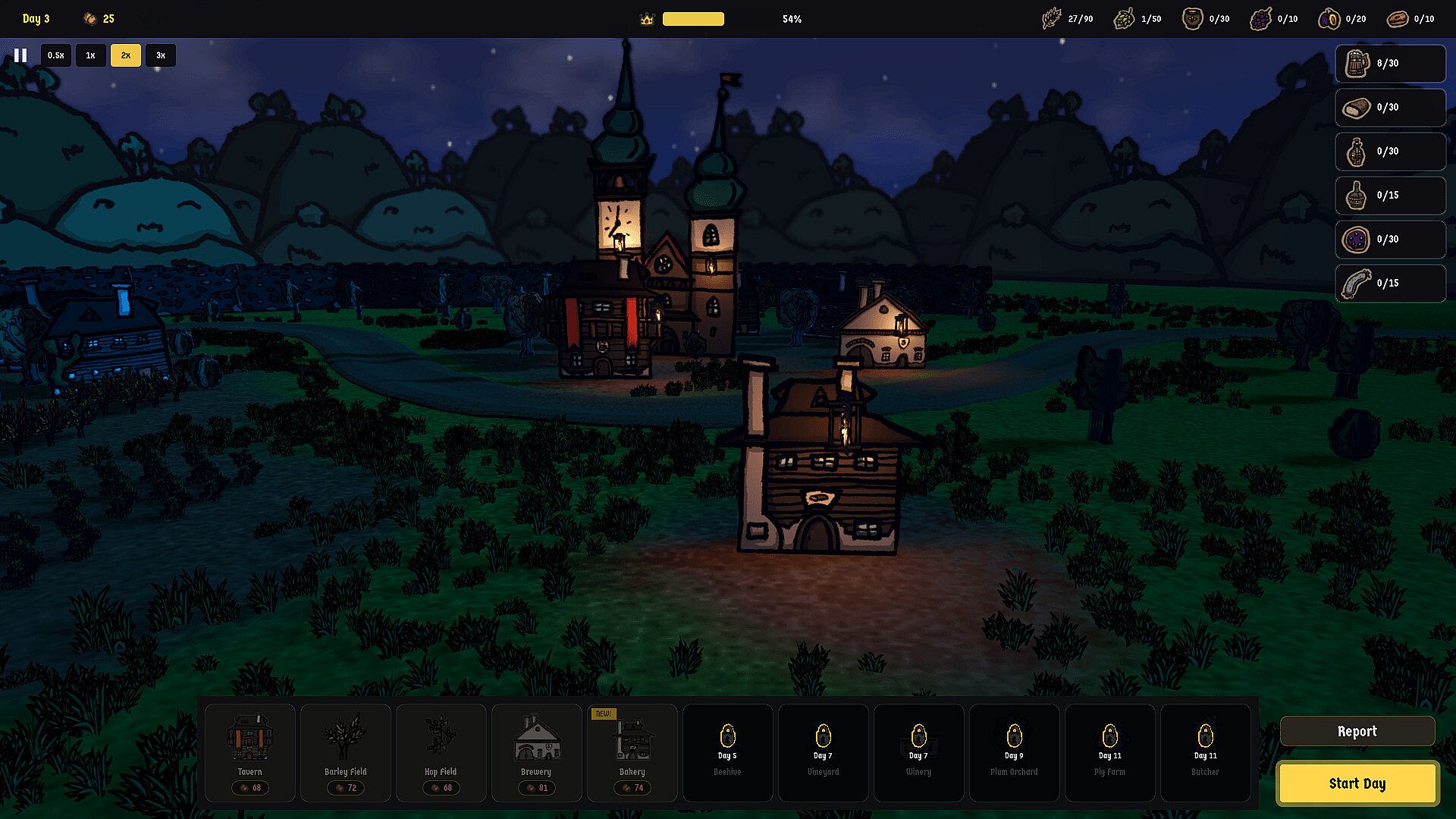
Customers follow a fixed route and stop at shops placed along the way. Each shop serves one type of good, so placement determines how efficiently cravings are met. Bottlenecks form when production lags behind arrivals, forcing players to expand fields, add processors, or reroute goods. Real-time logs track every expense, sale, and shortfall, giving immediate feedback on whether the operation stays profitable.
Escalating rushes increase both the number and variety of customers. Early waves feature simple orders that test basic setups, while later ones demand premium items that require longer production chains. Success depends on anticipating needs, expanding capacity before the next wave hits, and maintaining steady cash flow to fund further construction.
Game Modes
The game operates as a single-player experience focused on surviving successive waves of customers. There are no separate named modes; the entire session revolves around managing one continuous tavern operation that grows more demanding over time. Players start with basic fields and shops, then expand infrastructure while monitoring resource balance to prevent bankruptcy.
Progression comes from surviving longer rushes and unlocking additional crop types and recipes. The single campaign structure rewards efficient layouts that handle increasing volume without wasted production or idle shops. Because the game is still in development with a planned release date to be announced, no additional variants or alternate scenarios have been confirmed.
Core Systems and Progression
Supply balancing forms the heart of decision making. Every building has costs to construct and maintain, so players must decide whether to invest in more fields for raw materials, extra processors for speed, or additional shops for throughput. Real-time tracking shows exactly where money is earned or lost, allowing adjustments before a wave ends in failure.
Ingredient variety adds depth to planning. Barley and hops support basic beer, while grapes and plums enable wine and mead. Pigs provide meat for sausages and pies. Matching these outputs to customer preferences requires careful sequencing so that high-value items reach the right shops at the right moment.
Is It Worth Playing?
Brew&Defend appeals to players who enjoy strategy titles that combine resource management with defensive positioning. The real-time production lines and customer pathing create a steady stream of optimization problems that reward careful observation and incremental improvements.
Because the game has not yet released, there are no player reviews or ratings available to gauge reception. The developer has confirmed single-player focus and family sharing support, with system requirements that run on modest hardware. Those interested in the described mechanics can add the title to their wishlist for notification when it becomes available.
The experience suits fans of management games who appreciate visible cause-and-effect between production choices and customer satisfaction. Without confirmed updates or additional content post-launch, the current scope remains the wave-survival loop outlined in the available description. Players seeking this specific mix of farming, brewing, and path defense may find the upcoming release worth monitoring.