


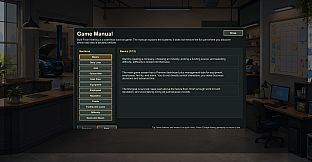
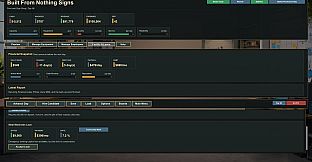
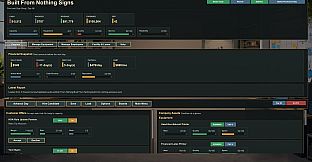
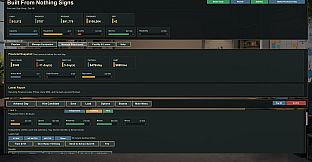
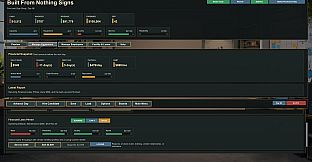
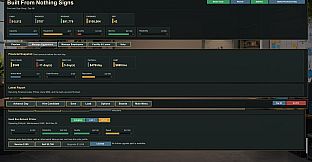
Built From Nothing is a single-player business management simulation game for PC that places players in charge of starting and running a company from scratch. The core experience revolves around making ongoing decisions about funding, equipment purchases, staffing, customer service, and daily operations across several industries while trying to keep the business afloat amid financial pressures and unexpected setbacks.
Gameplay
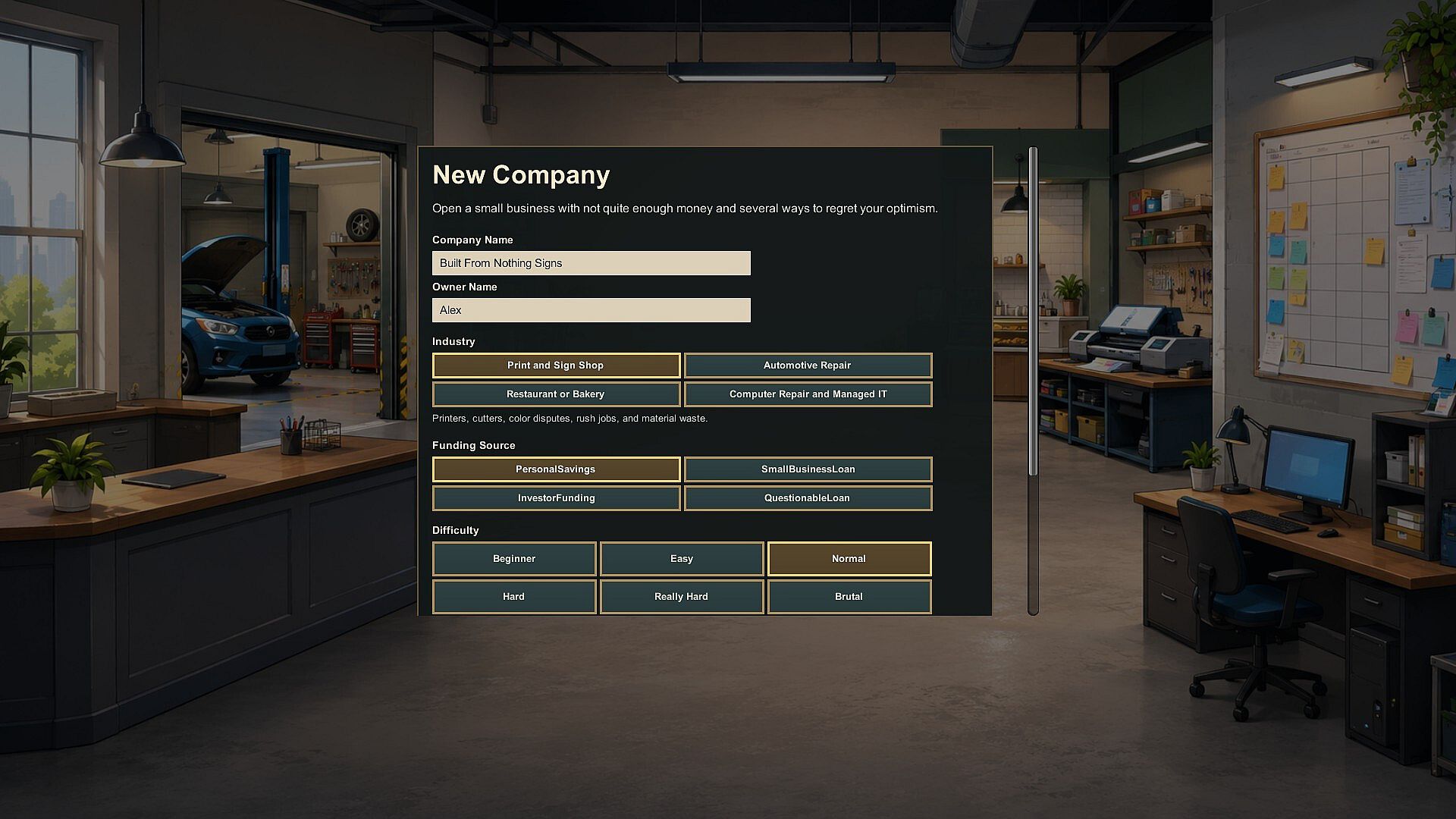
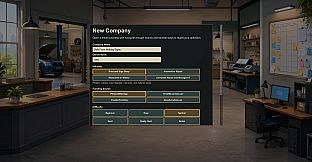
The gameplay centers on a detailed management loop that tracks multiple interconnected systems at once. Players begin by selecting an industry such as an automotive repair shop, a print and sign company, a restaurant or bakery, or a computer repair and managed IT operation. Each choice brings distinct equipment needs, job types, customer demands, and potential disasters while sharing the same underlying financial and personnel mechanics.
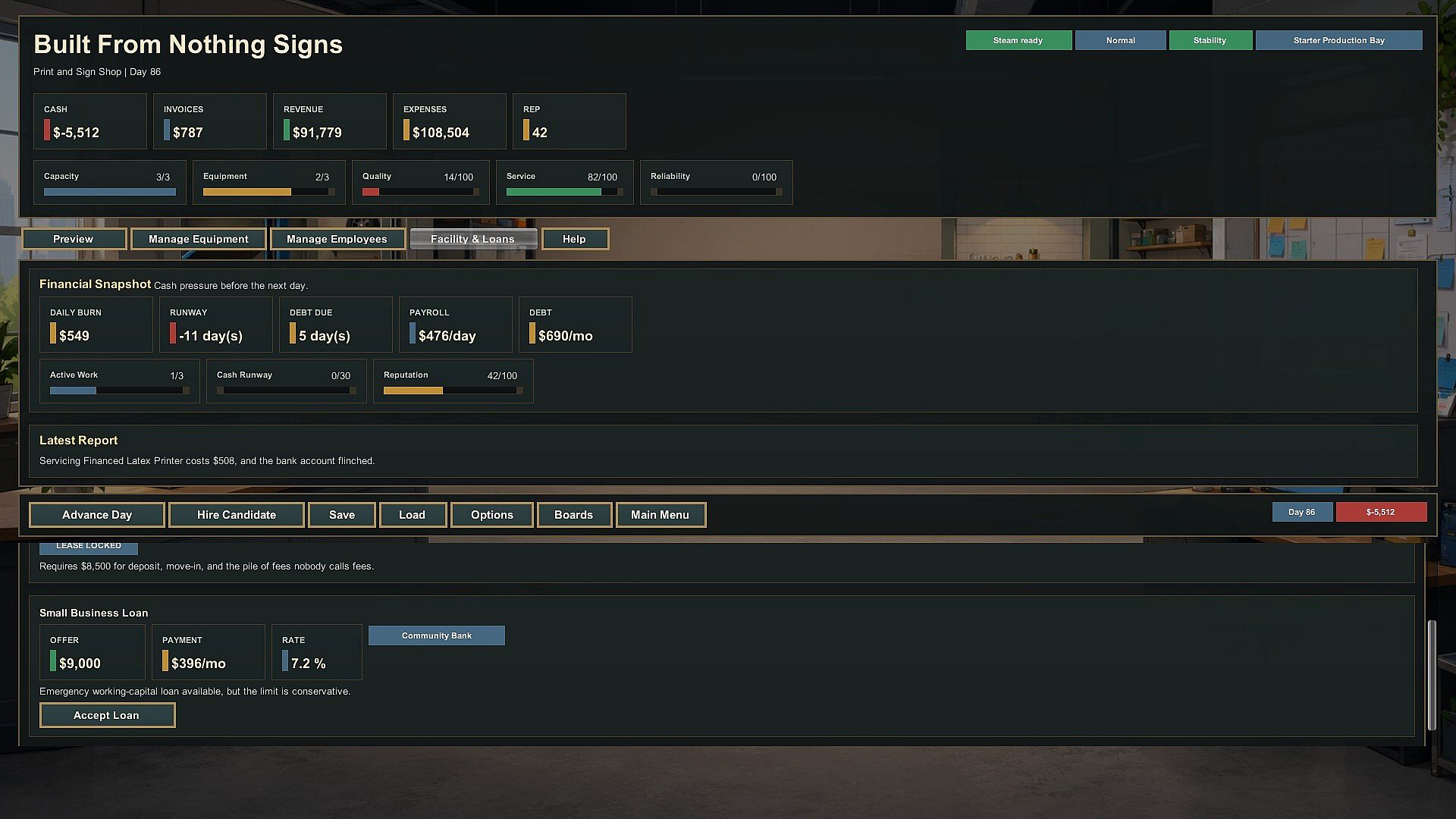
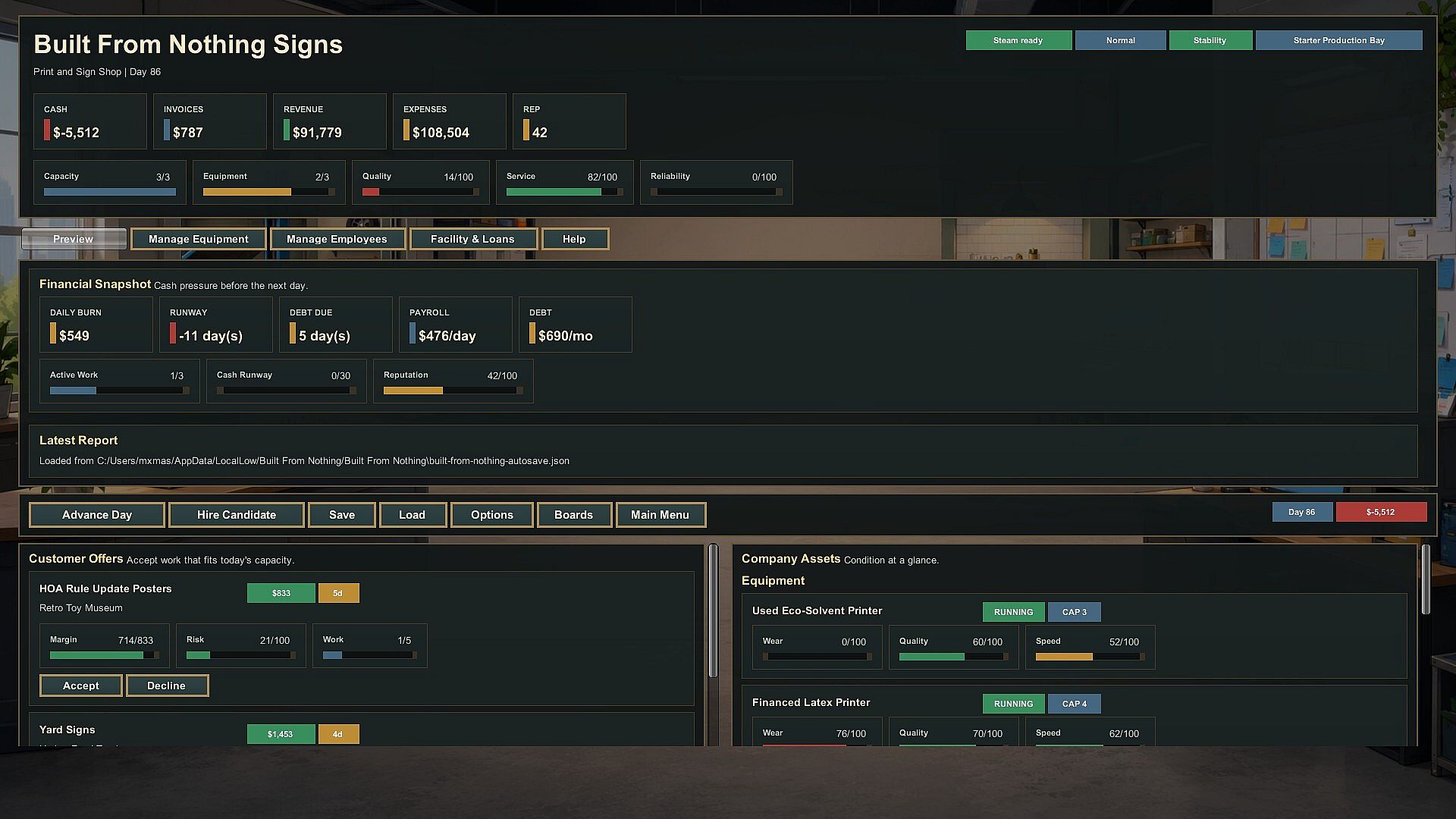
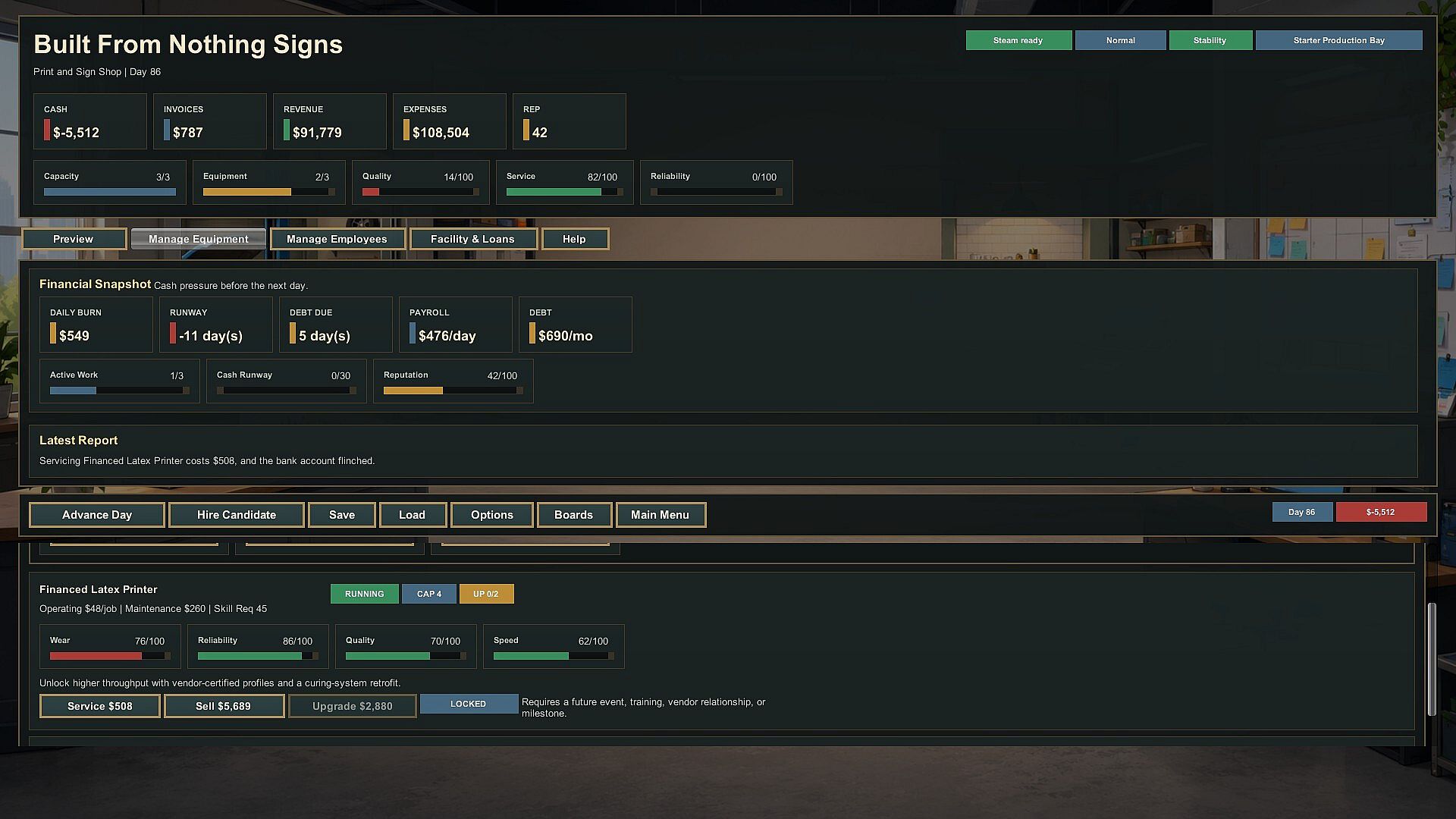
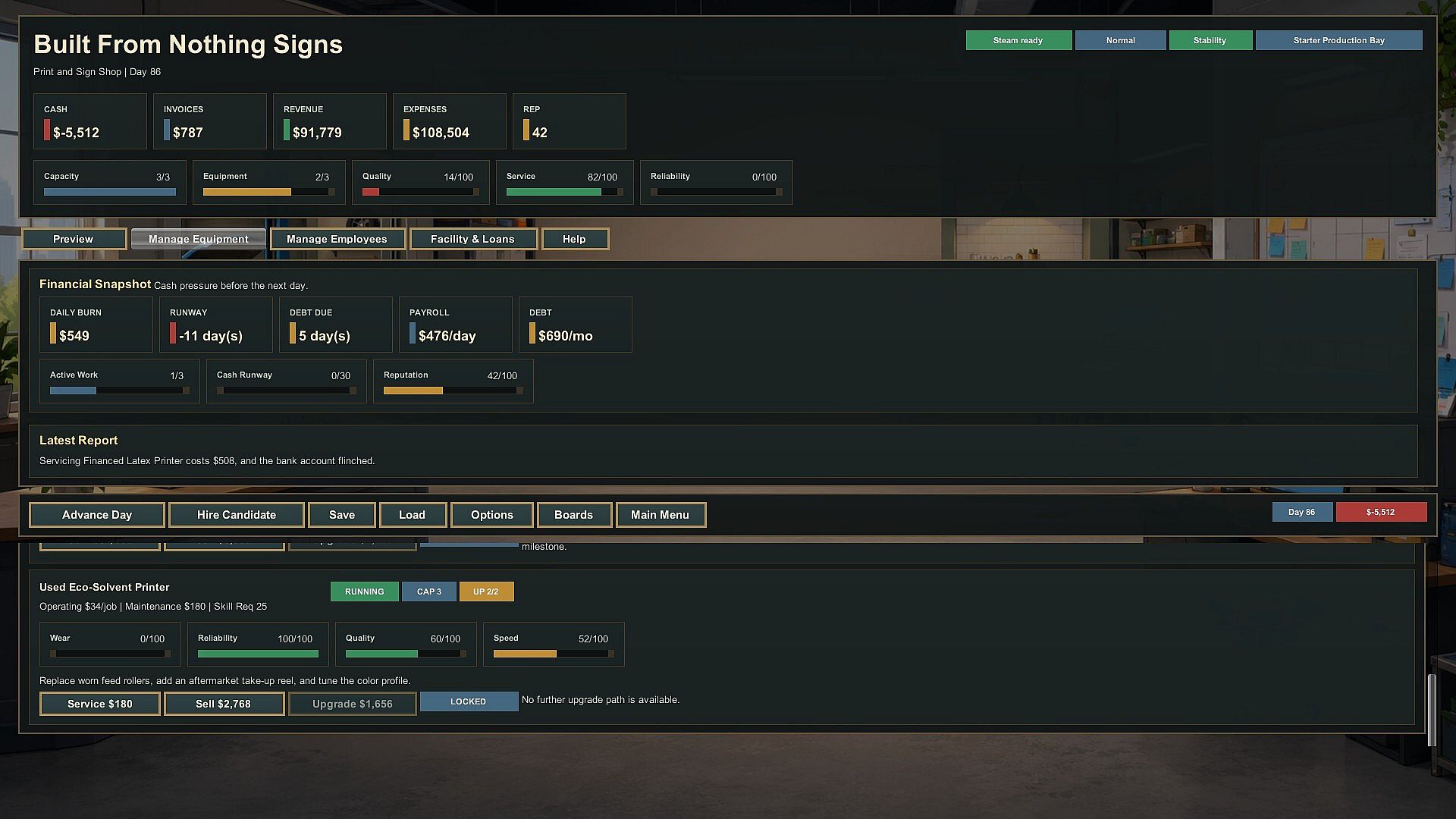
Early choices involve deciding how to fund the startup, whether through personal savings, a small business loan, investor capital, or riskier options. Limited starting resources force tradeoffs between reliable tools, payroll coverage, and other essentials. Equipment purchases require weighing cost against durability, speed, and maintenance demands, as items can wear out, break, or affect overall output and staff satisfaction.
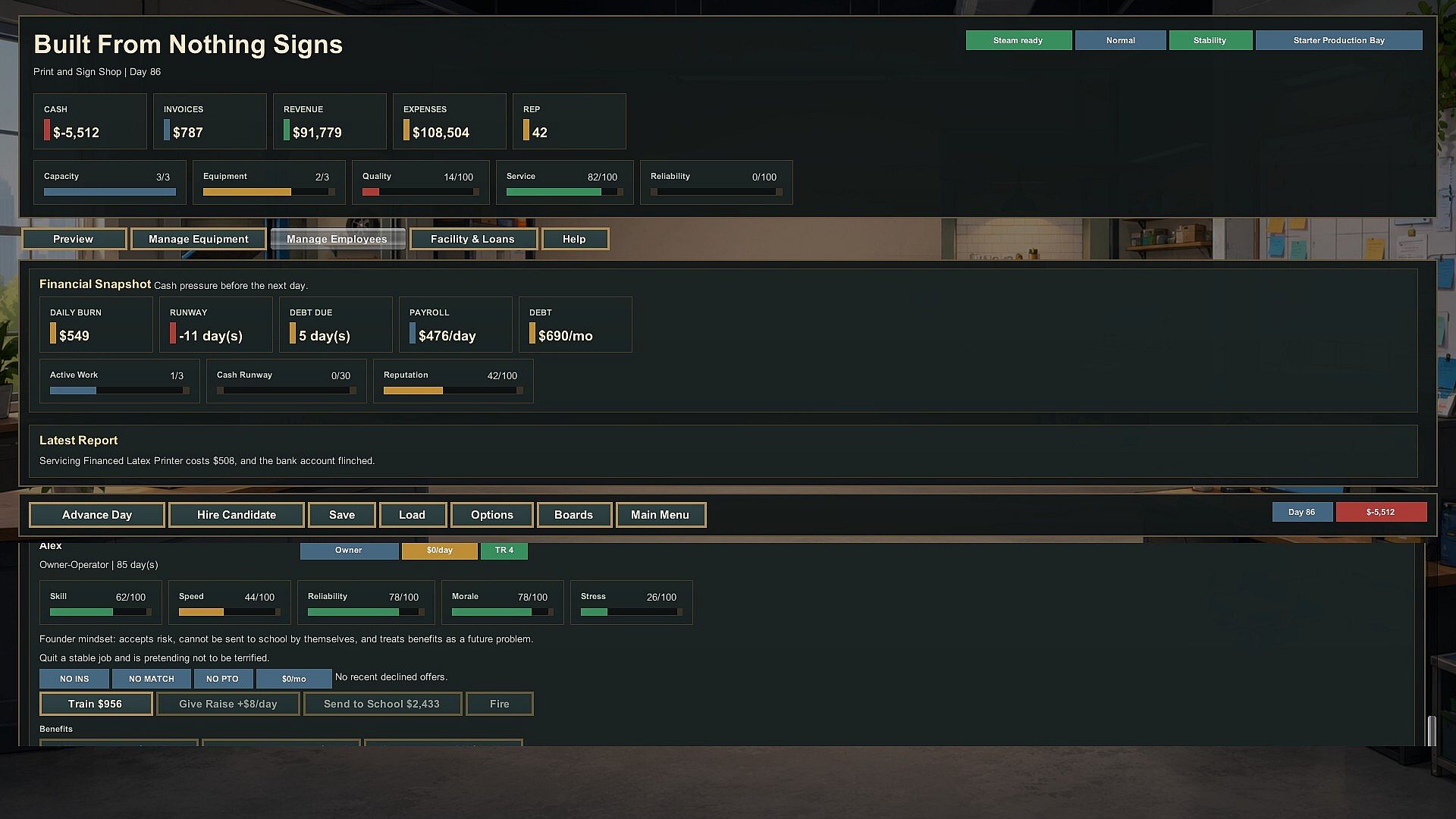
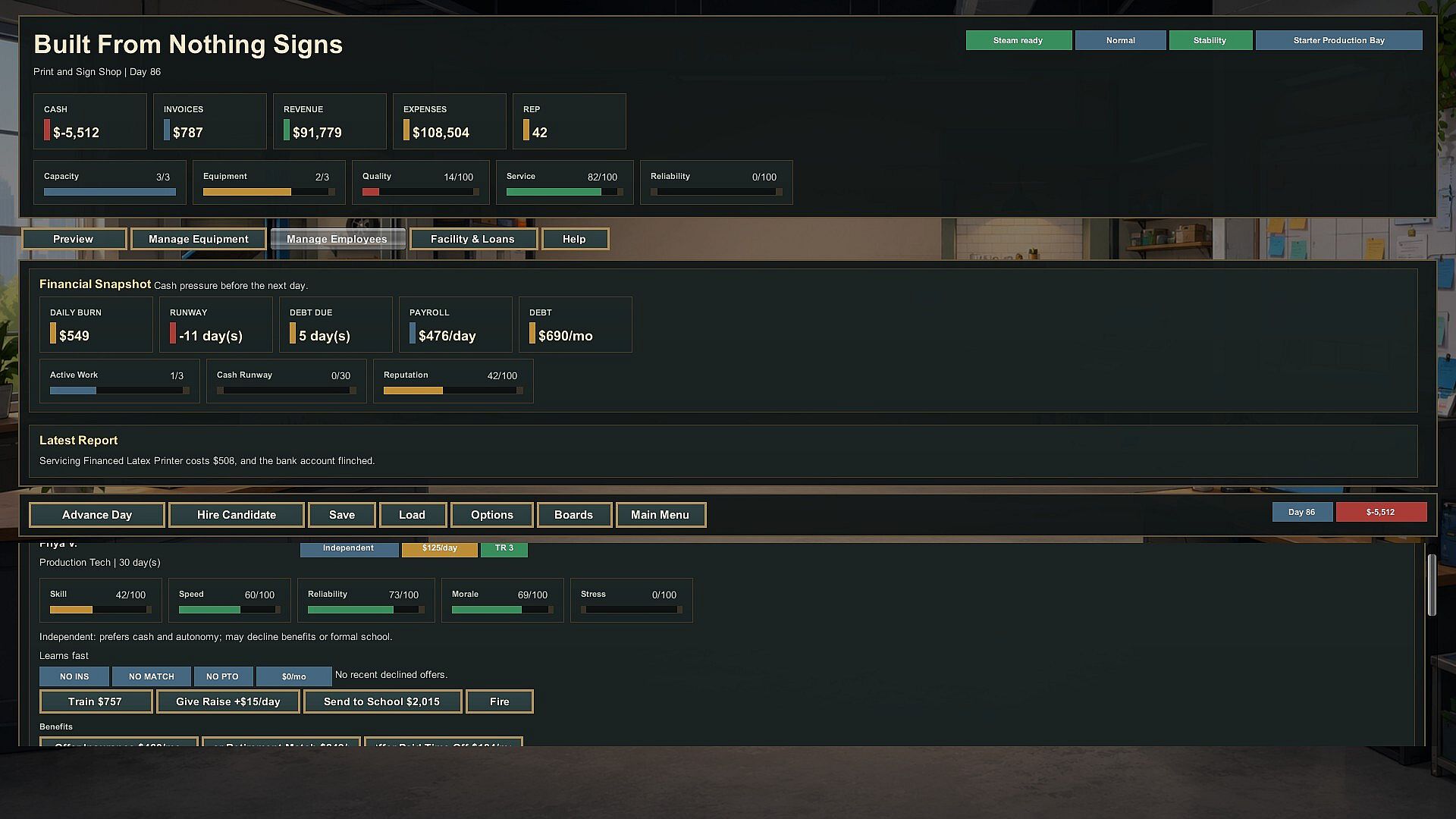
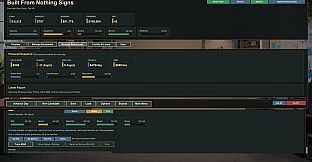
Employee management adds another layer, with hires possessing individual skills, personalities, and reliability levels. Players handle hiring, training, pay adjustments, workload distribution, and morale tracking. Treating staff fairly during disputes or crises can build loyalty, while poor handling may lead to turnover or reduced performance. Customer interactions further influence reputation, which in turn unlocks or restricts future contracts and opportunities.
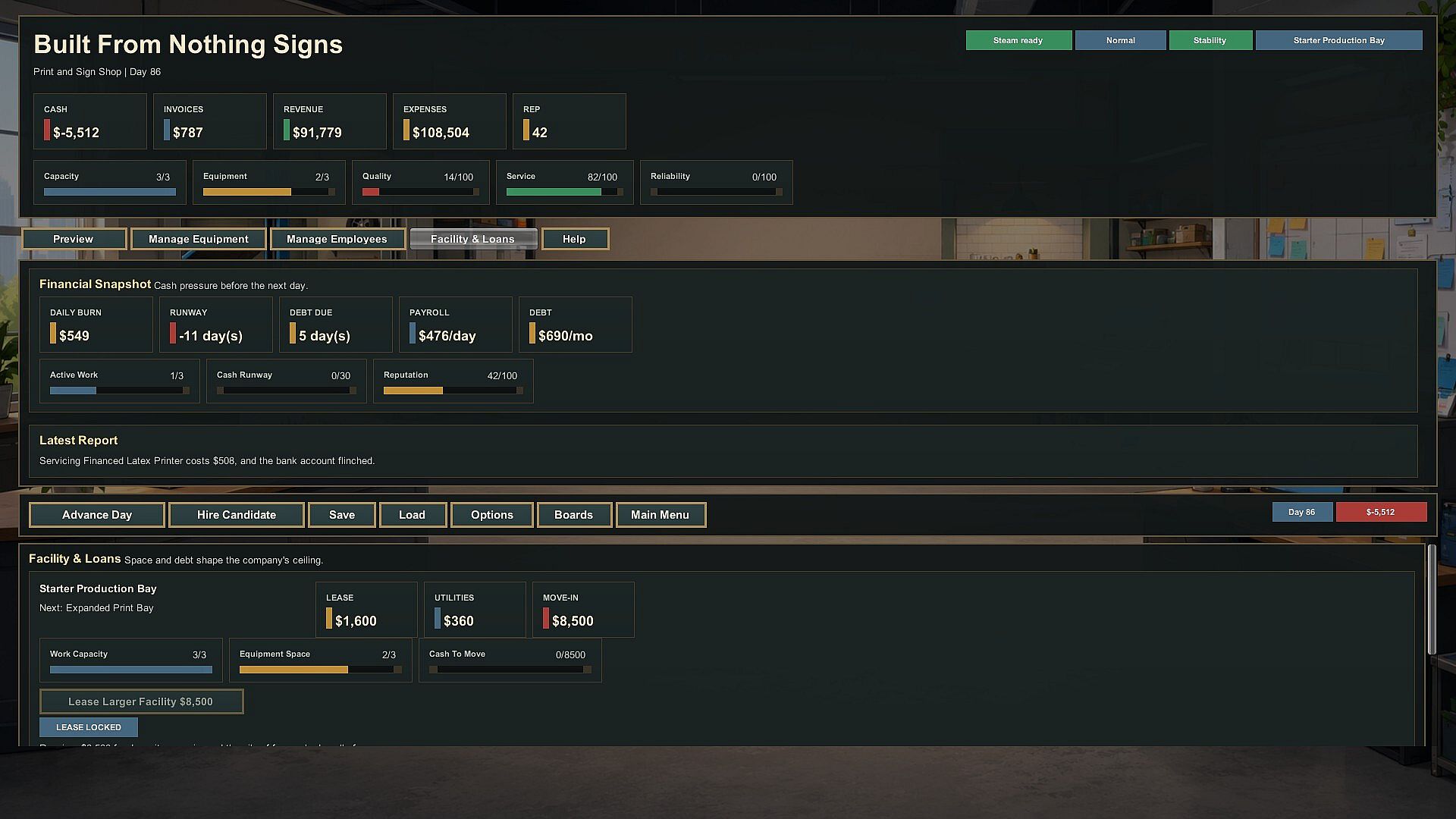
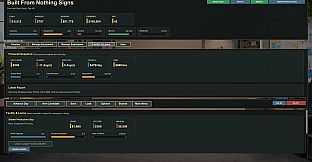
Financial oversight extends beyond simple profit tracking to include cash flow, rent, utilities, loans, inventory, and unpaid invoices. Uncontrolled expansion or poor resource allocation can sink even a seemingly profitable operation. Unexpected events such as equipment failures, supplier delays, regulatory inspections, or customer complaints force reactive decisions that carry long-term consequences for reputation, legal exposure, and company stability.
Game Modes
The game operates entirely in single-player mode with no separate multiplayer or competitive formats. Instead, variety comes from the different industries available at the start and the freedom to pursue varied growth strategies within each. Players can aim for slow, debt-free expansion focused on local stability or pursue aggressive borrowing and rapid scaling, with outcomes shaped by how well revenue keeps pace with obligations.
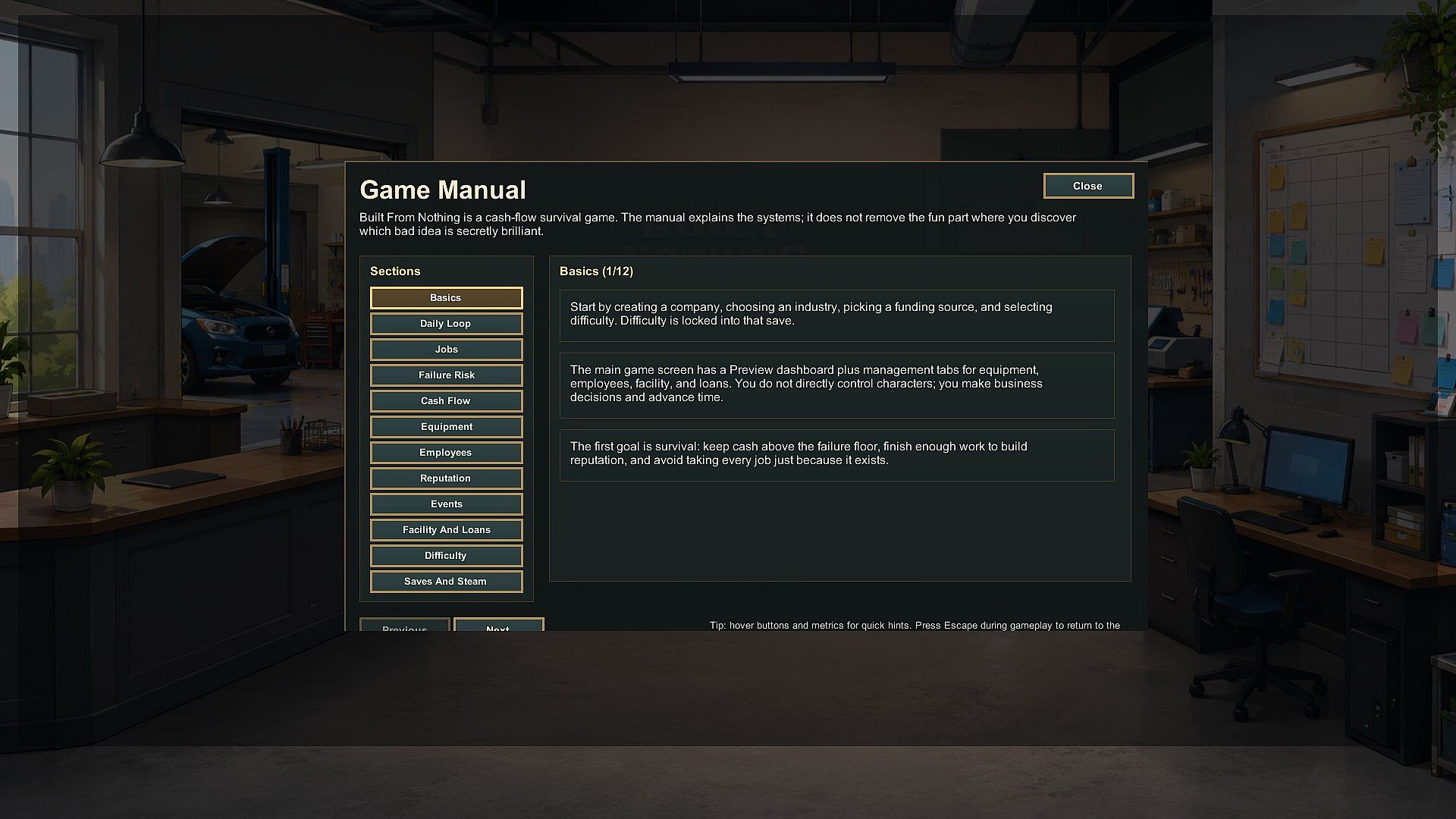
Progression occurs through unlocking better equipment, larger facilities, and higher-value contracts as the business grows. There are no predefined campaigns or scripted levels; success depends on balancing the listed management systems while adapting to industry-specific risks and opportunities. Steam achievements, stats tracking, and leaderboards provide optional goals for players who want measurable benchmarks across multiple playthroughs.
Key Mechanics and Systems
Reputation functions as a central driver that determines available customers and contracts. Building a name for quality, speed, or affordability opens certain paths, while cutting corners or frequent delays can limit options or invite complaints. Decisions made during crises, such as handling disputed damage claims or raise requests during tight payroll periods, create branching effects that may surface weeks later in the form of staff changes, lost business, or new opportunities.
Disasters and complications serve as core challenges rather than rare events. Equipment breakdowns, material shortages, bad reviews, and internal conflicts test the systems players have built. The game treats failure as a potential source of memorable stories, allowing chaotic or struggling businesses to continue in ways that highlight the simulation's depth.
Growth pacing remains entirely player-driven. A small, stable operation can persist indefinitely, while larger regional ambitions introduce new pressures around management delegation and cash flow. No fixed win condition exists; players define their own version of success through the company they create.
Is It Worth Playing?
Built From Nothing targets players who enjoy detailed single-player simulations focused on resource management, personnel decisions, and long-term consequences. The absence of reviews at this stage reflects its planned 2026 release, so expectations should center on the described systems rather than external validation. Those drawn to business-building experiences with meaningful tradeoffs in equipment, staffing, and reputation will likely find the mechanics engaging, particularly if they appreciate open-ended play without rigid objectives or multiplayer elements.
The game emphasizes thoughtful pacing and adaptation over fast action, making it suitable for sessions where players can revisit choices and observe ripple effects. Availability on PC with features like Steam achievements and family sharing supports solo playthroughs and experimentation across industries. If the core loop of starting small, managing interconnected risks, and shaping a unique company story aligns with your preferences, it offers a focused simulation worth following until launch.