




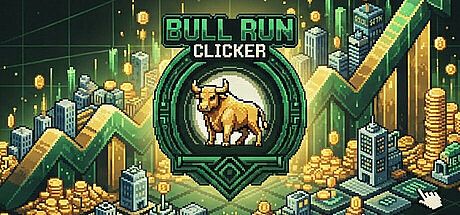



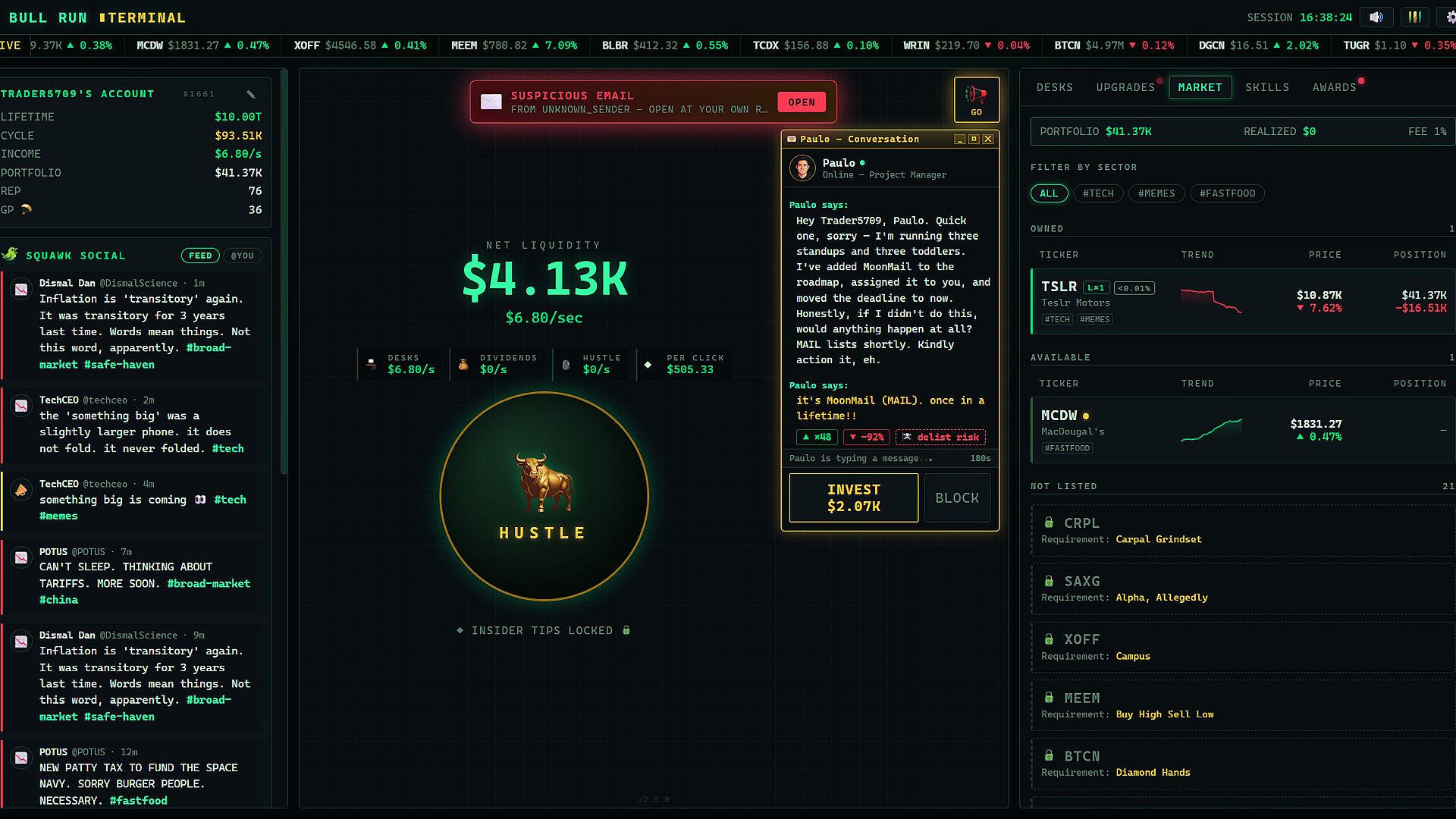

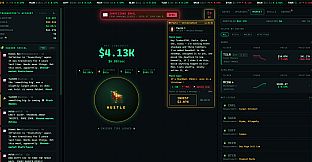
Bull Run Clicker is an incremental strategy simulation game set on PC that follows the rise of a financial empire through market speculation and desk promotions. Players begin with basic operations and advance through layers of trading and banking infrastructure while managing stock positions and responding to market shifts.
Gameplay
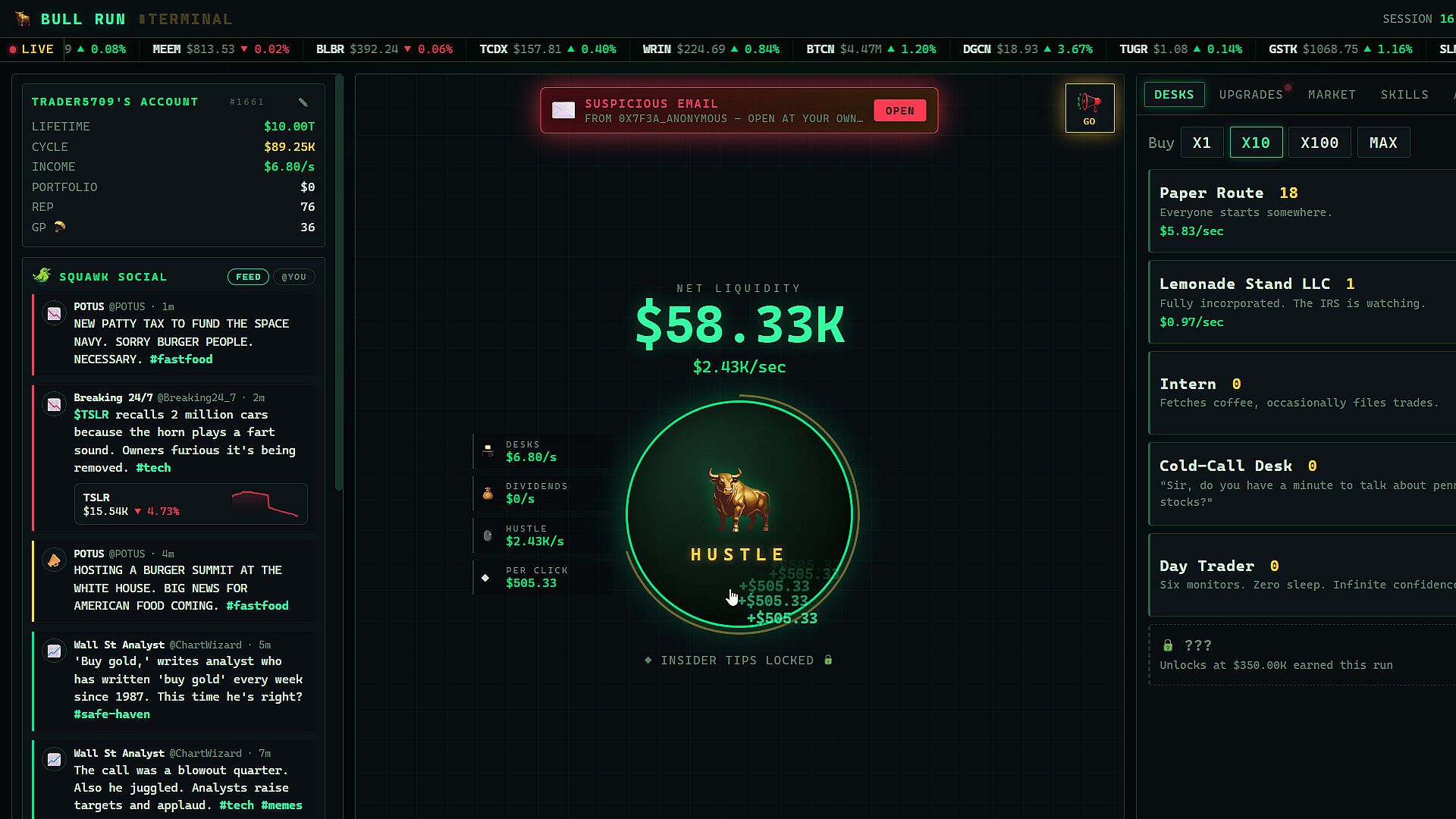
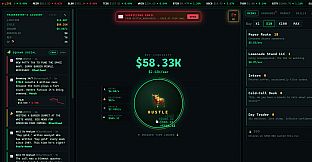
The core loop centers on climbing a progression of ten desks that represent increasing levels of financial involvement. Starting at a paper route, players generate income that funds upgrades to the next station, such as a lemonade stand LLC or an intern role. Each desk continues to produce earnings even when the player is offline, allowing steady advancement without constant input.
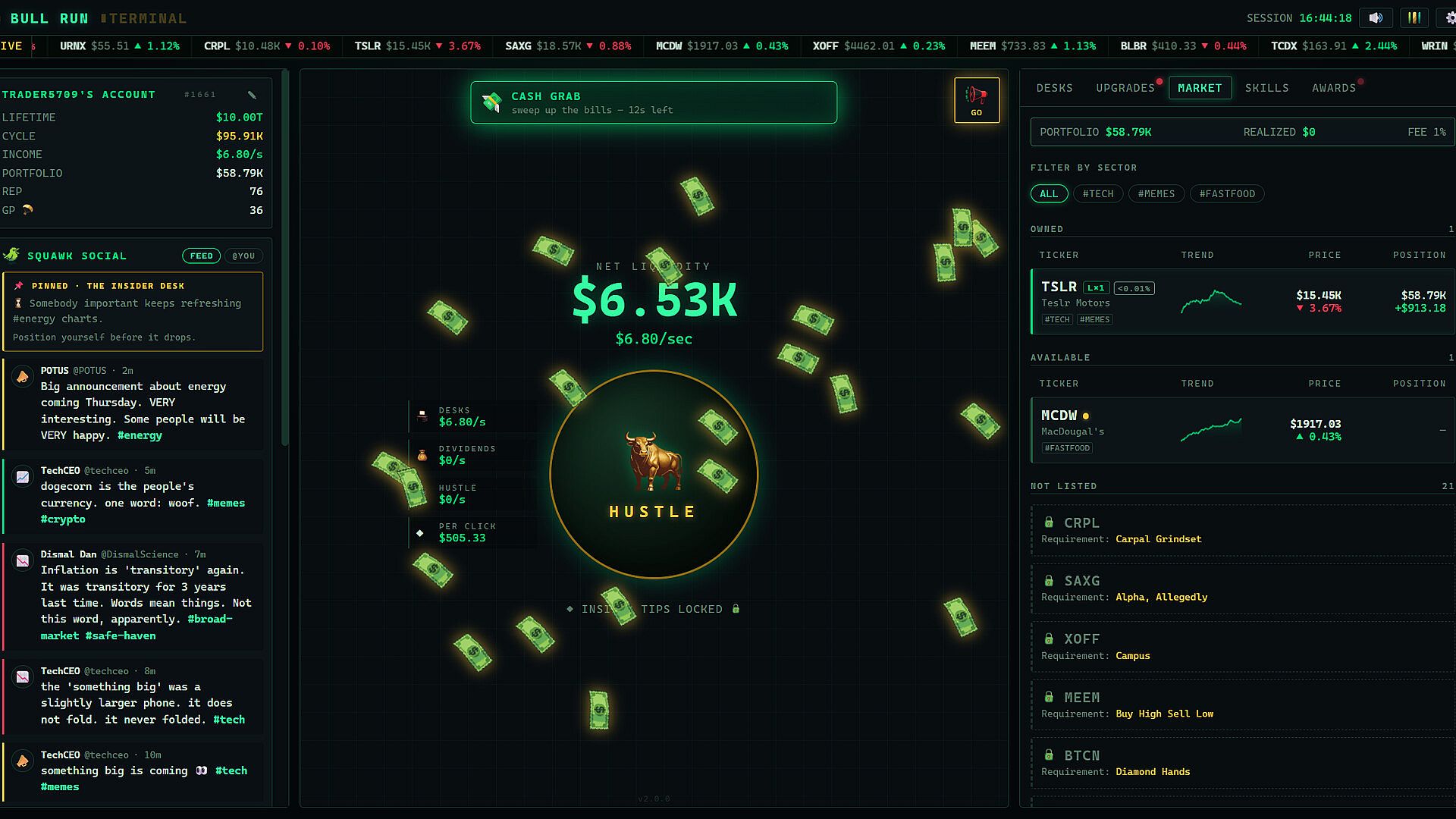
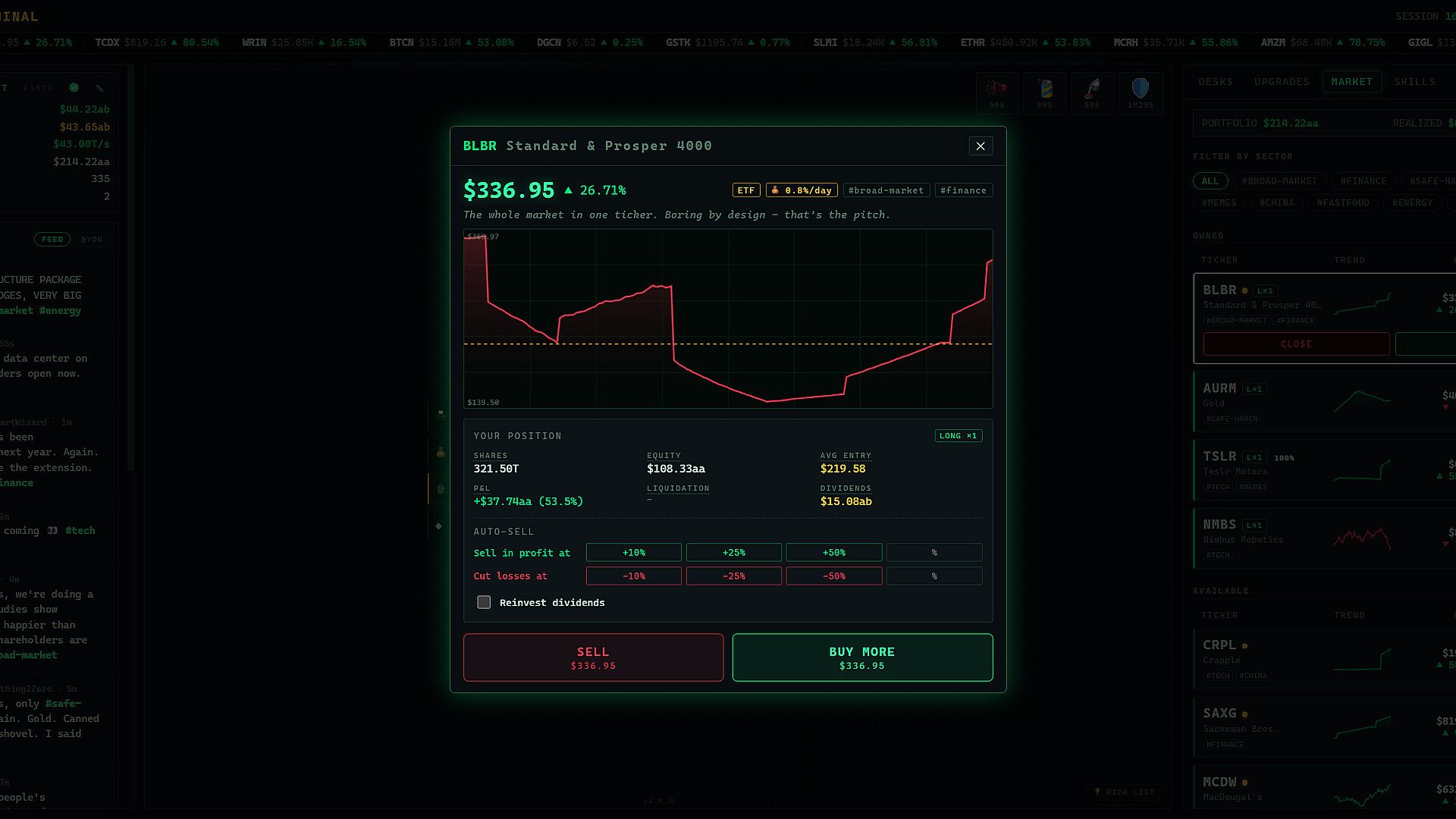
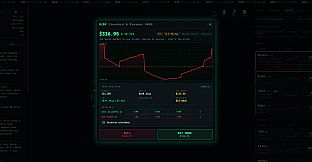
Trading forms a major part of the experience with twenty-three distinct tickers covering stocks, ETFs, and commodities. These assets fluctuate independently, requiring players to buy low during dips and sell during peaks or hold for dividends after acquiring full ownership of a company. IPO opportunities appear before lockups expire, adding timing decisions to portfolio management.
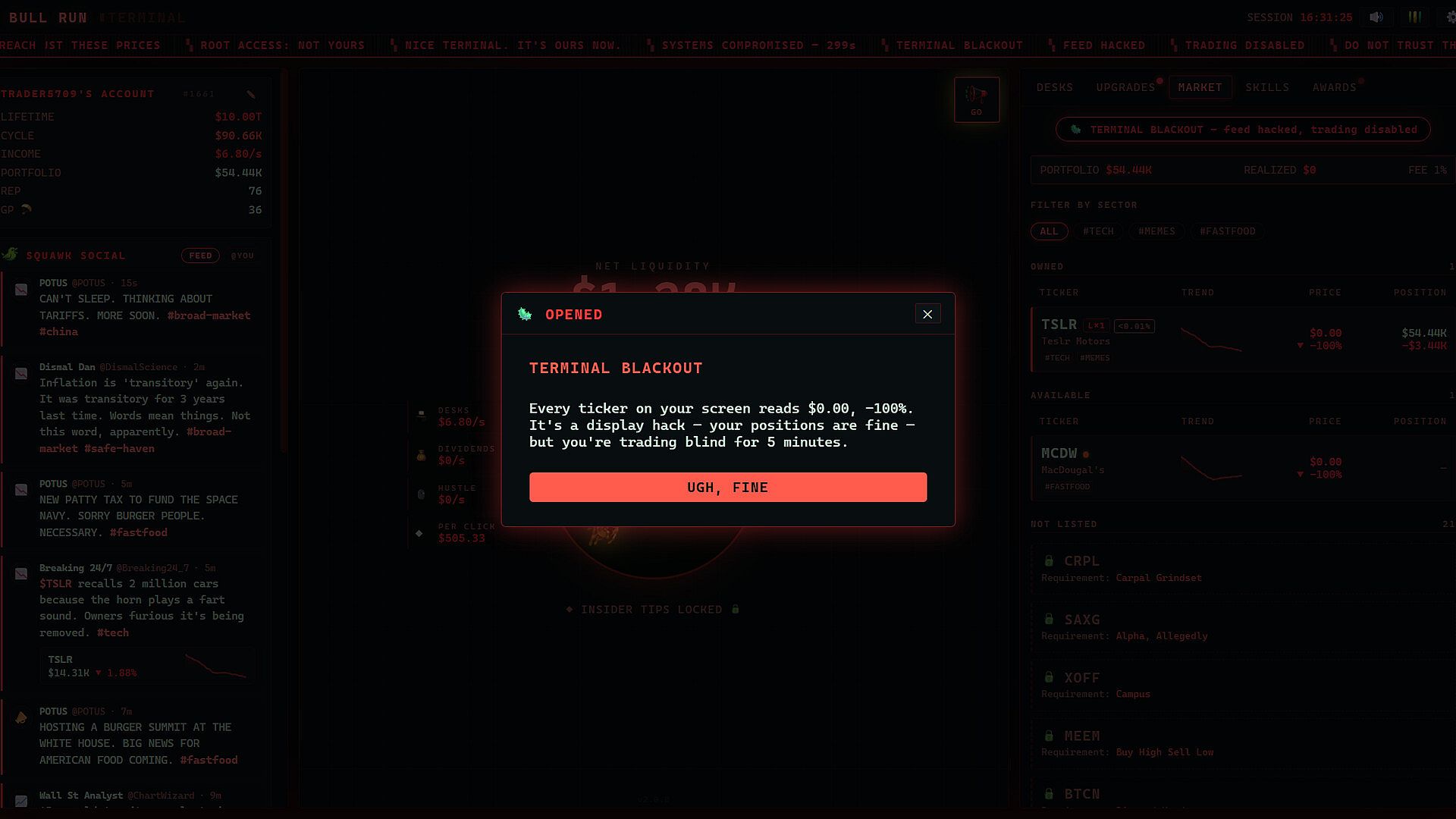
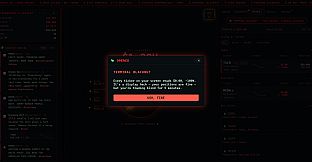
Market events introduce volatility through one hundred thirty-eight headlines and incidents that scroll across a ticker. These range from booms to panics and can alter asset values or trigger new opportunities. An inbox system delivers HACK MAIL messages whose outcomes depend on whether the player chooses to open them, creating risk-reward choices that affect cash flow and progress.
Game Modes
The primary structure revolves around the desk ladder and market interaction rather than separate named modes. Players advance sequentially through the ten desks while actively trading and reacting to events. This creates a continuous loop of accumulation and expansion within a single persistent session.
Prestige mechanics activate once earnings reach extreme levels. Players can cash out via a golden parachute that converts lifetime progress into permanent upgrades across thirty-eight skills in a prestige tree. After resetting, the next run begins again at the paper route but benefits from faster scaling due to the unlocked abilities.
Offline progression remains active across all stages, so desks generate resources during breaks. This supports both short sessions focused on trading decisions and longer periods of passive growth between prestige resets.
Progression and Systems
Seventy-five Steam achievements track milestones such as reaching specific desks, completing trades, or surviving particular event sequences. These provide additional goals beyond raw financial growth and encourage exploration of different trading strategies or event responses.
The prestige tree offers targeted improvements that compound over multiple runs. Skills purchased with cashed-out earnings reduce the time needed to reach higher desks or improve trading efficiency, turning each reset into a more optimized cycle of market domination.
Event handling and inbox decisions add layers of strategy to the otherwise steady incremental flow. Choosing when to engage with news or risky messages can accelerate or derail a run, rewarding careful observation of patterns across the twenty-three assets and one hundred thirty-eight events.
Is It Worth Playing?
Bull Run Clicker suits players who enjoy incremental games with economic themes and light satire on financial markets. The combination of desk progression, independent asset trading, and event-driven volatility creates a focused loop that rewards planning and timing without requiring constant attention.
Those interested in prestige systems and repeated runs will find value in the thirty-eight skill upgrades that shorten subsequent playthroughs. The offline earnings feature supports flexible play styles, from brief check-ins to extended sessions centered on portfolio adjustments.
With no additional modes or external competition confirmed, the experience stays tightly scoped around market simulation and ladder climbing. Players seeking a straightforward incremental title with trading depth and reset mechanics may find it a solid match for the genre.












