

















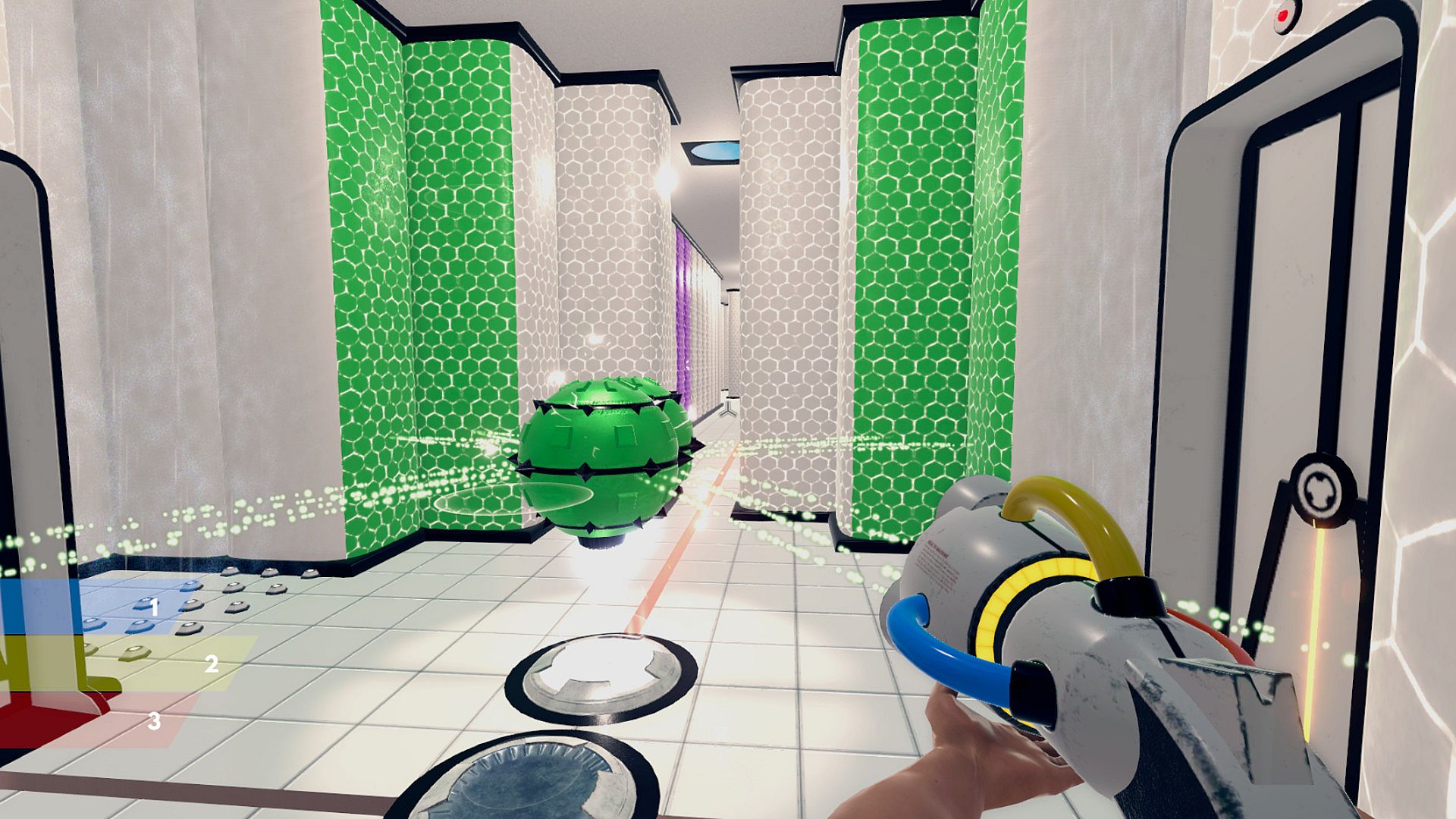
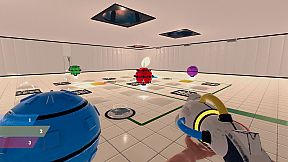
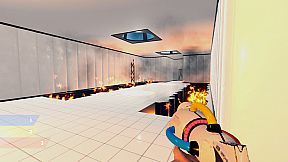
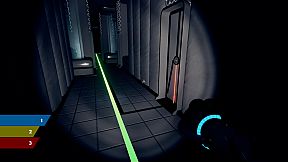
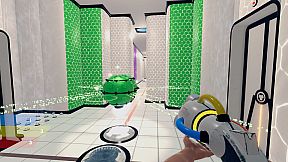
ChromaGun is a first-person puzzle game that blends action and adventure elements in a compact indie package for PC. Players step into the role of a test subject navigating a series of meticulously designed chambers using a specialized paint-shooting device. The core experience revolves around solving environmental puzzles by applying color to surfaces and robotic entities, creating a focused loop of experimentation and problem-solving without any multiplayer components.
Gameplay
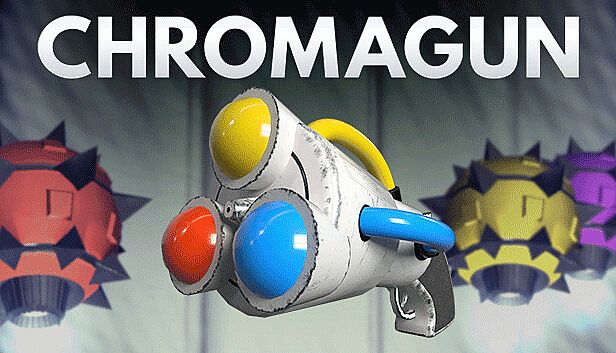
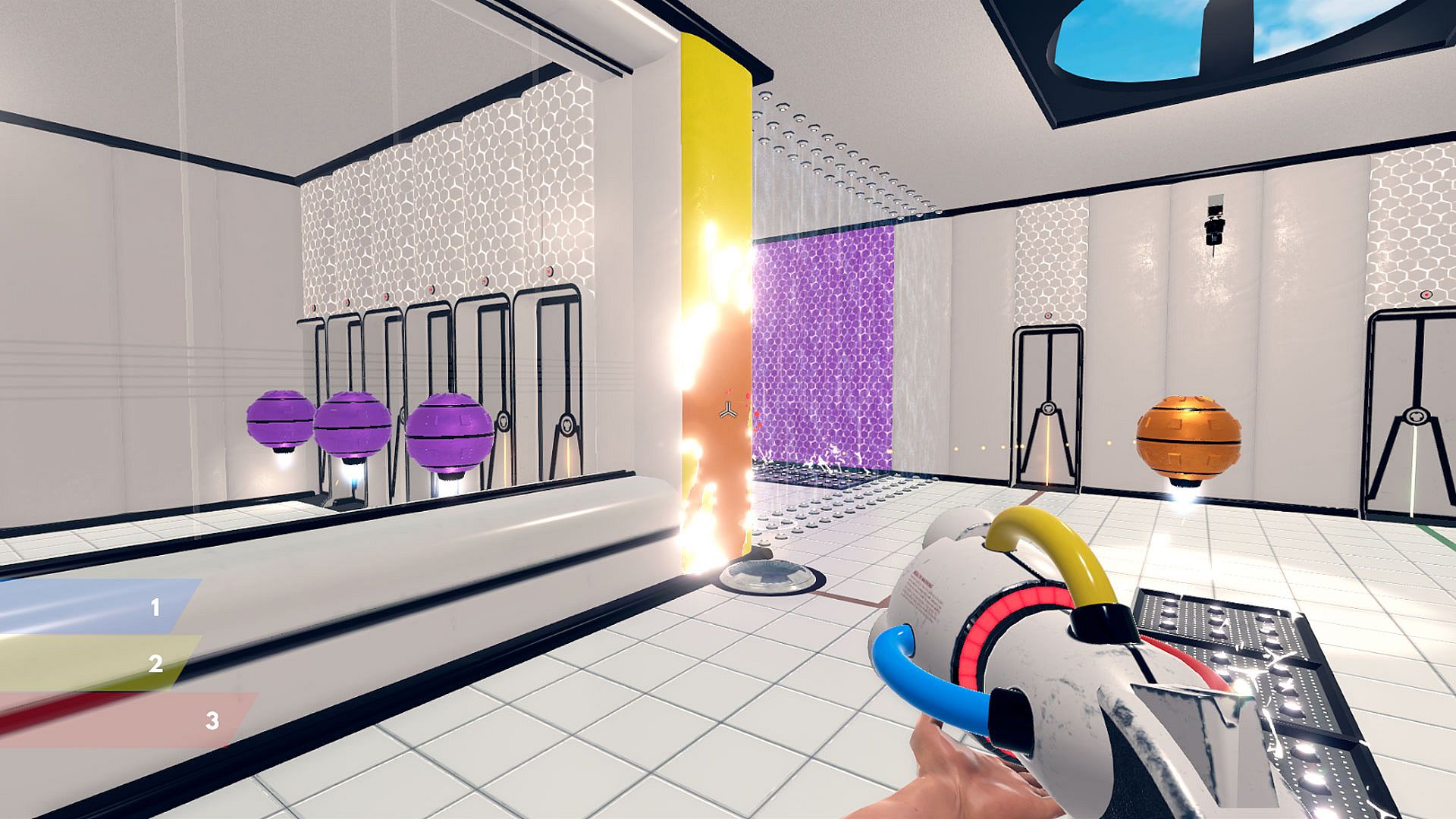
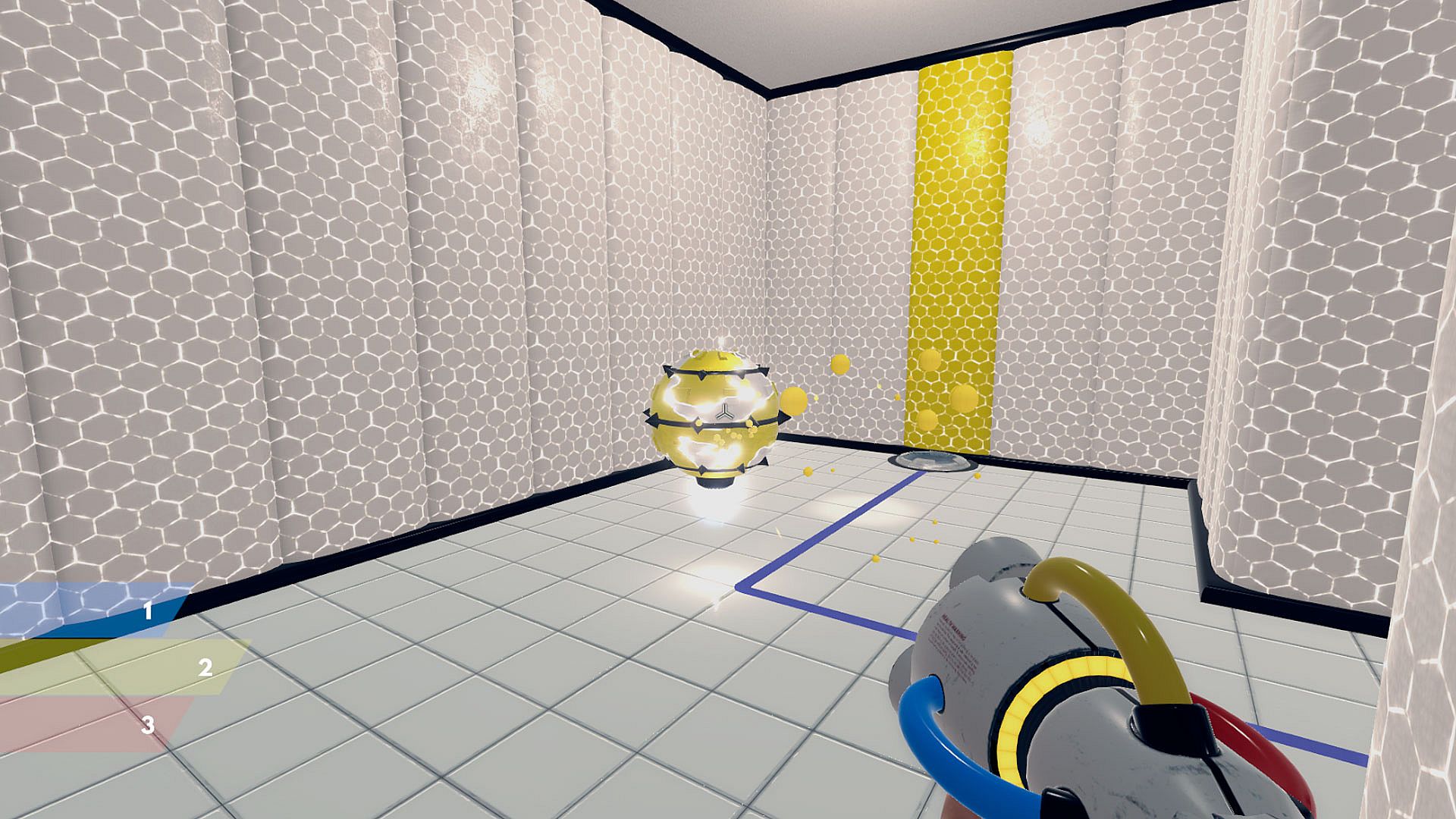
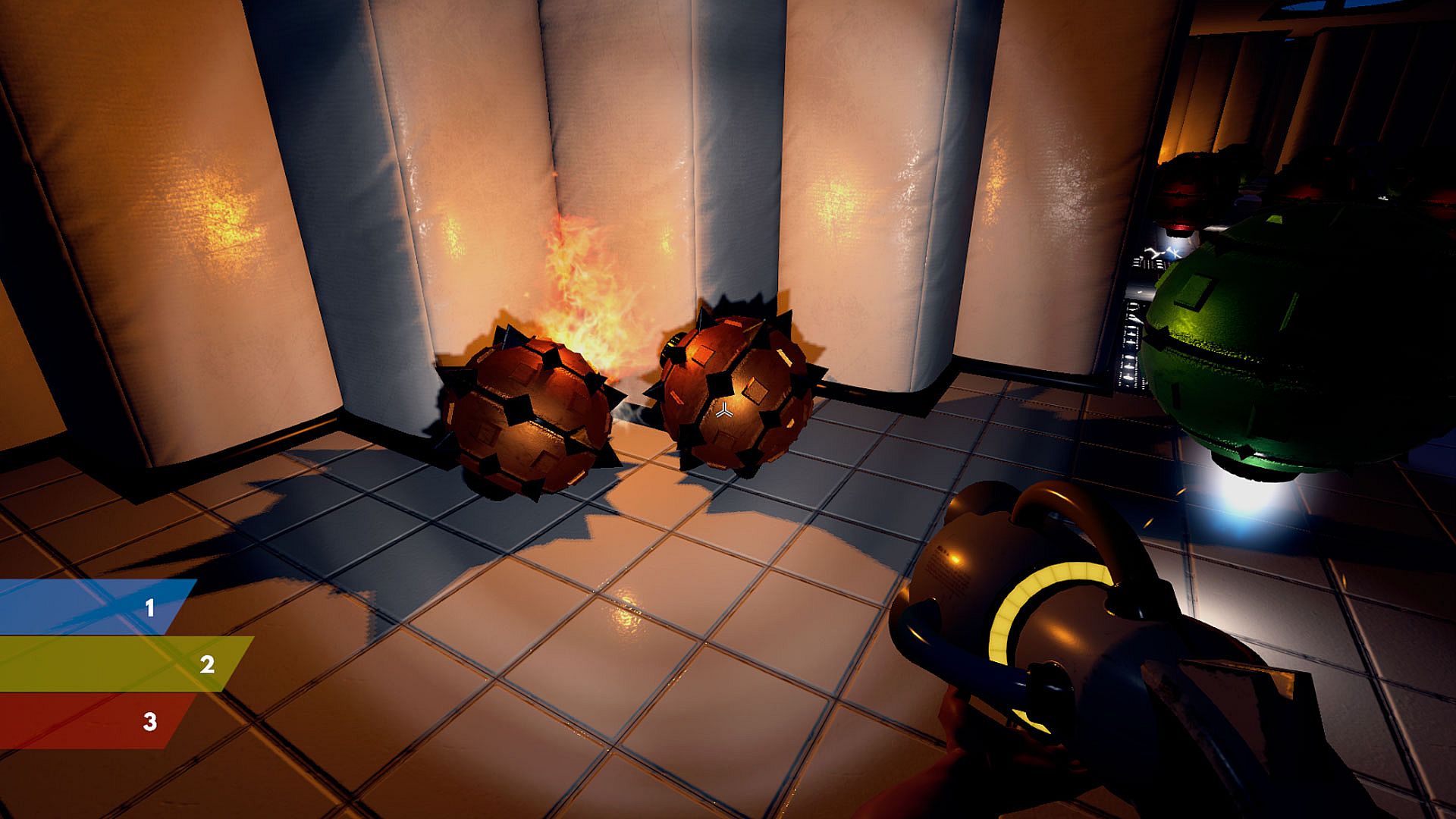
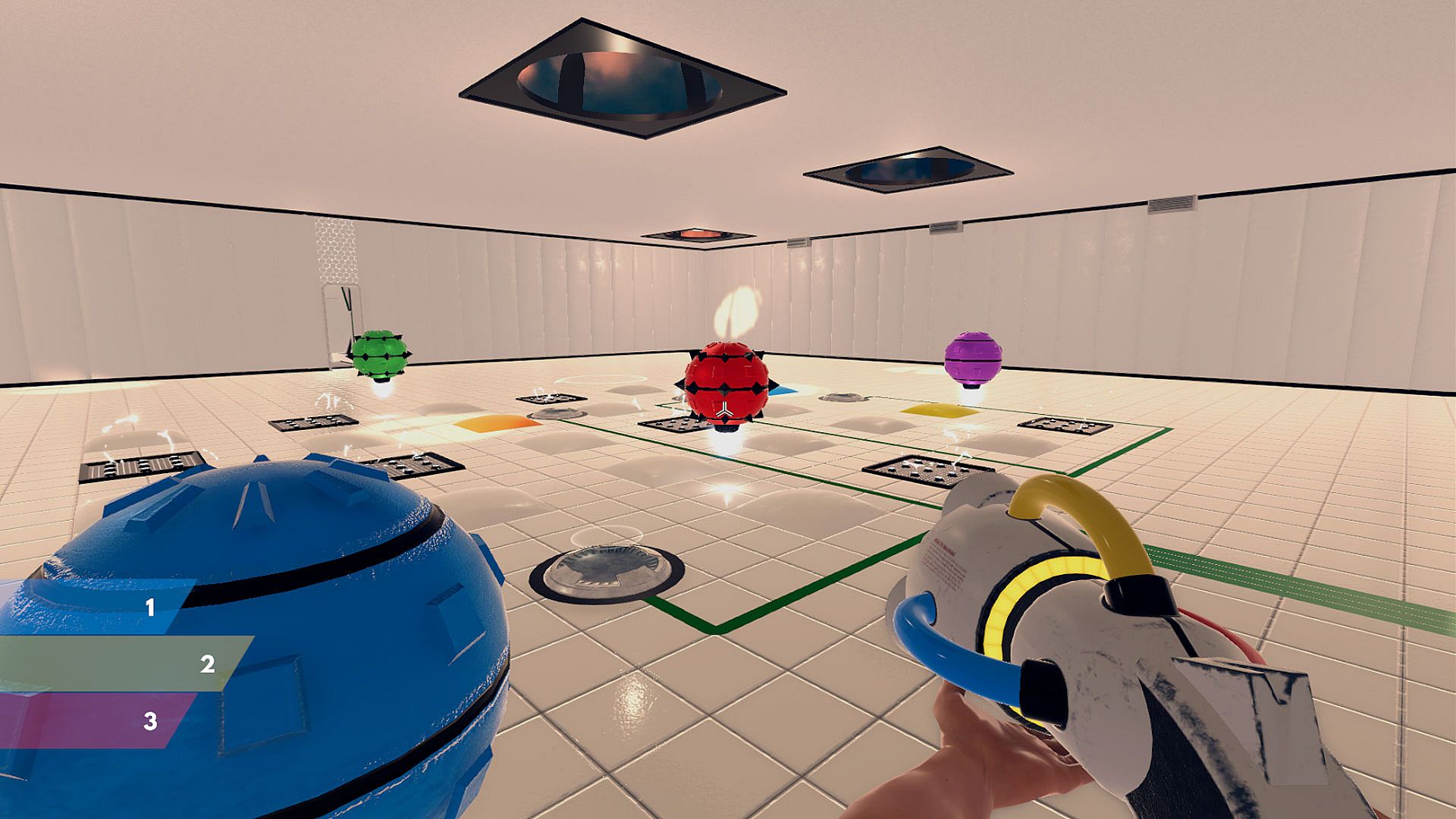
The central mechanic involves the ChromaGun, which allows players to apply color to walls and WorkerDroids throughout each test chamber. WorkerDroids respond by moving toward walls matching their color, enabling players to redirect their paths and create safe routes or activate mechanisms. This attraction system forms the foundation of progression, requiring careful planning to avoid hazards while advancing toward the exit.
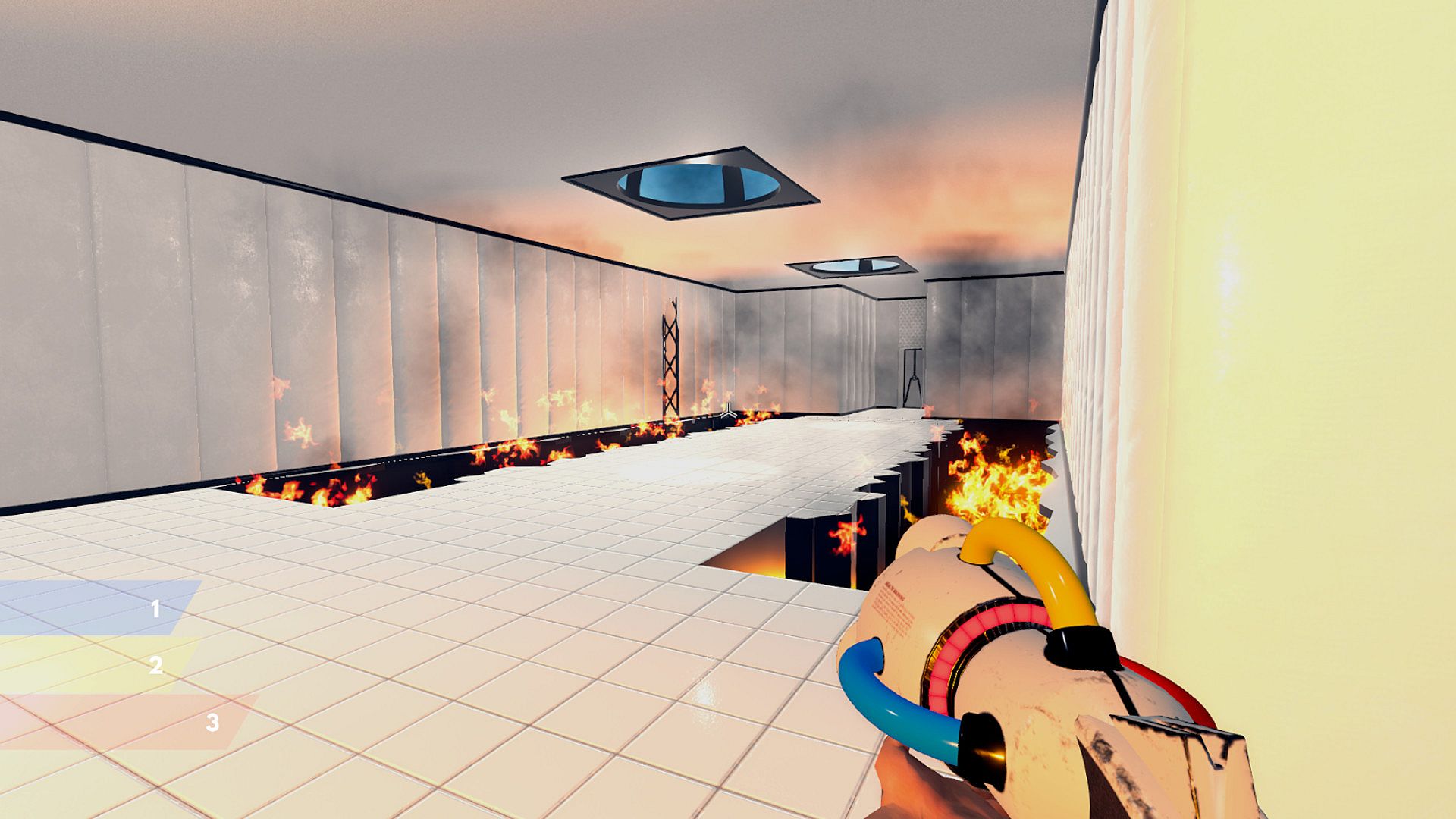
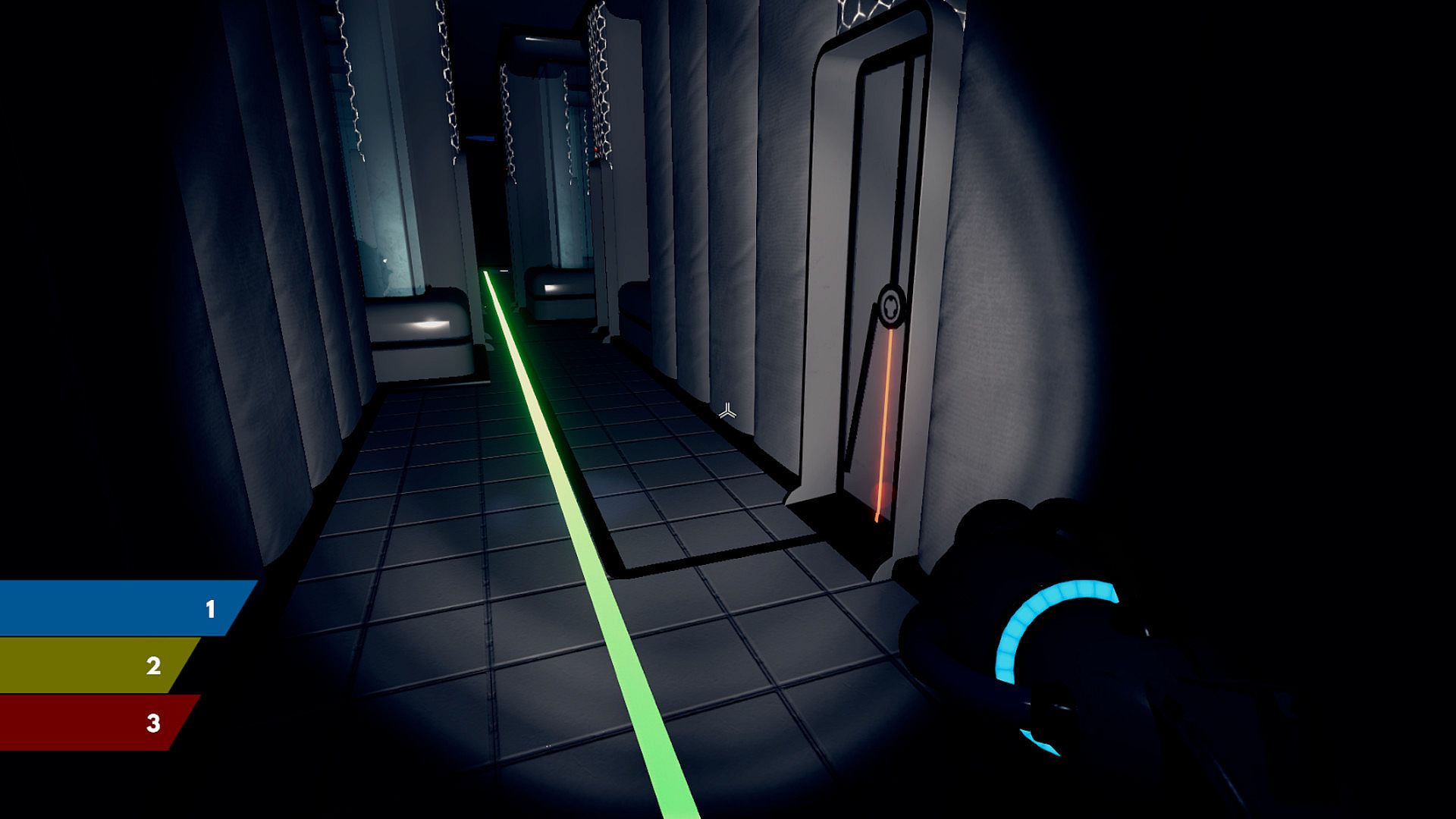
Doors often incorporate trigger systems that must remain occupied to stay open, adding layers of timing and positioning to the puzzles. Chambers increase in complexity across the experience, introducing new combinations of colored elements and droid behaviors that demand precise application of the color mechanic. The game emphasizes thoughtful observation and iterative testing rather than fast reflexes, though later sections introduce elements of urgency through moving threats.
Exploration stays contained within the linear structure of the test facility, where each chamber builds directly on prior mechanics. Players interact solely with the environment and droids using the gun, with no additional tools or abilities introduced beyond color application and basic movement.
Game Modes
ChromaGun operates exclusively as a singleplayer experience with no separate game modes or multiplayer options. The entire game consists of a campaign divided into 57 levels spread across eight chapters. Each chapter presents a sequence of connected chambers that progressively layer the color-based mechanics, culminating in more intricate trigger and droid coordination challenges.
Progression follows a straightforward path through the facility, with no branching paths, side objectives, or alternative playstyles. The focus remains on completing the test chambers in sequence, relying on the core color attraction and door trigger systems to reach each exit.
Level Design and Progression
Level design centers on compact, self-contained chambers that reward methodical color placement and droid manipulation. Early sections introduce basic attraction principles, while later chapters combine multiple colors and simultaneous triggers to create layered obstacles. The structure encourages replaying sections to refine solutions, though the game provides no built-in timers or scoring beyond completion.
WorkerDroids serve as both obstacles and tools, their predictable responses to color allowing players to herd them into specific positions. This creates opportunities for creative routing around hazards without introducing unrelated systems or external elements.
Is It Worth Playing?
ChromaGun delivers a concise puzzle experience centered on its color mechanics and droid interactions, appealing to players who enjoy deliberate, logic-driven challenges in a first-person format. The campaign structure with 57 levels provides a solid amount of content for the genre, with chambers that build logically on the core systems.
Reception highlights the satisfying mix of careful planning and occasional tension from droid movements, as noted in player feedback describing it as a strong combination of puzzle solving and hazard avoidance. Critic scores reflect a mixed but generally positive view, positioning it as a competent indie title for those interested in color-based puzzle games rather than action-heavy adventures.
The game suits individuals seeking a focused singleplayer puzzle session without extraneous features or ongoing updates. Its straightforward presentation and verified mechanics make it a worthwhile choice for fans of similar environmental puzzle titles, provided the emphasis on color redirection aligns with personal preferences for methodical gameplay.