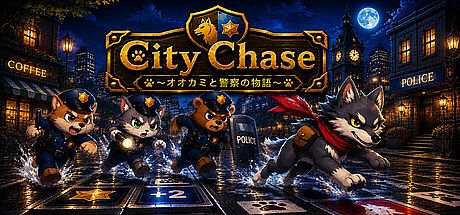


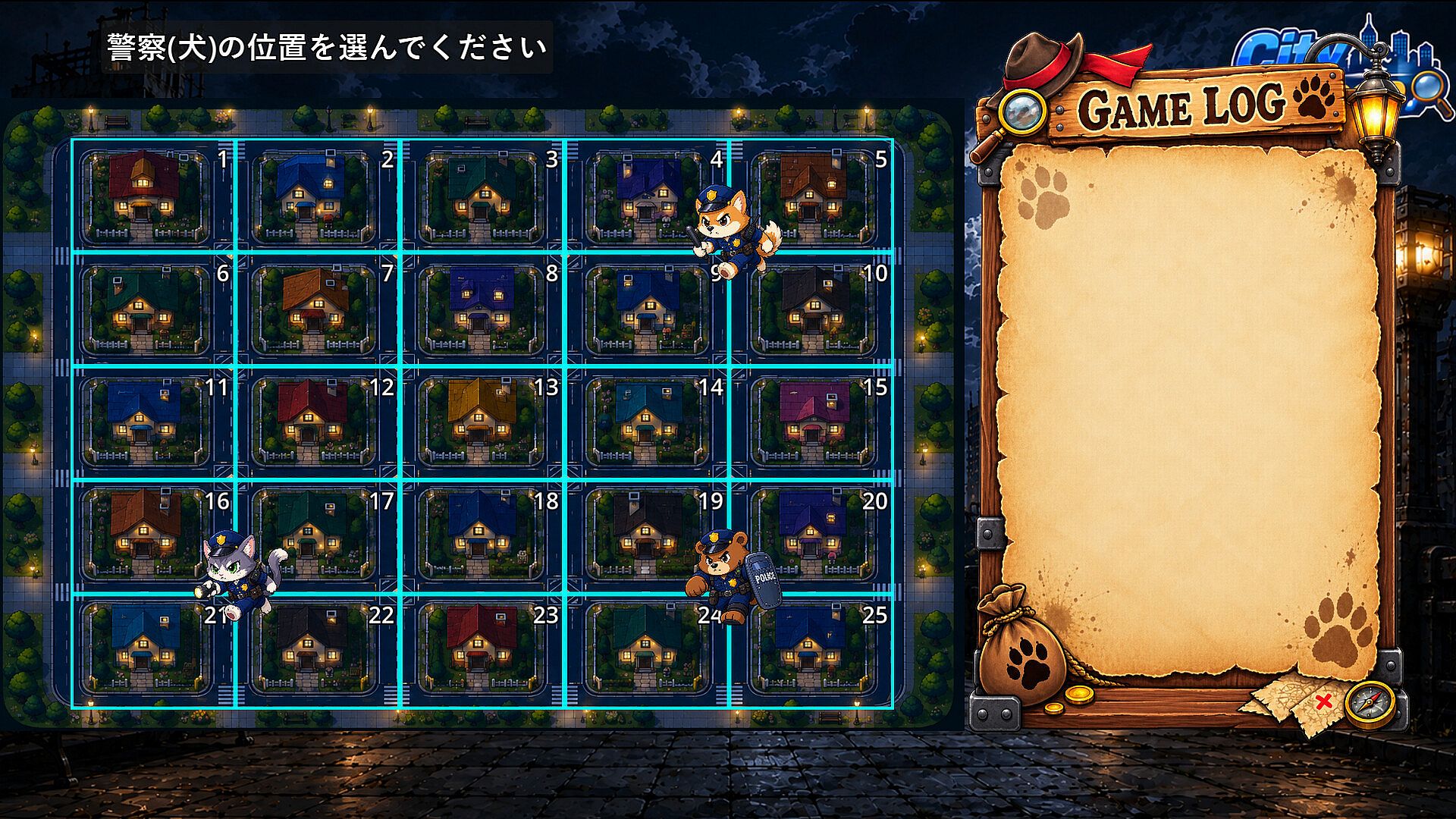
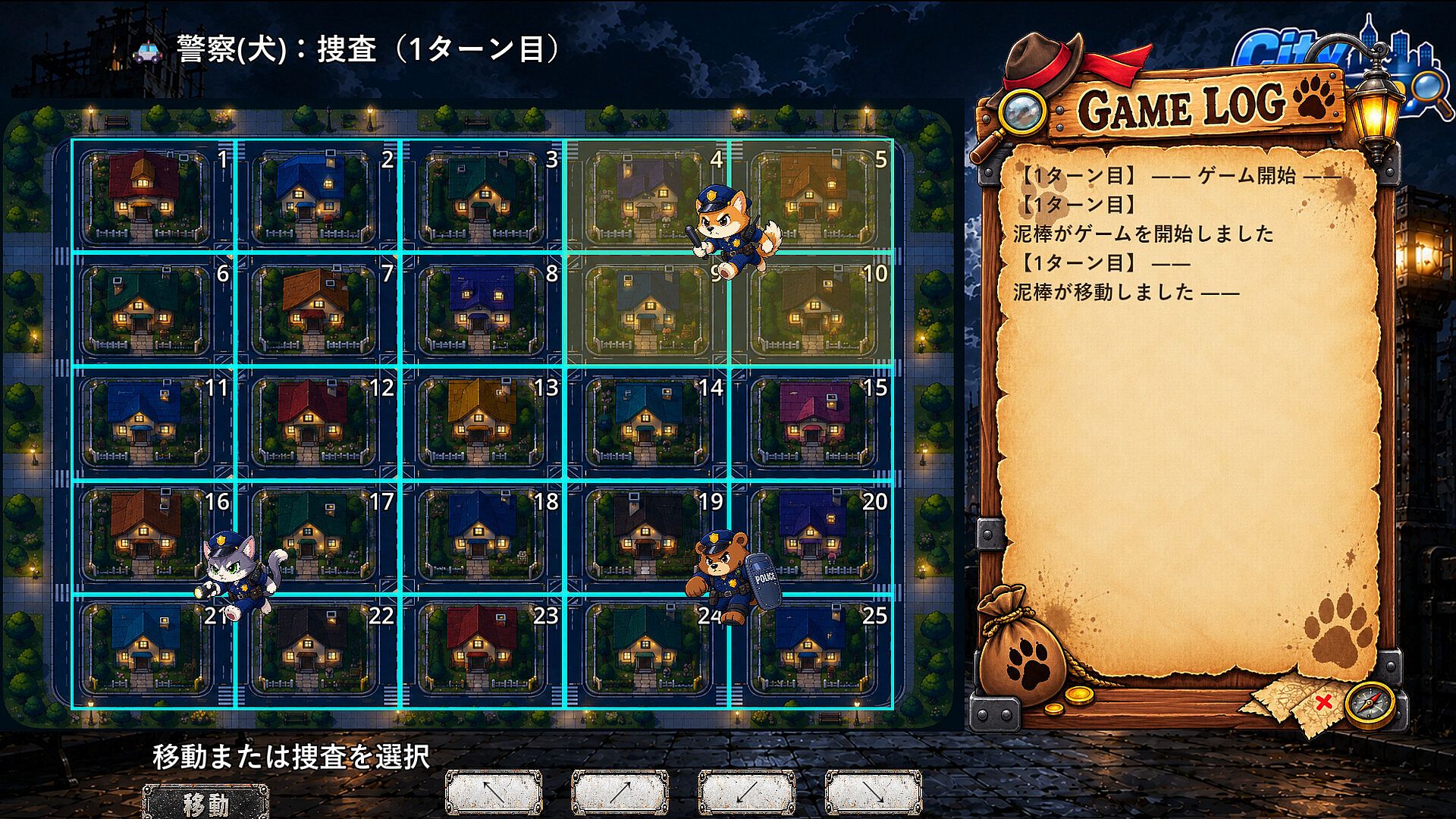
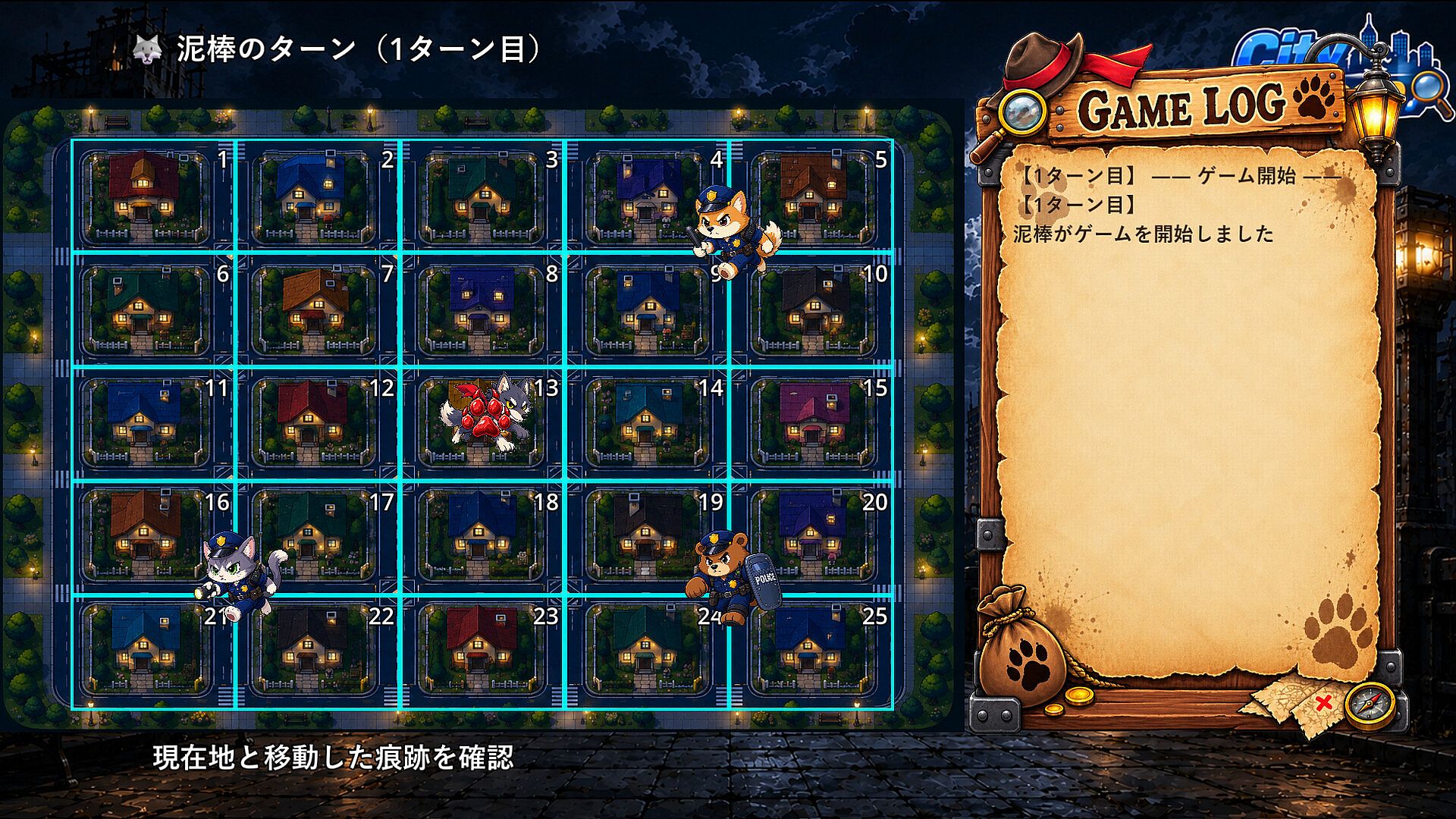
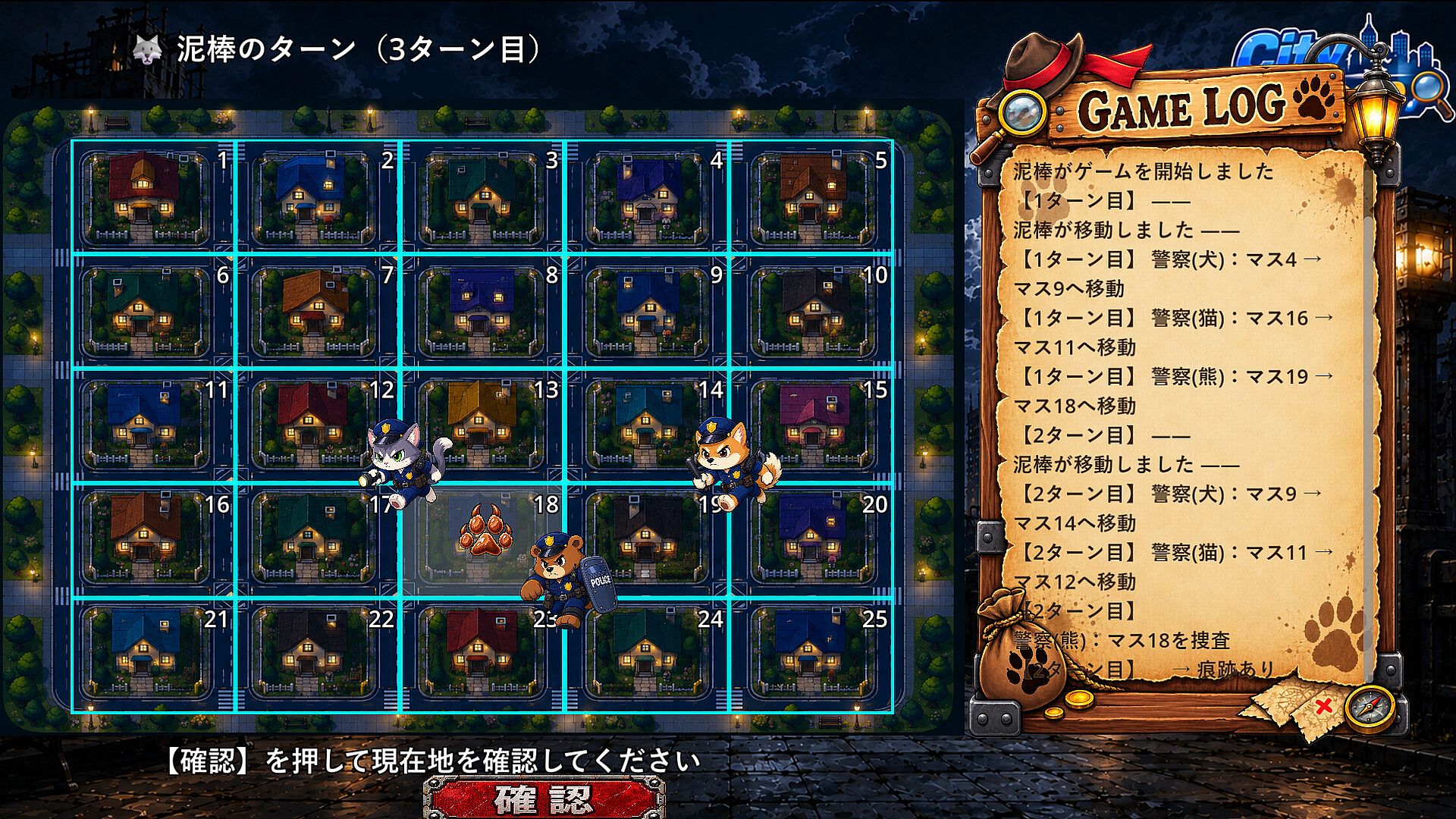
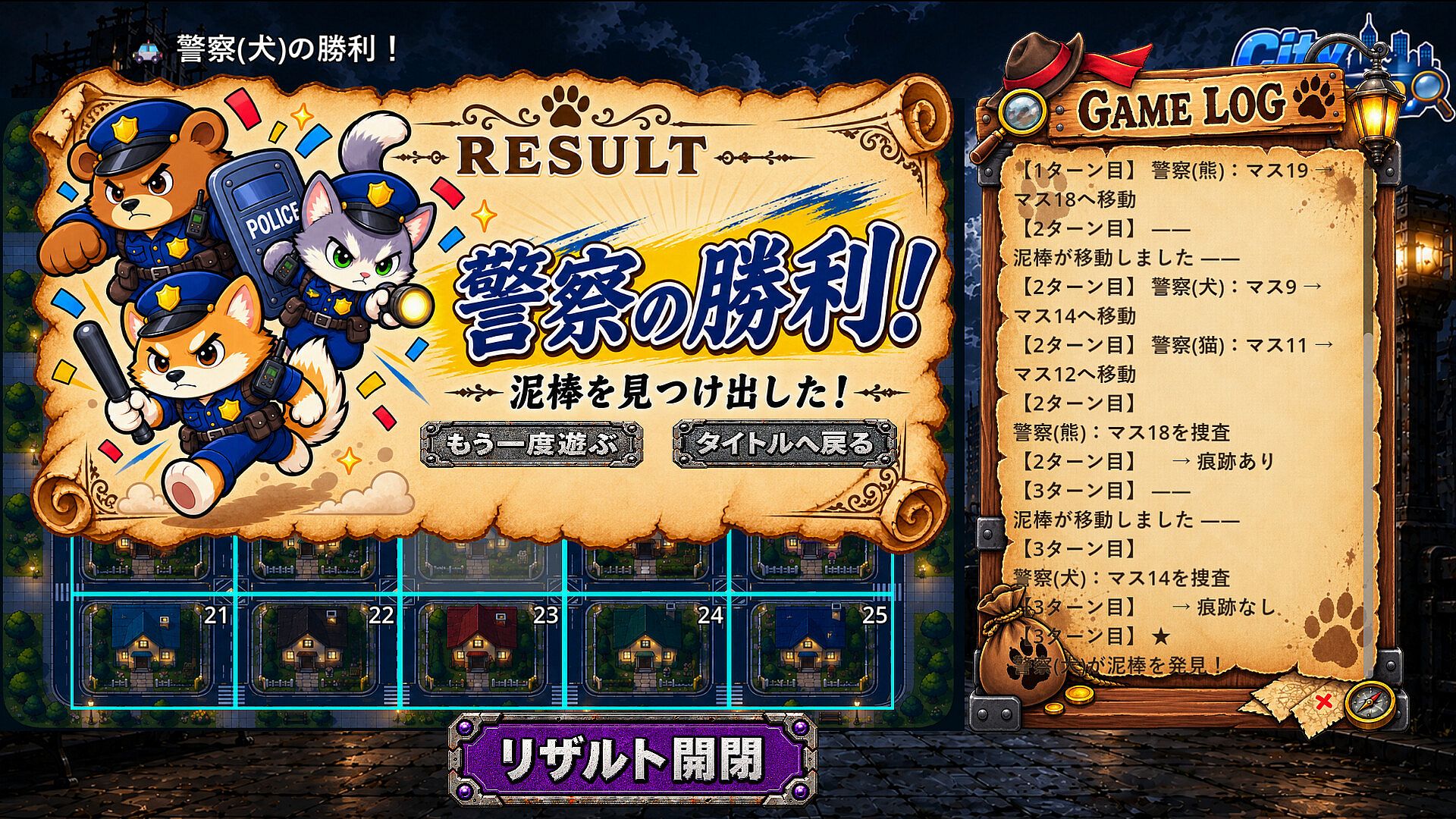
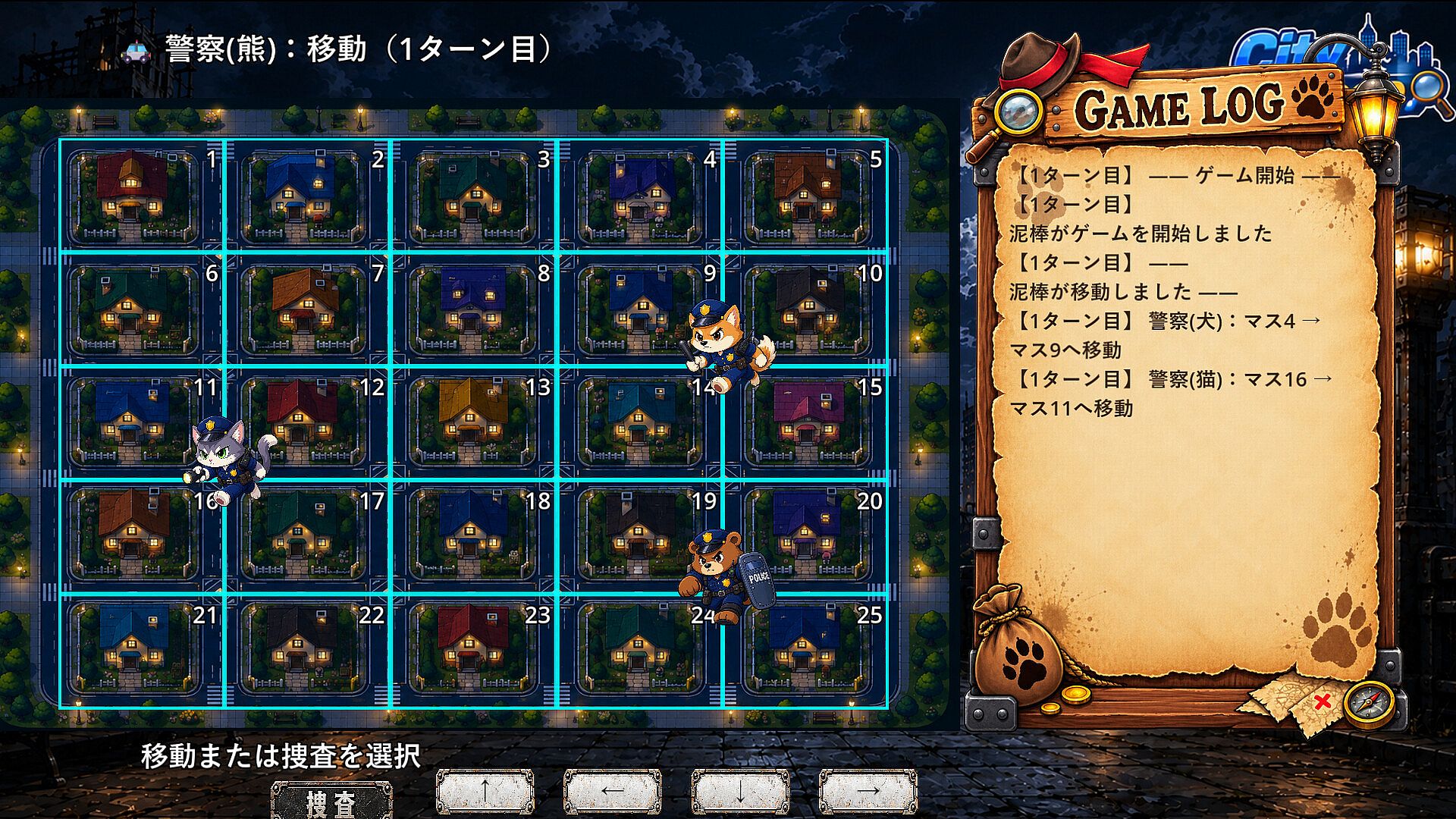
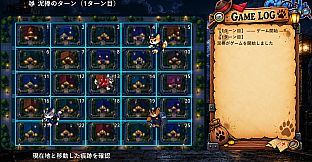
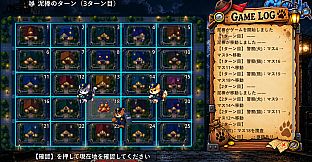
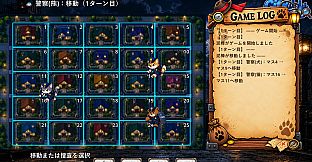
City Chase ~オオカミと警察の物語~ is a strategy game built around turn-based deduction and asymmetric pursuit. One participant controls the hidden Wolf attempting to slip away through an urban grid, while the opposing side directs the Police in piecing together scattered clues to pinpoint its position. The core tension arises from limited visibility: the Police never observe the Wolf's exact path in real time and must instead interpret physical traces left behind to reconstruct possible routes.
Gameplay
Matches unfold in alternating turns where the Wolf selects its next movement without revealing the choice outright. Each step risks leaving behind evidence that the Police can later examine. The Police respond by dedicating actions to investigation, gradually exposing those traces and narrowing the possible locations. This creates a layered cat-and-mouse dynamic in which the Wolf aims to create misleading patterns while the Police work to eliminate false trails through careful deduction. Simple movement rules keep the focus on strategic positioning rather than complex resource management, allowing players time between turns to analyze the growing set of clues.
The Wolf's decisions revolve around choosing escape routes that maximize uncertainty for the pursuers. Meanwhile, the Police must weigh which areas to probe next, balancing the need for information against the risk of letting the target slip further away. Every trace uncovered adds to a shared map of evidence, turning the session into a shared puzzle that both sides interpret differently based on their objectives.
Game Modes
Single-player mode lets one person take on the Wolf role against an AI-controlled Police force that follows the same deduction principles. This setup provides a controlled environment for learning routes and testing deceptive paths without requiring a second participant. Multiplayer matches pit human players against each other in direct confrontations, with one assuming the Wolf and the others coordinating as the Police team. The asymmetric structure ensures that each role demands distinct skills, from spatial planning on the Wolf side to logical elimination on the Police side.
Core Mechanics and Strategy
Trace investigation forms the central system. The Police gain access to specific locations where the Wolf has passed, revealing directional hints or timing details that must be cross-referenced with prior moves. The Wolf, aware of this process, selects paths that branch into multiple plausible interpretations, forcing the Police to commit resources without certainty. Turn structure grants breathing room for both sides to reassess after each revelation, emphasizing thoughtful planning over rapid reflexes.
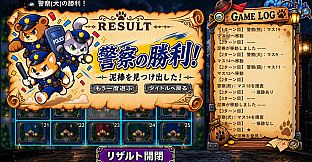
Victory conditions remain straightforward: the Wolf succeeds by reaching a safe exit or evading capture through the full duration, while the Police win by correctly identifying and closing in on the final position. This clarity allows newcomers to grasp the objectives quickly while still rewarding repeated plays through deeper pattern recognition.
Is It Worth Playing?
The game suits players who enjoy deduction-heavy experiences and asymmetric role design. Those drawn to titles where information asymmetry drives tension will find the constant back-and-forth between concealment and revelation engaging. Sessions remain concise due to the focused rule set, making it accessible for shorter play windows or repeated matches in one sitting.
Single-player offers a reliable way to practice mechanics in isolation, while multiplayer highlights the social element of outthinking opponents in real time. The emphasis on logical deduction rather than reflexes or extensive setup appeals to strategy enthusiasts looking for a clean, repeatable format without additional layers of complexity.