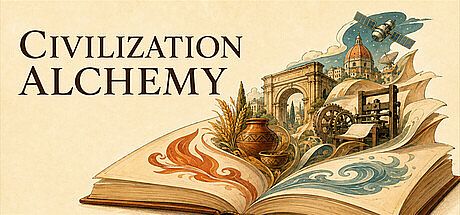


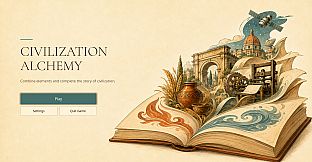
Civilization Alchemy is a casual simulation and adventure game built around element combination puzzles. Players begin with six basic elements and combine them repeatedly to uncover materials, tools, and concepts that shaped human progress across history.
Gameplay
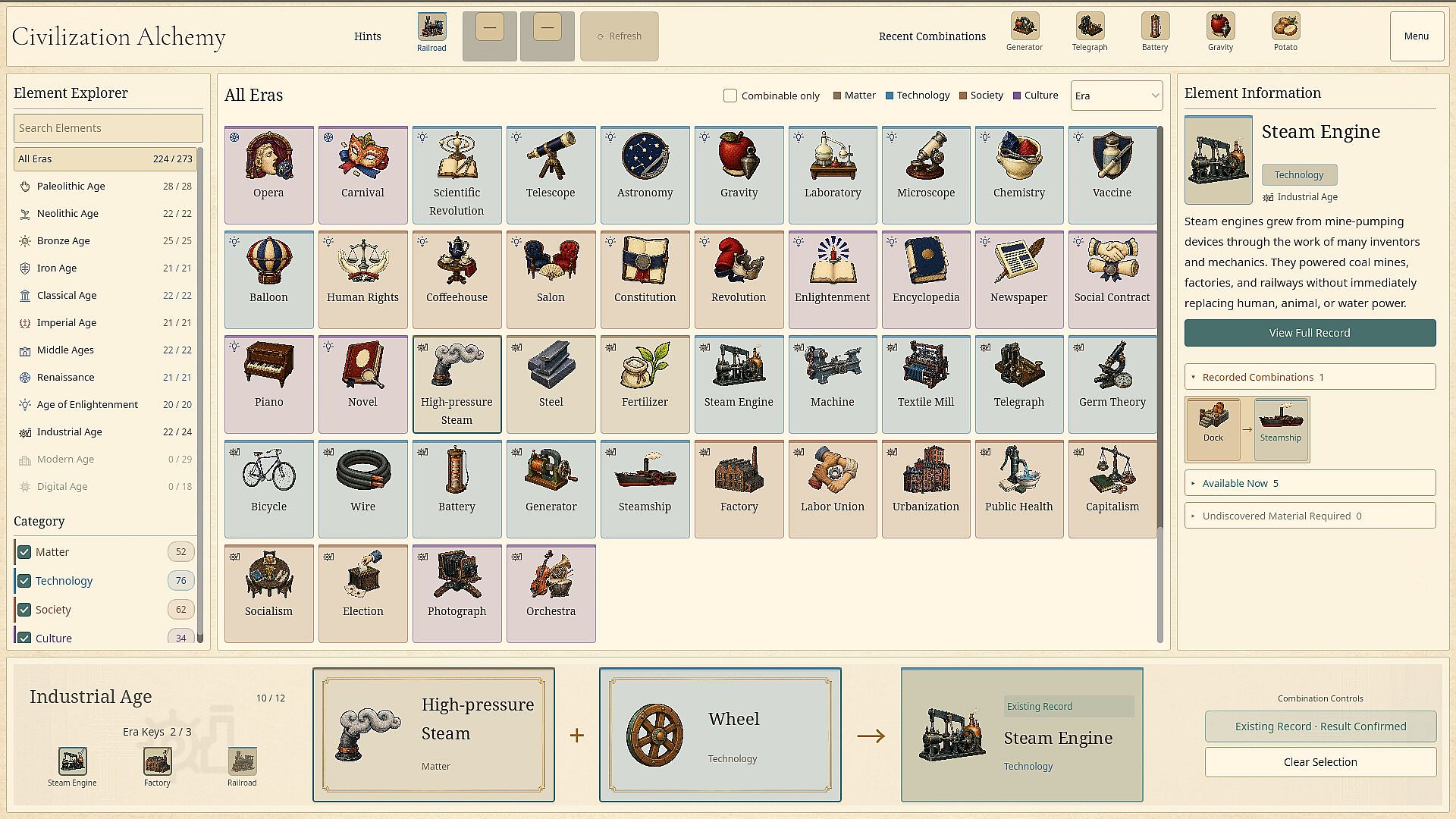
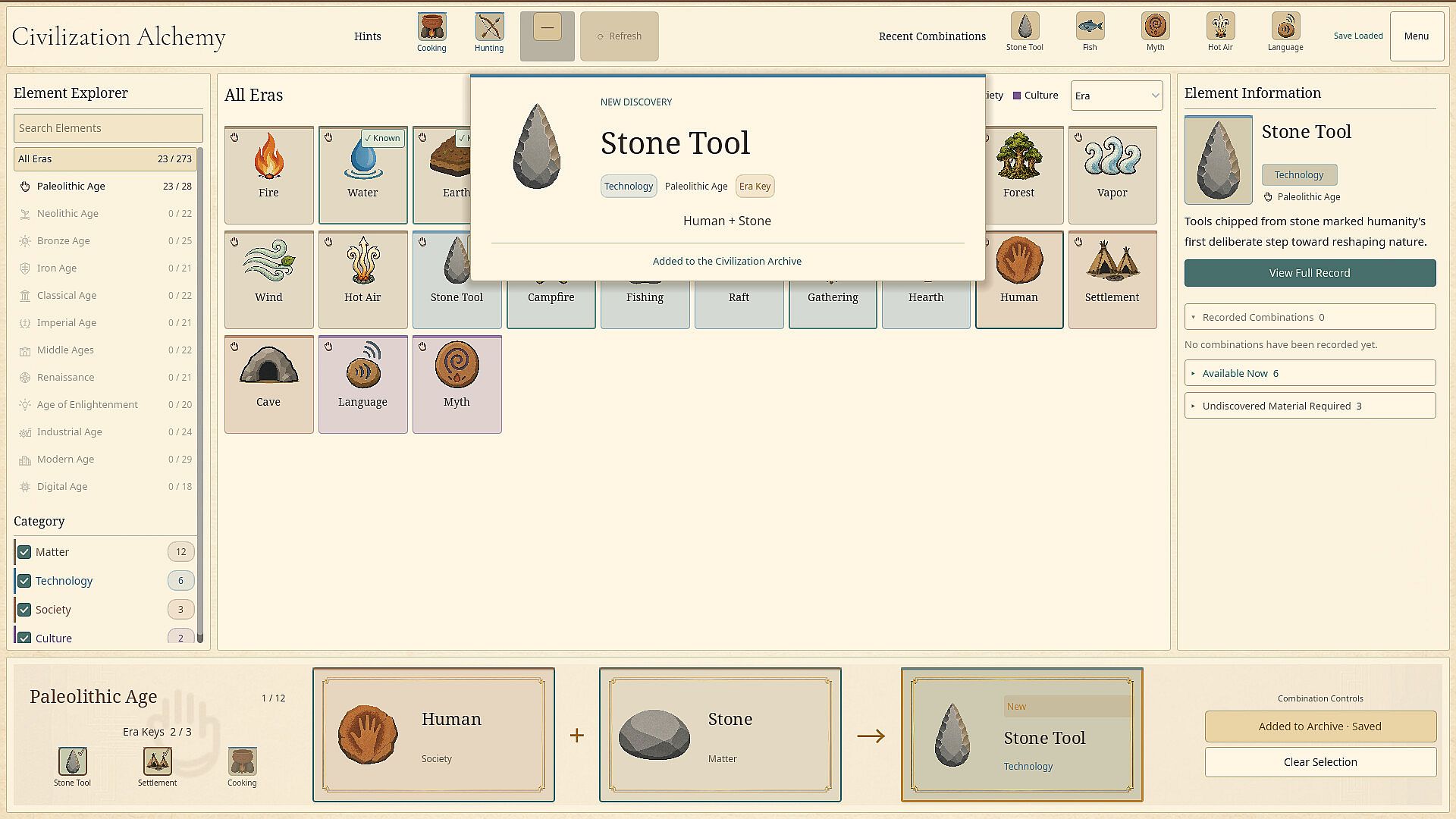
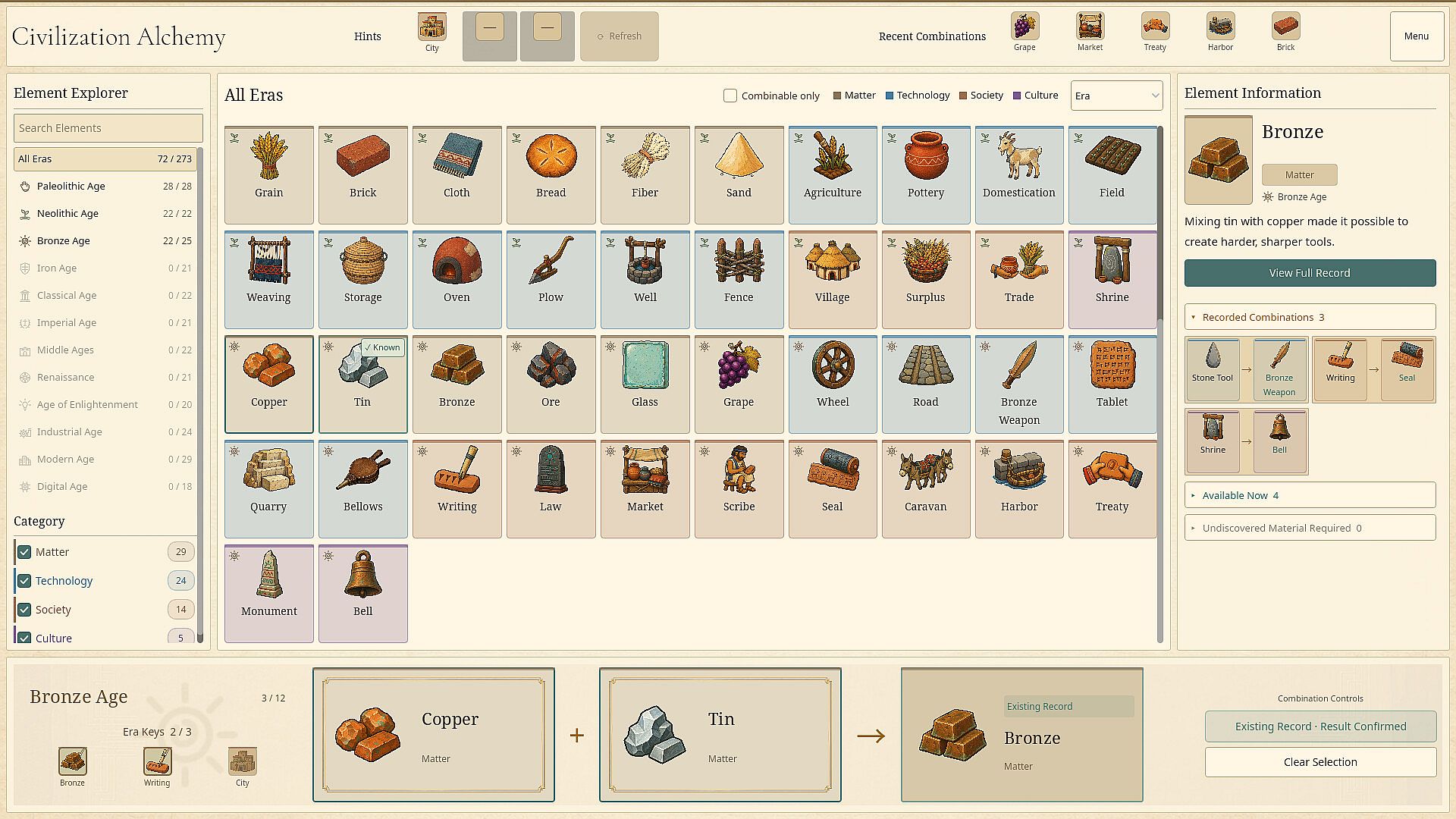
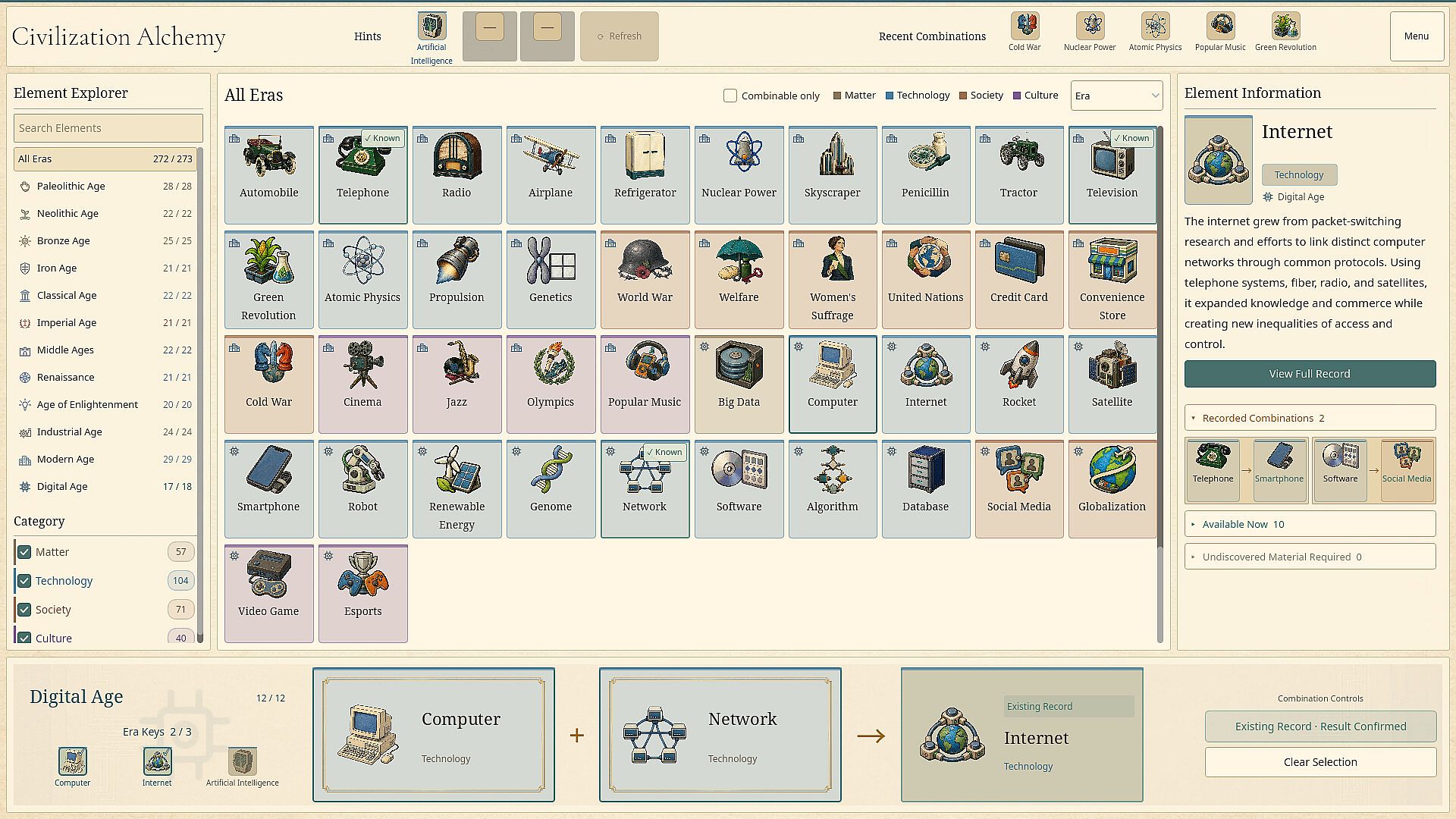
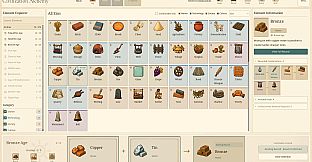
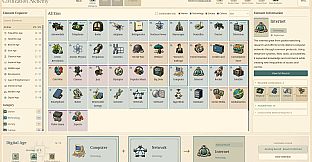
The core loop centers on pairing any two elements from the growing collection to generate new discoveries. Each successful combination adds the result to the player's library, where it becomes available for further pairings. This process reveals over 250 distinct elements that range from basic substances to complex inventions and abstract ideas.
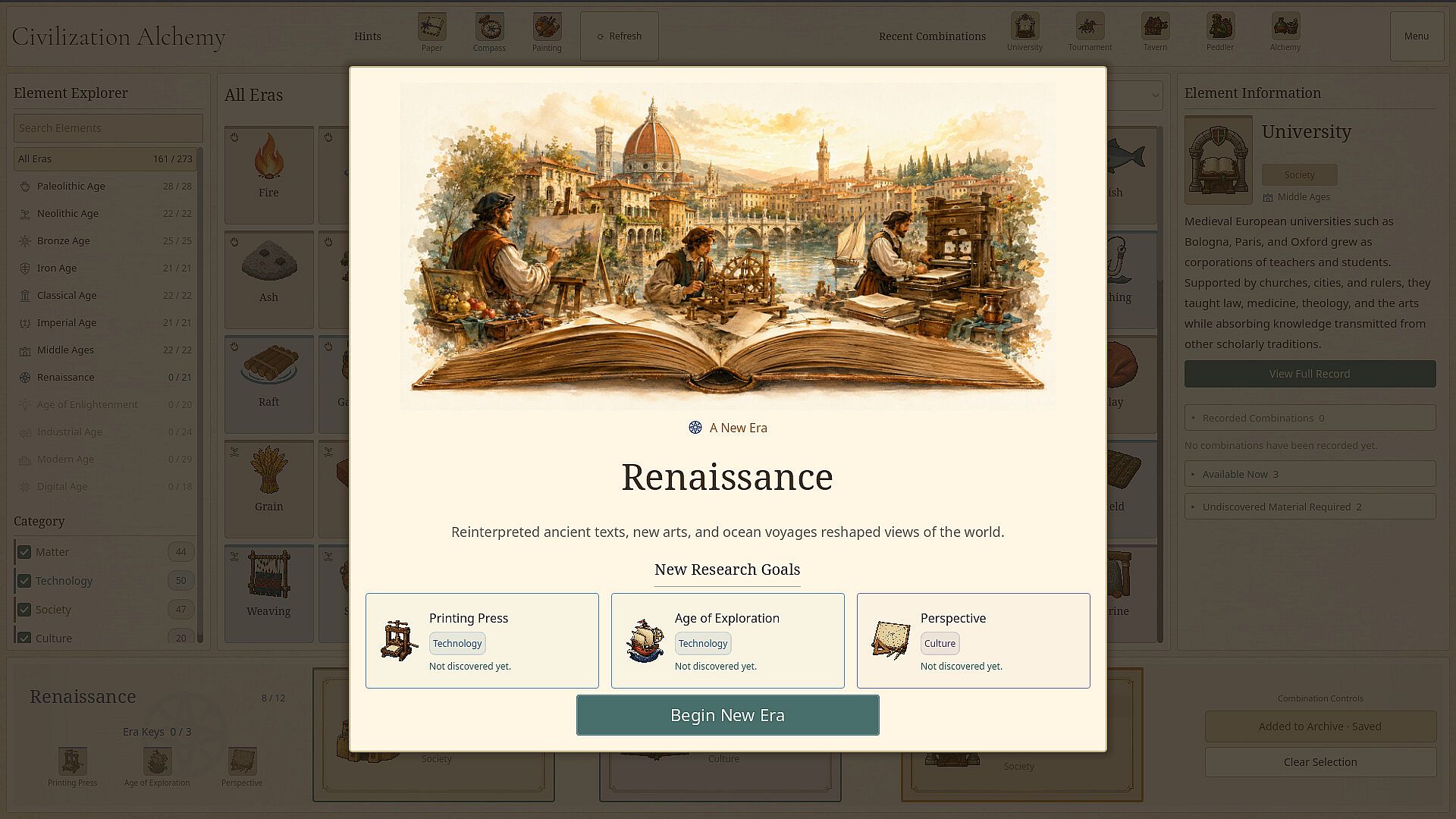
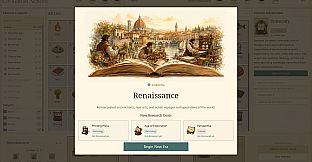
Progression follows a structured path through twelve eras. Unlocking the defining discoveries of one era grants access to the next, moving from early farming practices through classical civilizations, the Renaissance, industrial developments, and into the digital age. New elements appear with each era, encouraging players to revisit earlier combinations with fresh ingredients.
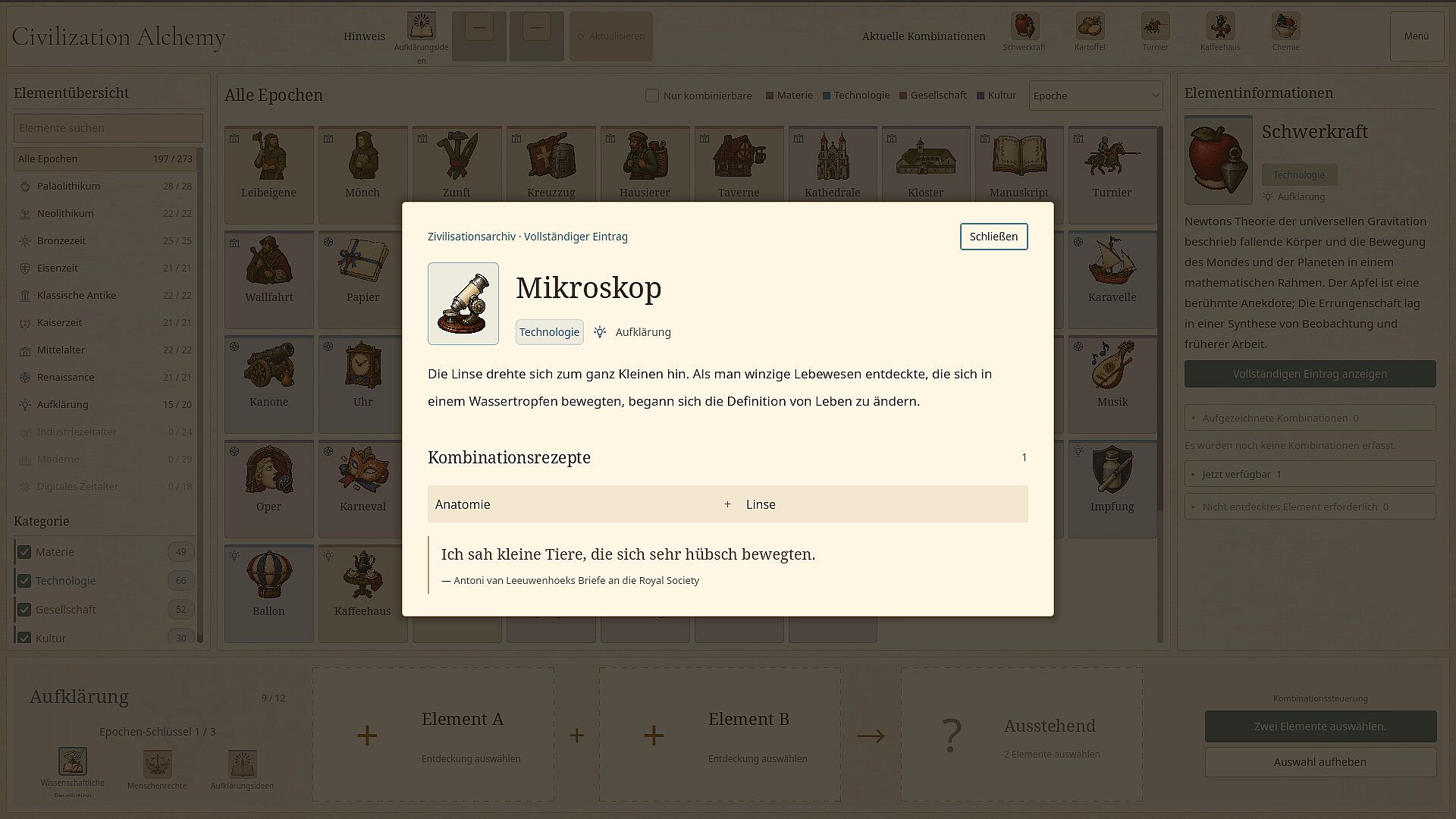
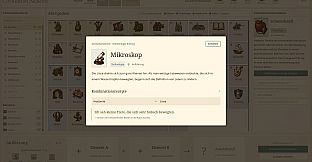
Every element carries additional context in the collection view. Short historical notes, relevant quotations, and the exact recipes used to create it provide background without interrupting the puzzle flow. Players can browse these details at any time, revisit past entries, or pursue a new combination based on curiosity rather than a strict objective.
Game Modes
The game operates as a single-player experience with no separate competitive or cooperative modes. Sessions revolve around freeform experimentation in the combination system, allowing players to advance through eras at their own pace or pause to explore the collection. There are no timed challenges, score systems, or branching campaigns beyond the era-based discovery sequence.
Replay value comes from the open-ended nature of combinations. After completing the main sequence of eras, players can return to test alternative pairings or fill gaps in the element library. The absence of pressure or failure states keeps the focus on relaxed exploration and incremental learning.
Is It Worth Playing?
Civilization Alchemy suits players who enjoy thoughtful puzzle games with a light educational layer. The combination mechanics reward patient experimentation, and the historical notes add context that many casual simulation fans appreciate. Those seeking fast action or multiplayer interaction will find little here, as the design emphasizes solitary discovery and unhurried progress through the eras.
The game runs on PC and aligns with the indie and casual genres through its accessible interface and lack of complex controls. Its strength lies in the steady stream of new combinations and the satisfaction of tracing how simple starting materials lead to later innovations. For anyone interested in history-themed puzzles or simulation titles that prioritize calm progression over competition, it offers a consistent and self-contained experience.
Collection and Exploration Features
The collection serves as both a record of progress and a reference tool. Each entry lists the combination recipe that produced it, allowing players to trace connections or recreate earlier steps if desired. Historical notes and quotations provide brief insights into the real-world significance of the elements without requiring external research.
Exploration remains entirely player-driven. There are no mandatory quests or guided tutorials beyond the initial six elements. This approach encourages repeated sessions where curiosity alone determines the next pairing, making the game suitable for short or extended play periods.
Technical and Accessibility Aspects
As a PC title in the indie space, Civilization Alchemy uses straightforward controls focused on selecting and pairing elements from lists or visual representations. The interface supports easy navigation between the combination workspace and the collection browser. No additional hardware or online requirements are needed beyond a standard PC setup.
The design avoids complex resource management or simulation depth found in larger strategy games. Instead, it maintains a narrow focus on the combination system and era progression, resulting in a streamlined experience that fits the casual and simulation genres listed.