

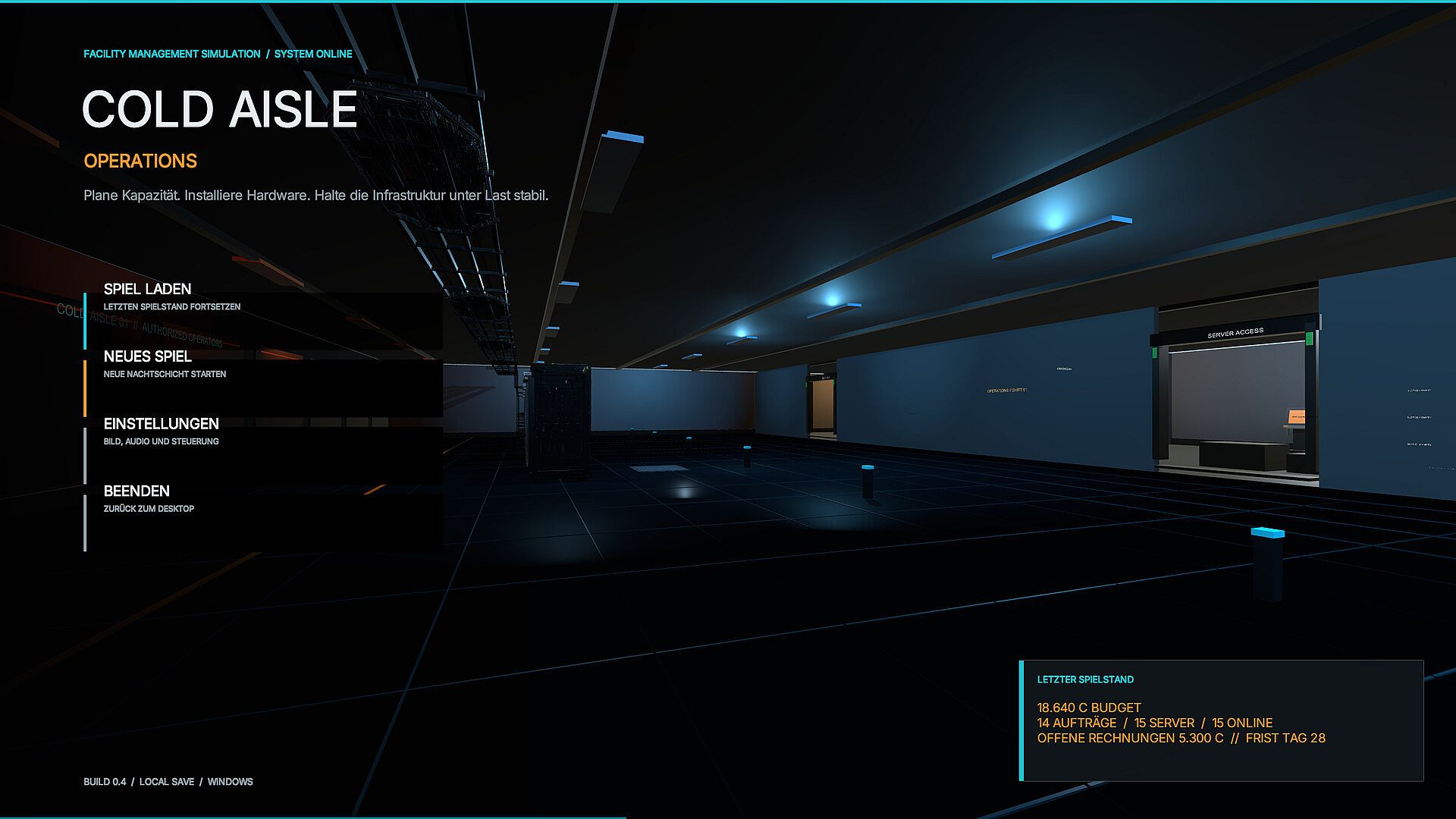
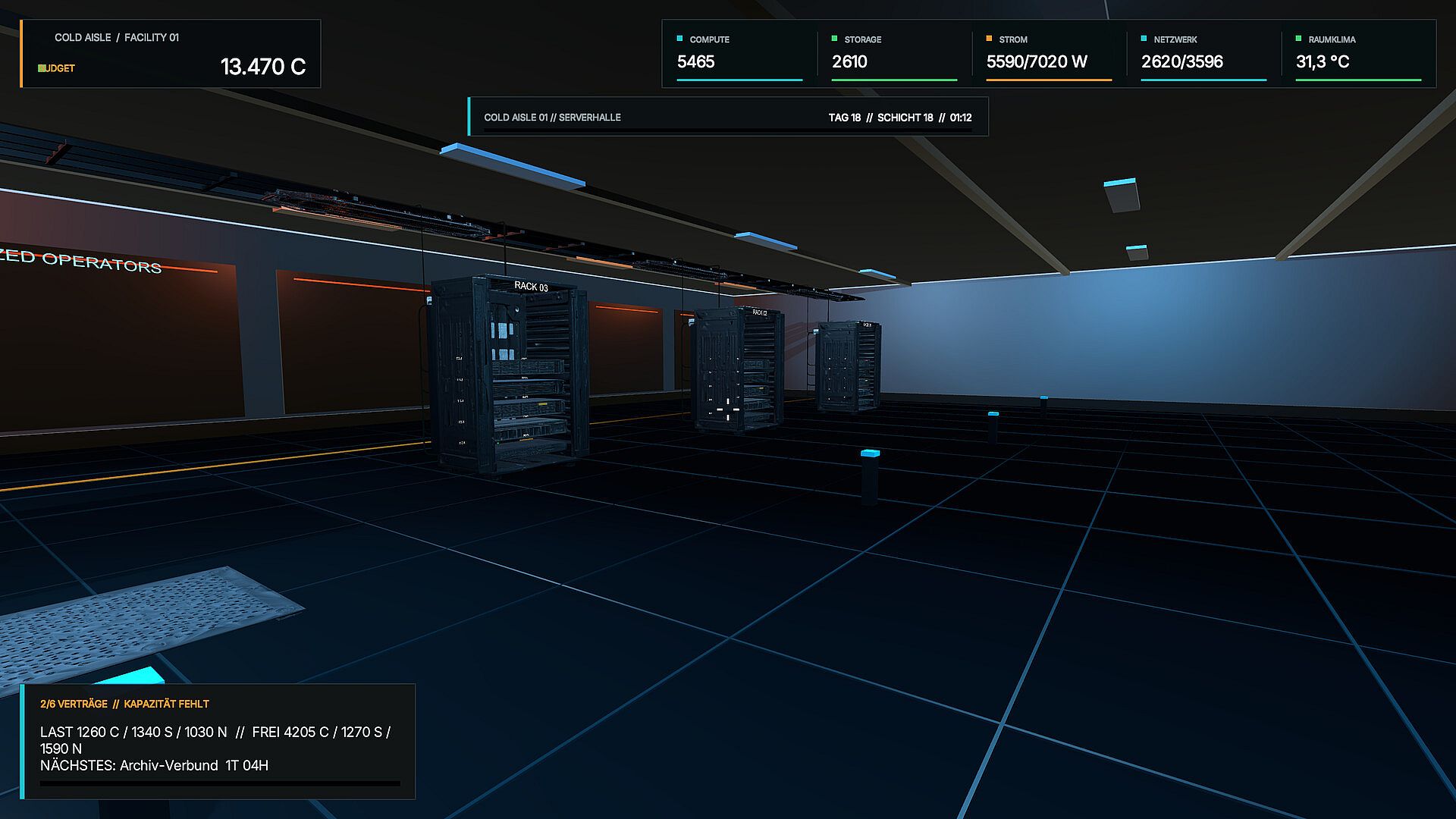
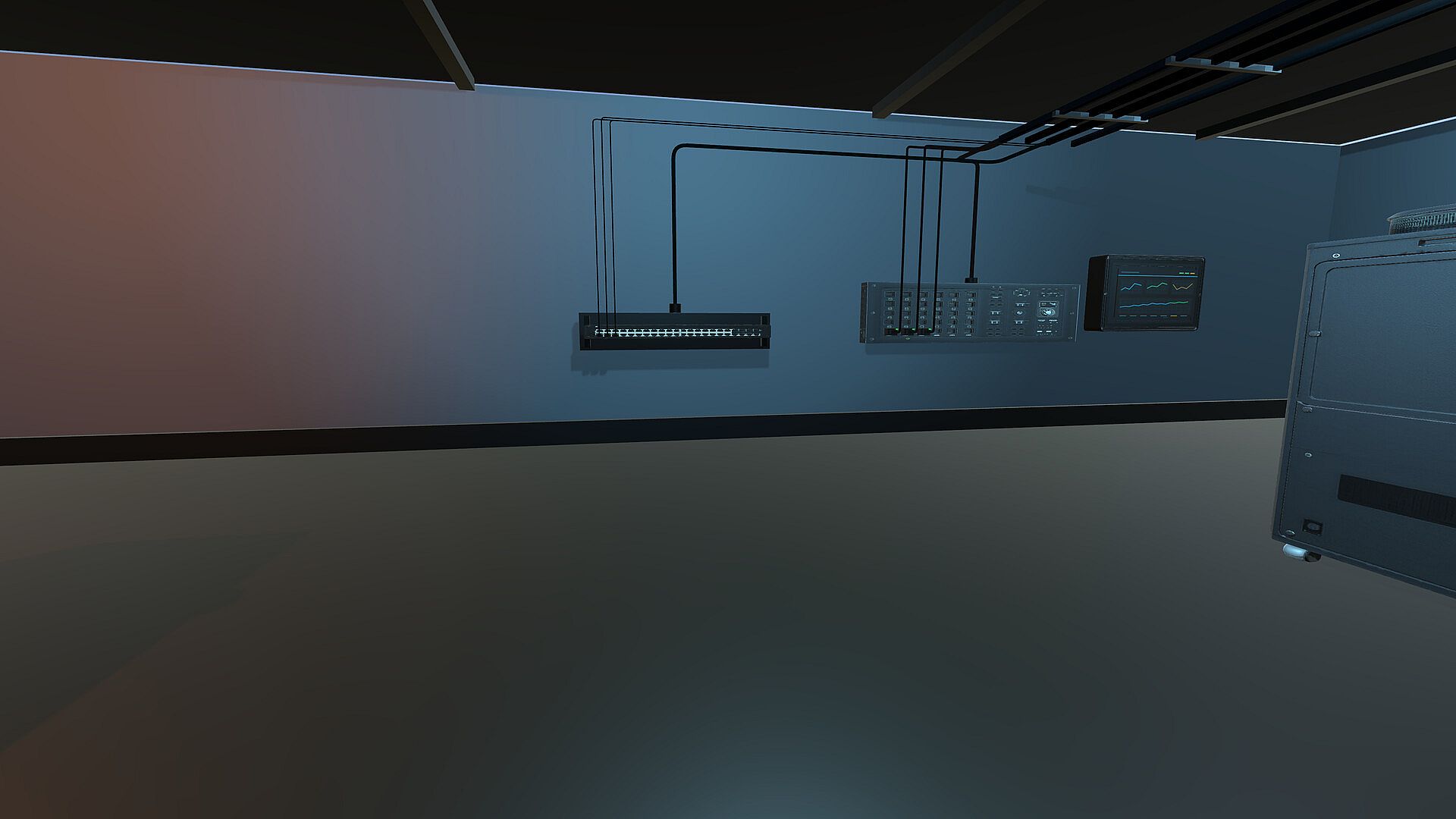
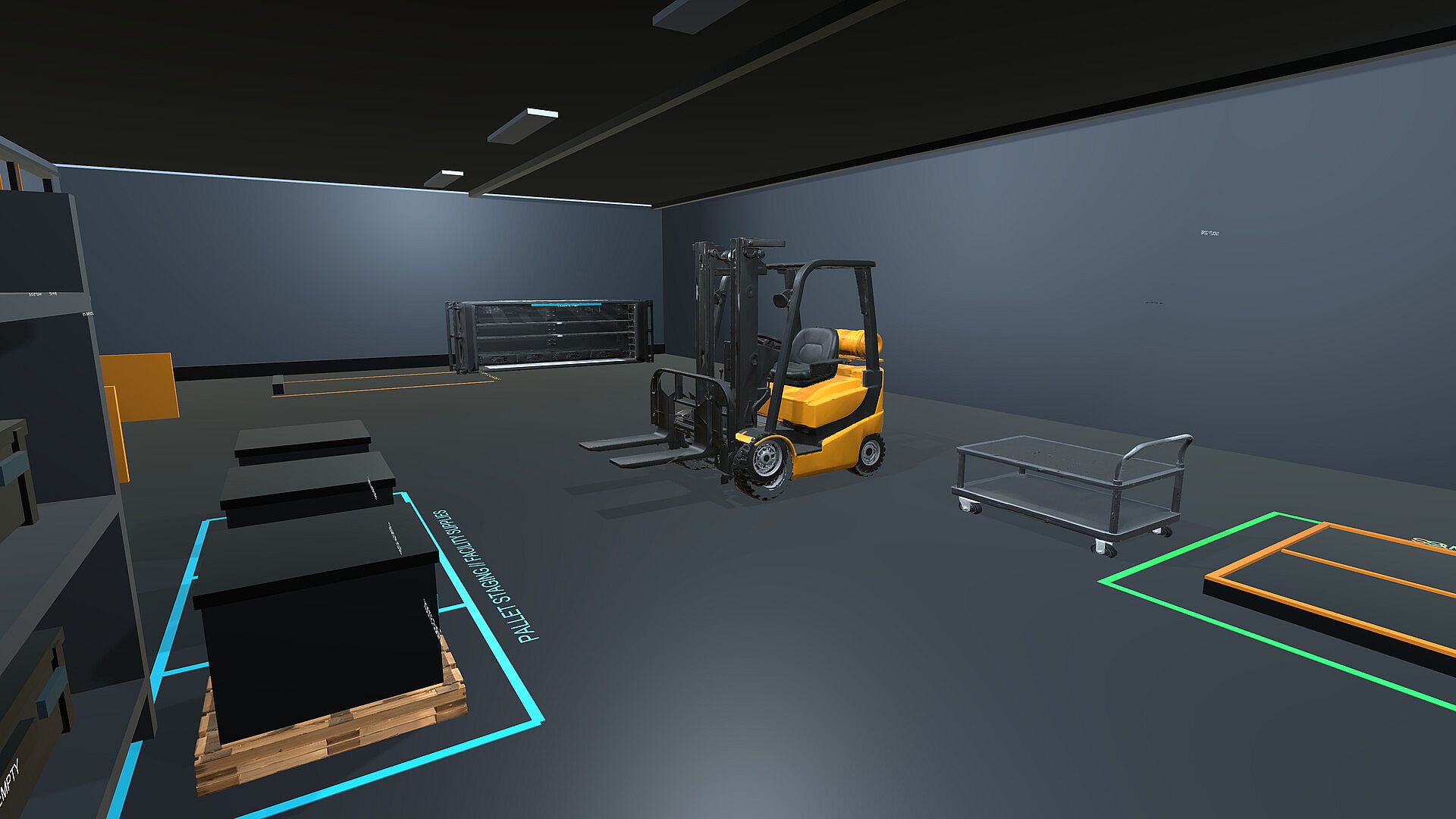
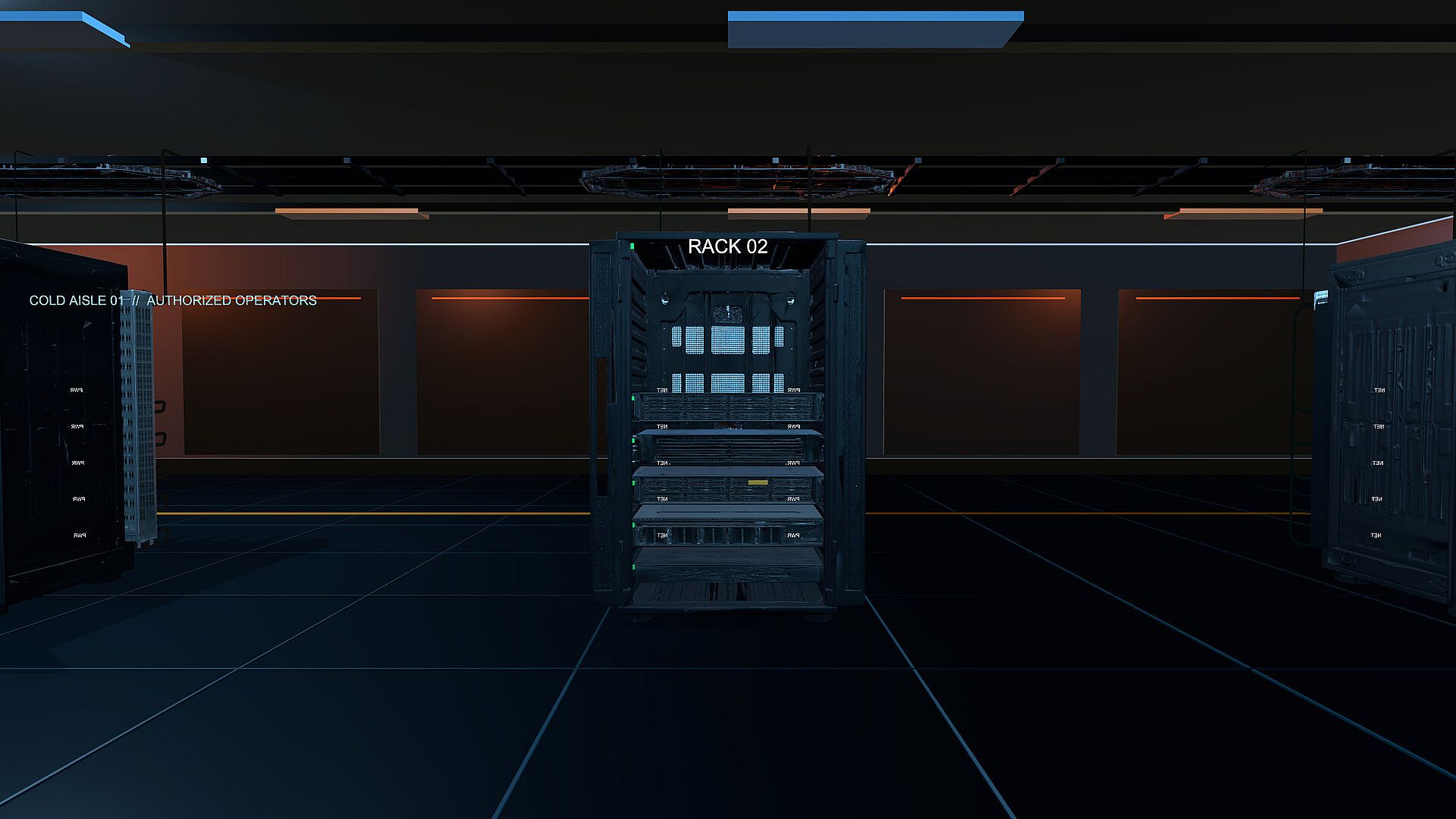
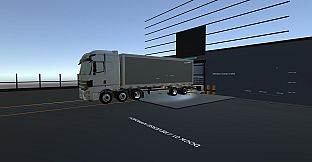
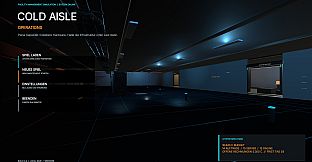
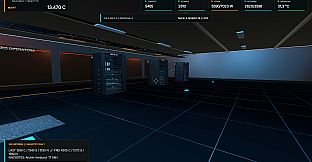
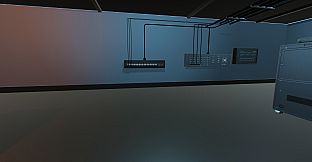
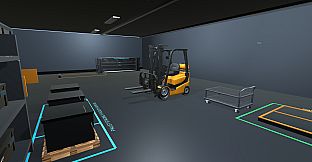
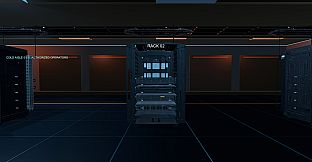
COLD AISLE: Data Center Tycoon is a single-player strategy and simulation game focused on building and operating a data center business from the ground up. Players start with an empty industrial facility and handle every aspect of construction, hardware installation, and ongoing operations to turn raw infrastructure into a profitable enterprise that serves demanding clients.
Gameplay
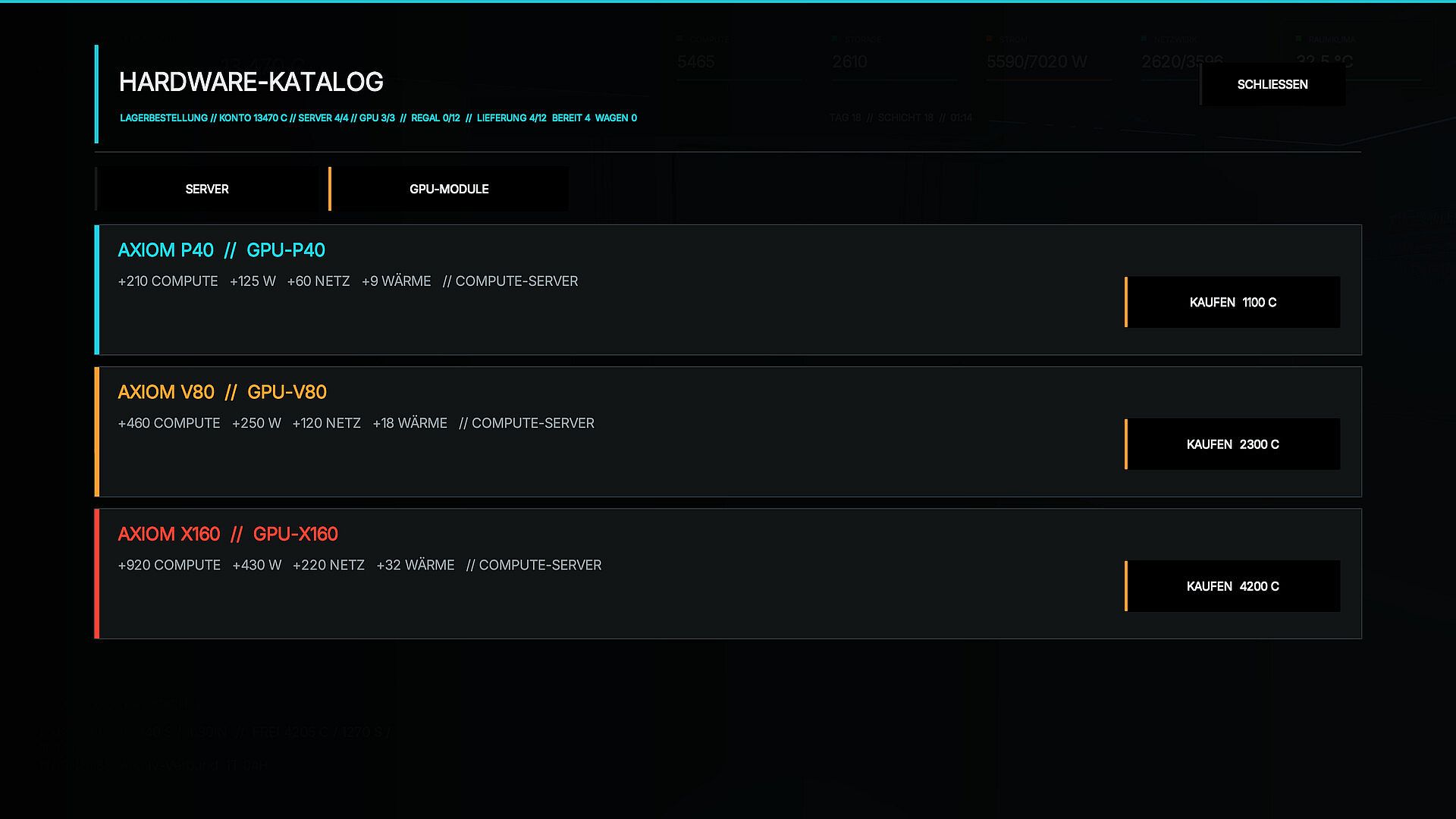
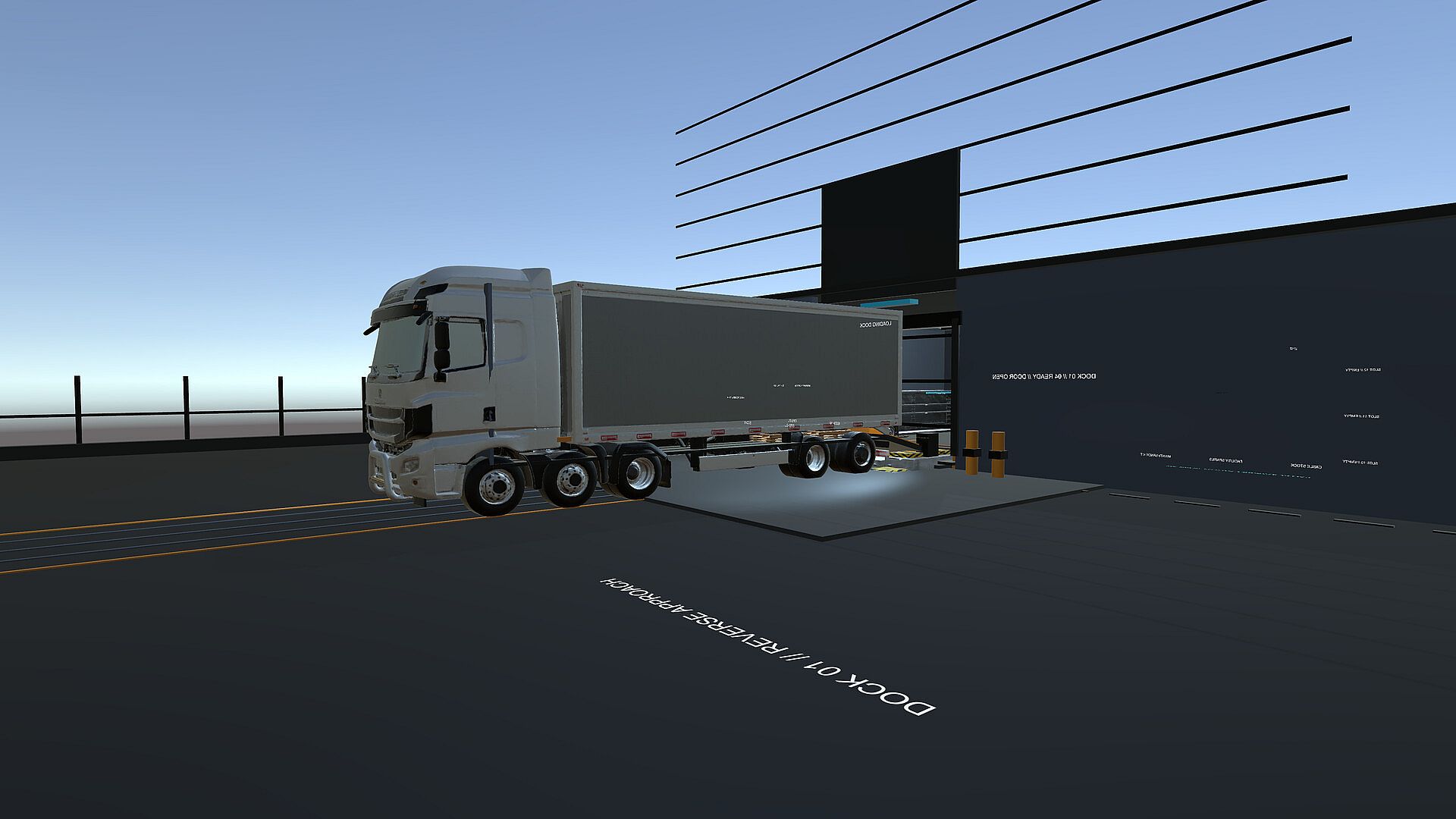
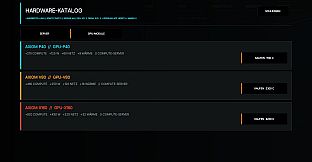
The core loop centers on hands-on facility management in a first-person perspective. Players order racks, servers, GPUs, switches, power distribution units, cooling systems, and logistics equipment, then receive deliveries and position everything manually within the hall. Racks get filled with hardware, connections route between ports for power and networking, and layouts expand while avoiding overloads or inefficiencies in compute, storage, power, network, and temperature systems.
Systems interact directly with one another. Overloaded circuits fail, equipment wears down over time, and cooling draws significant electricity. Players plan capacity reserves, test redundant setups, perform maintenance, and respond to incidents that risk violating service level agreements. These mechanics tie every decision to visible outcomes in performance and reliability.
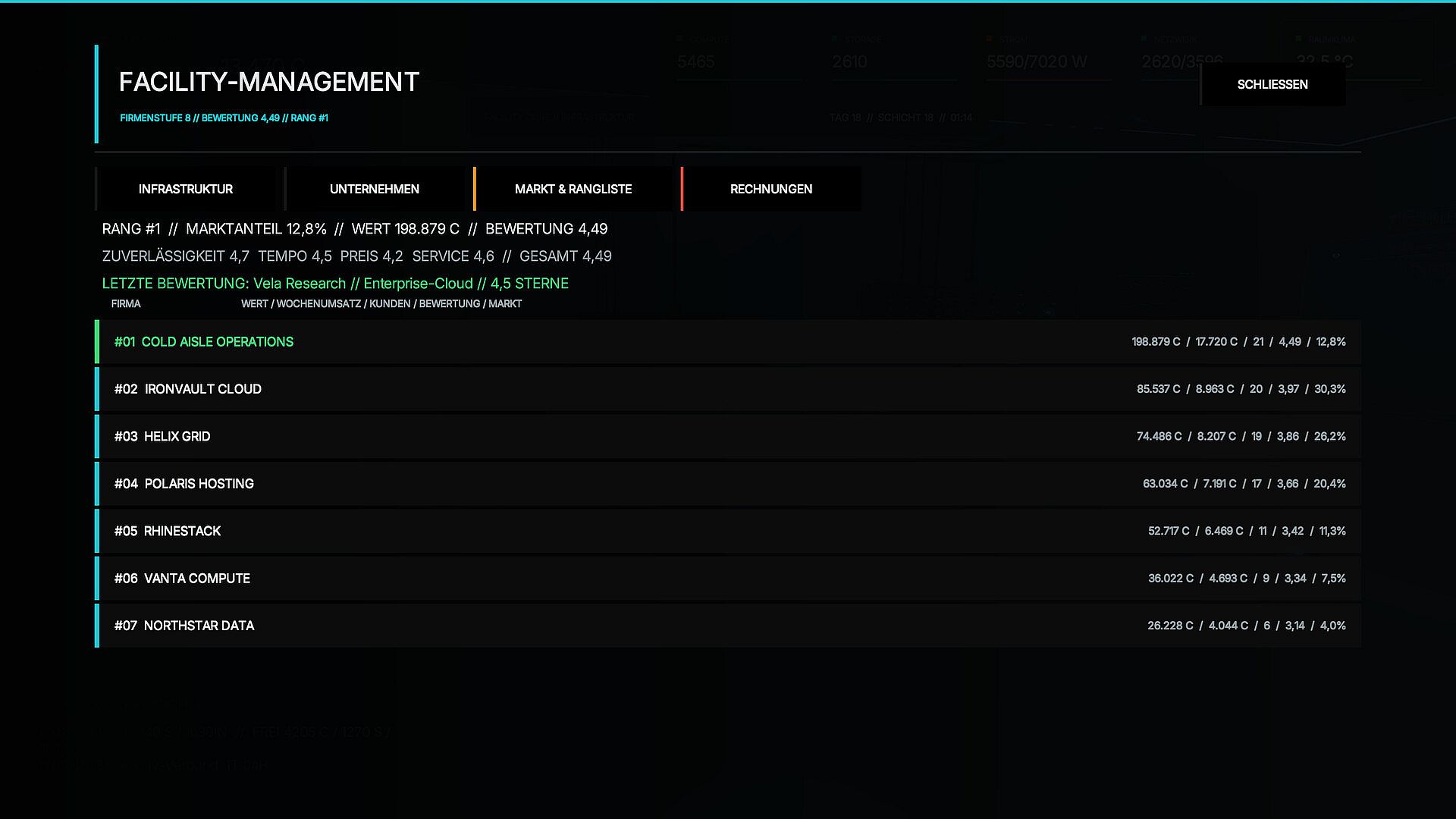
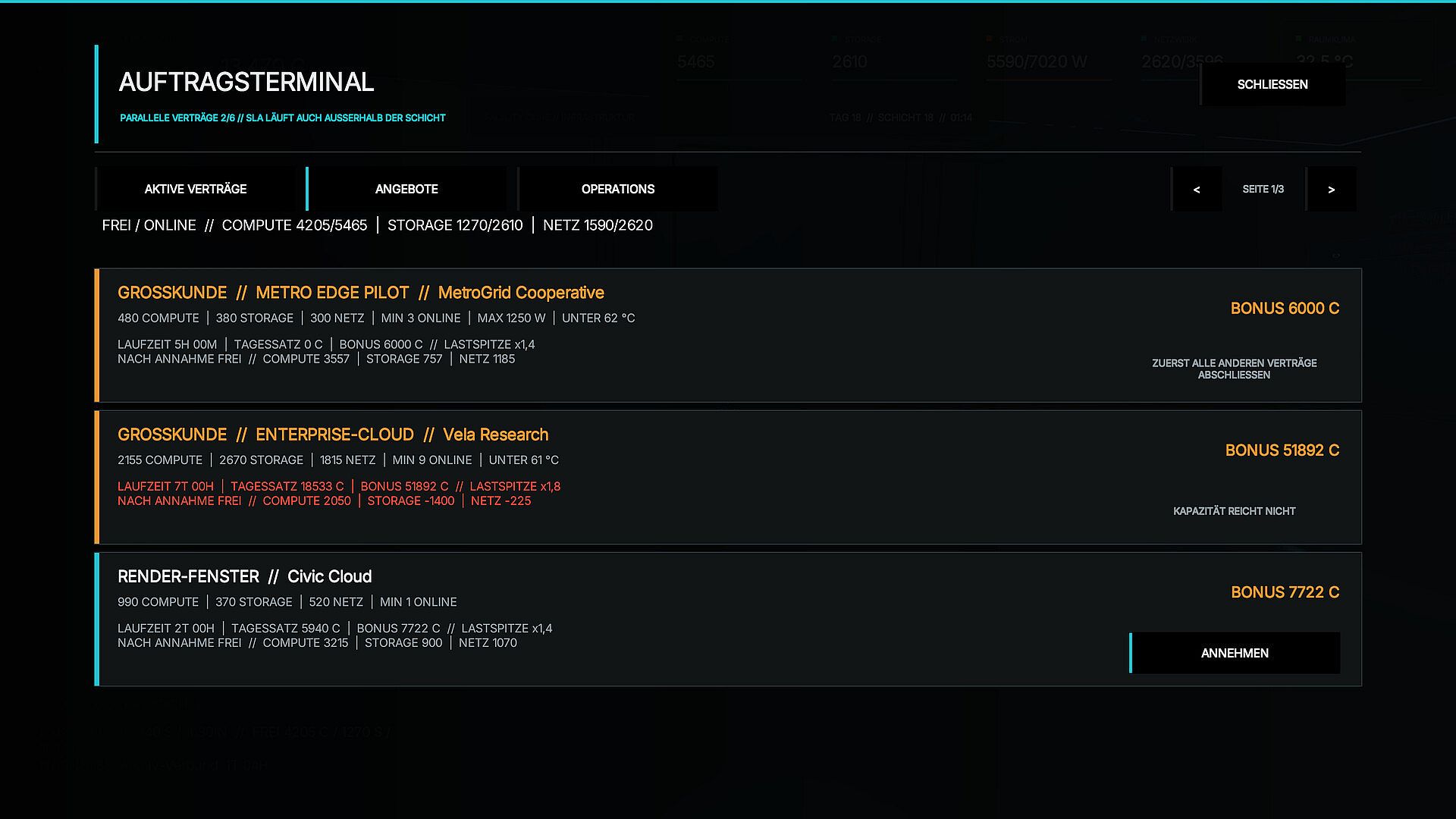
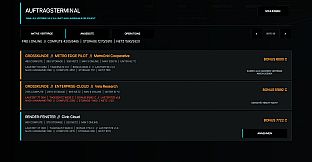
Customer contracts add another layer. Negotiations cover pricing, contract length, allocated capacity, peak loads, service levels, and penalty clauses. Multiple agreements run simultaneously, with scheduling for start dates and follow-up opportunities. Ratings arrive based on tracked metrics such as uptime, response speed, value delivered, and overall service quality.
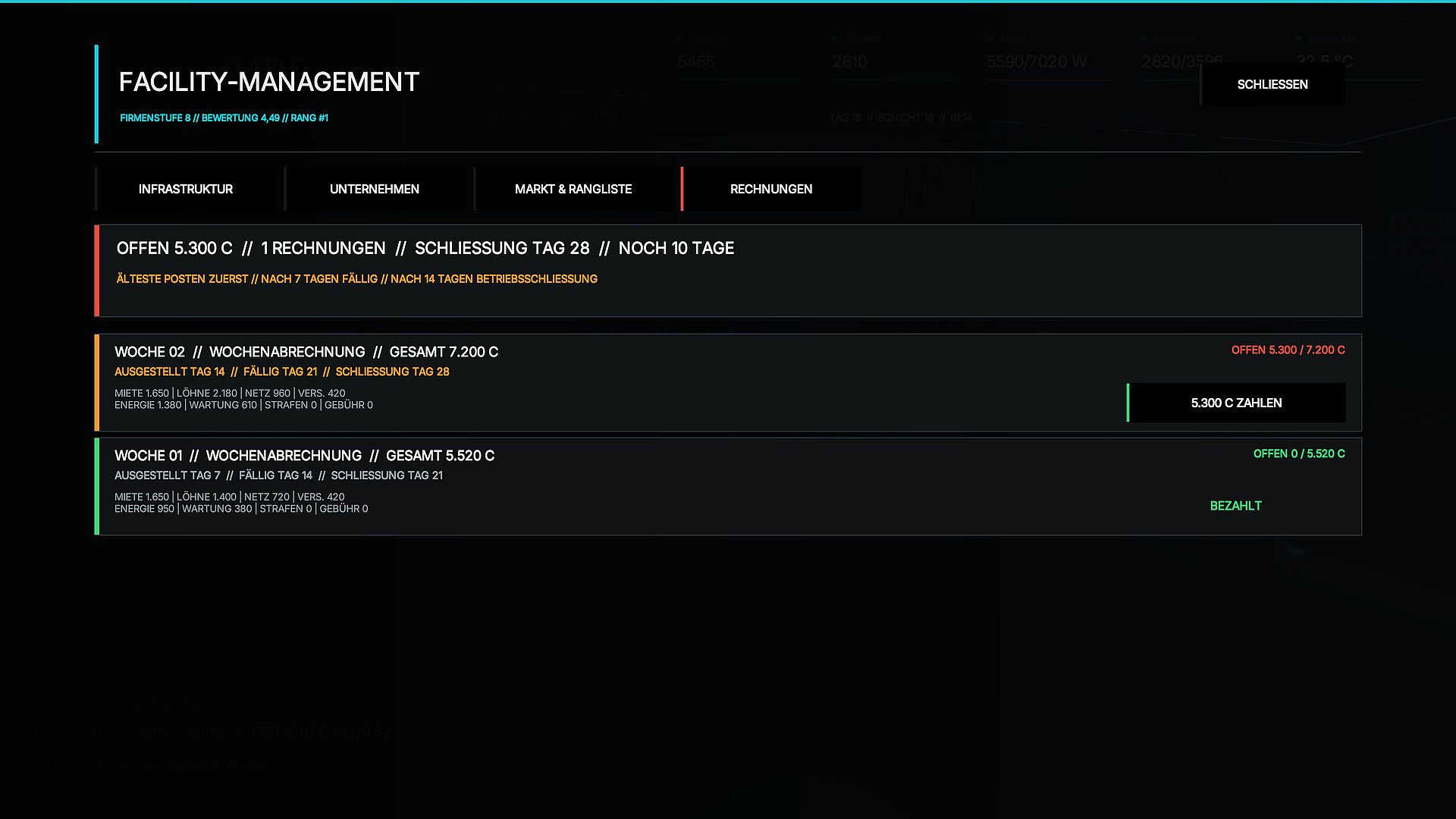
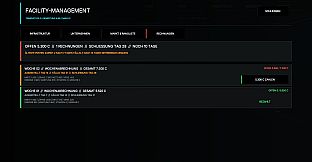
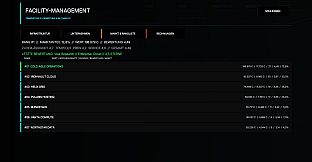
Company growth involves hiring staff with developing specializations, delegating tasks, and managing weekly costs including expenses and supplier invoices. Competition comes from 32 rival firms, and opportunities arise to acquire hardware lots from liquidated competitors using in-game funds. Spare capacity supports simulated AI product development, where research goals, power allocation, pricing, and reputation building create a parallel revenue stream balanced against hosting obligations.
Progression moves through company phases with milestone unlocks. Incidents test resilience, and the goal is scaling to challenge major market players while maintaining operational stability.
Game Modes
The game operates entirely in a single-player campaign format. There are no separate multiplayer modes or competitive online elements. All activity unfolds in one continuous experience where players manage the full business lifecycle from initial setup through expansion and market competition.
Within this single-player structure, the focus remains on iterative facility building and contract fulfillment. Players advance by completing contracts, maintaining systems, and growing infrastructure without external player interaction or seasonal events.
Business Management and Expansion
Staff management and financial oversight form key parts of long-term success. Weekly payroll and operational costs require careful balancing against incoming revenue from contracts and any AI product lines. Specializations among employees allow delegation of routine tasks like maintenance or cable routing, freeing the player to focus on strategic decisions such as new rack placements or contract negotiations.
Expansion avoids simple scaling. Adding capacity demands attention to power distribution, cooling efficiency, and network routing to prevent bottlenecks. Liquidation purchases from failing competitors provide occasional access to bulk hardware at reduced prices, introducing variability into procurement.
Is It Worth Playing?
This title suits players who enjoy detailed simulation games with interconnected systems and a strong emphasis on physical placement and troubleshooting. The first-person approach to hardware installation and cabling distinguishes it from more abstracted management titles, rewarding methodical planning and quick reactions to issues like power spikes or temperature rises.
Those interested in tycoon-style progression will find depth in contract handling, staff delegation, and dual-market balancing between hosting services and AI products. The single-player focus keeps attention on personal facility optimization without external variables.
With its upcoming release and emphasis on realistic cause-and-effect mechanics across power, cooling, and networking, the game appeals to fans of technical simulations who appreciate visible consequences for every placement and connection. Availability remains limited to PC at launch, with no additional monetization elements beyond the base experience.