





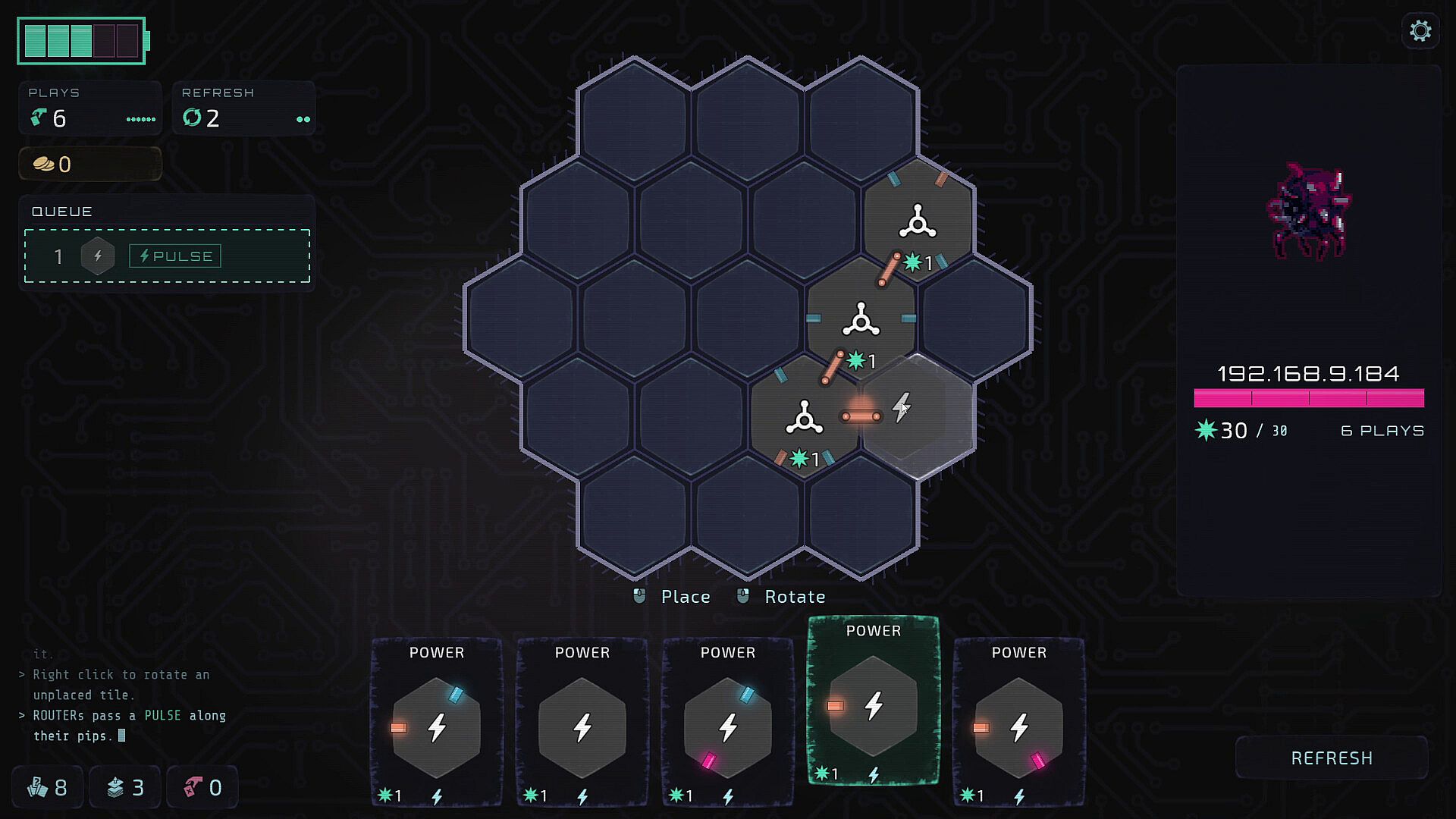
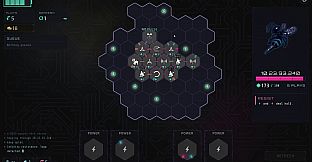
Crashloop is a strategy and casual game for PC where players construct machines from hexagonal tiles to crash servers in a digital network. The core loop centers on placing tiles, linking matching colors, and triggering chain reactions that power up elaborate contraptions. Each placement can connect distant parts of the machine, turning a single action into a cascade of effects across the board.
Gameplay
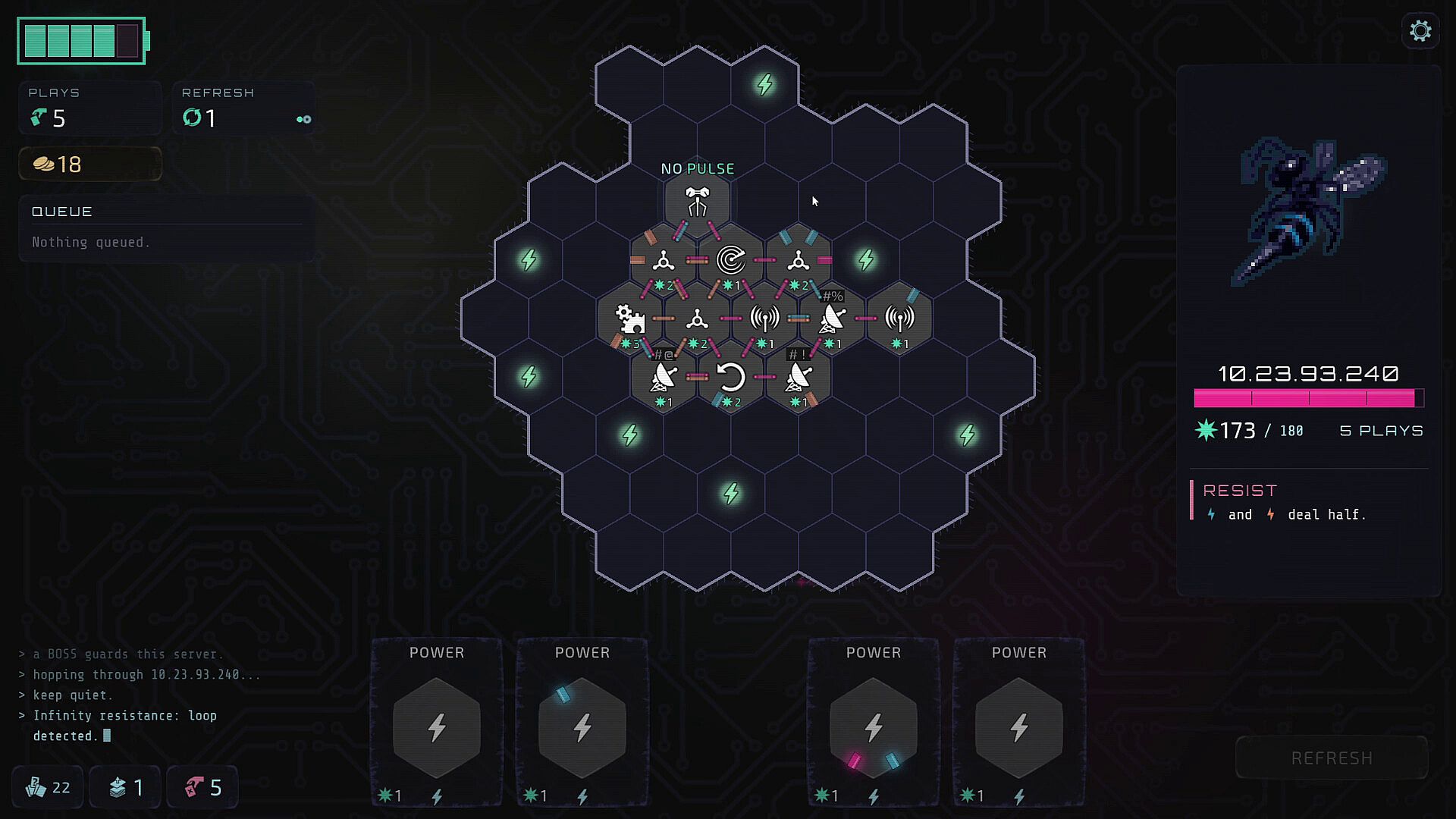
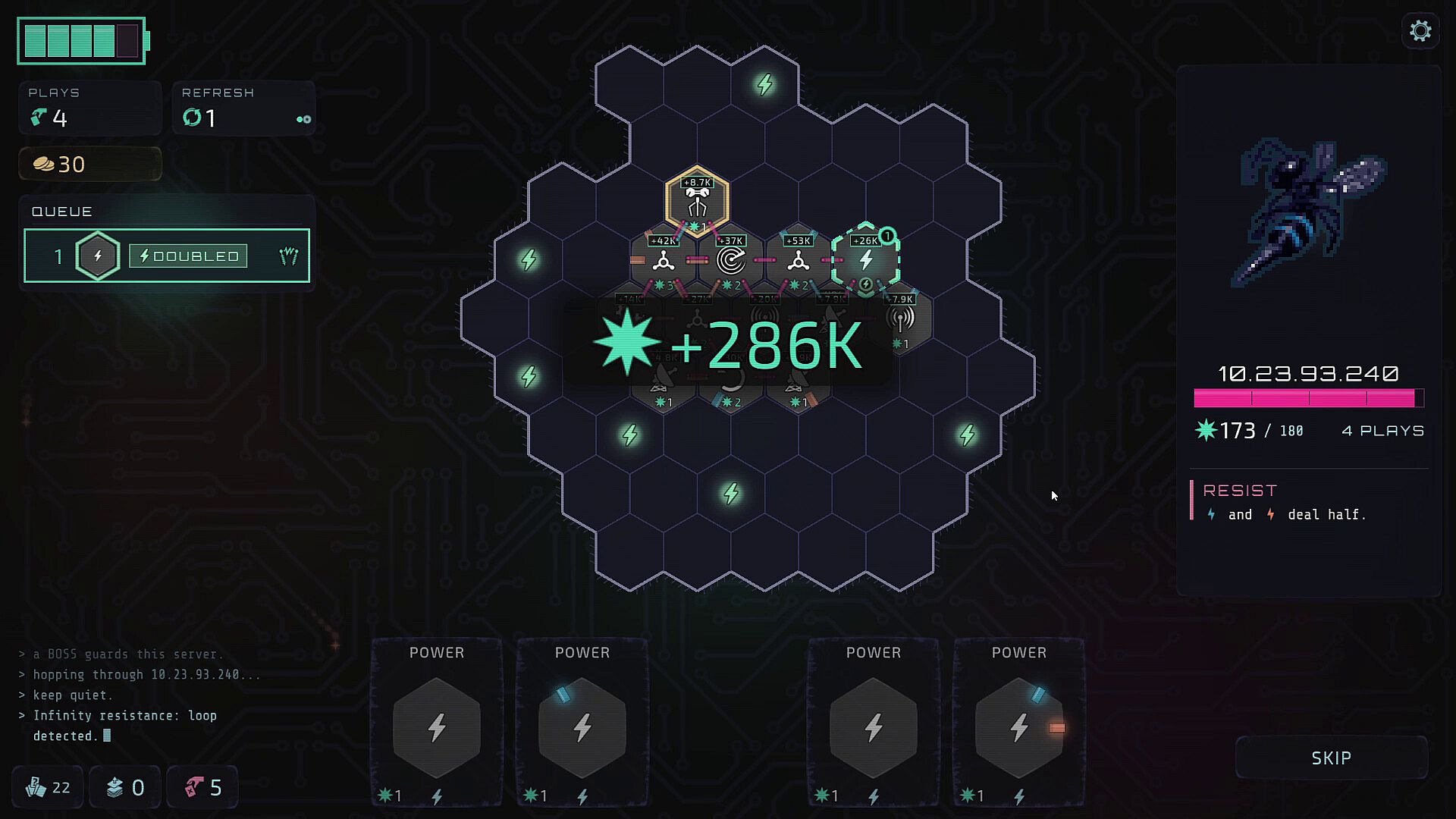
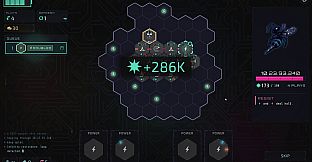
Players build machines by arranging hexagonal tiles on a grid. Tiles carry colors that must align to activate connections and generate power. A successful chain reaction can span multiple tiles in sequence, regardless of obstacles in the path. This system rewards careful planning for large-scale activations while allowing quick adjustments during a run.
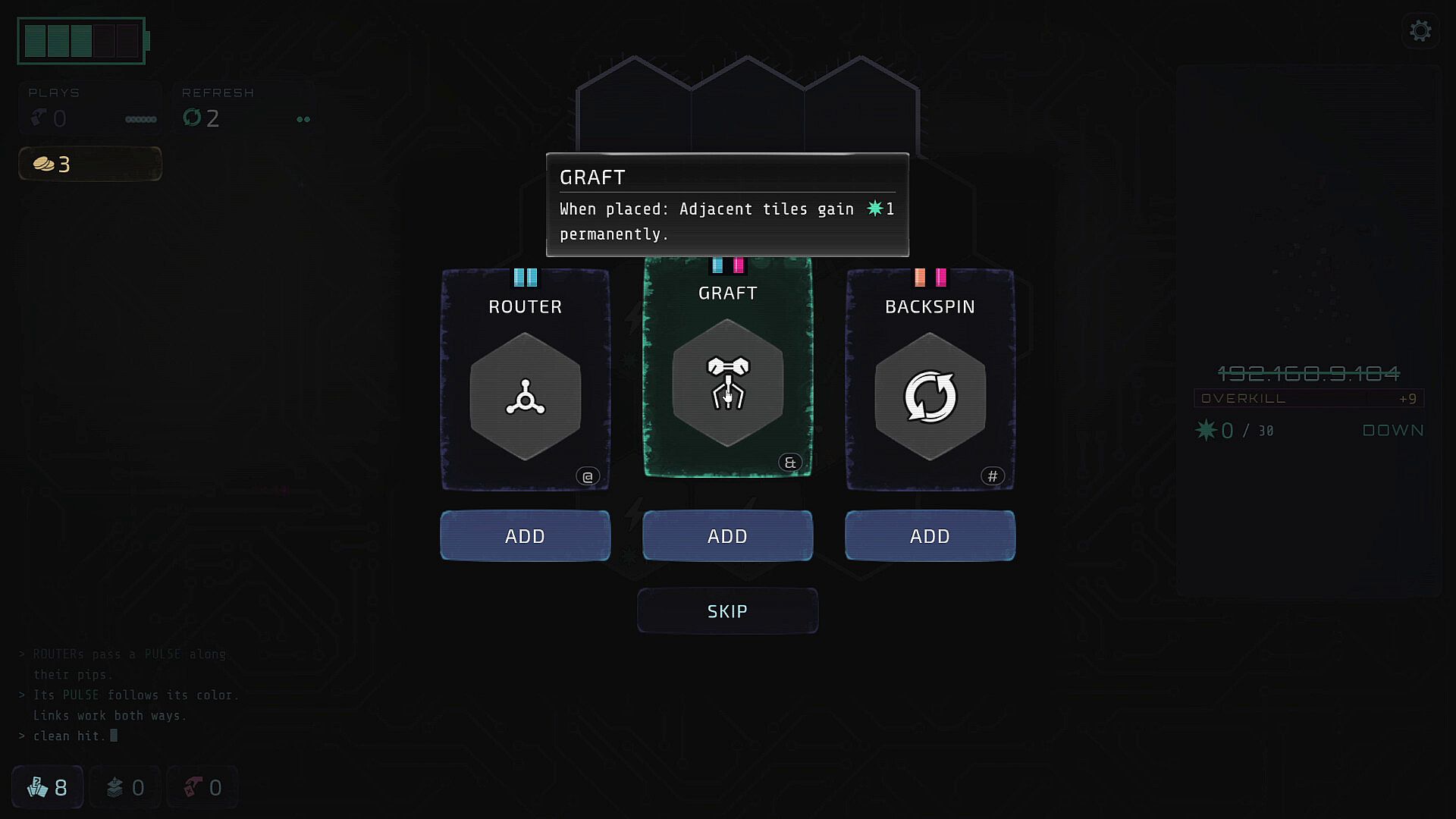
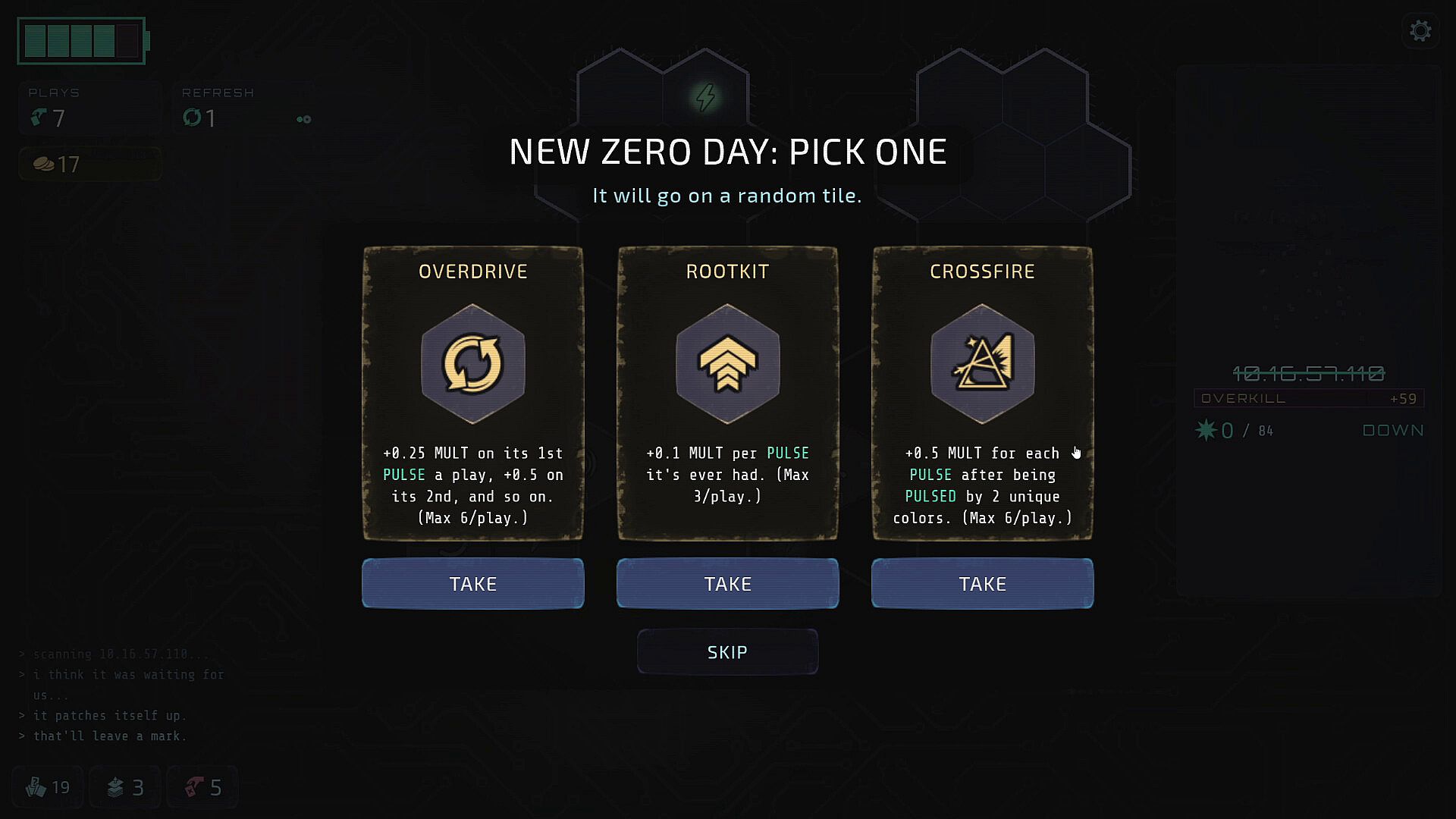
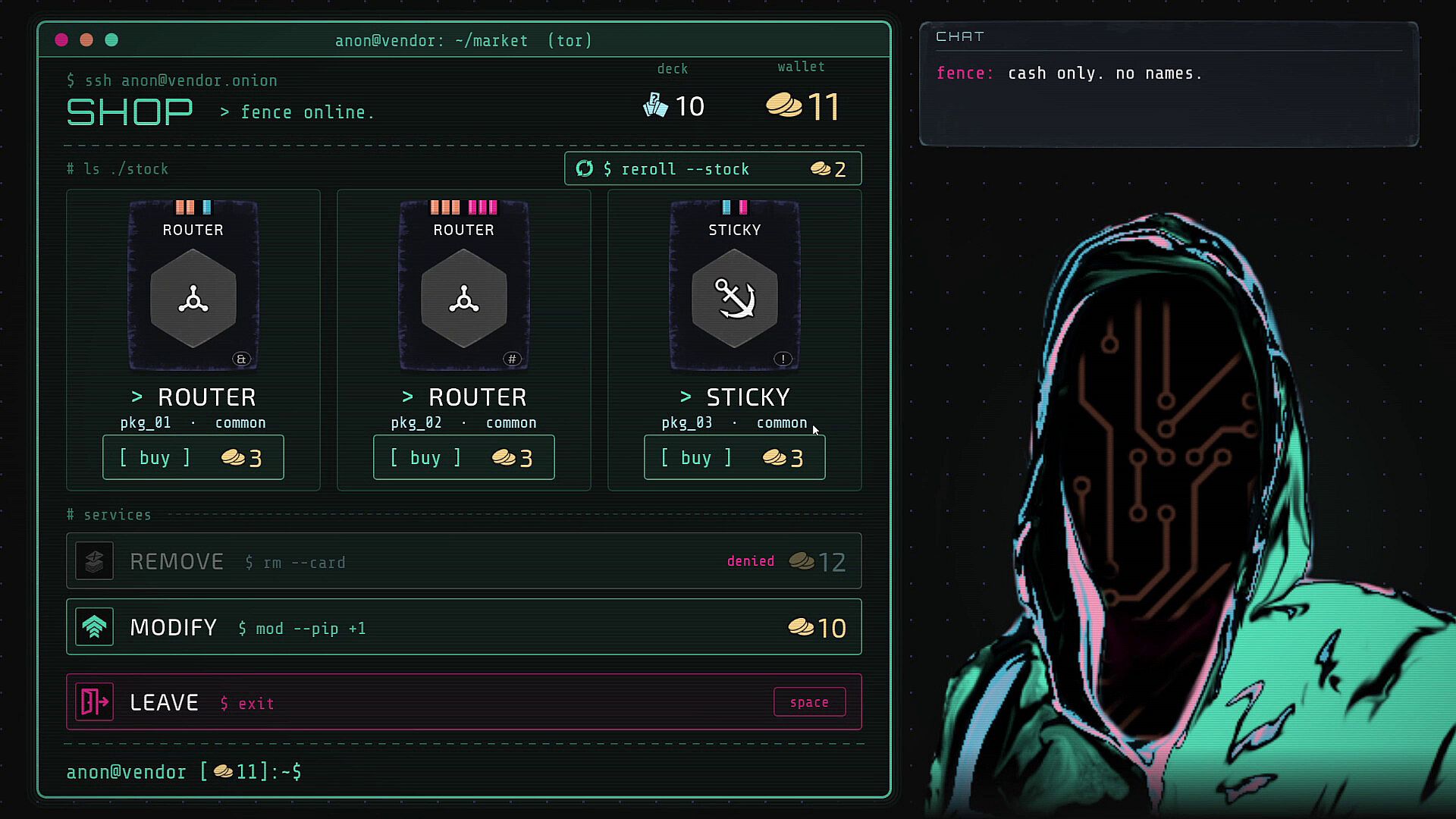
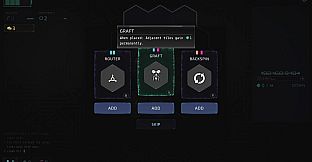
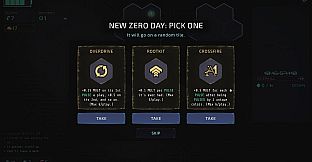
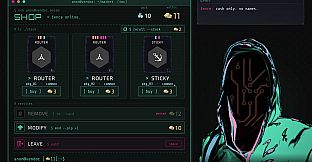
Deck building forms a key part of progression. Crashing a server grants access to new parts through drafting. Players can buy, remove, or modify cards using a vendor that operates without restrictions. This flexibility lets builds evolve over multiple attempts, shifting focus toward stronger combinations or specialized counters.
Hostile servers introduce variety through defensive mechanics. Some block specific colors with shields, others ignore low-power strikes via firewalls, and patches can disable tiles outright. Adapting the machine to these threats requires reading the environment and adjusting tile placement and card choices accordingly.
Game Modes
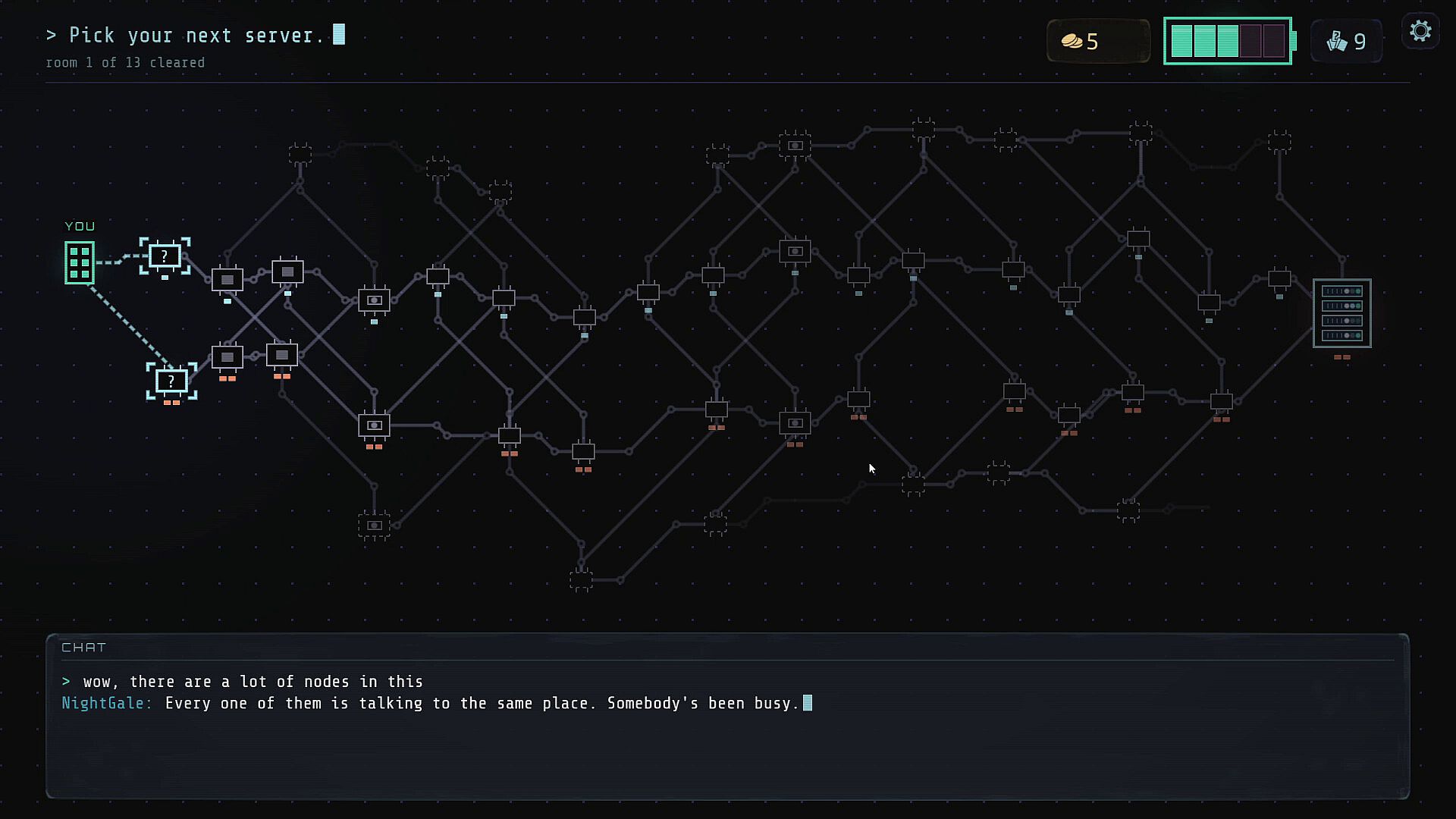
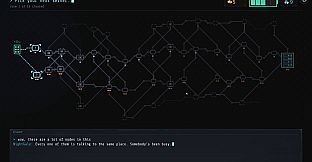
The game centers on runs across a network map where players select paths. Routes range from safer options to more demanding ones that test machine resilience. Completing successful runs expands access to additional areas of the network, encouraging repeated play to uncover further connections.
Progression ties directly to following traffic patterns that hint at larger forces controlling the botnet. Deeper exploration brings players closer to the source, with each layer presenting fresh server challenges that demand refined builds and route decisions.
Core Mechanics and Progression
Tile placement drives immediate feedback through color links and activations. A single well-timed addition can ignite an entire machine, clearing the way for server crashes. This emphasis on chain reactions creates satisfying moments when setups align perfectly across the grid.
Deck management adds layers of strategy beyond placement. Drafting new parts after each crash allows customization, while vendor interactions support fine-tuning existing cards. Over time, players develop machines tailored to specific server defenses encountered along chosen routes.
Is It Worth Playing?
Crashloop suits players who enjoy deliberate strategy combined with casual accessibility. The hexagonal tile system and chain reaction focus reward thoughtful setup without requiring constant high-speed decisions. Route selection on the network map adds replay value through different difficulty paths and expanding exploration.
Those drawn to deck-building elements will find depth in drafting, modifying, and countering varied server threats. The absence of named factions or complex multiplayer keeps the experience focused on solo runs and personal build experimentation. For fans of grid-based strategy with roguelike progression, the game delivers a self-contained loop of construction, adaptation, and discovery.











