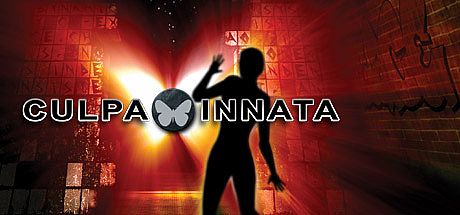













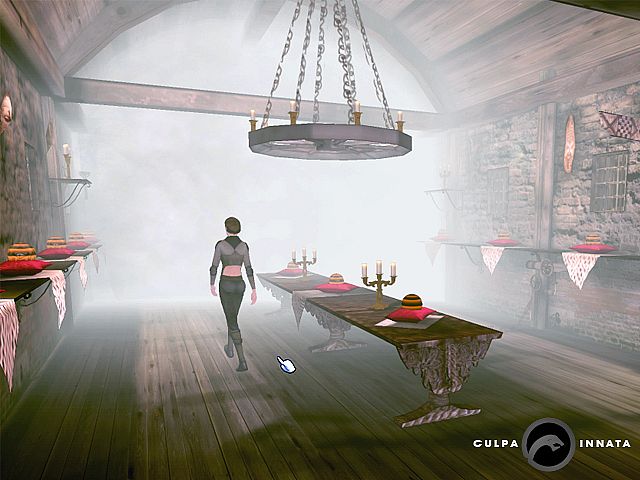
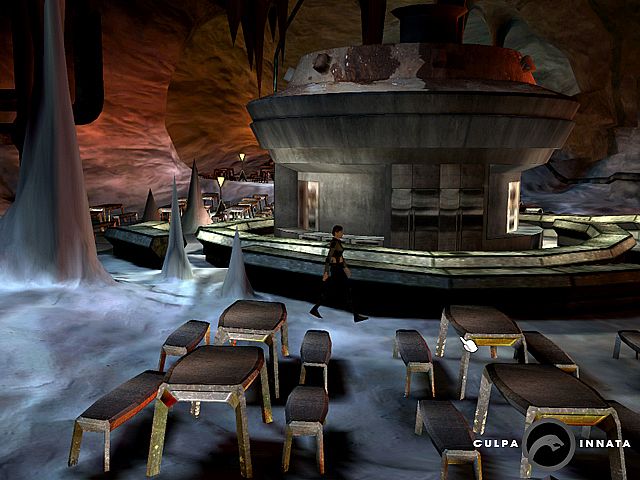
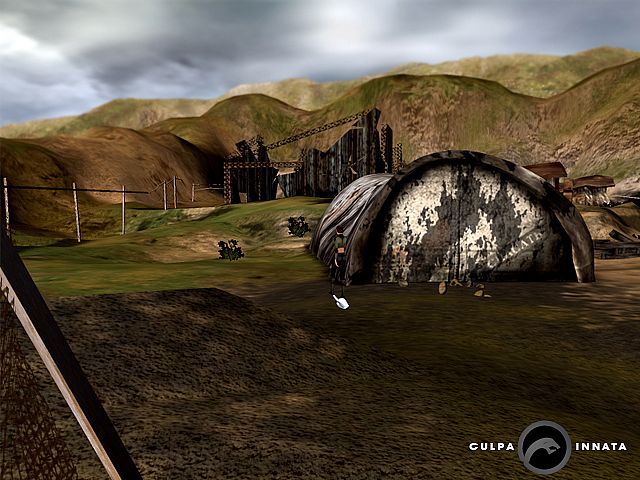
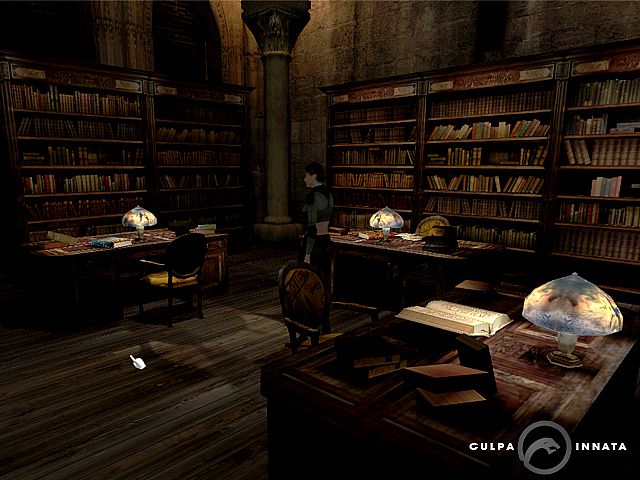
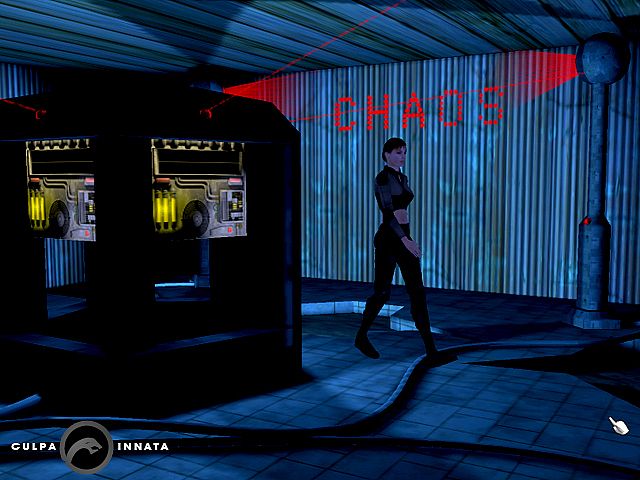
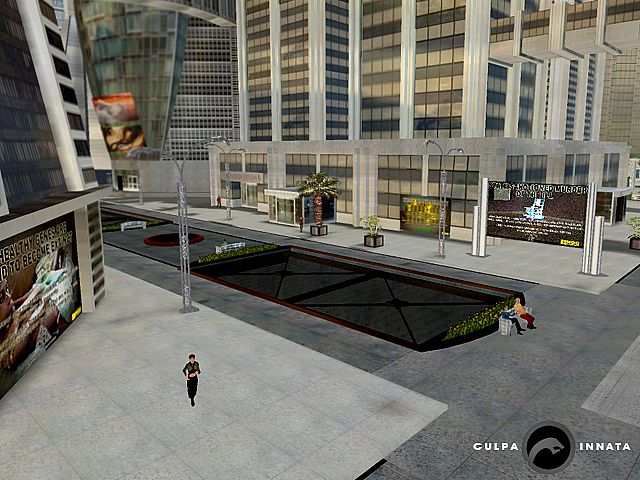
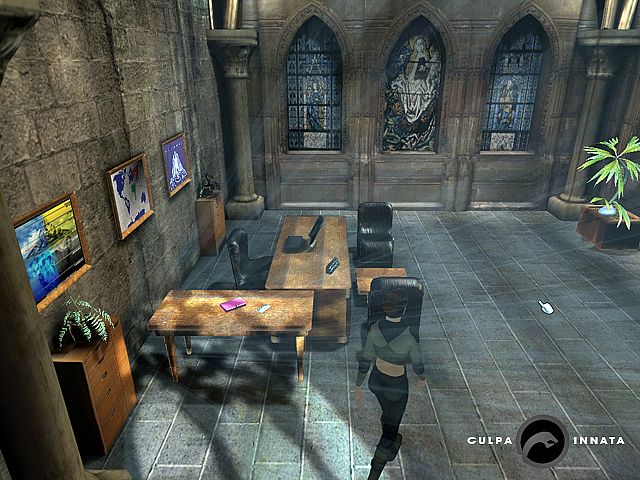
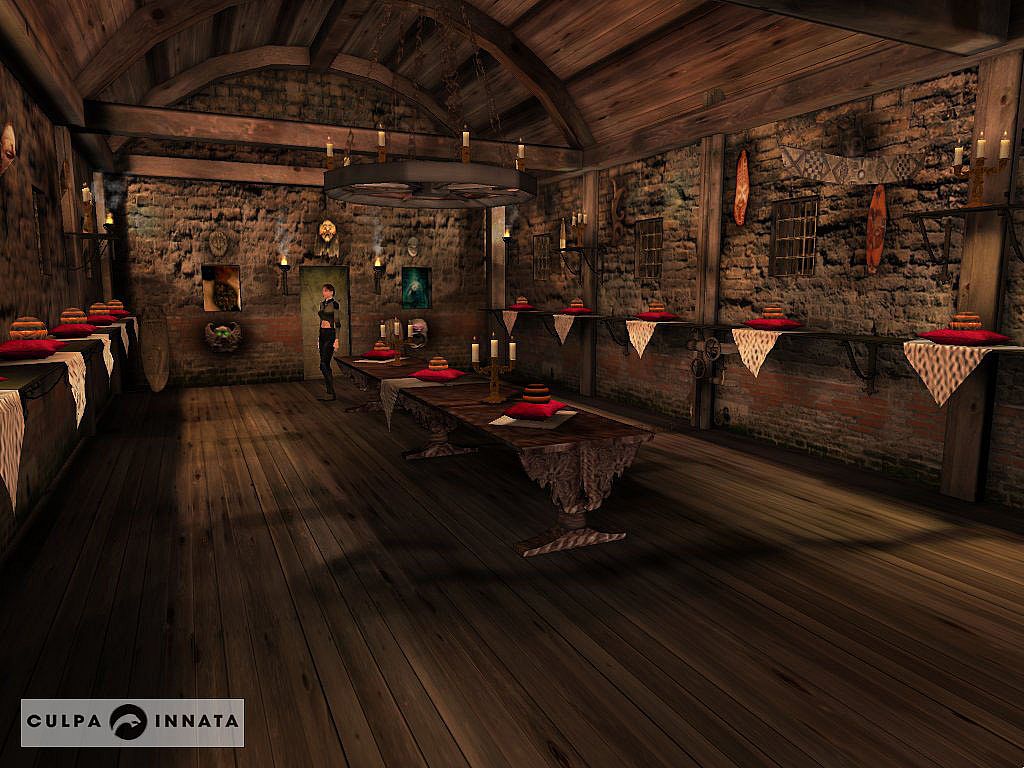
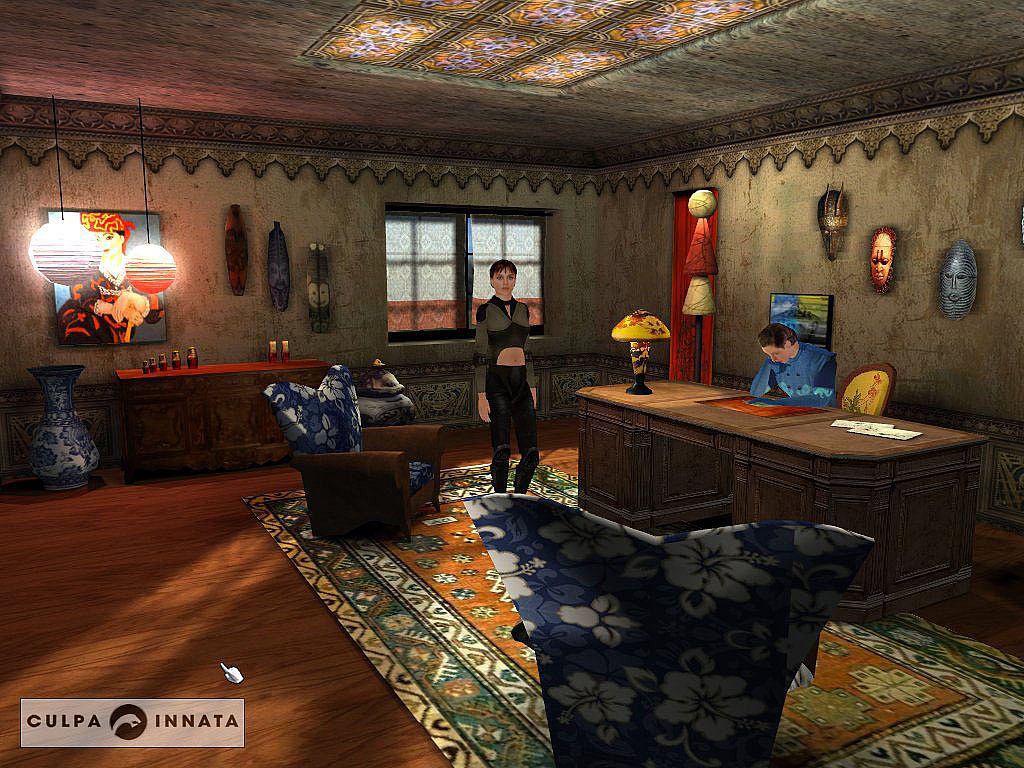
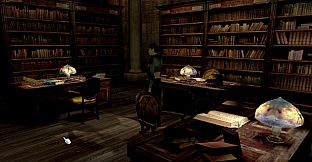
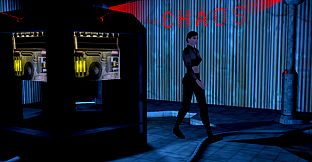
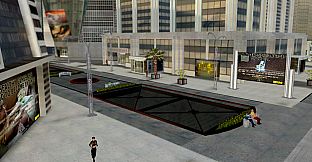
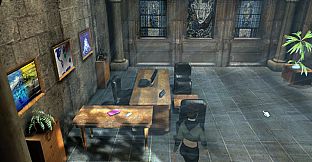

Culpa Innata is a point-and-click adventure game with RPG elements that places players in the role of Phoenix Wallis, a Peace and Security officer investigating a murder that disrupts the apparent stability of the World Union. Set in 2047, the title blends narrative investigation with exploration across a futuristic border region between the World Union and neighboring territories. The experience centers on dialogue choices, environmental interaction, and puzzle solving within a 3D world rendered with dynamic camera work.
Gameplay
Players navigate using a classic mouse-driven point-and-click system that moves the protagonist to selected locations and triggers interactions. The interface supports direct clicks on objects, characters, and hotspots to examine items, manipulate gadgets, or initiate conversations. A character journal automatically records key events and clues, helping track progress through the investigation without manual note-taking.
Challenges integrate logic puzzles, inventory management, and hi-tech gadget use alongside dialogue trees. Branching conversation paths allow players to steer discussions based on prior choices, which in turn influence available actions and information. A day and night cycle governs which characters appear and which events become accessible, adding timing considerations to exploration. Over forty distinct locations provide varied backdrops for these activities, from urban districts to restricted border areas.
The game employs a proprietary logic system that links thousands of conditions across events, creating varied sequences depending on the order of discoveries and decisions. Facial animations on more than fifty characters enhance dialogue scenes, giving each interaction a distinct personality. Cinematics play through the in-game engine to maintain visual consistency during key moments.
Game Modes
Culpa Innata runs exclusively as a single-player experience. The core structure revolves around a non-linear investigation that grants freedom to explore locations and pursue leads in any order. Player actions and dialogue selections dynamically alter the sequence of unlocked events and lead to multiple possible endings.
Optional side activities and secondary objectives encourage replay through different paths. The journal system supports this by preserving a record of all major developments, allowing players to revisit earlier decisions on subsequent playthroughs without losing track of the overarching case.
Story and Setting
The narrative unfolds in a society where prosperity follows scientific principles, major diseases and conflicts have been eliminated, and personal relationships emphasize individual fulfillment. Phoenix Wallis receives a high-profile assignment after a World Union citizen dies under suspicious circumstances in a neighboring region, an incident that coincides with another death in the border town of Adrianopolis.
Investigation reveals layers of clues that question the foundations of the World Union itself. The story incorporates detailed background lore delivered through environmental details, character conversations, and journal entries. Choices made during the case affect both immediate outcomes and the final resolution, giving the plot an element of player-driven consequence.
Is It Worth Playing?
Steam user reviews rate Culpa Innata as Mostly Positive, with 74 percent approval from over one hundred submissions. The title appeals to players who favor classic point-and-click adventures that emphasize story, dialogue, and logical problem solving over action or combat. Its non-linear structure and multiple endings reward careful exploration and repeated playthroughs.
Those seeking a focused single-player investigation with branching conversations and a self-contained world will find the mechanics align well with traditional adventure design. The game remains available on PC through standard digital storefronts, and its modest system requirements make it accessible on older hardware configurations as well. Reception highlights the strength of the central mystery and character interactions for audiences interested in narrative-driven experiences from the late 2000s era.