


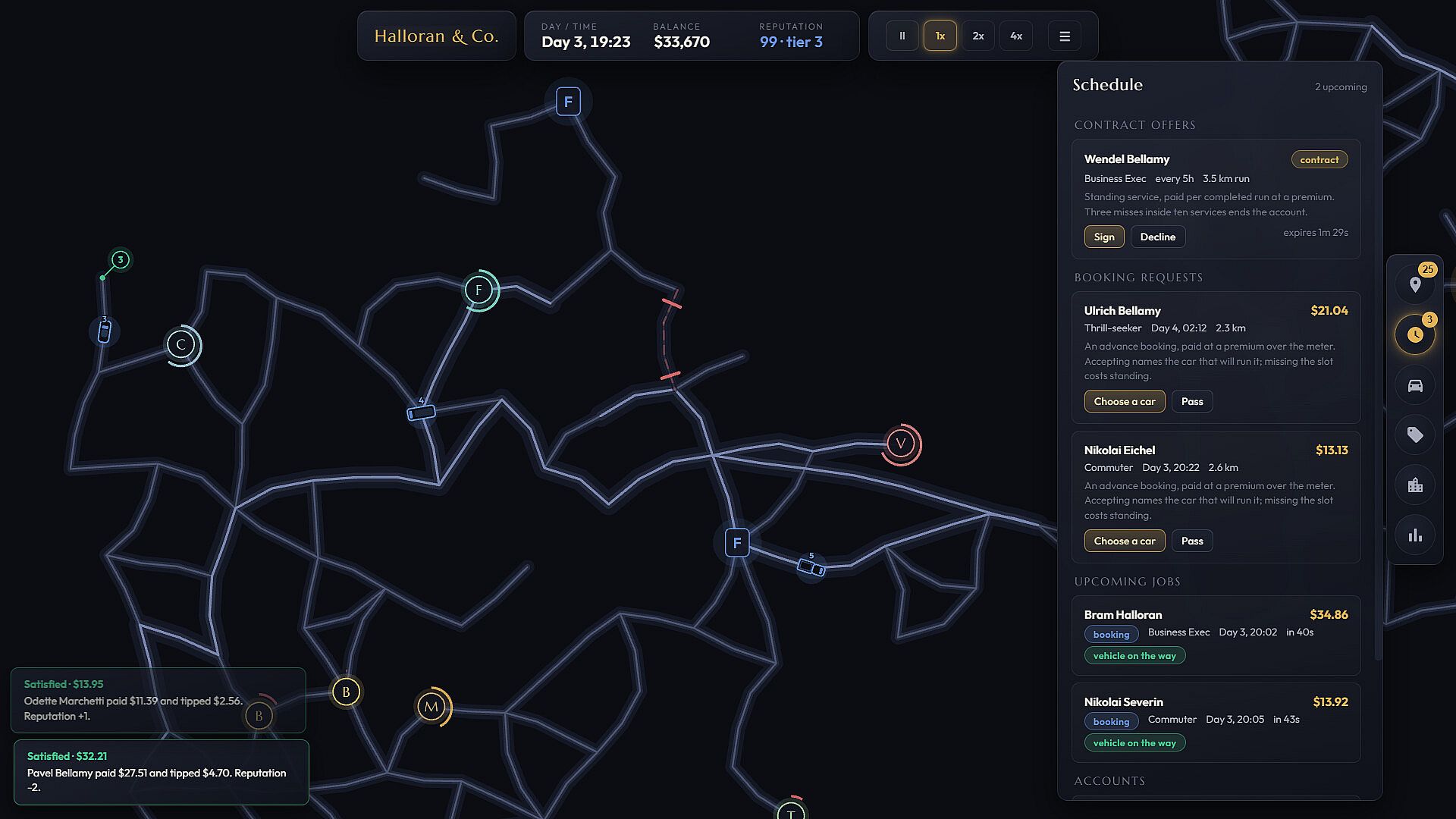
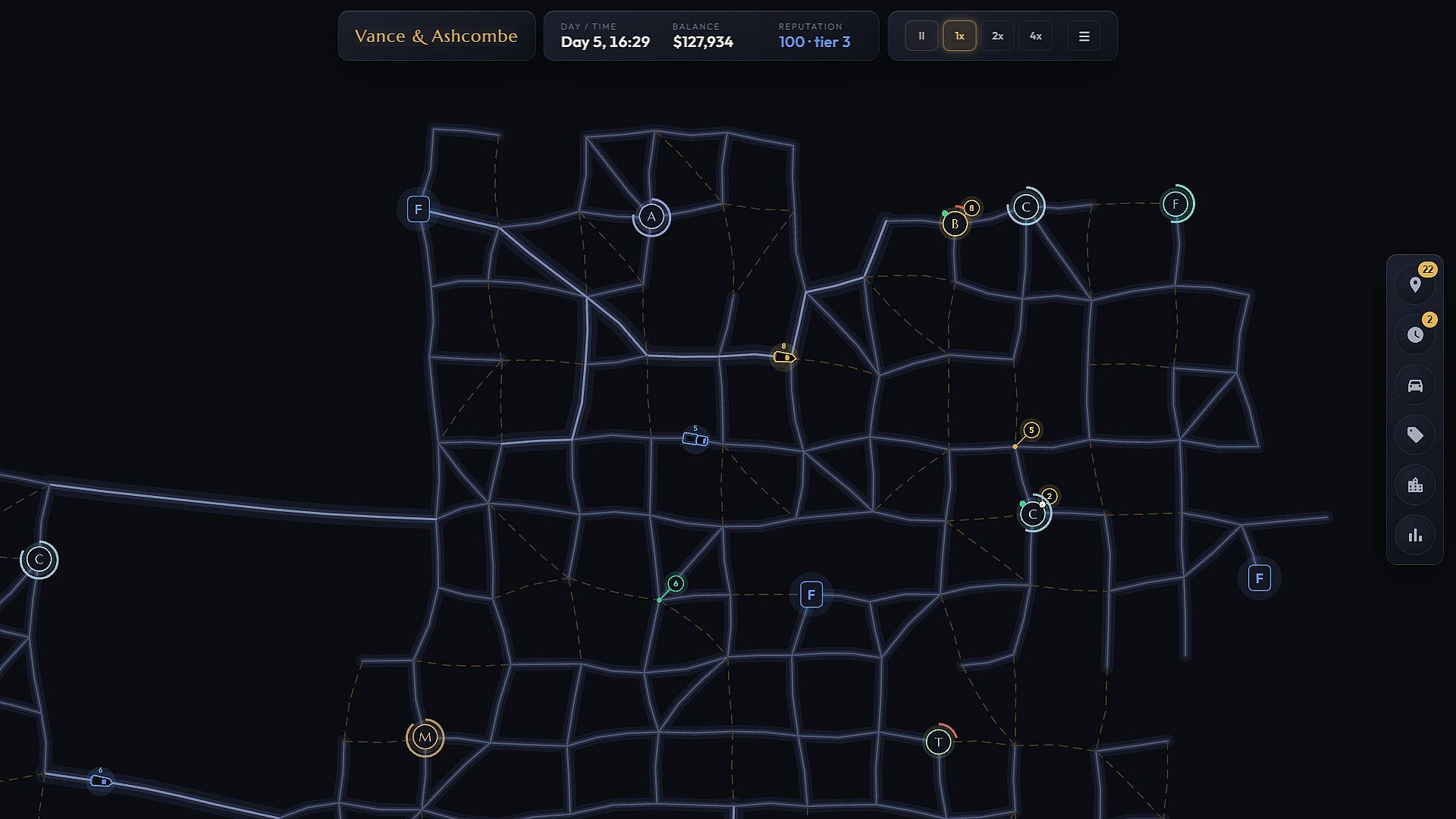
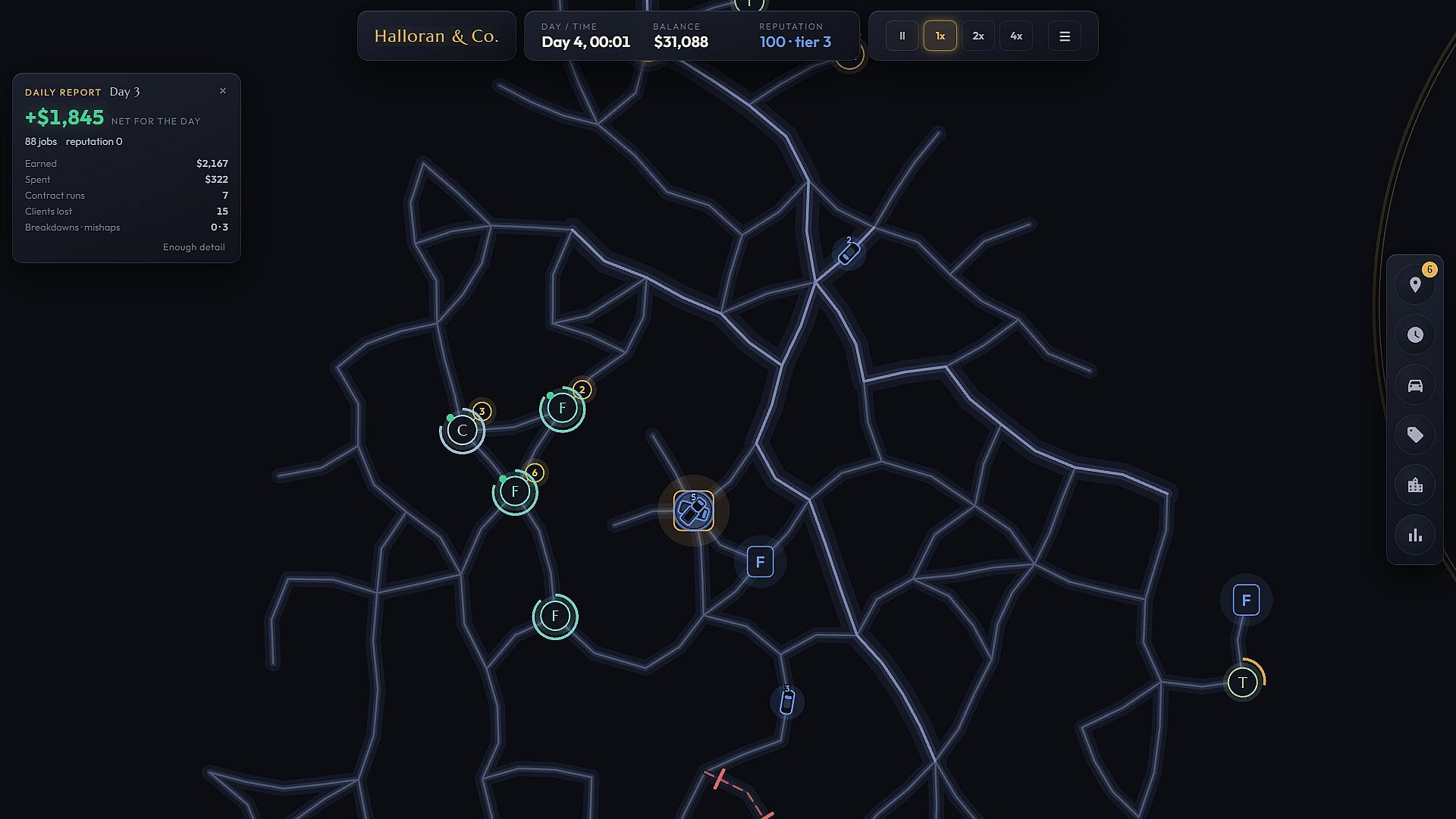
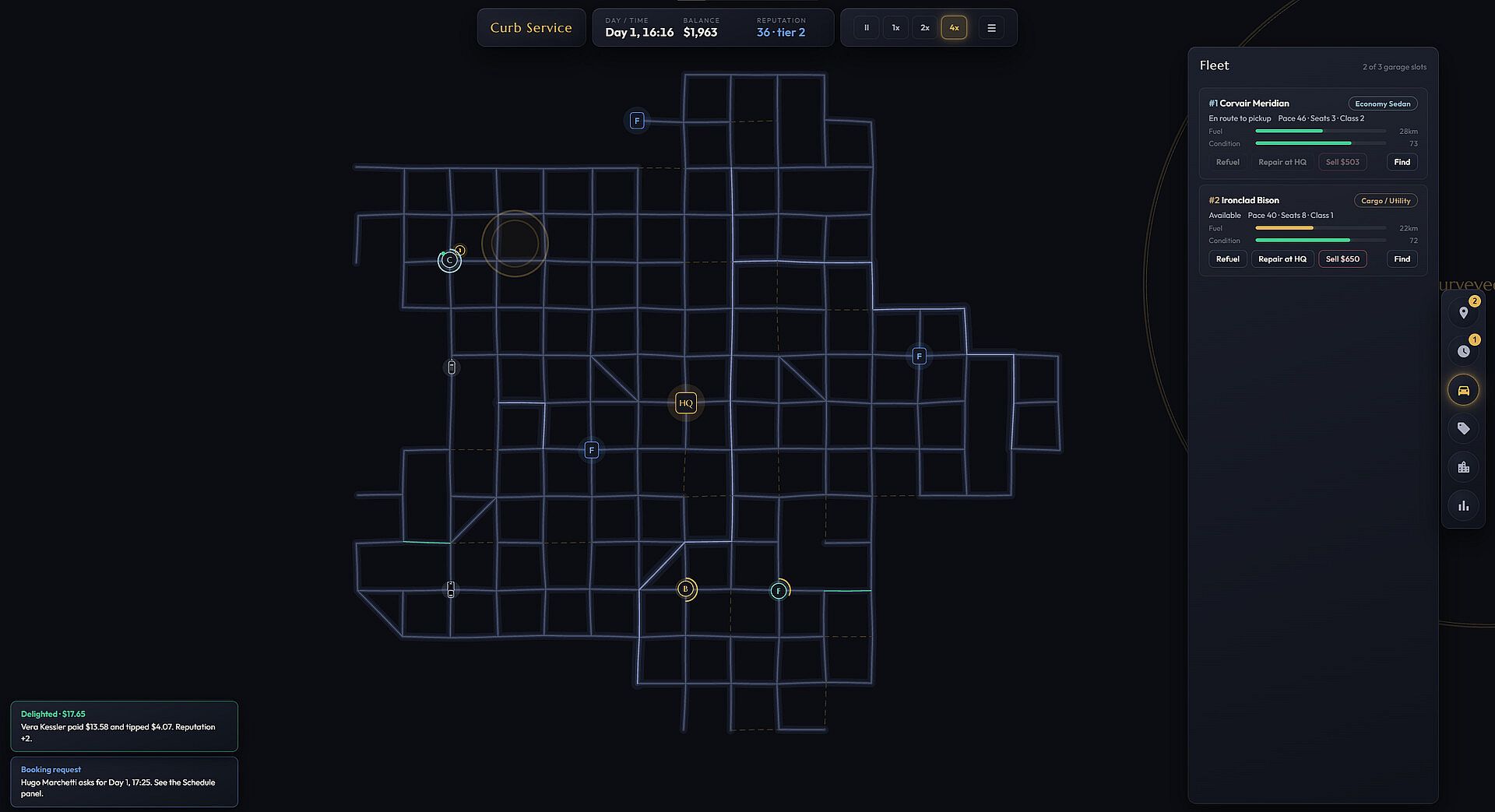
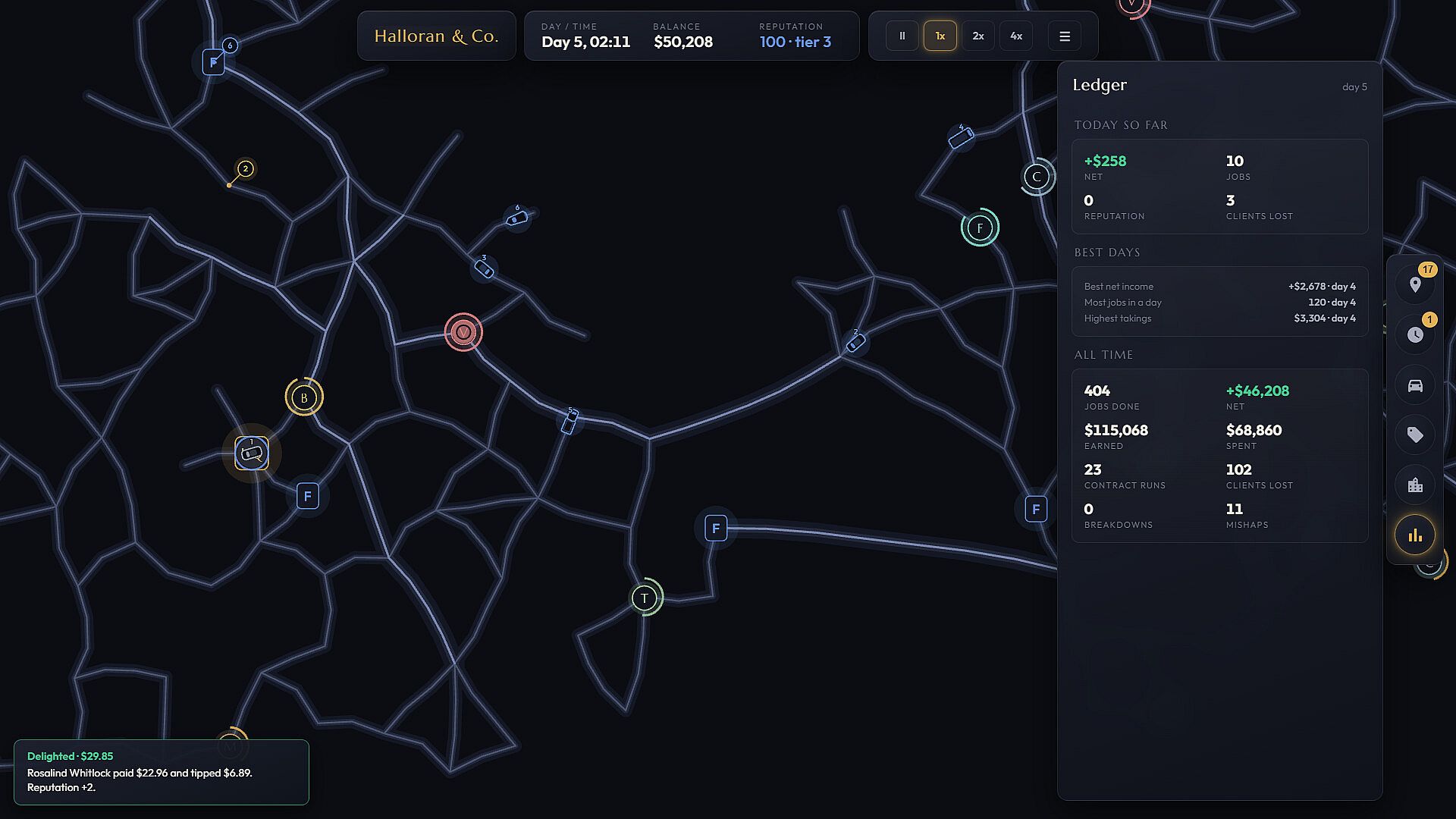
Curb Service is a strategy and simulation game set on PC in which players run a chauffeur dispatch operation across a procedurally generated city. The core loop centers on matching client requests to suitable vehicles from a growing fleet, then monitoring each assignment as it unfolds in real time on the map. Success depends on reading every request carefully, selecting the right car for the job, and maintaining steady income while reputation rises or falls with each outcome.
Gameplay
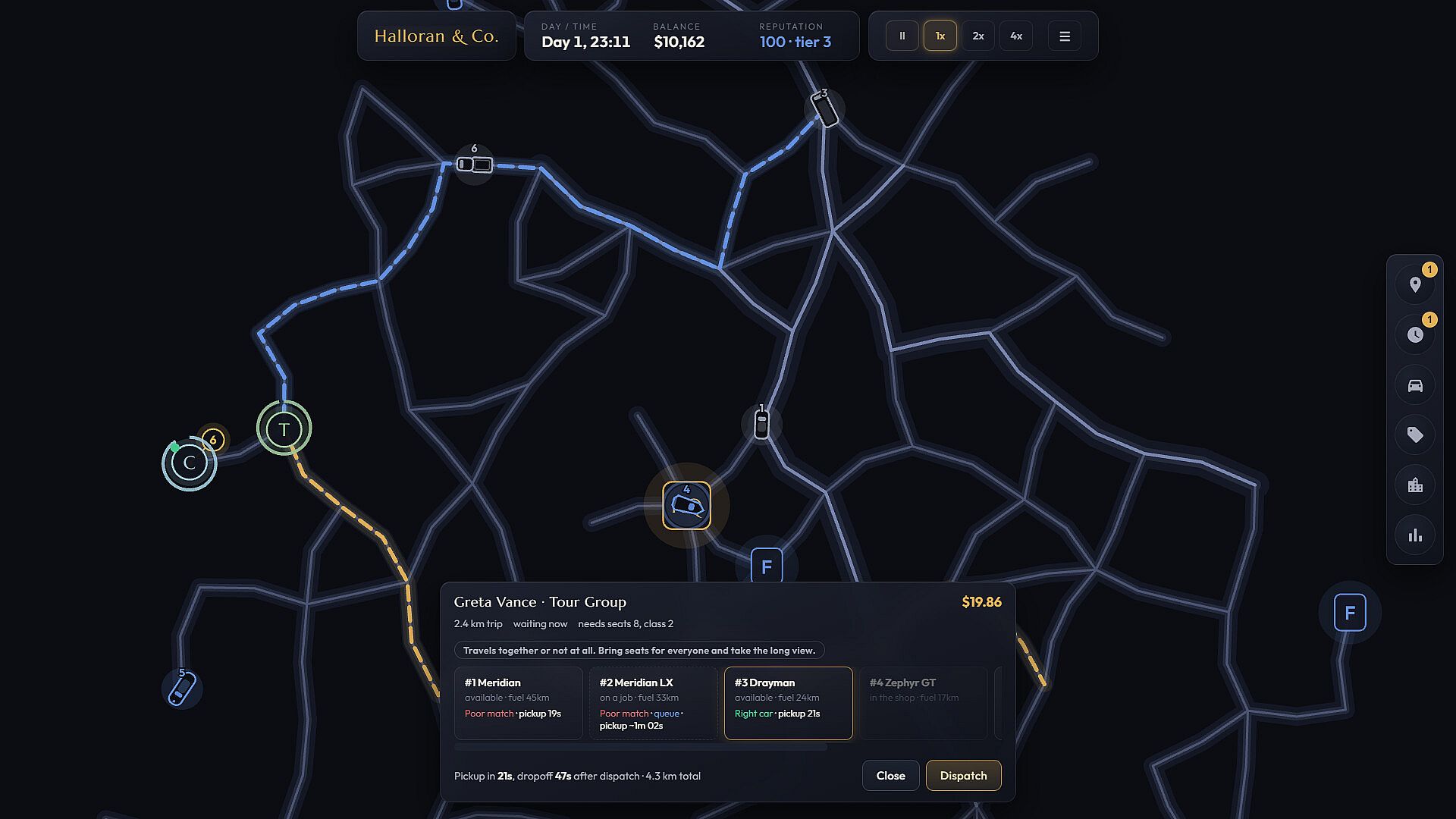
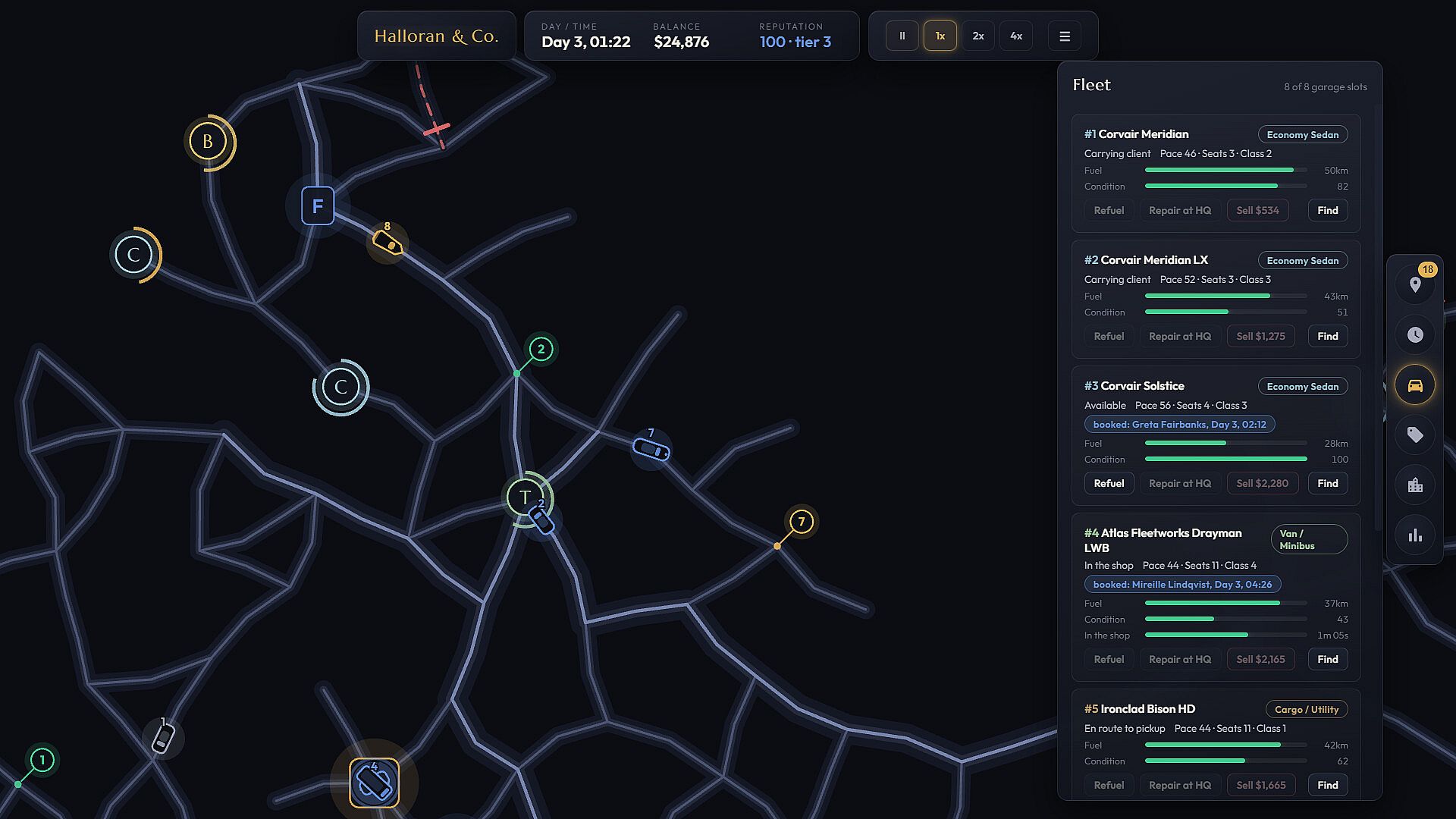
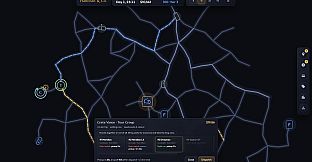
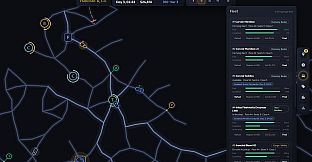
Players sit at a dispatch desk and handle incoming fares that range from quick commuter pickups on side streets to time-sensitive airport runs or group transports that require larger vehicles. Each assignment requires matching the client's needs to one of five vehicle classes and roughly twenty original models, each rated on Pace, Capacity, and Prestige. The better the fit, the higher the tip and the stronger the reputation gain.
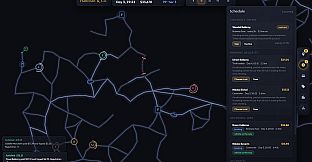
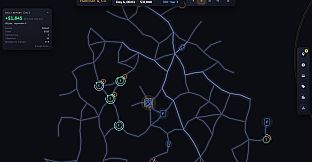
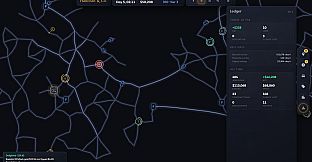
Routes appear live on the map from pickup to drop-off, giving a clear view of travel time and any potential issues before confirmation. Manual assignment is mandatory, with no automatic system available to handle decisions. Wrong matches still generate base pay but reduce tips and hurt reputation, while missed or poorly timed jobs carry lasting consequences for future contracts.
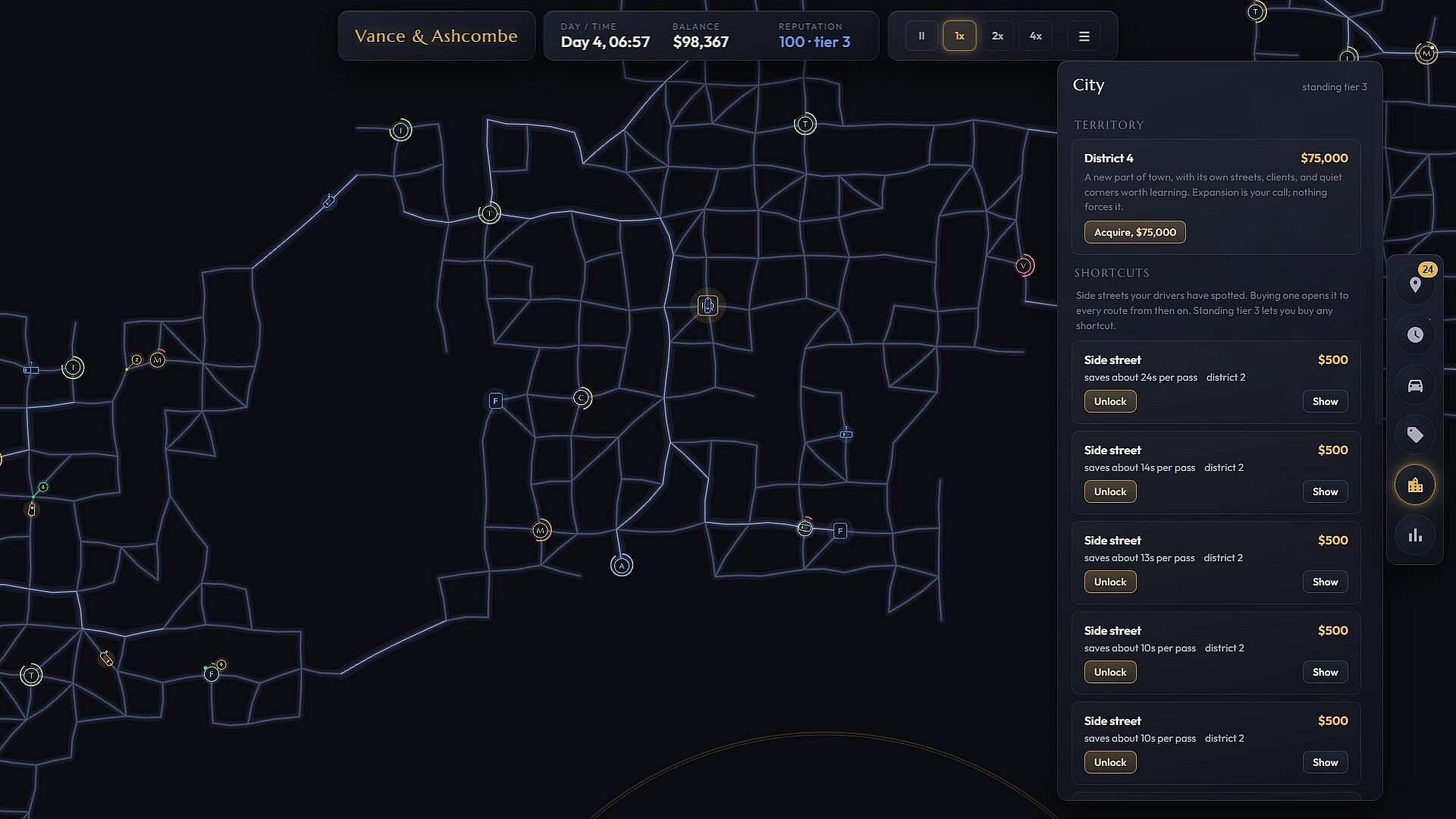
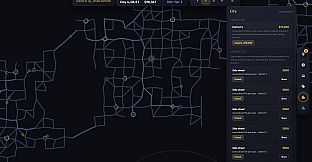
Fleet upkeep adds another layer. Fuel, vehicle condition, and headquarters repairs represent ongoing costs. Neglecting maintenance can lead to breakdowns that disrupt the entire schedule far more than routine service would. Reputation also unlocks new city areas, either through cash purchases or client rewards, allowing gradual expansion into previously locked side streets and shortcuts.
Game Modes
The experience runs entirely in a single-player format focused on building and sustaining the company over multiple sessions. On-demand fares arrive in real time, same-day bookings require advance planning, and recurring contracts reward consistent performance with steady income. Missing a recurring pickup triggers warnings, and three misses cause the client to leave permanently.
Client archetypes number around eight types, each with distinct preferences for vehicle class, payment levels, and patience thresholds. Fares adjust based on distance and match quality, encouraging careful selection rather than volume alone. The pace remains under player control through pause and speed options set at 1x, 2x, or 4x, with continuous autosave preserving progress at any point.
City and Fleet Progression
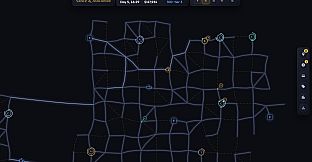
Every session begins in a fresh procedurally generated layout where only main roads are accessible. Side streets and shortcuts open through reputation-gated spending or direct client gifts once trust builds. This system lets players expand at their own speed without external pressure beyond ledger numbers and service quality.
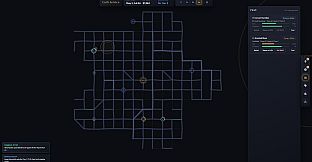
The dashboard interface supports extended play with its dark, glass-and-glow aesthetic designed for focused management rather than quick glances. Vehicle breakdowns and repair logistics create quiet tension that rewards proactive upkeep over reactive fixes.
Is It Worth Playing?
Curb Service remains unreleased with a planned date listed as to be announced and currently carries no user reviews. The described systems emphasize deliberate decision-making, real-time observation of routes, and long-term reputation management in a single-player setting. Those drawn to strategy and simulation titles that reward careful matching of resources to tasks, along with gradual city expansion, may find the loop engaging once available. The absence of auto-dispatch and the direct visibility of every route outcome set it apart from more automated management experiences. Players who prefer relaxed pacing with speed controls and autosave will appreciate the ability to step away and return without losing progress.