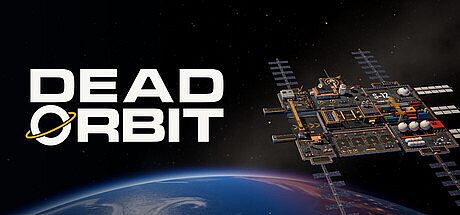


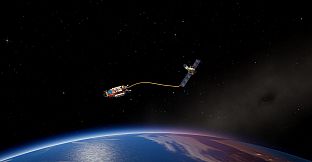
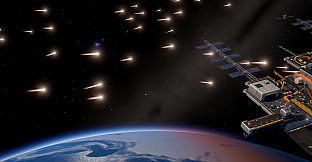
Dead Orbit is a simulation game set in low Earth orbit where players operate a small salvage tug from the S-12 recycling station. The core loop centers on locating orbital debris, securing it safely, and returning it for recycling into credits that fund upgrades and station improvements.
Gameplay
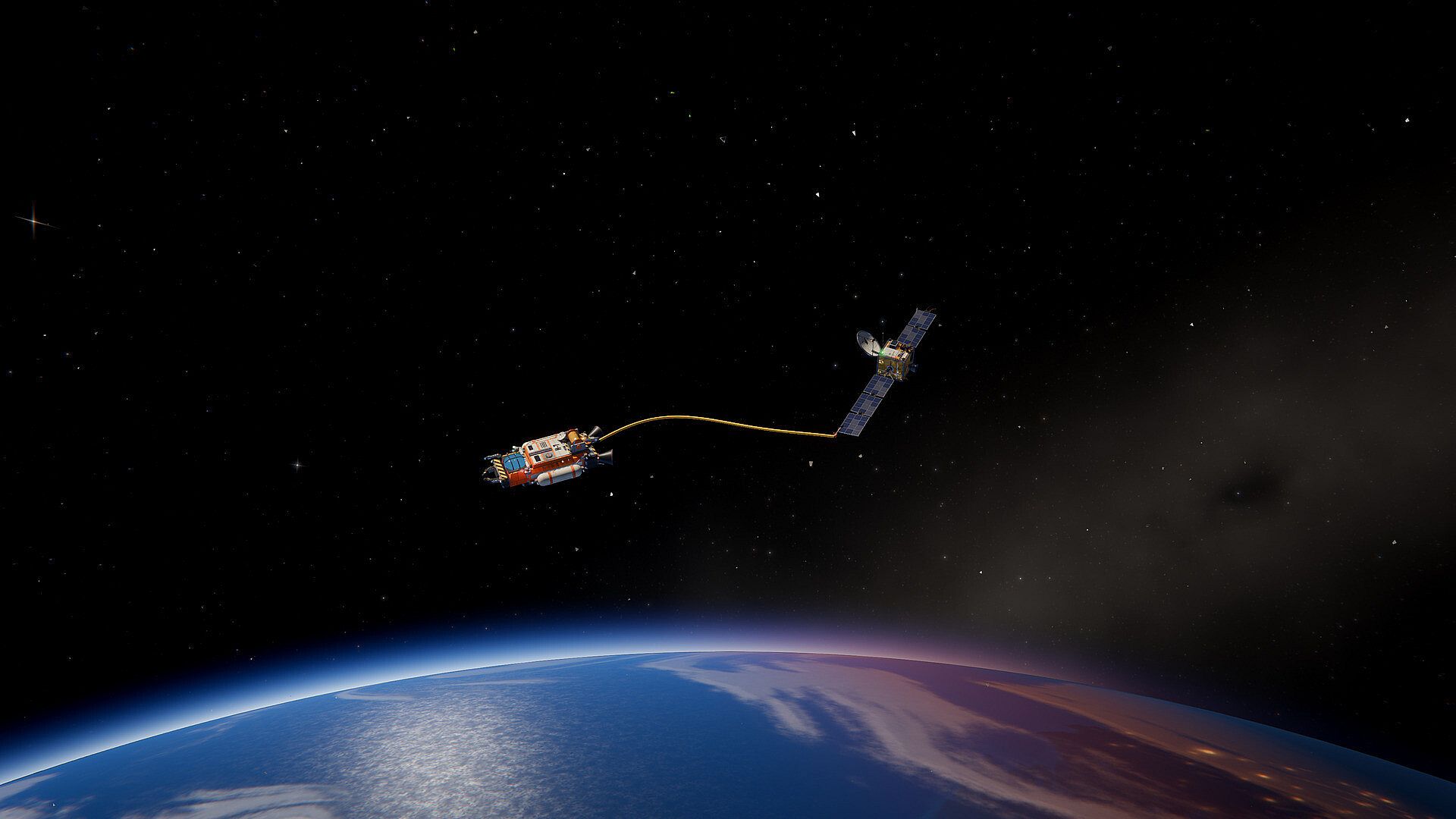
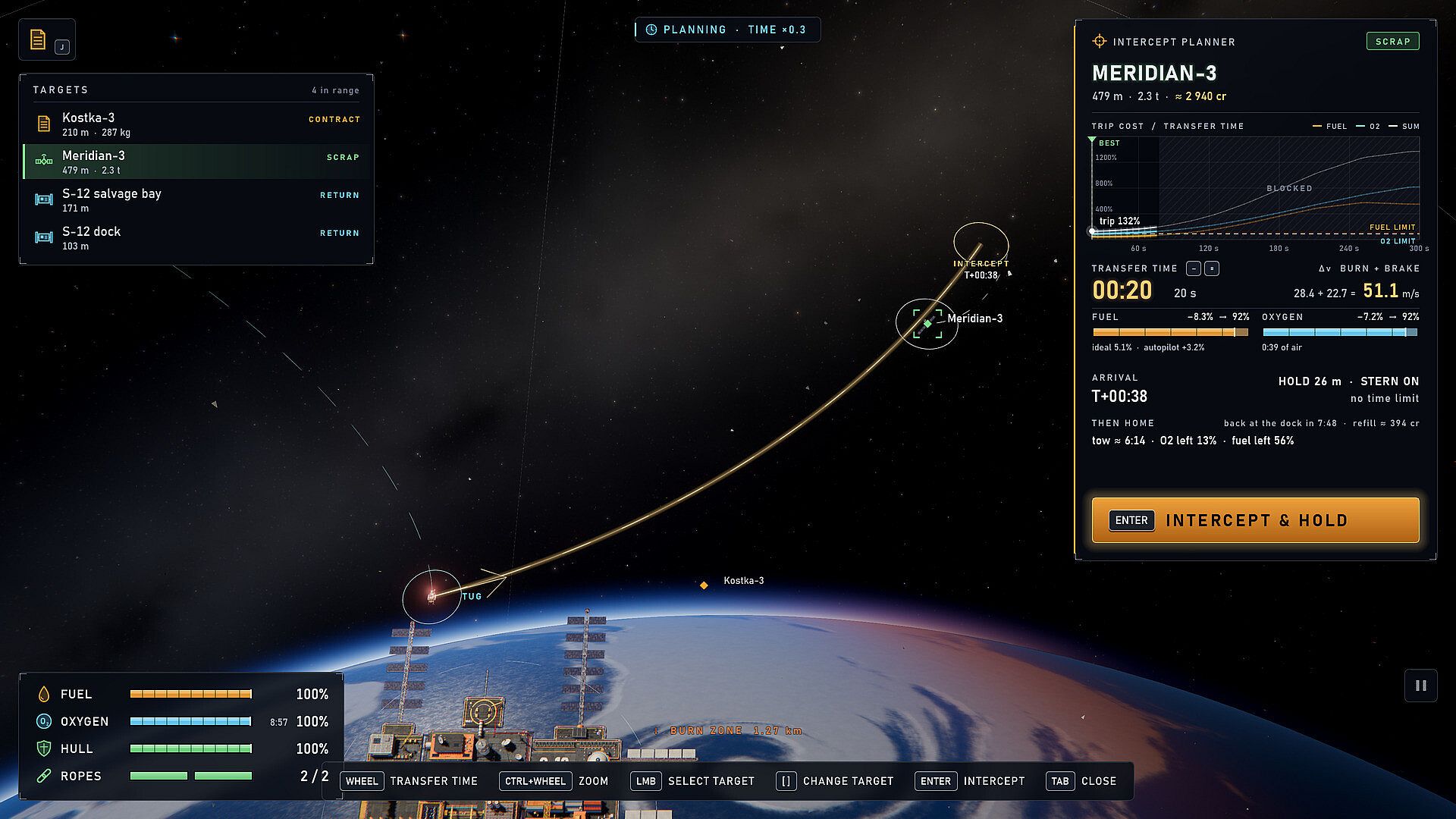
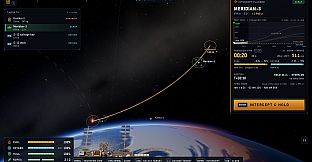
The experience revolves around realistic relative orbital mechanics. Players open an orbit planner to select a wreck, review the transfer path, estimated trip time, and remaining fuel and oxygen, then engage the autopilot for the approach. Once alongside the target, the tug hooks the debris for towing back to the station. Manual control is available through Newtonian thrusters, where burns affect trajectory in ways that match real orbital behavior, such as climbing when burning prograde and falling behind as a result.
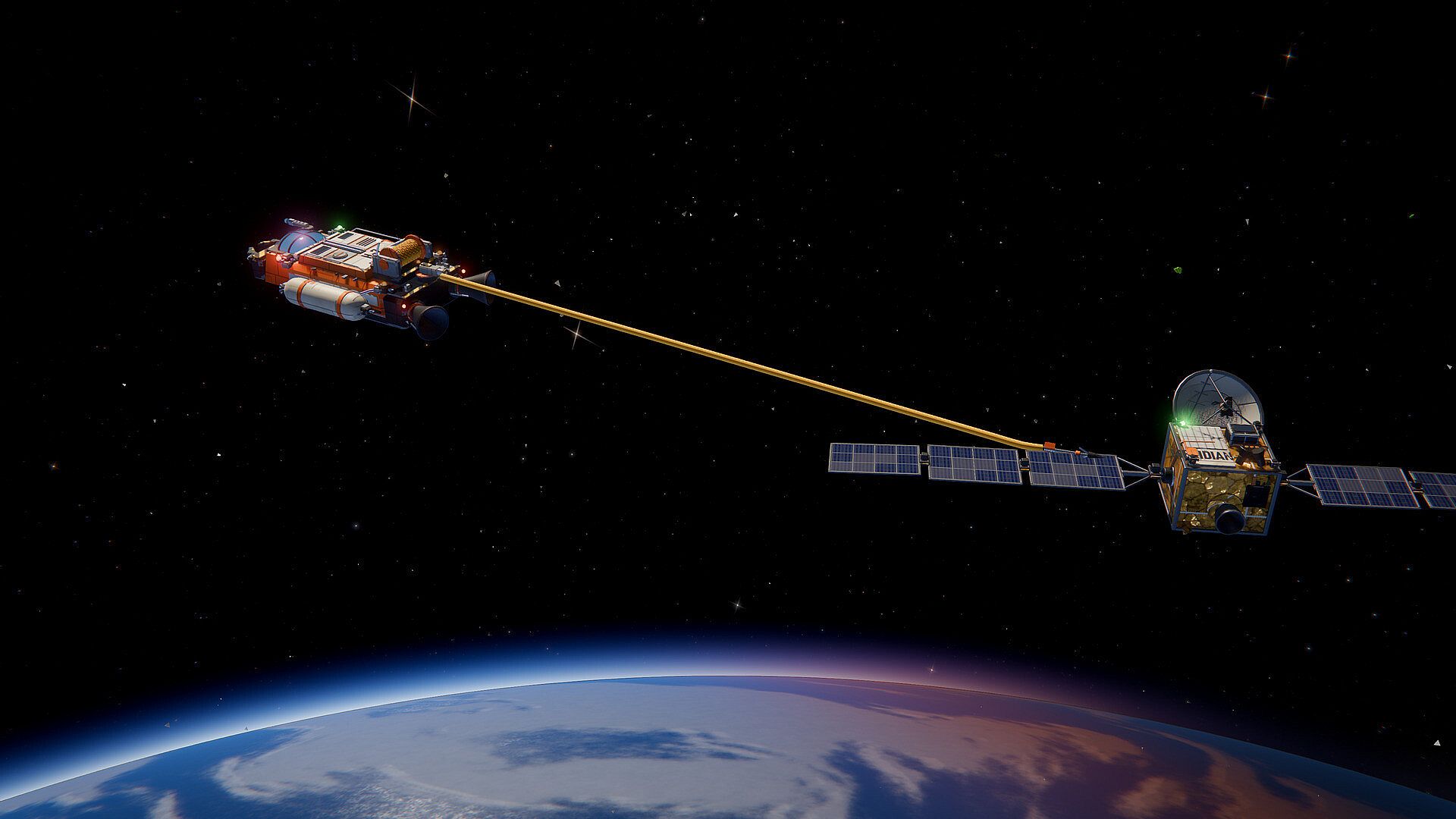
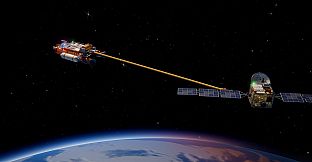
Salvage tools add precision and risk. A harpoon and winch allow players to reel in wrecks, though poor placement can cause spins, snapped lines, or damage to modules. A cutter removes solar wings and other components down to the core. A stabilization kit can be fired at tumbling objects to clamp on, seal leaks, and halt rotation. Smaller wrecks can be carried directly or pushed aside if the return trip offers little value. At the station, the tractor field guides wrecks into the salvage bay where shredders and recyclers convert them into credits.
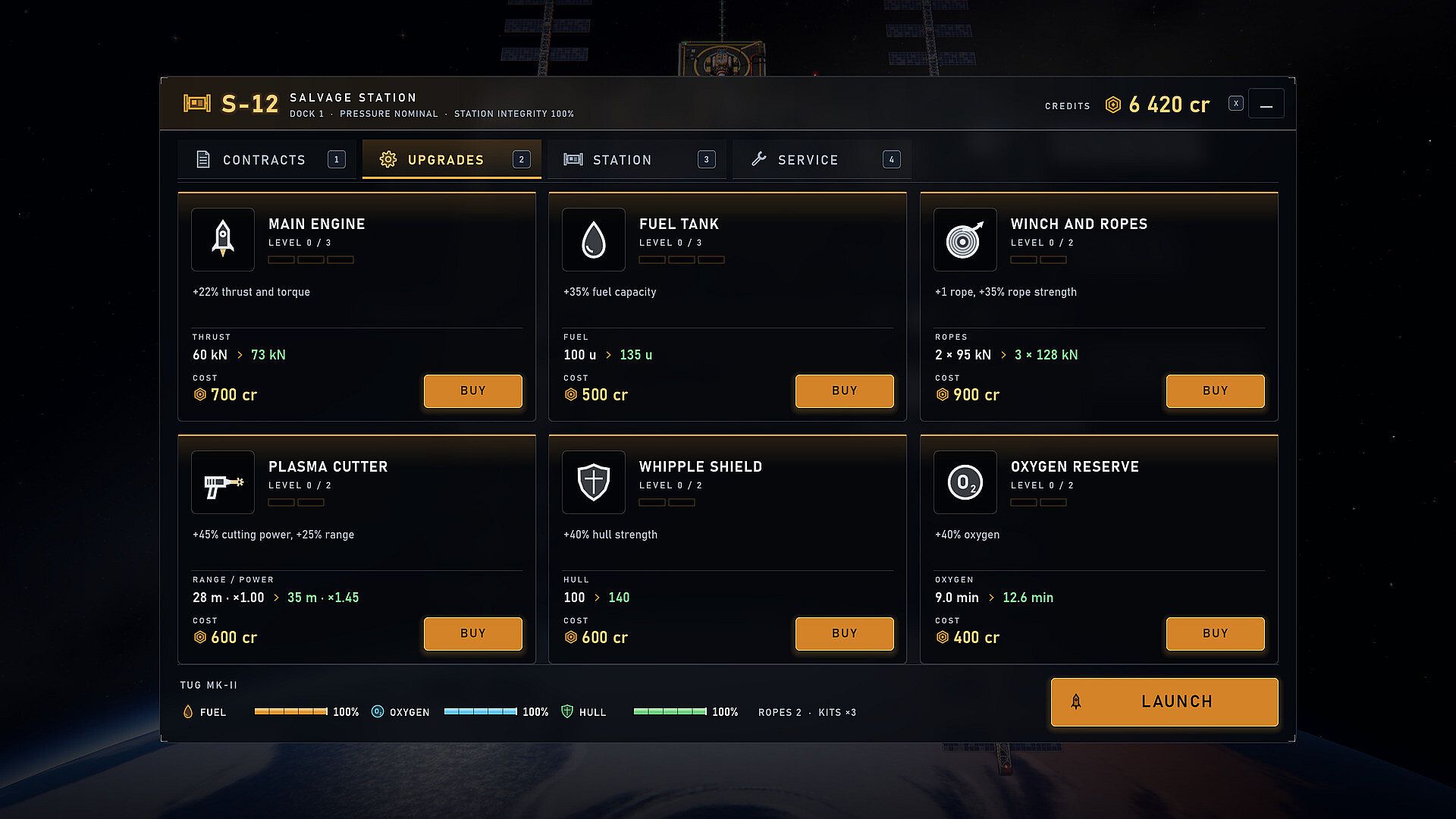
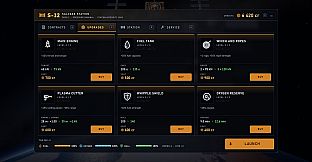
Upgrades expand capabilities. The tug gains better engines, larger tanks, stronger ropes, improved cutters, and shields. The station features four module slots for items like recyclers, fuel refineries, oxygen generators, radar, and repair drones. Supplies such as oxygen and fuel regenerate slowly at S-12, or players can purchase refills immediately. Contracts sometimes require pushing debris into the atmosphere for burn-up rather than recovery.
Game Modes
Dead Orbit functions as a single-player simulation without separate named game modes. All activity occurs in one continuous orbital environment that begins in low Earth orbit and expands outward. Early jobs involve straightforward tows of small debris, while later work includes larger rocket stages, modules that break apart during towing, and tanks venting gas. Threats appear on real collision courses tracked by an in-game clock.
Progression and Expansion
Credits from successful salvages support steady advancement. Tug improvements increase efficiency and safety during operations, while station modules accelerate resource production and provide better situational awareness. The scope grows beyond initial low-orbit work to include half-orbit flights to stranded ships on the night side, Earth-Moon transfers, kinetic nudges on asteroids, and passing comets near the station.
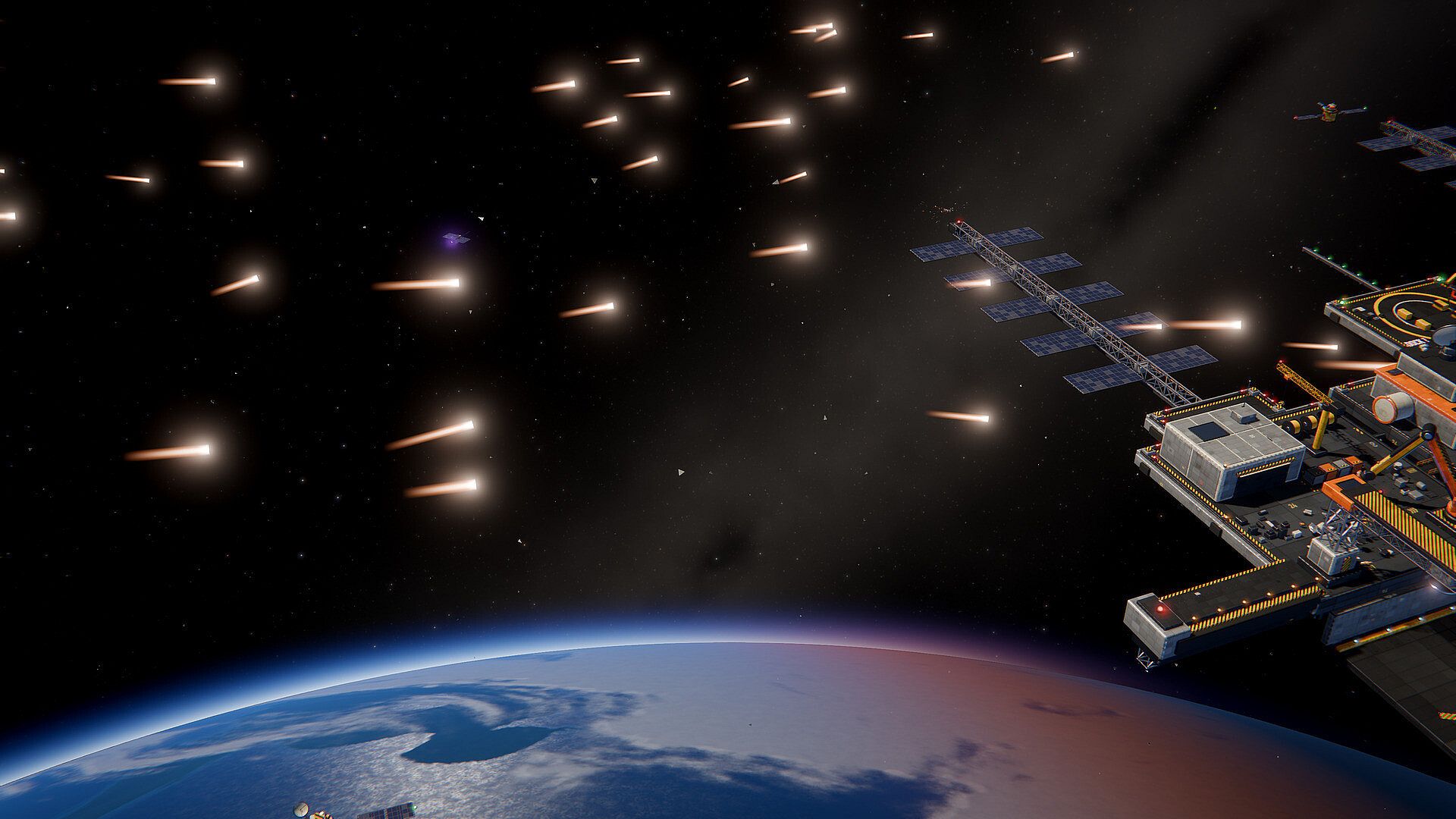
Debris accumulation creates escalating challenges. Each collision generates more fragments that follow actual trajectories, leading to denser fields over time. The sequence culminates in the Great Cascade, where players deploy interceptor satellites around S-12 to manage the largest incoming pieces and prevent uncontrolled escalation.
Is It Worth Playing?
Dead Orbit suits players who enjoy methodical, physics-driven tasks in a calm setting rather than fast action or combat. The emphasis on planning transfers, managing limited resources like fuel and oxygen, and handling unpredictable debris makes it rewarding for those interested in orbital mechanics and careful execution. Progression through upgrades and expanding job complexity provides ongoing goals, while the eventual Great Cascade introduces higher-stakes management without shifting the core pace. Availability is limited to PC, and the game remains focused on its simulation foundations with no additional content layers confirmed beyond the described systems.