







Demockracy is a strategy indie simulation game set on PC where players build and lead a political party through elections in a fictional country. The focus stays on seizing and holding power rather than governing once in office. Players navigate party creation, recruitment, regional campaigns, and parliamentary votes while choosing between straightforward persuasion or underhanded tactics that carry rising risks.
Gameplay
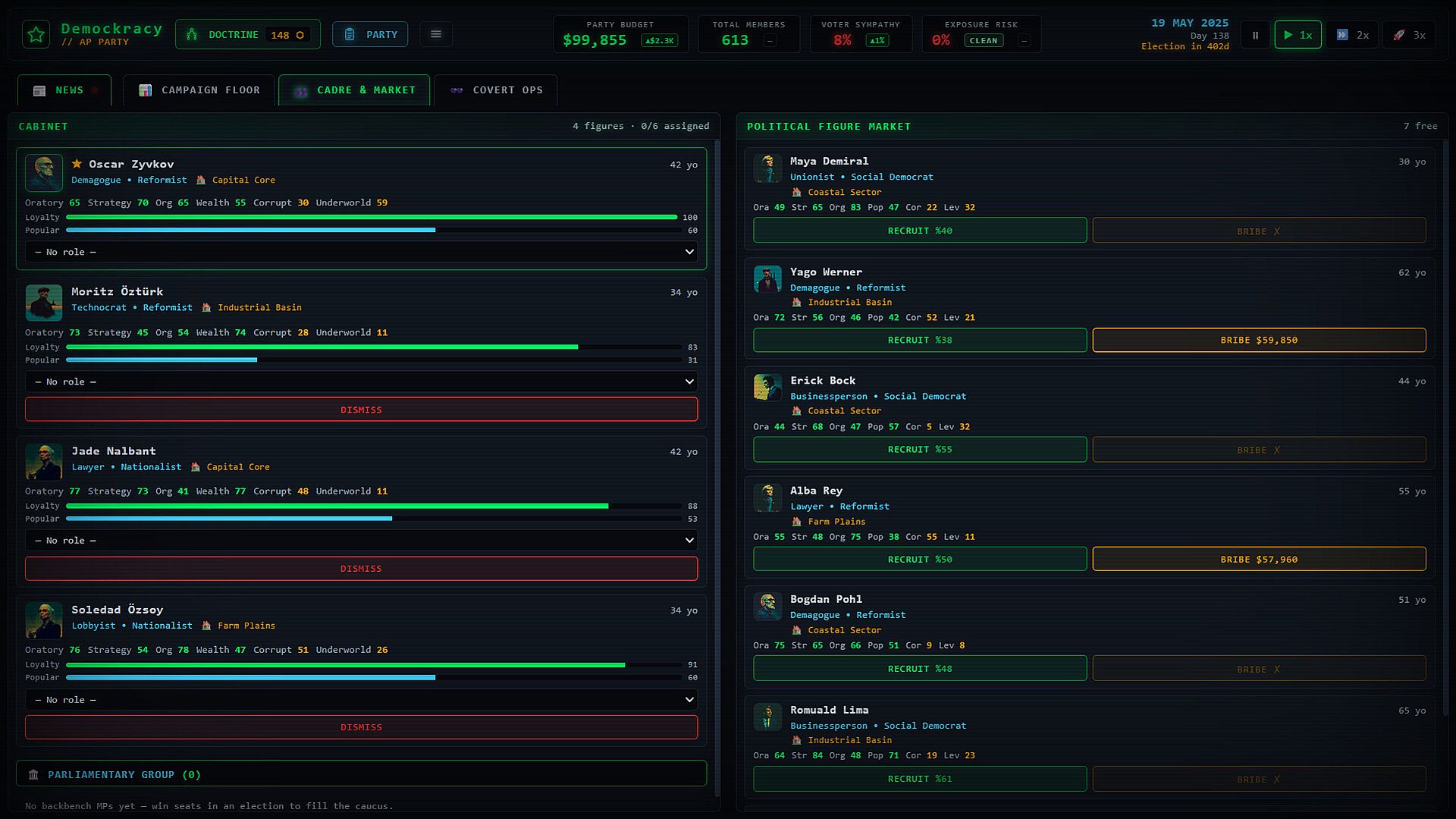
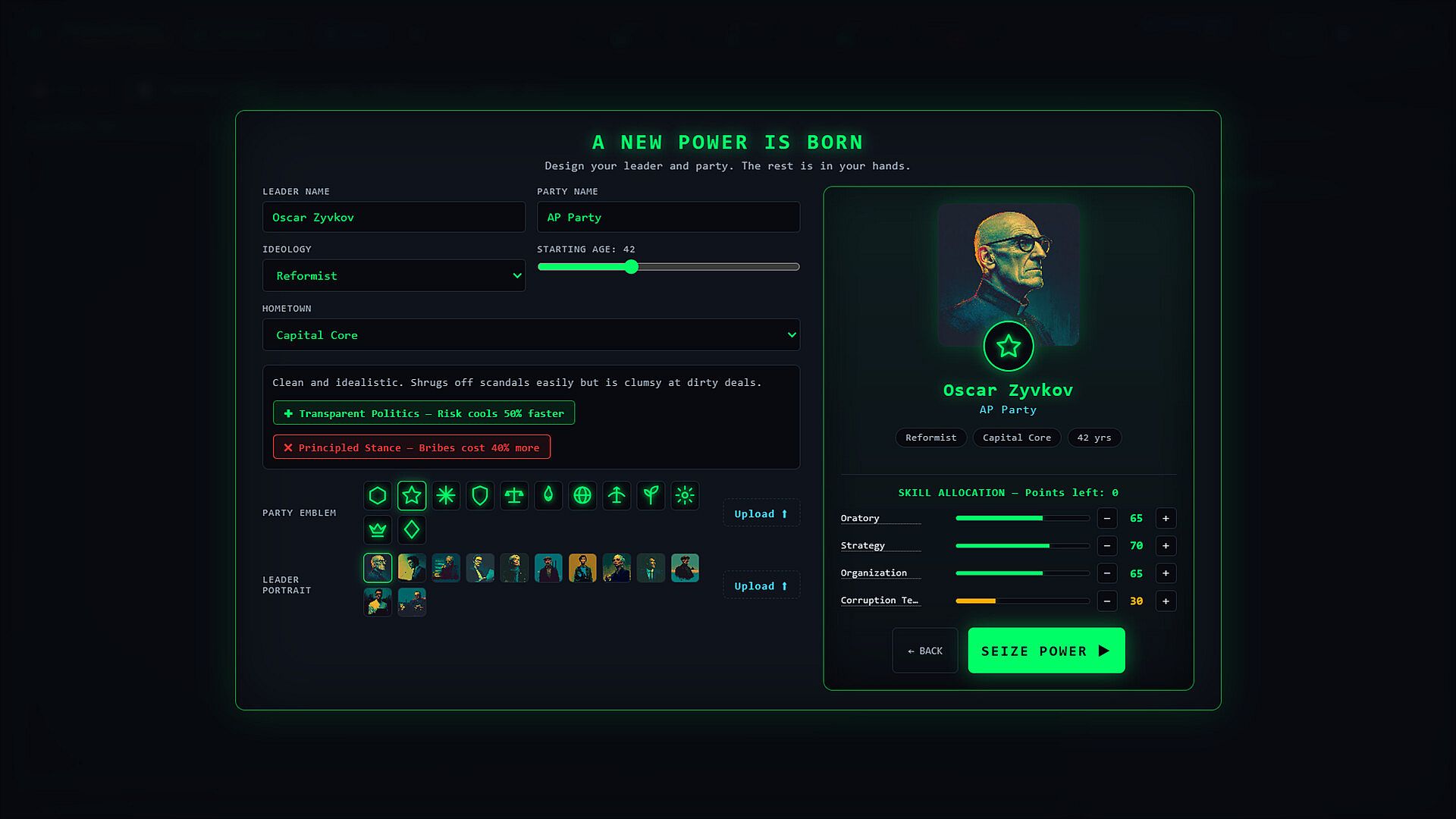
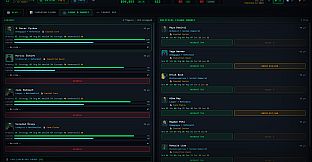
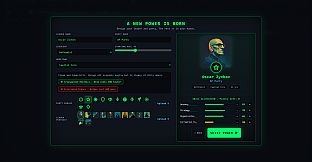
The core loop centers on assembling a competitive party from the ground up. Players select an ideology and doctrine at the start, then form an inner circle of advisors. Recruitment follows, with options to attract figures through prestige or secure their loyalty via cash payments. Every politician comes with a price, and the choice shapes the party's direction and vulnerabilities.
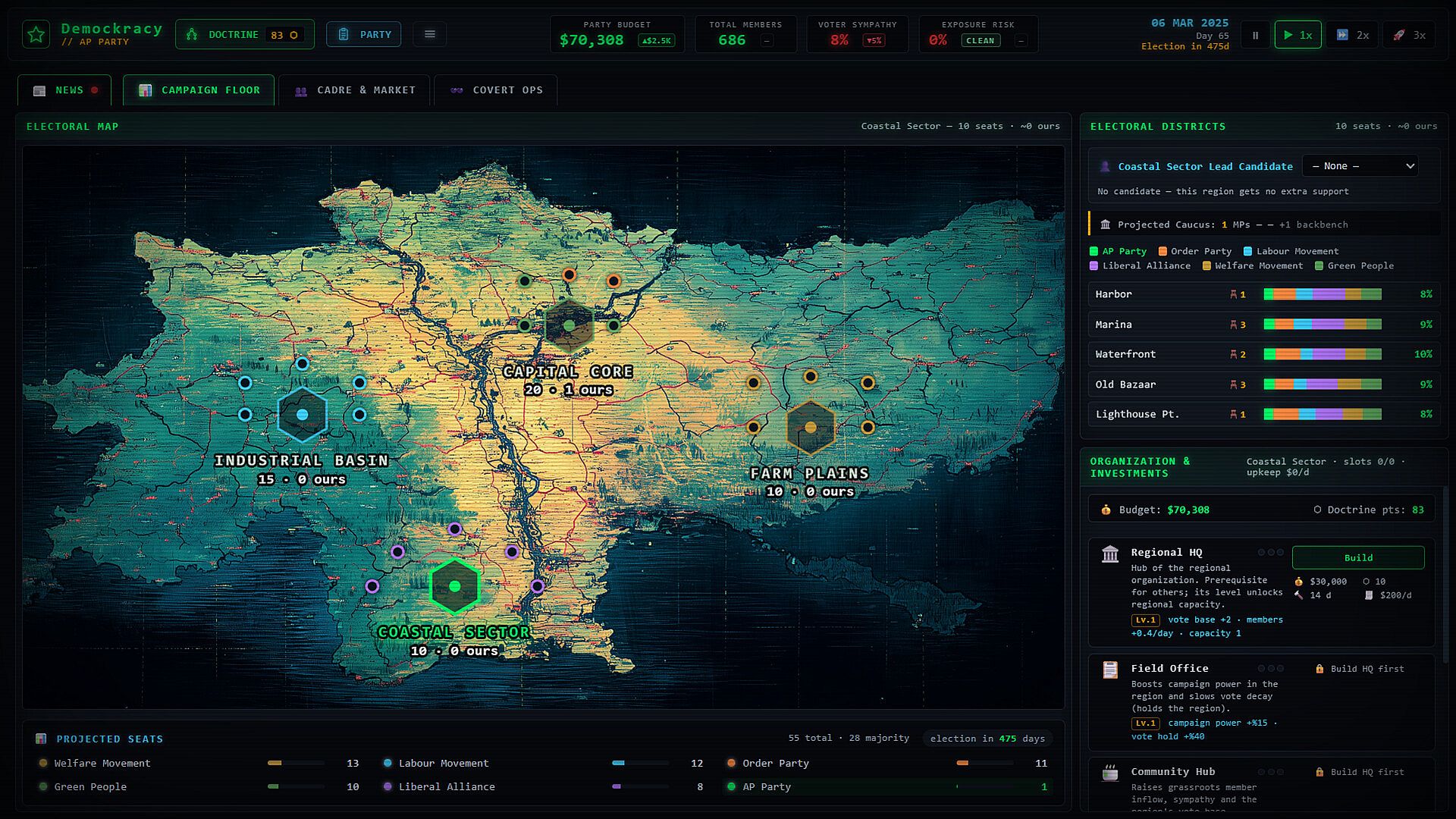
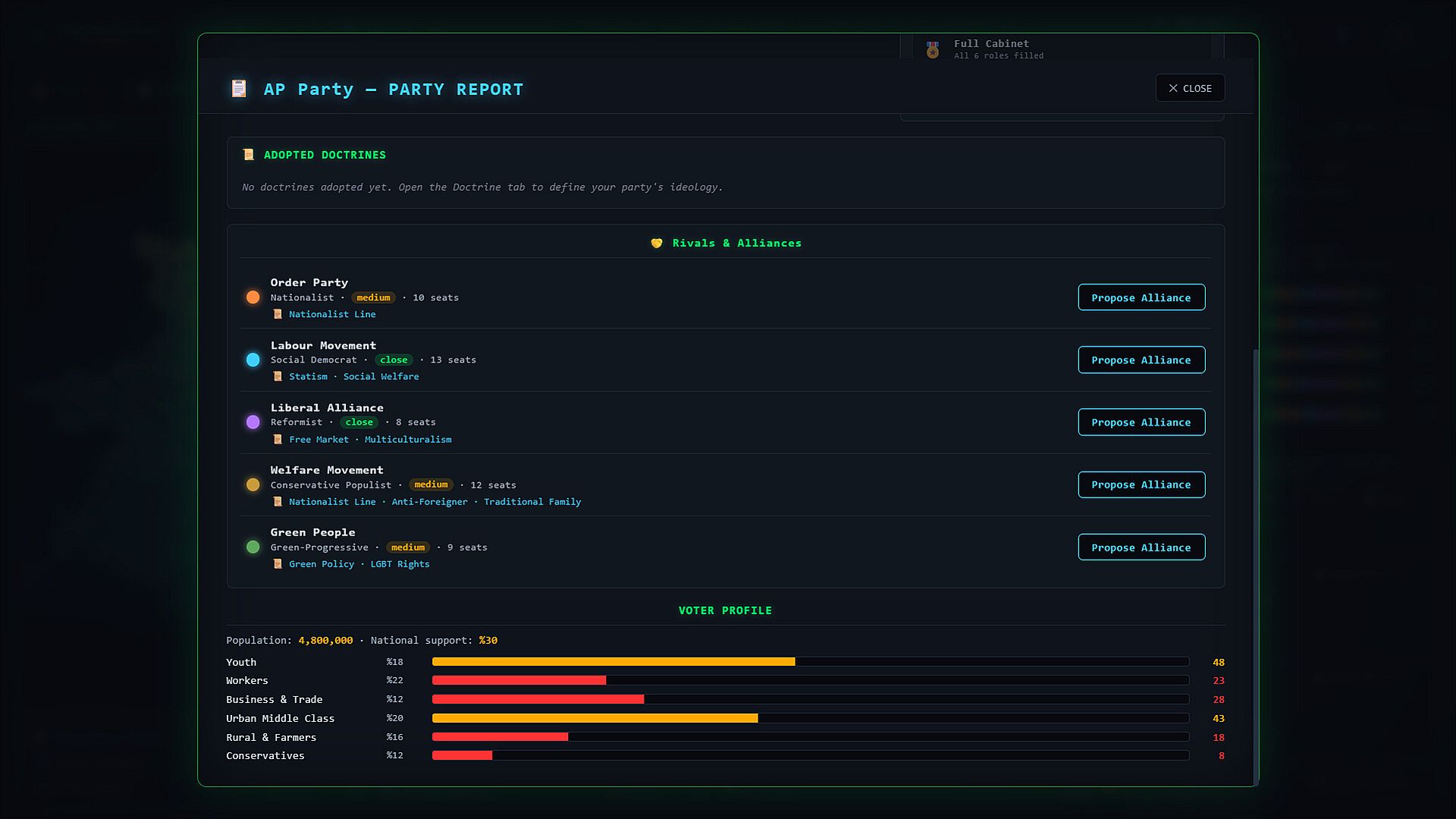
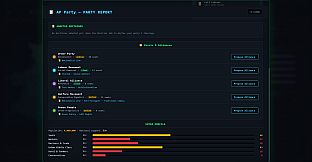
Campaign efforts target four regions divided into twenty districts. Players run targeted operations to shift poll numbers and build momentum ahead of the election. Success depends on balancing resources, timing, and the impact of prior decisions on public perception.
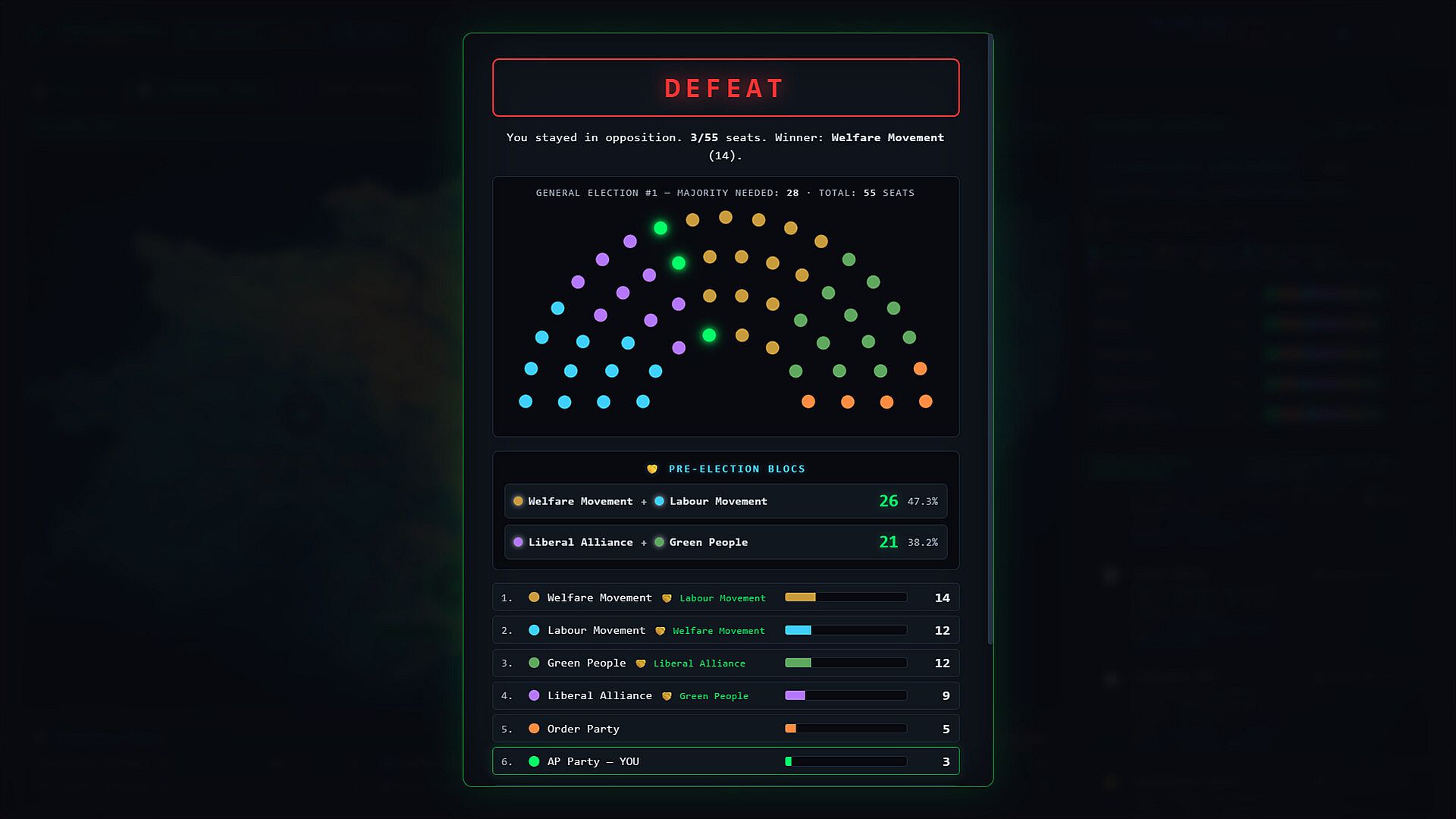
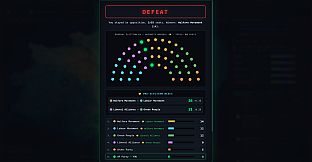
Voting uses proportional representation under the D'Hondt method for a 55-seat parliament. Securing at least 28 seats grants sole control. The system rewards consistent performance across districts while punishing uneven support.
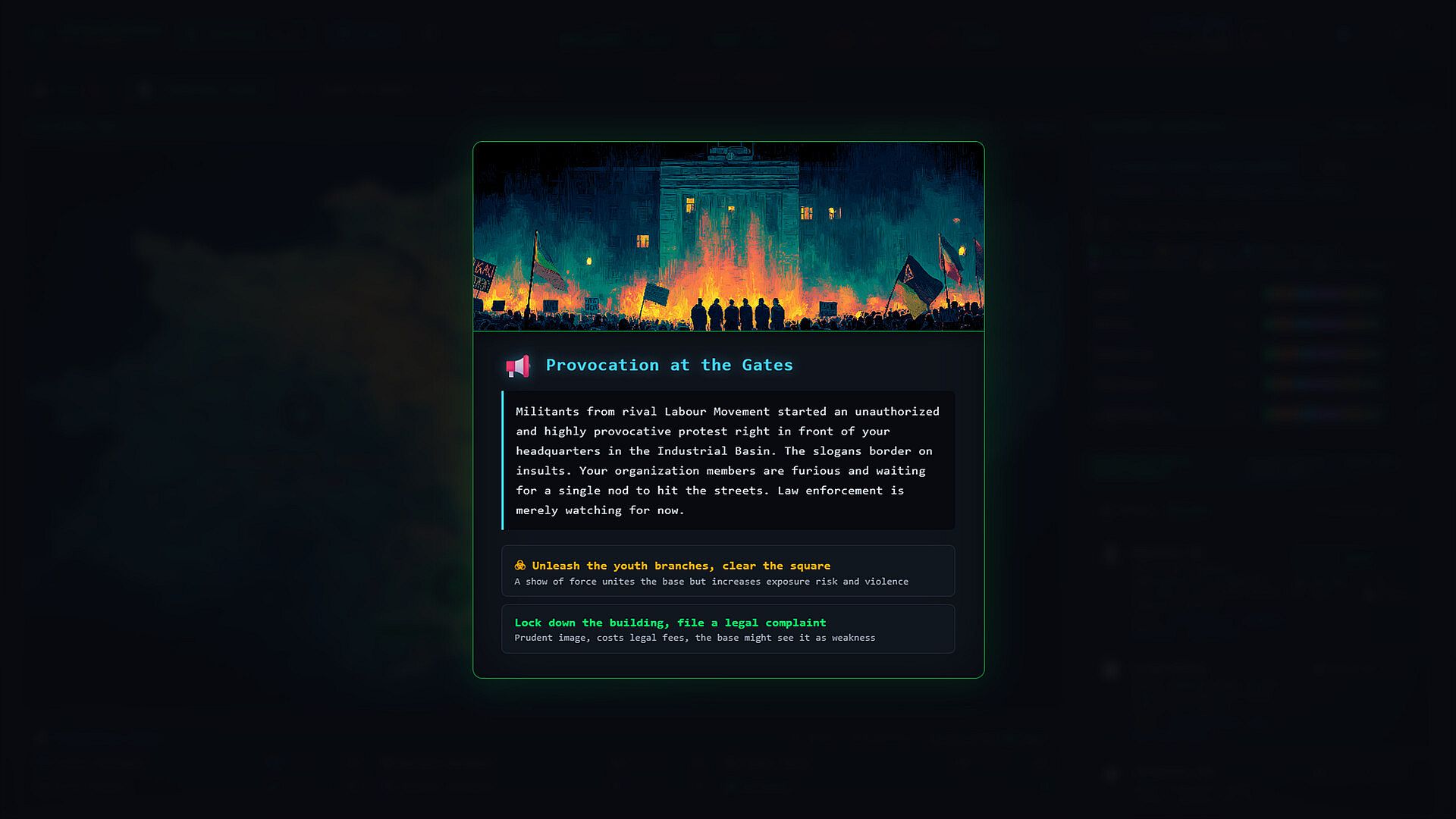
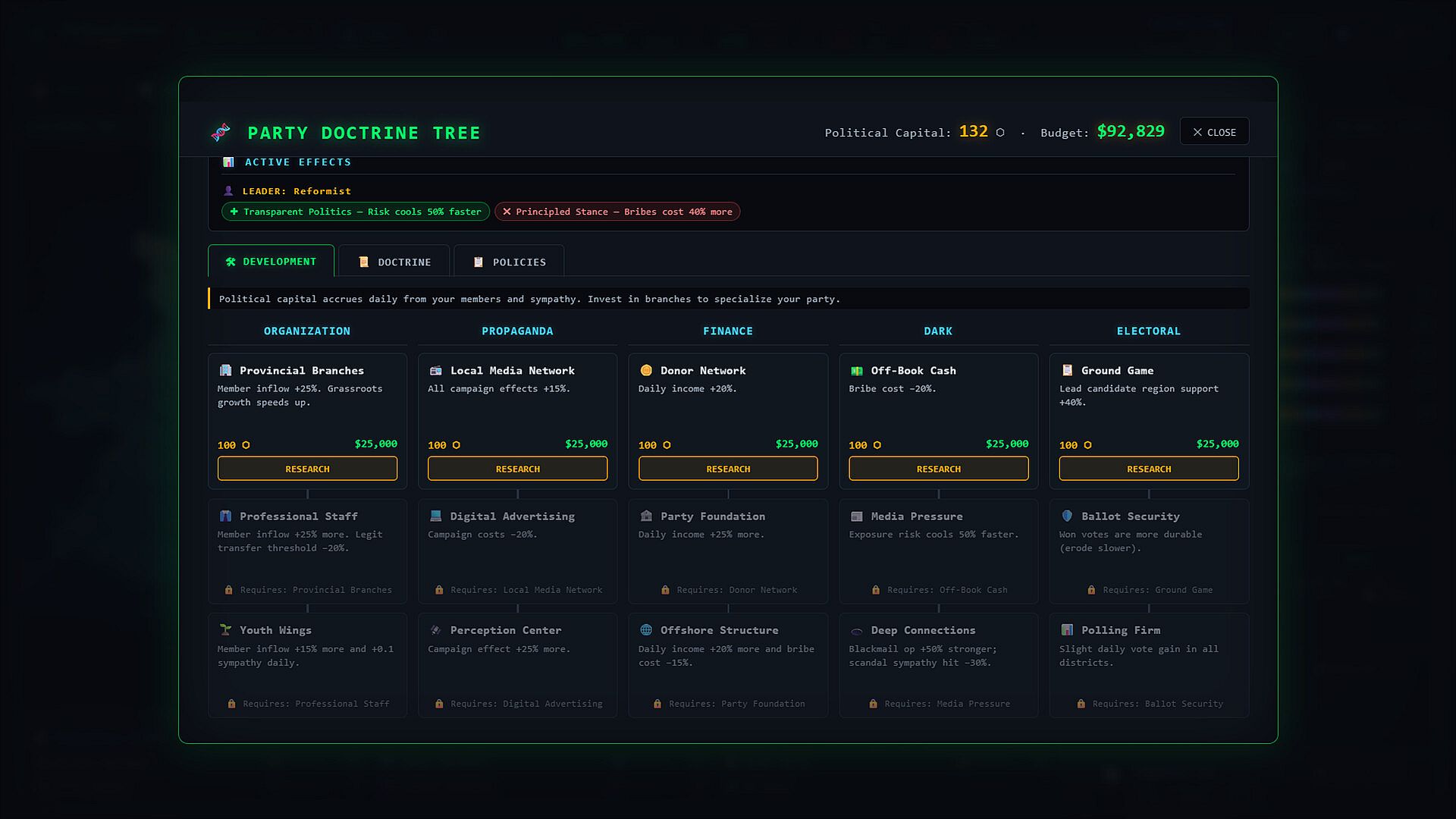
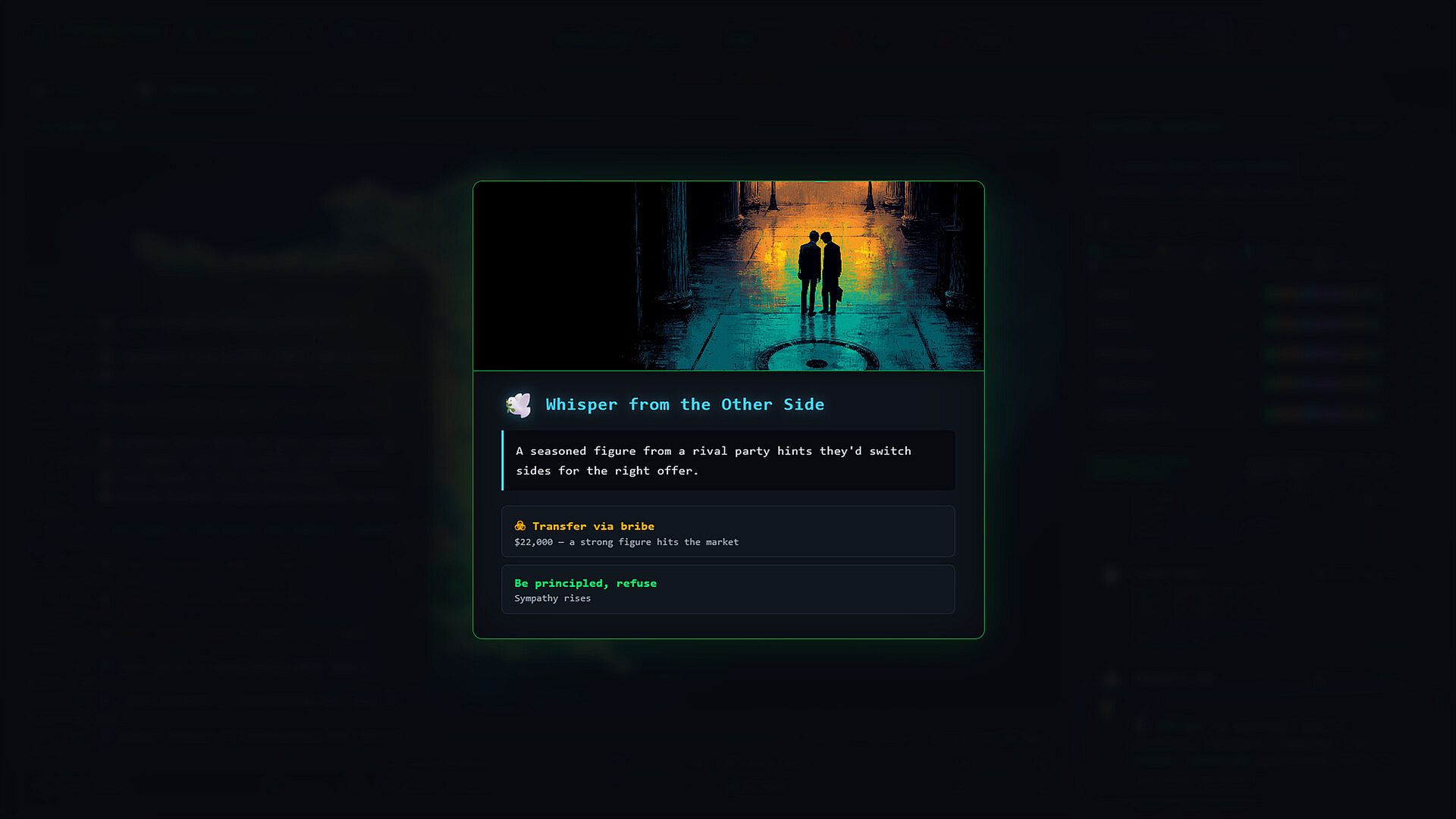
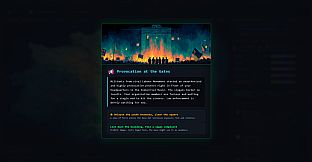
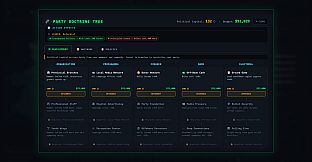
Throughout each run, players face recurring dilemmas that trade off budget, reputation, exposure risk, or direct vote totals. A doctrine tree lets players invest political capital to unlock specializations, forcing trade-offs that define the party's long-term identity. Reactive AI opponents monitor actions, launch counter-campaigns, and attempt to lure away key recruits. Scandals triggered by high exposure can drain funds, force resignations, and erode voter support, creating unpredictable swings from one playthrough to the next.
Game Modes
Demockracy offers only single-player mode. Each session plays out as a self-contained election cycle with high replayability through different starting ideologies, recruitment choices, and doctrine paths. No two campaigns unfold identically because of dynamic events, rival responses, and the branching consequences of clean versus risky tactics.
The structure encourages repeated attempts to test alternative strategies, such as focusing on rapid regional dominance or building a more resilient inner circle that withstands scandals. The absence of multiplayer keeps the experience centered on personal decision-making and adaptation against the AI.
Key Mechanics and Features
Localization covers seven languages with hundreds of unique political figures whose names reflect the respective language families. This detail supports the game's satirical tone without altering core systems. The emphasis remains on text-driven choices and menu interactions rather than visual spectacle or direct control.
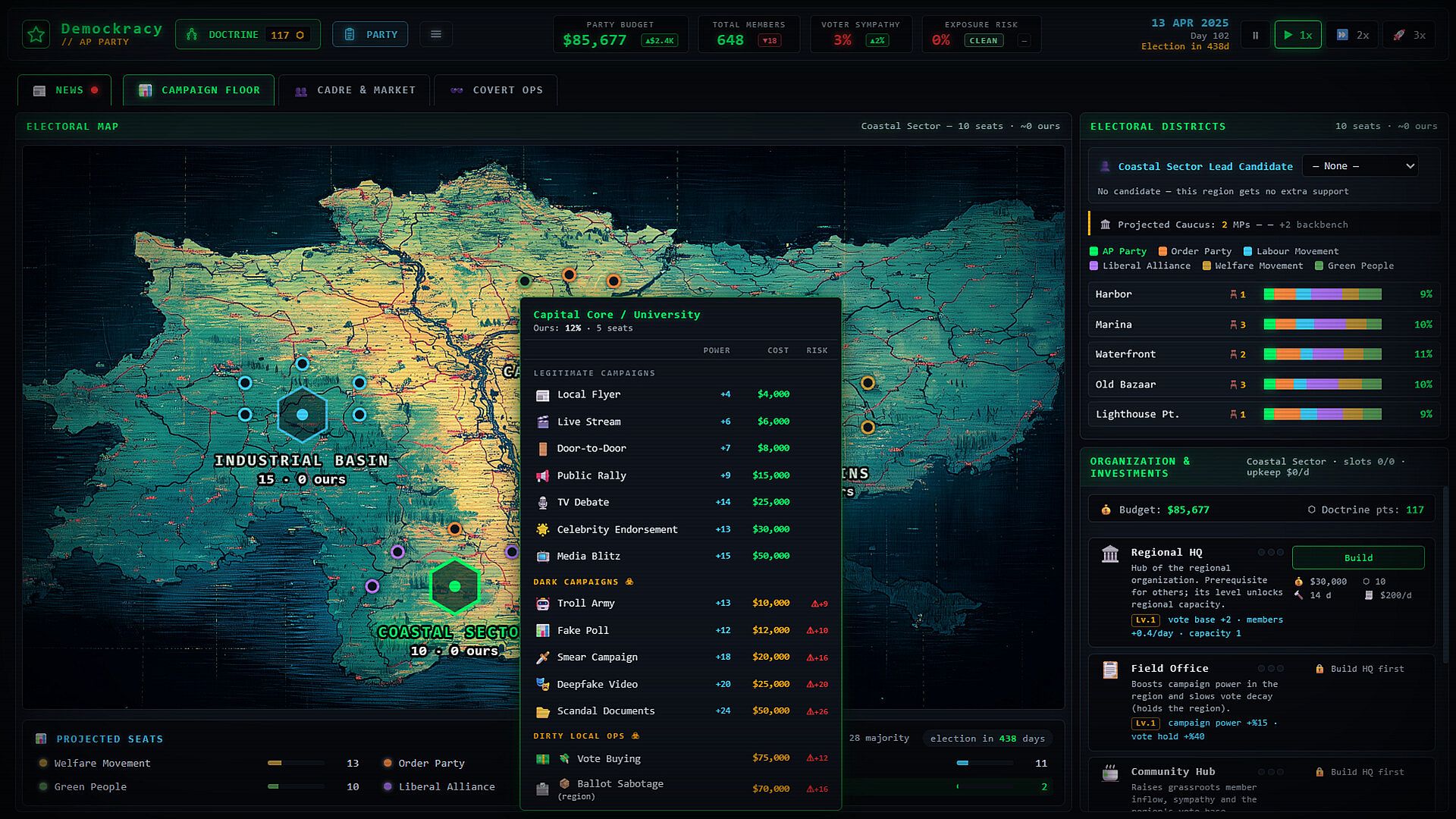
Exposure risk acts as a central tension meter. Low-risk paths involve public rallies and persuasion, while higher-risk options include troll campaigns or blackmail. Escalating risk invites scandals that can cascade into lost resources or defections, rewarding careful risk management alongside aggressive power plays.
Is It Worth Playing?
Demockracy suits players who enjoy deep strategy simulations built around political maneuvering and long-term planning. The single-player focus and procedural elements deliver varied outcomes across multiple runs, appealing to those interested in ideology building, rival interactions, and the consequences of ethical shortcuts.
With its November 2026 release date still ahead, the game remains unavailable for direct play. Those drawn to the described systems of party construction, regional conquest, and scandal management may find the premise compelling once it launches, particularly if they prefer thoughtful, replayable strategy over action or narrative-driven experiences.











