


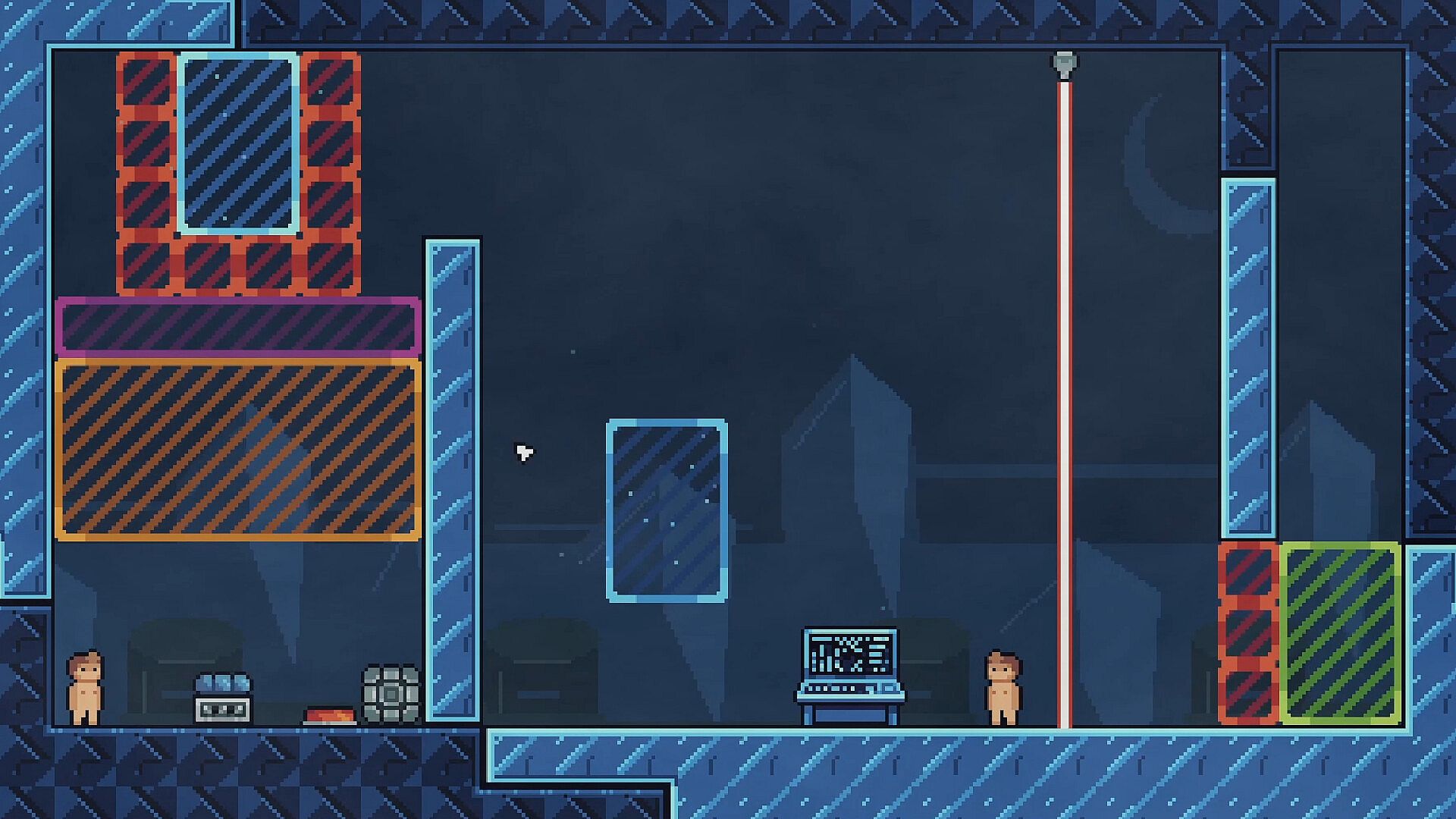
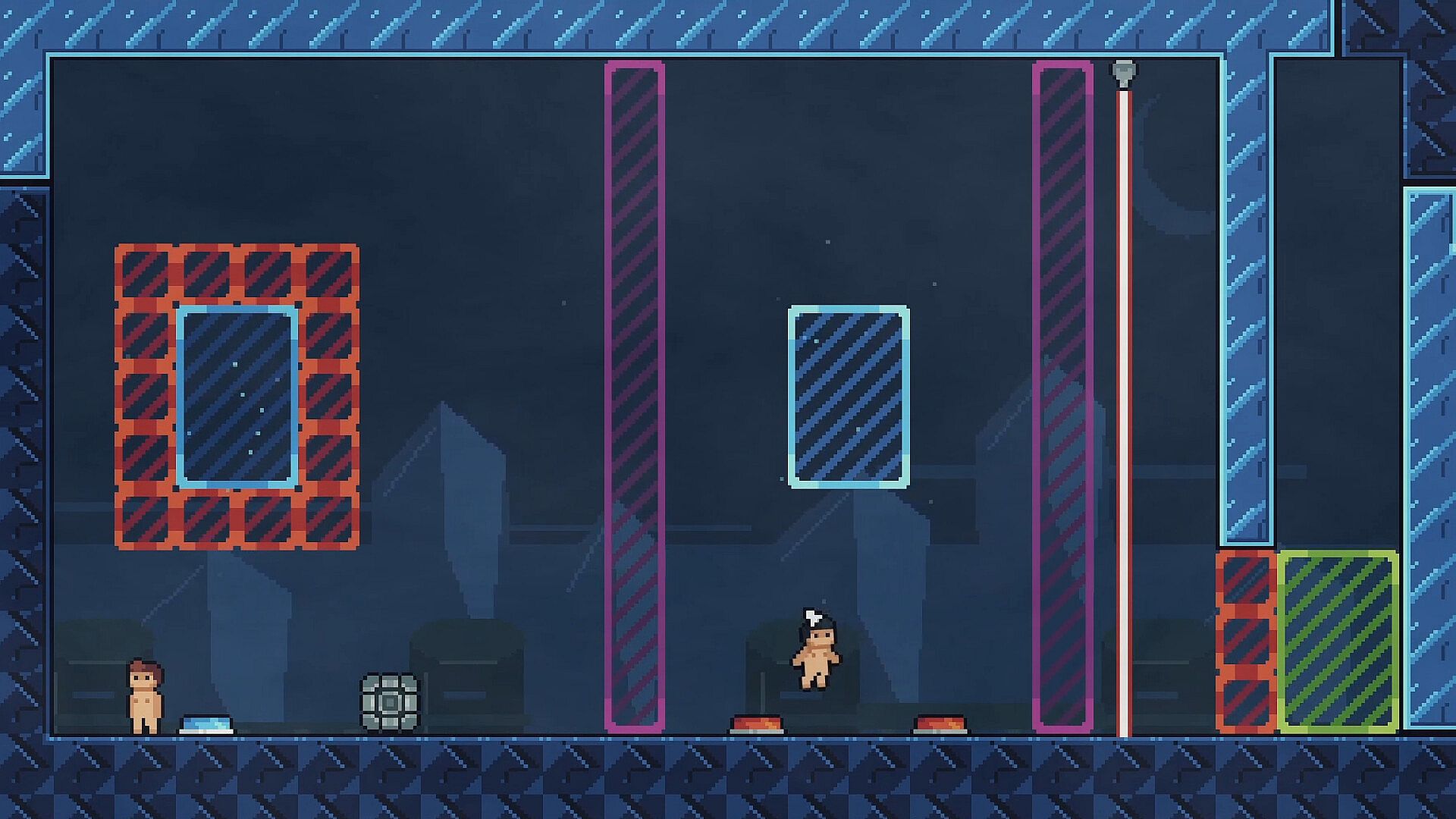
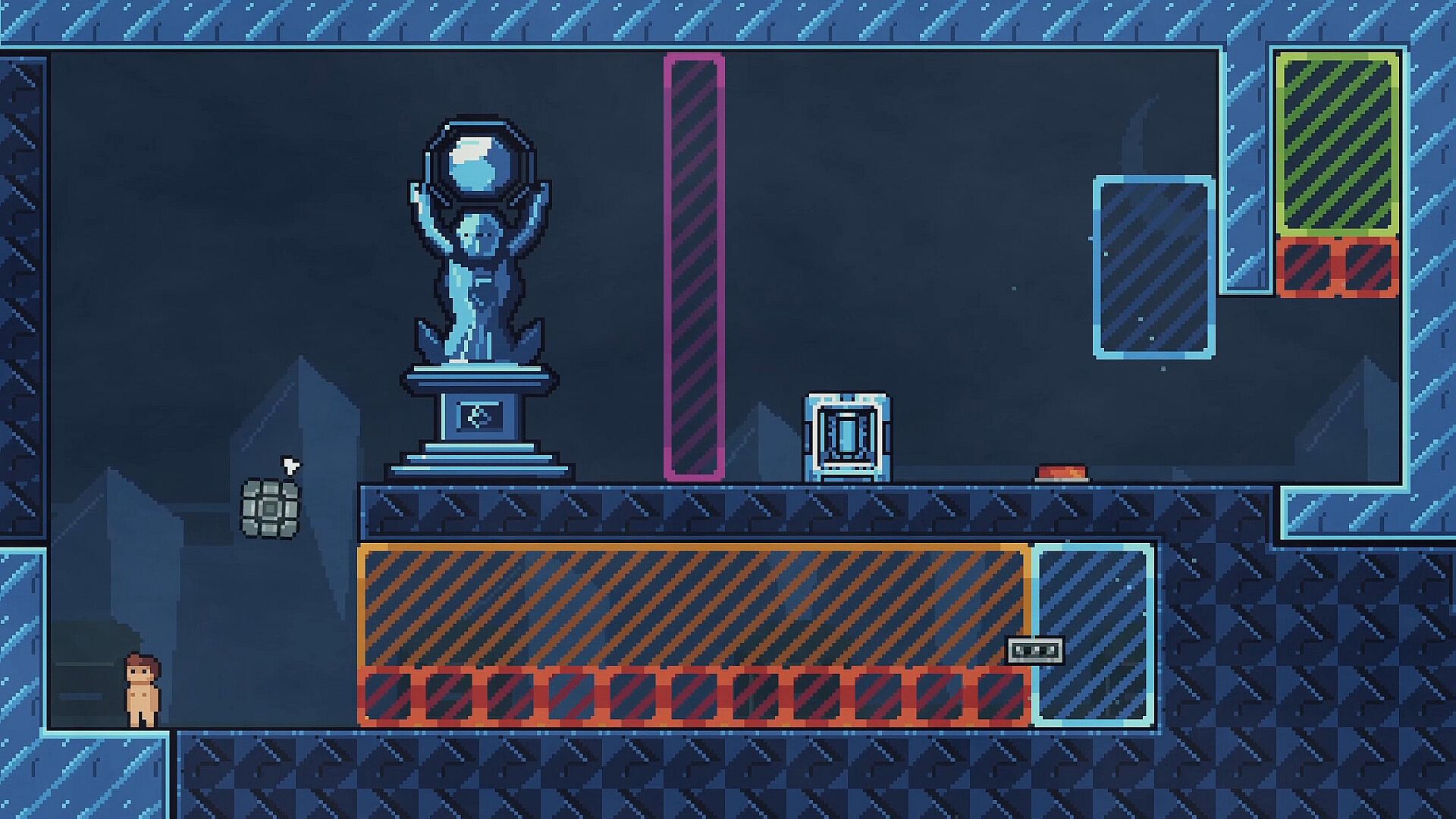
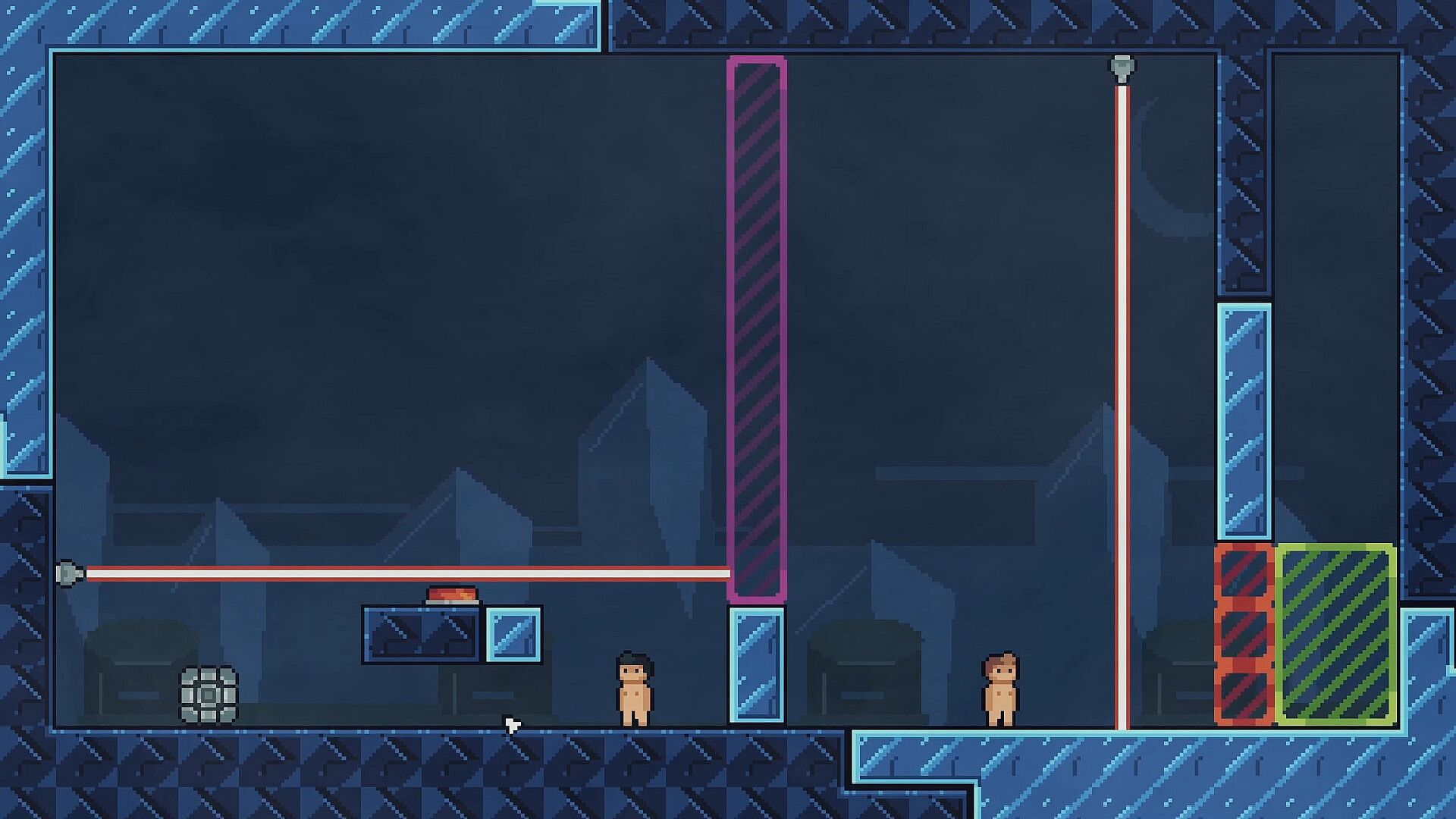
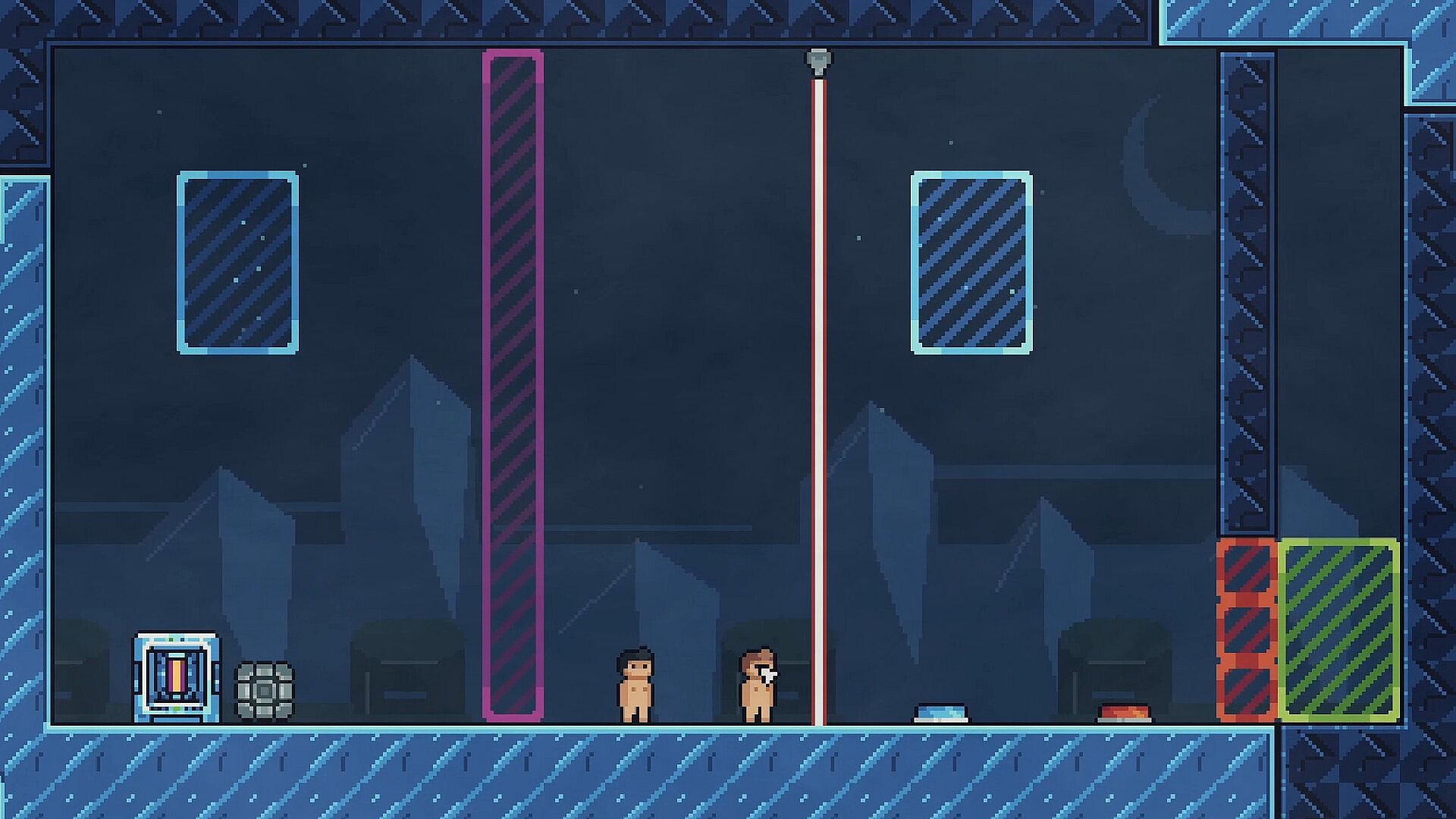
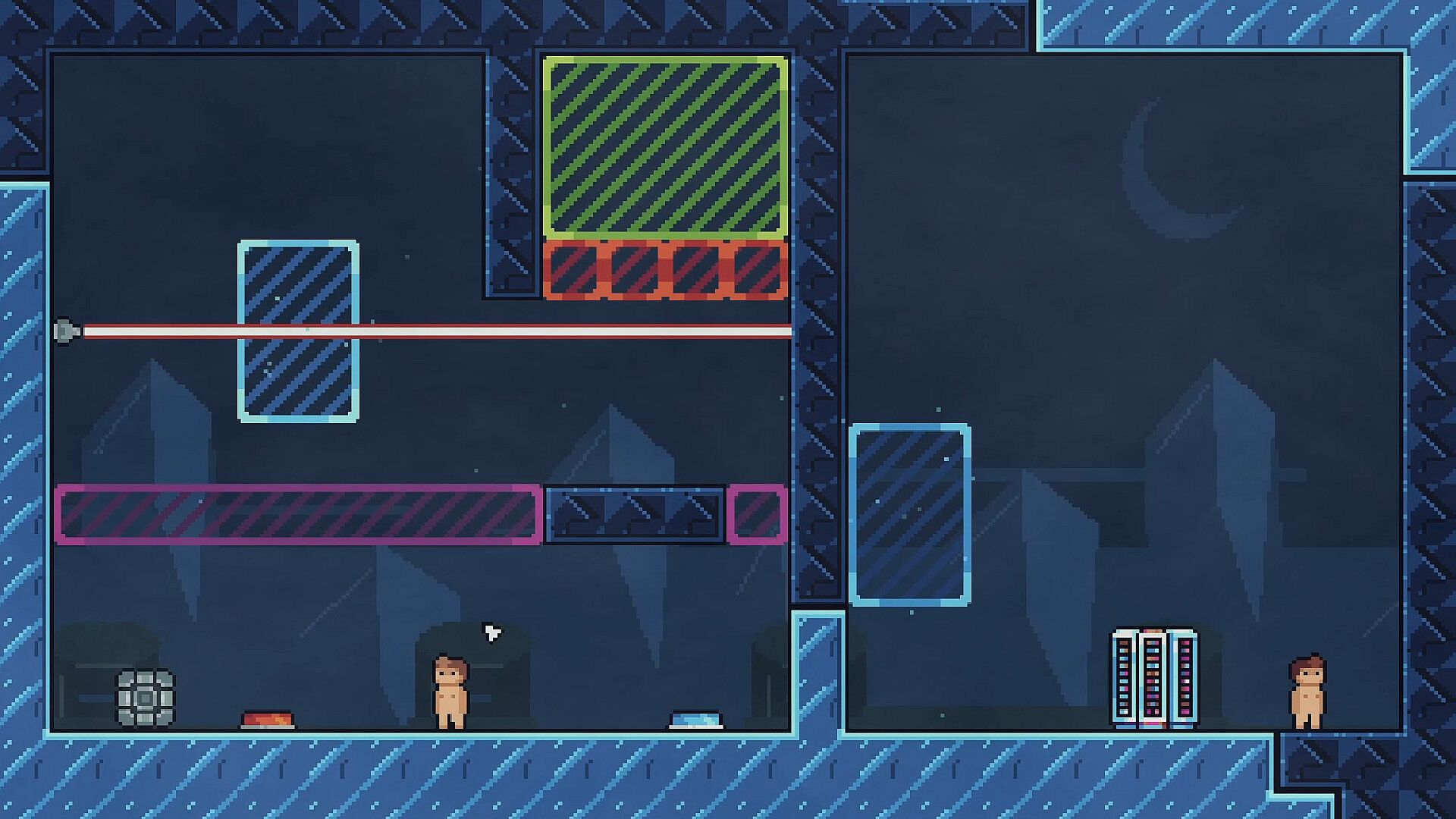
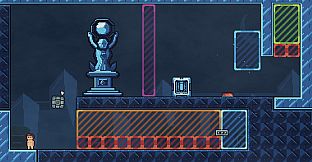
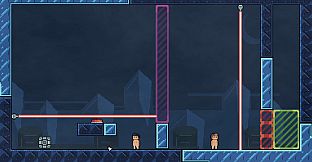
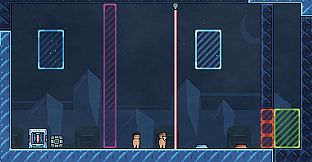
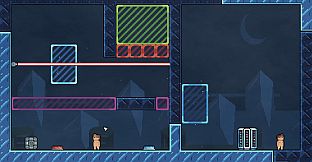
Drag and Drop: Teleport is a casual puzzle game for PC that centers on mouse-driven character movement through portal-based challenges. Players grab and reposition figures to navigate a series of interconnected spaces in a cyber-neon setting, using teleporters to shift positions instantly across each stage.
Gameplay
The core loop revolves around selecting characters with the mouse and directing them toward an exit while accounting for teleporters that relocate them to distant points on the map. These portals activate on contact and can link distant areas, allowing routes that bypass direct paths or hazards. Buttons placed throughout the levels alter teleporter destinations when activated, which forces players to test and observe changes before committing to a full sequence of moves. Route planning requires tracking multiple portal connections at once, as the exit position often depends on the current configuration of switches. Each decision to press a button rewrites possible paths, turning simple navigation into layered spatial problems that reward careful observation over trial and error.
Levels incorporate gaps, obstacles, and hidden routes that become accessible only after reconfiguring portals. The pixel art style renders glowing neon elements against dark city backdrops, providing clear visual feedback on active teleporters and button states without cluttering the screen. Progression builds through repeated exposure to these mechanics, with earlier stages introducing single-portal use before later ones combine multiple portals and switches in tighter spaces.
Game Modes
The game presents its content as a continuous single-player puzzle sequence. There are no separate competitive or cooperative modes listed. All activity occurs within the same framework of level-by-level progression, where success depends on solving each stage independently before advancing. The structure keeps focus on individual puzzle solutions rather than timed challenges or shared sessions.
Key Mechanics and Level Design
Teleporters form the central system, moving characters from entry points to exit points without additional input once contact occurs. Direction-changing buttons serve as the variable element, with each press redirecting at least one portal to a new location. This interaction creates branching possibilities within a single level, as players must identify which switch affects which portal through direct testing. The forty hand-crafted stages scale in complexity by increasing the number of portals and buttons while maintaining the same core drag-and-drop control scheme. Hidden areas often reward exploration after a portal reconfiguration opens a previously unreachable section.
Brain-teasing elements arise from the need to mentally simulate entire routes before executing moves, since portal chains can loop or lead to dead ends if switches remain untouched. The design avoids random elements, relying instead on fixed layouts that reward pattern recognition across multiple attempts.
Is It Worth Playing?
This title suits players who enjoy methodical puzzle games that emphasize spatial planning and cause-and-effect experimentation. The drag-and-drop interface keeps controls simple while the teleporter and button systems add layers of depth that grow across the forty levels. Those seeking quick sessions can tackle individual stages, while completionists will find value in mapping every portal interaction. Without confirmed player counts or update schedules, the experience stands on its self-contained puzzle set and consistent visual presentation. Fans of similar mouse-controlled logic games will likely find the cyber-neon atmosphere and portal manipulation engaging enough to justify a playthrough.