





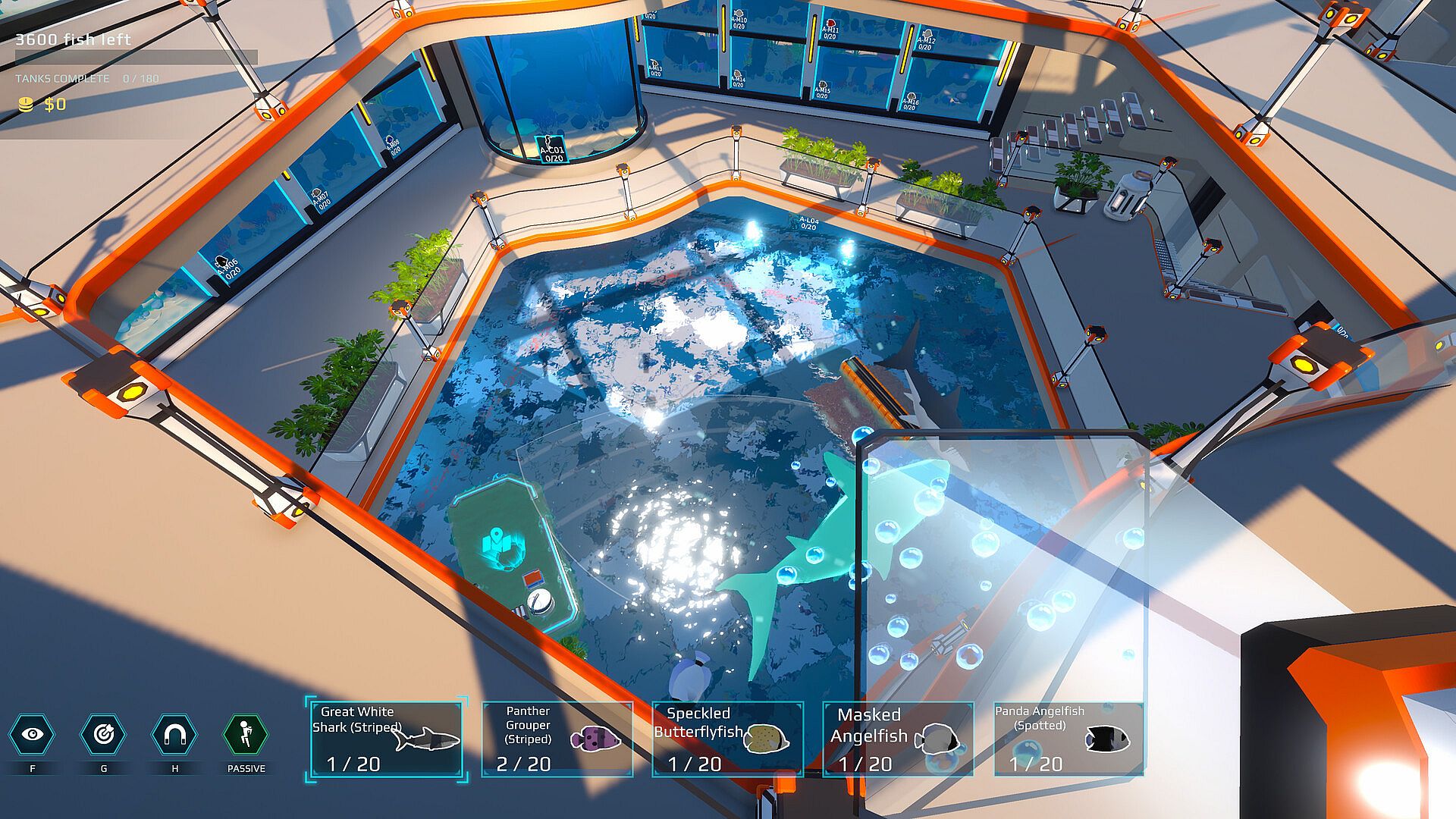
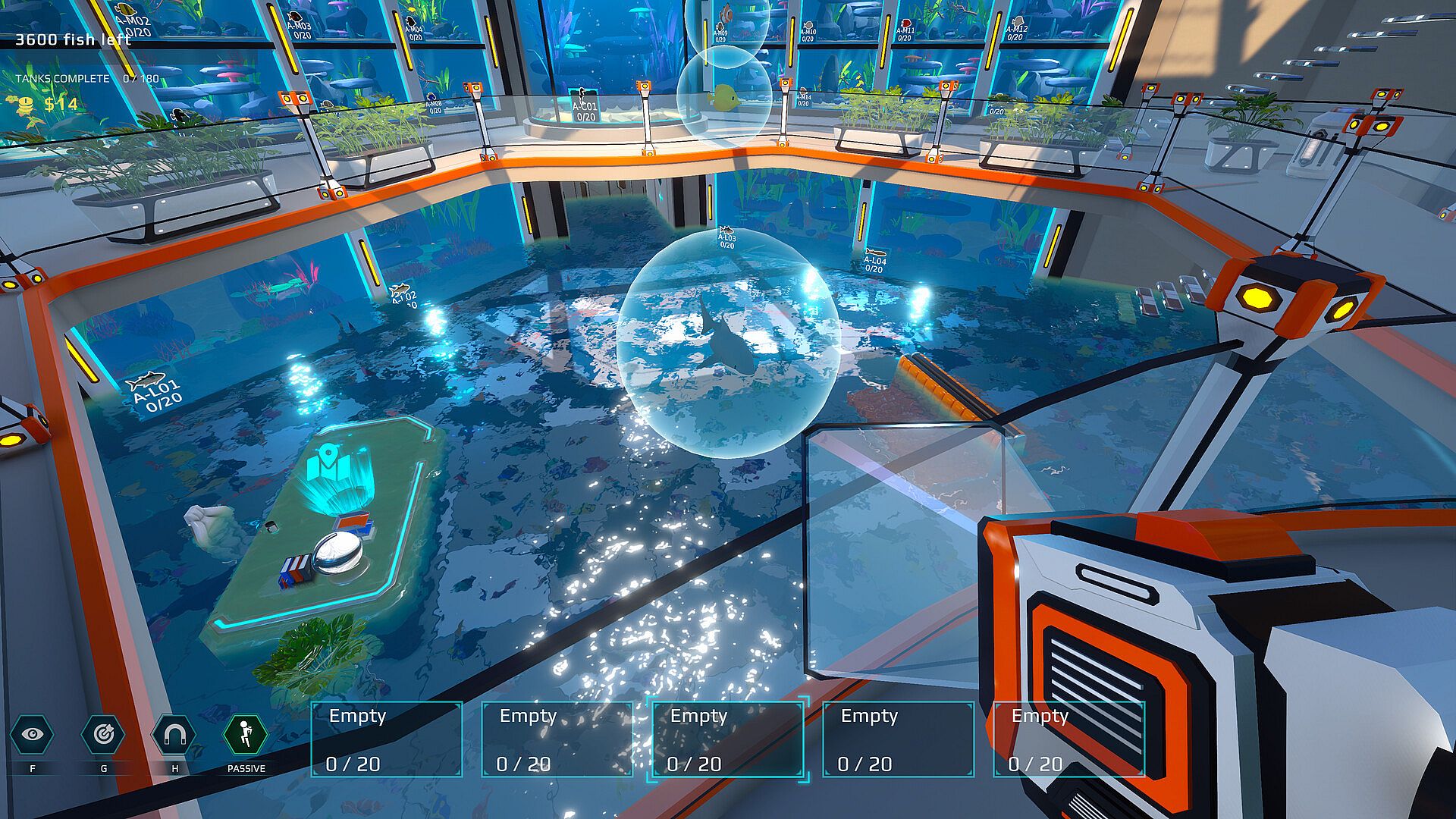
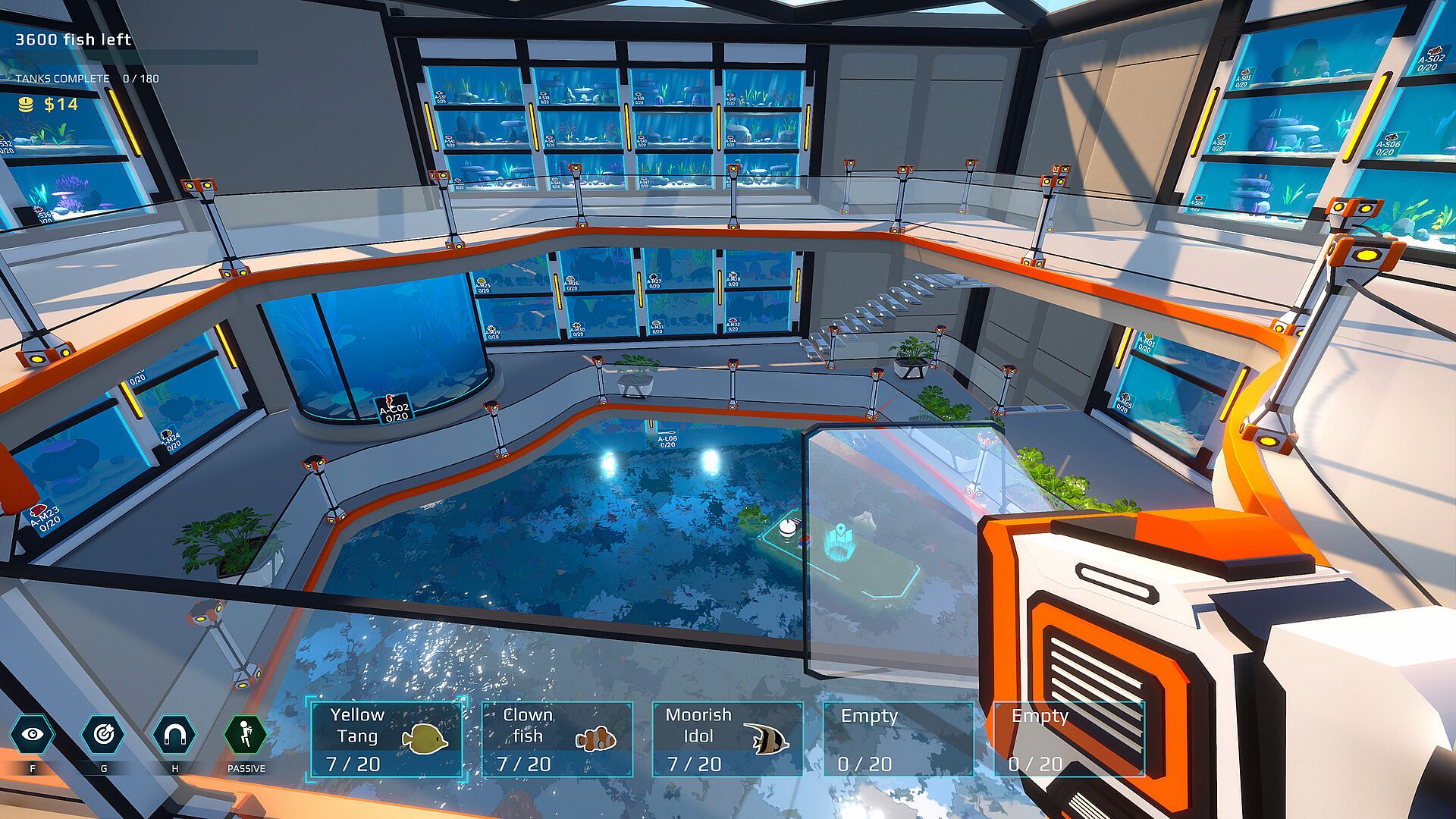
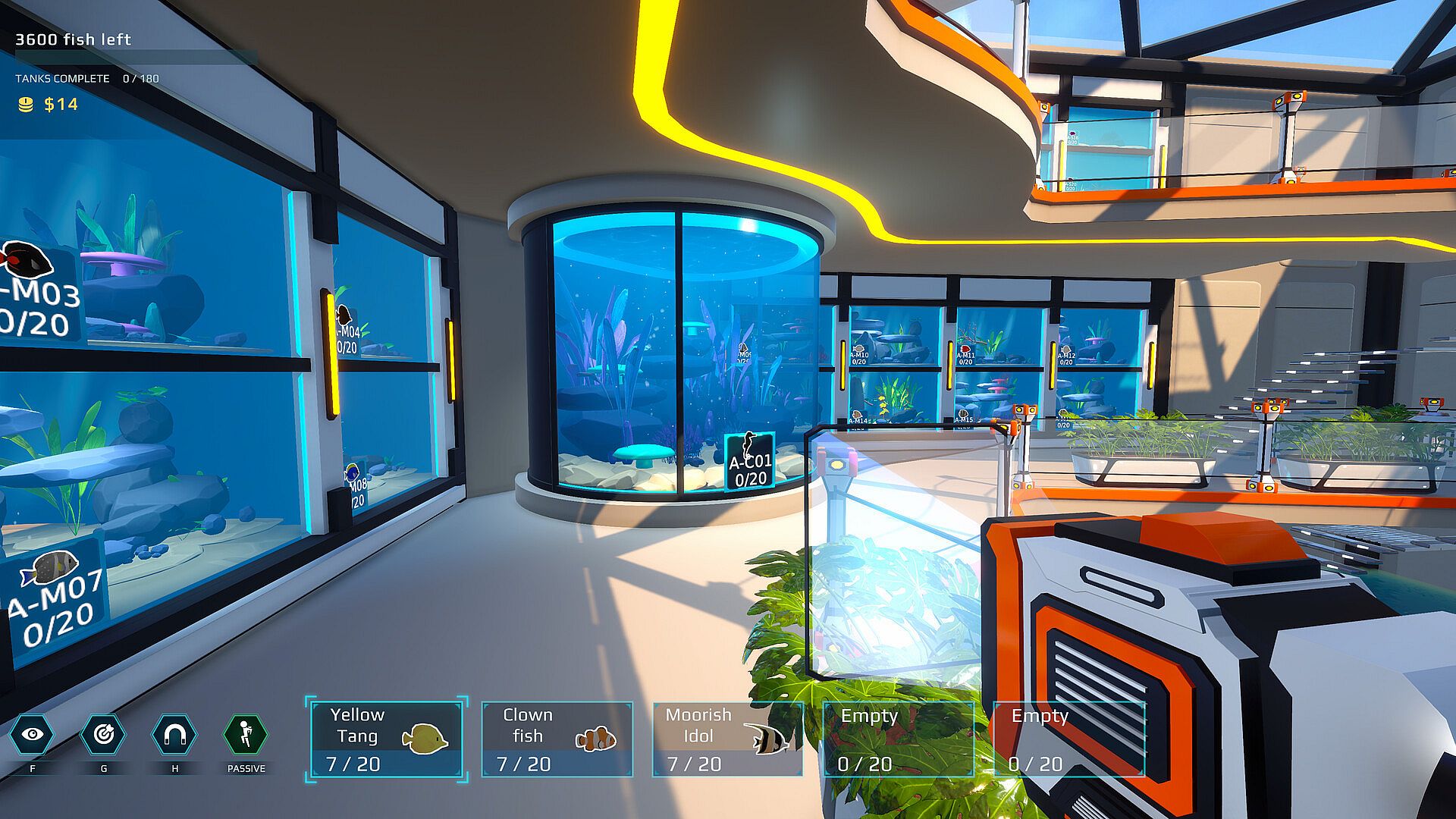
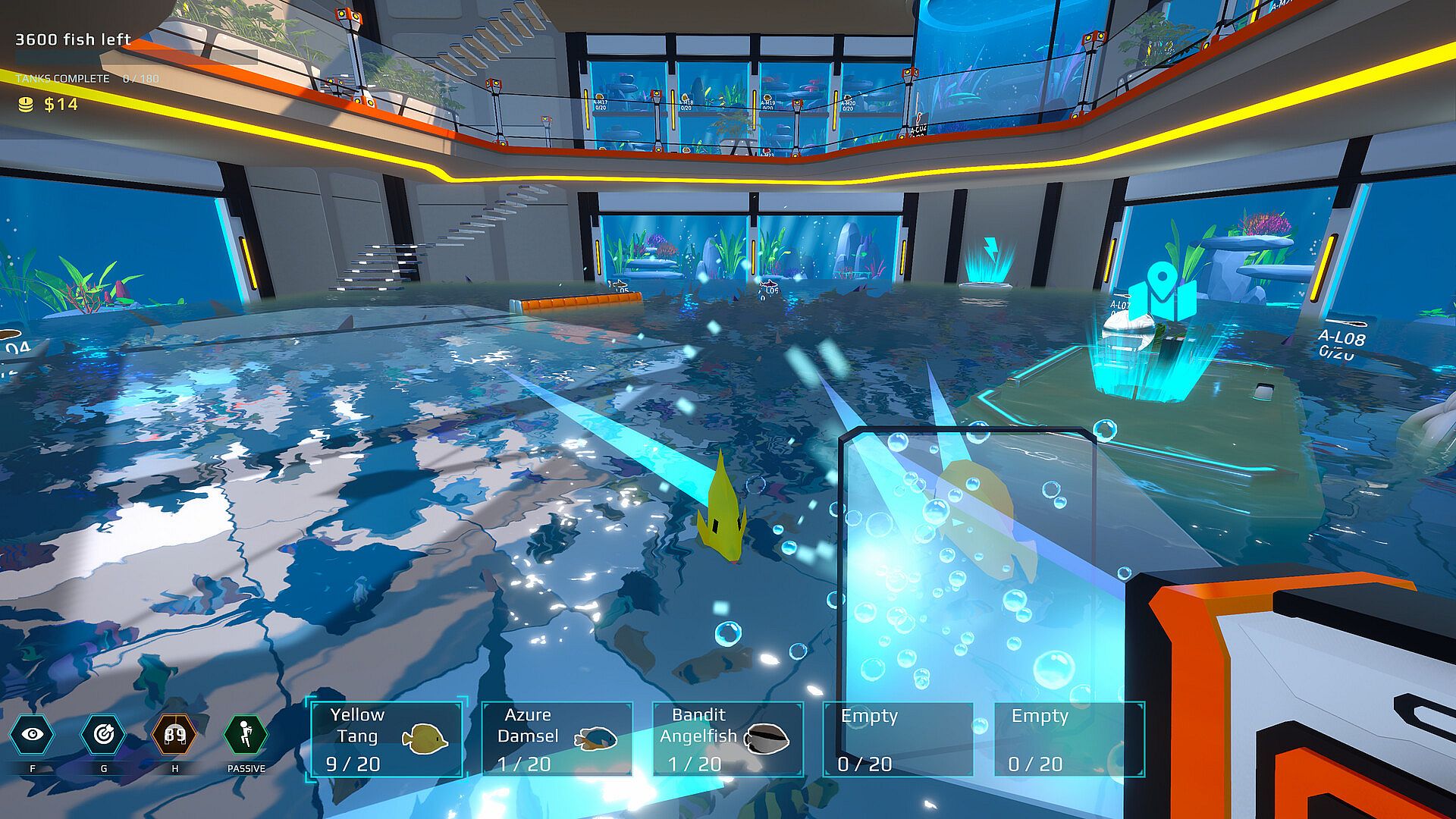
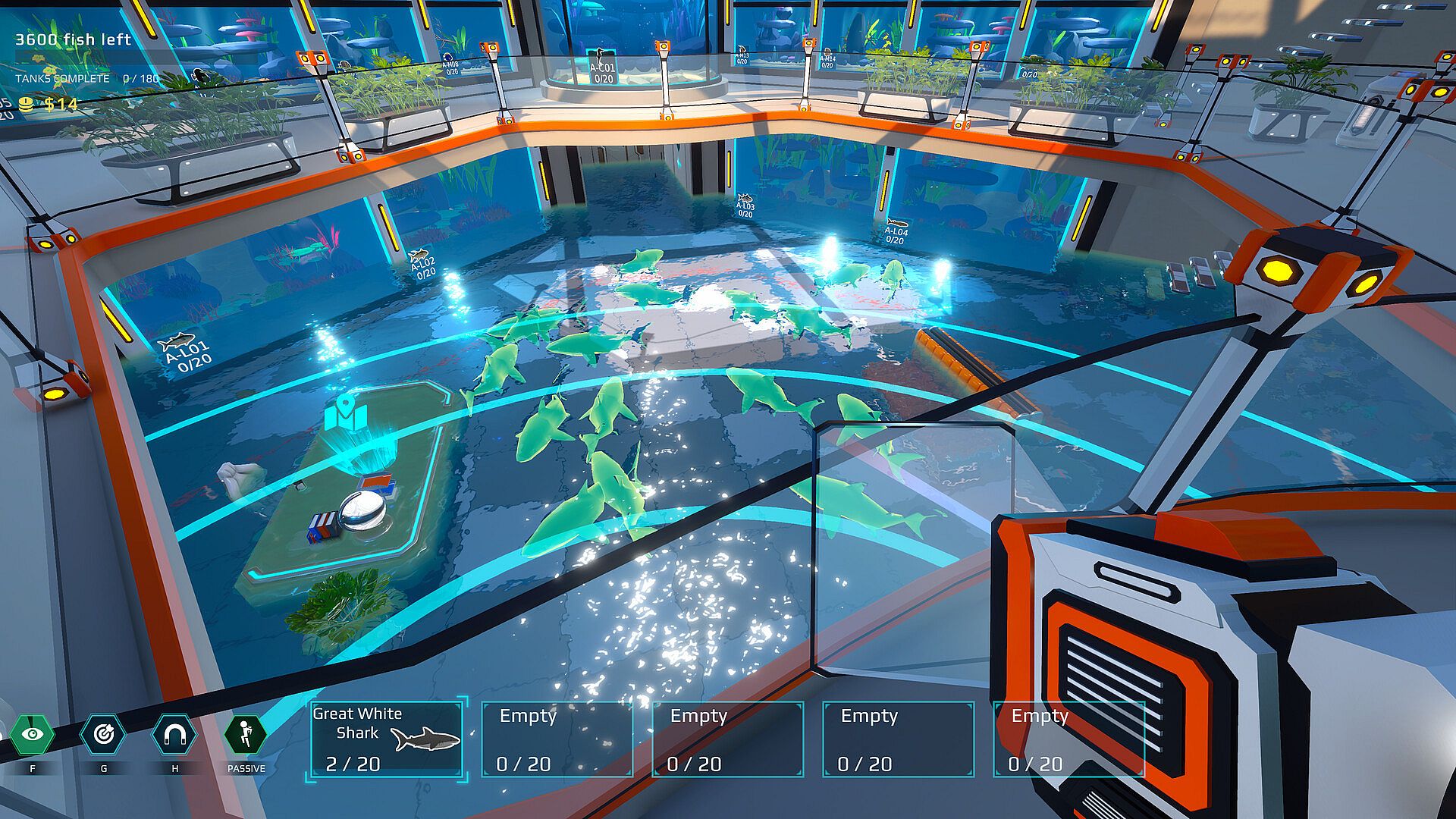





Fish It Out is a first-person casual simulation game set in a flooded aquarium facility. Players take on the role of a sorter equipped with a vacuum gun to collect and organize thousands of displaced fish back into their proper tanks. The core premise involves restoring order after a flood has scattered 3600 fish across the environment into 180 separate tanks, requiring careful identification and placement based on species and patterns.
Gameplay
The gameplay centers on a collecting and sorting loop that emphasizes inventory management and efficient routing through the multi-level facility. Players vacuum up loose fish during each trip, then identify the types carried before depositing them into matching tanks. Carrying capacity limits what can be gathered in one outing, so decisions about which fish to prioritize or when to return to empty inventory shape the pace of progress.
Early sessions involve learning the layout of the aquarium while handling mixed groups of fish. As familiarity grows, routes become more direct. Upgrade points earned through sorting allow purchases that improve collection speed, tracking of specific fish types, and overall workflow. Abilities unlocked this way help locate needed species faster and reduce backtracking, while equipment upgrades combine with cooldown management to create smoother sessions over time.
The experience rewards a methodical approach. Players can focus on completing one tank at a time or gather several compatible types together before making deliveries. The sci-fi styled environment supports this by providing clear visual cues for tank locations once upgrades are applied, turning initial exploration into repeated, optimized paths.
Game Modes
Fish It Out operates entirely as a single-player experience with no multiplayer components or separate modes listed. The entire game revolves around the core sorting and collection loop in the flooded facility, allowing players to progress at their own pace through the available tanks and fish types.
Progression ties directly to this unified structure. Completing sorting tasks yields resources for upgrades that enhance the same core activities, without branching into timed challenges, score attacks, or alternative scenarios. The focus remains on restoring the aquarium through repeated trips that grow more efficient with each ability and equipment improvement.
Progression and Upgrades
Upgrade systems form the main avenue for long-term engagement. Points accumulated from successful sorting sessions unlock new abilities for locating fish and tools that streamline transport and identification. These combine with equipment enhancements to handle larger loads or reduce the time spent crossing the facility.
Cooldowns on abilities encourage thoughtful timing during collection runs. Players learn to balance active use of tracking tools with passive inventory clearing, creating personal rhythms suited to different sections of the aquarium. This incremental improvement keeps the sorting process engaging as more tanks become accessible and familiar.
Is It Worth Playing?
Fish It Out targets players who enjoy relaxed, methodical simulation and puzzle-style sorting games. The first-person perspective and vacuum-based collection add a tactile layer to the task of matching fish to tanks, while the upgrade path provides steady motivation to continue organizing the facility.
Because the game remains in a coming-soon state with no public release or reviews available yet, its appeal rests on the described mechanics of inventory-aware trips, ability unlocks, and facility navigation. Those drawn to casual indie titles focused on tidy-up tasks and incremental efficiency gains may find the loop satisfying once it launches on PC.
The absence of multiplayer or additional modes keeps the experience contained and self-paced, suiting solo sessions where attention stays on refining collection routes and completing the full set of tanks. For fans of similar organizing simulations, the combination of visual identification and upgrade-driven improvements offers a clear hook without unnecessary complexity.












