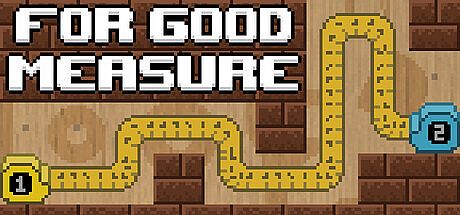


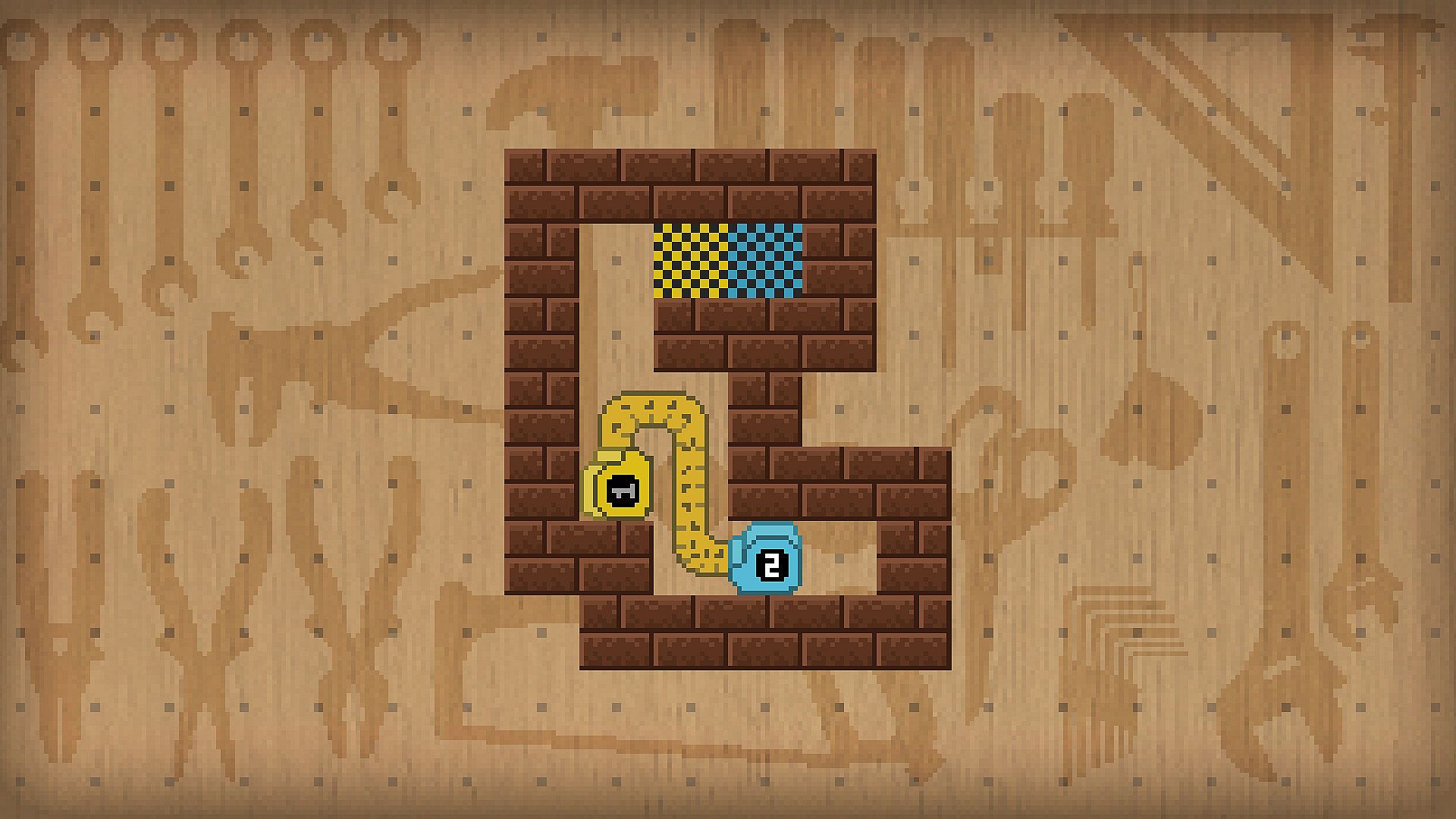
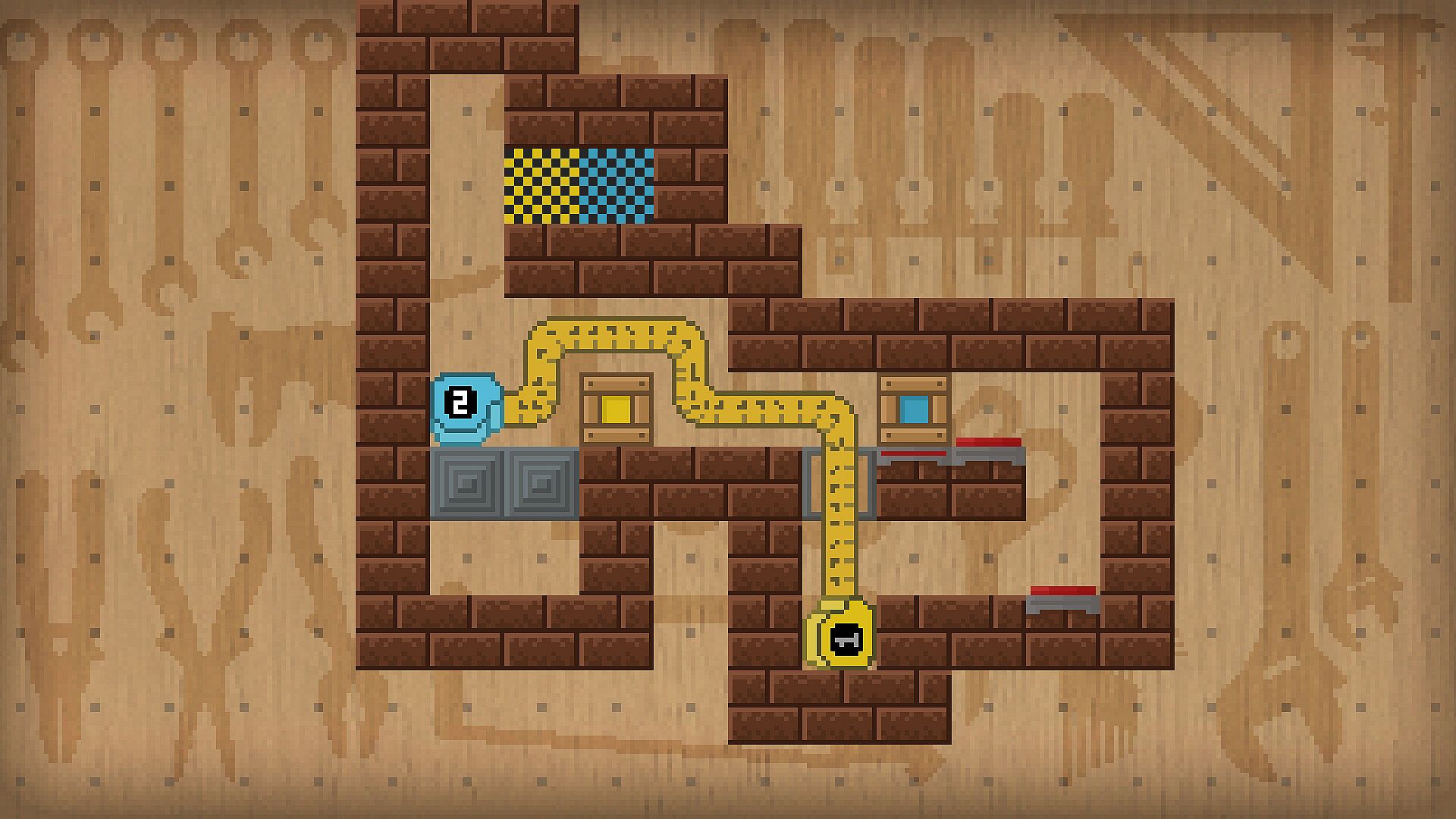
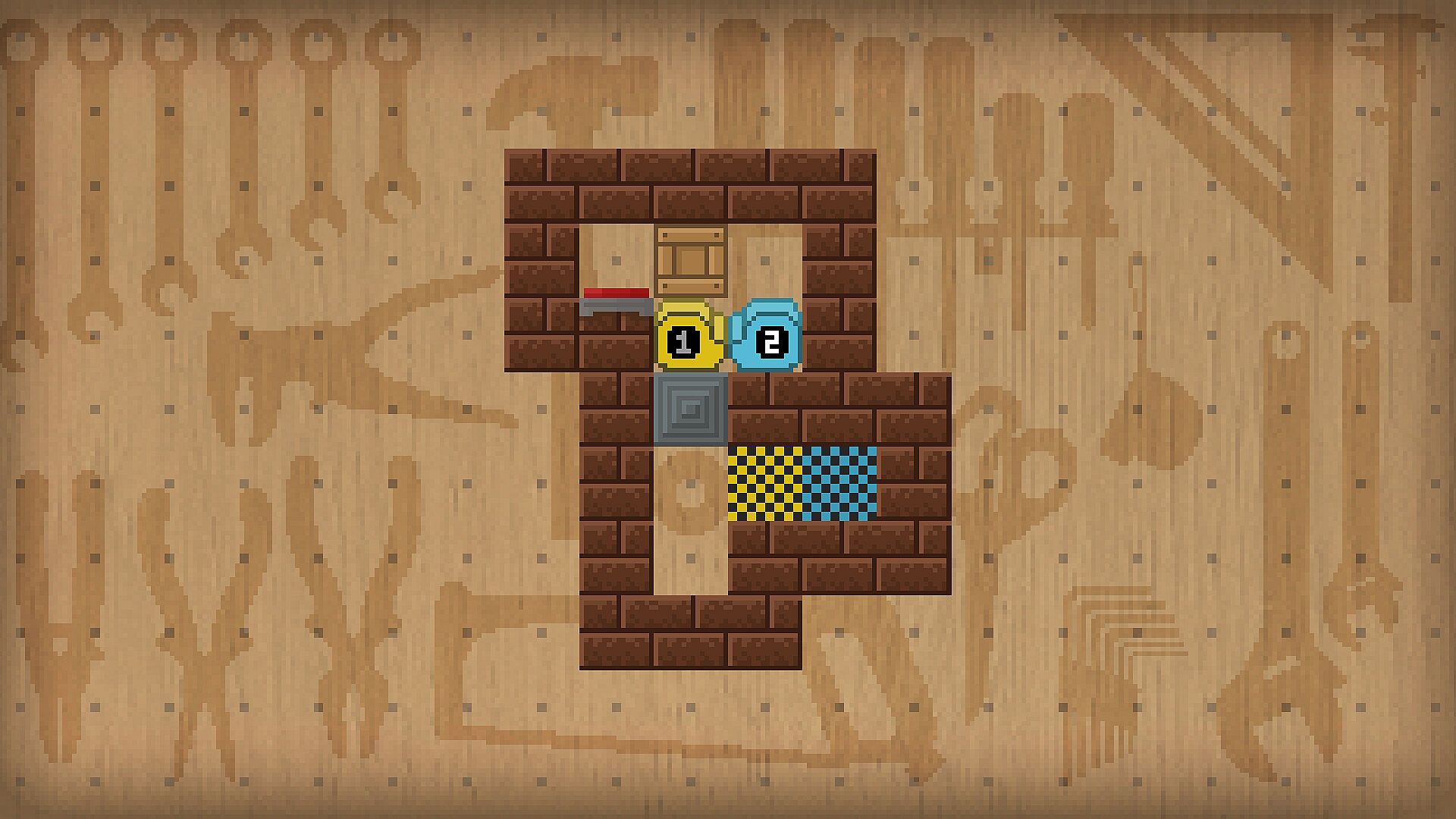
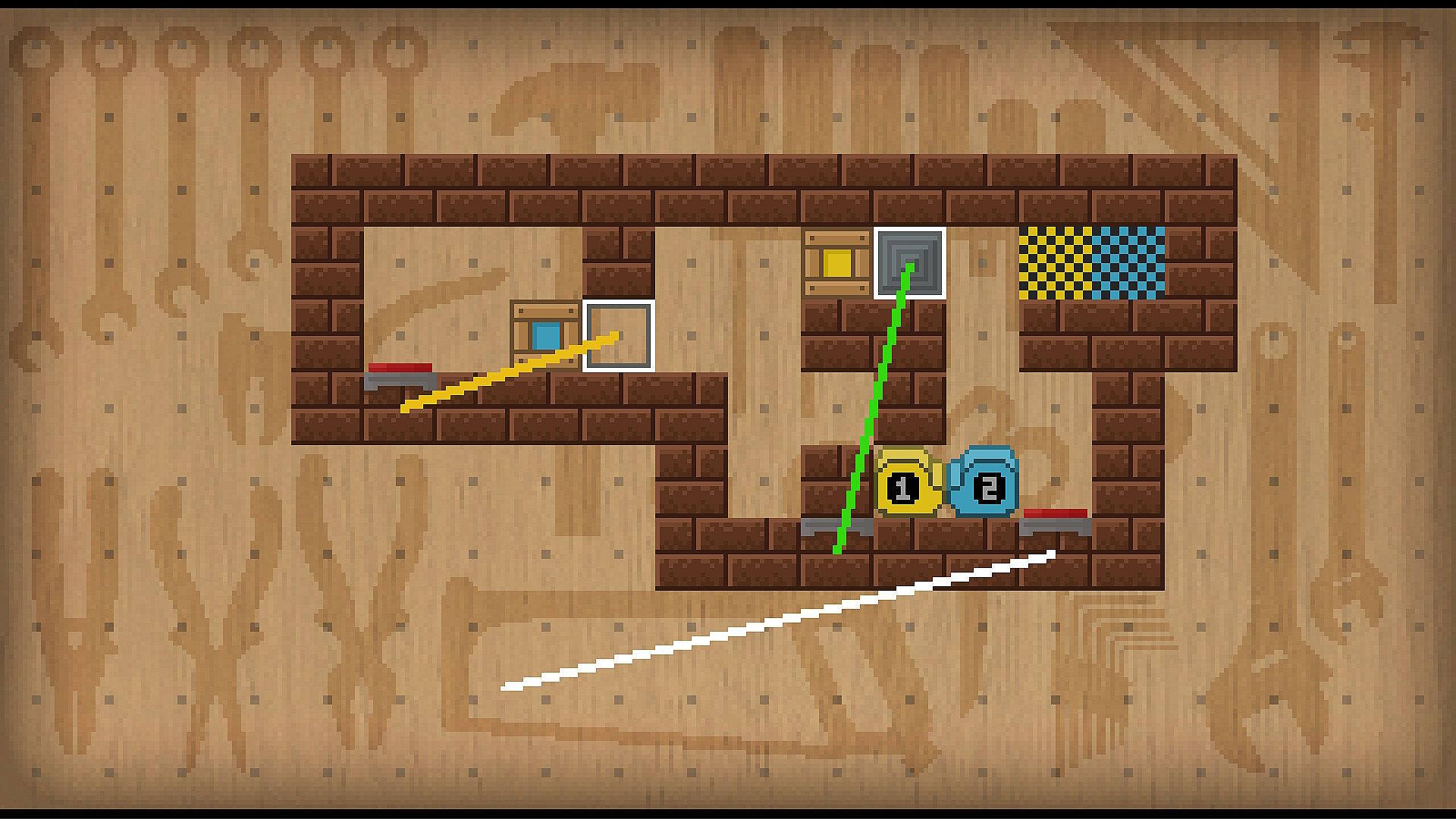
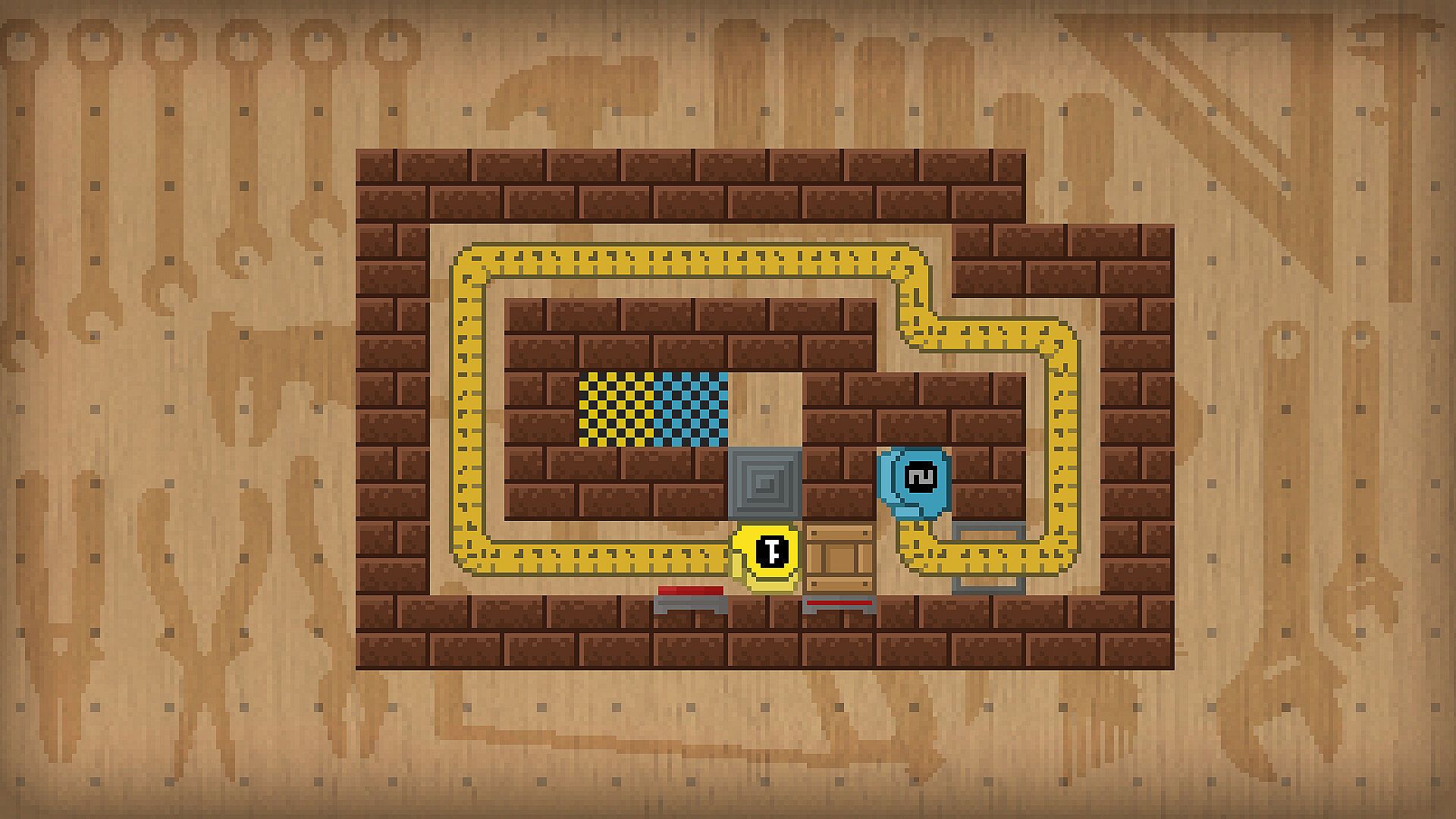
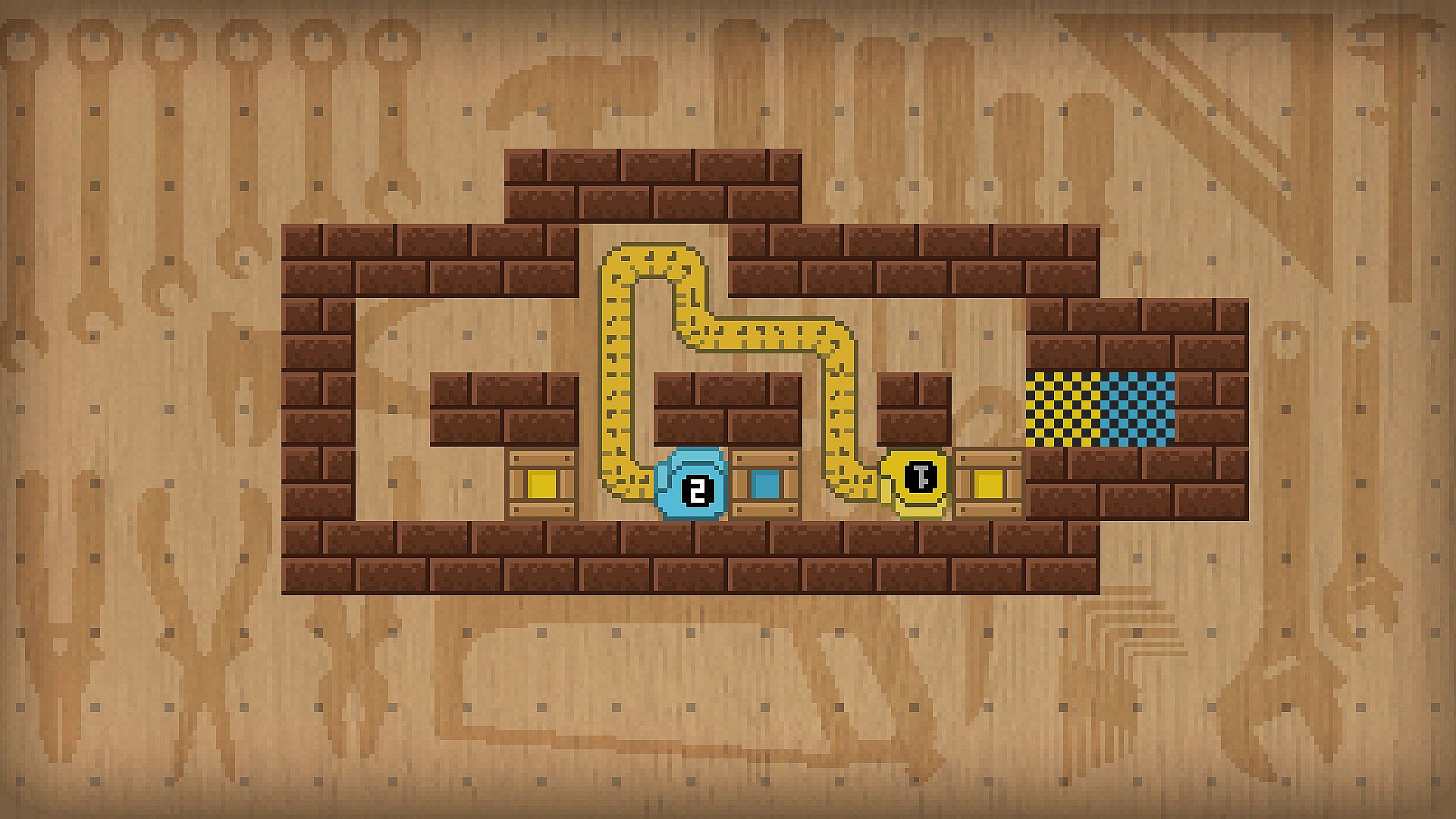
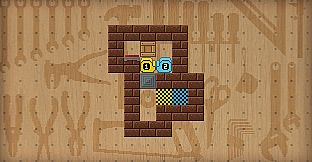
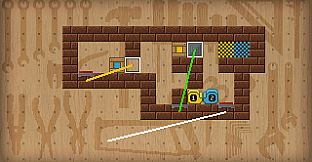
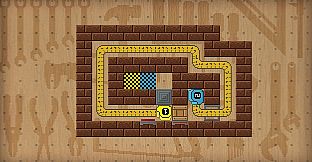
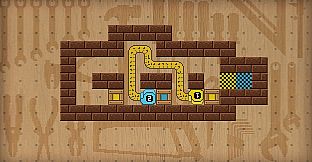
For Good Measure is an indie casual puzzle game for PC in which players guide two measuring tapes connected by a shared strip of tape through a series of spatial challenges. The premise centers on precise positioning, where each tape must reach a designated goal while the connection between them creates constant physical constraints. Simple inputs drive the action, yet the interplay of movement quickly produces intricate problem-solving demands that reward careful planning over rapid trial and error.
Gameplay
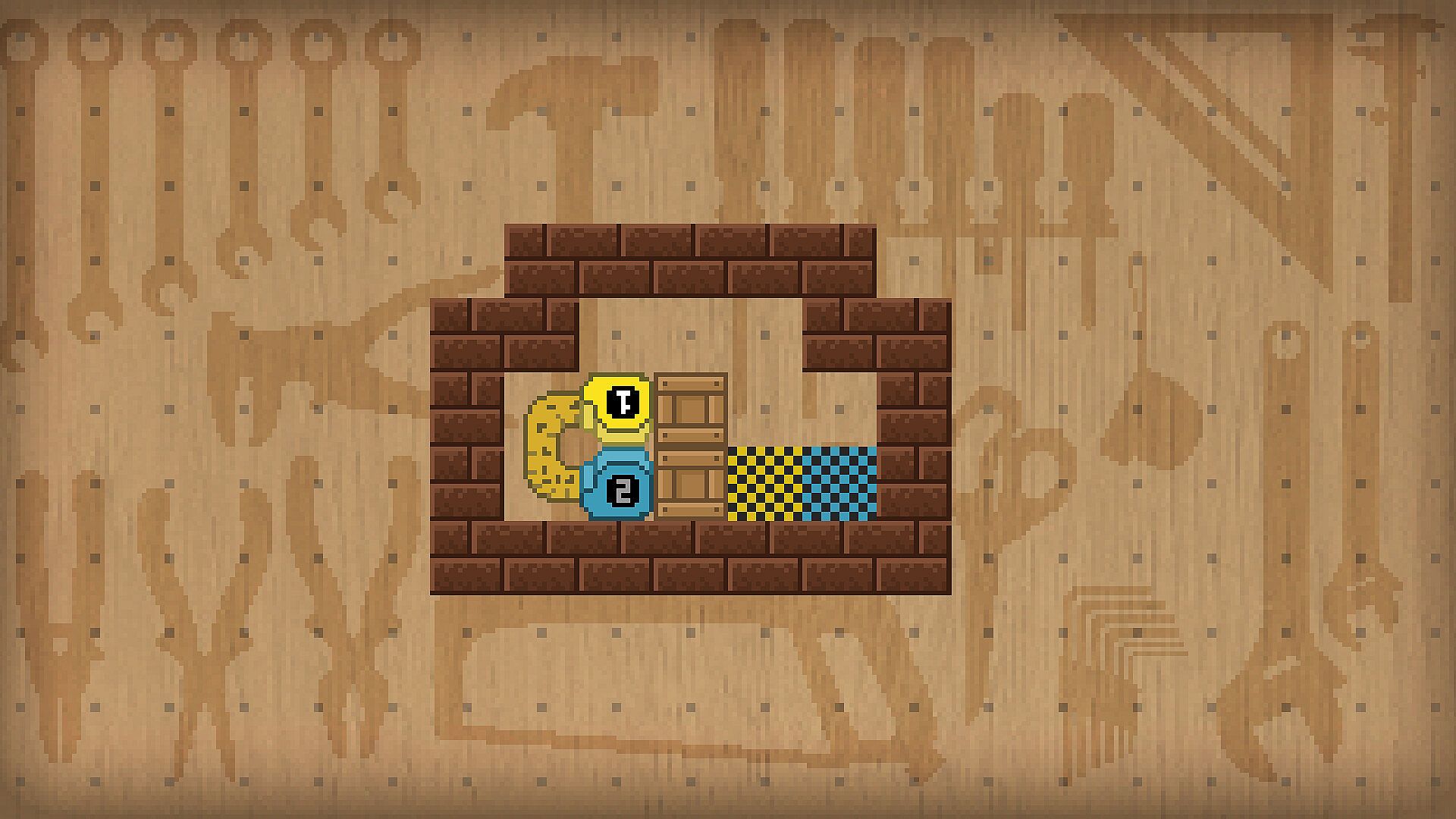
The core loop revolves around two-button controls for each tape. One input pushes the tape away from its partner, while the other pulls it closer. This mechanic generates tension because every adjustment affects both objects simultaneously. Levels incorporate elements such as color-coded boxes that must be maneuvered into place, pressure plates that open doors, and gravity-influenced pushing similar to classic box-pushing puzzles but altered by the connected movement system. A single misstep can entangle the tapes or block paths, forcing a full reset of the current stage. The design emphasizes spatial awareness and sequence optimization, with over sixty hand-crafted levels that gradually introduce new combinations of obstacles.
Progression feels deliberate. Early stages focus on basic coordination between the two tapes. Later stages layer in additional mechanics like switches and movable objects that require the tapes to interact with the environment in specific orders. The result is a steady increase in complexity without overwhelming new rules at once. Controller support allows precise inputs, and the system works equally well with keyboard and mouse for solo sessions.
Game Modes
Single-player mode lets one person handle both tapes at the same time, switching focus between them as needed to solve each puzzle. This approach turns the experience into a test of mental multitasking and foresight. Co-op options expand the same levels for two participants. Local co-op uses shared or split-screen views on one machine, while online co-op connects players across the internet. Both co-op formats preserve the same core rules and level layouts, so the challenge remains consistent whether players share a couch or connect remotely.
The level editor provides a separate creative mode. Users can build custom stages using the same mechanics and objects found in the main campaign. Completed creations can be shared through the integrated workshop system, allowing community members to download and attempt puzzles made by others. This extends the available content beyond the initial sixty-plus stages without altering the fundamental rules.
Level Design and Mechanics
Each stage presents a contained environment where the connected tapes must navigate around fixed and dynamic elements. Gravity affects box movement, so pushing an object in one direction can cause it to slide or fall in unexpected ways once released. Color coding on boxes and switches adds a matching requirement that forces players to coordinate which tape interacts with which object. Doors activated by buttons introduce timing elements, because the tapes cannot occupy the same space and must sometimes hold positions while the other completes a task. These layers combine to create puzzles that feel fresh even when they reuse core movement rules.
The tutorial introduces the controls and basic interactions in a short sequence of guided stages. After that, players are left to experiment with the exponential growth of possible move combinations. The design avoids unnecessary complexity in the interface, keeping attention on the spatial relationships between the two tapes and the level geometry.
Is It Worth Playing?
For Good Measure targets players who enjoy deliberate puzzle solving and cooperative coordination. The simple controls lower the barrier to entry, while the connected movement system creates depth that scales across dozens of levels. Single-player sessions suit those who prefer to tackle challenges alone, and the co-op modes offer a natural extension for pairs who want to communicate strategies in real time. The included level editor and workshop support add longevity through user-generated content.
Because the game remains in development with a planned release in December 2026, current information centers on the verified mechanics and features described by the developer. Puzzle enthusiasts who value spatial reasoning and light co-op interaction will find the core loop engaging. Those seeking fast action or narrative-driven experiences may want to wait for additional details closer to launch. The combination of accessible inputs and growing puzzle complexity positions the title as a focused entry in the casual indie puzzle category.