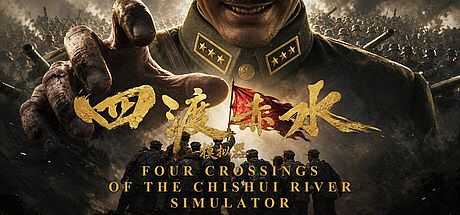


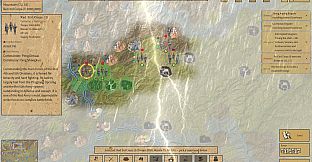
Four Crossings of the ChiShui River Simulator is a turn-based strategy game for PC that places players in command of the Central Red Army during its 1935 campaign. The title simulates the historical breakout from encirclement through an open hex-grid campaign rather than linear scenarios.
Gameplay
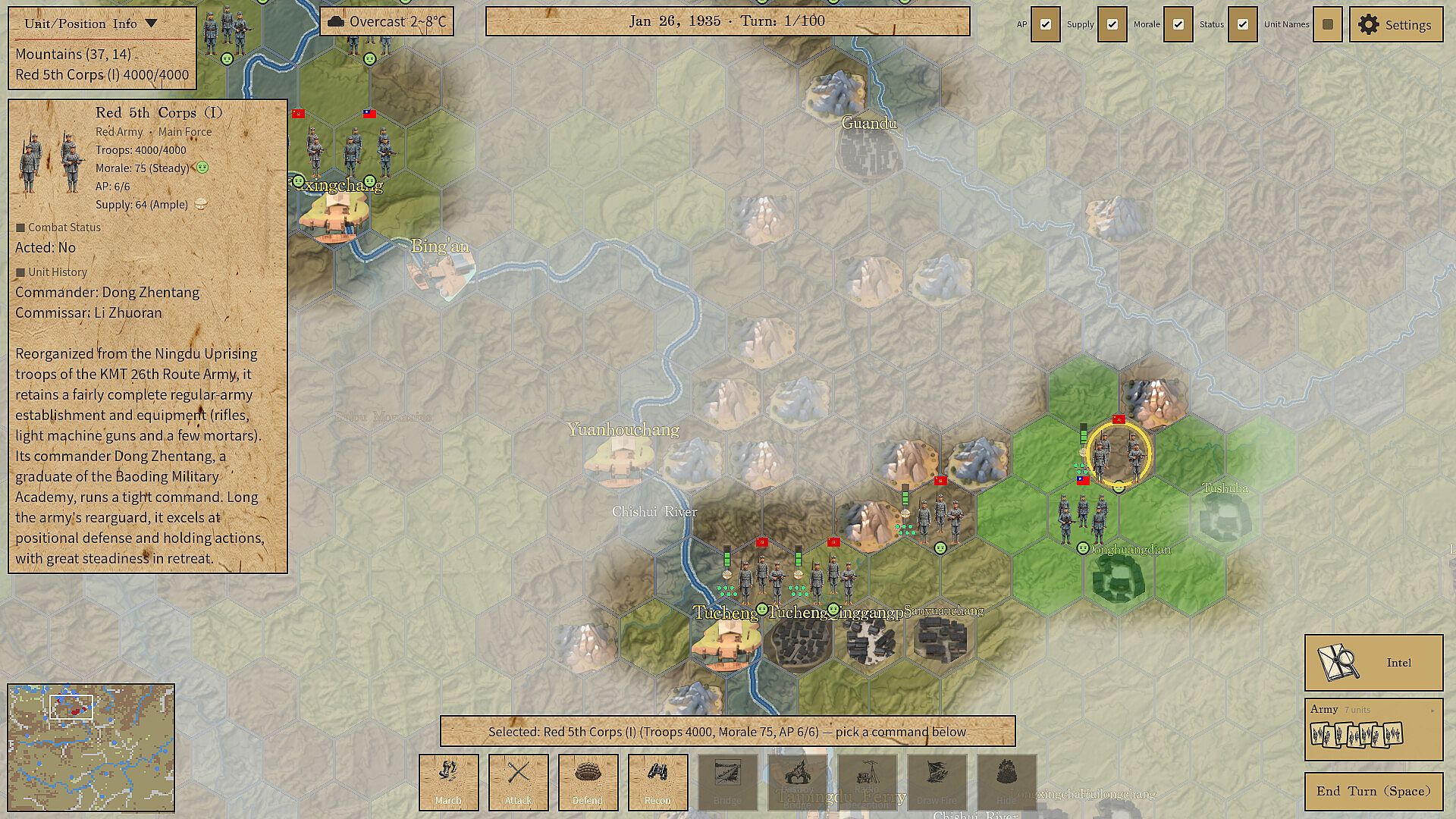
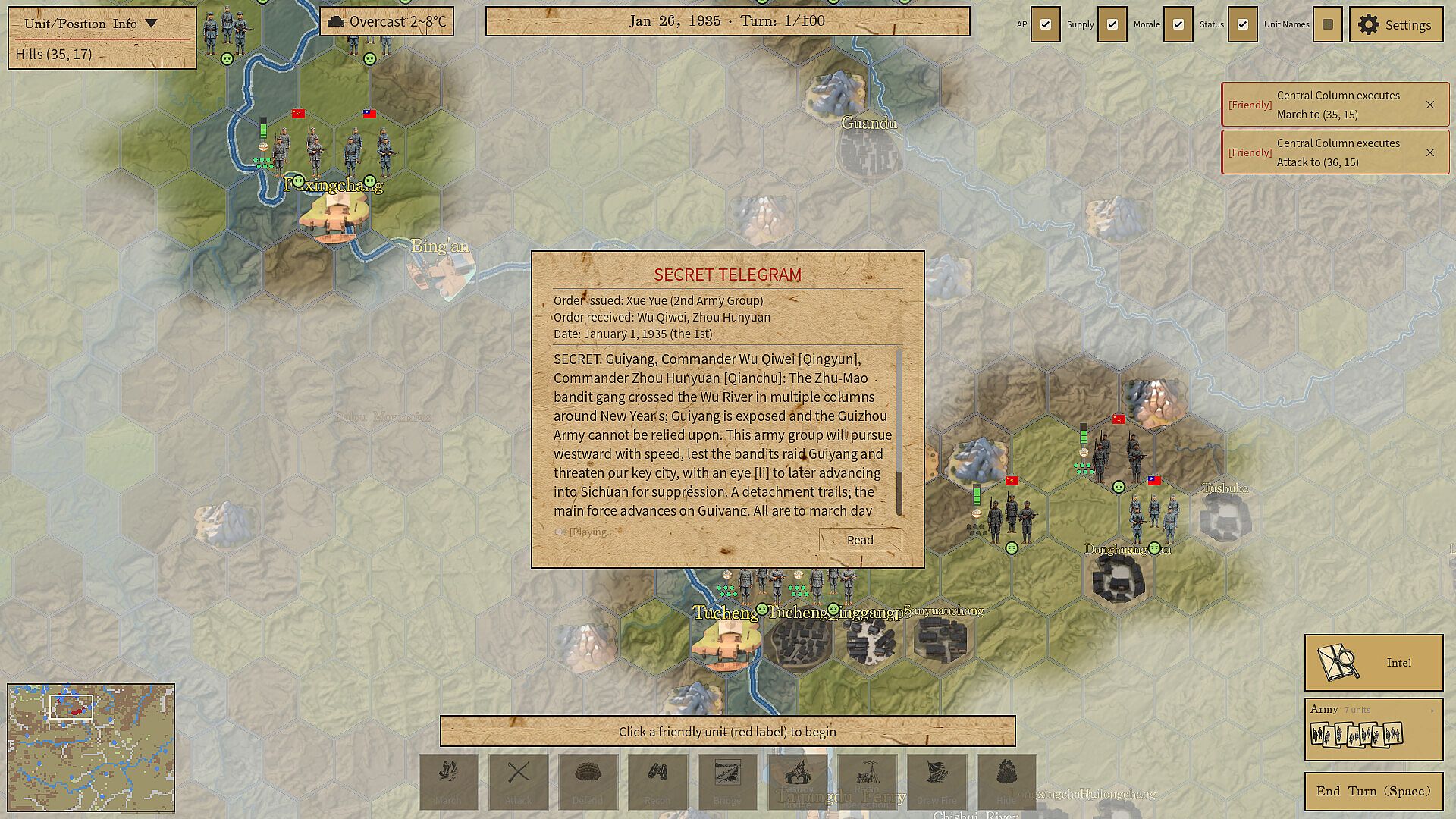
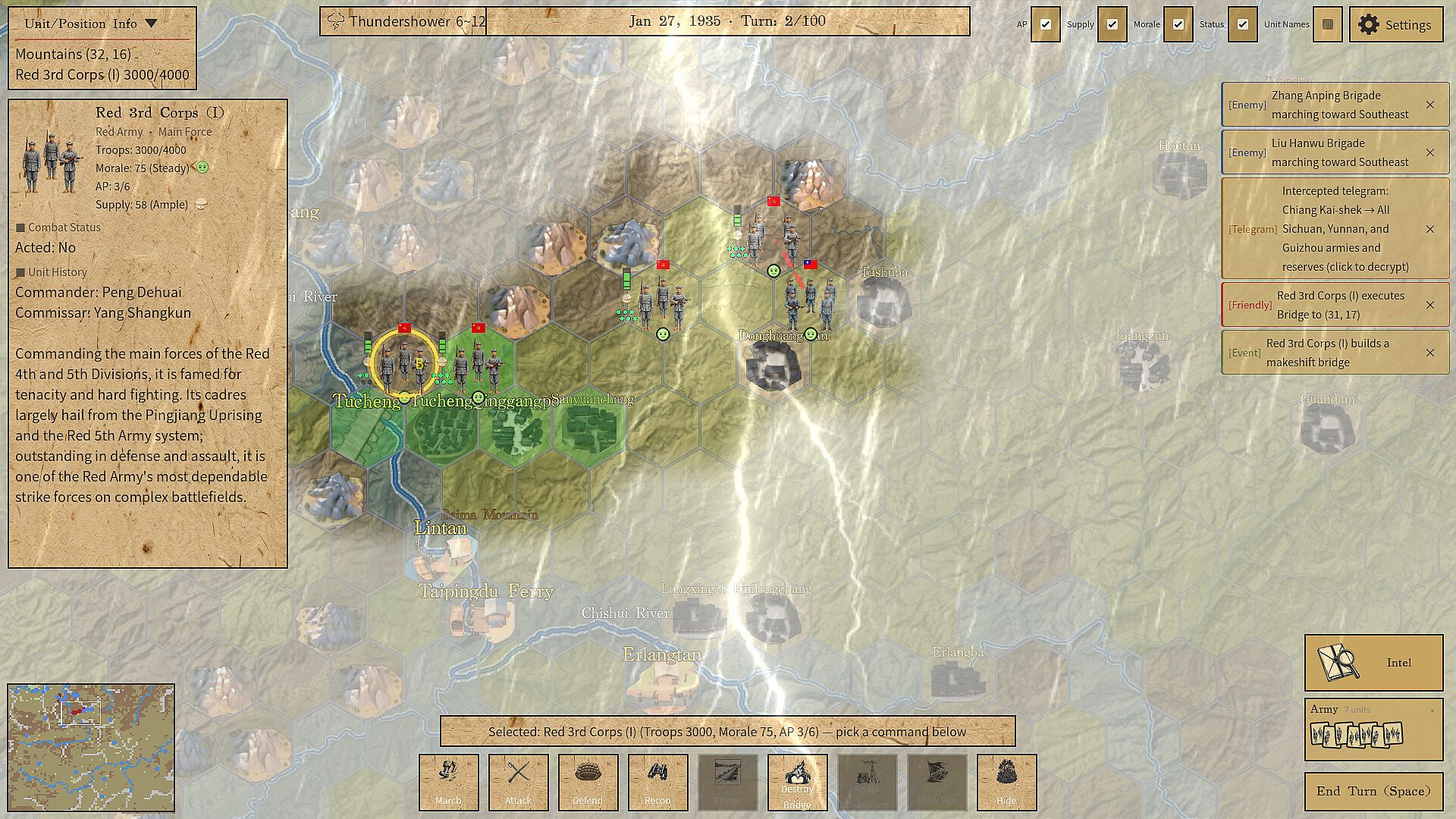
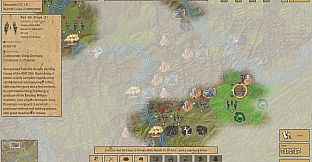
Players act as the Central Revolutionary Military Commission and issue daily orders across a map spanning from the withdrawal at Tucheng on January 26, 1935, to May 5. The battlefield covers an 82 by 73 hex grid built from historical military maps and elevation data, with accurate placements for the Yangtze, Chishui, and Wu rivers along with key locations such as Loushan Pass, Zunyi, and Maotai. Weather conditions for the full 100 days draw from primary sources and affect movement, visibility, bridging operations, and air activity.
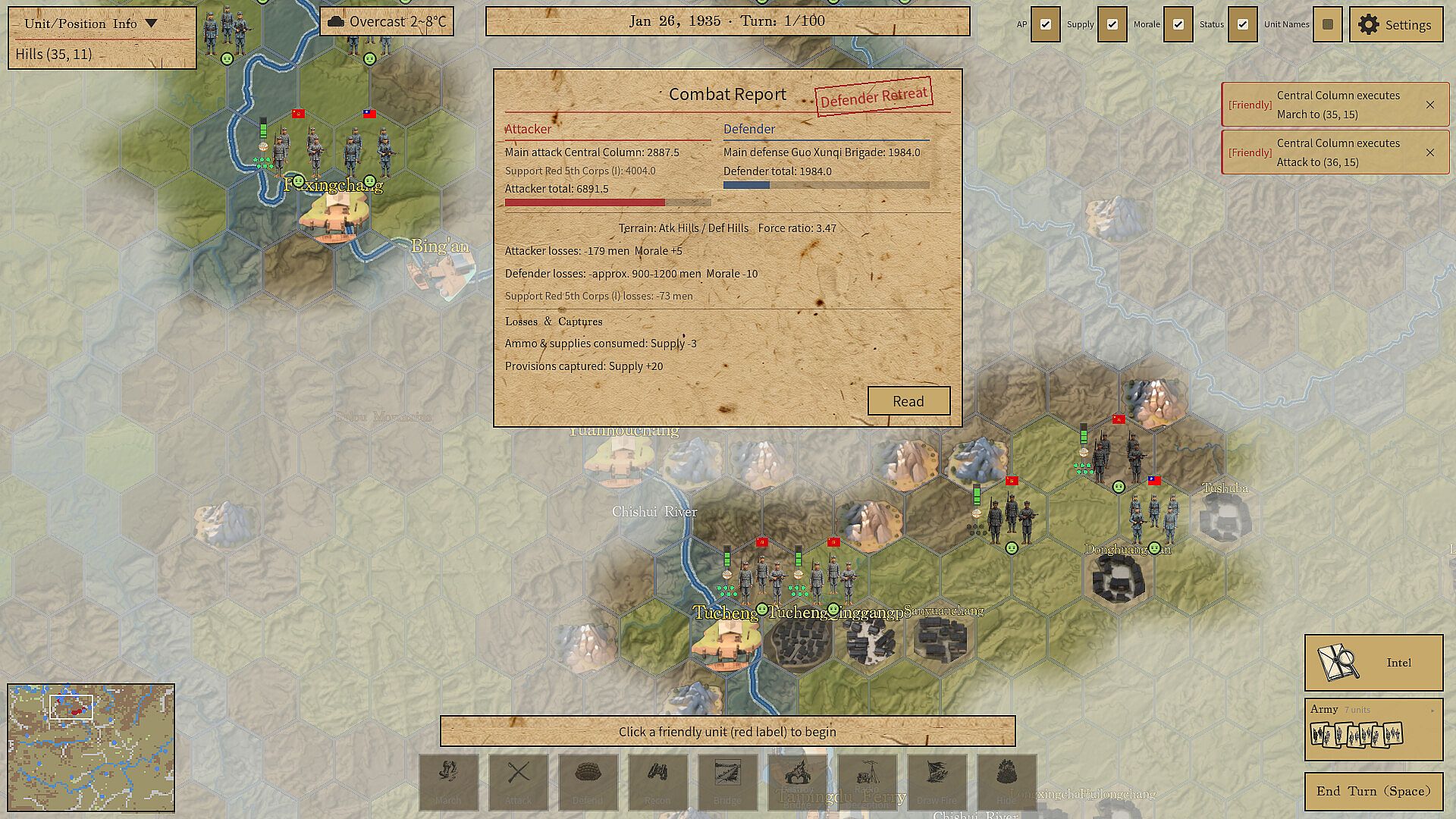
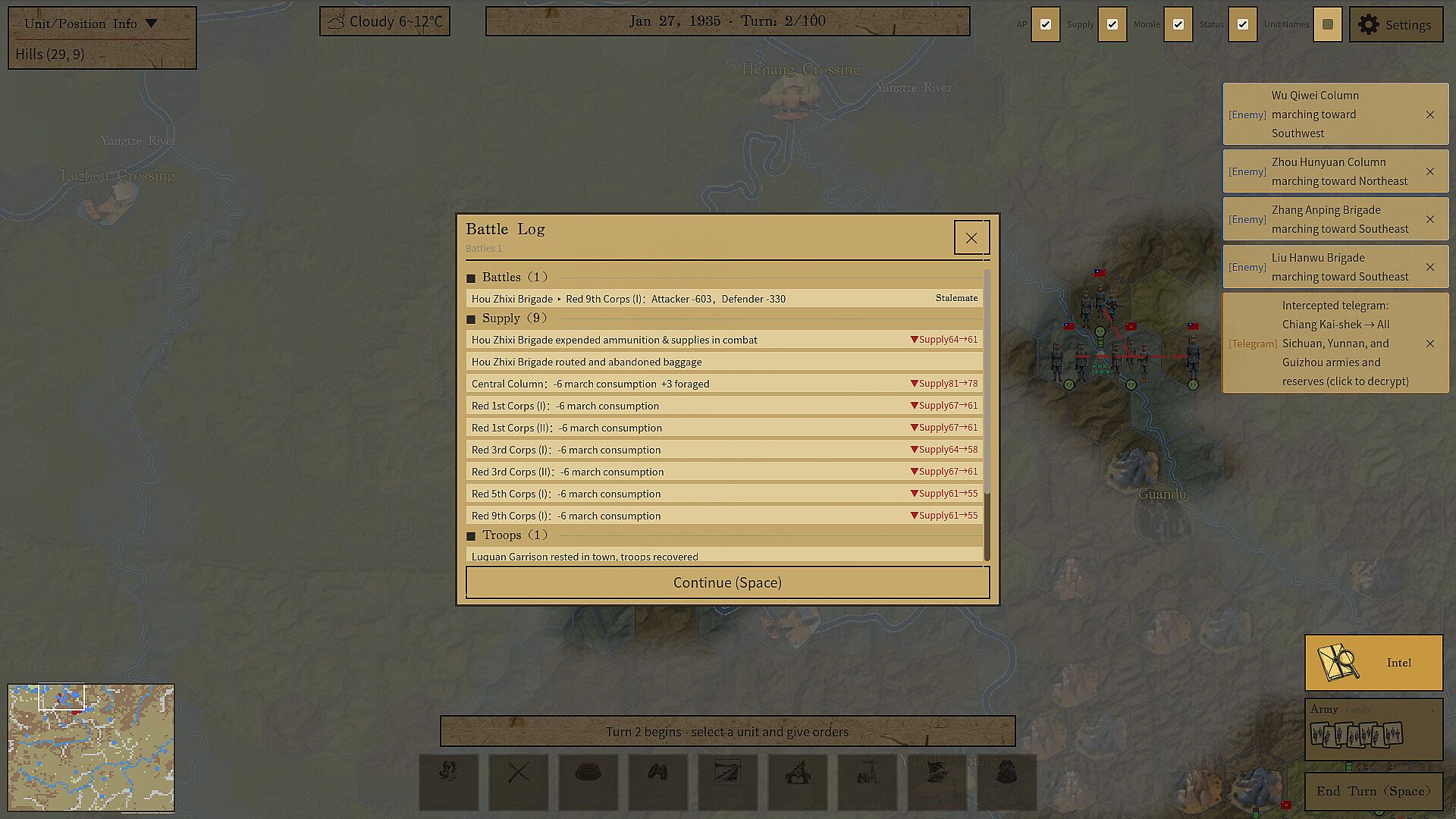
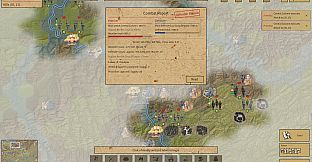
Core systems revolve around command options that include marching, forced marches, bridging, demolition, detachment, reorganization, recruitment, reconnaissance, concealment, attack, and defense. Units split into detachments for scouting along trails while the main force travels roads, each operating under different action point and terrain rules. Supply functions as a strict limit, with every unit consuming rations daily and each hex holding finite stocks that deplete after use. Mountain hexes provide almost no forage, towns offer tiered resupply, and captured stocks provide relief. Combat resolves through seven modifiers covering strength, attack versus defense, terrain, morale, faction, scale, and supply.
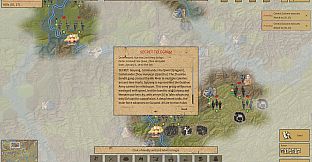
Intelligence plays a central role. Enemy positions remain hidden until revealed through intercepts and decryption of telegrams, many drawn from archival records. Players can employ radio disguise to send decoy detachments, deliberately draw fire to mask the main column, or issue forged orders to alter enemy movements. Three mutually exclusive escape routes exist: north across the Yangtze, east into Hunan, or west through Yunnan. Success on any route ends the campaign in victory. Emergent objectives such as concentrating forces at Zhaxi or holding the Maotai crossing deliver mechanical advantages when achieved.
Game Modes
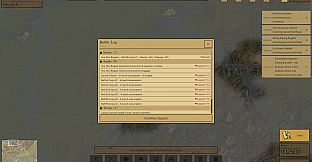
The game operates as a single open campaign simulation without scripted levels. Four difficulty settings adjust the enemy order of battle and overall challenge. Novice and Standard ease certain pressures, while Hard and Historical Hardcore restore the full historical composition of opposing forces, particularly the KMT Central Army, resulting in greater numbers of units on the map. Structural changes rather than simple stat adjustments define the higher settings. A black-box replay system records every order, combat resolution, enemy movement, telegram, and event within each save file, allowing turn-by-turn review after completion.
Historical Accuracy and Forces
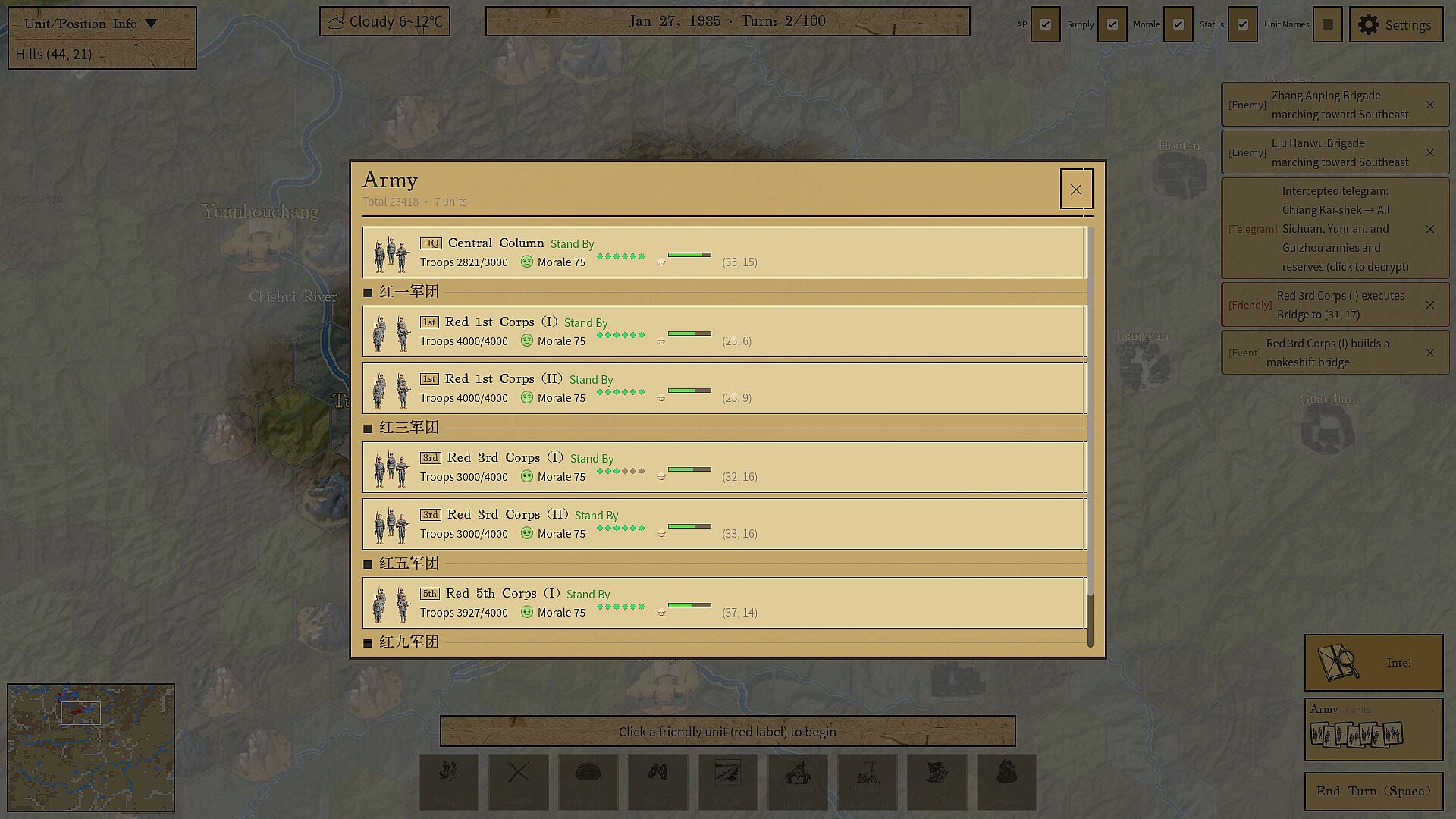
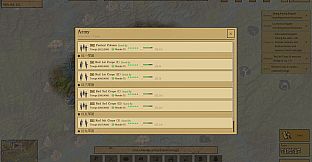
Red Army forces field roughly 24,000 combat troops, with the broader headcount including non-combat personnel. Opposing sides total around 200,000 fielded and garrison units, while the larger strategic encirclement reaches 400,000. Each enemy faction follows documented historical behavior: Sichuan units defend their home territory without advancing deeper into Guizhou, Guizhou troops garrison points but fight with lower effectiveness, the Central Army pursues aggressively, the Yunnan Army remains along the border until the Red Army enters Yunnan, and the four Hunan divisions appear under their actual designations. Enemy intelligence tools such as aerial reconnaissance and radio direction-finding operate symmetrically, countered by player concealment, disguise, and weather effects.
Is It Worth Playing?
This title suits players who enjoy detailed historical wargames focused on logistics, intelligence, and maneuver over direct confrontation. The open campaign structure, route choices, and deception mechanics create meaningful decision points at every stage. Difficulty options accommodate different experience levels, and the replay system supports analysis of outcomes. Those seeking a faithful simulation of the 1935 campaign with symmetric rules and research-backed terrain and weather will find the systems align closely with the described historical constraints. Availability is limited to PC, and the experience centers on single-player campaign play with no additional modes confirmed beyond the core simulation and its difficulty variants.