


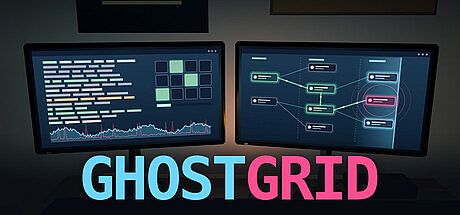








GHOSTGRID is an indie simulation game set on PC that places players in the role of a freelance security specialist operating in the rainy port city of Dockside. The experience blends realistic hacking mechanics with everyday life management, where every action at the desk carries consequences in the streets and vice versa. Players handle contracts, manage finances, and navigate a world where traces left behind can lead to real in-game repercussions.
Gameplay
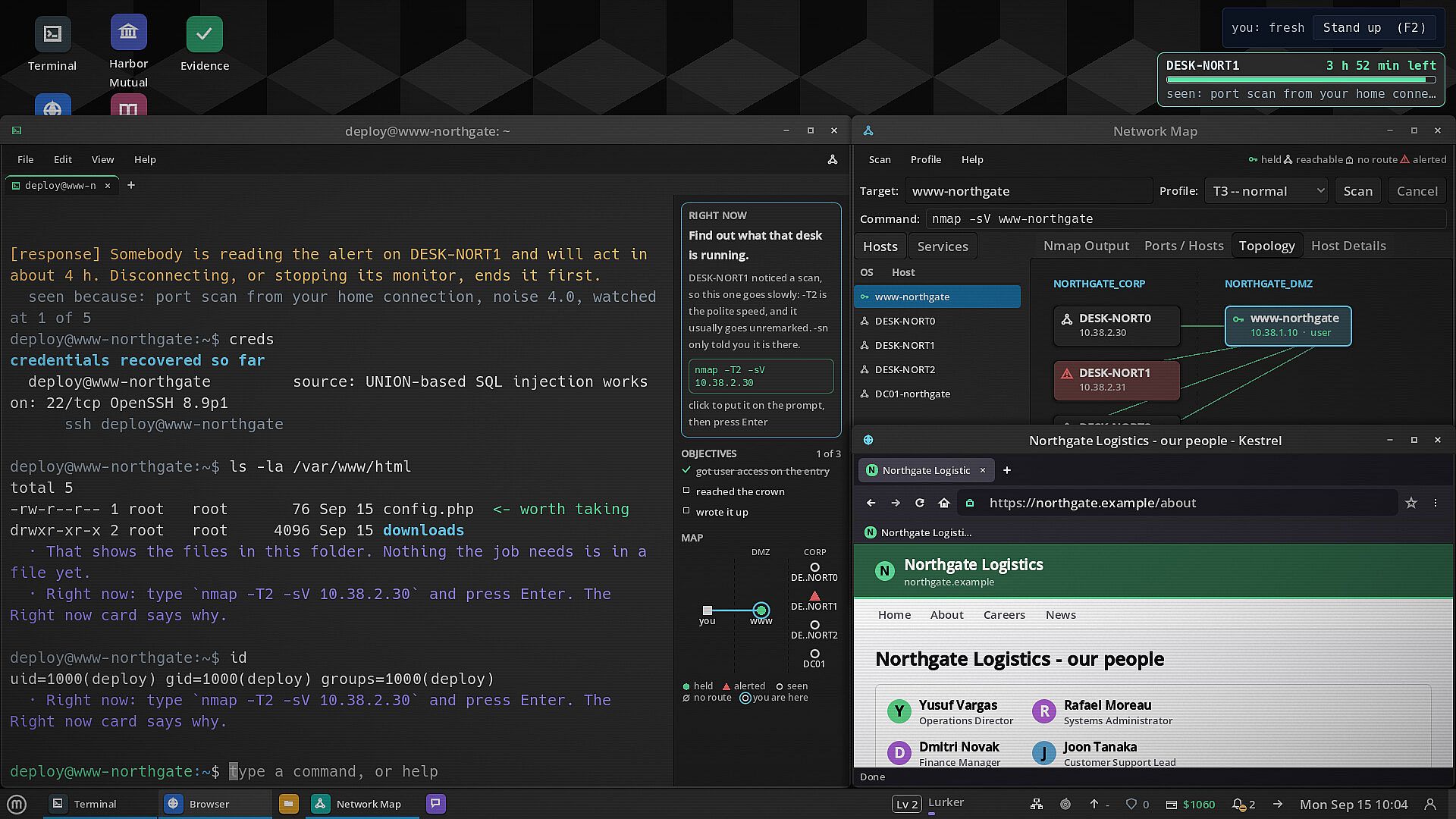
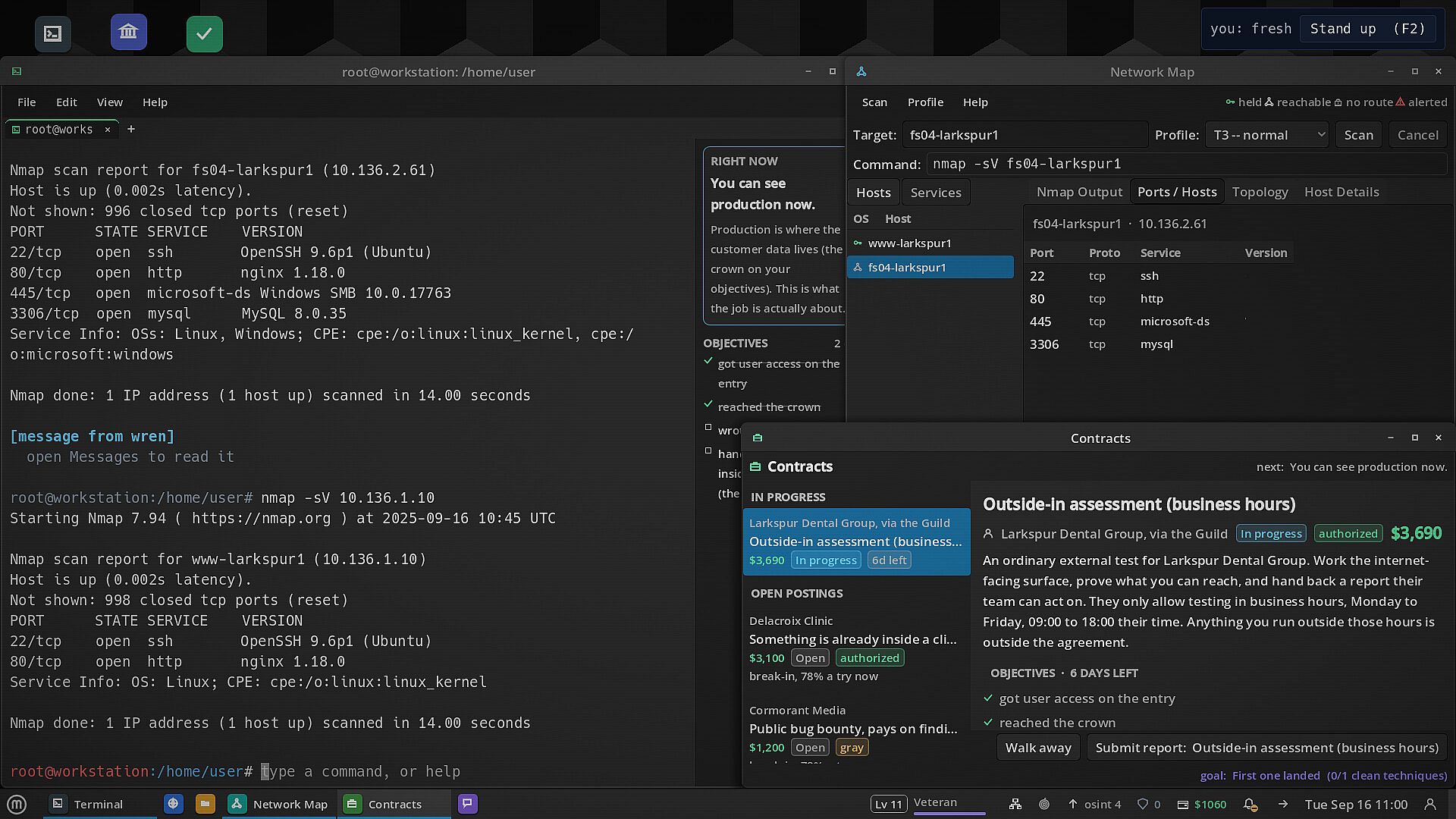
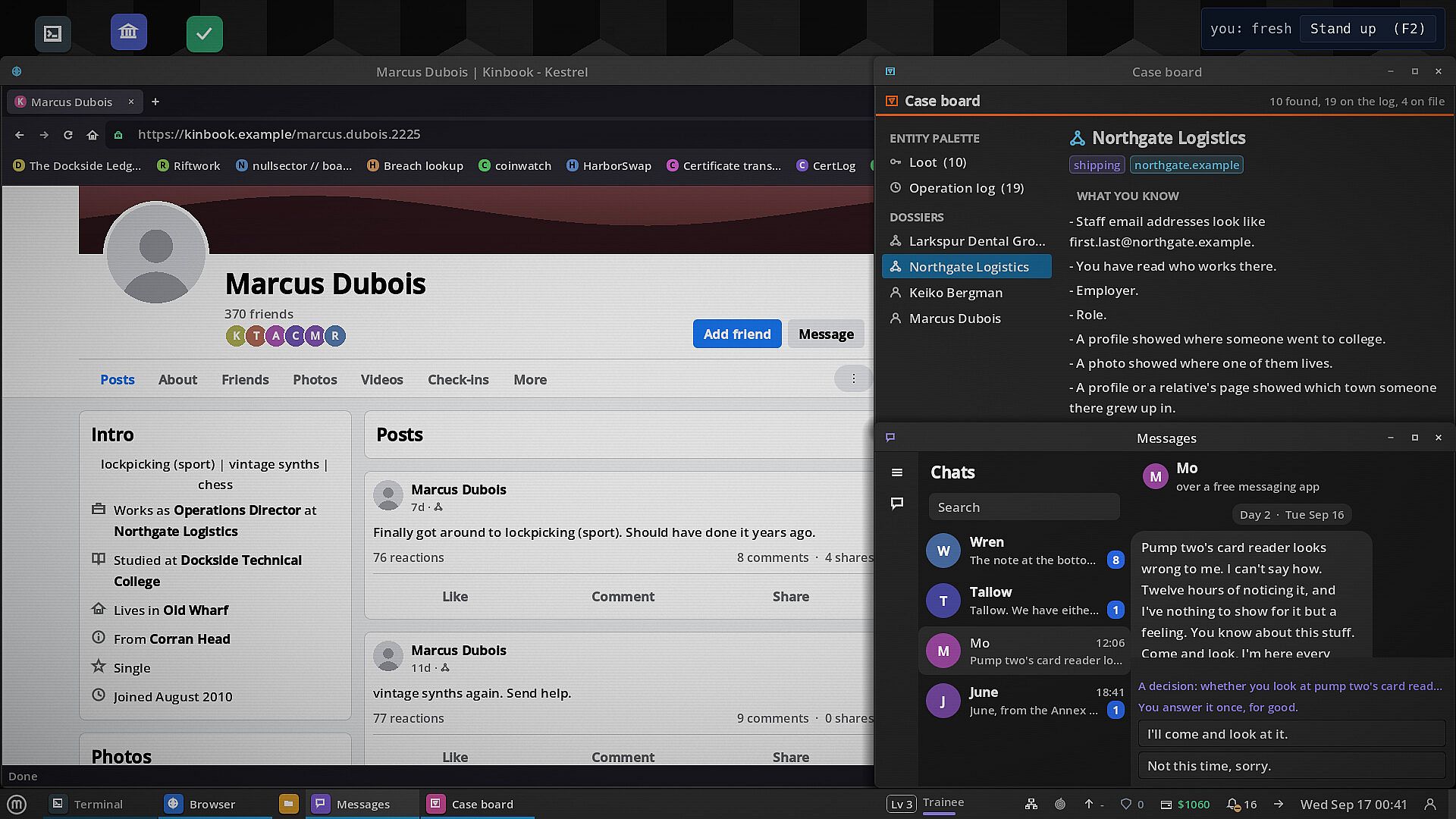
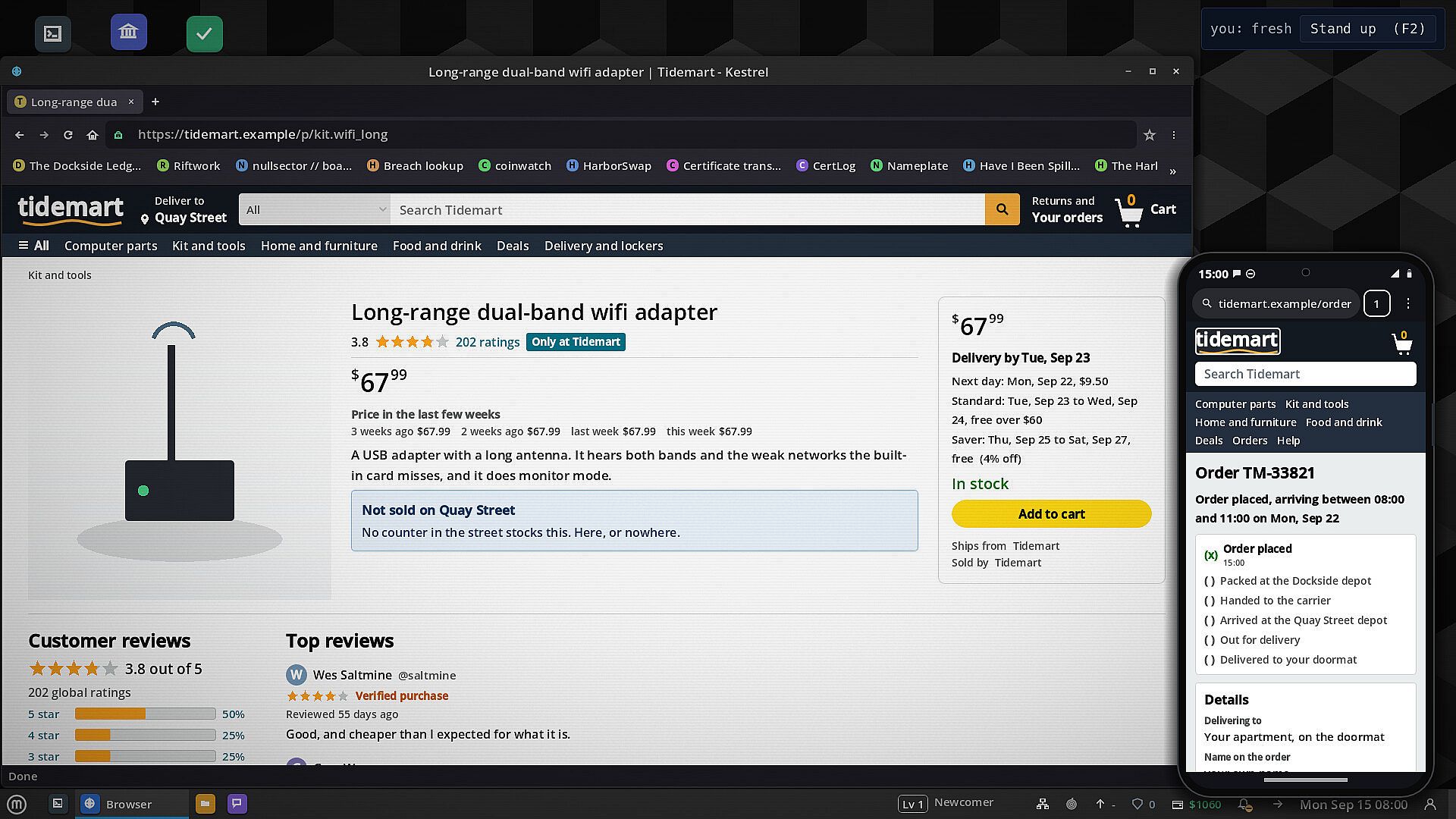
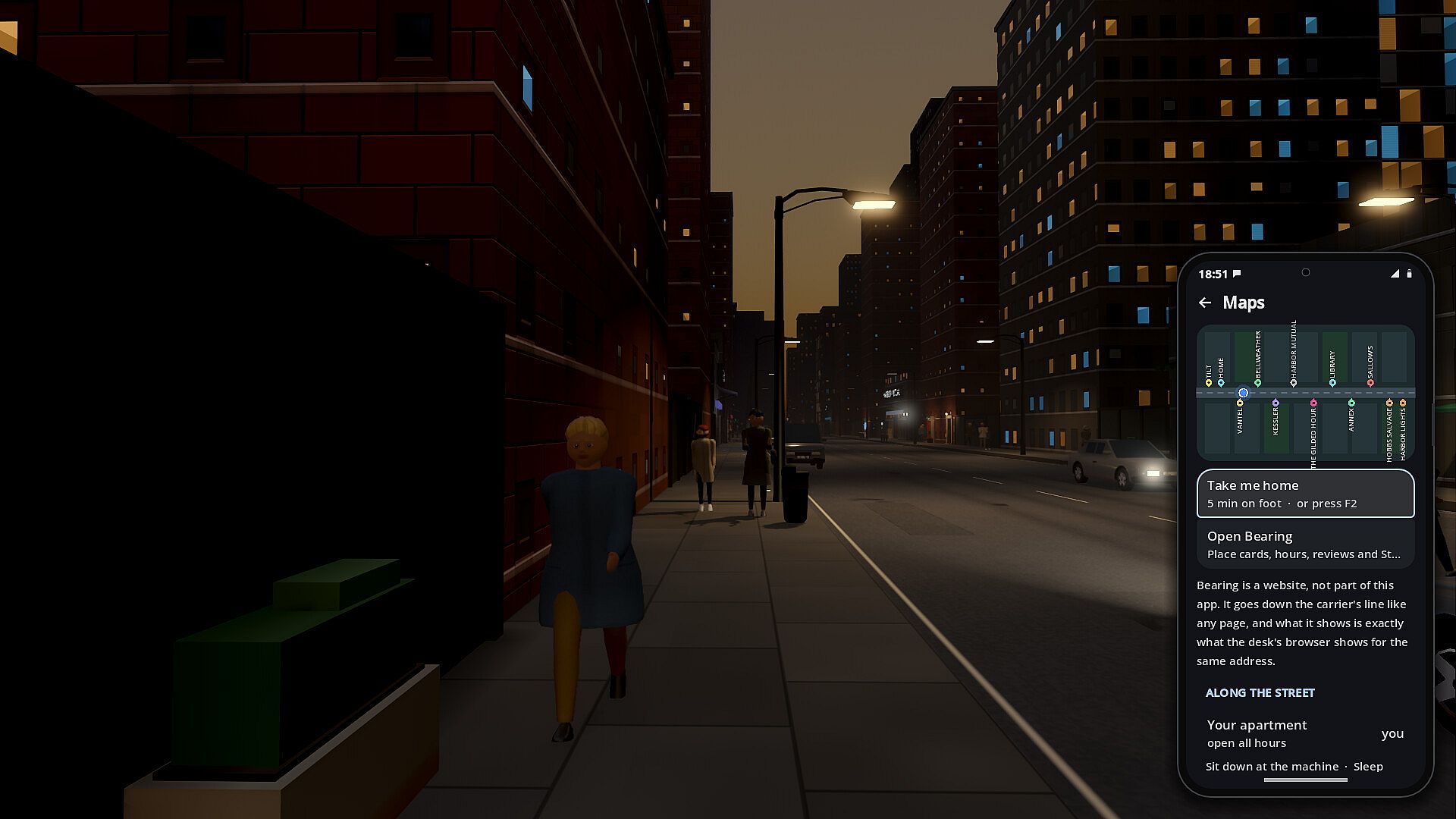
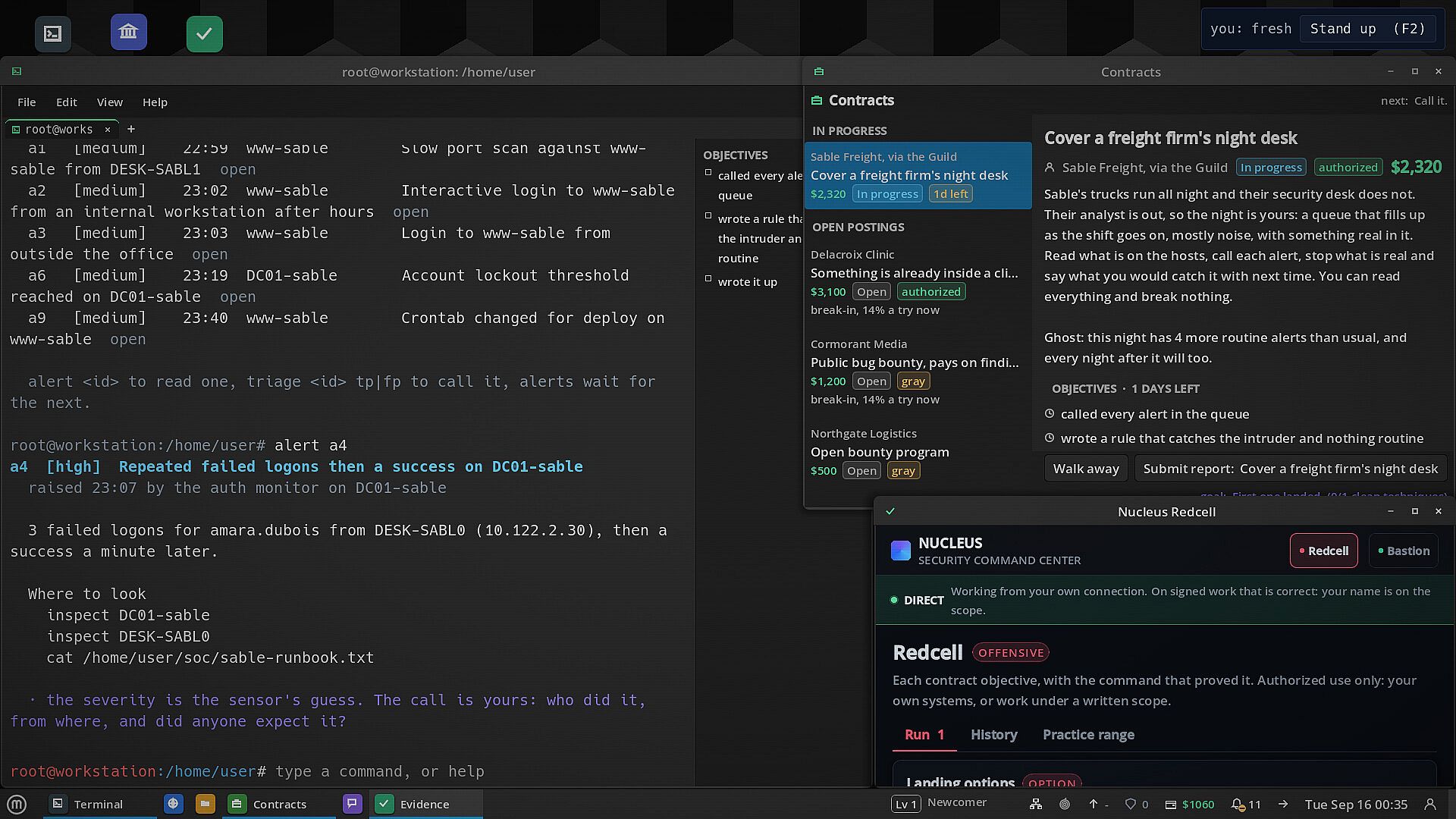
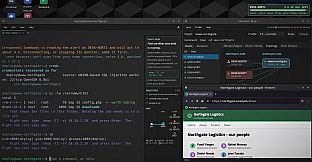
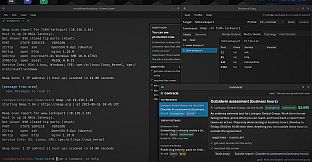
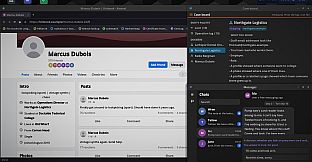
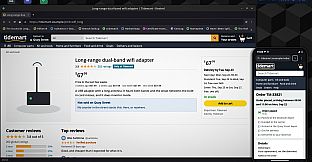
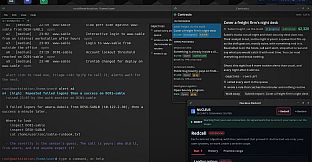
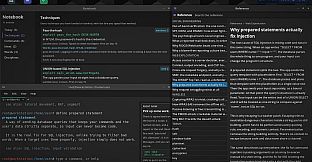
The core loop centers on accepting contracts, executing work against fictional targets using authentic command-line techniques and tools, then handling the fallout in both digital and physical spaces. At the desk, a compact operating system provides access to a terminal, browser, mail, file manager, network map, wallet, and code editor. Networks respond like real systems, often requiring indirect paths through unpatched older machines. Standing up shifts the perspective to first-person street navigation, where paying rent, refueling, or buying supplies happens through timed options like online transfers, bank counters, or late-night gas stations. Energy drinks provide temporary focus at a later cost, while interactions at locations like Sallow's or the casino influence leads and finances. The city environment changes with time of day and weather, feeding information back to desk work. Every technique requires actual execution in the simulation to register progress, with records and traces building naturally from actions like reused handles or identifiable payments.
Game Modes
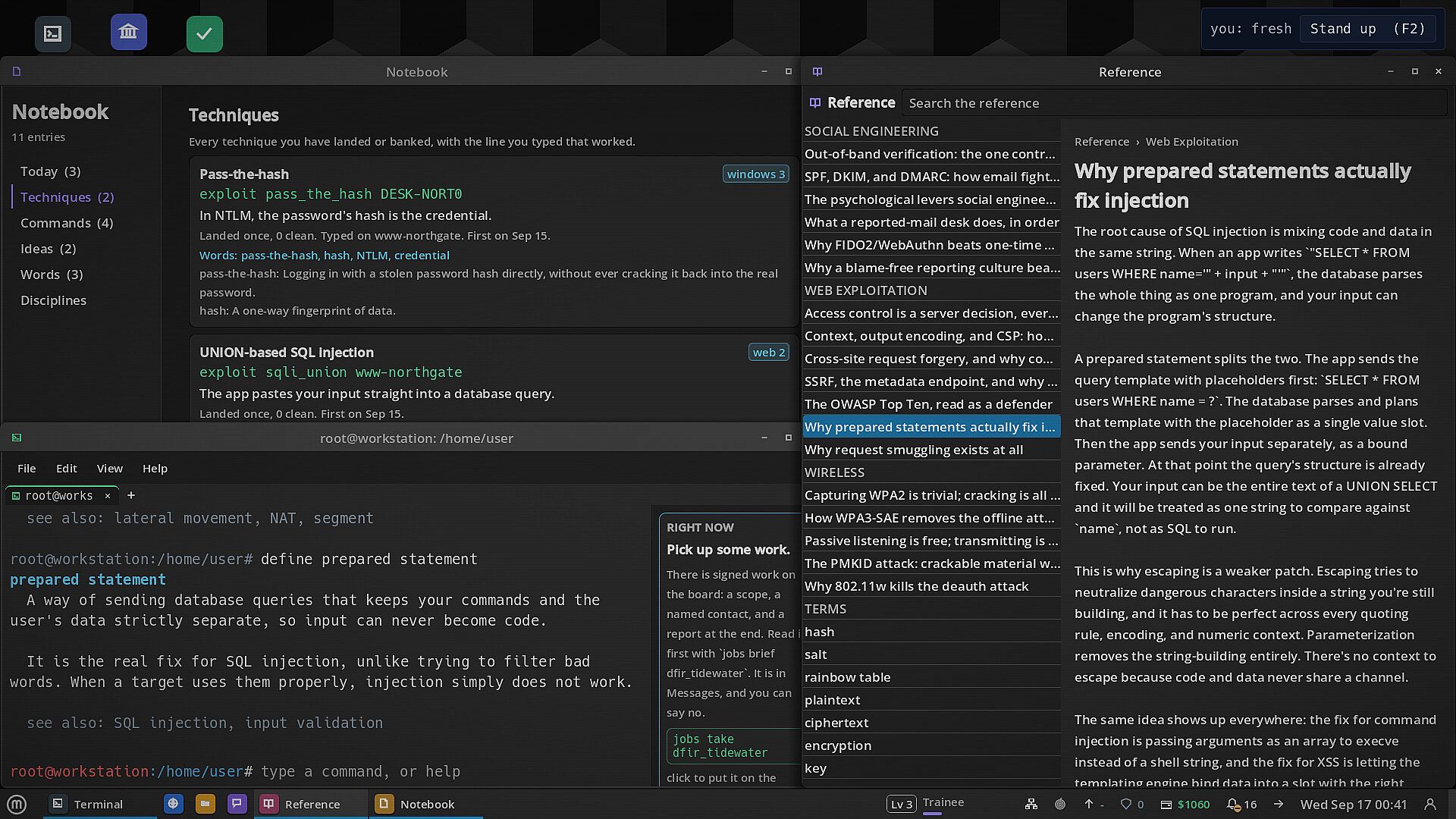
Contract work forms the primary structure, beginning with seven story contracts that outline specific learning goals, real-world echoes, and post-job debriefs. One contract reverses the perspective to incident response, where players preserve evidence, analyze logs, and reconstruct an attack chain. After the initial contract, ongoing work appears from city firms in forms such as external tests, re-tests, bug bounties, hardening tasks, and breach investigations. These scale with demonstrated skill and include statements of work. The practice range at the Annex offers targeted drills on specific flaws, allowing players to scan, exploit, and confirm success on isolated target machines. Techniques unavailable on live networks receive alternative drills focused on methodology ordering and defense selection. A scripting language in the terminal supports automation of repetitive sequences once basic commands become familiar.
Disciplines and Progression
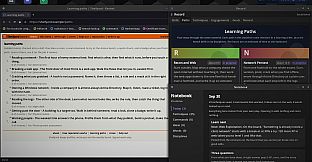
Sixteen disciplines cover OSINT, network enumeration, web attacks, password methods, binary exploitation, wireless, physical and RFID access, social engineering, Active Directory, mobile systems, forensics and incident response, cryptography, malware analysis, cloud environments, hardware and IoT, plus blue-team detection. Across these sit 153 techniques and 112 tools, each paired with details on defenses and detection signs. Progress registers only through verified execution rather than reading or quizzes. The drill command provides on-demand explanations of any technique, including mechanics, countermeasures, and indicators, while the practice range serves as the proving ground. A privacy-focused phone integrates messaging, banking, mapping, and a portable practice copy, though it generates location records when active.
Is It Worth Playing?
GHOSTGRID suits players seeking a grounded single-player simulation of professional hacking and personal logistics without tutorials or quizzes blocking entry. The emphasis on verifiable actions, persistent traces, and dual career paths creates meaningful choices between authorized reporting work and higher-risk alternatives. With a planned March 2027 release and no user reviews available yet, the value depends on interest in realistic command execution, consequence tracking, and offline play. Those drawn to detailed technical systems and open-ended contract progression will find the structure rewarding, while the DRM-free design and lack of telemetry support straightforward ownership. The game remains fully playable without an internet connection once purchased.












