

























Glass Masquerade is an indie casual puzzle game built around the assembly of stained glass clock faces. Players restore intricate designs drawn from the artistic traditions of 25 countries, each presented as an exhibit in a fictional International Times Exhibition. The experience centers on visual composition rather than speed or competition, with every puzzle rendered in an Art Deco stained glass style that highlights cultural motifs and timekeeping themes.
Gameplay
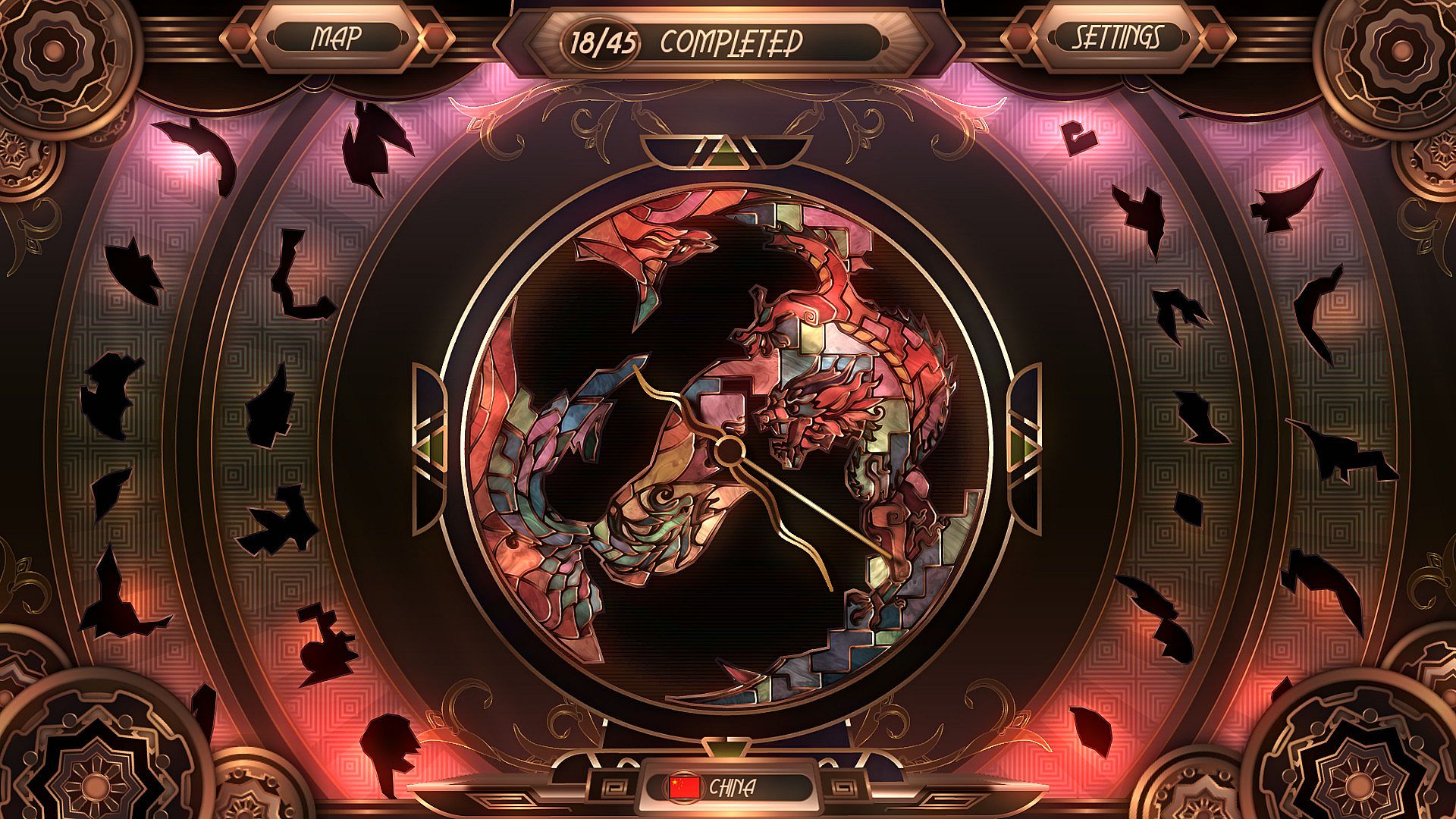
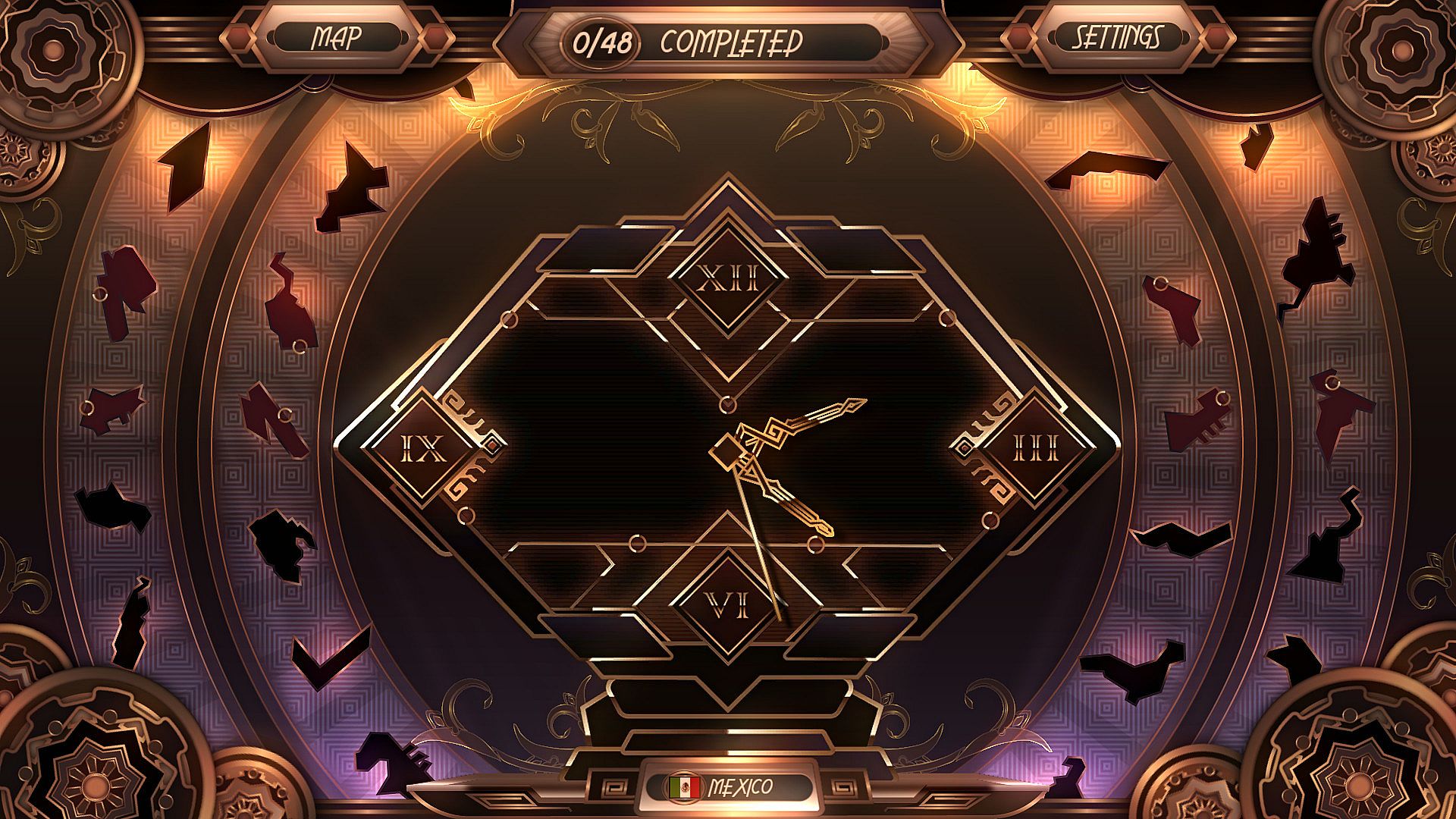
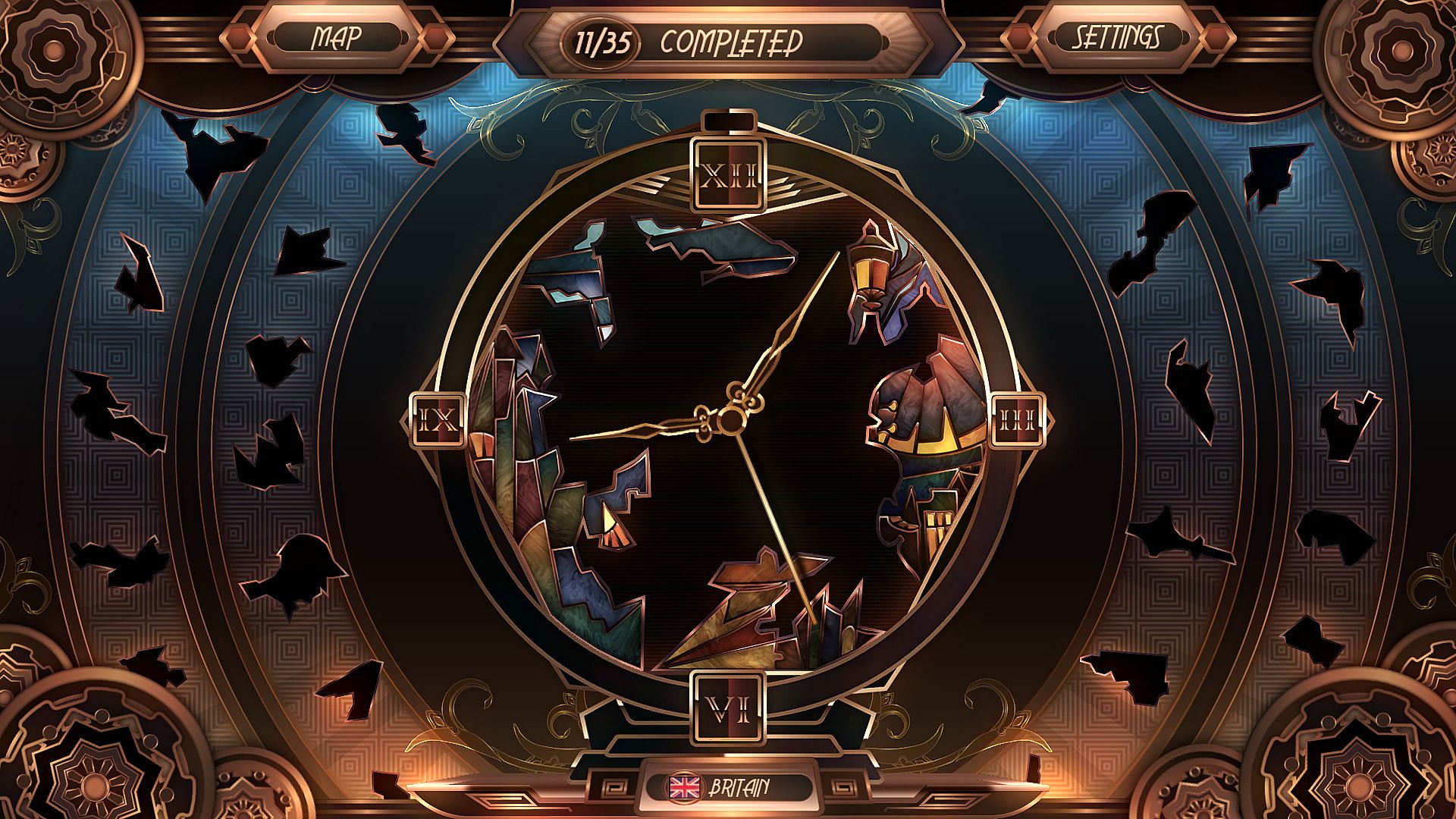
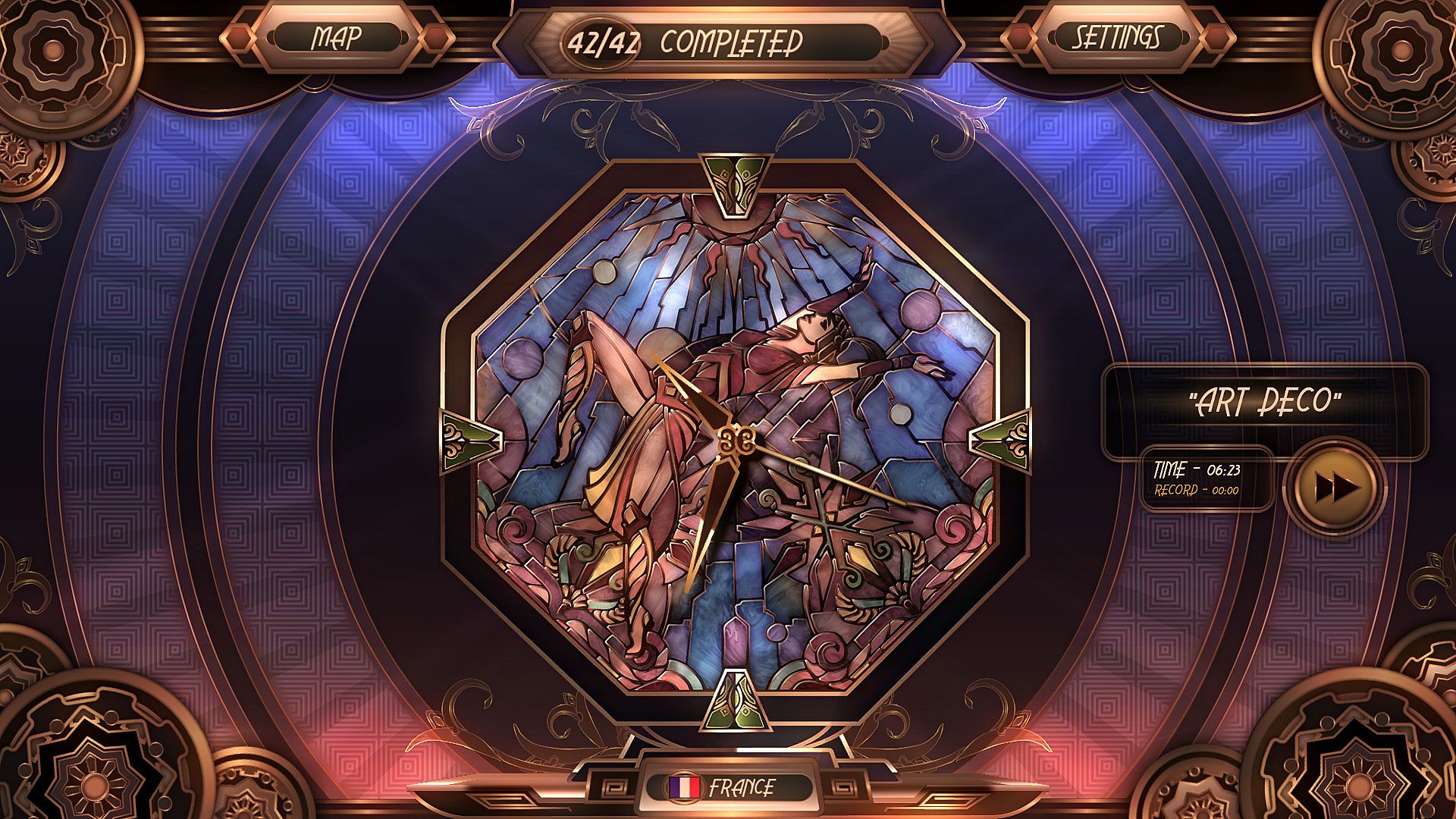
The core loop involves selecting individual glass fragments from a scattered collection and positioning them onto a circular frame. Fragments snap into place when aligned correctly, gradually revealing the full clock design. Each completed puzzle activates moving clock hands that track the time spent on that exhibit. The process emphasizes careful observation of shapes, colors, and patterns rather than trial and error under pressure.
Puzzles vary in complexity through the number and shape of fragments, with later exhibits requiring more precise placement to complete the layered glass effects. The absence of timers or failure states keeps the focus on the aesthetic outcome. Background music complements the visual work, creating a consistent atmosphere across the entire set of exhibits.
Controls remain straightforward throughout, relying on mouse or touch input for dragging and rotating pieces. No additional systems such as power-ups, scoring multipliers, or hidden objectives appear in the base experience. The full journey through all exhibits typically requires three to four hours for most players.
Game Modes
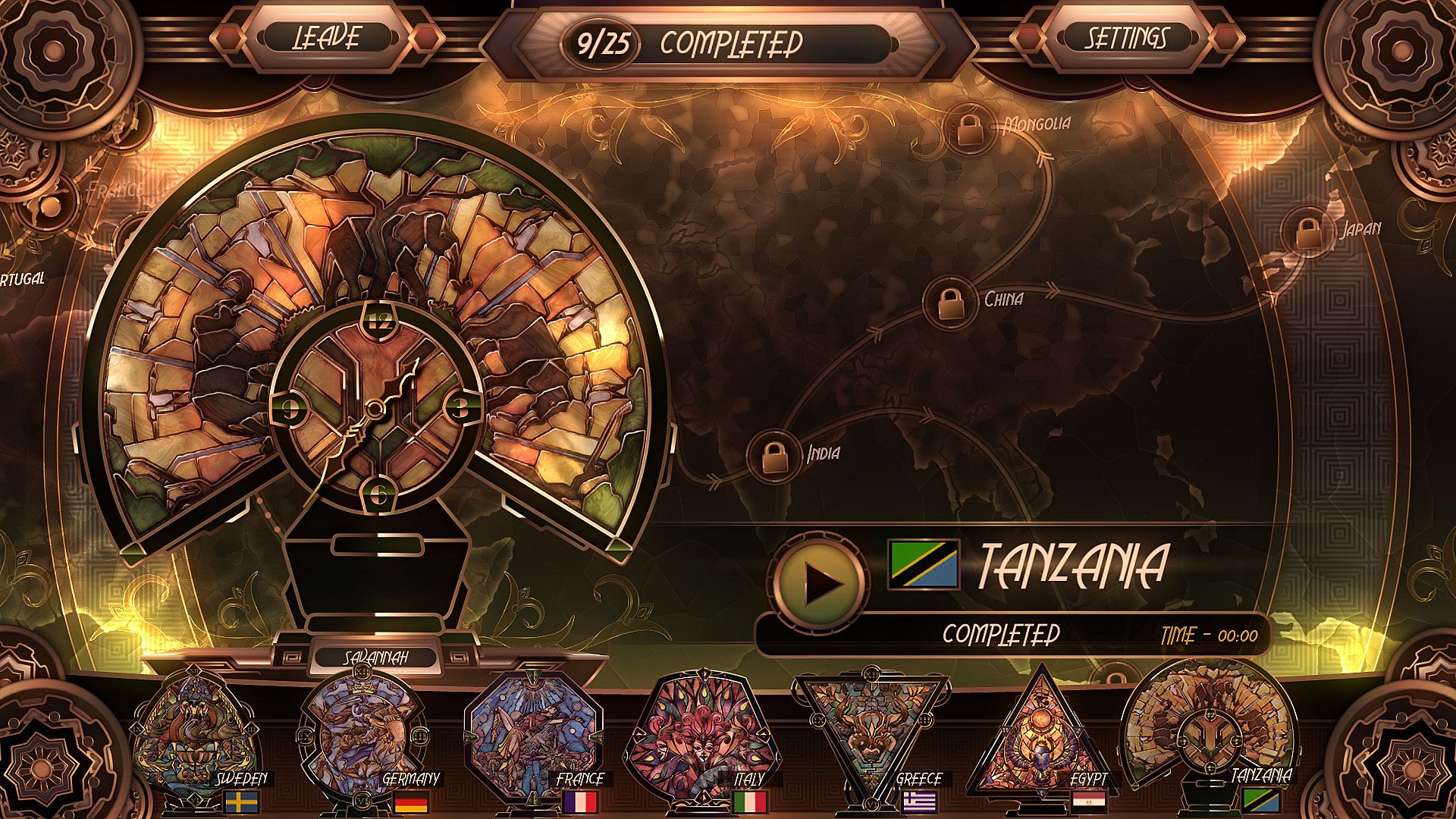
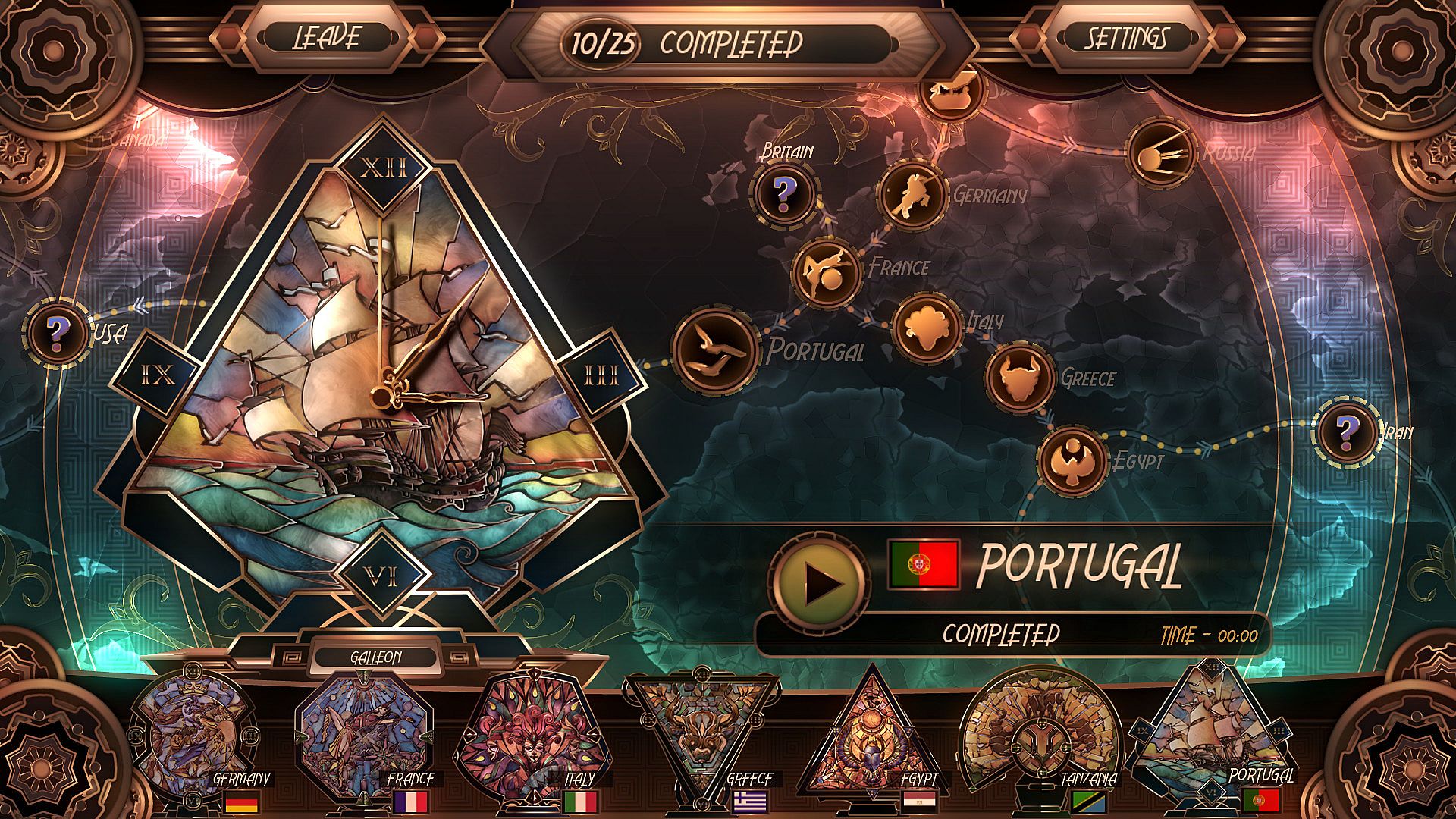
Glass Masquerade offers a single continuous sequence of 25 puzzles. Each puzzle corresponds to one country and follows the same assembly rules without branching paths or alternate rulesets. There are no separate difficulty settings, competitive modes, or cooperative options.
Progression occurs simply by completing one exhibit and moving to the next. The order follows a curated route around the world, beginning with certain regions and concluding with others. This linear structure ensures every player encounters the same sequence of designs and cultural themes.
Visual and Audio Design
Each puzzle draws from specific cultural elements associated with its country, rendered through colored glass segments that form both the clock face and surrounding decorative borders. The Art Deco influence appears in geometric patterns and elegant lines that frame the central timepiece. Once assembled, the completed clocks display subtle animations as the hands move.
The soundtrack supports the meditative pace with original compositions that shift slightly between exhibits. Extended versions of certain tracks exist outside the game, but the in-game audio remains integrated with the puzzle flow. Sound effects are minimal and limited to the satisfying click of pieces locking into position.
Is It Worth Playing?
Glass Masquerade suits players seeking a short, visually focused puzzle experience without competitive elements or complex systems. Its strength lies in the consistent quality of the stained glass artwork and the calming assembly process that rewards attention to detail over speed.
Reviews consistently highlight the relaxing nature of the gameplay and the appeal of the cultural themes presented through the clock designs. The game delivers exactly what its premise promises: a compact collection of artistic puzzles that can be completed in a single sitting or spread across several sessions.
Those who enjoy jigsaw-style mechanics with an artistic twist will find the 25 exhibits satisfying. The lack of additional modes or ongoing updates means the experience remains exactly as released, focused entirely on the core assembly loop. For anyone interested in a low-pressure creative puzzle title, the game provides a clear and enjoyable option within its modest scope.