


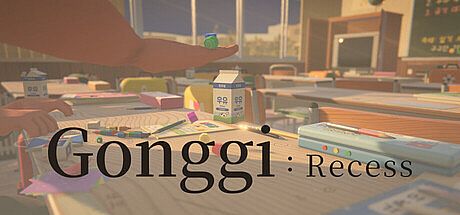


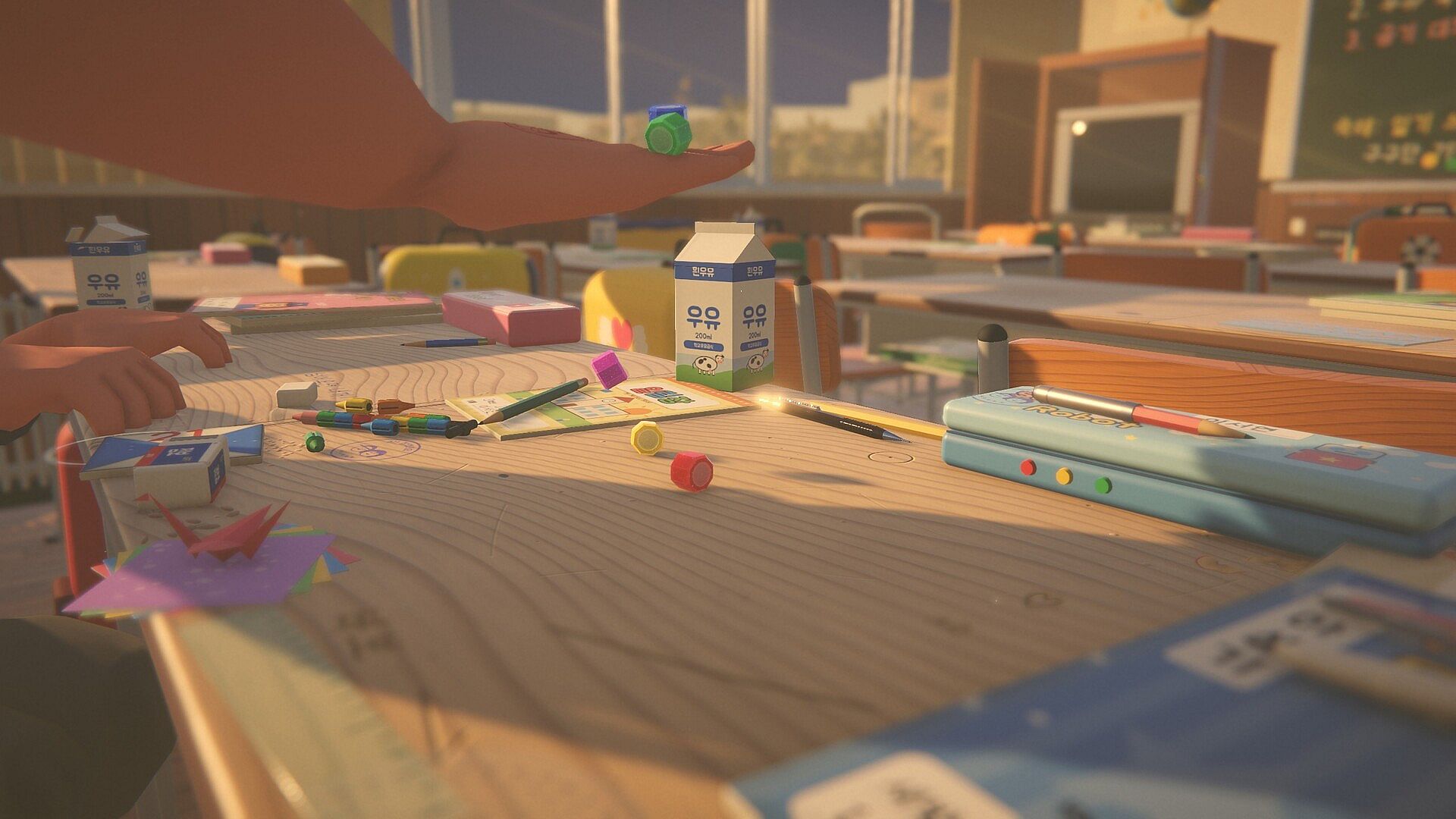
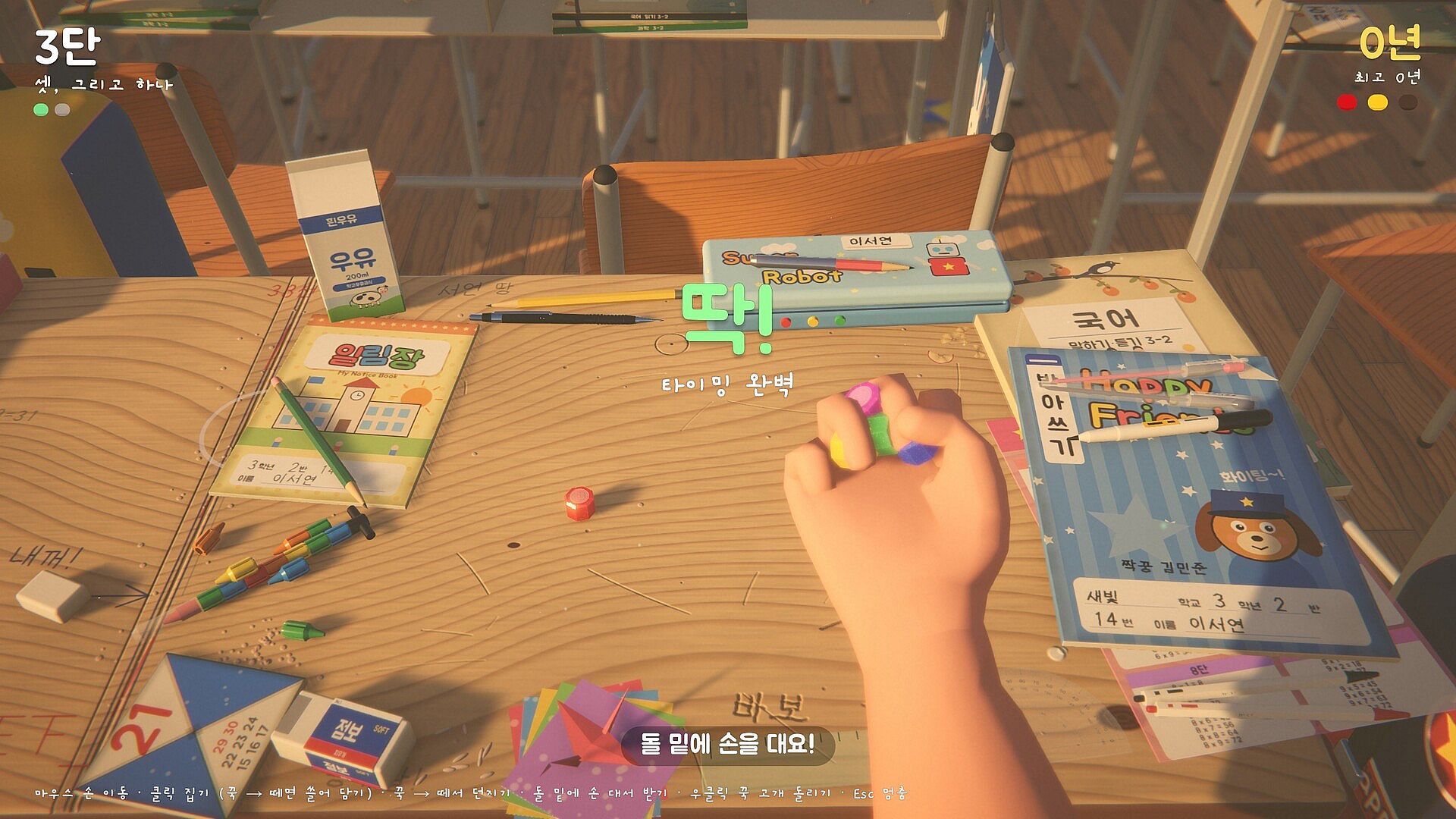
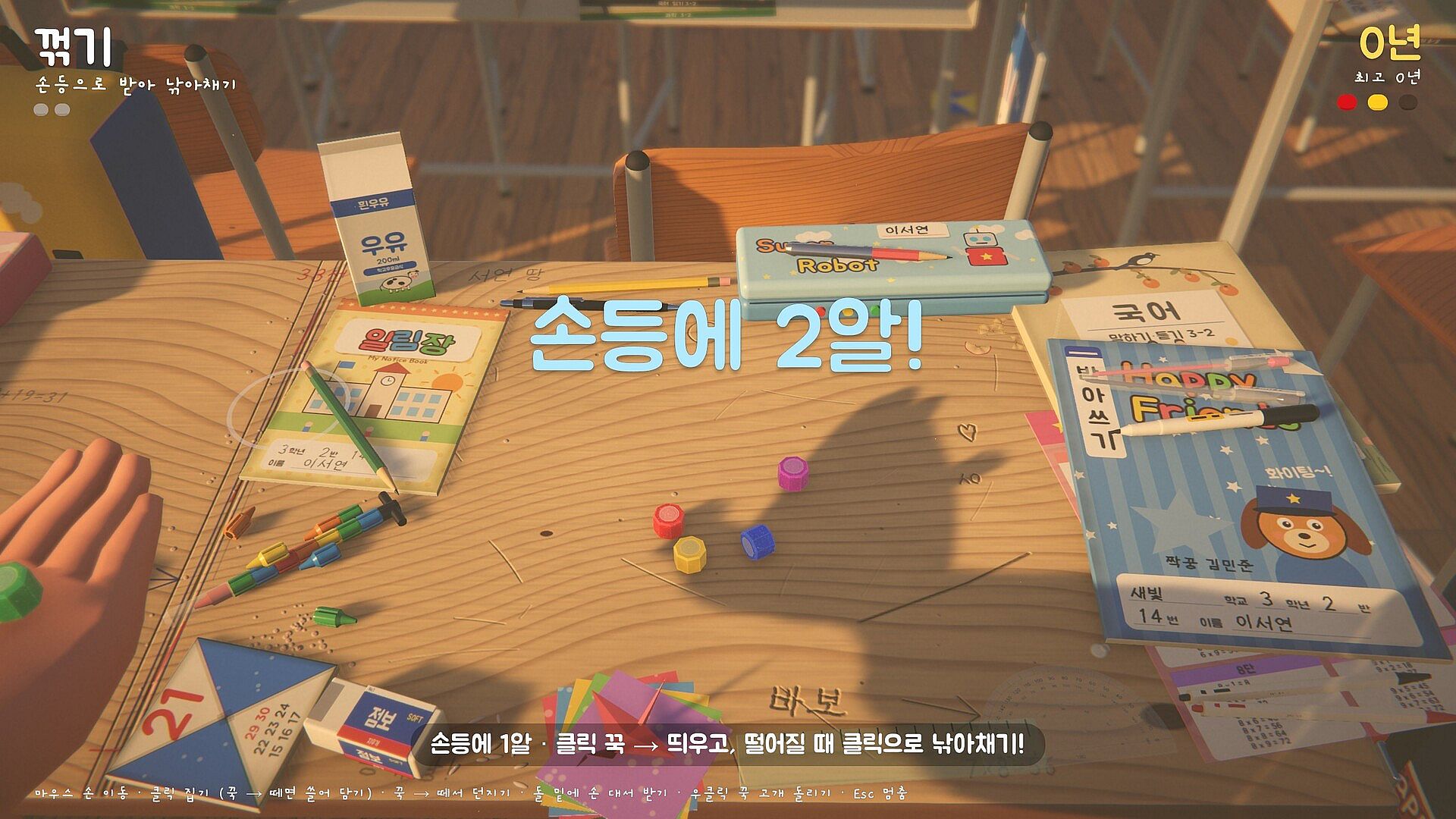
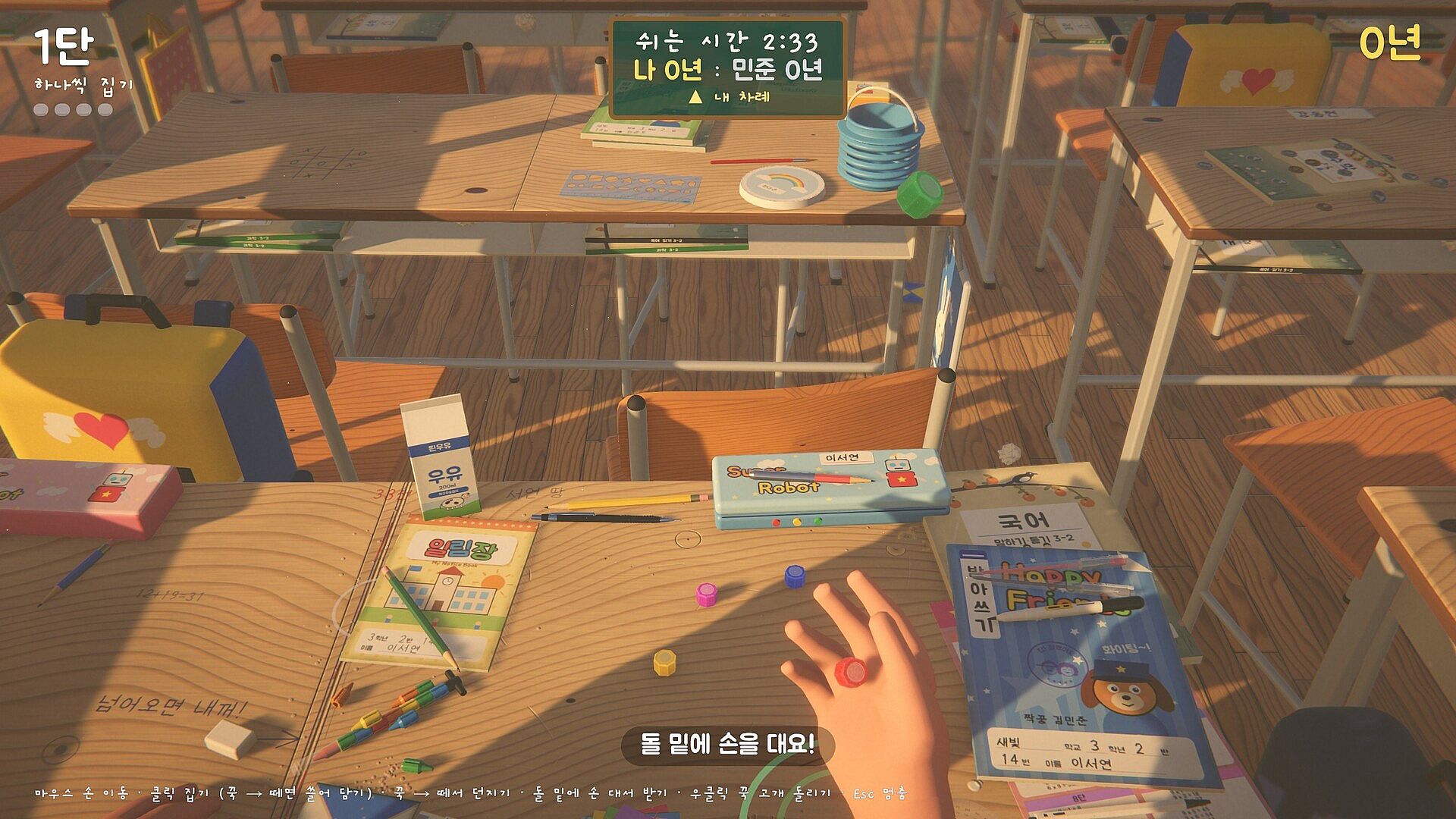
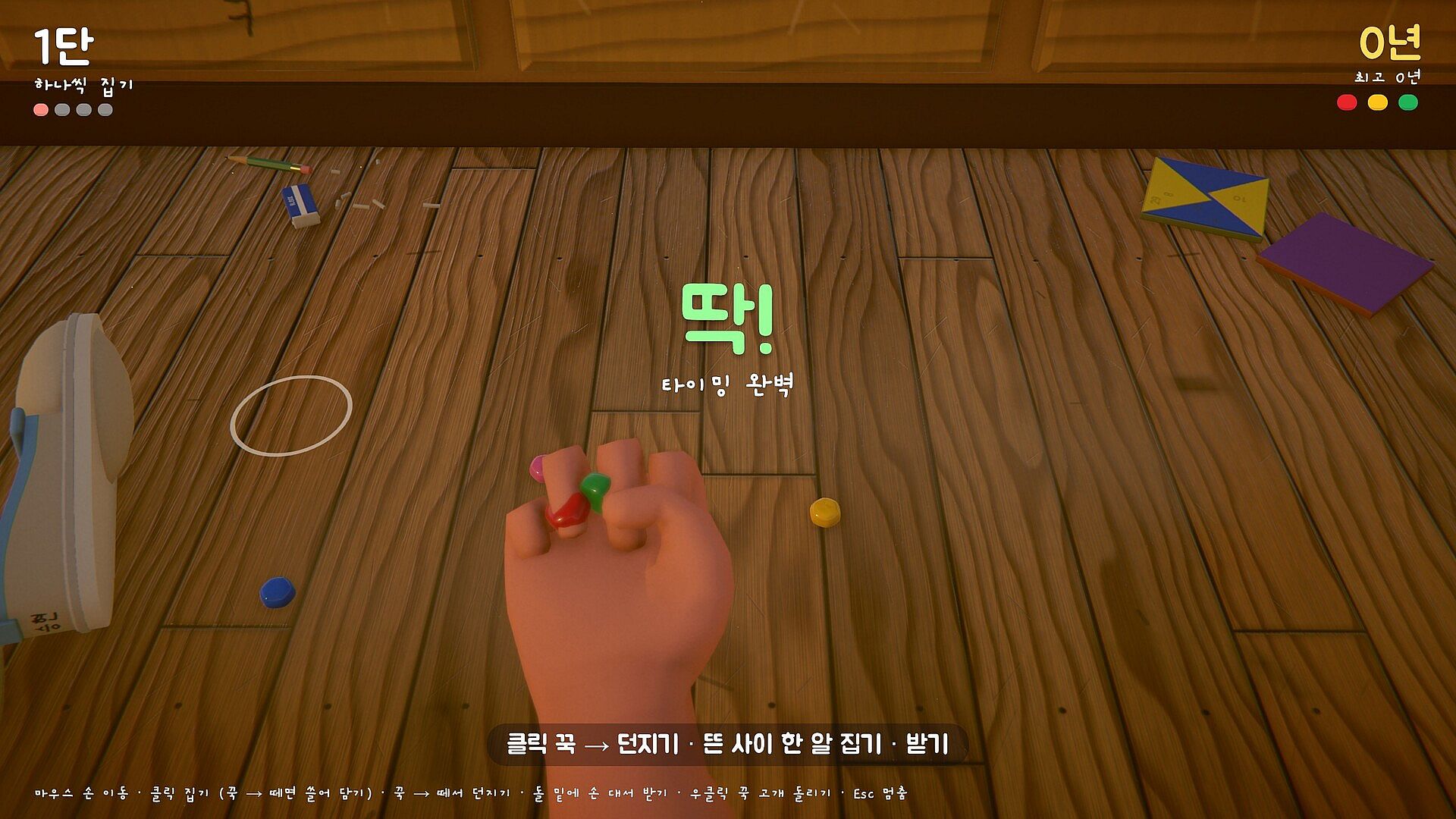
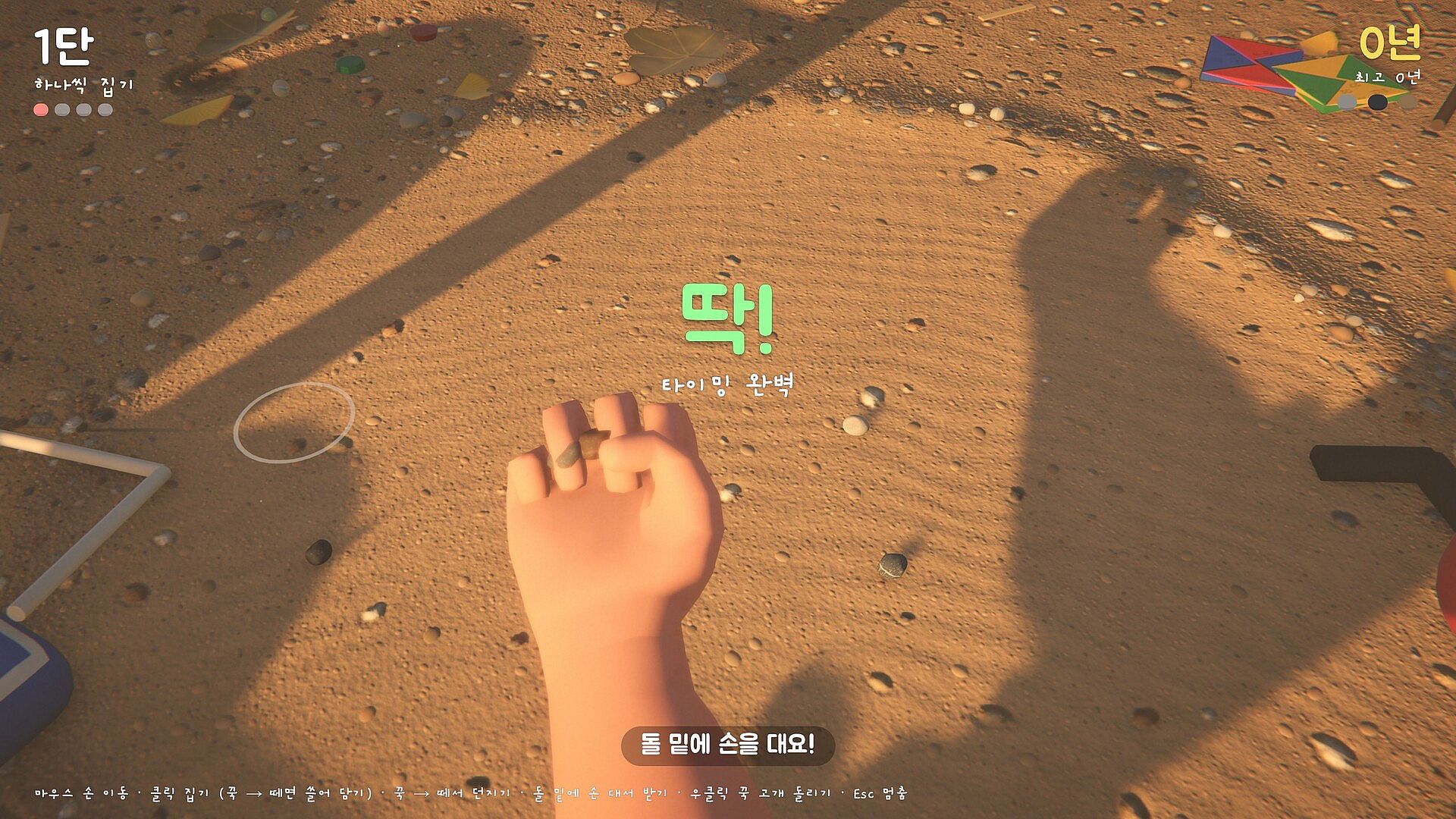
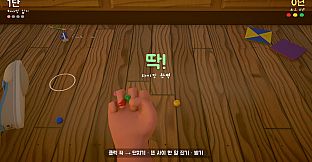
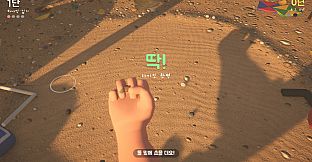
Gonggi: Recess is a casual simulation game that recreates the traditional Korean playground activity of gonggi during recess in a 2000s elementary school classroom. Players control a hand to toss and catch stones across progressive stages while competing against an opponent or practicing alone. The experience emphasizes precise mouse-driven movements and timing in a nostalgic school setting complete with desks, chalkboards, and playground areas.
Gameplay
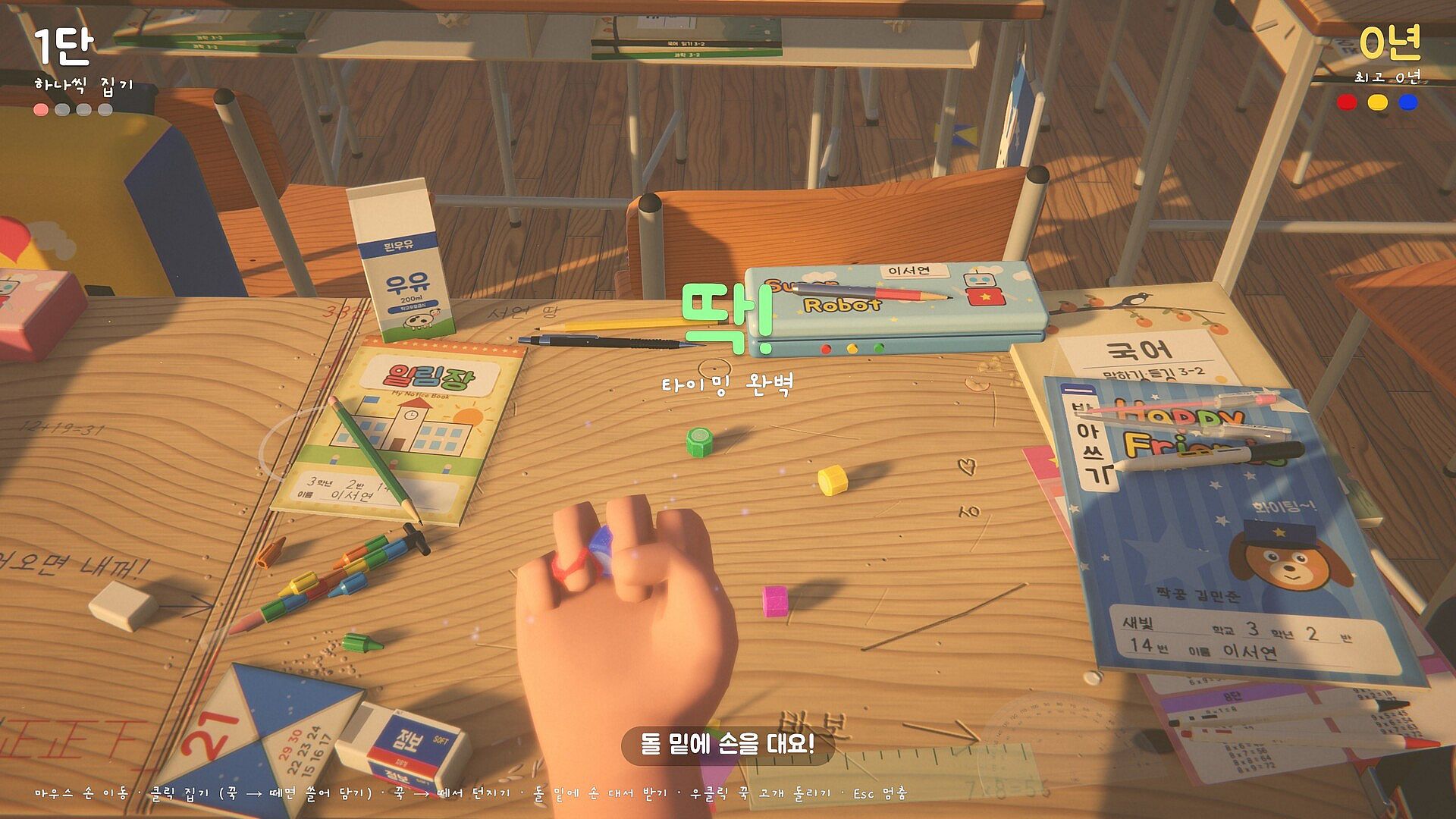
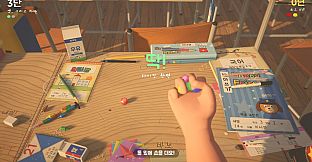
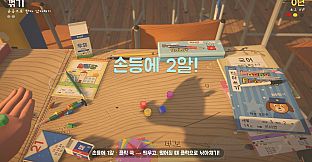
The core loop centers on five stones scattered across a surface. Players move a virtual hand using the mouse, hold and release the spacebar to toss a stone upward, then tap the spacebar again to catch it midair. Additional stones are picked up from the desk or floor during the toss, with the hand wrapping around those already held. Time slows during each airborne stone to aid precise catches. The sequence advances through Onesies, Twosies, Threesies, and Foursies before reaching the Flip stage, where stones land on the back of the hand and must be snatched from the air. Each successful catch in the Flip awards years, which determine the winner once the bell rings. Between rounds, players can doodle on the chalkboard or play the reed organ. Locations include a classroom desk, the floor at the back of the room, or the outdoor playground. Stone varieties range from glitter and hexagon types to pebbles and eraser bits. Over seventy interactive objects appear throughout the school environment, and players advance through six classes per grade from first to sixth year.
Game Modes
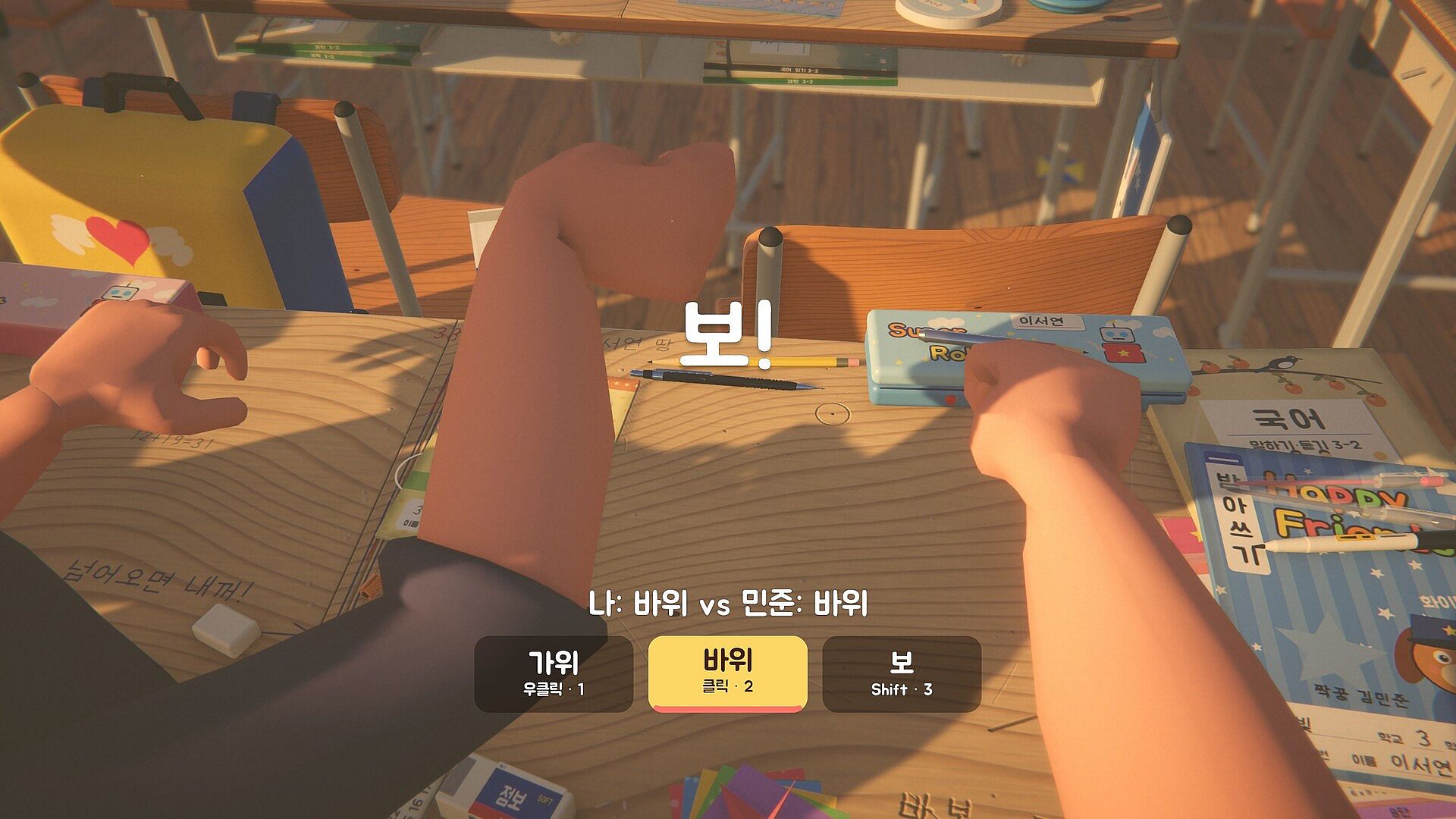
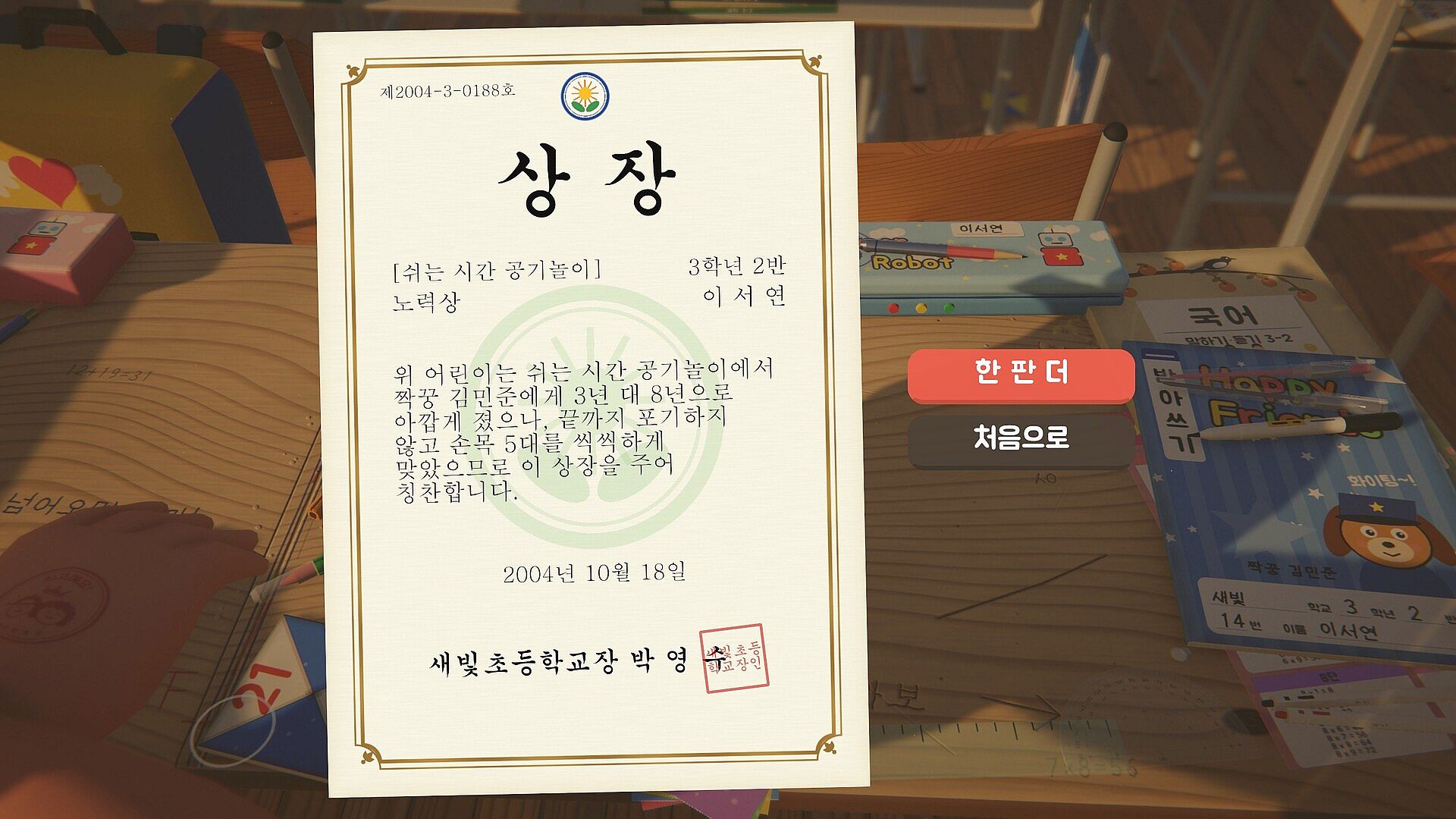
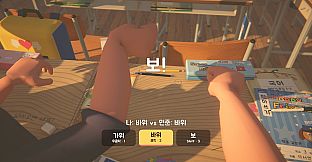
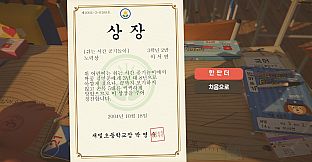
Three main ways to play gonggi appear in the game. Solo practice allows full runs from Onesies through the Flip with adjustable settings for airborne time, catch margin, and scatter assistance. Matches against a seatmate begin with rock-paper-scissors to decide the starting player, after which participants alternate turns until one accumulates more years. The loser receives a wrist flick while both receive certificates. Online play supports one-on-one matches with a Steam friend under the same turn-based structure and scoring rules. Each class follows slightly different parameters such as faster-falling stones or pebble-based sets, and advancing a class presents three gift options from classmates including an eraser to correct a mistake or a bandage for an extra attempt.
School Setting and Progression
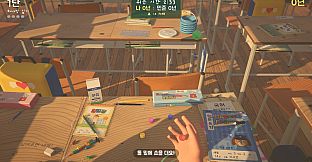
The environment captures a specific era of Korean elementary life with desks covered in notebooks, a reed organ in the corner, and outdoor playground spaces. Players interact with numerous objects while moving between locations for each round. Progression through grades unlocks new classes with their own rule variations, encouraging repeated play to experience different stone behaviors and gift choices. The hand physics remain consistent across all areas, rewarding careful mouse control and timing adjustments tailored to each session.
Is It Worth Playing?
This title suits players seeking a focused recreation of a classic dexterity game rather than broad action or narrative depth. The mouse-based hand controls and slowing time mechanic provide a direct simulation of physical gonggi play, while the turn-based competition against a seatmate or online friend adds light social elements without complex systems. With no user reviews available prior to its Early Access launch, the experience stands on its faithful representation of the stone-tossing stages, multiple play locations, and classroom details. Those who enjoy precise timing challenges and short, repeatable matches in a casual indie package will find the core loop engaging, especially when experimenting with different stone types and class rules. Availability on PC supports straightforward access for anyone interested in this specific cultural pastime simulation.












