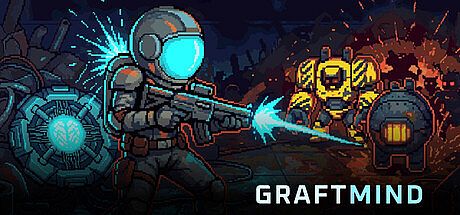


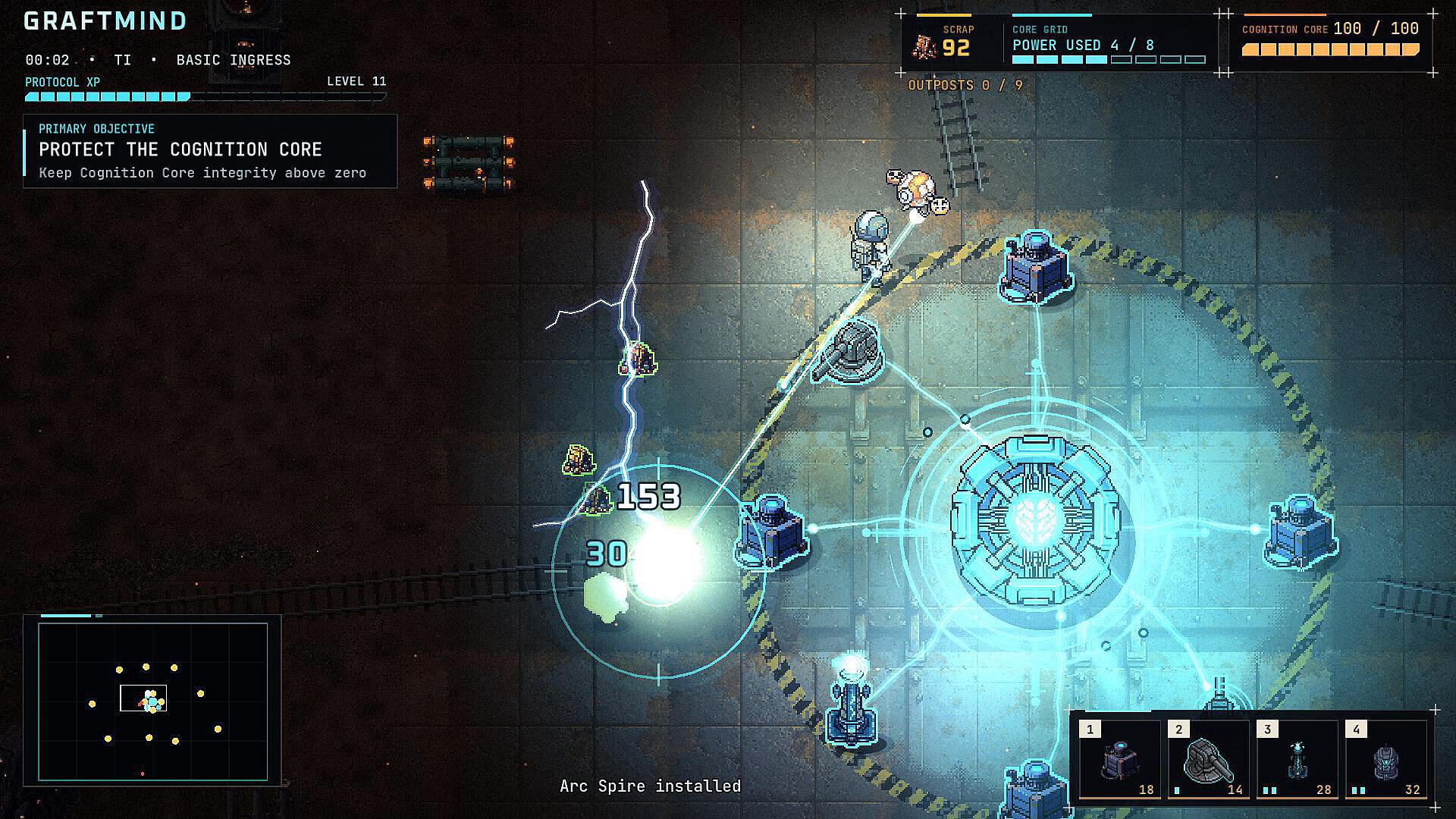
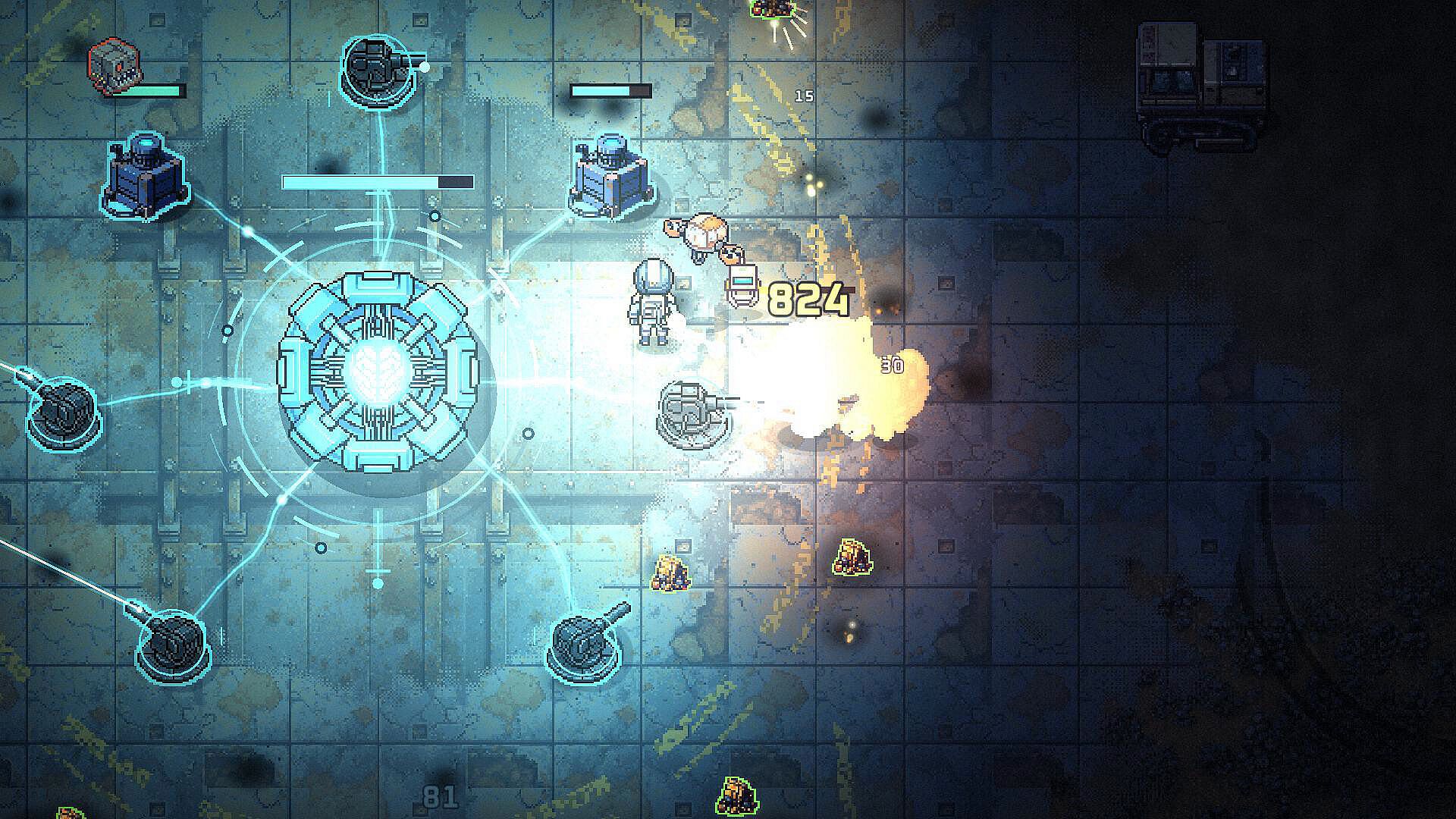
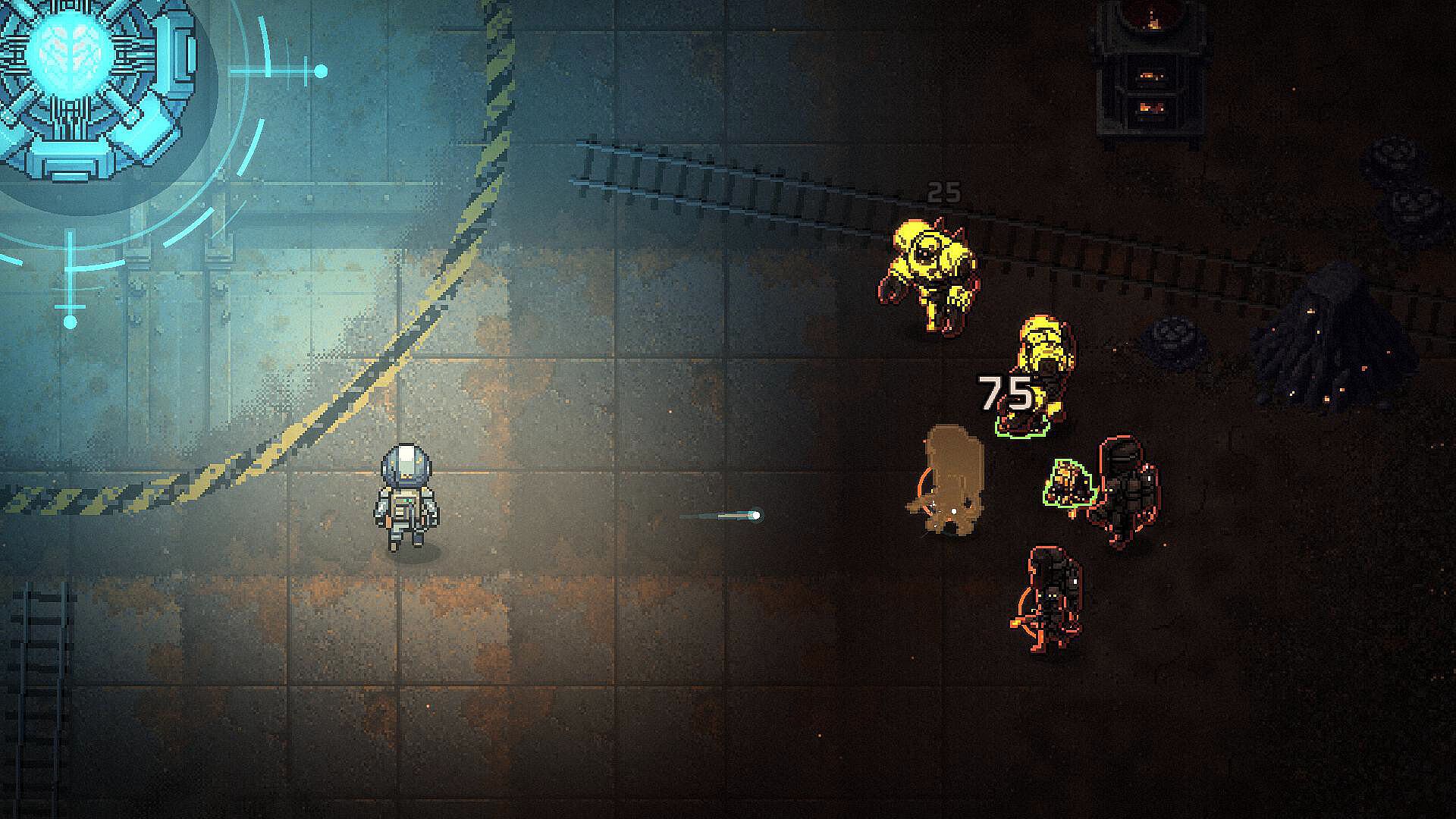
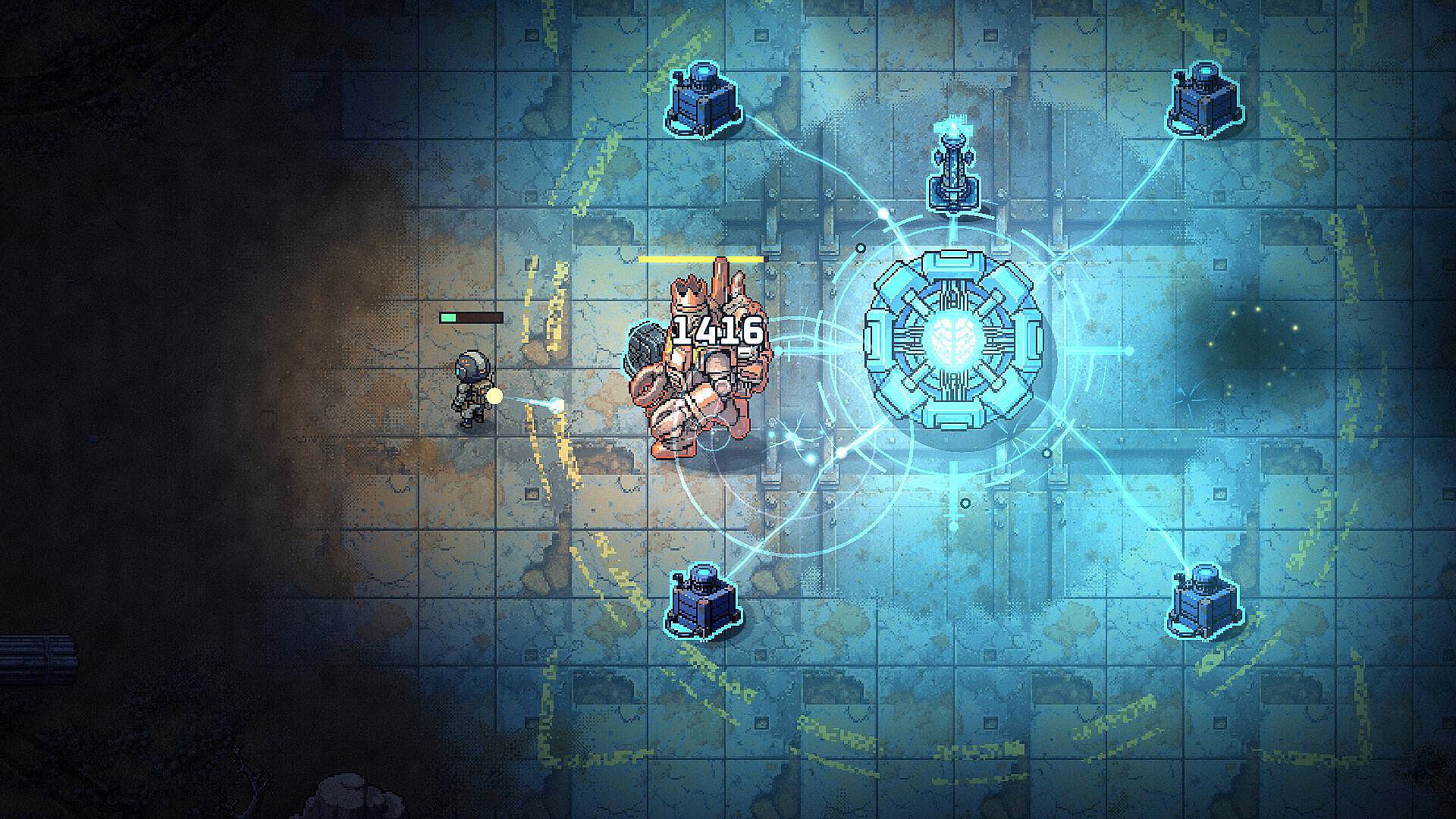
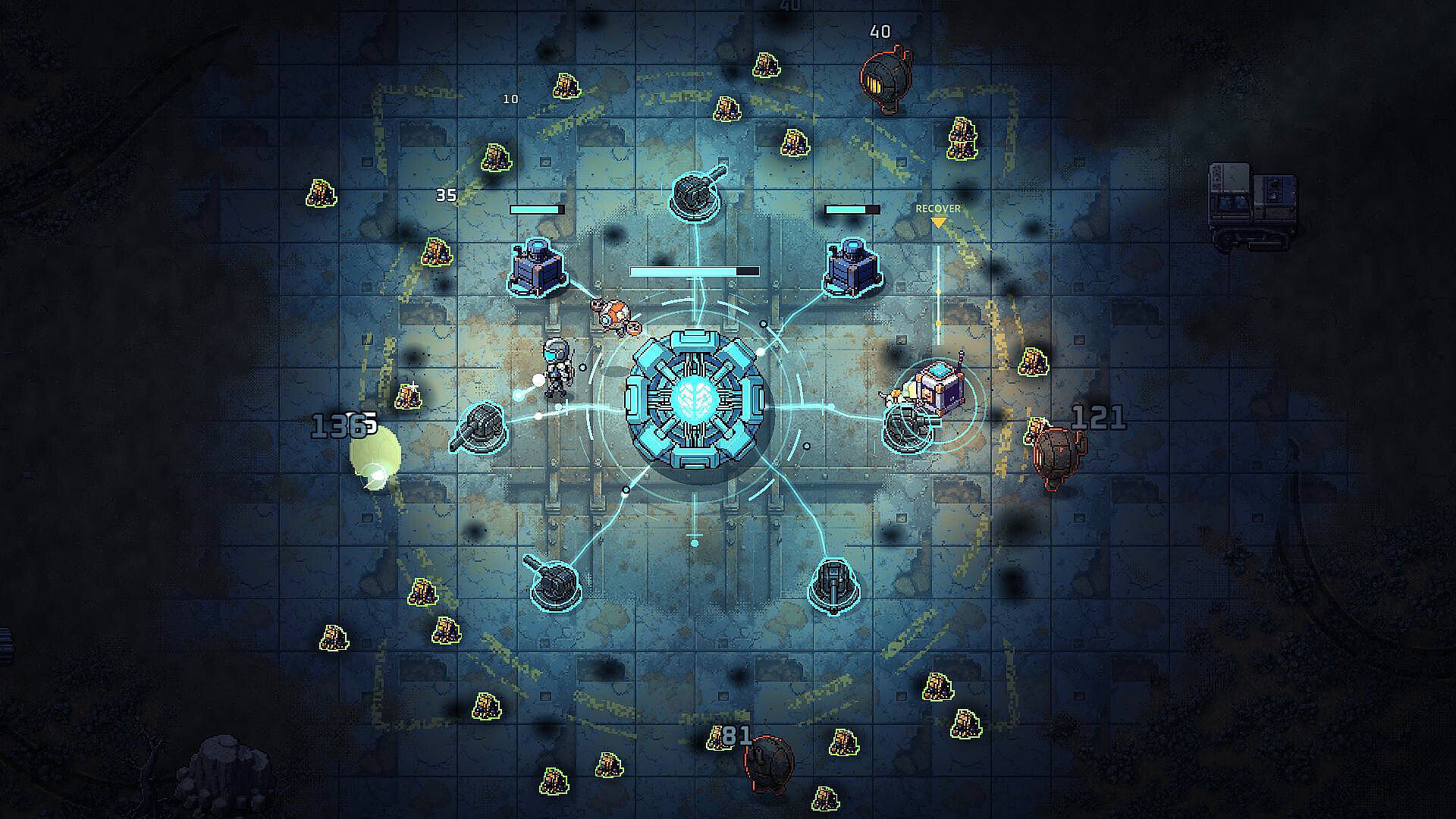
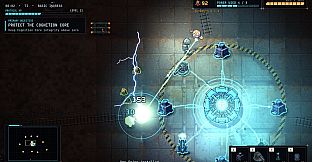
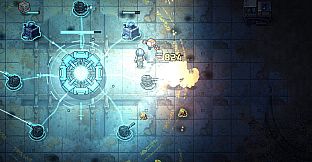
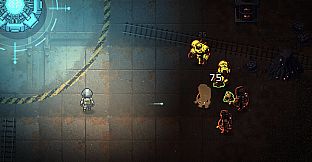
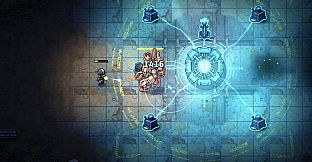
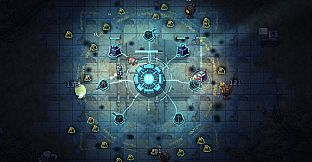
GRAFTMIND is a top-down action tower defense roguelite for PC that places players directly on the battlefield instead of in a detached command role. Robots constructed from scrap surge toward a central Core from all directions, forcing constant movement, shooting, and on-the-spot construction. The game blends real-time combat with strategic building, where every decision about placement and power management happens amid active waves rather than during pauses.
Gameplay
Combat unfolds in a continuous loop of movement and resource gathering. Players navigate the field to eliminate incoming machines, collect Scrap from fallen enemies, and deploy structures without halting the action. Turrets require power to function, so new buildings must connect to existing power sources or Generators placed on Power Nodes. Claiming an outpost with a Generator expands the powered area, provides a steady Scrap income, and draws more enemy attention.
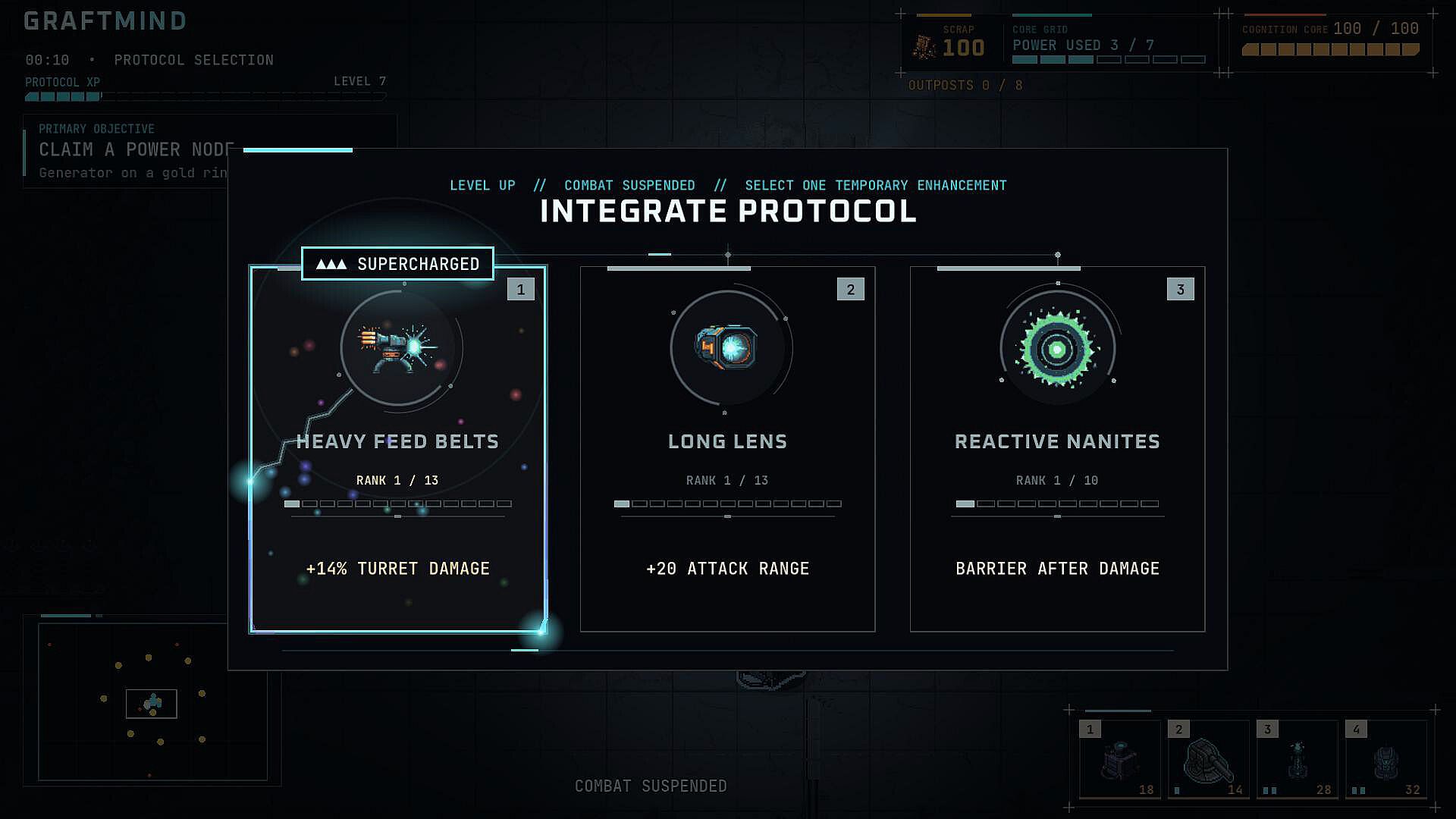
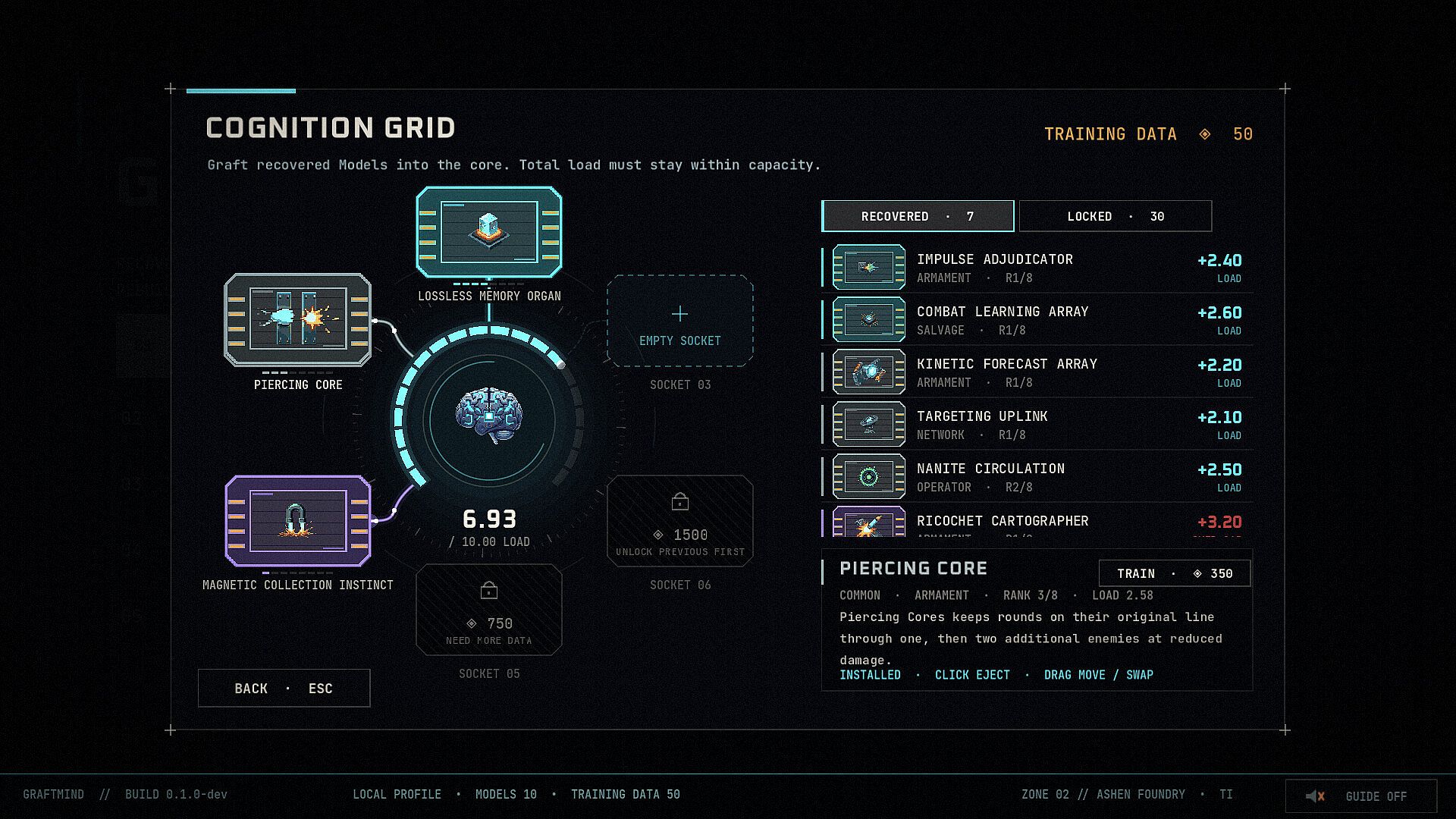
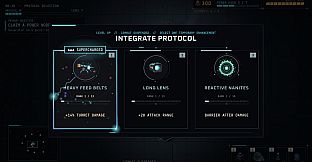
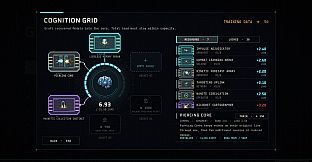
Progression occurs through level-ups that present choices for weapon improvements, turret enhancements, and base upgrades. Some options appear Supercharged for amplified effects. Runs typically last around fifteen minutes before concluding against a zone Guardian. Defeated machines occasionally yield Models, which are recovered AI chips inserted into the Core before subsequent runs. These Models grant persistent upgrades and can be trained using data collected from prior attempts to increase their strength over time.
Enemy variety includes fast-moving units, heavy armored types, ranged attackers, aerial drones, and more specialized machines that appear in later stages. The system emphasizes positioning and power routing because structures only operate within range of active Generators, turning each wave into a test of both reflexes and layout planning.
Game Modes
The core experience centers on individual runs across three distinct zones, each with its own environmental challenges and escalating threats. Scrap Wastes serves as an open junkyard area suited for learning core systems. Ashen Foundry introduces a burnt-out factory setting with heavier enemies appearing sooner. Severed Grid features a broken power network where shielded enemy formations and signal storms add layers of complexity.
Each zone ends with a Guardian encounter that caps the run. Between runs, players manage Models to carry forward advantages, creating a roguelite loop of incremental improvement without altering the fundamental real-time defense structure. No separate multiplayer or alternative modes exist beyond these zone-based runs and the persistent Model system.
Zones and Progression
The three zones provide variety in layout and enemy composition while maintaining the same core loop of field combat and building. Scrap Wastes offers straightforward open space for mastering Scrap collection and basic turret placement. Ashen Foundry shifts toward denser environments and stronger early opposition. Severed Grid demands careful power management due to shielded groups and disruptive storms that affect visibility or targeting.
Model collection and training add long-term depth. Each recovered chip brings unique bonuses that stack across attempts, and training them with run data refines their contributions. This progression rewards repeated play without requiring lengthy sessions, as individual runs remain short and self-contained.
Is It Worth Playing?
GRAFTMIND appeals to players who enjoy real-time strategy mixed with direct action and roguelite elements. The emphasis on fighting alongside defenses, managing power grids under pressure, and building a collection of trainable Models creates a focused loop that rewards quick thinking and iterative improvement. As an indie title still in development, it currently offers no released version or player reviews, so interest depends on whether the described mechanics align with preferences for short, intense sessions of top-down tower defense with personal combat involvement. Those drawn to the genre may find the on-field perspective and carry-over systems worth following through its Steam page for future updates.