


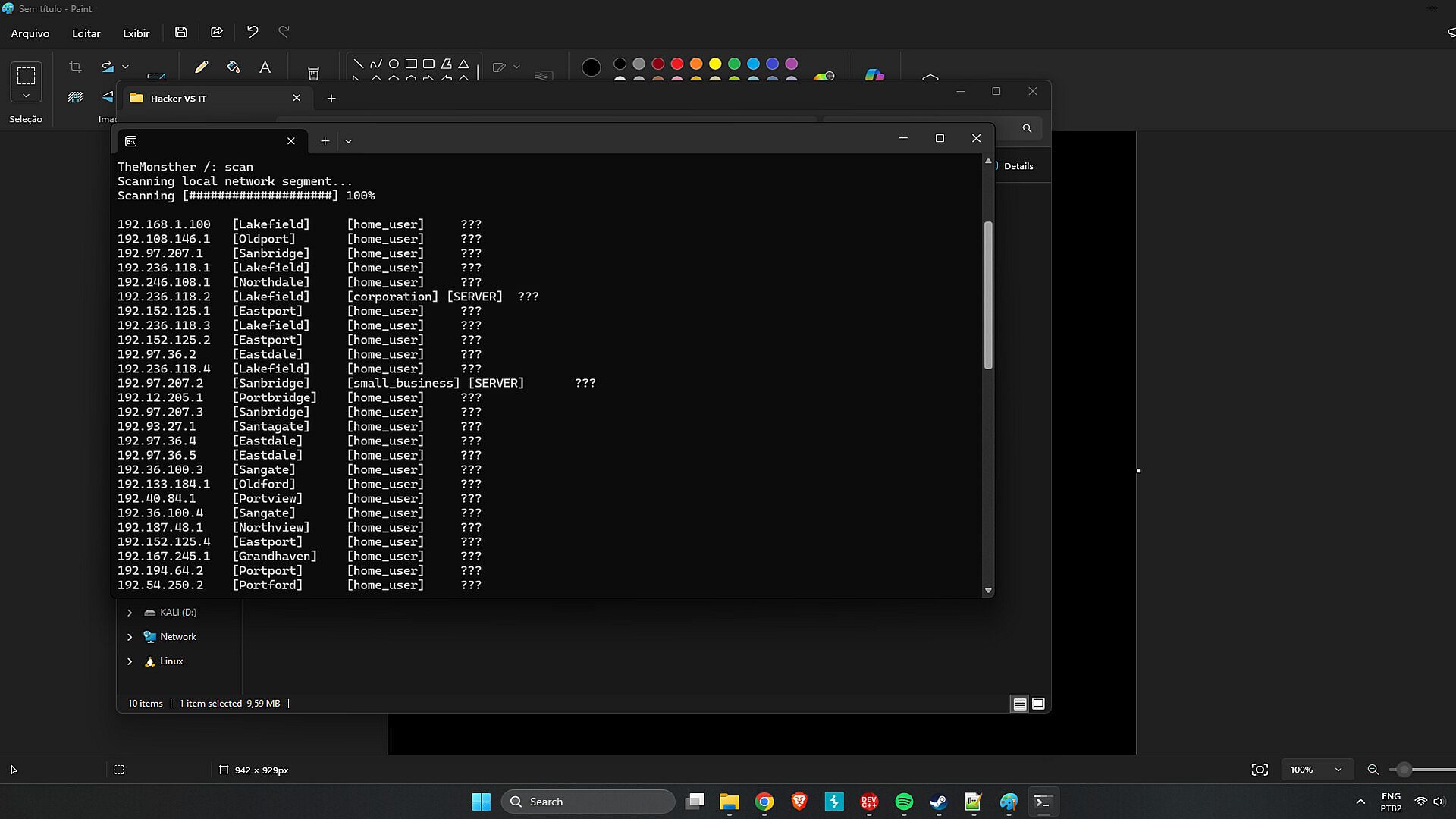
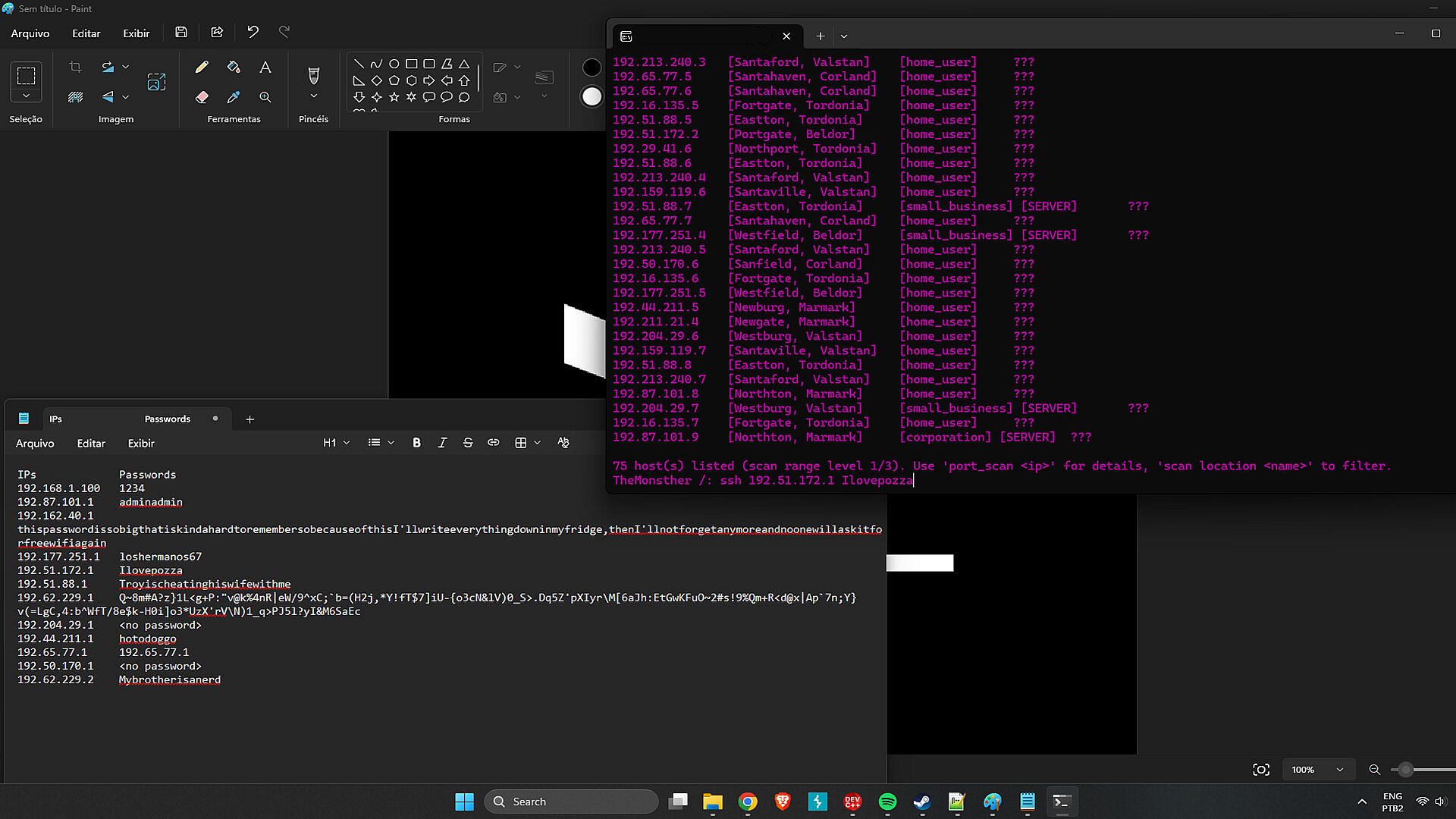
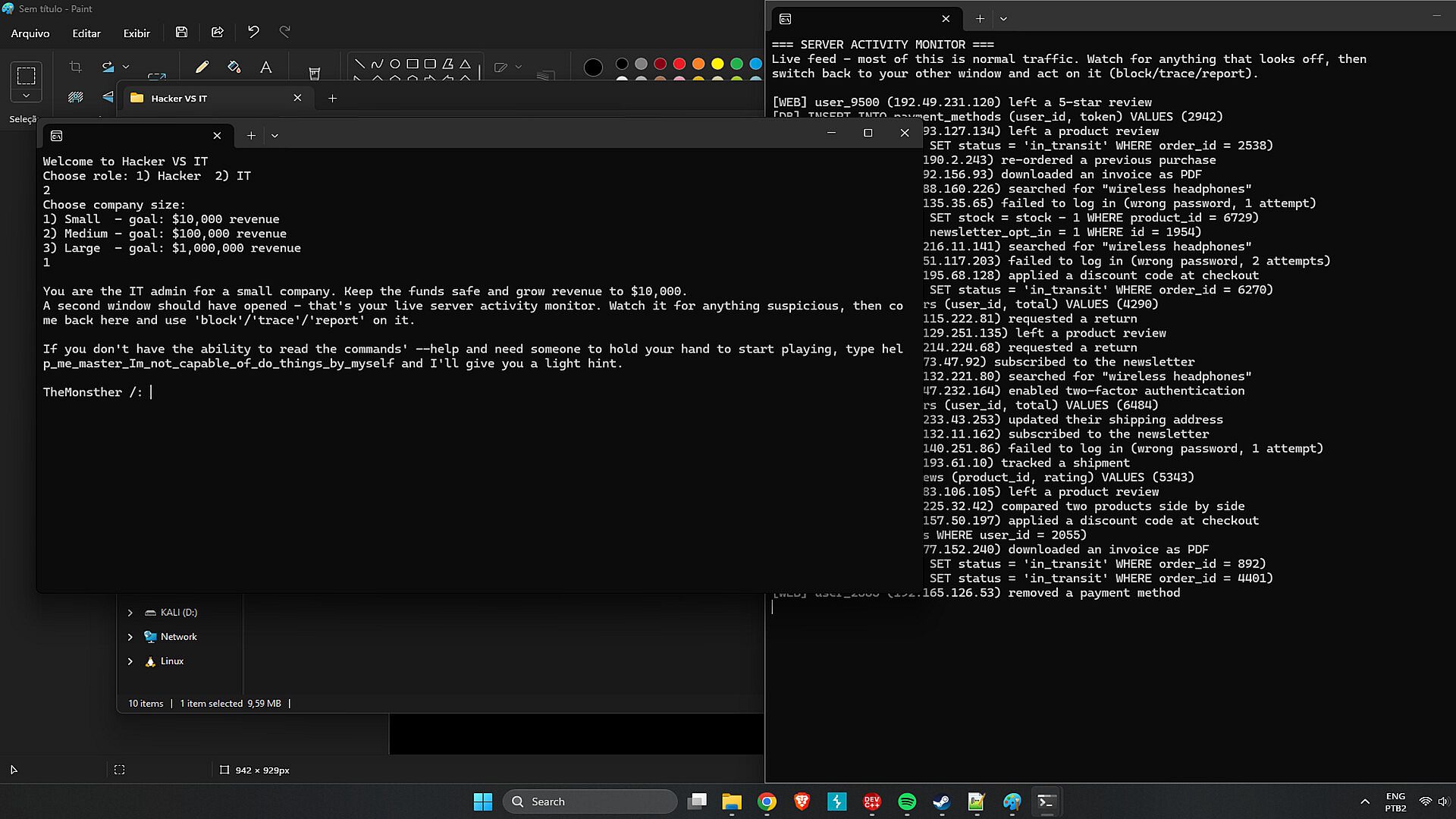
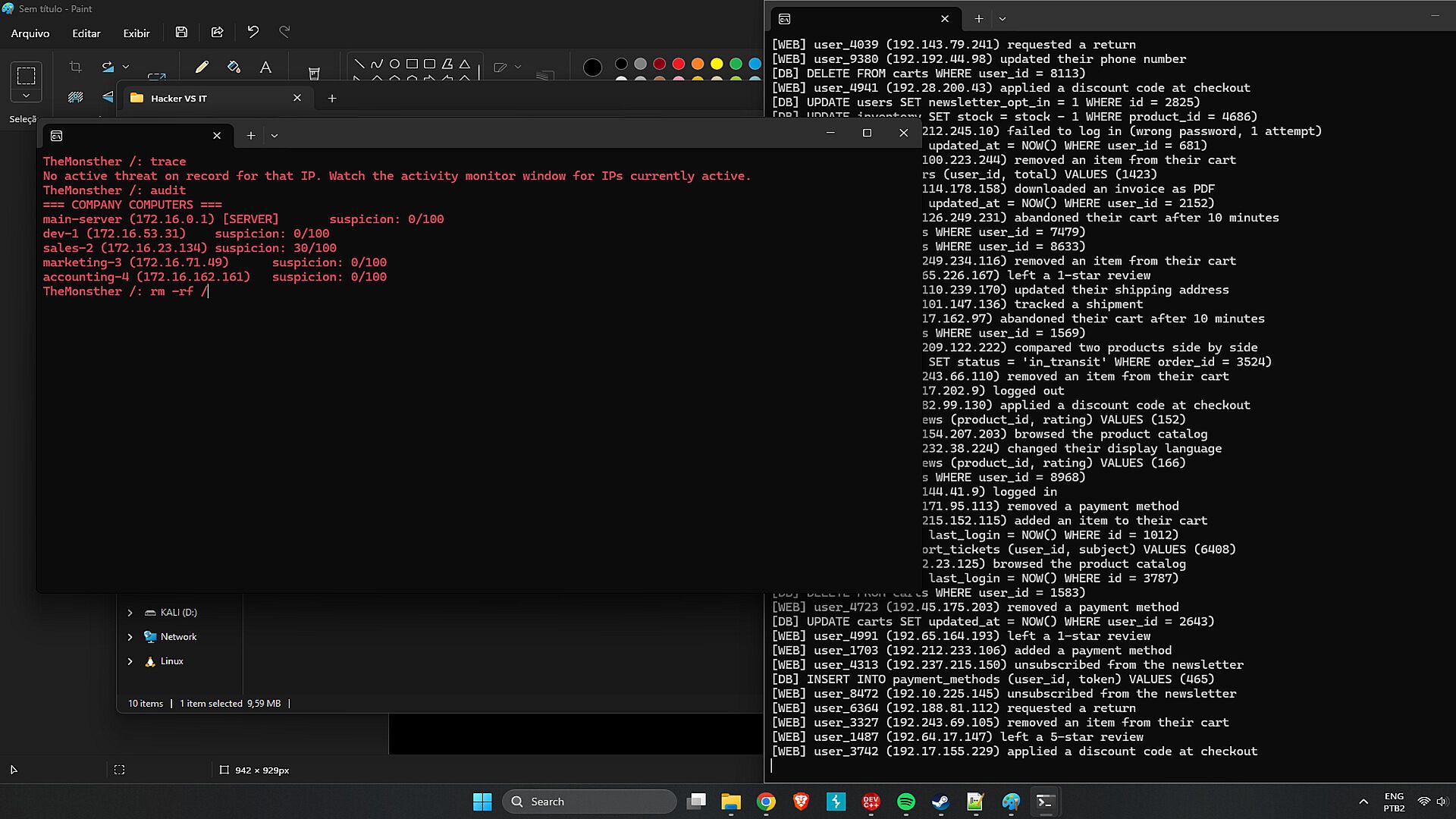
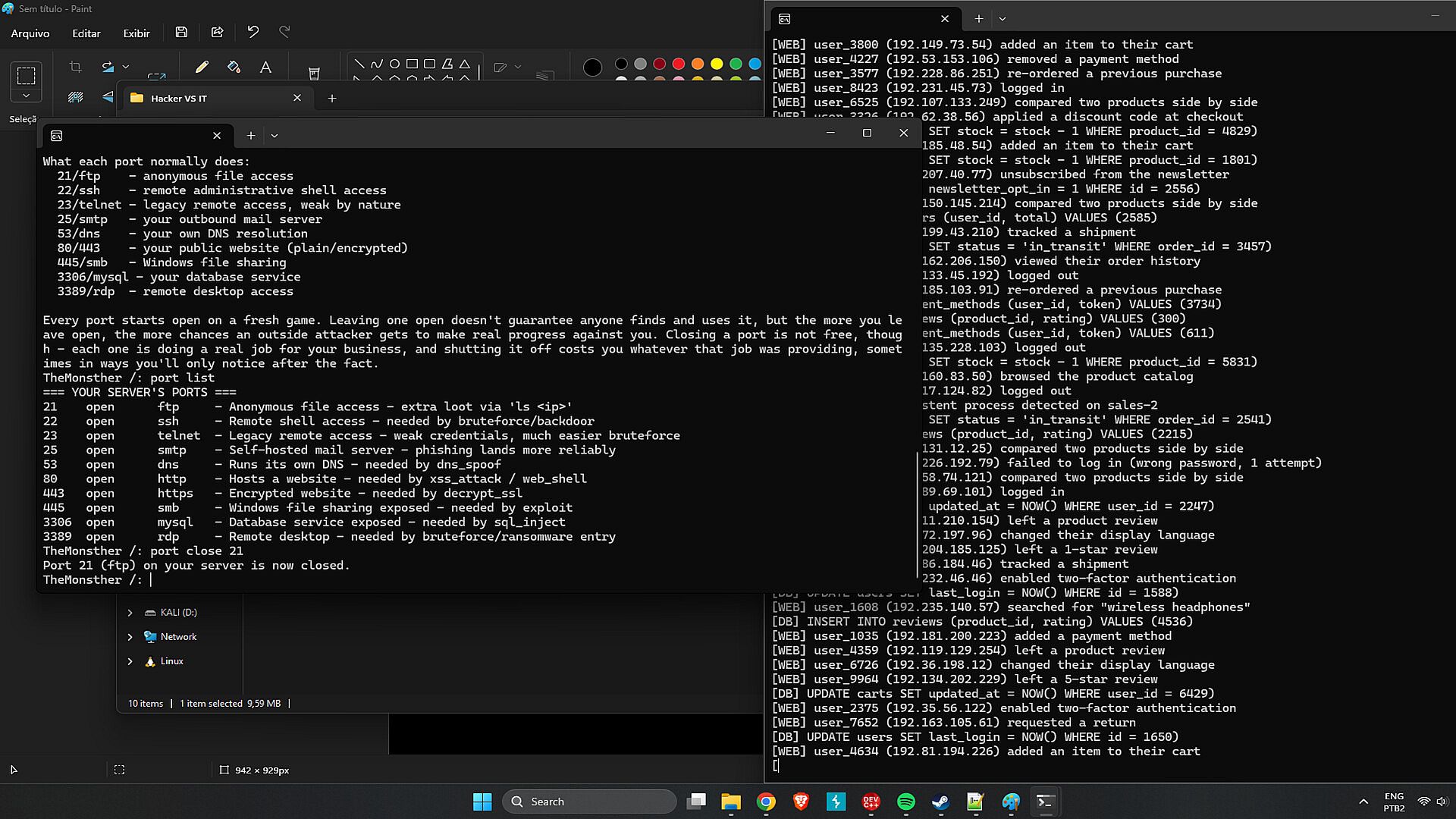
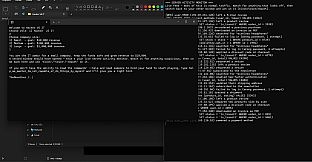
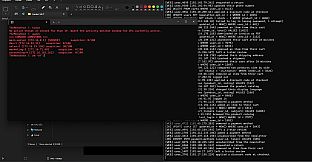
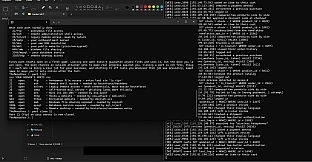
Hacker vs IT is a strategy indie simulation game for PC that places players in the role of either a hacker or an IT professional through a minimalist terminal interface. The experience centers on decision making in a simulated environment that reflects aspects of real world cybersecurity without providing formal instruction. Players interact via text commands on a black screen with a blinking cursor, occasionally managing multiple such screens to handle parallel tasks or opposing objectives.
Gameplay
The core loop revolves around reading system outputs, entering commands, and observing the results of those choices. Sessions begin with a blank terminal prompt where the player types actions to advance the scenario. Outcomes depend entirely on the sequence of decisions made, leading to different paths that represent either offensive hacking attempts or defensive IT responses. The simulation shows partial realities of white hat and red hat activities alongside routine IT operations such as monitoring and mitigation. Low system demands mean the game runs on basic hardware, emphasizing focus on the text interactions rather than graphics or performance features. Players manage their own pace, using external notes if desired to track strategies across attempts.
Game Modes
The game offers a single primary experience built around perspective switching between hacker and IT roles. No separate named modes exist beyond the core simulation, where the player determines the approach from the start. This structure allows repeated playthroughs to explore alternative actions and endings without additional layers or procedural variations. The emphasis remains on personal choice rather than competitive or cooperative elements.
Core Mechanics and Player Agency
Mechanics stay grounded in command input and consequence observation. A player selects how to proceed at each step, whether attempting access, securing systems, or responding to intrusions. The simulation highlights distinctions in hacker motivations and the importance of personal cybersecurity habits through its narrative branches. Energy and focus become practical considerations during longer sessions due to the text heavy format. Multiple endings emerge from consistent decision patterns, rewarding experimentation with different strategies on subsequent runs.
Who the Game Targets
This title suits individuals interested in strategy simulations that explore cybersecurity themes through direct interaction. Those seeking a low commitment experience on modest hardware will find the minimal requirements accessible. The design encourages reflection on ethical aspects of hacking and defensive practices without requiring prior technical expertise. Sessions can conclude quickly for players familiar with terminal concepts, while others may take more time to map effective approaches.
Is It Worth Playing?
The game delivers a focused, choice driven simulation that aligns with its stated goals of illustrating hacker and IT realities. Players who complete multiple runs often report greater awareness of cybersecurity practices and nuanced views on hacker roles. Its accessibility and replayability through self determined endings make it suitable for short sessions or deeper exploration of outcomes. Those who value minimalist strategy experiences over polished visuals or extensive content will likely appreciate the direct approach. The absence of refunds in some cases stems from the intentional design that rewards thoughtful engagement rather than speed alone. Overall it serves as a straightforward tool for personal insight into these topics when approached with an open mindset.