




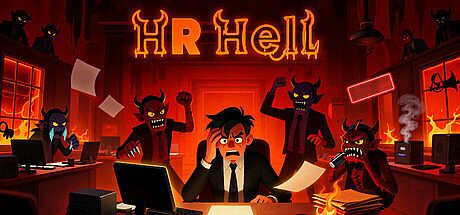


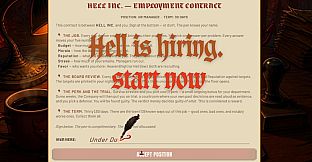
HR Hell is a strategy indie simulation game set on PC where players take on the role of an HR manager in a demonic corporate office. The premise places you in an eternal Monday managing impossible employee issues among demons while balancing multiple performance metrics that determine your survival.
Gameplay
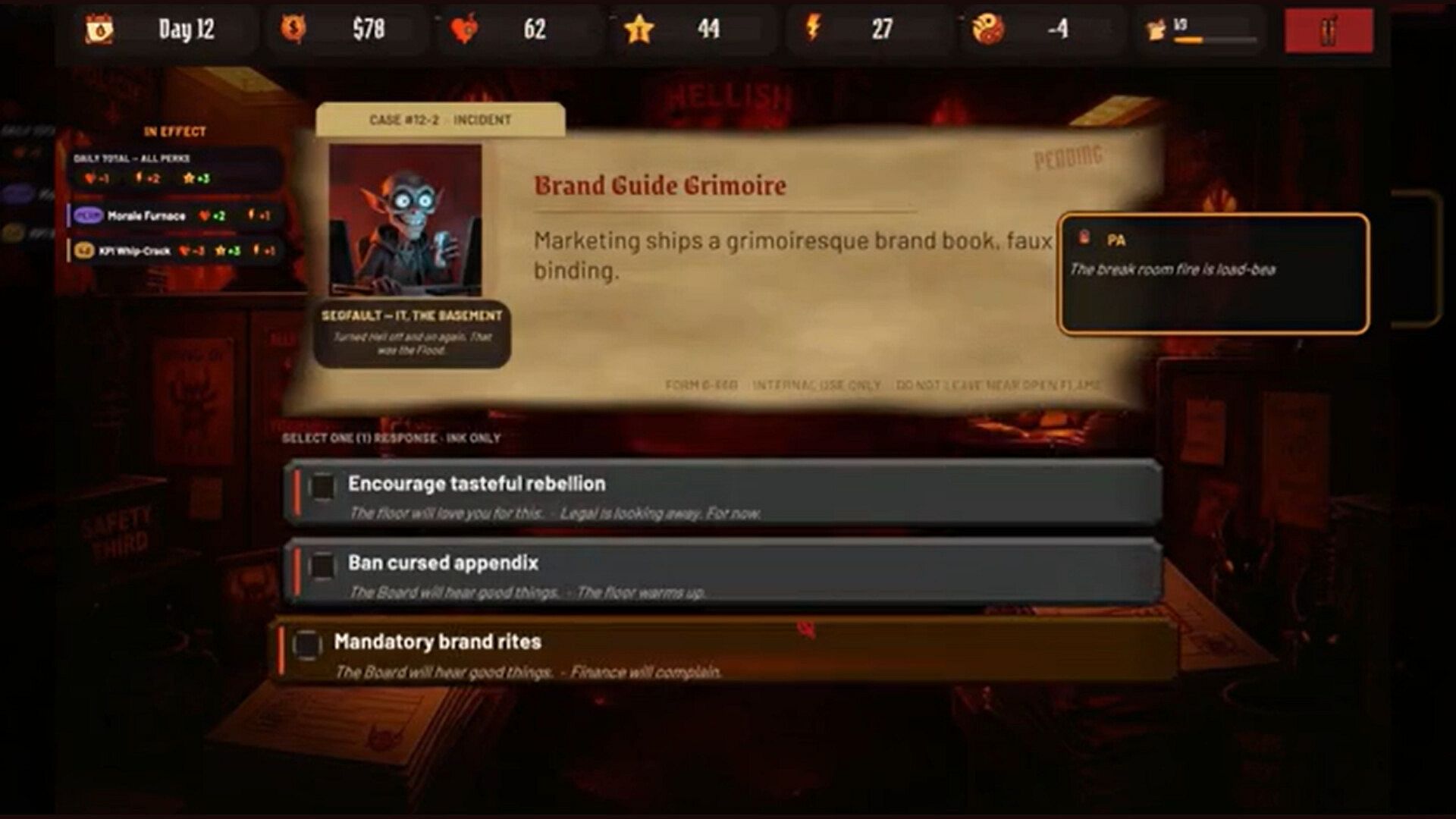
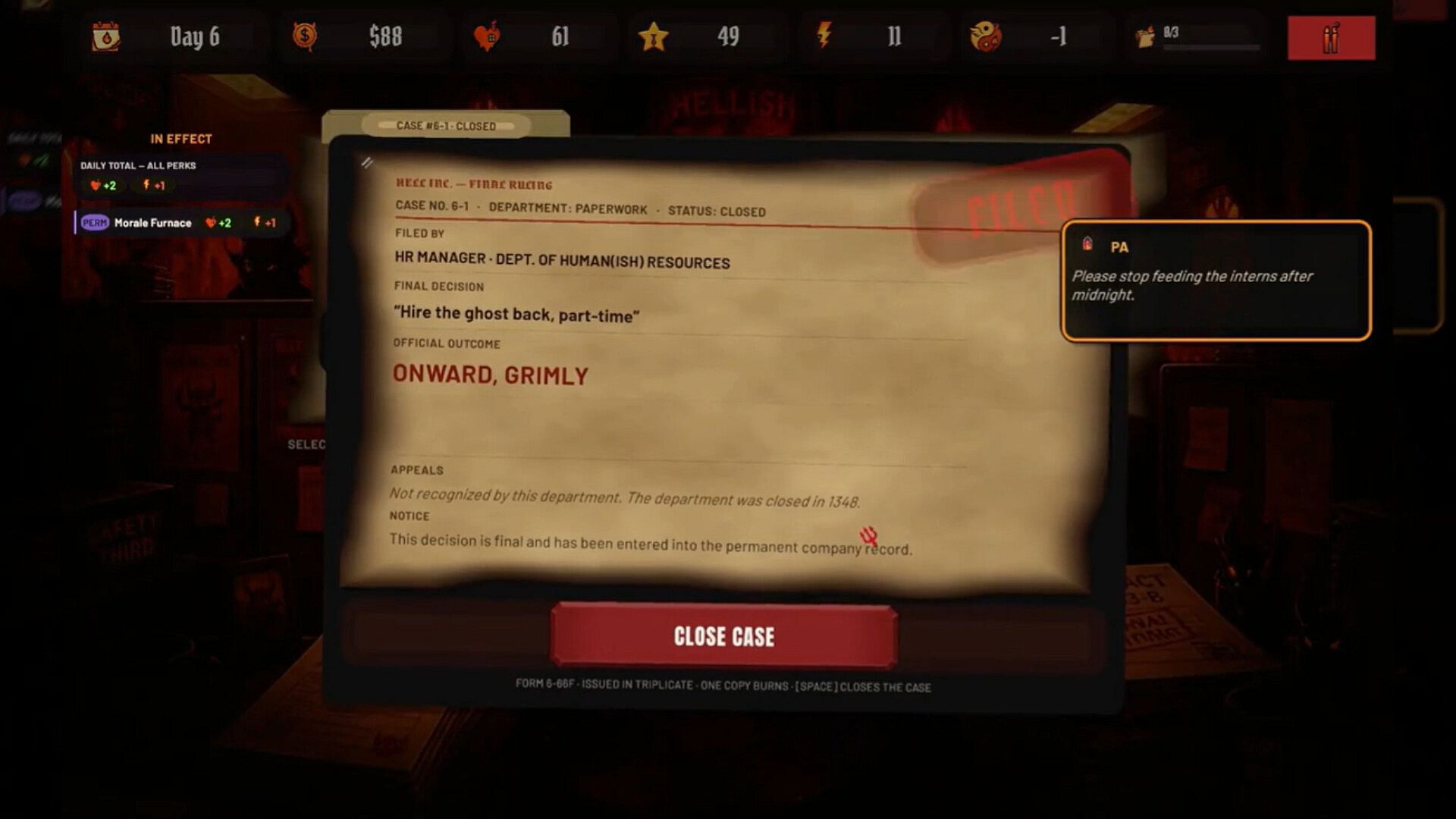
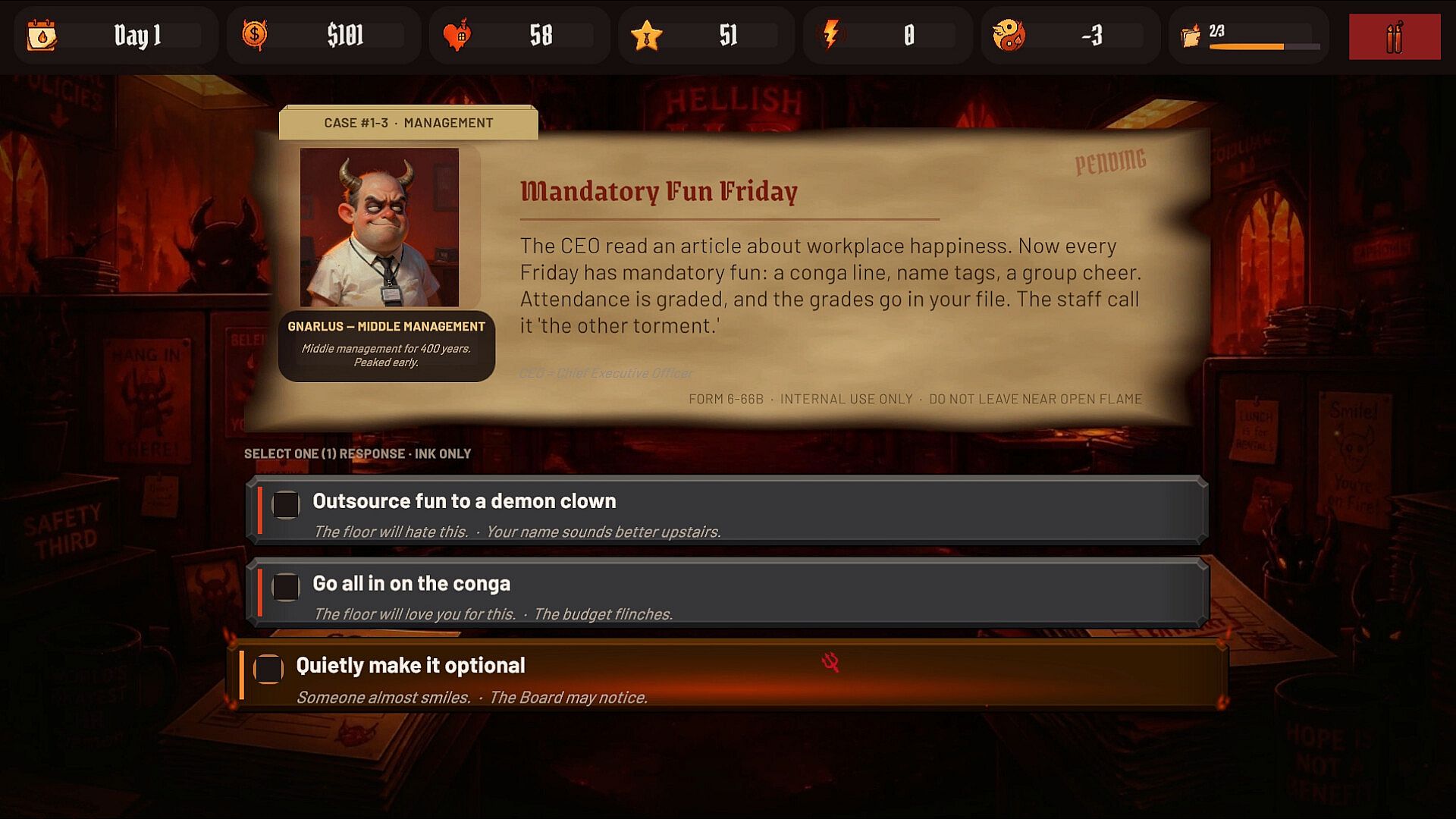
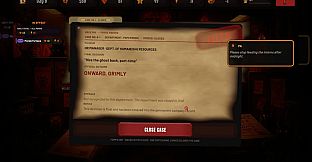
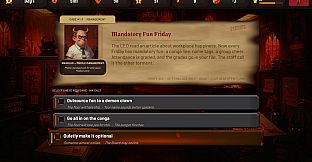
The core loop centers on daily case reviews. Each shift presents a new scenario drawn from over two hundred hand-written events filled with corporate satire and absurd demonic twists. You read the details of the case and select one response from the available options. That single choice immediately shifts five key stats: Budget, Morale, Reputation, Stress, and Favor. No outcome satisfies every metric at once, forcing constant trade-offs that shape the rest of the run.
Recurring characters appear across multiple days and respond to your past decisions. Gary from Accounting gradually transforms into his desk, the Eternal Auditor returns with fresh scrutiny, and intern Brenda may quietly consolidate power. These figures remember earlier rulings and can testify during later events, turning your history into evidence that affects future outcomes.
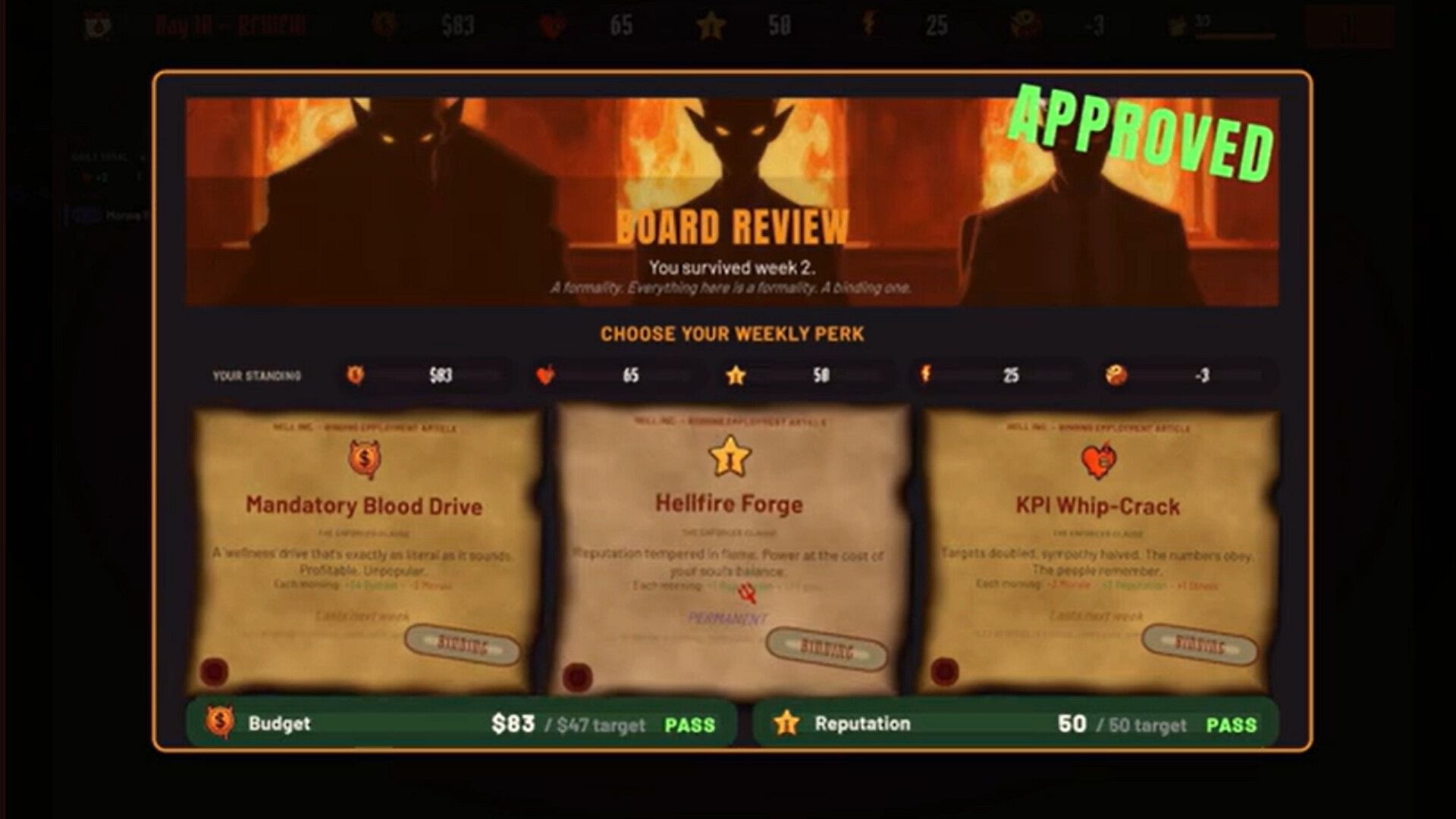
Relics and policies function as permanent upgrades collected during runs. They allow players to emphasize fear-based management, kindness-driven approaches, or profit-focused tactics. Each choice compounds over the week, altering how cases resolve and how the final review unfolds.
Game Modes
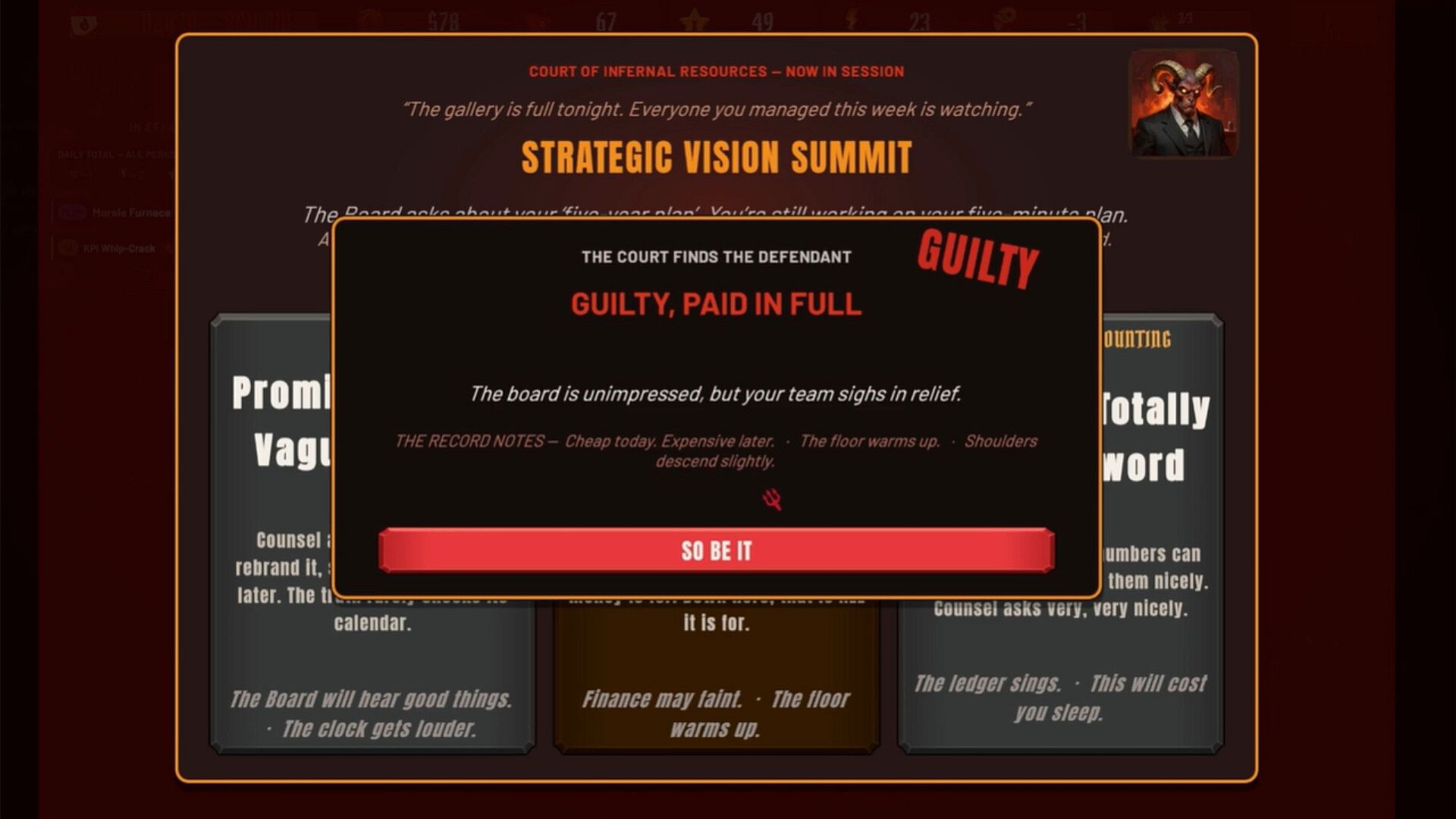
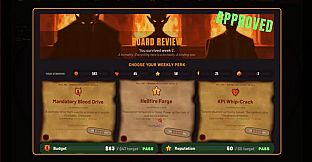
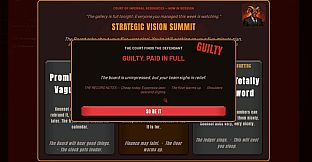
The primary experience unfolds as a week-long survival sequence. Days consist of case-by-case decisions that build toward a Board review at the end of the week. Passing the review grants a run-long perk and advances you to a Corporate Trial where you defend your record through additional trade-off answers. The trial verdict determines the exact form of guilt rather than innocence or full exoneration.
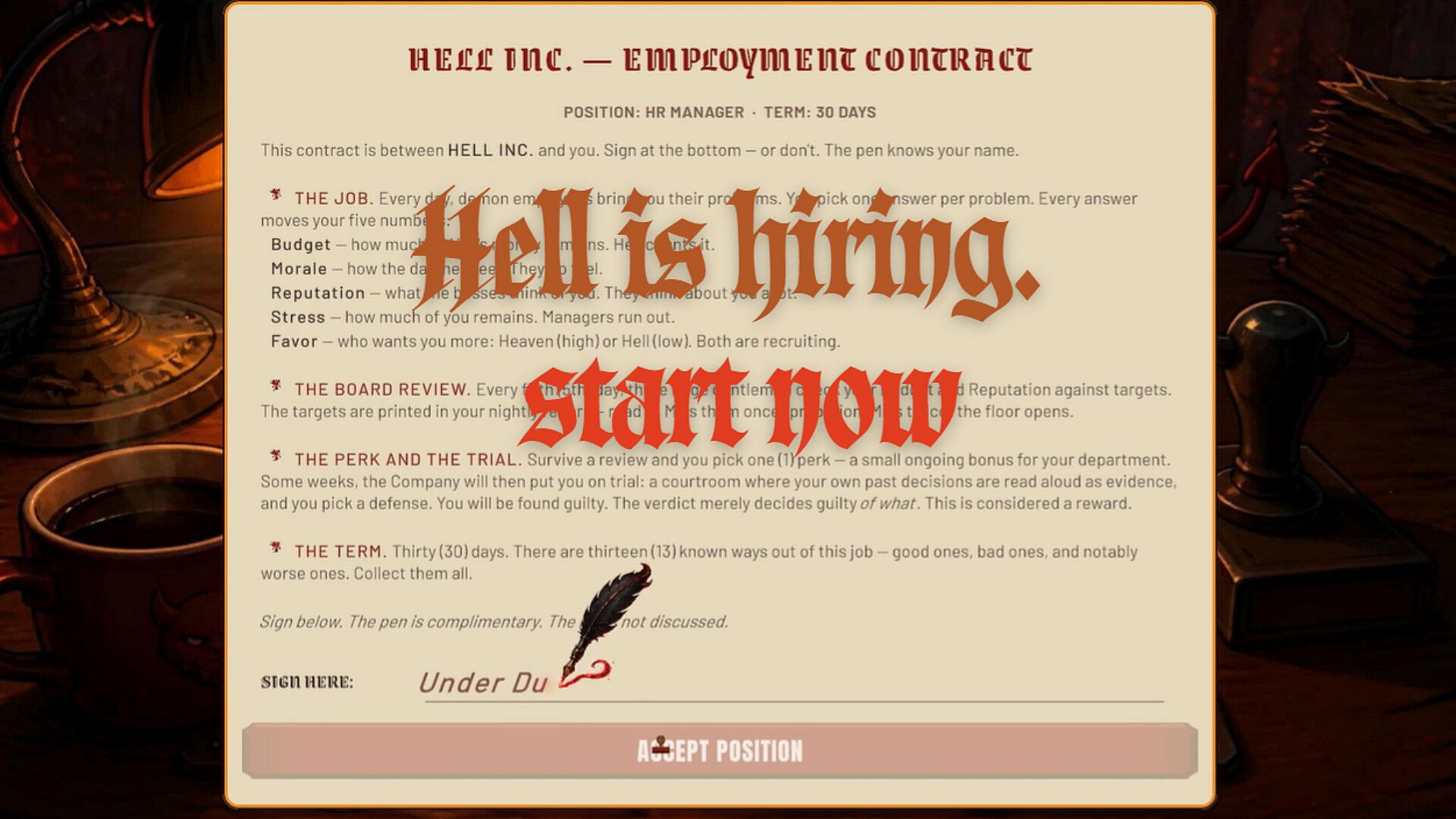
Failing the Board review or the trial triggers an immediate reset. The floor opens and the cycle begins again with a fresh set of cases. Thirteen distinct escape paths exist, ranging from promotion to VP of Eternal Torment to handing control to Brenda or literal burnout. Each run generates different event combinations, so the same sequence of choices rarely repeats.
The structure emphasizes roguelike progression within a singleplayer framework. No separate multiplayer or competitive modes appear in the design. Every attempt builds knowledge of recurring characters and event patterns while testing new combinations of relics and policies.
Key Mechanics and Features
Corporate Trials stand out as a distinctive system. They reference your actual prior rulings and call upon demons you previously helped or harmed to speak for or against you. This turns the entire run into admissible evidence rather than abstract scoring.
Management style emerges through accumulated relics and policies rather than a single character class. One run might favor intimidation tools that reduce Stress at the cost of Morale, while another leans on favor-building options that protect Reputation. The five tracked stats interact continuously, so early decisions constrain later options.
Thirteen endings reward exploration across multiple attempts. Discovering even one path requires surviving several weeks of compounding consequences. The game explicitly states that first attempts rarely succeed, positioning repeated runs as the intended way to uncover the full range of outcomes.
Is It Worth Playing?
HR Hell suits players who enjoy narrative-driven strategy simulations with heavy emphasis on decision consequences and dark humor. The hand-written events and recurring cast create a consistent satirical tone that rewards attention to detail across runs. Those who appreciate roguelike elements without combat will find the weekly cycle and multiple endings engaging.
The game remains in a wishlist stage with no released updates or seasons confirmed. Availability is limited to the PC platform described in the listing. Players seeking light-hearted office management or fast-paced action may find the constant stress tracking and inevitable failures less appealing. Those drawn to corporate satire, branching narratives, and systems that remember player history will likely appreciate the focused scope and the promise of thirteen distinct conclusions.











