











I'll Pay Tomorrow is a strategy indie simulation game set on PC where players take on the role of a hostel caretaker during a two-week trial period. The owner evaluates performance at the end, turning everyday management into a tense test of judgment and resource allocation under constant time pressure.
Gameplay
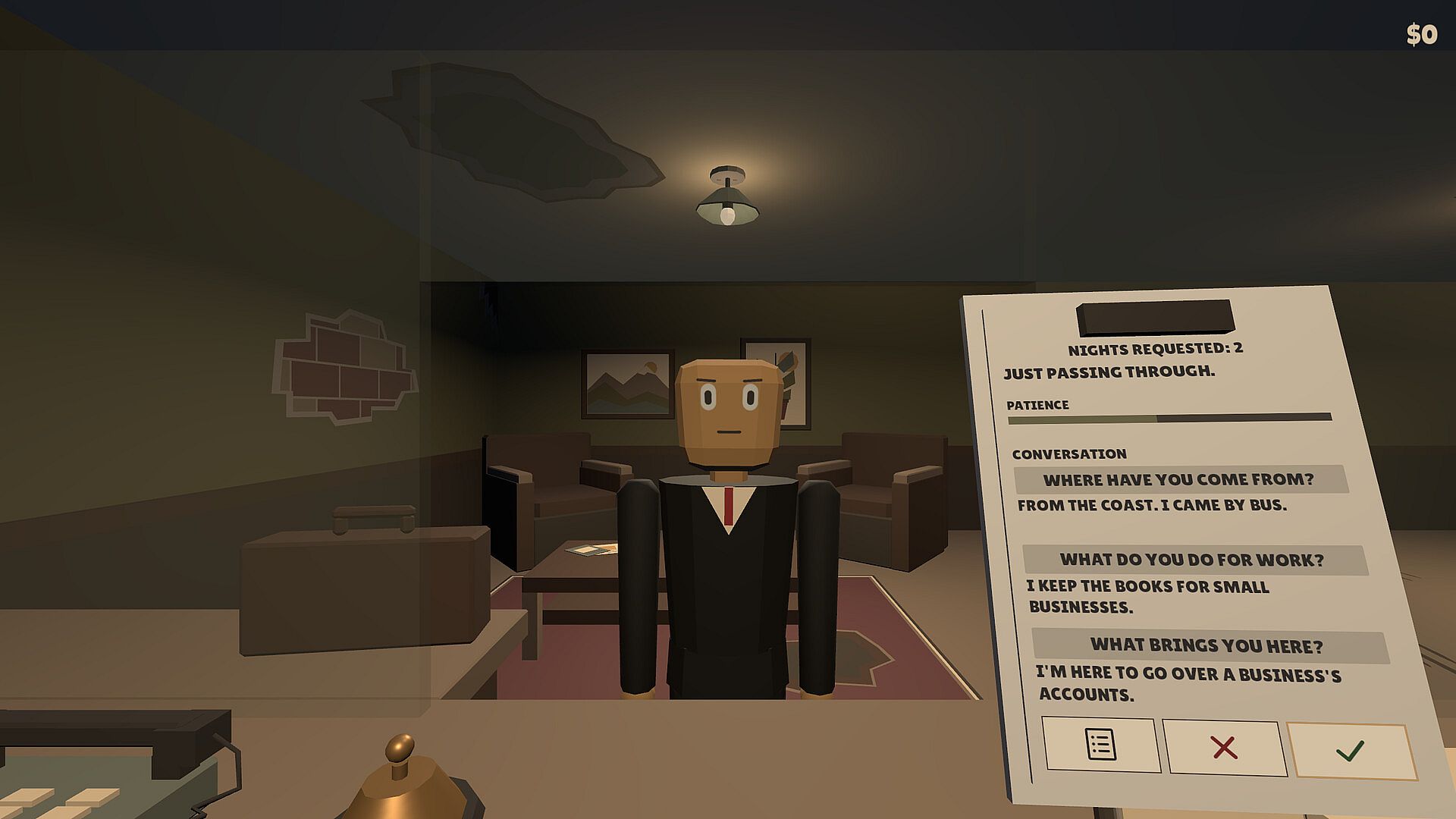
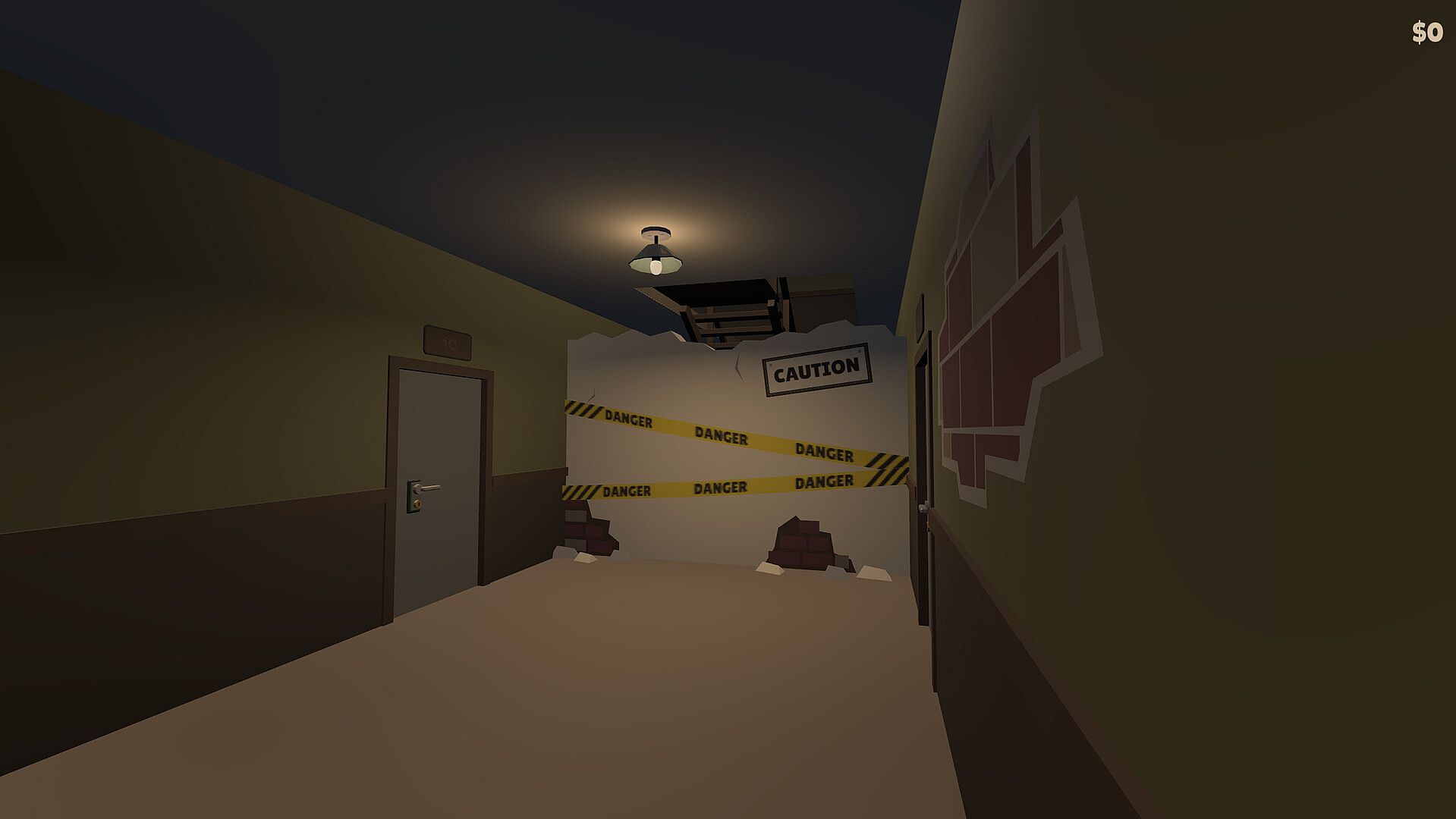
The core loop revolves around real-time clock management once the front desk opens. Guests arrive and decisions hinge on visual cues, dialogue, and a single question, with no paperwork or verification available. Accepting or rejecting someone directly affects the ledger and future nights. Time becomes the scarcest resource, as every movement between floors or rooms consumes seconds, and the upper level doubles the cost. Interruptions like maintenance issues or complaints arrive simultaneously, forcing prioritization that shapes the entire run.
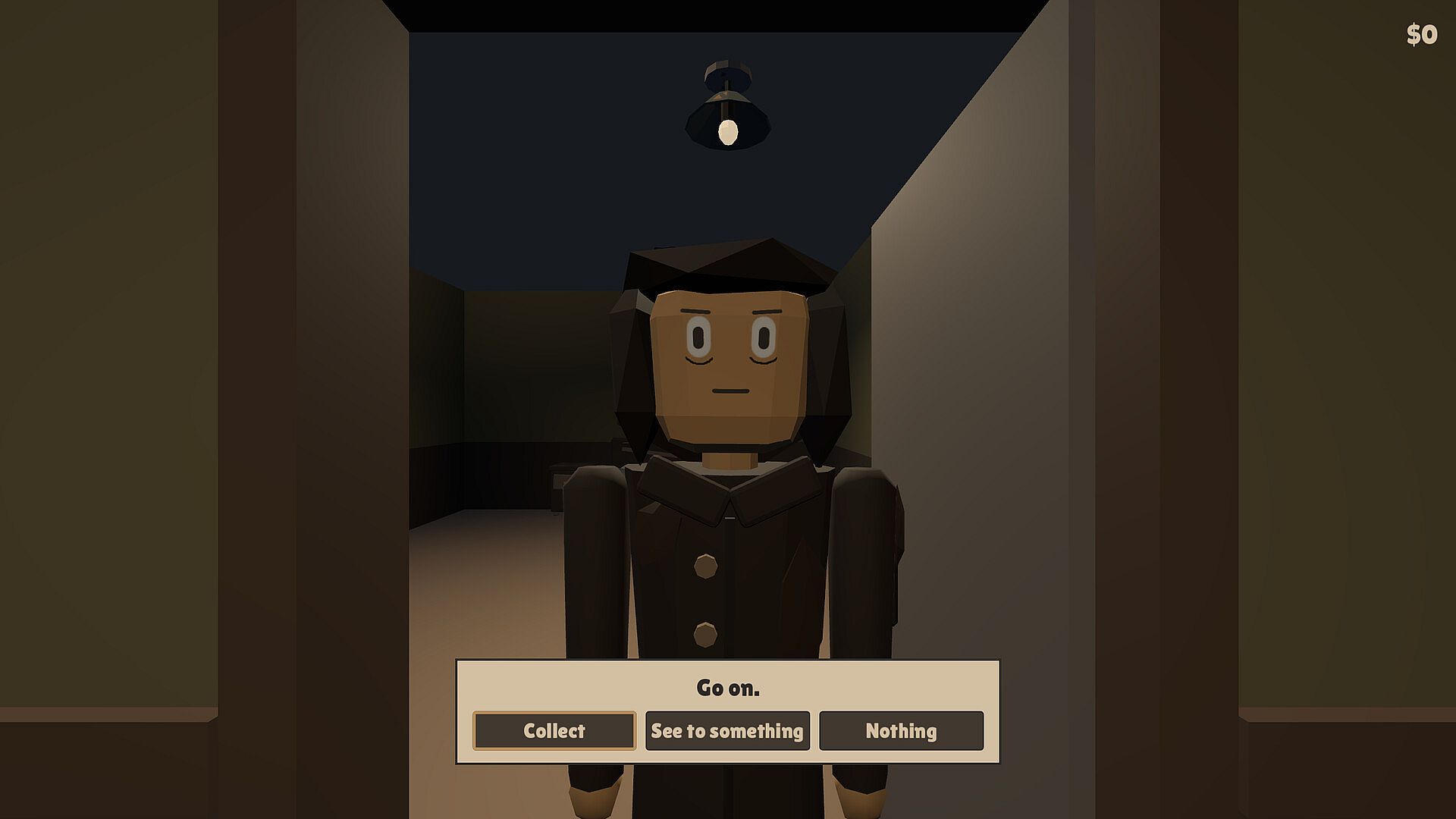
Evenings shift focus to rent collection through direct door-to-door visits. Most guests pay promptly, but others defer with promises that carry over as accumulating debt. Unresolved problems compound quickly, drawing attention from the owner through complaints or visible neglect. The simulation emphasizes that nothing resolves automatically, so choices about where to invest limited minutes determine whether the hostel stays functional or spirals into disorder.
Players can pursue shortcuts that speed up outcomes but introduce lasting consequences. Options range from involving authorities to more direct interventions like temporary service cutoffs or ledger adjustments. These paths accelerate progress yet build suspicion that persists across nights, altering how future interactions unfold and limiting clean resolutions later.
Game Modes
The experience centers on a single continuous run lasting roughly an hour. Each attempt follows the same structure of daytime desk work and nighttime collections, but player decisions branch the outcome in distinct directions. The trial concludes based on overall performance, with possible results including full hiring with positive endorsement, conditional hiring that acknowledges unconventional methods, outright dismissal, or legal consequences from escalated actions.
Replays encourage experimentation with different approaches to guest selection and problem handling. The structure supports multiple completions by varying the balance between strict adherence to rules and pragmatic shortcuts, each path leading to one of the documented endings without additional named modes or separate campaigns.
Core Mechanics and Systems
Debt accumulation forms a central system, carrying unpaid amounts forward and increasing pressure on subsequent nights. Complaints function as another tracking layer that influences the final evaluation. Maintenance events and guest conflicts compete for attention, requiring constant trade-offs between immediate fixes and long-term stability. The ledger serves as the primary record of choices, reflecting both income and any irregularities introduced through alternative collection methods.
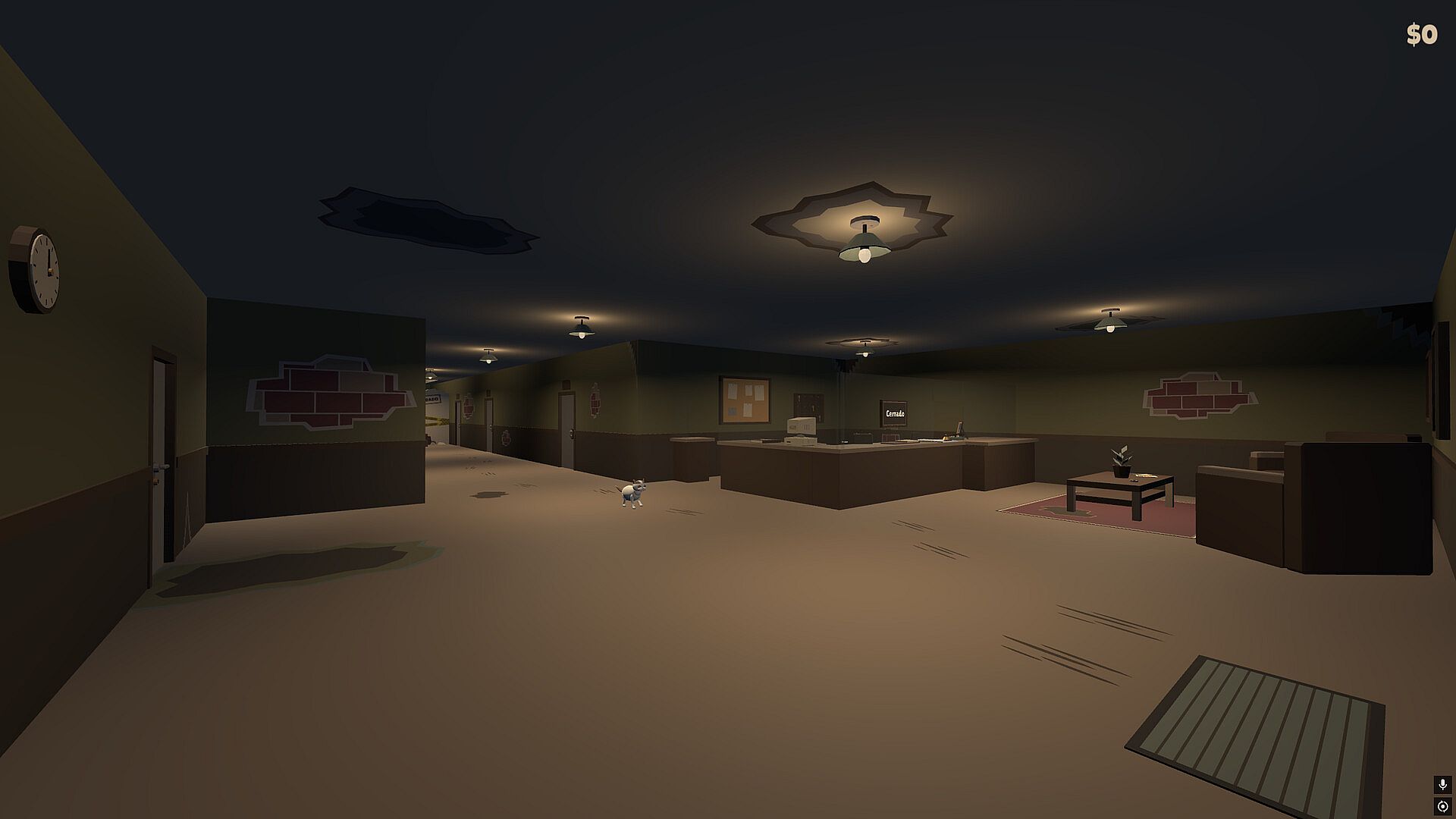
Physical navigation adds another layer, with movement costs scaling by floor and forcing efficient routing during busy periods. The single-question limit per guest interaction keeps decisions grounded in limited information, heightening reliance on observation and intuition over data.
Is It Worth Playing?
I'll Pay Tomorrow suits players who enjoy simulation experiences built around time management, moral trade-offs, and branching consequences rather than expansive worlds or combat. The hour-long run length makes it accessible for repeated attempts to explore different decision styles, particularly those interested in how small choices compound into distinct endings. The emphasis on gut instinct over documentation and the persistent effects of shortcuts create a focused loop that rewards careful planning alongside willingness to test boundaries. Those drawn to indie strategy titles that simulate high-stakes daily operations will find the mechanics align closely with the described systems, offering replay value through varied paths to the available conclusions.












