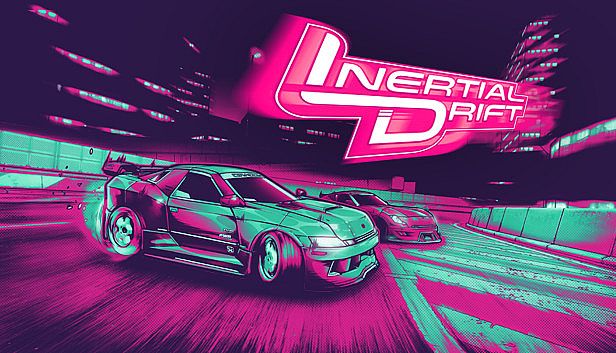
























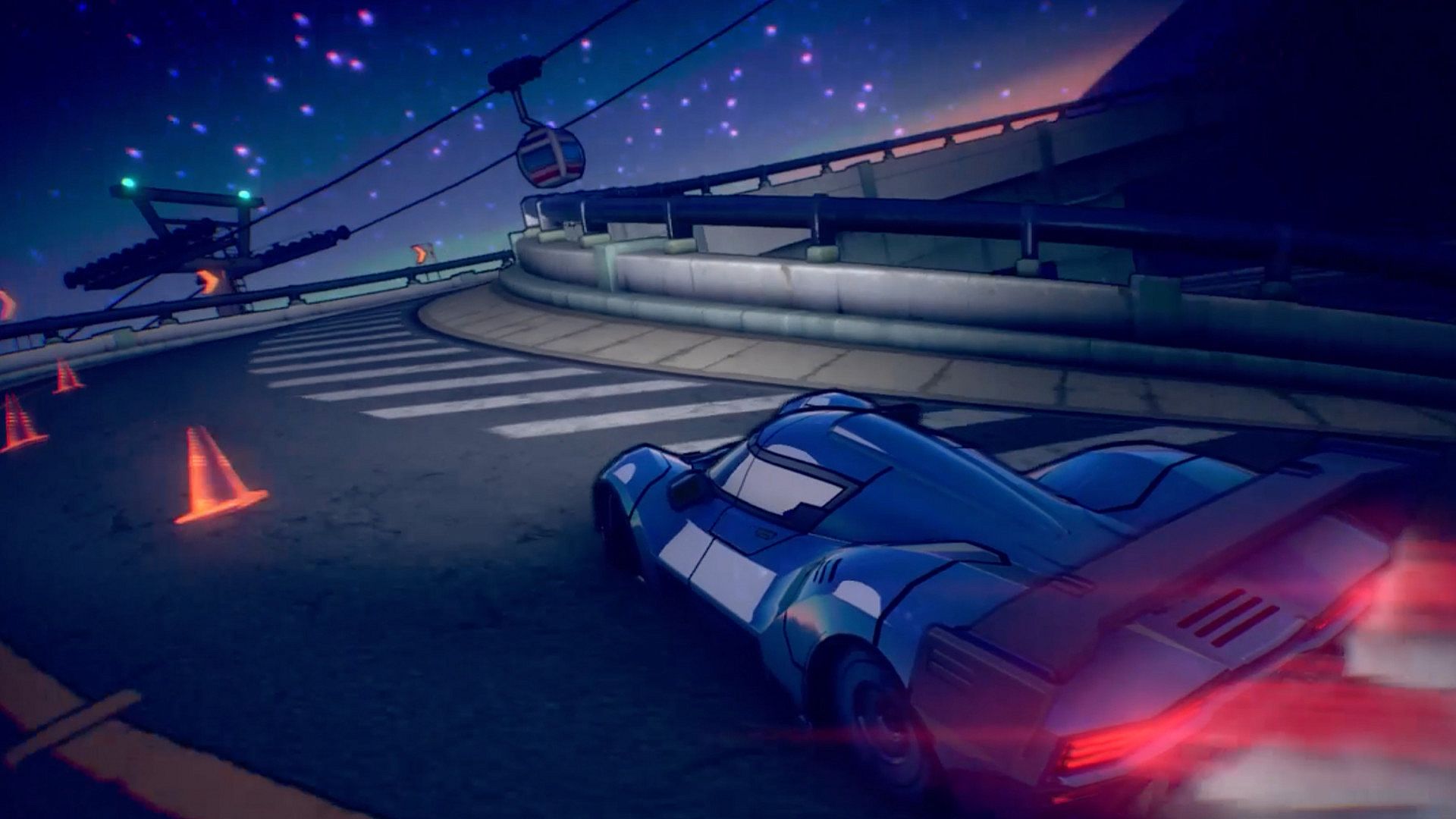
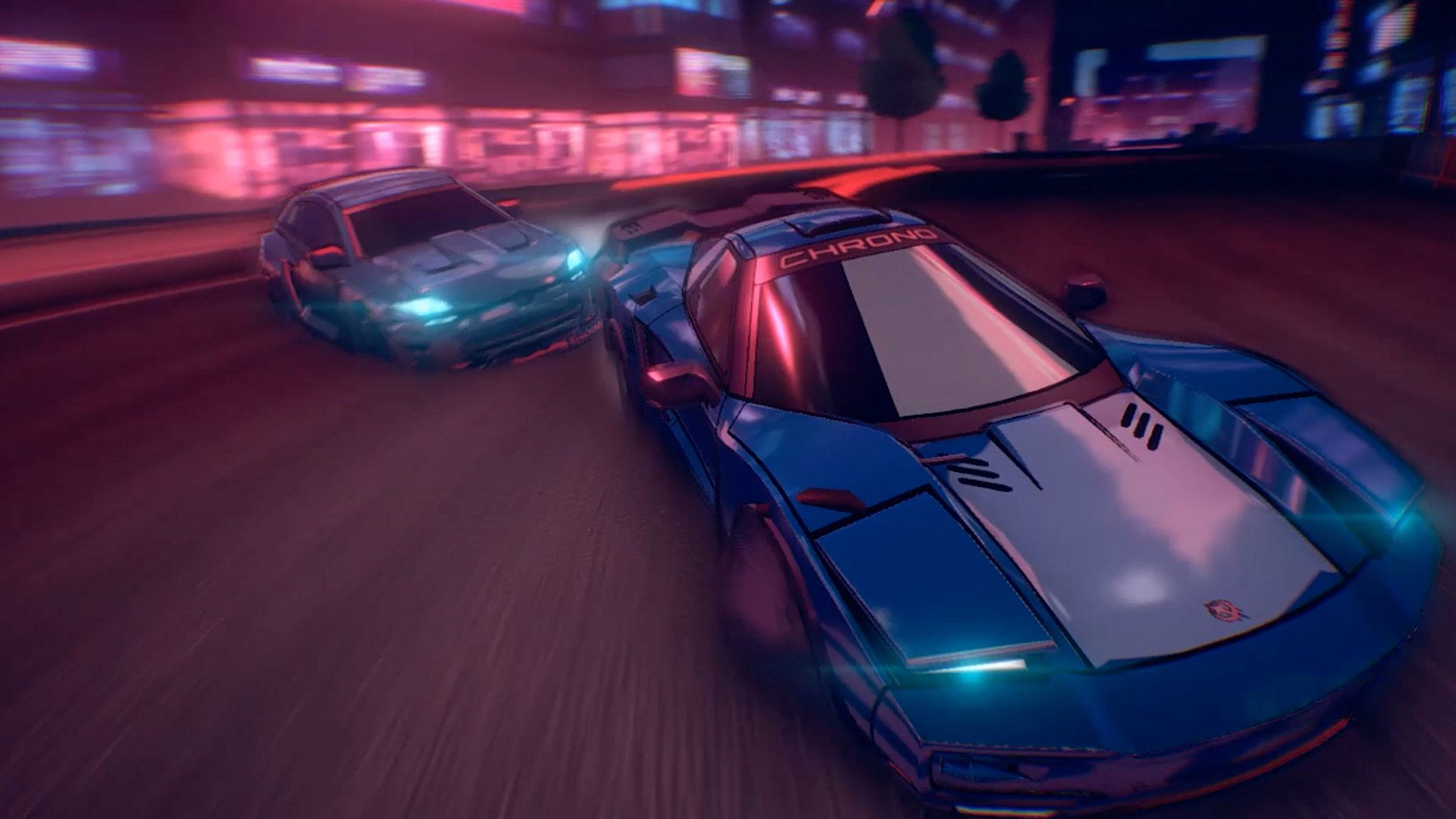
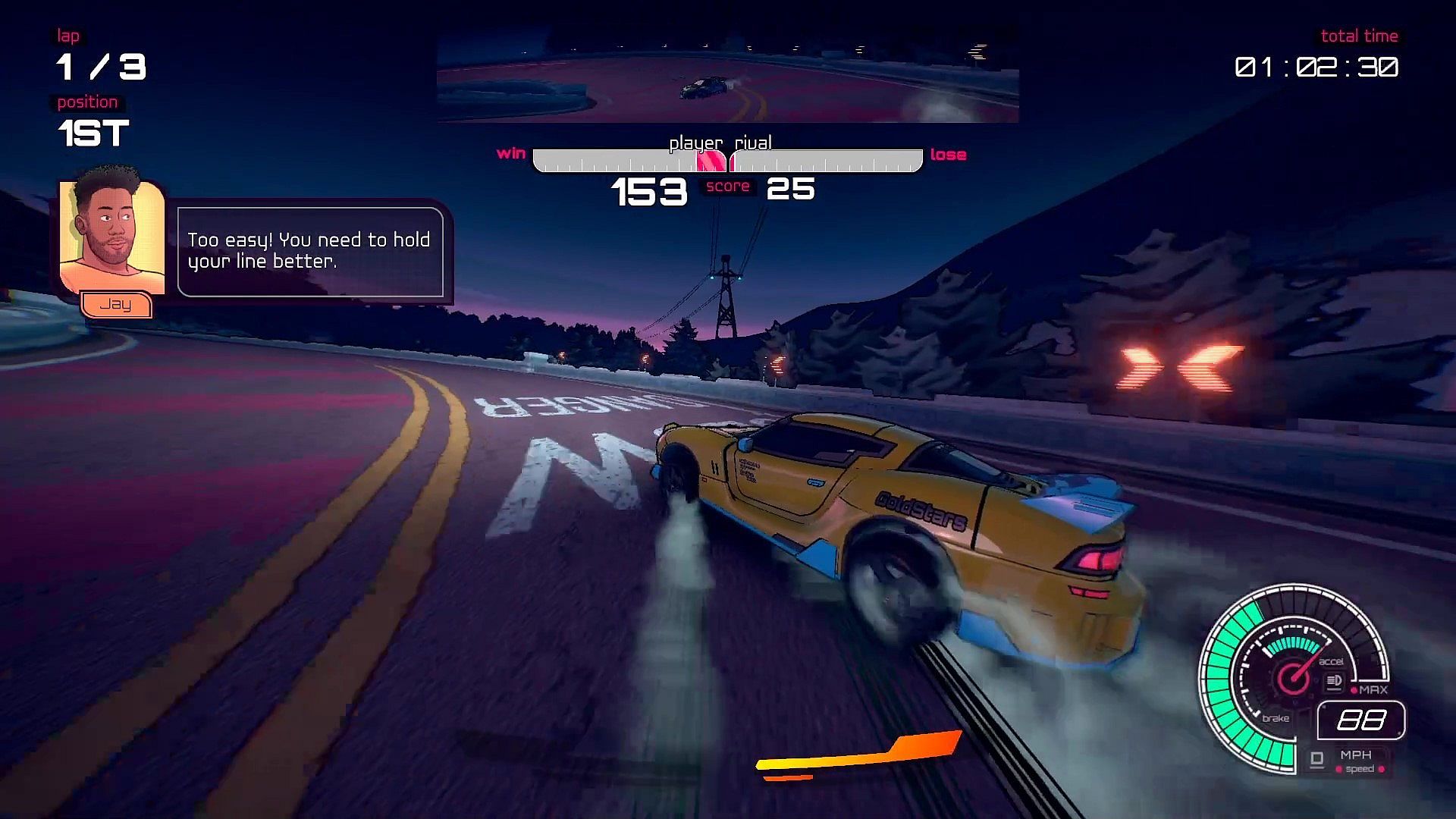
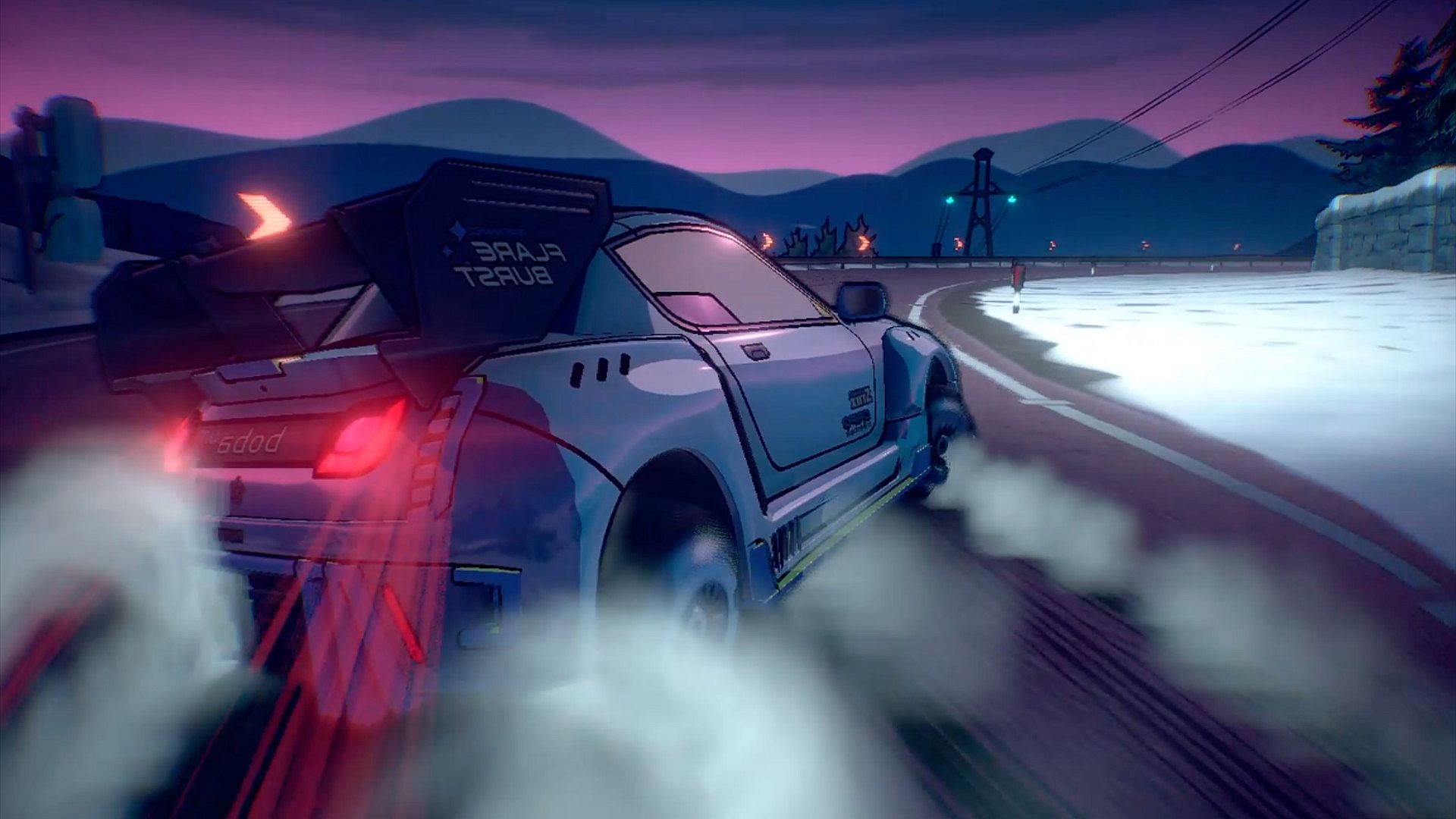
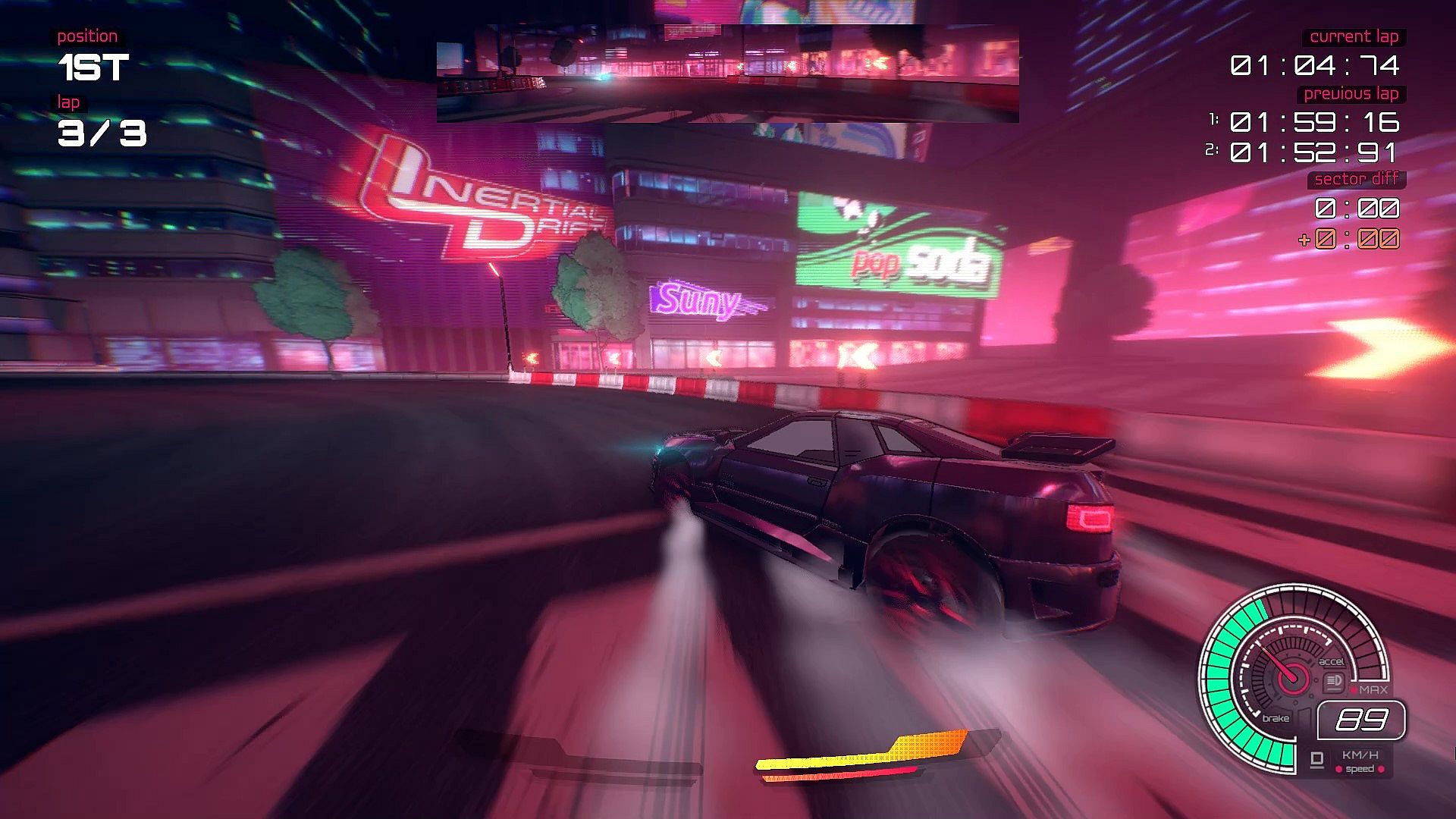

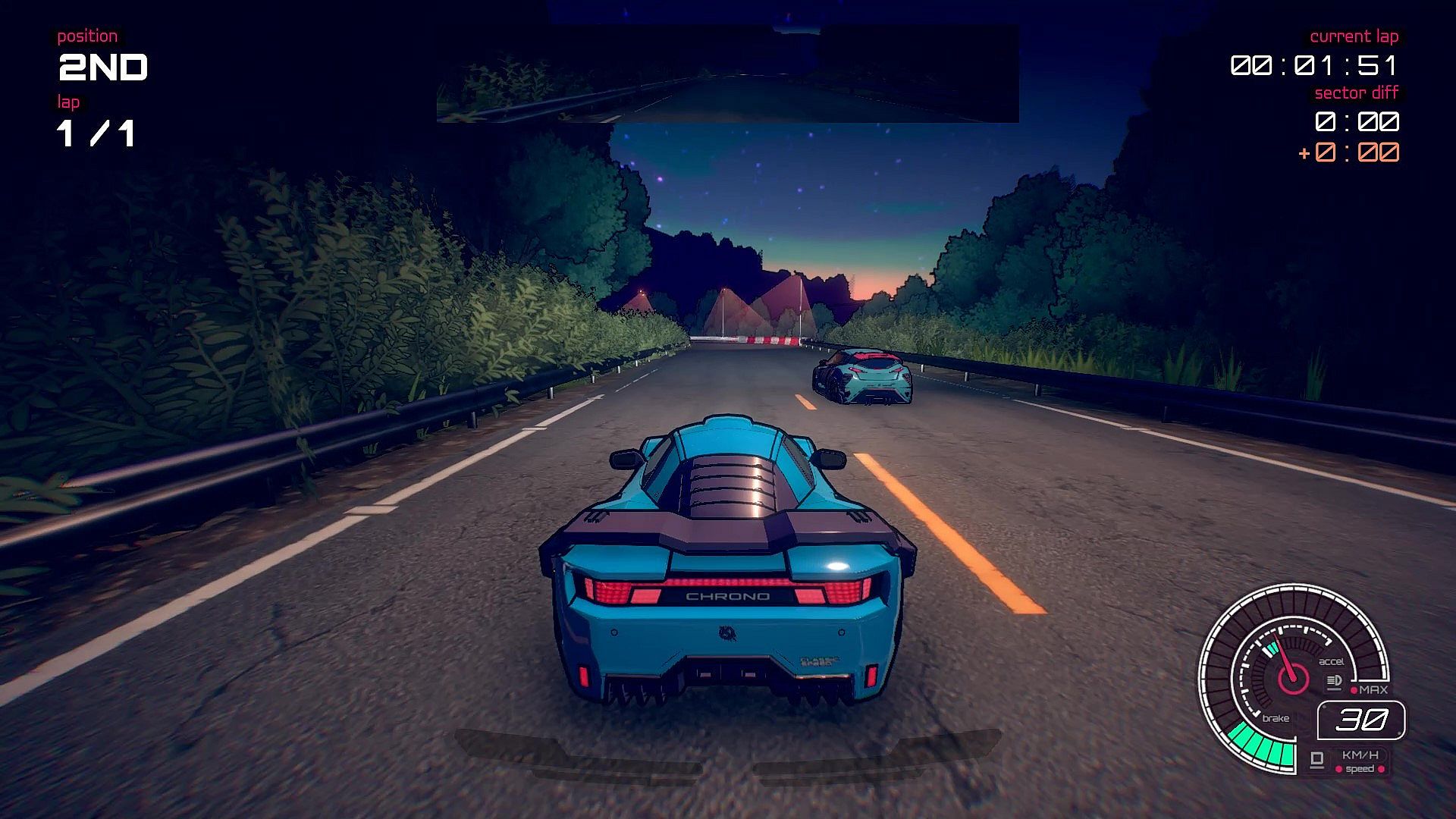
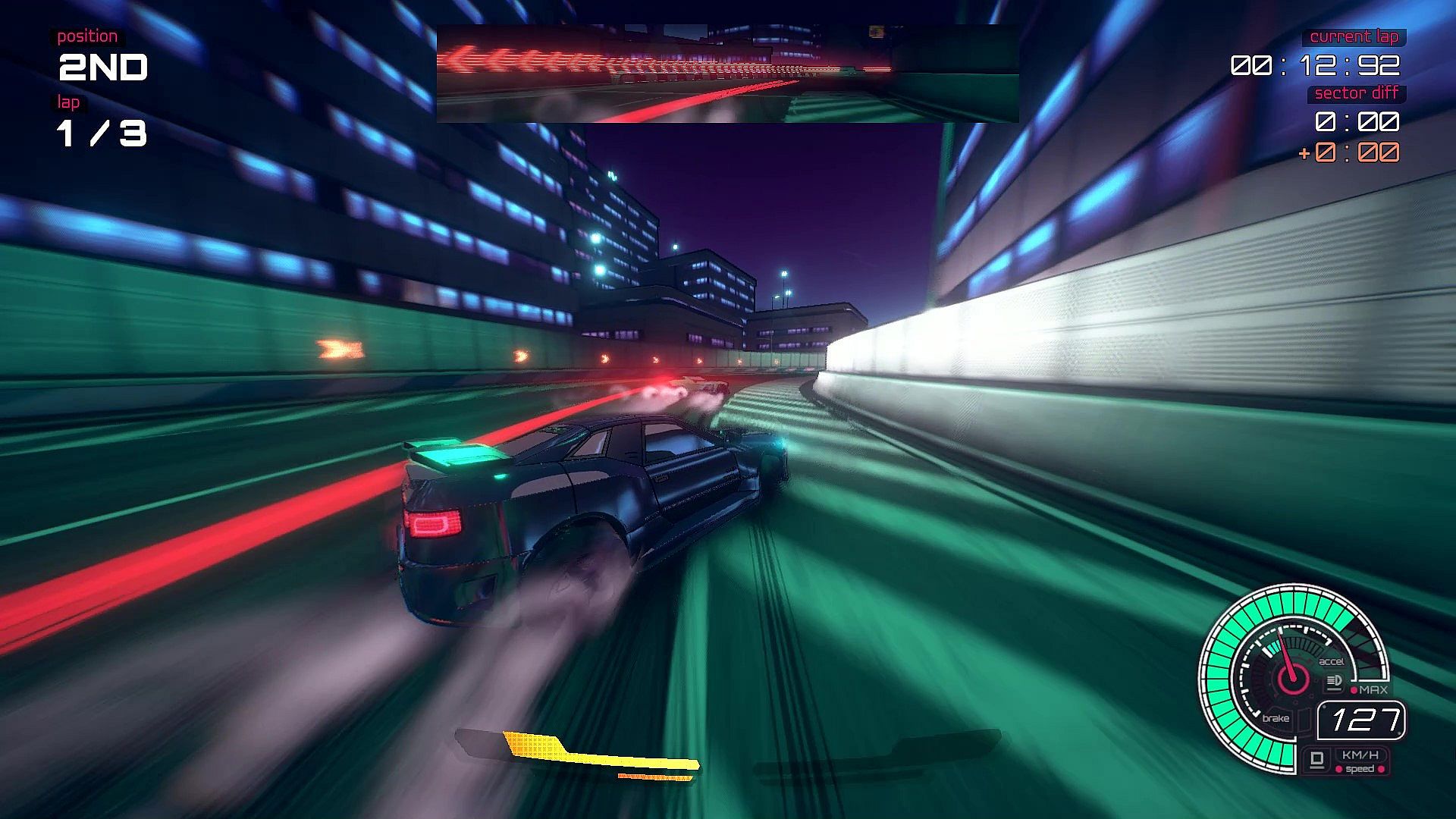
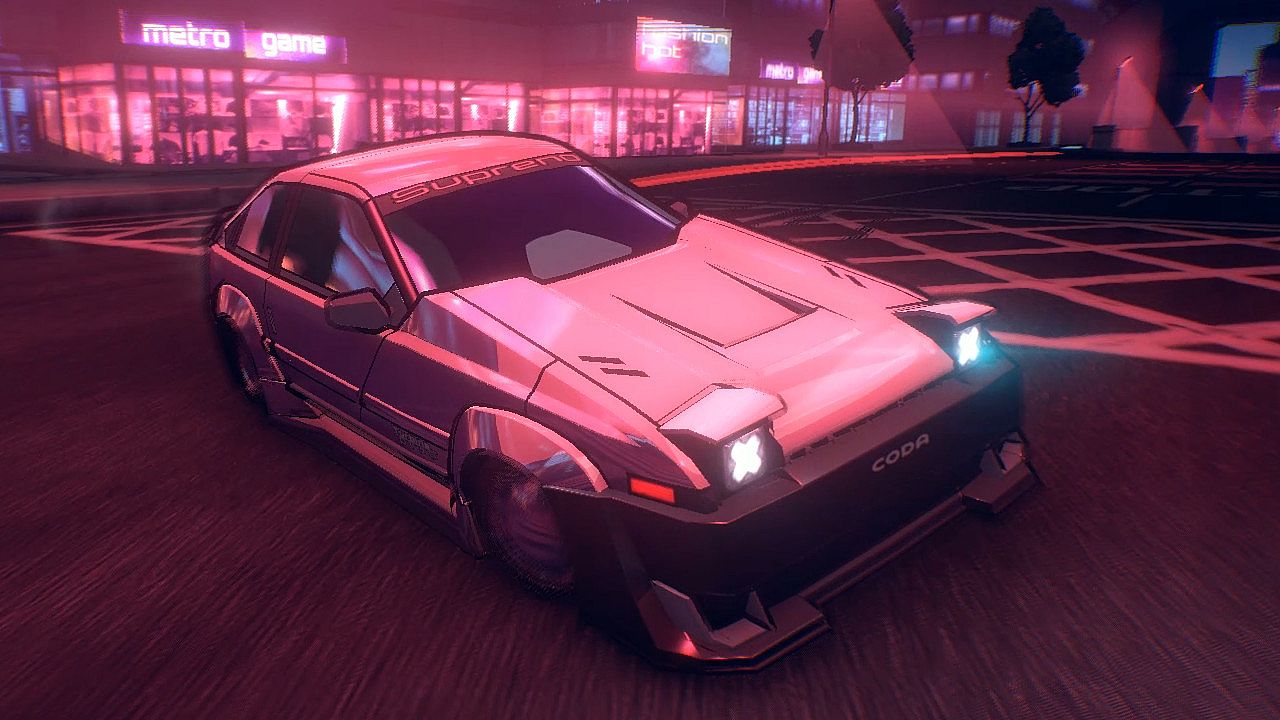
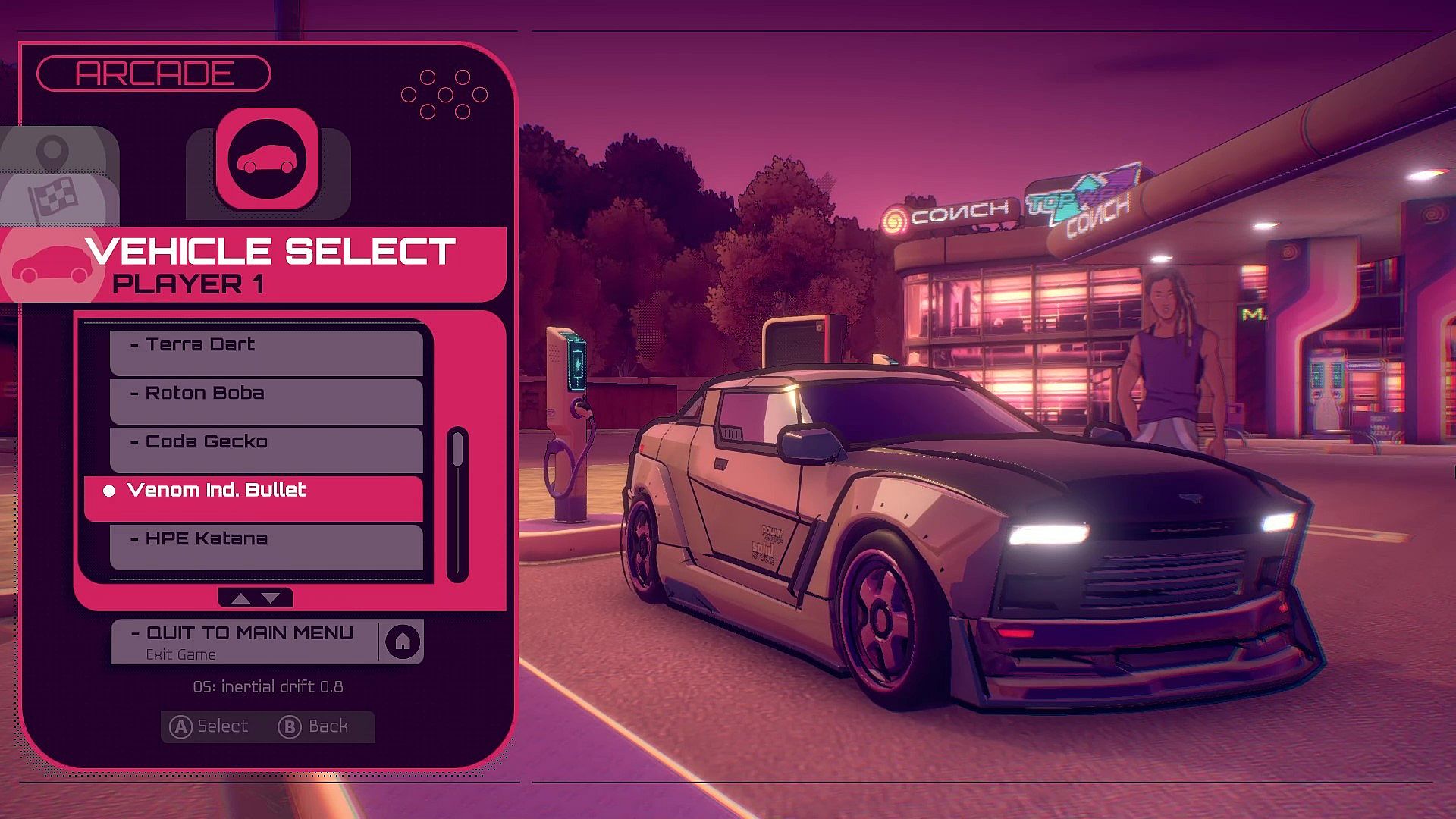

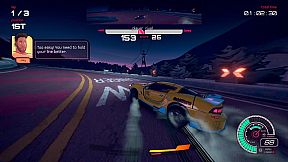
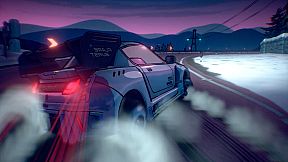
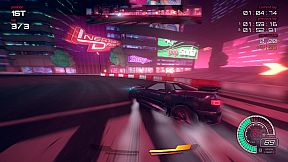

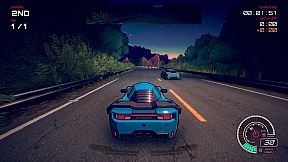
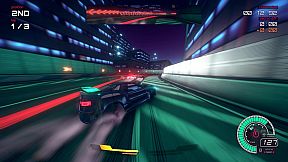
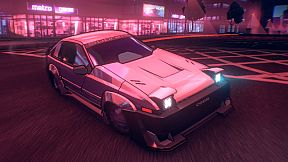

Inertial Drift is an indie arcade racing game that stands out through its distinctive twin-stick control scheme and retro-futuristic setting. Players steer with the left analog stick while using the right stick to independently manage drift angle and intensity. This separation creates a handling model that feels intuitive for beginners yet demands precision from experienced racers. The game features sixteen distinct cars, each with its own weight, grip, and acceleration profile, ranging from sport hatchbacks to supercars. Tracks wind through neon-lit city streets, coastal roads at sunset, temple complexes, and snow-covered mountain passes, all rendered in a vibrant 90s-inspired aesthetic.
Gameplay
The core loop centers on mastering the drift stick to maintain speed through corners while chaining drifts for style points and faster lap times. Each car demands a different approach to throttle control and stick input, rewarding players who learn the nuances of oversteer and traction management. Visuals emphasize bold colors and atmospheric lighting that shift across day and night conditions on the same routes. Sound design pairs electronic tracks with engine notes that change based on drift duration and angle. Single-player sessions focus on repetition and improvement, with ghost racing available to compare against personal bests or community times.
Game Modes
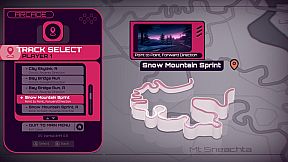
Seven distinct event types provide variety beyond standard circuit racing. Story mode follows four selectable characters across five tracks, each broken into three sequential events that escalate from time trials to head-to-head confrontations. Arcade mode offers quick access to any unlocked track and car for free runs or practice. Challenge mode presents twelve targeted tasks that unlock additional vehicles upon completion. Grand Prix mode chains five races into a single campaign with limited attempts per car. Style showdowns emphasize scoring through sustained drifts near walls and obstacles. Time trials and head-to-head events round out the selection, supporting both local split-screen and online multiplayer sessions for competitive play.
Tracks and Cars
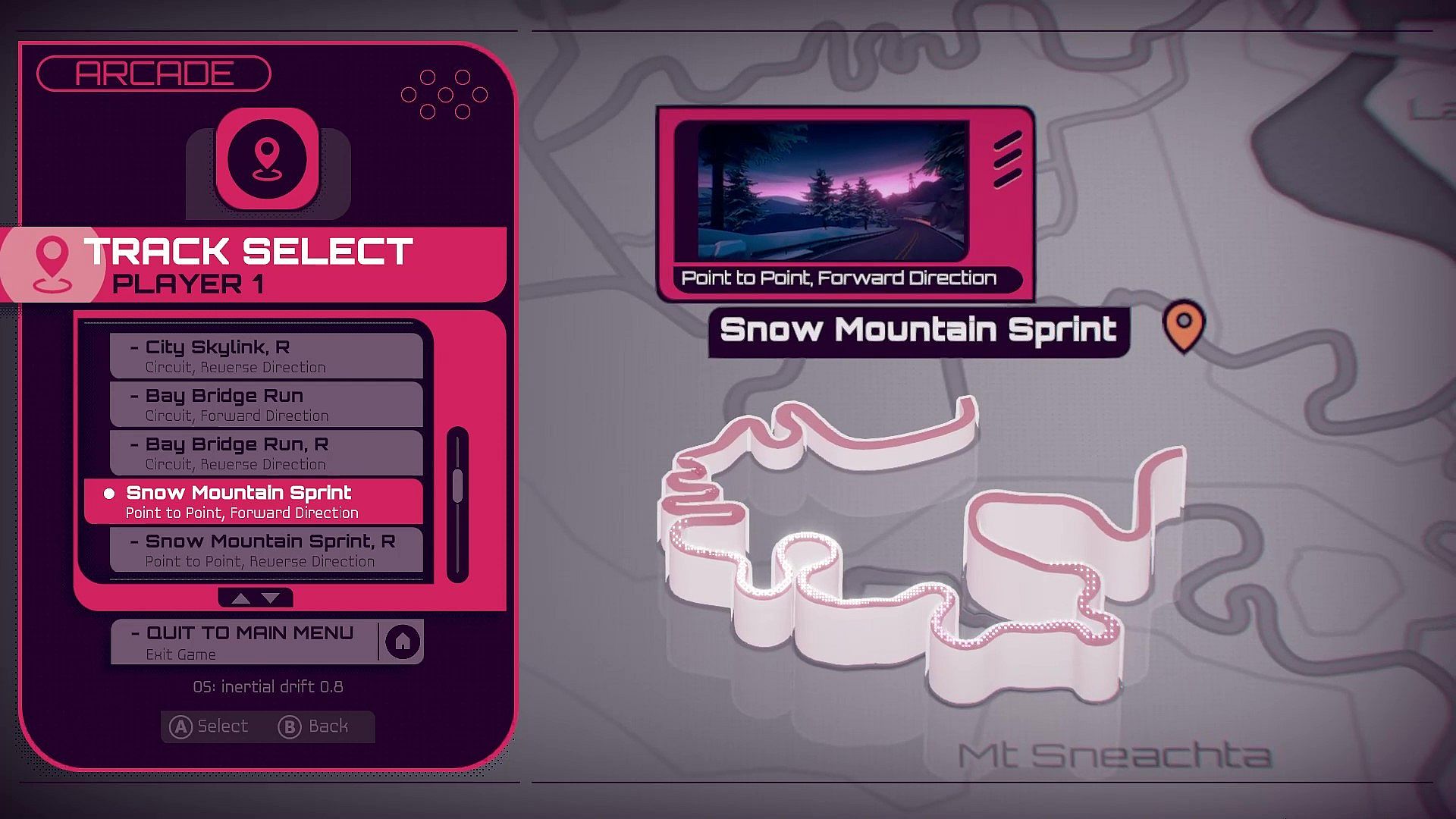
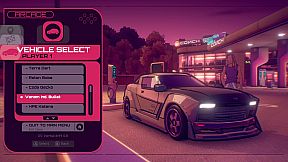
More than twenty track configurations span point-to-point and circuit layouts, with forward and reverse variants available in most cases. Environments range from dense urban grids to winding rural paths and high-altitude passes, each presenting unique elevation changes and corner sequences that test the drift mechanics differently. The sixteen cars vary significantly in handling, encouraging experimentation rather than reliance on a single favorite. Unlocking proceeds through story progression and challenge completion, giving a steady sense of advancement without overwhelming complexity.
Is It Worth Playing?
Player reception remains strongly positive years after release, with the majority of reviews highlighting the satisfying control innovation and replayability of its modes. The game suits those who enjoy arcade racers focused on skill mastery over simulation realism or large-scale online lobbies. Local and online multiplayer options add longevity for groups, while the single-player content provides ample practice opportunities. No major updates or seasonal content have appeared since launch, so the experience stands as a complete package centered on its unique drifting system. Fans of precise handling and retro visuals will find repeated play sessions rewarding, particularly when chasing personal bests across the full roster of cars and tracks.